Prompt Engineering Paper Accepted at ICML 2026 Sparks Heated Debate Among Netizens

marsbitXuất bản vào 2026-07-15Cập nhật gần nhất vào 2026-07-15

Tóm tắt

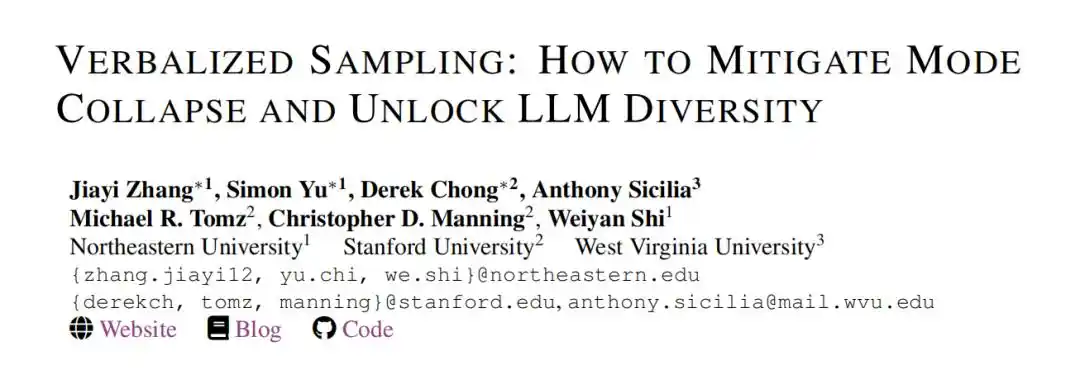
A paper on prompt engineering, titled "Verbalized Sampling (VS)," has been accepted by the prestigious machine learning conference ICML 2026, sparking significant debate online. The paper addresses the problem of "mode collapse" in large language models (LLMs), where models tend to produce repetitive, safe, and homogeneous outputs. Instead of proposing new training algorithms or model architectures, the authors introduce a simple yet effective prompt-based method. The core technique, Verbalized Sampling, instructs the model to generate multiple responses (e.g., five jokes) while also outputting a possible probability value for each. This prompt adjustment alone was shown to significantly increase output diversity by 1.6x to 2.1x in creative writing tasks, without compromising factual accuracy or safety. The authors argue that the root cause of mode collapse lies not in optimization algorithms but in the "typicality bias" present in human preference data used for alignment. Human annotators naturally favor familiar and fluent text, which steers models toward conservative outputs. The VS method aims to counteract this by leveraging the model's inherent pre-training distribution during inference. The paper's acceptance has led to polarized reactions. Critics argue that prompt engineering lacks the theoretical depth and algorithmic innovation expected from top-tier conferences like ICML, questioning its novelty, generalizability across models, and experimental scale. Some draw...

Prompt engineering can get a paper published in ICML these days???

Recently, a guy shared a paper just accepted by ICML 2026 on Reddit, and the post instantly went viral, with the number of comments skyrocketing.

However, everyone was left scratching their heads: Is this for real?
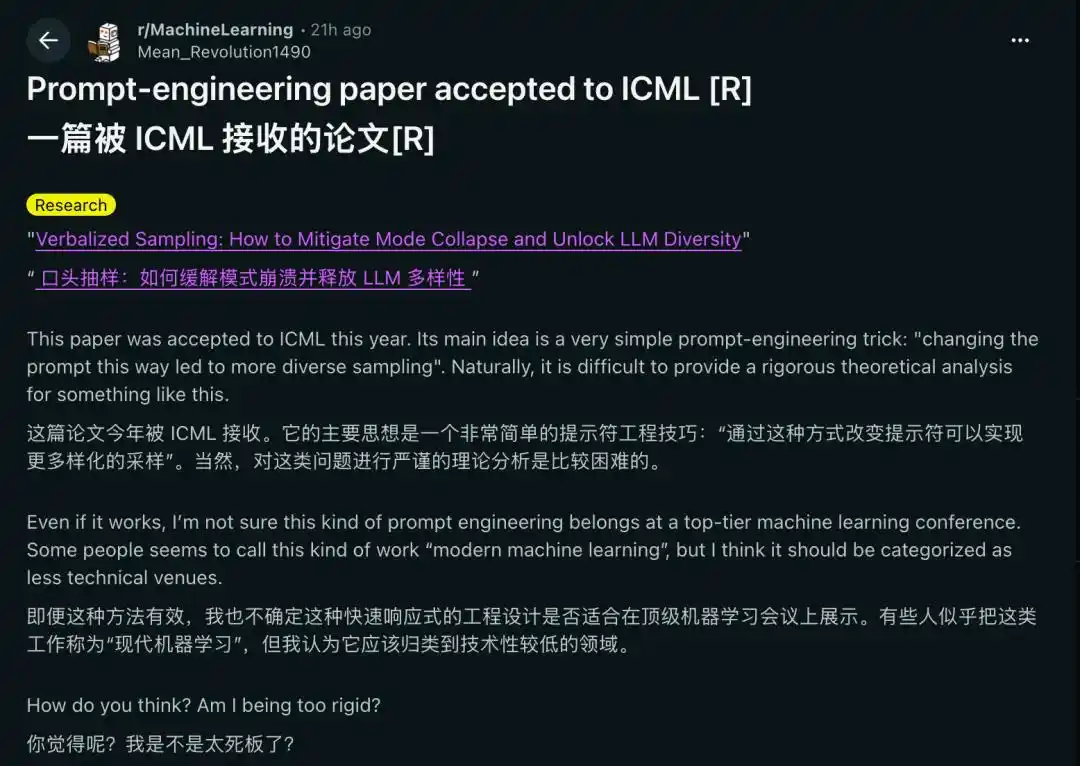
The authors didn't propose any new optimization algorithms or train any new large models. They simply did one thing—

Modified the Prompt.

The paper proposes a method called Verbalized Sampling (VS), which significantly enhances the diversity of large language model outputs and alleviates the long-standing issue of Mode Collapse in LLMs, solely by adjusting the prompt.

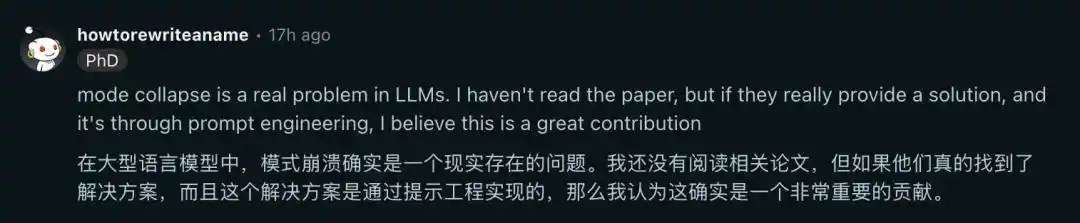
It sounds quite practical, but is it right for a mere prompt trick to get into a top-tier conference?

Let's take a look at the paper first before passing judgment.

A Highly Controversial ICML Paper
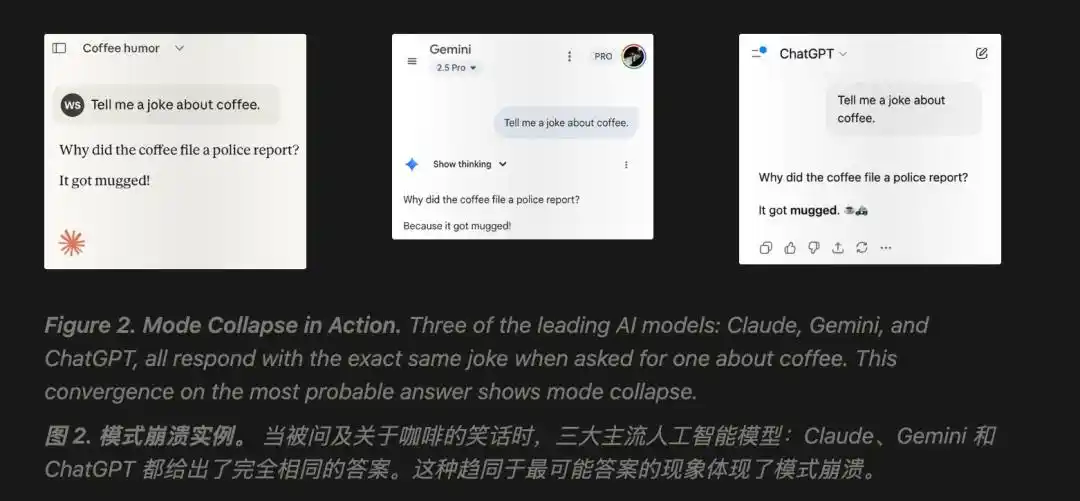
Have you ever felt that AI is becoming increasingly homogeneous?

Ask it ten times to "Tell me a joke," and the answers you get are often highly similar. This is not only true for creative tasks but also for Q&A, code generation...

This phenomenon is collectively referred to as mode collapse in academia.

Simply put, models increasingly prefer to output the highest probability, safest, and most classic answers, while rejecting alternative creative ideas.
In the past, to solve this model problem, most researchers would first think of adjusting sampling parameters, modifying decoding algorithms, retraining, etc. However, this paper takes a different approach: directly asking the model to output its own sampling process along with the answer.

For example, using the earlier joke-telling scenario, the authors would modify the prompt, requiring the model to:

Generate 5 jokes, while also assigning a possible probability value to each joke.

Then the model can produce more varied and less repetitive answers.

It sounds very simple, doesn't it? In fact, this is the core contribution of the paper—the Verbalized Probability Sampling method. No fine-tuning is needed; just by changing the way of asking, content diversity can be significantly improved.
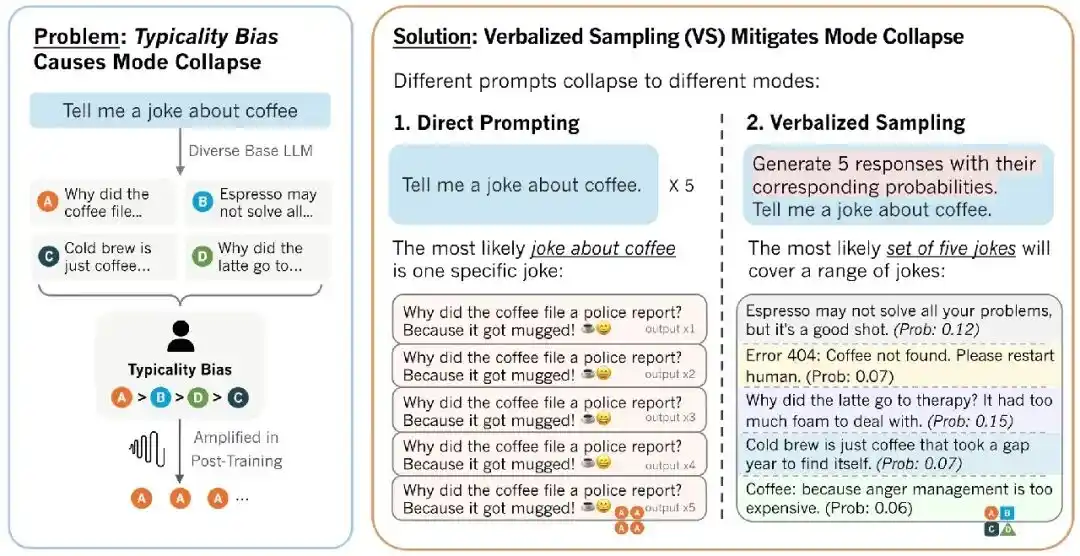
In the paper, however, the authors provide a rigorous argumentation process for this.

First, they address the root cause of the model's uniformity.

Past academia attributed this problem to algorithmic aspects, such as insufficient reward models or improperly set KL penalty terms. This paper delves deeper, suggesting the real root lies in the preference data itself.

They propose a concept called prototypical bias. From a cognitive psychology perspective, human annotators naturally prefer familiar, fluent, conventional text, and instinctively give higher scores to stereotypical, mainstream answers.
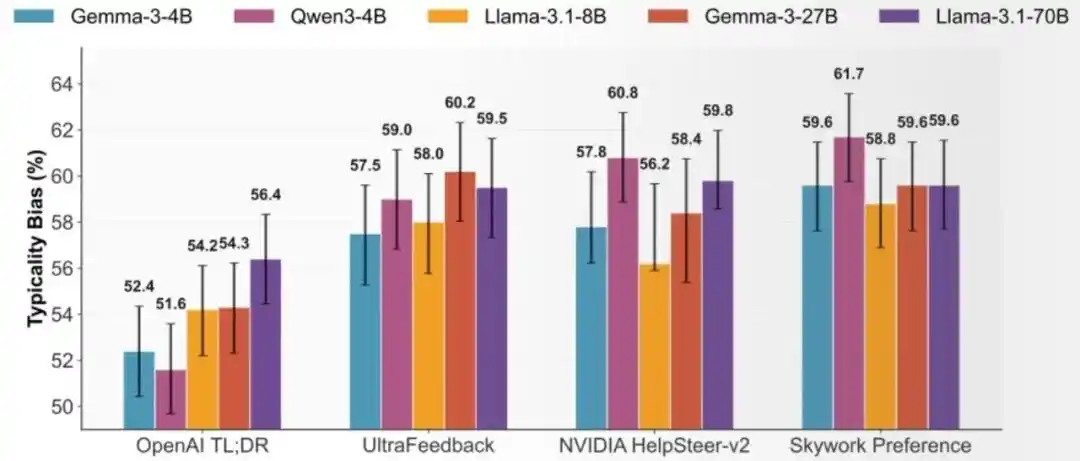
Therefore, even if reward models and optimization algorithms are perfected, as long as the human preference data used for training inherently contains prototypical bias, post-alignment models will still suffer from mode collapse.

The authors tested this repeatedly on five preference datasets and different base models, and the conclusion remained consistent.

After realizing this, the authors argue that since the problem is rooted in the training data, one only needs to consider designing a prompt-based correction scheme during the inference stage. That is, by making the model output the complete probability distribution in the prompt, the model's inherent diverse output distribution from the pre-training phase can be awakened, restoring diversity.

The rest involved running experiments with this method in various scenarios. The results show that in creative writing tasks, diversity was 1.6~2.1 times that of ordinary prompts, without reducing factual accuracy or compromising model safety.

Furthermore, the stronger the model's capabilities and the larger the parameter count, the more pronounced the diversity improvement brought by VS.
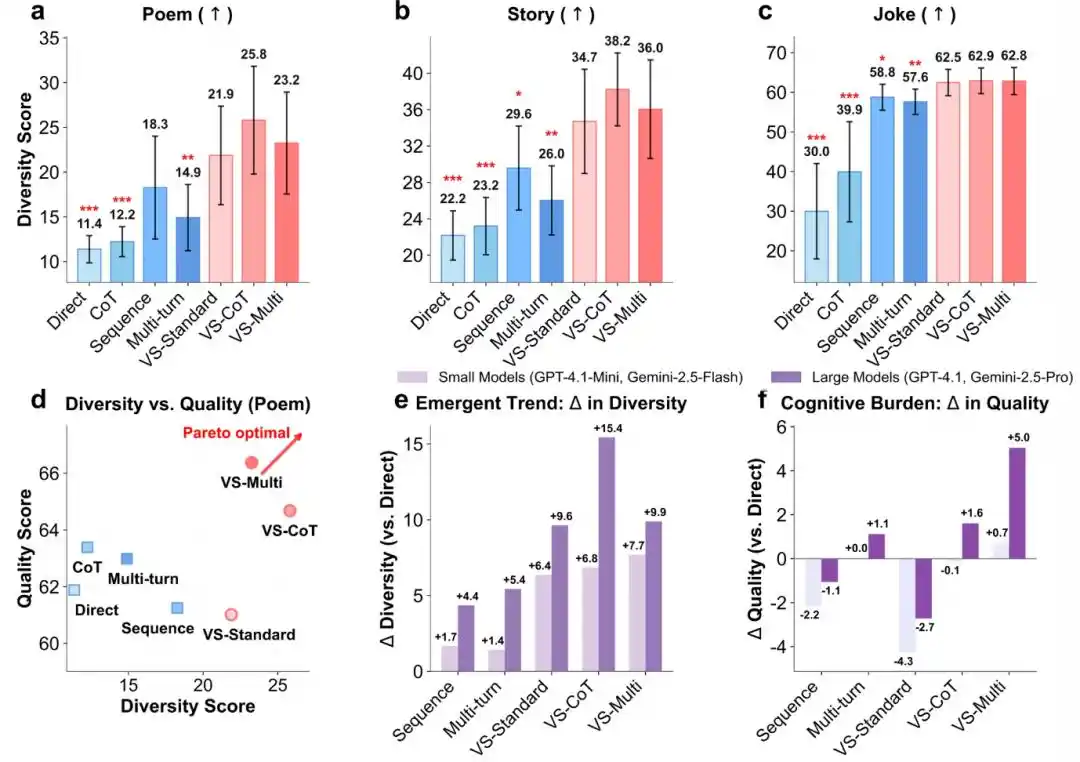
So, while the final method presented in the paper is simple, ICML still passed it.

Reddit Users in a Heated Debate

Under the original post, however, opinions on this paper are polarized.

Many netizens expressed that in the past, ICML featured hardcore innovations like new models, new algorithms, and new theories. Merely optimizing prompts or inference processes doesn't qualify as serious machine learning research.

In comparison, the innovation of this work seems somewhat thin, and several issues exist:

First, similar instruction-writing methods are not unique; some even claimed they were writing prompts like this just yesterday. Second, the theory is difficult to verify because prompts might fail when models are changed, unlike algorithms which are more stable. Third, the experimental scale is limited, insufficient to prove this is a universal law.
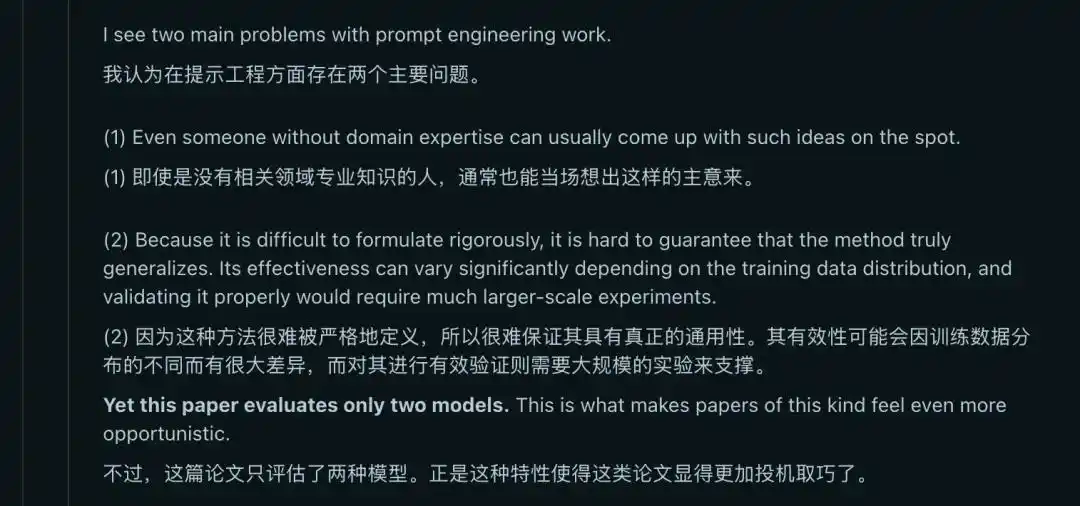
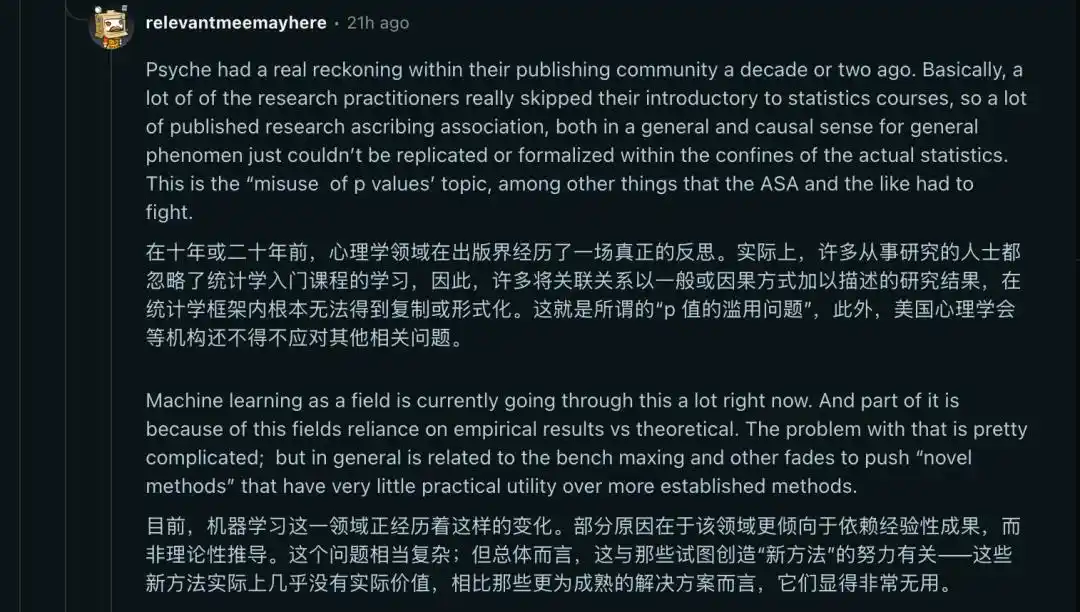
Some netizens directly compared the current state of the machine learning field to the academic crisis in psychology over a decade ago.

Back then, many researchers had weak statistical foundations and misused statistical tools, leading to many papers with unreproducible conclusions and a severe trust crisis in the field. Similarly, the machine learning industry now heavily relies on empirical experiments and undervalues rigorous theoretical support.

The industry is internally competitive, chasing new methods, but there's a widespread atmosphere of excessive hyperparameter tuning and benchmark score chasing. Many so-called innovative algorithms offer little practical value compared to mature baseline models, being packaged as innovative achievements based on tiny metric improvements.

Essentially, these are issues in paper publishing caused by unclear professional standards following the rapid expansion of the discipline.
But supporters argue that scientific research is not about whose method is more complex. As long as the hypothesis is clear, experiments are sufficient, and results are stable and reproducible, it can still be excellent research.

For example, this paper thoroughly explains what mode collapse is and proposes that the real problem lies in prototypical bias—a viewpoint more important than the prompt itself.
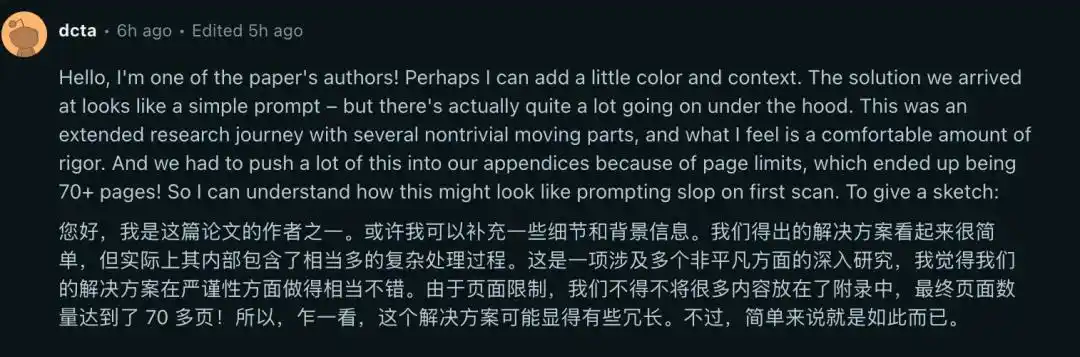
One of the authors also replied in the comments, stating that while the paper appears simple, it actually involves a great deal of complex processing.

The entire work includes complete problem tracing, new theoretical attribution, mathematical derivation, and multi-dimensional quantitative experiments—it's not a shallow, trivial prompt-tuning effort.
Many also mentioned Chain-of-Thought (CoT). When CoT first appeared, it was essentially a one-line prompt:

Let’s think step by step.

But now, almost all reasoning methods can be traced back to CoT. This precisely indicates that prompt engineering is no longer just about writing prompts; it is becoming a new method for studying model behavior.

Over the past decade, machine learning research has almost revolved around training. But now, some usage techniques during the inference stage are gradually moving toward the core of machine learning research.

Perhaps in the coming years, we will see more and more papers like this. They don't add a single line of training code or an extra model parameter, yet they can still change the capability boundaries of large models.

Research Team Introduction

Finally, let's take a look at the research team.

This work was completed by Weiyan Shi's team at Northeastern University (USA) in collaboration with Stanford's Manning Lab and West Virginia University. Jiayi Zhang, Simon Yu, and Derek Chong are listed as co-first authors.

Jiayi Zhang completed her undergraduate studies at the University of Michigan, earning triple bachelor's degrees in Computer Science, Mathematics, and Linguistics. She then pursued a Master's in Computer Science at Northeastern University (USA).

Another paper of hers, "Analyzing the Role of Semantic Representations in the Era of Large Language Models," accepted by the NLP top conference NAACL 2024, also revolves around semantic representation and large models.

Simon Yu is currently pursuing a Ph.D. at Northeastern University (USA), with his main research direction focusing on alignment and reinforcement learning mechanisms in large models. He completed both his bachelor's and master's degrees at the University of Edinburgh and has published several top conference papers.

Besides this paper, another one of his papers, "Unsafer in Many Turns: Benchmarking and Defending Multi-Turn Safety Risks in Tool-Using Agents," was also accepted by ICML 2026.

Derek Chong earned his Master's from Stanford University and is currently a researcher at the Stanford Artificial Intelligence Laboratory. His research primarily focuses on large language models in NLP.

He previously had three years of experience as a founder-entrepreneur and worked at Ello as an Applied Scientist, participating in industry-end AI implementation R&D. He possesses both solid theoretical research skills and rich hands-on practical experience.

References:[1]https://www.reddit.com/r/MachineLearning/comments/1uv1xb3/promptengineering_paper_accepted_to_icml_r/

[2]https://www.linkedin.com/in/jiayizx/[3]https://simonucl.github.io/[4]https://www.linkedin.com/in/derekch/

This article is from the WeChat public account "Qubit" (量子位), author: Focus on Frontier Technology


Tiền kỹ thuật số thịnh hành

Câu hỏi Liên quan

QWhat is the main contribution of the 'Verbalized Sampling' paper accepted at ICML 2026?

AThe main contribution is a method called 'Verbalized Sampling' (VS), which involves adjusting prompts to ask language models to output their sampling process (e.g., assign probabilities to multiple generated answers). This simple intervention significantly increases the diversity of LLM outputs and mitigates the 'mode collapse' problem without requiring model retraining or new algorithms.

QAccording to the paper, what is identified as the root cause of the mode collapse problem in LLMs?

AThe paper identifies the root cause as 'typicality bias' in the human preference data used for training. This cognitive bias leads human annotators to consistently favor familiar, fluent, and conventional text. Consequently, the reward models trained on this data steer aligned models towards safe, high-probability answers, causing mode collapse.

QWhat are some of the key criticisms from Reddit users regarding this paper's acceptance at ICML?

ACritics argue that the innovation is thin, noting similar prompt techniques are already in use and questioning the method's stability across different models. They also contend that the experimental scale is insufficient to prove a universal law and express concern that the field is drifting towards an over-reliance on empirical results and 'benchmark hacking' rather than rigorous theoretical contributions.

QHow do the paper's supporters defend its value and acceptance at a top-tier conference?

ASupporters argue that good research is defined by clear hypotheses, rigorous experimentation, and reproducible results, not just complexity. They highlight that the paper's core contribution is the novel theoretical insight into the cause of mode collapse (typicality bias). They also compare it to foundational techniques like Chain-of-Thought, suggesting prompt engineering is evolving into a legitimate method for studying model behavior.

QWhat was the observed impact of the Verbalized Sampling method on creative writing tasks?

AIn creative writing tasks, the Verbalized Sampling method increased output diversity by 1.6 to 2.1 times compared to standard prompting, without compromising factual accuracy or model safety. The effectiveness of the method was also shown to be more pronounced in larger, more capable models.

Nội dung Liên quan

PA Đồ Họa | Một hình ảnh hiểu rõ sự kiện lớn Web3 tháng 8 năm 2026

Tháng 8 năm 2026, thị trường Web3 sẽ đón nhận nhiều sự kiện quan trọng từ nhiều khía cạnh: 📌 **Dữ liệu vĩ mô:** Dữ liệu CPI và việc làm phi nông nghiệp của Mỹ tháng 7 sẽ được công bố. Cùng với đó là bản ghi nhớ cuộc họp của Fed và Hội nghị thượng đỉnh Ngân hàng Trung ương toàn cầu Jackson Hole. 🏛️ **Tiến triển quy định:** Thượng viện Mỹ dự kiến công bố dự thảo mới của *Đạo luật CLARITY*. Lệnh cấm tiền mã hóa mở rộng của EU đối với Belarus chính thức có hiệu lực. 🪙 **Giải phóng token:** Một lượng lớn token như ENA, AVAX, STRK, ZRO, KAITO sẽ được mở khóa tập trung, cần theo dõi chặt chẽ để ứng phó với biến động thị trường tiềm năng. ⚠️ **Điều chỉnh dự án:** Một số nền tảng/dịch vụ như Exchange Art, Ctrl Wallet, Zapper, NFTfi, Summer.fi sẽ ngừng hoạt động hoặc điều chỉnh, người dùng cần xử lý tài sản kịp thời. 💼 **Tài chính doanh nghiệp:** Các công ty như SpaceX, Circle, NVIDIA sẽ công bố báo cáo tài chính Quý 2. Unitree Robotics bắt đầu chào bán cổ phần IPO trên STAR Market, trong khi Moonshot AI lên kế hoạch cho vòng gọi vốn Pre-IPO. 🌐 **Sự kiện ngành:** Các hội nghị Bitcoin Asia 2026 và 2026 Digital Expo sẽ được tổ chức. Tóm lại, chủ đề chính của thị trường trong tháng 8 sẽ xoay quanh kỳ vọng vĩ mô, việc triển khai quy định, giải phóng token và sự đào thải trong ngành. Độc giả có thể trải nghiệm Lịch tiền mã hóa phiên bản mới của PANews để theo dõi toàn diện và thuận tiện hơn.

marsbit8 phút trước

PA Đồ Họa | Một hình ảnh hiểu rõ sự kiện lớn Web3 tháng 8 năm 2026

marsbit8 phút trước

Ông ‘Quạ đen’ nổi tiếng nhất phố Wall lần này lại nhắm vào Nvidia

Một bản tiết lộ giao dịch mới nhất một lần nữa đưa Michael Burry, nhà quản lý quỹ nổi tiếng với vụ bán khống chính xác thị trường thế chấp dưới chuẩn, vào tâm điểm dư luận. Ngày 30/6, thông qua bản tin "Cassandra Unchained", ông đã công bố một danh sách bán khống bao gồm NVIDIA (giá vào lệnh 198.09 USD), Tesla, Applied Materials, Caterpillar và ETF bán dẫn Philadelphia (SOXX). Ngày 1/7, ông mở thêm vị thế bán khống Micron Technology. Ngày 25/7, Burry tiếp tục mở rộng vị thế bán khống đối với NVIDIA, Micron và SOXX. Lý do ông đưa ra xoay quanh hai vấn đề trong xây dựng cơ sở hạ tầng AI: "tài trợ vòng tuần hoàn ngoại bảng" và "báo cáo khấu hao không chính xác". Ông lo ngại cách xử lý tài chính từ phía khách hàng của NVIDIA có thể khiến lợi nhuận trên sổ sách của toàn chuỗi cung ứng trông tốt hơn thực tế. Phản ứng trên mạng xã hội gần như là phản xạ có điều kiện: lại một lập luận bi quan. Giá cổ phiếu NVIDIA biến động mạnh sau các tiết lộ. Sau lần công bố thứ hai của Burry vào 25/7, một bài báo cho biết NVIDIA đang thảo luận về việc cung cấp bảo lãnh tài chính khoảng 250 tỷ USD cho OpenAI, khiến giá giảm mạnh. Burry bình luận rằng điều này tương đương với "NVIDIA bảo lãnh cho khách hàng mua chip của chính mình", làm dấy lên thêm lo ngại. Tuy nhiên, thành tích của Burry sau chiến thắng huyền thoại năm 2008 không ổn định. Ông từng bán khống Tesla và chịu lỗ, bỏ lỡ đợt tăng giá mạnh của GameStop, và các vị thế bán khống NVIDIA/Palantir trước đây cũng gặp khó khăn. Phương pháp phân tích của ông tập trung vào dòng tiền tự do và kiểm tra chứng từ tài chính gốc, giỏi phát hiện rủi ro cấu trúc nhưng không thể dự đoán thời điểm rủi ro bùng phát. Tỷ lệ bán khống NVIDIA hiện ở mức thấp, khoảng 1.3-1.4% cổ phiếu lưu hành, nhưng tổng giá trị tuyệt đối vẫn lớn. Các tổ chức bán khống NVIDIA tính đến tháng 2 được cho là đã lỗ hơn 50 tỷ USD. Các lập luận của Burry có sức thuyết phục khác nhau: 1. **Khấu hao:** Lập luận vững chắc nhất, nghi ngờ các công ty đám mây như Microsoft, Google kéo dài thời gian khấu hao chip AI (6 năm) so với vòng đời thực tế ngắn hơn (2-3 năm), làm đẹp lợi nhuận. 2. **Tài trợ vòng tuần hoàn ngoại bảng:** Nghi ngờ nhu cầu chip một phần được tạo ra bởi các vòng tài trợ mà NVIDIA có thể cung cấp cho khách hàng, làm méo mó nhu cầu thực. Khó xác minh hơn. 3. **Mua lại cổ phiếu làm pha loãng EPS:** Bị NVIDIA bác bỏ do sai sót trong tính toán, là lập luận yếu nhất. Các nhà đầu tư huyền thoại khác có quan điểm khác biệt: * **Steve Eisman** (cũng là nhân vật trong "The Big Short"): Không bán khống NVIDIA vì doanh thu tăng trưởng mạnh, nhưng cảnh giác và đã giảm sở hữu. * **Jim Chanos:** Đồng ý với Burry về rủi ro kế toán, nhưng không bán khống NVIDIA hay Micron. Thay vào đó, ông tập trung vào các công ty cổ phần tư nhân có đòn bẩy tài chính cao liên quan đến AI. Bài học chính cho các nhà đầu tư không nằm ở việc sao chép vị thế của một nhà đầu tư nào, mà là học hỏi cách họ đặt câu hỏi: những con số nào dễ bị "đẹp hóa", những rủi ro cấu trúc nào dễ bị bỏ qua, và cần kiểm tra điều gì khi mọi người đều nói "lần này khác". Việc dự đoán thời điểm thị trường điều chỉnh phụ thuộc vào nhiều yếu tố không thể kiểm soát được.

marsbit32 phút trước

Ông ‘Quạ đen’ nổi tiếng nhất phố Wall lần này lại nhắm vào Nvidia

marsbit32 phút trước

Chọn Lọc Trong Tuần | Thị trường chứng khoán biến động kịch tính, Changxin Technology lên sàn thay đổi cục diện lưu trữ, Saylor đặt mục tiêu đưa STRC trở lại neo vào khoảng 8/9

**Tóm tắt nội dung bài viết:** PANews tổng hợp các nội dung chất lượng trong tuần, tập trung vào các chủ đề nóng trong lĩnh vực tiền mã hóa và tài chính công nghệ. **Các xu hướng chính:** * **AI & Tài chính:** Các ví thông minh AI trở thành chiến trường mới, đáp ứng nhu cầu thanh toán lập trình. Các gã khổng lồ như Coinbase đang tận dụng cơ hội này. Tuy nhiên, thị trường chứng khoán Hàn Quốc trải qua nhiều lần "ngắt mạch", một phần do cổ phiếu công nghệ AI và sự sụt giảm của SK Hynix. * **Bối cảnh vĩ mô:** Trung tâm của sự chú ý là đợt IPO của Changxin Technology (Trường Tân Kỹ Thuật), với vốn hóa thị trường khổng lồ 3.35 nghìn tỷ, đánh dấu bước đột phá trong ngành bán dẫn. Cục Dự trữ Liên bang Mỹ (Fed) giữ nguyên lãi suất nhưng phát đi tín hiệu "diều hâu", gây áp lực lên tài sản rủi ro. * **Góc nhìn chuyên gia:** Nhiều nhân vật nổi tiếng như Tom Lee và Raoul Pal chia sẻ quan điểm. Họ cho rằng đợt điều chỉnh của AI chỉ là "giải phóng đòn bẩy cưỡng chế", logic dài hạn của ngành vẫn vững chắc. Đồng thời, các kênh đầu tư cho nhà đầu tư nhỏ lẻ Trung Quốc đang thu hẹp, mở ra cơ hội cho tài sản mã hóa. * **Cơ hội đầu tư:** Bài viết đề cập đến các hiện tượng như giao thức "bốc thăm" NFT FWA, cơ chế "phí ưu tiên" của Hyperliquid tạo ra doanh thu lớn, và thực trạng tài sản RWA (Tài sản trong thế giới thực) quy mô lớn nhưng chưa được sử dụng hiệu quả trên chuỗi. * **Tin tức Web3:** Tầm nhìn Ethereum đến năm 2030 hướng đến tốc độ nhanh hơn, bảo mật lượng tử và quyền riêng tư gốc. Lido thực hiện đợt nâng cấp lớn, di chuyển số lượng stETH khổng lồ. Cuộc chiến stablecoin tiếp tục gia tăng. **Thông tin đáng chú ý:** * Michael Saylor đặt mục tiêu tái neo giữ STRC vào khoảng ngày 8/9. * Cổ phiếu các công ty khai thác tiền mã hóa chuyển hướng sang AI (như IREN, Bitdeer) tăng mạnh. * Thị trường chứng khoán Hàn Quốc và cổ phiếu Changxin Technology (C Trường Tân) tại Trung Quốc ghi nhận mức tăng kỷ lục. * Coinbase báo cáo doanh thu quý II thấp hơn kỳ vọng.

marsbit38 phút trước

Chọn Lọc Trong Tuần | Thị trường chứng khoán biến động kịch tính, Changxin Technology lên sàn thay đổi cục diện lưu trữ, Saylor đặt mục tiêu đưa STRC trở lại neo vào khoảng 8/9

marsbit38 phút trước

Khi thị trường bắt đầu hoài nghi về chi tiêu vốn cho AI: Phân tích toàn diện báo cáo tài chính quý 2 của năm công ty công nghệ lớn

Trong tuần công bố báo cáo tài chính quý 2/2026, báo cáo của năm gã khổng lồ công nghệ Mỹ (Alphabet, Intel, Microsoft, Meta, Apple) cho thấy một chủ đề chung: đầu tư mạnh mẽ vào cơ sở hạ tầng AI vẫn tiếp tục tăng tốc, nhưng thị trường đang mất kiên nhẫn với việc chờ đợi khoản chi tiêu khổng lồ này chuyển hóa thành lợi nhuận thực tế. Mặc dù hầu hết doanh thu và lợi nhuận đều vượt kỳ vọng, phản ứng của nhà đầu tư lại phân hóa rõ rệt dựa trên triển vọng dòng tiền tự do (FCF). Alphabet (Google) và Intel đều báo cáo tăng trưởng doanh thu ấn tượng (24% và 25%) nhưng đồng thời điều chỉnh tăng mạnh dự báo chi tiêu vốn (CapEx) cho năm 2026, khiến FCF bị áp lực, dẫn đến sự sụt giảm về giá cổ phiếu. Đặc biệt, Alphabet lần đầu tiên ghi nhận FCF âm theo quý. Meta là trường hợp tiêu cực nhất, với lợi nhuận giảm 14% do chi phí tăng 55% và FCF sụt giảm hơn 90%. Việc công ty điều chỉnh tăng hướng dẫn CapEx và CEO Mark Zuckerberg nhấn mạnh sẽ tiếp tục đầu tư mạnh vào năng lực tính toán đã khiến cổ phiếu chịu đợt bán tháo mạnh nhất. Ngược lại, Microsoft trở thành điểm sáng nhờ điều chỉnh *giảm* dự báo CapEx cho năm 2026 và cam kết duy trì FCF dương trong năm tài chính 2027, giúp cổ phiếu tăng mạnh. Apple, dù có quý tháng 6 tốt nhất lịch sử với doanh thu và lợi nhuận kỷ lục, lại đưa ra hướng dẫn tăng trưởng quý tiếp theo thấp hơn kỳ vọng, chủ yếu do thách thức về chuỗi cung ứng, khiến giá cổ phiếu lao dốc. Tóm lại, báo cáo quý này cho thấy thị trường không còn chỉ tập trung vào sức mạnh của nhu cầu AI, mà đã chuyển sang đánh giá kỹ lưỡng lộ trình và thời điểm hoàn vốn từ các khoản đầu tư khổng lồ này. Khả năng quản lý và giải thích rõ ràng về nhịp độ chi tiêu vốn và con đường tạo ra dòng tiền sẽ là yếu tố then chốt định hình phản ứng thị trường trong các mùa báo cáo tài chính sắp tới.

Odaily星球日报45 phút trước

Khi thị trường bắt đầu hoài nghi về chi tiêu vốn cho AI: Phân tích toàn diện báo cáo tài chính quý 2 của năm công ty công nghệ lớn

Odaily星球日报45 phút trước

a16z: Từ Công ty đến DAO, DUNA có thể trở thành hình thức tổ chức tiếp theo

Từ các đoàn thương nhân gia đình như Marco Polo đến các công ty cổ phần như Đông Ấn Hà Lan, lịch sử kinh doanh là lịch sử của sự hợp tác. Mỗi bước nhảy vọt tổ chức đều giải quyết vấn đề phối hợp của thời đại mình. Công ty, với tư cách pháp nhân và trách nhiệm hữu hạn, là đột phá vĩ đại cho thời kỳ công nghiệp. Ngày nay, công nghệ blockchain và các giao thức internet cho phép hợp tác phi tập trung mà không cần quản lý tập trung, dẫn đến sự ra đời của các Tổ chức Tự trị Phi tập trung (DAO). Tuy nhiên, DAO đối mặt với thách thức pháp lý: thiếu sự công nhận pháp lý khiến thành viên chịu trách nhiệm vô hạn, và sự mơ hồ trong quy định chứng khoán (như bài kiểm tra Howey của SEC) đã kìm hãm sự phát triển. DUNA (Hiệp hội phi lợi nhuận phi tập trung không hợp nhất) xuất hiện như một giải pháp. Được công nhận ở một số bang Mỹ, DUNA cung cấp cho một nhóm người tư cách pháp nhân và trách nhiệm hữu hạn, cho phép họ quản trị thông qua cơ chế dựa trên blockchain mà không cần bộ máy quản lý tập trung truyền thống. Nó lấp đầy khoảng trống pháp lý cho các mạng lưới phi tập trung, cho phép họ ký hợp đồng, nắm giữ tài sản một cách hợp pháp. Giống như công ty đã cách mạng hóa hợp tác trong quá khứ, DUNA có thể đại diện cho hình thức tổ chức tiếp theo cho kỷ nguyên internet.

marsbit1 giờ trước

a16z: Từ Công ty đến DAO, DUNA có thể trở thành hình thức tổ chức tiếp theo

marsbit1 giờ trước

Giao dịch

Giao ngay

Bài viết Nổi bật

VERONA là gì

I. Giới thiệu Dự án VERONA là một blockchain được xây dựng cho mọi người, ở mọi nơi thông qua việc trừu tượng hóa chuỗi. Sử dụng lớp Trừu tượng Hóa Tổng quát, VERONA tự phân biệt mình bằng cách tích hợp các chức năng blockchain phức tạp, chẳng hạn như tài khoản, chữ ký và khả năng tương tác, trực tiếp ở cấp độ giao thức. Cách tiếp cận này cho phép tham gia vào các ứng dụng blockchain mà không cần phải hiểu các công nghệ cơ bản.1) Thông tin cơ bản Tên: VERONA (VERONA)III. Liên kết liên quan Liên kết trang web chính thức: https://xion.burnt.com/ Tài liệu trắng: https://xion.burnt.com/whitepaper.pdf Các trình khám phá: https://explorer.burnt.com/ Mạng xã hội: https://x.com/burnt_xion Lưu ý: Giới thiệu dự án đến từ các tài liệu được công bố hoặc cung cấp bởi đội ngũ dự án chính thức, chỉ để tham khảo và không cấu thành lời khuyên đầu tư. HTX không chịu trách nhiệm cho bất kỳ tổn thất trực tiếp hoặc gián tiếp nào phát sinh.

Tổng lượt xem 533Xuất bản vào 2026.06.22Cập nhật vào 2026.06.22

VERONA là gì

NES là gì

I. Giới thiệu Dự ánNesa là nền tảng và hệ sinh thái AI phi tập trung lớn nhất, được hỗ trợ bởi một lớp AI ưu tiên quyền riêng tư Layer 1. Công nghệ suy diễn mã hóa độc quyền của nó hỗ trợ một loạt các khối lượng công việc và phục vụ cho các khách hàng doanh nghiệp Fortune 500 trong các ngành như bán lẻ, chăm sóc sức khỏe và CNTT.II. Thông tin TokenTên token: NES(Nesa)III. Liên kết liên quanWebsite:https://nesa.ai/Explorers:https://bscscan.com/address/0x3131f6B80C26936aB03F7d9D29Eb4Ddf36AC3FB5Twitter:https://x.com/nesaorgGhi chú: Giới thiệu dự án đến từ các tài liệu được công bố hoặc cung cấp bởi đội ngũ dự án chính thức, chỉ mang tính tham khảo và không cấu thành lời khuyên đầu tư. HTX không chịu trách nhiệm cho bất kỳ tổn thất trực tiếp hoặc gián tiếp nào phát sinh.

Tổng lượt xem 314Xuất bản vào 2026.06.24Cập nhật vào 2026.06.24

NES là gì

ANSEM là gì

I. Giới thiệu Dự ánBlack Bull ($ANSEM) là một memecoin minh bạch, do cộng đồng điều hành trên Solana, được xây dựng dựa trên một niềm tin: tiến về phía trước bất kể điều gì. Dự án này ưu tiên giao diện người dùng và hoàn toàn có thể xác minh — trang web của nó đọc dữ liệu trực tiếp trên chuỗi và dữ liệu thị trường từ Solana, bao gồm giá, thanh khoản, khối lượng, vốn hóa thị trường và phân phối người nắm giữ, vì vậy bất kỳ ai cũng có thể kiểm tra các tuyên bố mà không cần đăng nhập và không thu thập dữ liệu người dùng. Ngoài token, nó còn cung cấp Ansem-call Radar, các Pods thanh khoản cộng đồng không giữ hộ trên PumpSwap, và một terminal meme dựa trên trình duyệt. $ANSEM là một token SPL tiêu chuẩn của Pump.fun (6 chữ số thập phân) giao dịch với SOL và USDC.II. Thông tin TokenKý hiệu Token: ANSEM (Black Bull)III. Liên kết liên quanWebsite:https://www.blackbullsol.com/X: https://x.com/blknoiz06Địa chỉ Hợp đồng: https://solscan.io/token/9cRCn9rGT8V2imeM2BaKs13yhMEais3ruM3rPvTGpumpGhi chú: Giới thiệu dự án đến từ các tài liệu được công bố hoặc cung cấp bởi đội ngũ dự án chính thức, chỉ để tham khảo và không cấu thành lời khuyên đầu tư. HTX không chịu trách nhiệm cho bất kỳ tổn thất trực tiếp hoặc gián tiếp nào phát sinh.

Tổng lượt xem 800Xuất bản vào 2026.07.01Cập nhật vào 2026.07.01

ANSEM là gì

Thảo luận

Chào mừng đến với Cộng đồng HTX. Tại đây, bạn có thể được thông báo về những phát triển nền tảng mới nhất và có quyền truy cập vào thông tin chuyên sâu về thị trường. Ý kiến ​​của người dùng về giá của G (G) được trình bày dưới đây.

活动图片