Founder of Baixing.com: The Notion That Large Language Models Will Devour Everything, I Believe Half of It

marsbitXuất bản vào 2026-07-07Cập nhật gần nhất vào 2026-07-07

Tóm tắt

Founder of Baixing.com: I Only Half-Believe the Saying “Large Language Models Will Devour Everything” Author: Wang Jianshuo, Founder of Baixing.com Many proclaim that large models are everything, but the author is skeptical. He argues that such sweeping claims often stem from a limited understanding of the future. Drawing parallels to past technologies like electricity and the internet—which were predicted to “devour everything” but didn’t—he suggests that large language models (LLMs) are better seen as a foundational base. Like electricity, this base is essential for modern development, but its real value emerges only when applied to specific scenarios through various “machines” or “tools” (e.g., Claude Code for programming, Claude Design for design). The author acknowledges that LLMs may indeed replace many existing software systems built on rigid rules, workflows, and forms (e.g., CRMs, SaaS tools), as these are precisely what LLMs excel at processing. However, he emphasizes that beyond software, elements like customer data, execution capabilities (e.g., booking a flight), trust, and physical-world interactions will not be “devoured.” Instead, he foresees that after streamlining existing software, LLMs will open up a larger space for innovative, next-generation applications. These new tools will likely feature fluid interfaces and rely less on fixed rules, unleashing greater creativity. The author cautions against short-sightedness, recalling how in 2004 many believed ...

Author: Wang Jianshuo, Founder of Baixing.com

Many people readily proclaim, "Large models are everything." I don't quite buy it.

Every time I hear phrases like "devour everything," I feel it's mostly because our understanding of the future hasn't reached that level, hence we casually throw out such a broad statement. Otherwise, how could one thing devour everything? Take the internet—it's been shouting about devouring everything for years, has it truly devoured everything now? So which one is it, the internet devours everything, or large models devour everything? Both are devouring, leaving nothing behind?

So I'd rather put it differently: it is a very important foundation. Without this foundation, the whole world can't develop, just like the internet without its underlying backbone network, or like using electricity without power plants. That, I acknowledge.

But after the foundation is in place, that's where the real excitement happens above.

Take electricity. As soon as electricity was generated, what was the first application people saw? The light bulb. Thomas Edison lit the first one, and it just kept shining, shining, shining. If the world stopped there, with only a light bulb, then I could completely say: the power plant is the core of the whole world, the power plant devours everything.

But that's not how things went. Later came motors, to drive machines; and then you find that once a fundamental thing like electricity exists, countless appliances grow on top of it to utilize it. Washing machines are for washing clothes, televisions are for watching TV, vacuum cleaners are for vacuuming—they are all applications of electricity. Without electricity, none of these things would exist. But if you say "electricity devours everything," I don't believe it.

It's the same with large models. They provide foundational intelligence. But this intelligence must be placed into a specific, scenario-oriented "machine" or "device" before it can play its role and truly change the world.
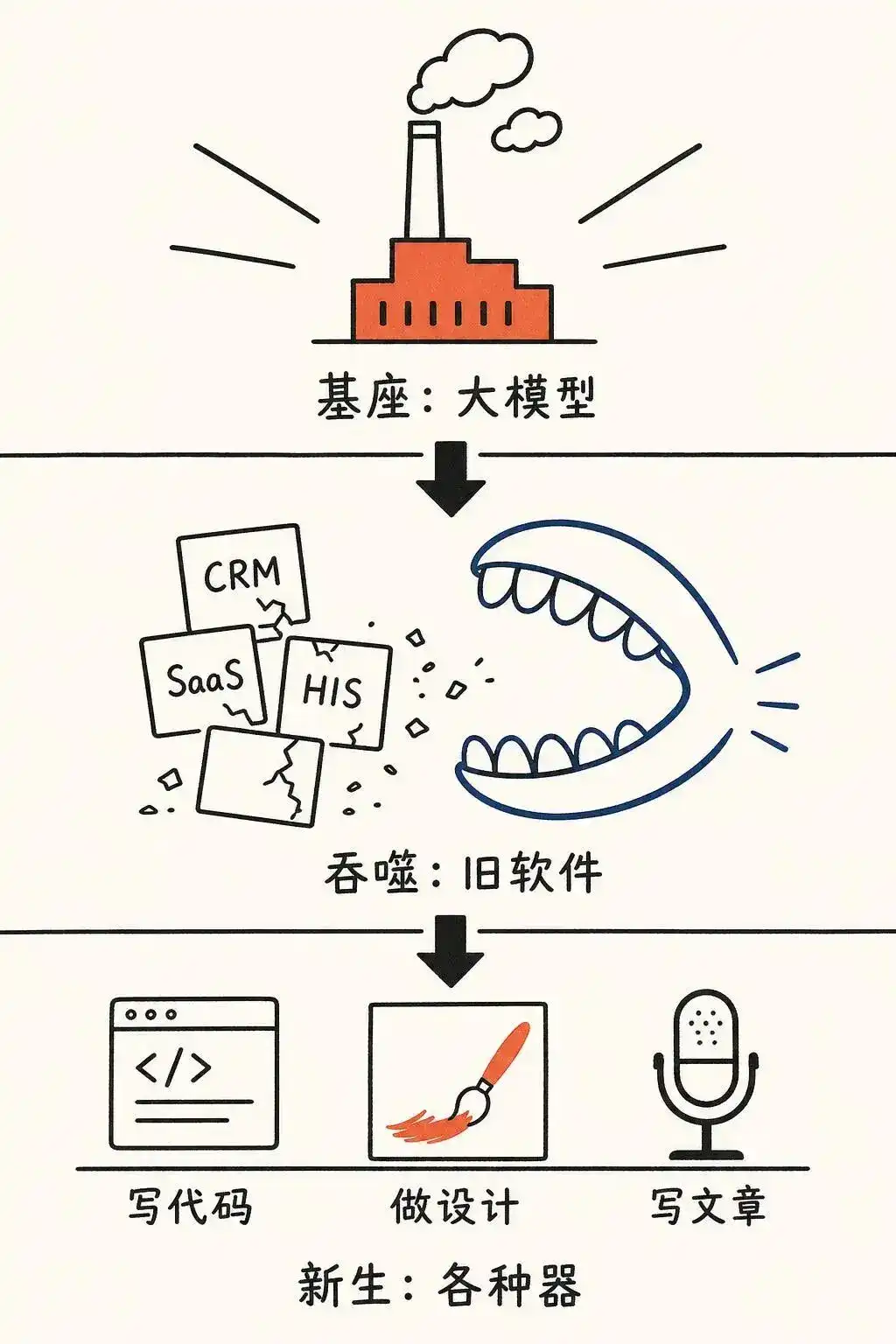
Claude Code is for writing code, Claude Design is for design, VoiceDrop is for writing articles. Using the same large model, placed into different devices, solves completely different problems.

With only electricity, only water, without a washing machine, clothes still can't be washed. Imagine, a power plant produces a massive amount of electricity, electricity is very powerful, and then what? Without a washing machine, can this pile of electricity wash clothes by itself?

Intelligence is great, but most things in the world require the combination of multiple elements to work, just as a washing machine needs to combine elements like electricity, water, and even a tub; large models might be able to replace a lot in the field of software, but application scenarios in the world that require only one element are not many.

Here's a current example. Now we have large models, but having just a large model isn't enough. There needs to be a layer above it called Harness—this layer has only recently emerged—it interacts with code, and finally forms something truly usable. A large model by itself can't write code. Of course, the core of Claude Code, frankly, I could write it with a little over fifty lines; a bit longer with a few more lines, and it can run and write programs. But you have to see: with only a large model and without this outer layer, it's still not easy to use—that is, the intelligence of a large model, if not combined with the code execution capabilities provided by the operating system, relying on the large model for calculations isn't economical, and sometimes even impossible.

The core value of this interface layer is to help us put that intelligence, which is like electricity or water, into a specific application scenario, turning it into a machine that can solve specific problems.

Now, of course, the logic behind "devour everything," I don't completely disbelieve it either.

What it primarily refers to is existing software. So far, we have built up a very, very large layer of software—things pieced together by many rules, forms, buttons, workflows, a lot of it. Massive numbers of filters, fixed templates, a bunch of backend operations, many SaaS detection features. And all the various things we used to know as "M" systems, whether CRM, or HIS (hospital information system), all sorts of so-called "systems," "software," and the like, a whole pile.

This layer, I believe large language models will indeed devour quite a bit of.

Why? Because these original software programs were, by nature, clear, computer-executable instructions, solidified and repeatedly executed—we call this software. And this is precisely what large language models are most adept at chewing through.

But.

Within this layer, besides software, there are many other things. Customer information. Execution capabilities—like when you book a flight ticket, the actual capability to move a plane, to transport a person from here to there. Also trust. Many things in the physical world. These, I don't think will be devoured.

After devouring that layer, it actually opens up a much larger space—the new type of software on top of it.

The interface of the new software will certainly be flow-based, it likely won't solidify as many rules as before. After handing all those rules to AI, think about it, the CRM we could achieve like Salesforce before, that was already the pinnacle of human effort, using all possible strength. But if this part becomes relatively easier to solve, then what everyone will do next is to unleash even more imagination and possibilities on top of it—and that part is precisely what we haven't seen yet.

This is where we often make mistakes. When a new technology arrives, because we can't see the bigger road beyond it, we can only stare at the part in front of us. The leaf blocks the view, obscuring the mountain.

Let alone this kind of trend judgment. I remember back in 2004, a group of friends were complaining, saying that the entire internet could no longer produce companies bigger than Sina, Sohu, and NetEase, that the internet was nearly over, and they would monopolize everything. And look how many years have passed since then? The world turned upside down. We would be crying at our own shortsightedness back then.

So my proposition is this: Are large models important? Yes, they are the foundation, the main driving force in recent times. But once they become stable, continuously provided things, then various kinds of "machines" and "devices" on top are needed to solve specific problems. That thick layer—where it's used, how it's used—is precisely the mainstream of the second wave of this trend.

The phrase "devour everything" is too imprecise. In this world, which thing, which social form, which technology has ever truly devoured everything?

Finding opportunities in the places it does devour—that's the truly important thing.

Tiền kỹ thuật số thịnh hành

Câu hỏi Liên quan

QWhat is the core viewpoint of the author, the founder of Baixing.com, regarding the statement 'Large language models will devour everything'?

AHe believes it only half. He views large language models as a crucial foundational platform, like electricity or the internet, but argues that they alone cannot 'devour everything.' True value and transformation come from applying this foundational intelligence to specific scenarios through various 'machines' or applications built on top of it.

QHow does the author use the analogy of electricity to explain the role of large language models?

AThe author compares large language models to electricity. Electricity itself is a foundational utility (like a power plant), but it doesn't 'devour everything.' Its real-world impact comes from the diverse array of appliances (like washing machines, TVs) built on top of it to solve specific problems. Similarly, LLMs provide base intelligence, but they need to be integrated into specific applications (like Claude Code for programming) to be truly useful and transformative.

QAccording to the article, what specific layer of existing technology does the author believe large language models are likely to 'devour' or replace?

AThe author believes large language models are likely to replace a significant portion of existing, rule-based, fixed-template software systems, such as many CRM, HIS, and various SaaS applications. These systems are composed of clear, computer-executable instructions, which is precisely what LLMs are good at handling and generating.

QWhat does the author identify as elements that will NOT be 'devoured' by large language models, even as software systems change?

AThe author identifies several elements that will not be devoured: customer information, execution capabilities (like physically moving people or goods), trust, and many aspects of the physical world. These components are essential and exist alongside or beyond the software logic that LLMs might replace.

QWhat is the 'second wave' of the AI浪潮 (wave/tide) that the author predicts will follow the establishment of large language models as a stable foundation?

AThe author predicts the 'second wave' will be focused on the thick layer of applications built *on top* of the large language model foundation. This involves creating the various 'machines' and 'tools' that leverage the base intelligence to solve concrete, specific problems in different domains. This application layer is where the next major phase of innovation and opportunity lies.

Nội dung Liên quan

Zuckerberg Bắt Đầu Đặt Cược Vào Thị Trường Dự Đoán, Trong Khi Các Quốc Gia Châu Á Vẫn Xem Nó Là Cờ Bạc

**Mark Zuckerberg Bắt Đầu Đặt Cược vào Thị Trường Dự Đoán, Trong Khi Các Quốc Gia Châu Á Vẫn Xem Nó Là Cờ Bạc** Thị trường dự đoán, nơi người tham gia giao dịch các hợp đồng về kết quả sự kiện tương lai, đã phát triển thành một ngành công nghiệp chính thống với khối lượng giao dịch hàng tháng lên tới 14 tỷ USD. Sự tham gia của Meta với dự án "Arena" do Mark Zuckerberg dẫn đầu củng cố xu hướng này. Cơ chế hoạt động đơn giản: hợp đồng thanh toán 1 USD nếu sự kiện xảy ra và 0 USD nếu không. Giá giao dịch thể hiện xác suất thời gian thực, được xác định bởi cơ chế oracle sau khi sự kiện kết thúc. Sức mạnh cốt lõi nằm ở nguyên tắc "skin in the game" – người tham gia mất tiền nếu dự đoán sai, khiến thông tin họ cung cấp có độ tin cậy cao. Trong khi các thị trường phương Tây như Mỹ đang hợp pháp hóa và tích hợp thị trường dự đoán vào hệ thống tài chính, nhiều quốc gia châu Á chủ yếu vẫn xem chúng là hình thức cờ bạc và hạn chế tham gia. Cách tiếp cận này dẫn đến ba vấn đề: 1) Tạo ra cơ hội trốn tránh quy định và dòng vốn chảy ra nước ngoài; 2) Mất quyền kiểm soát đối với cơ sở hạ tầng thông tin quan trọng, vì dữ liệu xã hội giá trị được tích lũy ở các nền tảng nước ngoài; 3) Người dùng không được bảo vệ khi buộc phải sử dụng các nền tảng không được kiểm soát. Bài viết kết luận rằng thay vì ngăn cản, nhiệm vụ cấp bách của châu Á là thảo luận cách thức chịu trách nhiệm tích hợp các thị trường này vào khuôn khổ chính thức, biến dữ liệu chúng tạo ra thành tài sản cho xã hội và thiết lập cơ chế giám sát minh bạch.

Foresight News5 phút trước

Zuckerberg Bắt Đầu Đặt Cược Vào Thị Trường Dự Đoán, Trong Khi Các Quốc Gia Châu Á Vẫn Xem Nó Là Cờ Bạc

Foresight News5 phút trước

Không chỉ là khóa riêng tư: Từ ví, L2 đến chuỗi cung ứng, làm thế nào để bảo vệ biên giới an ninh của Web3?

Tháng 6 vừa qua đã chứng kiến hàng loạt sự cố bảo mật trong hệ sinh thái tiền mã hóa, gây tổn thất hàng chục triệu USD, cho thấy rủi ro không chỉ đến từ việc bảo vệ khóa cá nhân. Sự cố với ví SecondFi trên Cardano nhấn mạnh tầm quan trọng của việc triển khai chữ ký mã hóa đúng đắn ở tầng cơ sở của ví. Một lỗi trong việc tạo chữ ký có thể khiến khóa riêng tư bị phơi bày chỉ từ dữ liệu giao dịch công khai trên chuỗi, ngay cả khi người dùng không tiết lộ cụm từ khôi phục. Điều này cho thấy sự cần thiết của việc sử dụng ví có mã nguồn mở cho các thành phần cốt lõi, luôn cập nhật phiên bản mới và tách biệt tài sản có giá trị lớn vào ví lạnh. Các lớp giải pháp mở rộng (L2) như Aztec Connect (phiên bản cũ) và Taiko cũng bộc lộ lỗ hổng. Chúng liên quan đến việc thiếu ràng buộc trong mạch chứng minh zk, khóa xác thực bị rò rỉ hoặc lỗi logic dẫn đến ngừng tạo khối (như trường hợp Base). Những sự kiện này nhắc nhở rằng bảo mật L2 không chỉ là khả năng chống đánh cắp, mà còn là độ tin cậy của chuỗi, cơ chế rút tiền và khả năng phục hồi. Người dùng nên hiểu rõ các cơ chế này, sử dụng cầu nối chính thức và tránh giữ lượng tài sản lớn không cần thiết trên các L2 mới hoặc ít được kiểm chứng. Cuộc tấn công vào nhà cung cấp dịch vụ bên thứ ba của Polymarket minh họa cho mối đe dọa từ chuỗi cung ứng. Kịch bản độc hại được tiêm vào giao diện trang web hợp pháp thông qua một phụ thuộc bị xâm nhập, đánh cắp tài sản mà không cần khai thác hợp đồng thông minh. Điều này cho thấy "URL đúng" không đảm bảo toàn bộ mã code đều an toàn. Để giảm thiểu rủi ro, người dùng nên sử dụng ví riêng biệt cho tương tác DApp hàng ngày, kiểm tra kỹ thông tin trên cửa sổ ký duyệt trước khi phê duyệt, và dừng ngay các giao dịch khi giao diện có biểu hiện bất thường. Tóm lại, bảo mật Web3 ngày nay đòi hỏi sự bảo vệ toàn diện trên toàn bộ hành trình tương tác, từ ví, giao diện, L2 đến việc thanh toán cuối cùng. Thói quen an toàn hiệu quả bao gồm: cách ly tài sản dài hạn, dùng số tiền nhỏ cho giao dịch thường ngày, hạn chế cấp quyền cho DApp lạ và luôn xác minh các thao tác rủi ro cao. Phòng thủ phải là một tập hợp các thói quen hoàn chỉnh, vượt xa việc chỉ bảo vệ khóa cá nhân.

marsbit1 giờ trước

Không chỉ là khóa riêng tư: Từ ví, L2 đến chuỗi cung ứng, làm thế nào để bảo vệ biên giới an ninh của Web3?

marsbit1 giờ trước

OpenAI Cuối Cùng Có Thể Tạo Ra Lợi Nhuận Không?

Gần đây, OpenAI và Anthropic đều lên kế hoạch IPO với định giá gần nghìn tỷ USD, phản ánh sự lạc quan của nhà đầu tư về triển vọng sinh lời. Tuy nhiên, tăng trưởng doanh thu không đảm bảo sẽ có lợi nhuận. Hiện không có công ty mô hình lớn nào độc lập sinh lời. Phân tích thị trường API gọi mô hình lớn cho thấy đây là thị trường cạnh tranh độc quyền: số lượng nhà cung cấp nhiều, mức độ tập trung thấp, rào cản gia nhập thấp hơn dự kiến và cạnh tranh gay gắt. Mặc dù nhu cầu tăng trưởng theo cấp số nhân, việc mở rộng nguồn cung nhanh chóng khiến các công ty khó có lãi. Các công ty có thể đạt được lợi nhuận siêu ngạch ngắn hạn nhờ khác biệt hóa sản phẩm, nhưng khó duy trì do rào cản kỹ thuật hạn chế, độ co giãn giá của cầu cao và lòng trung thành người dùng thấp. Về lâu dài, các công ty thua lỗ có thể rút lui, đẩy thị trường từ cạnh tranh độc quyền sang độc quyền nhóm. Tuy nhiên, trong cấu trúc độc quyền nhóm, khả năng sinh lời vẫn không chắc chắn, phụ thuộc vào việc các công ty cạnh tranh bằng giá hay bằng số lượng. Nếu không phối hợp chiến lược hoặc xây dựng rào cản khác biệt hiệu quả, họ có thể không đạt được lợi nhuận bền vững. Tóm lại, dù giá trị công nghệ và tiềm năng nhu cầu của mô hình lớn là rõ ràng, các công ty chỉ đơn thuần "bán token" có thể không sinh lời. Nhà đầu tư cần xem xét định giá một cách thận trọng. Các công ty cần lựa chọn cẩn thận mô hình kinh doanh và phân khúc thị trường. Các mô hình như "AI+" (nhúng AI vào sản phẩm/dịch vụ sẵn có) hoặc hợp đồng tùy chỉnh có thể tạo ra rào cản khác biệt và lòng trung thành khách hàng cao hơn, từ đó có khả năng sinh lời bền vững hơn so với mô hình API thuần túy.

marsbit1 giờ trước

OpenAI Cuối Cùng Có Thể Tạo Ra Lợi Nhuận Không?

marsbit1 giờ trước

Giao dịch

Giao ngay

Bài viết Nổi bật

Làm thế nào để Mua PEOPLE

Chào mừng bạn đến với HTX.com! Chúng tôi đã làm cho mua ConstitutionDAO (PEOPLE) trở nên đơn giản và thuận tiện. Làm theo hướng dẫn từng bước của chúng tôi để bắt đầu hành trình tiền kỹ thuật số của bạn.Bước 1: Tạo Tài khoản HTX của BạnSử dụng email hoặc số điện thoại của bạn để đăng ký tài khoản miễn phí trên HTX. Trải nghiệm hành trình đăng ký không rắc rối và mở khóa tất cả tính năng. Nhận Tài khoản của tôiBước 2: Truy cập Mua Crypto và Chọn Phương thức Thanh toán của BạnThẻ Tín dụng/Ghi nợ: Sử dụng Visa hoặc Mastercard của bạn để mua ConstitutionDAO (PEOPLE) ngay lập tức.Số dư: Sử dụng tiền từ số dư tài khoản HTX của bạn để giao dịch liền mạch.Bên thứ ba: Chúng tôi đã thêm những phương thức thanh toán phổ biến như Google Pay và Apple Pay để nâng cao sự tiện lợi.P2P: Giao dịch trực tiếp với người dùng khác trên HTX.Thị trường mua bán phi tập trung (OTC): Chúng tôi cung cấp những dịch vụ được thiết kế riêng và tỷ giá hối đoái cạnh tranh cho nhà giao dịch.Bước 3: Lưu trữ ConstitutionDAO (PEOPLE) của BạnSau khi mua ConstitutionDAO (PEOPLE), lưu trữ trong tài khoản HTX của bạn. Ngoài ra, bạn có thể gửi đi nơi khác qua chuyển khoản blockchain hoặc sử dụng để giao dịch những tiền kỹ thuật số khác.Bước 4: Giao dịch ConstitutionDAO (PEOPLE)Giao dịch ConstitutionDAO (PEOPLE) dễ dàng trên thị trường giao ngay của HTX. Chỉ cần truy cập vào tài khoản của bạn, chọn cặp giao dịch, thực hiện giao dịch và theo dõi trong thời gian thực. Chúng tôi cung cấp trải nghiệm thân thiện với người dùng cho cả người mới bắt đầu và người giao dịch dày dạn kinh nghiệm.

Tổng lượt xem 771Xuất bản vào 2024.12.12Cập nhật vào 2026.06.02

Làm thế nào để Mua PEOPLE

Thảo luận

Chào mừng đến với Cộng đồng HTX. Tại đây, bạn có thể được thông báo về những phát triển nền tảng mới nhất và có quyền truy cập vào thông tin chuyên sâu về thị trường. Ý kiến ​​của người dùng về giá của PEOPLE (PEOPLE) được trình bày dưới đây.

活动图片