Completely Free, Open-Source Alternative to Claude Science, Use DeepSeek/GLM as You Like

marsbitXuất bản vào 2026-07-07Cập nhật gần nhất vào 2026-07-07

Tóm tắt

Free, Open-Source Alternative to Claude Science: OpenScience Lets Researchers Use Any AI Model Like DeepSeek or GLM Shortly after Anthropic launched Claude Science, a specialized AI workbench for scientific research, the open-source community responded with its own solution: OpenScience. Developed by YC-backed Synthetic Sciences, this platform offers a full AI research workflow covering literature review, hypothesis generation, code experimentation, and paper writing. Unlike Claude Science, which is restricted to macOS/Linux, paid users, and only Claude models, OpenScience is model-agnostic and free. Researchers can use any AI model—DeepSeek, GLM, Claude, GPT, or local models via Ollama—simply by providing their own API keys, keeping data private. OpenScience features over 250 editable research skill packs, more than four times Claude Science's initial offering, and supports one-command installation. It emphasizes openness, arguing that scientific AI tools should not be controlled by a single company. The project includes a clear disclaimer of no affiliation with Anthropic, reflecting caution in the open-source community.

Researchers are ecstatic!!

Less than a week after Anthropic's Claude Science launched, the open-source community has presented its own answer.

An AI research team incubated by YC, has delivered 'the open-source alternative to Claude Science' — OpenScience.

It's also a full-process AI research workbench covering literature search, hypothesis generation, code experiments to paper writing, but it is not tied to any single model provider.

DeepSeek, GLM, Claude, GPT... regardless of domestic or international, use whichever one you want.

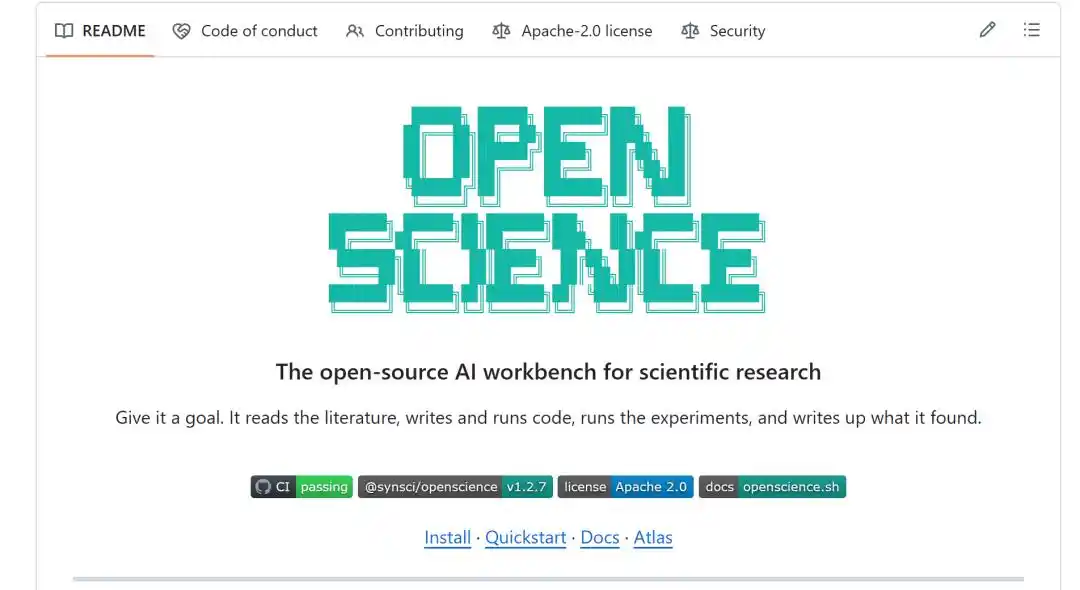
Moreover, the project adopts the developer-friendly Apache 2.0 license and can be installed with just one command.

Once the news broke, the project directly trended on X. People bluntly stated:

This is what scientific AI should look like. (Anthropic: Just say my name.)

Claude Science is powerful, but it's unusable...

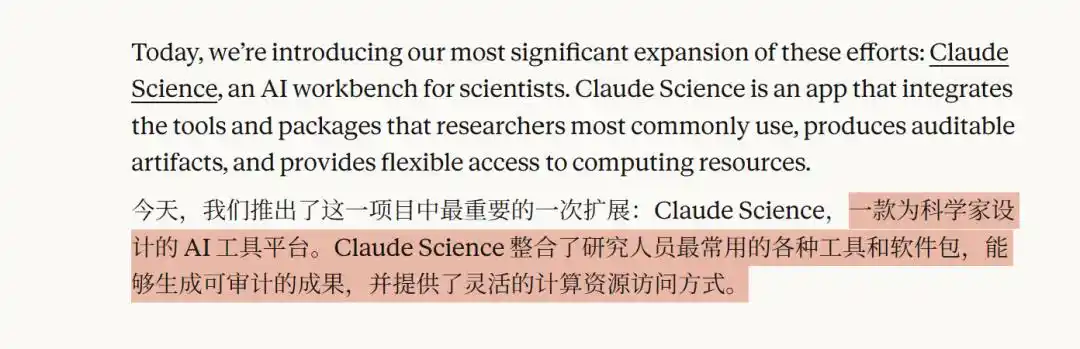
About 5 days ago, Anthropic officially launched Claude Science at a closed-door event by MIT Technology Review.

This is an AI workbench specifically for scientists, providing various tools and software packages most commonly used by researchers.
For example, previously, a researcher completing a study had to search literature on PubMed, write code in Jupyter, run statistics in R, connect to a cluster via SSH to submit tasks, and then use various tools to create charts and write papers.

Switching between a dozen windows, the mere 'transitions' between tools consumed a huge amount of energy.

What Claude Science aims to do is bundle all of this into the same workbench.

Specifically, it achieves several key integrations:

At the database and toolchain level, it comes with built-in connectors to over 60 scientific databases and pre-configured skill packages, covering common research fields like genomics, single-cell analysis, proteomics, structural biology, chemoinformatics, etc.

You ask in natural language, and specialized Agents automatically perform cross-database queries — no need to manually search databases like UniProt, PDB, Ensembl, ChEMBL, GEO one by one.

It also integrates with NVIDIA's BioNeMo Agent Toolkit, allowing direct connection to life science models like Evo 2, Boltz-2, OpenFold3.
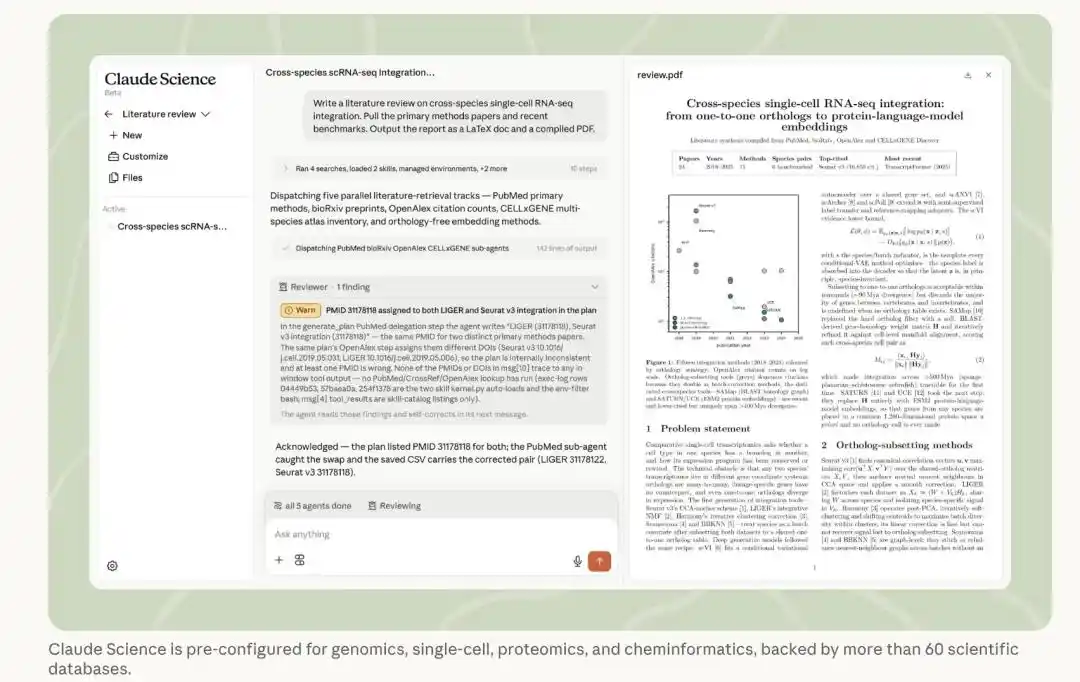
At the execution level, it introduces a multi-agent architecture.

The main Agent handles overall planning, sub-agents process different tasks in parallel, and there is a Reviewer Agent specifically responsible for fact-checking, such as verifying citations, validating calculation results, and flagging potential errors.

The generated output is not just text. It can natively render content like 3D protein structures, genome browser tracks, chemical structure formulas.

Moreover, each chart retains the generation code, runtime environment, natural language description, and complete conversation history.

In some scenarios, scientists can even modify charts with a single sentence, and the system automatically rewrites the underlying code.

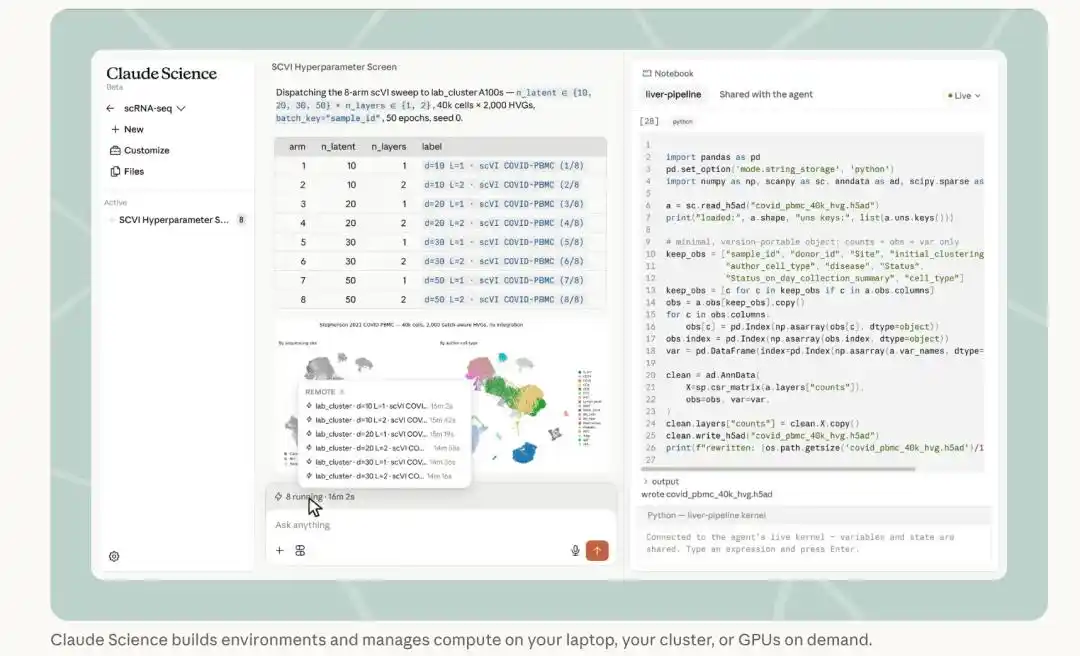
At the computing power level, Claude Science can directly interface with your lab's existing infrastructure.

Be it notebooks, Linux servers, or HPC cluster login nodes, it can connect via SSH or use a Modal account to call cloud GPUs on demand, scaling from a single GPU to hundreds.

Large-scale datasets only need to be loaded once; sensitive data never leaves your own system. Only the context needed for each step of analysis is sent to Claude.
Early beta users have already produced some practical cases.

Jerome Lecoq, a neuroscientist at the Allen Institute, used it to build a multi-agent 'computational review template' containing about 20 custom skills, letting sub-agents read thousands of papers, extract core viewpoints and quantitative data, and then generate review chapters one by one.

To put it simply, writing a review used to take two years; now he has about 10 drafts in hand —

Many exceed 100 pages, and all citations have been verified by the Reviewer Agent.

Stephen Francis from the UCSF Brain Tumor Center used it for molecular epidemiological studies of glioma, running germline variant analysis.

He said Claude Science compressed the previously required time to one-tenth, and his team independently validated the results, confirming the analysis was both fast and reliable.

Combined with the evaluation of AI research capabilities by Harvard physicist Matthew Schwartz this past March, Claude's current level is roughly equivalent to a second-year graduate student.

He published a guest post titled "Vibe Physics: The AI Grad Student" on the Anthropic official blog, documenting his entire process of using Claude Opus 4.5 to complete a theoretical physics paper.

His conclusion at the time was:

Current AI research capability is roughly equivalent to a second-year grad student — can work, doesn't complain about being tired, but needs a supervisor to monitor every step.

This assessment was later incorporated by Anthropic into the Claude Science technical documentation as a calibration point for the product's positioning.

However, Claude Science currently has several hard limitations:

Only supports macOS and Linux

Only available to Pro/Max/Team/Enterprise paying users

Only Claude's own models can be used on the platform

These thresholds stacked together, especially for domestic research teams in China, make Claude Science something "visible but out of reach."

Good News: An Open-Source Alternative is Here

Targeting the above limitations, the open-source project OpenScience emerged.

The team behind it is called Synthetic Sciences, founded in San Francisco in 2025, and just graduated from the YC Winter 2026 batch this year.

The founding team's ambition is not small: to build a platform that lets scientists directly delegate complex research tasks to "AI co-scientists," enabling AI to autonomously run the entire chain from literature review to hypothesis generation to experiment execution to paper writing.

They have an internal core belief:

Scientific foundation models need to possess genuine 'research taste,' and this taste cannot be achieved by simply scaling parameters. It must be a two-pronged approach: product and model. Use the product to collect high-quality scientific process data, then use this data to train models with taste.

OpenScience is the first product landing on this path.
Although OpenScience's mission is the same as Claude Science's, they have a fundamental difference:

Model-agnostic.

In Synthetic Sciences' own words:

Scientific AI should be open. The tools humans use for exploration and discovery should not be monopolized by one company, nor should that company decide who is qualified to use them.

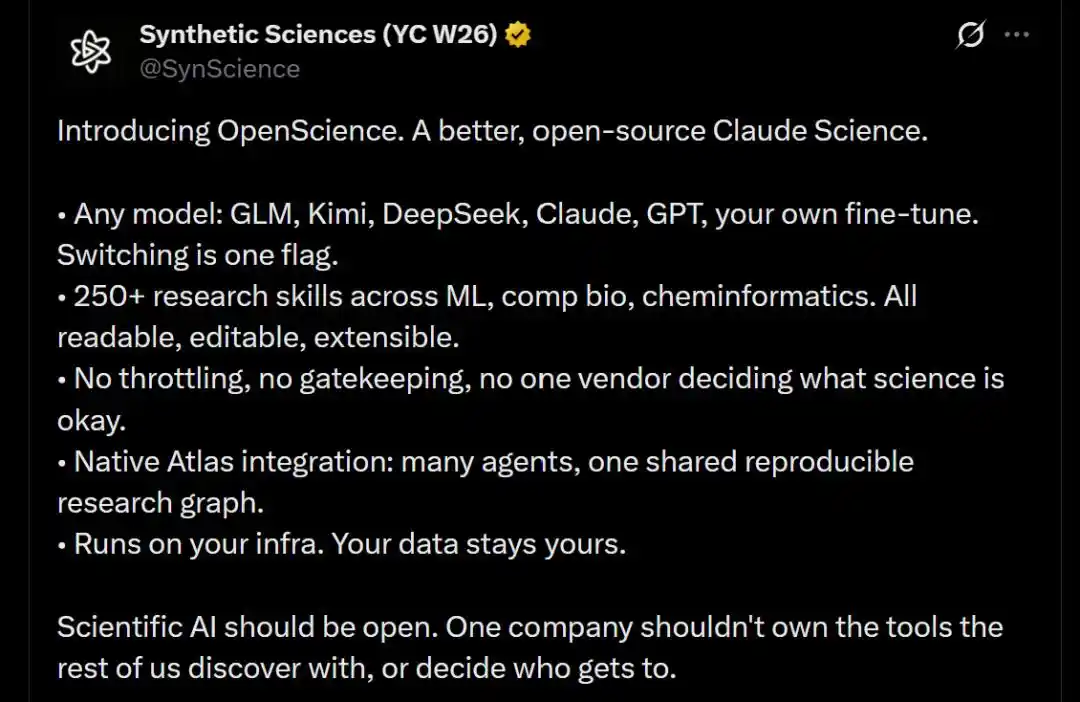
Therefore, on this platform, Anthropic, OpenAI, Google, DeepSeek, GLM... as long as you have an API Key, you can connect directly.

You can even run local models, deploy via Ollama, without a single byte of your data leaving your machine.

Your Key stays locally, requests go directly to the model provider, not passing through any intermediate server.

Moreover, OpenScience supports switching models per request.

Within the same workbench, you can use Claude for this step, then switch to DeepSeek for the next, without changing any configuration.
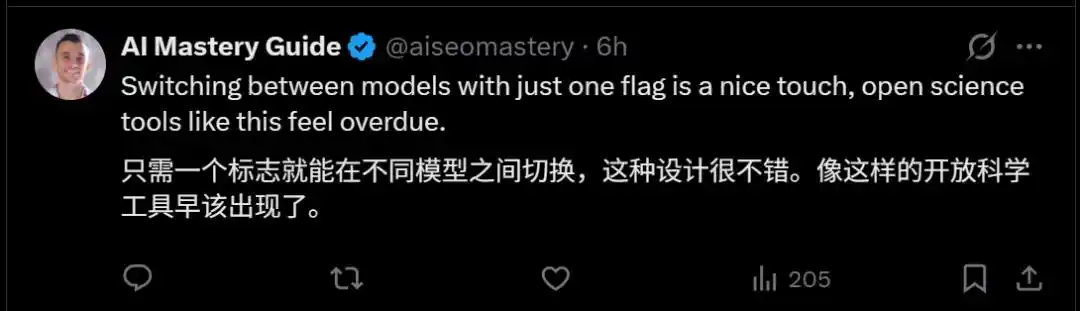
Feature-wise, OpenScience is even more aggressive than Claude Science —

Built-in with over 250 research skill packages, more than 4 times that of Claude Science, covering ML, computational biology, chemoinformatics, etc., and all are readable, editable, and extensible.
Installation is also simple, just one command in the terminal:

Open and use immediately, the workbench automatically pops up in the browser. On first run, select a model source, fill in the API Key, and you can start working.

You can also install it globally:

If configuring Keys is troublesome, the team also provides a hosted platform called Atlas —

Top up a wallet to directly call various cutting-edge models without configuring Keys one by one, plus persistent research graphs and cloud computing power.

But Atlas is not mandatory. You can use OpenScience fully for free with your own Keys, no barrier.

One More Thing

Interestingly, if you scroll to the very bottom of OpenScience's GitHub page, you'll see a statement added specifically:

OpenScience is an independent project. It is not affiliated with, endorsed by, or sponsored by Anthropic. “Claude” is a trademark of Anthropic, PBC, used here only to describe compatibility.
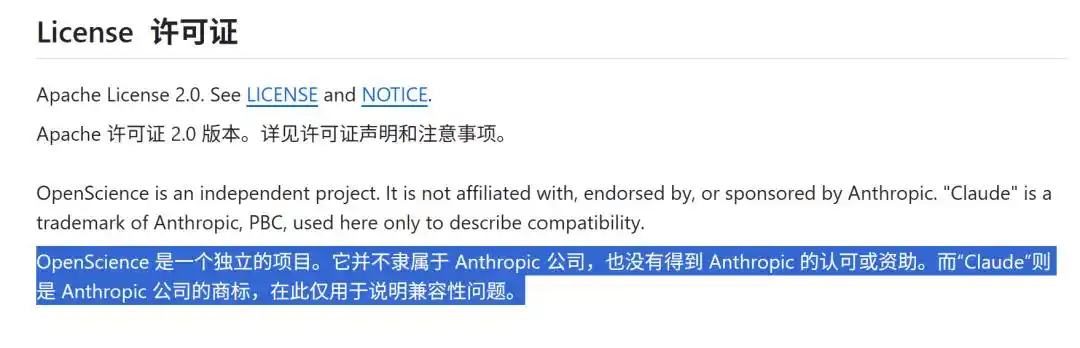
Translation: We are an independent project, with no relation to Anthropic whatsoever. Mentioning "Claude" is purely about describing compatibility, don't read too much into it.

It seems the impression left by the "lobster" incident on the entire open-source community is still too profound.

With OpenClaw changing names several times before, OpenScience this time directly welded the disclaimer onto the first version of the README.

Nothing else — survive first, then talk about being an alternative (doge).

Open-source address:

https://x.com/i/trending/2073904804829741364?s=20

Reference links:

[1]https://x.com/SynScience/status/2073829478393086311?s=20

[2]https://x.com/i/trending/2073904804829741364?s=20

[3]https://www.openscience.sh/

[4]https://www.anthropic.com/news/claude-science-ai-workbench

This article is from WeChat official account "QbitAI", author: Yi Shui

Tiền kỹ thuật số thịnh hành

Câu hỏi Liên quan

QWhat is OpenScience and how does it compare to Claude Science?

AOpenScience is an open-source AI scientific research workbench that serves as a free alternative to Anthropic's Claude Science. Unlike Claude Science, which is proprietary and limited to Claude models for paid users, OpenScience is model-agnostic, allowing users to freely choose and switch between various AI models like DeepSeek, GLM, Claude, or GPT via API keys or local deployments. It is released under the Apache 2.0 license and offers more than 250 research skill packages, significantly more than Claude Science's 60+.

QWhat are the key limitations of Claude Science mentioned in the article?

AClaude Science has several key limitations: 1) It only supports macOS and Linux operating systems. 2) It is exclusively available to Pro, Max, Team, and Enterprise paying users. 3) Users are restricted to using only Anthropic's proprietary Claude models on the platform. These restrictions, especially the payment requirement and model lock-in, make it inaccessible to many researchers, particularly in certain regions.

QHow does OpenScience address data privacy and local deployment?

AOpenScience prioritizes data privacy and flexibility by supporting local model deployment. Users can run models locally using tools like Ollama, ensuring that sensitive research data never leaves their own machines. API keys are also stored locally, and requests are sent directly to the model provider without passing through any intermediate servers, giving researchers full control over their data and computational environment.

QWhat was the early user feedback on Claude Science's capabilities?

AEarly internal testers reported positive results. A neuroscientist at the Allen Institute used Claude Science to create a multi-agent computational review template, enabling the generation of lengthy, citation-verified review papers in a fraction of the traditional time (e.g., producing ~10 papers over 100 pages each that previously would have taken years). A researcher at UCSF's Brain Tumor Center used it for molecular epidemiology studies, reducing the required time for germline variant analysis to one-tenth while maintaining result accuracy verified by his team.

QWhat is the stated long-term vision of the Synthetic Sciences team behind OpenScience?

AThe Synthetic Sciences team aims to build a platform where scientists can delegate complex research tasks to 'AI co-scientists' that autonomously handle the entire research pipeline from literature review to hypothesis generation, experiment execution, and paper writing. They believe that truly capable scientific foundation models require 'research taste,' which cannot be achieved by merely scaling model parameters. Instead, it requires a product-model co-development approach, where the product collects high-quality research process data to train models with genuine scientific intuition.

Nội dung Liên quan

‘Kích thích dân chủ’ với cái giá là an ninh? Bên trong vụ khai thác 20 triệu đô la của Bonk

BonkDAO vừa trở thành nạn nhân mới nhất của một vụ tấn công tiền mã hóa, với thiệt hại khoảng 20 triệu USD. Vụ việc xảy ra do một "đề xuất quản trị độc hại" được kẻ tấn công tạo ra sau khi tích lũy đủ token BONK. Với ngưỡng phê duyệt chỉ 1%, đề xuất này đã cho phép chuyển 4,4 nghìn tỷ BONK từ kho bạc vào ví của hacker. Các nhà phân tích bảo mật chỉ trích cấu hình ngưỡng bỏ phiếu quá thấp và thiếu các biện pháp an toàn như thời gian khóa hay yêu cầu nhiều lần phê duyệt cho các giao dịch lớn. Một chuyên gia nhận định, đây là một lỗ hổng bảo mật vận hành điển hình, đồng thời đặt câu hỏi về việc đánh đổi an ninh để "khuyến khích tính dân chủ" thông qua mô hình DAO. Ngay sau thông tin vụ việc, giá đồng BONK đã giảm 10%. Tuy nhiên, dữ liệu on-chain cho thấy các ví cá voi (lớn) vẫn tiếp tục tích lũy từ giữa tháng 6 và nhu cầu không bị ảnh hưởng đáng kể. Tương lai giá sẽ phụ thuộc vào diễn biến thị trường và tâm lý sau sự kiện này. Dự án cho biết đang phối hợp với cơ quan thực thi pháp luật, Quỹ Solana và các sàn giao dịch để xử lý sự cố.

ambcrypto32 phút trước

‘Kích thích dân chủ’ với cái giá là an ninh? Bên trong vụ khai thác 20 triệu đô la của Bonk

ambcrypto32 phút trước

Zoomex X Space Tóm Tắt Với David James Và Ban Giao Dịch World Cup

Zoomex đã tổ chức tập thứ ba của X Space Phiên bản World Cup với sự tham gia của thủ môn huyền thoại David James và các nhà giao dịch Crypto Kid, Farouk Bashar, Theo Mercier. James chia sẻ sâu về tâm lý thi đấu, đặc biệt là trong những tình huống đối mặt với áp lực và loạt đá luân lưu. Ông nhấn mạnh tầm quan trọng của sự chuẩn bị kỹ lưỡng, phân tích thông tin và việc luyện tập tinh thần – những yếu tố quyết định trong khoảnh khắc then chốt, đồng thời so sánh trực tiếp với sự chuẩn bị cần thiết trong giao dịch tài chính. James cũng đánh giá về các đội bóng tại World Cup, chỉ ra sức mạnh đa dạng của Pháp và thách thức tâm lý với những đội chưa để thủng lưới. Ông bày tỏ niềm tin mạnh mẽ rằng Anh Quốc có đầy đủ khả năng để vô địch giải đấu. Chương trình là một phần trong cam kết từ thiện của Zoomex, với 1.000 USDT sẽ được quyên góp cho UEFA Foundation nếu dự đoán vô địch của James thành hiện thực. Xuyên suốt buổi thảo luận, chủ đề chính được khẳng định: thành công, dù trên sân cỏ hay thị trường, đều bắt nguồn từ sự chuẩn bị kỹ càng để biến bản năng thành hành động quyết đoán và chính xác.

TheNewsCrypto43 phút trước

Zoomex X Space Tóm Tắt Với David James Và Ban Giao Dịch World Cup

TheNewsCrypto43 phút trước

Unitree hối hả lên sàn, bí ẩn thực sự là 42 tỷ nhận được sẽ tiêu như thế nào

Ngày 6/7, Ủy ban Chứng khoán Trung Quốc phê duyệt đơn đăng ký phát hành lần đầu ra công chúng (IPO) trên STAR Market của Unitree Robotics. Công ty này, với biệt danh "công ty làm chó robot", dự kiến huy động khoảng 4,202 tỷ nhân dân tệ (42,02 tỷ Yên), định giá sau IPO có thể lên tới 50 tỷ nhân dân tệ. Khởi đầu từ robot bốn chân, Unitree đã nhanh chóng mở rộng sang lĩnh vực robot hình người, với tốc độ ra mắt sản phẩm ấn tượng. Họ đã xây dựng một ma trận sản phẩm toàn diện, từ mức giá tiêu dùng 26.900 Yên (R1) đến phiên bản công nghiệp cao cấp. Sự tăng trưởng thương mại hóa của Unitree rất nổi bật, doanh thu năm 2025 đạt 1,71 tỷ nhân dân tệ, lợi nhuận 288 triệu, với hơn 5.500 robot hình người và hơn 30.000 robot bốn chân đã xuất xưởng. Thị trường nước ngoài đóng góp khoảng 40% doanh thu. Số tiền huy động được từ IPO sẽ được sử dụng để tăng cường nghiên cứu, phát triển sản phẩm mới và xây dựng cơ sở sản xuất, nhằm mục tiêu tiếp tục giảm chi phí và nâng cao trí tuệ cho robot. Tuy nhiên, Unitree đối mặt với thách thức lớn trong một thị trường cạnh tranh ngày càng khốc liệt, với các đối thủ như Ubtech, Tesla Optimus, Fourier và 1X Technologies. Tương lai của Unitree sẽ phụ thuộc vào ba yếu tố chính: 1) Tìm được ứng dụng ngành then chốt thứ hai ngoài robot bốn chân (ví dụ: hậu cần sân bay như thử nghiệm tại Sân bay Haneda Tokyo); 2) Duy trì lợi thế về giá cả trong khi đảm bảo chất lượng và độ ổn định; 3) Phát triển thành công trí tuệ thể hiện (embodied AI), như hợp tác với NVIDIA trên nền tảng H2 Plus. Con đường chiến lược có khả năng nhất của họ là kết hợp "công cụ phát triển + trường hợp điển hình ngành", sử dụng sản phẩm giá thấp để mở rộng thị phần và tích lũy dữ liệu, đồng thời xây dựng các dự án tiêu biểu trong các ngành công nghiệp cụ thể. Việc IPO thành công chỉ là bước khởi đầu, cuộc đua thực sự trong ngành robot hình người mới chỉ bắt đầu.

marsbit1 giờ trước

Unitree hối hả lên sàn, bí ẩn thực sự là 42 tỷ nhận được sẽ tiêu như thế nào

marsbit1 giờ trước

Đi Sâu Vào Đội Hình Các Đối Tác Của Open USD: Nhìn Vào Ai Đang Tham Gia Là Có Thể Thấy Rõ Dòng Tiền Đang Chảy Về Đâu

Bài viết phân tích sâu về danh sách hơn 140 đối tác sáng lập của Open USD, một stablecoin mới, lập luận rằng danh sách này quan trọng hơn chính đồng tiền và tiết lộ dòng chảy vốn trong tương lai. Sự tham gia của các công ty hàng đầu từ nhiều lĩnh vực - như BlackRock (quản lý tài sản), Visa, Mastercard (mạng lưới thanh toán), nhiều ngân hàng lớn (Bank of New York Mellon, Standard Chartered...), Shopify, Google, IBM, và các công ty crypto như Coinbase, Ripple - cho thấy stablecoin đang trở thành hạ tầng tài chính chung thiết yếu. Mỗi nhóm tham gia với động cơ riêng: các công ty quản lý tài sản nhắm đến khoản dự trữ sinh lời; người bán lẻ muốn giảm chi phí thanh toán; ngân hàng muốn bảo vệ dòng tiền gửi; các công ty công nghệ tìm kiếm phương tiện thanh toán lập trình được; còn các doanh nghiệp crypto tìm kiếm sự hợp pháp hóa. Việc các đối thủ trực tiếp cùng ngồi chung một bàn cho thấy nỗi sợ bị bỏ lại phía sau lớn hơn sự khó chịu khi phải hợp tác. Bài viết kết luận rằng sự liên minh rộng rãi này là mối đe dọa trực tiếp đối với các stablecoin độc lập như USDC của Circle hay USDT của Tether, bởi nó đánh dấu sự chuyển dịch: stablecoin không còn là sản phẩm của một công ty riêng lẻ, mà đang trở thành hạ tầng cơ sở được cả ngành công nghiệp cùng sở hữu và kiểm soát.

Foresight News1 giờ trước

Đi Sâu Vào Đội Hình Các Đối Tác Của Open USD: Nhìn Vào Ai Đang Tham Gia Là Có Thể Thấy Rõ Dòng Tiền Đang Chảy Về Đâu

Foresight News1 giờ trước

Giao dịch

Giao ngay

Bài viết Nổi bật

Làm thế nào để Mua GLM

Chào mừng bạn đến với HTX.com! Chúng tôi đã làm cho mua Golem (GLM) trở nên đơn giản và thuận tiện. Làm theo hướng dẫn từng bước của chúng tôi để bắt đầu hành trình tiền kỹ thuật số của bạn.Bước 1: Tạo Tài khoản HTX của BạnSử dụng email hoặc số điện thoại của bạn để đăng ký tài khoản miễn phí trên HTX. Trải nghiệm hành trình đăng ký không rắc rối và mở khóa tất cả tính năng. Nhận Tài khoản của tôiBước 2: Truy cập Mua Crypto và Chọn Phương thức Thanh toán của BạnThẻ Tín dụng/Ghi nợ: Sử dụng Visa hoặc Mastercard của bạn để mua Golem (GLM) ngay lập tức.Số dư: Sử dụng tiền từ số dư tài khoản HTX của bạn để giao dịch liền mạch.Bên thứ ba: Chúng tôi đã thêm những phương thức thanh toán phổ biến như Google Pay và Apple Pay để nâng cao sự tiện lợi.P2P: Giao dịch trực tiếp với người dùng khác trên HTX.Thị trường mua bán phi tập trung (OTC): Chúng tôi cung cấp những dịch vụ được thiết kế riêng và tỷ giá hối đoái cạnh tranh cho nhà giao dịch.Bước 3: Lưu trữ Golem (GLM) của BạnSau khi mua Golem (GLM), lưu trữ trong tài khoản HTX của bạn. Ngoài ra, bạn có thể gửi đi nơi khác qua chuyển khoản blockchain hoặc sử dụng để giao dịch những tiền kỹ thuật số khác.Bước 4: Giao dịch Golem (GLM)Giao dịch Golem (GLM) dễ dàng trên thị trường giao ngay của HTX. Chỉ cần truy cập vào tài khoản của bạn, chọn cặp giao dịch, thực hiện giao dịch và theo dõi trong thời gian thực. Chúng tôi cung cấp trải nghiệm thân thiện với người dùng cho cả người mới bắt đầu và người giao dịch dày dạn kinh nghiệm.

Tổng lượt xem 170Xuất bản vào 2024.12.10Cập nhật vào 2026.06.02

Làm thế nào để Mua GLM

Thảo luận

Chào mừng đến với Cộng đồng HTX. Tại đây, bạn có thể được thông báo về những phát triển nền tảng mới nhất và có quyền truy cập vào thông tin chuyên sâu về thị trường. Ý kiến ​​của người dùng về giá của GLM (GLM) được trình bày dưới đây.

活动图片