The Robinhood Stock Tokens You Bought Are Just Debts from Jersey Island

Foresight NewsXuất bản vào 2026-07-07Cập nhật gần nhất vào 2026-07-07

Tóm tắt

The Robinhood stock tokens you buy are essentially debt securities issued by a shell company in Jersey, not real equity. These tokens merely track stock prices like NVIDIA or Apple but grant no shareholder rights like voting or dividends. If the underlying company fails, you have no claim on its assets. Instead, you hold a debt instrument from Robinhood Assets (Jersey) Limited, which promises returns based on stock performance. If this Jersey entity goes bankrupt, you become an unsecured creditor. This complex structure stems from Robinhood's past crisis during the 2021 GameStop short squeeze, where T+2 settlement caused liquidity issues. The blockchain-based tokens enable instant settlement, theoretically preventing such trading halts. The product is classified by the SEC as a "linked security" or structured note, carrying counterparty risk not borne by actual shareholders. It is available globally but excluded from the US, UK, and other major markets, while Robinhood offers a fully compliant, asset-backed token model in Europe under MiFID II. The system relies on oracles for pricing, which poses risks like manipulation and faulty liquidations seen in DeFi exploits. Robinhood profits from spreads and aims to become a full-chain settlement layer. Meanwhile, competitors like Ondo have launched SEC-registered, fully compliant equity tokens in the US with actual voting rights and dividends. Robinhood’s Jersey debt model appears as a transitional, regulatory-arbitrage product, ...


Written by: Thejaswini M A

Compiled by: Luffy, Foresight News


Operating illegal private gambling in barbershops has been against the law for a hundred years. But once run by the state, it becomes a legal lottery. How can one monetize a product that is legally prohibited from direct sale? Capital always flows towards channels that exploit loopholes in the rules.


Last week, Robinhood CEO Vlad Tenev officially launched the company's public chain and stock tokens at a release event themed "The World is Flat." The theme sounds clever, but the so-called stock assets users buy are essentially "castles in the air."


When you buy an Nvidia stock token, you can only track the price fluctuation of Nvidia stock, without enjoying any shareholder legal rights. Once Nvidia collapses operationally, you have no claim on the company's assets. The tokenization model inherently carries such risks. Ondo has already submitted relevant filings to the U.S. SEC, but related regulatory plans remain unresolved.


The truth about Robinhood's product is: what you are buying is not equity, but debt securities.


These debt securities are issued by Robinhood Assets (Jersey) Limited. Users are essentially lending money to this shell company located on the tax haven island in the English Channel. This shell company then pays you returns based on the rise and fall of the corresponding stock price.


Looking back to the June 2025 event in Cannes, Robinhood, to promote the product, distributed free private company stock tokens for OpenAI and SpaceX to European users to attract traffic. Equity in these companies is not publicly available, and ordinary investors have no normal channels to subscribe. After seeing tokens misusing its name, OpenAI publicly issued a risk warning, stating it never authorized the circulation of such assets; OpenAI co-founder Elon Musk directly called such tokens fakes. At that time, Robinhood CEO Tenev also personally admitted that such tokens are, strictly speaking, not equity; they only allow users to gain price exposure.


Since direct equity tokens are possible, why package them as debt and issue them through a Jersey Island shell company? The answer lies within the regulatory rules of the U.S. SEC. Equity represents ownership in a company, enjoying shareholder rights such as voting, dividends, and claims on assets in liquidation. Debt is an obligation the company owes you, where creditors do not possess ownership of the company.


Robinhood stock tokens are "equity-like debt instruments." Holders are not the legal shareholders of the listed company. Even if you buy an Nvidia token, Nvidia itself is completely unaware of your existence.


What you actually hold is a debt certificate issued by the Jersey shell company, which promises to settle returns with you based on, say, Apple's stock price. If Apple's stock price rises 20%, the company pays a corresponding 20% return. However, if this Jersey shell company goes bankrupt, you become merely an ordinary creditor, waiting in line for liquidation repayments. The real Apple stock held by the shell company might cover your claim, or it might be insufficient, ultimately resulting in a total loss of principal, all depending on the complex bankruptcy liquidation process.


If Apple itself declares bankruptcy, your situation becomes even more passive: you don't hold Apple stock; you only hold a debt instrument pegged to Apple's stock price. The underlying asset's value drops to zero, rendering the debt worthless.


The root of Robinhood's effort to design this complex structure can be traced back to the company's most devastating crisis: the January 2021 GameStop short squeeze. A large number of retail investors rushed to buy the stock, but Robinhood directly shut down the buy button. The U.S. stock market's T+2 settlement mechanism caused the platform to face a margin shortfall of tens of billions of dollars, unable to meet clearing guarantee requirements, forcing an emergency trading restriction. Many retail investors felt abandoned by the platform. Congress specifically subpoenaed Tenev for questioning, and the brand's trust has never fully recovered since.


Five years later, this token product is seen as Tenev's solution: blockchain enables second-level settlement, completely abolishing the T+2 settlement cycle, no longer generating huge margin call demands, and theoretically never needing to shut down the buy button again. Since early 2026, he has continuously promoted this logic externally. Robinhood also submitted a 42-page token asset regulatory proposal to the SEC back in 2025, advocating for dedicated industry rules.


In January 2026, three divisions of the SEC jointly issued guidance on the classification of token securities, categorizing such products into two types. First, Native Equity Tokens: Companies directly tokenize their own stock on-chain, and holders possess full shareholder rights. Second, Linked Securities: Third parties issue tokens that simulate stock prices, without carrying any shareholder legal rights or responsibilities. The SEC explicitly stated that such products can be packaged as structured notes (debt products), where holders bear counterparty risks that ordinary shareholders do not face. If the issuer goes bankrupt, all losses are borne by the investors themselves.
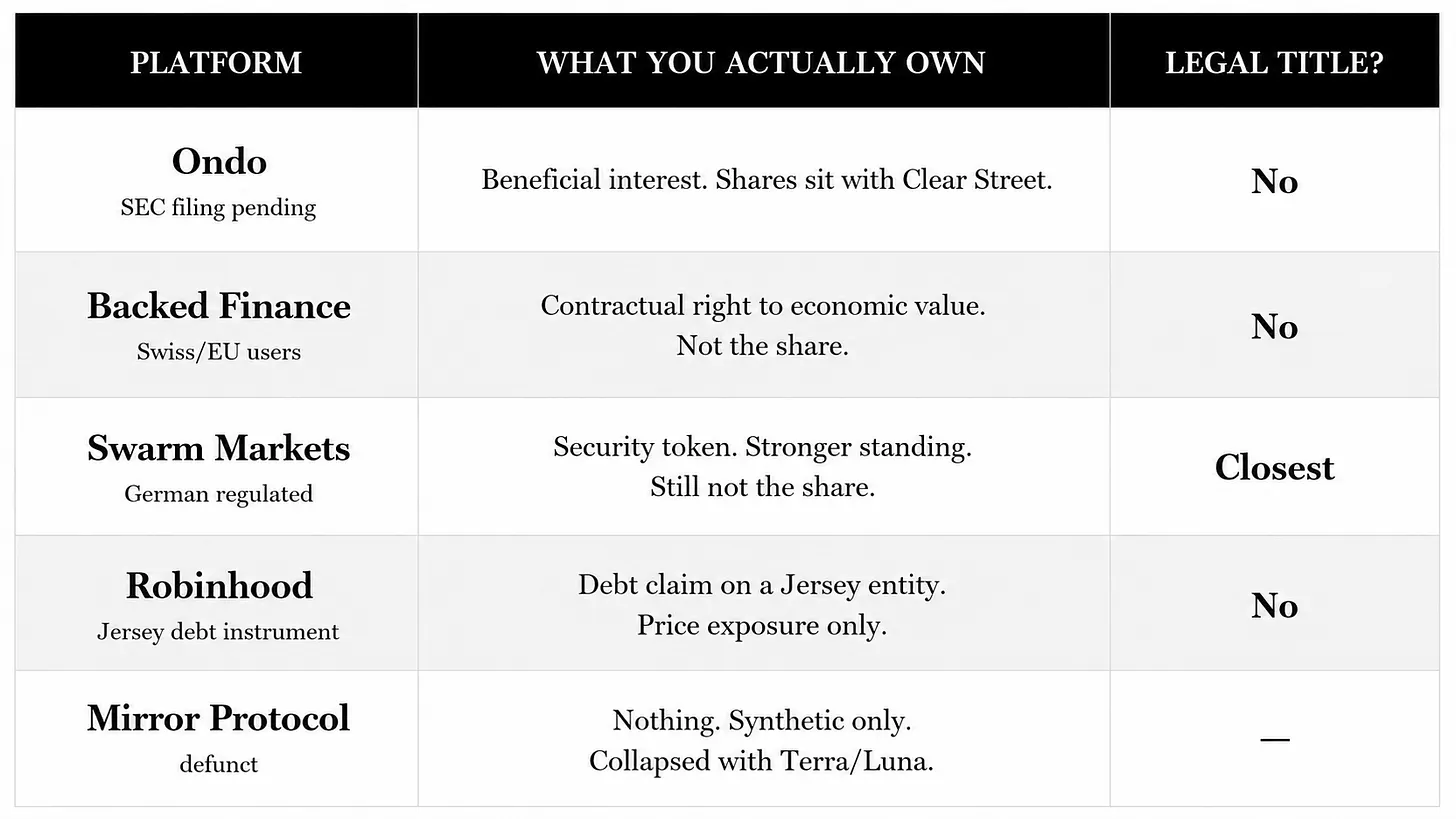


In March of the same year, the SEC and the U.S. Commodity Futures Trading Commission (CFTC) jointly announced maintaining the classification and regulatory framework issued in January unchanged. Robinhood deliberately chose to issue the second type—Linked Securities—from Jersey Island, precisely to sidestep regulatory red lines.


The regulatory document also mentioned a similar product: security-based swap contracts, which are essentially over-the-counter bets on stock prices. However, federal regulations strictly limit participation to qualified institutions and high-net-worth professional investors; ordinary retail investors cannot purchase them.


Debt-based structured notes have no investor threshold restrictions, allowing even a 19-year-old with only $10 to participate. Robinhood ultimately chose this packaging model with the broadest audience and the least regulatory resistance.


At the same time, U.S. domestic users are completely excluded. The stock tokens are open to over 120 countries worldwide, with the United States, Canada, the United Kingdom, Switzerland, and the UAE not within the service scope.


The European market adopts a different compliance structure. The classic stock tokens launched in Cannes in 2025 comply with EU MiFID II regulations, issued by Robinhood's European entity, with tokens backed 1:1 by real stocks held in custody. The number of underlying assets has now expanded from 200 to over 2,000, with entry possible with as little as 1 Euro. This means Robinhood can indeed offer compliant real-stock tokens in Europe; the Jersey debt structure is an active choice.


This model heavily relies on the transparent pricing logic of public markets. Only publicly traded companies like U.S. stocks with real-time trading have fair market prices. For private, unlisted companies like Anthropic and OpenAI, there is no publicly traded price. Token valuation can only rely on subjective institutional estimates, with no obligation for the companies to disclose externally, making risks entirely uncontrollable.


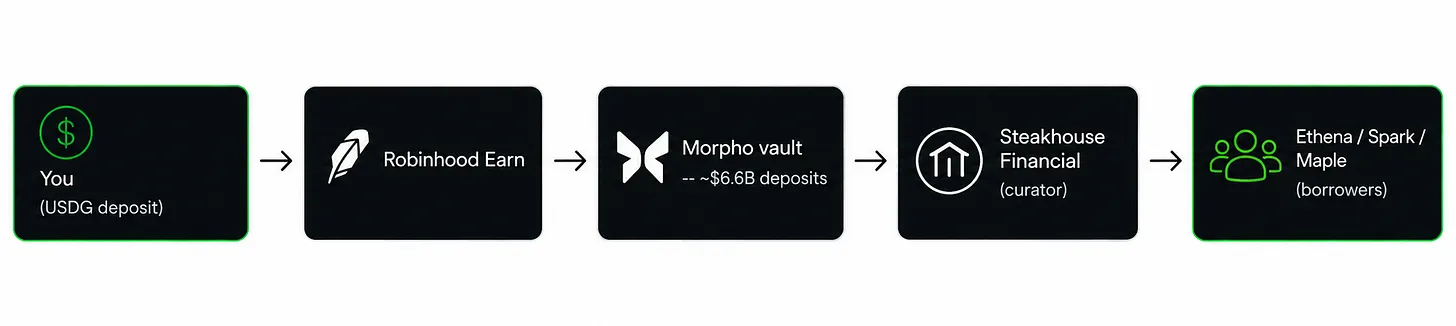
Additionally, Robinhood's separate Robinhood Earn product independently offers a 7% annualized yield, available only to U.S. users. Users lend the stablecoin USDG, with funds first flowing into a Morpho lending vault operated by Steakhouse Financial, then distributed to various DeFi protocols like Ethena and Maple. The Morpho vault deposit size is about $6.6 billion, with yields floating based on market lending demand.


Robinhood has insured smart contract theft with London's Lloyd's, but the policy does not cover the risk of yield dropping to zero. When market lending demand shrinks, yields will decline alongside money market fund rates. User funds pass through multiple intermediaries: Robinhood, Steakhouse, Morpho. Once USDG depegs or a large-scale borrower default occurs, insurance cannot cover it at all. These are common causes of principal loss in such products.


Tokens are stored on-chain and support staking and lending, seemingly convenient. However, smart contracts cannot directly read stock prices and must rely on oracles for price feeds. If an oracle feeds false prices, the contract will incorrectly liquidate user assets or issue loans improperly. From 2024 to 2025, oracle price manipulation was a core method for large DeFi thefts, causing losses of tens of millions of dollars for numerous projects.


Within the entire product ecosystem, the only orthodox, full-voting-right equity is Robinhood's own stock, HOOD, traded on traditional Nasdaq channels. The platform keeps the real equity for itself.


The underlying business logic is clear. Robinhood earns a spread on every token transaction; the public chain belongs to itself. The overseas new business can continuously beautify the financial reports of the listed company, all without being constrained by U.S. domestic regulations. A token business without actual equity has lower regulatory costs and cleaner profits.


The Robinhood Chain is built on the Arbitrum Orbit network, using ETH to pay Gas fees. It has not issued a native platform token, avoiding token speculation risks, and the platform does not need to profit from a native token. The company's long-term plan is to build a one-stop settlement channel, enabling 7x24 on-chain trading for stocks, ETFs, stablecoins, commodity perpetual contracts, and future private equity. Robinhood was originally just an order routing intermediary. If the plan materializes, it will combine the functions of an exchange and a clearinghouse.


Objectively speaking, current regulatory rules are rapidly evolving. The new SEC Chairman Atkins has overturned the previous "sue first, regulate later" approach and is drafting an innovative regulatory sandbox exemption bill. The "CLARITY Act" has been submitted to the Senate for review since June. Once enacted, the regulatory gray area Robinhood currently occupies will continue to narrow.


This playbook is already familiar in the industry. Coinbase and Kraken expanded their businesses early in regulatory gaps, then strengthened compliance qualifications after regulations detailed and industry demand was validated. The current Jersey debt tokens are more like a transitional, semi-finished product for Robinhood.


Just two days before Robinhood's stock token launch, on July 2nd, Ondo launched compliant tokenized stocks on Ethereum, issued through an SEC-registered transfer agent. The tokens are fully backed by real stocks held in custody, with holders enjoying on-chain voting rights, covering over 250 companies. Coinbase simultaneously listed the product, allowing U.S. users to trade legally, with dividends distributed directly to user accounts.


Operating a fully compliant model in the U.S. costs more and is subject to regulatory constraints throughout. Robinhood already bears these compliance costs in Europe. Therefore, the Jersey Island debt structure is a choice by Robinhood. In the future, either regulations will force a product upgrade, or competitors will launch U.S.-compliant real-stock tokens to steal customers.


First capture the market, then wait for regulations to mature—this is Robinhood's strategy.

Tiền kỹ thuật số thịnh hành

Câu hỏi Liên quan

QWhat is the fundamental nature of the Robinhood stock tokens discussed in the article?

AThey are not actual equities or ownership stakes in the underlying companies. They are debt instruments (structured notes) issued by Robinhood Assets (Jersey) Limited, a shell company in a tax haven. Holders are creditors who receive payments based on the price movements of the referenced stocks but have none of the legal rights of a shareholder.

QWhy does Robinhood use a complex Jersey-based shell company structure for its stock tokens instead of offering direct equity tokens?

ATo navigate U.S. SEC regulations. The SEC has classified tokenized securities, and Robinhood's product falls under 'Linked Securities,' which track a stock's price without granting ownership rights. Structuring them as debt from a Jersey entity allows Robinhood to avoid stricter U.S. regulations that apply to equity securities and security-based swaps, enabling them to offer the product to retail investors globally (excluding the U.S. and several other countries) with lower regulatory hurdles.

QWhat are the key risks for investors holding Robinhood's stock tokens, according to the article?

AInvestors face significant counterparty and structural risks: 1) If the Jersey issuer goes bankrupt, token holders become unsecured creditors in a liquidation process, risking total loss. 2) If the underlying company (e.g., Apple) goes bankrupt, the debt instrument's value is tied to that stock, so it could become worthless. 3) There is no direct recourse to the actual company's assets. 4) The structure relies on oracles for pricing, which could be manipulated, leading to faulty liquidations.

QHow does the article contrast Robinhood's approach with a compliant alternative like Ondo's product?

AOndo's product, launched on Ethereum and listed on Coinbase, is a compliant equity token registered with the SEC. It is backed 1:1 by real, custodied stocks, and token holders possess full shareholder rights, including voting and receiving dividends. This contrasts with Robinhood's debt-based tokens, which offer no ownership rights and are issued from an offshore entity to sidestep the higher costs and regulatory scrutiny of the U.S. compliant model that Robinhood itself uses for its European customers.

QWhat historical event does the article link to Robinhood's motivation for developing its blockchain-based trading system?

AThe GameStop short squeeze crisis of January 2021. During that event, Robinhood faced a massive liquidity shortfall due to the T+2 settlement cycle and was forced to restrict buying. The blockchain system with near-instant settlement is presented as CEO Vlad Tenev's solution to eliminate such settlement risks and theoretically prevent future trading halts, aiming to restore trust after the significant brand damage from that incident.

Nội dung Liên quan

Lỗ Nặng 55 Triệu Đô Bán 3588 BTC, Strategy Chính Thức Là 'Trai Hư' Đích Thực

Công ty Strategy (trước đây là MicroStrategy) đã công bố việc bán 3.588 Bitcoin trong các ngày 29-30/6 và 1-5/7 với giá trung bình khoảng 60.200 USD/BTC, thu về tổng cộng khoảng 216 triệu USD. Đây là đợt bán ròng lớn nhất kể từ khi công ty triển khai chiến lược Bitcoin vào năm 2020, với mức giá bán thấp hơn đáng kể so với chi phí trung bình khoảng 75.476 USD/BTC, dẫn đến khoản lỗ thực tế ước tính 55 triệu USD. Số tiền thu được sẽ được sử dụng để thanh toán cổ tức cho cổ phiếu ưu đãi và bổ sung dự trữ USD. Chiến lược này đánh dấu sự thay đổi đáng kể so với cam kết "chỉ mua, không bán" trước đây của nhà sáng lập Michael Saylor. Động thái bán ra được thể chế hóa thông qua "Khung vốn tín dụng số" mới, cho phép công ty bán tối đa 12,5 tỷ USD Bitcoin (khoảng 2,5% tổng nắm giữ) khi cần thiết. Tính đến ngày 5/7, Strategy vẫn nắm giữ 843.775 BTC, duy trì vị thế là công ty đại chúng sở hữu Bitcoin lớn nhất. Việc bán Bitcoin để trả cổ tức cho các đợt phát hành cổ phiếu ưu đãi (vốn được dùng để huy động vốn mua Bitcoin) cho thấy một nghịch lý trong mô hình kinh doanh của công ty. Phân tích cho rằng động thái này có thể làm xói mòn "câu chuyện" và uy tín mà Saylor đã xây dựng, vốn là cơ sở cho mức giao dịch cao hơn giá trị tài sản ròng (NAV) của cổ phiếu MSTR so với Bitcoin mà công ty nắm giữ.

Foresight News50 phút trước

Lỗ Nặng 55 Triệu Đô Bán 3588 BTC, Strategy Chính Thức Là 'Trai Hư' Đích Thực

Foresight News50 phút trước

Liệu thanh khoản stablecoin 150 tỷ USD của Ethereum có thể giúp phe đang tích cực giành lại quyền kiểm soát?

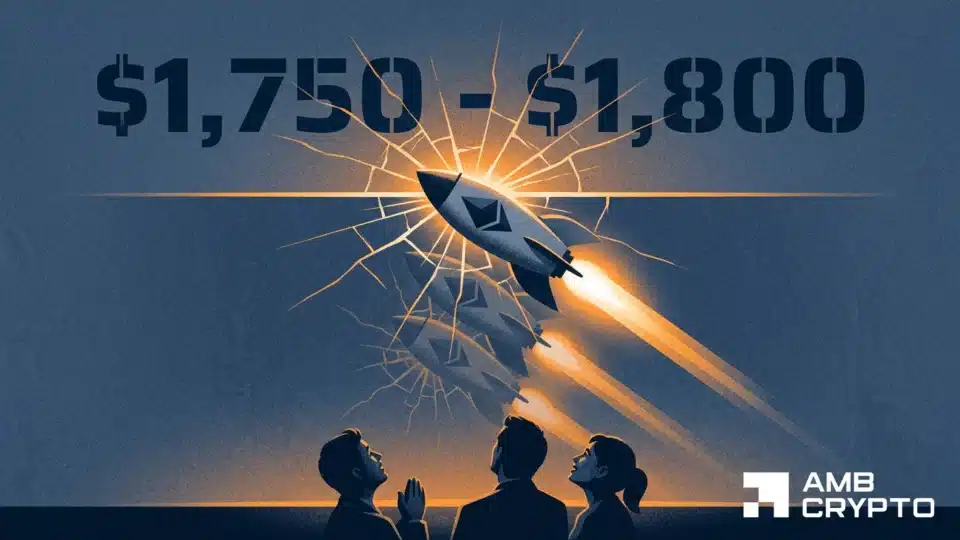
Theo báo cáo mới nhất, Ethereum đang dẫn đầu về cơ sở hạ tầng tài chính cho đồng đô la kỹ thuật số và tài sản mã hóa, với hơn 150 tỷ USD thanh khoản stablecoin trên chuỗi, phản ánh hoạt động kinh tế thực tế chứ không chỉ là đầu cơ. Tại thời điểm này, giá ETH giao dịch ở mức 1.748,47 USD, tăng 11% trong tuần trước. Dù ETF của ETH trải qua giai đoạn ròng dòng tiền ra kéo dài, nhưng đã ghi nhận dòng tiền vào đáng kể vào đầu tháng 7. Nhiều nhà phân tích đang theo dõi ngưỡng giá 1.750–1.800 USD như một vùng kháng cự quan trọng, nơi áp lực bán thường xuất hiện. Tuy nhiên, việc ETH hình thành mô hình hai đáy (double bottom) có thể cho thấy người mua đang dần lấy lại kiểm soát. Một số dự báo lạc quan cho rằng ETH có thể hướng tới mức 8.500 USD vào giữa năm 2027, nhờ vào sự phát triển của stablecoin và tài sản thực trên chuỗi. Bên cạnh đó, Ethereum đang bước vào giai đoạn phát triển mới với kế hoạch Lean Ethereum, một bản thiết kế lại toàn diện giao thức cốt lõi trong vòng ba đến bốn năm tới. Sự chênh lệch giữa dòng vốn đầu cơ và tiện ích mạng ngày càng rõ có thể góp phần đẩy giá lên cao hơn.

ambcrypto53 phút trước

Liệu thanh khoản stablecoin 150 tỷ USD của Ethereum có thể giúp phe đang tích cực giành lại quyền kiểm soát?

ambcrypto53 phút trước

Quỹ Token Hóa của JPMorgan Tăng Trưởng 250% TVL Trong Một Tháng, Vốn Tổ Chức Đang Coi Ethereum Là Tầng Nền Mặc Định

Chỉ trong một tháng, quỹ tiền tệ được token hóa JLTXX của JPMorgan đã chứng kiến tổng giá trị bị khóa (TVL) trên chuỗi tăng khoảng 250%, từ 2 tỷ lên gần 7 tỷ USD. Điều đáng chú ý là quỹ này chỉ hoạt động trên mạng Ethereum chính. Sự tăng trưởng mạnh một phần đến từ nhu cầu tài sản dự trữ cho stablecoin, phù hợp với quy định của Đạo luật GENIUS. JPMorgan cùng với các tổ chức lớn khác như BlackRock đang lựa chọn Ethereum làm lớp cơ sở để chạy các sản phẩm tài chính được quản lý, biến nó từ một tài sản đầu cơ dần trở thành một sổ cái kỹ thuật số đáng tin cậy cho các tổ chức. Song song đó, BitMine Immersion Technologies, do Tom Lee điều hành, đã mua thêm 42.197 ETH trị giá khoảng 73 triệu USD chỉ trong một tuần, nâng tổng nắm giữ lên 5,74 triệu ETH, tương đương 4,8% tổng cung lưu hành. Mục tiêu công ty là kiểm soát 5% nguồn cung ETH. Mặc dù giá ETH đã giảm hơn 50% so với mức đỉnh và thị trường ghi nhận dòng tiền ròng rút khỏi ETF, các tổ chức vẫn đang tích lũy hoặc phát triển sản phẩm trên Ethereum. Điều này cho thấy hai câu chuyện khác biệt: các tổ chức đặt cược vào vị thế lâu dài của Ethereum với tư cách là hạ tầng cho tài sản token hóa và dự trữ stablecoin, trong khi thị trường thứ cấp chịu ảnh hưởng bởi thanh khoản và tâm lý ngắn hạn. Sự gia tăng của tổ chức là một thay đổi cơ bản tích cực nhưng không nhất thiết báo hiệu đáy giá trong ngắn hạn.

marsbit54 phút trước

Quỹ Token Hóa của JPMorgan Tăng Trưởng 250% TVL Trong Một Tháng, Vốn Tổ Chức Đang Coi Ethereum Là Tầng Nền Mặc Định

marsbit54 phút trước

Bitcoin Bắt Đầu Hành Trình Độc Lập: Bây Giờ Là Sự Phục Hồi Hay Đảo Chiều?

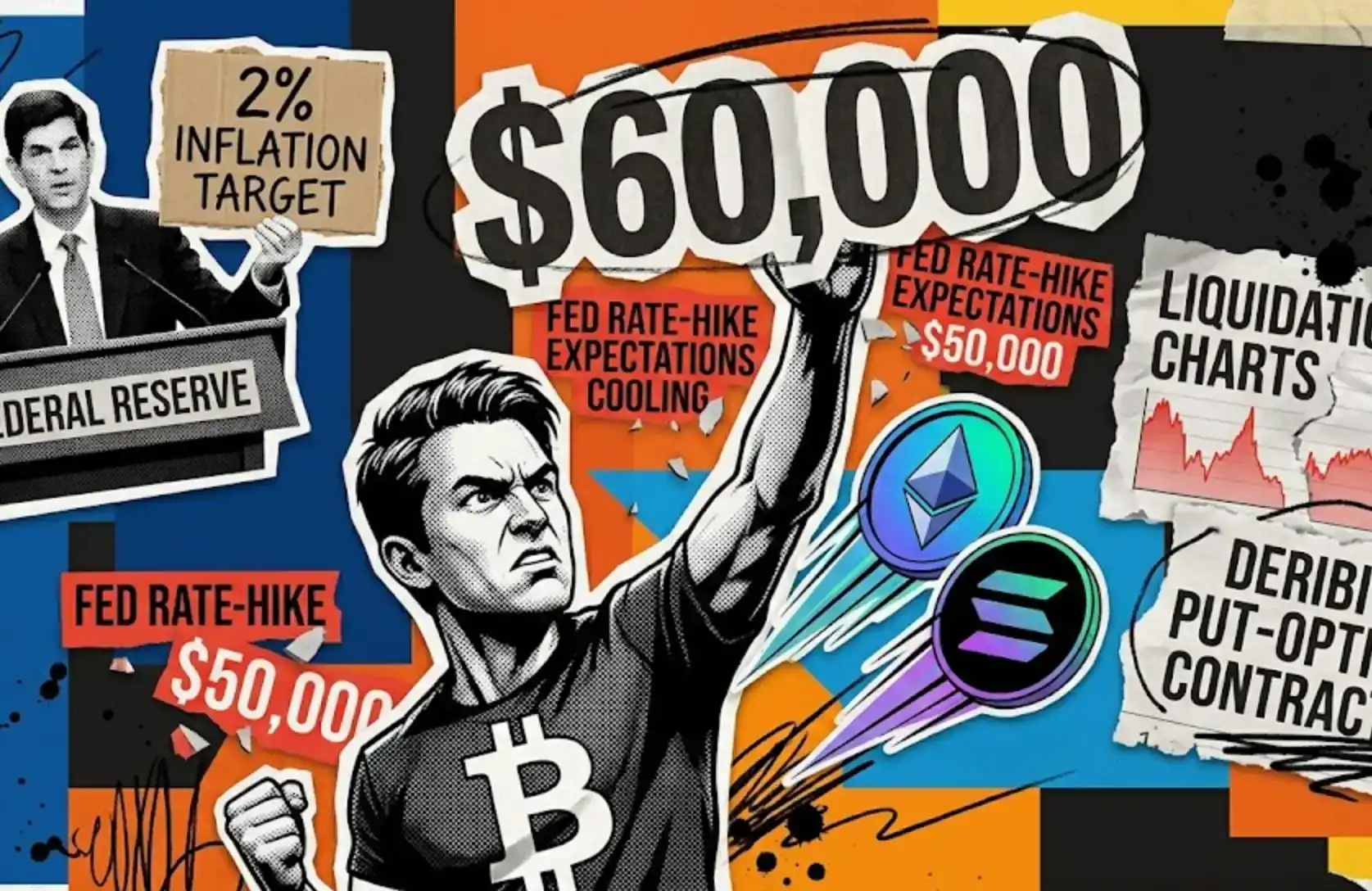
Giá Bitcoin đã phục hồi mạnh mẽ, vượt lên trên ngưỡng 60.000 USD sau những tuyên bố làm dịu lo ngại về lạm phát của Chủ tịch Fed và dữ liệu việc làm Mỹ yếu hơn dự kiến. Động thái này trước hết là sự điều chỉnh lại sau đợt giao dịch hoảng loạn trước đó, khi kỳ vọng lãi suất cứng rắn bị hạ nhiệt. Đợt phục hồi được thúc đẩy bởi ba yếu tố chính: 1) Lo ngại về con đường chính sách của Fed giảm bớt; 2) Kỳ vọng tăng lãi suất tiếp tục hạ nhiệt; 3) Lực đẩy kỹ thuật quan trọng từ việc các vị thế bán khống bị thanh lý, tạo ra lực mua cưỡng ép. Việc thanh lý khoảng 395 triệu USD khi giá chạm đáy gần 57.742 USD cho thấy đợt giảm trước đó được khuếch đại bởi đòn bẩy. Khi giá phục hồi, việc đóng các vị thế bán khống (tương đương với mua vào) đã đẩy giá lên nhanh hơn. Thị trường altcoin cũng phản ứng tích cực, với Ethereum và Solana dẫn đầu đà tăng, chỉ số "mùa altcoin" đạt mức cao nhất trong ba tháng. Tuy nhiên, đây chưa hẳn là sự khởi đầu của một mùa altcoin thực sự, mà chỉ cho thấy dòng tiền đang chảy vào các tài sản có tính thanh khoản cao sau khi Bitcoin ổn định. Một số tín hiệu thận trọng vẫn tồn tại: thị trường quyền chọn vẫn sẵn sàng trả phí cao để phòng ngừa rủi ro giảm giá, cho thấy niềm tin vào đà tăng chưa thực sự vững chắc. Động lực từ việc thanh lý vị thế bán khống là có hạn và không thể duy trì xu hướng một mình. Thị trường cần lực mua mới từ ETF, dòng tiền stablecoin hoặc động lực tăng trưởng mạnh mẽ từ altcoin. Cuối cùng, biến số vĩ mô vẫn là yếu tố then chốt. Đợt tăng này phụ thuộc vào dữ liệu lạm phát và việc làm thuận lợi. Nếu các dữ liệu trong tương lai thay đổi hoặc Fed trở nên cứng rắn hơn, thị trường có thể phản ứng theo chiều ngược lại. Sự phục hồi từ trạng thái phòng thủ quá mức là rõ ràng, nhưng sự xác nhận xu hướng thực sự cần chờ thị trường phái sinh giảm bớt các công cụ phòng ngừa rủi ro.

marsbit1 giờ trước

Bitcoin Bắt Đầu Hành Trình Độc Lập: Bây Giờ Là Sự Phục Hồi Hay Đảo Chiều?

marsbit1 giờ trước

Đối thoại với Nhất Vĩ Capital, SoundAI Technology, Ling Universe, Zhongbo JV: Cơ hội và thách thức trên thị trường phần cứng thông minh AI

Ngày 28/6/2026, sự kiện "Cơ hội mới cho phần cứng thông minh AI, cuộc chiến giành cổng tương tác bắt đầu" đã diễn ra tại Bắc Kinh. Báo cáo ngành từ IT桔子 chỉ ra làn sóng khởi nghiệp sôi động trong lĩnh vực phần cứng thông minh AI tại Trung Quốc, với 327/431 công ty khởi nghiệp mới thành lập sau năm 2023 đã huy động được vốn. Các xu hướng chính bao gồm: robot thông minh thể hiện (embodied AI) thu hút nhiều vốn nhất; thiết bị đeo như nhẫn thông minh, kính AI tăng trưởng nhanh; Thâm Quyến dẫn đầu về số lượng công ty; và các công ty tập trung vào việc cải tiến nhỏ (micro-innovation) trong các phân khúc cụ thể. Trong phần chia sẻ, bà Hoàng Huân Hạ, Giám đốc Sản phẩm của SoundAI, nhấn mạnh thách thức chung là tìm kiếm sản phẩm khả thi cho công nghệ AI, đồng thời đề xuất sự cân bằng giữa khả năng công nghệ, nhu cầu thị trường và kiểm soát chi phí. Bà cũng chỉ ra rằng tương tác bằng giọng nói vẫn phụ thuộc vào lệnh đánh thức và tương tác chủ động không cần đánh thức là mục tiêu tương lai. Trong phiên đối thoại bàn tròn, các chuyên gia thảo luận về tương lai của cổng tương tác. Quan điểm chung cho rằng trong khi các thiết bị đầu cuối thống nhất vẫn quan trọng, thì các thiết bị chuyên biệt cho từng kịch bản cũng sẽ xuất hiện. Các công ty khởi nghiệp có thể tập trung vào các phân khúc thị trường ngách và đối tượng người dùng dọc để xây dựng lợi thế cạnh tranh, tích lũy dữ liệu và lặp lại sản phẩm. Về mô hình kinh doanh, có thể thử nghiệm mô hình phần cứng không lãi nhưng kiếm tiền từ dịch vụ thuê bao, nhưng cần kiểm soát chặt chẽ cả chi phí phần cứng (BOM) và chi phí suy luận mô hình. Vấn đề tỷ lệ hoàn trả sản phẩm cũng được đề cập, với tai nghe AI có tỷ lệ hoàn trả trung bình khoảng 30-50%. Về tương tác chủ động, các chuyên gia cho rằng công nghệ này vẫn chưa chín muồi do những hạn chế như ảo giác mô hình lớn (hallucination) và thiếu cảm nhận môi trường. Các thiết bị đeo theo dõi sức khỏe là một trong những ứng dụng hạn chế hiện tại. Chìa khóa thành công được tóm tắt là: chọn đúng phân khúc thị trường có triển vọng, xây dựng một vòng lặp khép kín hoàn hảo từ công nghệ, sản phẩm đến thương mại hóa, và cuối cùng là tạo ra một mô hình kinh doanh bền vững.

marsbit1 giờ trước

Đối thoại với Nhất Vĩ Capital, SoundAI Technology, Ling Universe, Zhongbo JV: Cơ hội và thách thức trên thị trường phần cứng thông minh AI

marsbit1 giờ trước

Giao dịch

Giao ngay

Bài viết Nổi bật

Làm thế nào để Mua CAP

Chào mừng bạn đến với HTX.com! Chúng tôi đã làm cho mua Cap (CAP) trở nên đơn giản và thuận tiện. Làm theo hướng dẫn từng bước của chúng tôi để bắt đầu hành trình tiền kỹ thuật số của bạn.Bước 1: Tạo Tài khoản HTX của BạnSử dụng email hoặc số điện thoại của bạn để đăng ký tài khoản miễn phí trên HTX. Trải nghiệm hành trình đăng ký không rắc rối và mở khóa tất cả tính năng. Nhận Tài khoản của tôiBước 2: Truy cập Mua Crypto và Chọn Phương thức Thanh toán của BạnThẻ Tín dụng/Ghi nợ: Sử dụng Visa hoặc Mastercard của bạn để mua Cap (CAP) ngay lập tức.Số dư: Sử dụng tiền từ số dư tài khoản HTX của bạn để giao dịch liền mạch.Bên thứ ba: Chúng tôi đã thêm những phương thức thanh toán phổ biến như Google Pay và Apple Pay để nâng cao sự tiện lợi.P2P: Giao dịch trực tiếp với người dùng khác trên HTX.Thị trường mua bán phi tập trung (OTC): Chúng tôi cung cấp những dịch vụ được thiết kế riêng và tỷ giá hối đoái cạnh tranh cho nhà giao dịch.Bước 3: Lưu trữ Cap (CAP) của BạnSau khi mua Cap (CAP), lưu trữ trong tài khoản HTX của bạn. Ngoài ra, bạn có thể gửi đi nơi khác qua chuyển khoản blockchain hoặc sử dụng để giao dịch những tiền kỹ thuật số khác.Bước 4: Giao dịch Cap (CAP)Giao dịch Cap (CAP) dễ dàng trên thị trường giao ngay của HTX. Chỉ cần truy cập vào tài khoản của bạn, chọn cặp giao dịch, thực hiện giao dịch và theo dõi trong thời gian thực. Chúng tôi cung cấp trải nghiệm thân thiện với người dùng cho cả người mới bắt đầu và người giao dịch dày dạn kinh nghiệm.

Tổng lượt xem 57Xuất bản vào 2026.06.26Cập nhật vào 2026.06.26

Làm thế nào để Mua CAP

Làm thế nào để Mua ANSEM

Chào mừng bạn đến với HTX.com! Chúng tôi đã làm cho mua The Black Bull (ANSEM) trở nên đơn giản và thuận tiện. Làm theo hướng dẫn từng bước của chúng tôi để bắt đầu hành trình tiền kỹ thuật số của bạn.Bước 1: Tạo Tài khoản HTX của BạnSử dụng email hoặc số điện thoại của bạn để đăng ký tài khoản miễn phí trên HTX. Trải nghiệm hành trình đăng ký không rắc rối và mở khóa tất cả tính năng. Nhận Tài khoản của tôiBước 2: Truy cập Mua Crypto và Chọn Phương thức Thanh toán của BạnThẻ Tín dụng/Ghi nợ: Sử dụng Visa hoặc Mastercard của bạn để mua The Black Bull (ANSEM) ngay lập tức.Số dư: Sử dụng tiền từ số dư tài khoản HTX của bạn để giao dịch liền mạch.Bên thứ ba: Chúng tôi đã thêm những phương thức thanh toán phổ biến như Google Pay và Apple Pay để nâng cao sự tiện lợi.P2P: Giao dịch trực tiếp với người dùng khác trên HTX.Thị trường mua bán phi tập trung (OTC): Chúng tôi cung cấp những dịch vụ được thiết kế riêng và tỷ giá hối đoái cạnh tranh cho nhà giao dịch.Bước 3: Lưu trữ The Black Bull (ANSEM) của BạnSau khi mua The Black Bull (ANSEM), lưu trữ trong tài khoản HTX của bạn. Ngoài ra, bạn có thể gửi đi nơi khác qua chuyển khoản blockchain hoặc sử dụng để giao dịch những tiền kỹ thuật số khác.Bước 4: Giao dịch The Black Bull (ANSEM)Giao dịch The Black Bull (ANSEM) dễ dàng trên thị trường giao ngay của HTX. Chỉ cần truy cập vào tài khoản của bạn, chọn cặp giao dịch, thực hiện giao dịch và theo dõi trong thời gian thực. Chúng tôi cung cấp trải nghiệm thân thiện với người dùng cho cả người mới bắt đầu và người giao dịch dày dạn kinh nghiệm.

Tổng lượt xem 37Xuất bản vào 2026.07.01Cập nhật vào 2026.07.01

Làm thế nào để Mua ANSEM

Làm thế nào để Mua DATA

Chào mừng bạn đến với HTX.com! Chúng tôi đã làm cho mua DATA Network (DATA) trở nên đơn giản và thuận tiện. Làm theo hướng dẫn từng bước của chúng tôi để bắt đầu hành trình tiền kỹ thuật số của bạn.Bước 1: Tạo Tài khoản HTX của BạnSử dụng email hoặc số điện thoại của bạn để đăng ký tài khoản miễn phí trên HTX. Trải nghiệm hành trình đăng ký không rắc rối và mở khóa tất cả tính năng. Nhận Tài khoản của tôiBước 2: Truy cập Mua Crypto và Chọn Phương thức Thanh toán của BạnThẻ Tín dụng/Ghi nợ: Sử dụng Visa hoặc Mastercard của bạn để mua DATA Network (DATA) ngay lập tức.Số dư: Sử dụng tiền từ số dư tài khoản HTX của bạn để giao dịch liền mạch.Bên thứ ba: Chúng tôi đã thêm những phương thức thanh toán phổ biến như Google Pay và Apple Pay để nâng cao sự tiện lợi.P2P: Giao dịch trực tiếp với người dùng khác trên HTX.Thị trường mua bán phi tập trung (OTC): Chúng tôi cung cấp những dịch vụ được thiết kế riêng và tỷ giá hối đoái cạnh tranh cho nhà giao dịch.Bước 3: Lưu trữ DATA Network (DATA) của BạnSau khi mua DATA Network (DATA), lưu trữ trong tài khoản HTX của bạn. Ngoài ra, bạn có thể gửi đi nơi khác qua chuyển khoản blockchain hoặc sử dụng để giao dịch những tiền kỹ thuật số khác.Bước 4: Giao dịch DATA Network (DATA)Giao dịch DATA Network (DATA) dễ dàng trên thị trường giao ngay của HTX. Chỉ cần truy cập vào tài khoản của bạn, chọn cặp giao dịch, thực hiện giao dịch và theo dõi trong thời gian thực. Chúng tôi cung cấp trải nghiệm thân thiện với người dùng cho cả người mới bắt đầu và người giao dịch dày dạn kinh nghiệm.

Tổng lượt xem 37Xuất bản vào 2026.07.01Cập nhật vào 2026.07.01

Làm thế nào để Mua DATA

Thảo luận

Chào mừng đến với Cộng đồng HTX. Tại đây, bạn có thể được thông báo về những phát triển nền tảng mới nhất và có quyền truy cập vào thông tin chuyên sâu về thị trường. Ý kiến ​​của người dùng về giá của M (M) được trình bày dưới đây.

活动图片