Kraken Sets Its Sights on Aave: Why is CeFi Starting to 'Buy the Dip' in Core DeFi Assets?

marsbitXuất bản vào 2026-06-27Cập nhật gần nhất vào 2026-06-27

Tóm tắt

Recent market rumors suggest Kraken is planning a strategic investment in Aave, sparking widespread interest. Although Aave's co-founder clarified some inaccurate details in the reports, this event highlights a significant trend: centralized exchanges are accelerating their entry into the core areas of on-chain finance. Kraken's interest in Aave reflects its strategic expansion beyond simple trading into more profitable, higher-barrier financial services like DeFi asset management. Aave, a leading DeFi lending protocol, offers a mature lending model, deep liquidity, and a growing ecosystem, making it a key gateway to future on-chain finance. Despite a major security incident in April that caused significant withdrawals, Aave's core architecture, governance, and market trust remained intact. The protocol's strong fundamentals are underscored by its $134 million in annual revenue, suggesting its valuation may be undervalued. Aave is also designing a new tokenomics model (Aavenomics 3.0) featuring an automated token buyback mechanism to better capture value for token holders, signaling DeFi's evolution towards sustainable value models. Ultimately, this potential move signals accelerated convergence between CeFi and DeFi. Kraken's target is not just an asset but a strategic position in the future of on-chain financial infrastructure, while Aave aims to prove DeFi can evolve into a cash-flow-generating, global financial system.

Author: Flora, CryptoPulse Labs

Recently, market rumors that Kraken intends to make a strategic investment in Aave have garnered widespread attention in the crypto market. It is reported that Payward, Kraken's parent company, is in talks to acquire equity and token assets related to Aave to accelerate its expansion into DeFi asset management.

Although Aave co-founder Stani Kulechov subsequently clarified, stating that the valuation and transaction framework circulating in the market contained inaccuracies, this incident itself has sent a strong signal—centralized exchanges are accelerating their entry into the core realm of on-chain finance.

From exchanges acquiring derivatives platforms to betting on DeFi lending leaders, the moves by Kraken perhaps reflect not just the strategic upgrade of a single company, but a new competition for control over the financial infrastructure of the future.

I. Kraken Sets Its Sights on Aave: CeFi Giants Begin Competing for On-Chain Financial Access Points

On the surface, Kraken's interest in Aave stems from its strategic expansion into asset management. According to informed sources, this deal is defined as Payward's first major series investment for its asset management business.

This indicates that Kraken is no longer content with being a pure transaction-matching platform and instead hopes to enter the higher-profit, higher-barrier field of financial services. However, the underlying logic is actually not that complicated.

Over the past few years, the primary revenue for crypto exchanges has come from three types of businesses: spot trading, derivatives trading, and custody services. However, as industry competition intensifies and trading fees continue to decline, exchanges must seek new growth curves.

DeFi provides precisely this direction. Compared to traditional trading businesses, the value of DeFi lies in its inherent "on-chain asset management" attributes.

Users don't just trade; they also engage in lending, staking, leveraging, yield aggregation, and stablecoin management. These activities are essentially high-frequency financial services, and their user lifetime value far exceeds that of pure trading users.

In the DeFi lending sector, Aave is undoubtedly one of the most core infrastructures. Aave has long been at the forefront of Total Value Locked (TVL) among decentralized lending protocols. Its core advantages lie in its mature lending models and risk parameter systems, its strong liquidity moat, and its evolution from a single lending protocol into a complete financial ecosystem.

In other words, what Kraken might want to buy is not just AAVE tokens, but control over future access points to on-chain finance. Investing in Aave is, in essence, Kraken betting on the next generation of financial infrastructure.

II. Why is Aave Potentially More Valuable After Experiencing a Black Swan Event?

From a traditional perspective, now might not seem like the best time to invest in Aave. After all, in April of this year, Aave experienced one of the most severe risk events in DeFi history.
At that time, hackers exploited a vulnerability in the KelpDAO cross-chain bridge to mint approximately $292 million in uncollateralized rsETH and used it as collateral to borrow real assets on Aave, resulting in bad debts of $190 to $230 million for the protocol.

Although Aave's smart contracts themselves were not breached, this event still caused significant panic. The most direct consequence was the withdrawal of over $8 billion in deposits.

This exposed a long-underestimated problem in DeFi: a protocol's own security does not guarantee the security of the overall system. In a highly interconnected on-chain financial system, risk is no longer a single-point issue but a network issue.

Aave's problem did not originate from its internal code but from the quality of external collateral. This indicates that future DeFi risk management will enter a new phase, where the object of risk assessment will no longer be just individual protocols, but the interconnectedness of the entire ecosystem.

In the short term, this undoubtedly dealt a heavy blow to market confidence. However, in the long run, this crisis may have actually strengthened Aave's strategic value.

The reason is that protocols that survive extreme risks often possess higher barriers to entry. In financial history, truly great institutions have typically weathered crises. This holds true for banks, exchanges, and on-chain protocols as well.

In the crisis, Aave demonstrated three key capabilities: first, its core protocol architecture did not fail; second, its governance system remained effectively operational; and third, the market's fundamental trust in it did not collapse.

These three points are extremely important because the moat of DeFi is not just code, but market consensus. More crucially, Aave's fundamentals are not poor.

In his response, Stani Kulechov provided a highly impactful figure: Aave's current annualized revenue has reached $134 million. Note that this is protocol-layer revenue, and all of it belongs to Aave DAO. This suggests that Aave is no longer just "a protocol" but more akin to a high-cash-flow financial enterprise.

If valued from a traditional finance perspective, an overall valuation of $385 million even seems relatively low. Based on annualized revenue, the corresponding Price-to-Sales ratio is less than 3.

However, for financial infrastructure still in a high-growth industry with clear network effects, this valuation can hardly be considered expensive. This also explains why Stani explicitly refuted the claim of a "30% discount sale."

From the founder's perspective, if protocol cash flow continues to grow, a significant discount sale clearly lacks justification. The market may be underestimating Aave's true value.

III. Behind Aavenomics 3.0: DeFi Is Entering the Era of Value Capture

Compared to the acquisition rumors themselves, another piece of information revealed by Stani might be even more noteworthy. He stated that the team is designing Aavenomics 3.0, which will introduce a brand-new automated, non-discretionary token buyback mechanism. This statement hints at a change in DeFi's value logic.

For a long time, a core problem existed in the crypto market: protocols could make money, but their tokens didn't necessarily profit. Many DeFi protocols had real revenue, but this revenue did not effectively accrue to token holders, leading to a long-term disconnect between "cash flow" and token price.

This is also why the market is increasingly focusing on Value Accrual, because value capture essentially answers one question: how does the revenue generated by the protocol truly flow to token holders?

The answer Aave provides is buybacks. If the protocol continuously generates revenue and uses a portion of it for automated buybacks of AAVE, its economic model will undergo a fundamental change.

This is somewhat similar to stock buybacks in traditional stock markets. When a company consistently repurchases its outstanding shares with profits, the market re-evaluates its value anchor.

AAVE may also form a similar mechanism in the future. This could have three potential impacts: reducing market circulating supply, strengthening token value support, and establishing a pricing logic between revenue and valuation. This is significant for the entire DeFi industry.

Stani also emphasized that Aave's target market is not limited to crypto assets but covers the entire financial asset market, including RWA (Real World Assets).

This reveals greater ambitions. In the future, collateral for on-chain lending might not just be ETH, BTC, stablecoins, but could also include

Treasury bonds, stocks, fund shares, real estate income rights, and even corporate bonds.

After all, CeFi giants have realized that the next trillion-dollar market might not be in trading, but in on-chain asset management.

Conclusion

Regardless of whether Kraken ultimately completes its strategic investment in Aave, this incident sends a clear signal: the fusion of CeFi and DeFi is accelerating.

On the surface, what Kraken wants to buy is equity and tokens of Aave. But looking deeper, what it wants to buy is a core seat at the table in the future era of on-chain finance. What Aave wants to prove is that DeFi is not just an idealistic experiment; it is evolving into a new type of financial infrastructure that can genuinely generate cash flow and facilitate global capital movement.

Therefore, the next round of competition in the crypto industry will likely no longer be about whose token rises faster, but about who can become the infrastructure in the new financial order.

Tiền kỹ thuật số thịnh hành

Câu hỏi Liên quan

QWhat are the main strategic motivations behind Kraken's reported interest in Aave, according to the article?

AAccording to the article, Kraken's motivations are twofold: to diversify beyond its core trading and custodial businesses into higher-margin financial services like asset management, and to secure a controlling position in the future infrastructure of on-chain finance. Aave, as a leading DeFi lending protocol, represents a core entry point to the expanding market for on-chain financial services such as lending, staking, and yield management.

QDespite the recent security incident, why does the article argue that Aave's strategic value might have increased?

AThe article argues that surviving a major stress test like the KelpDAO exploit incident has demonstrated Aave's resilience, thereby increasing its long-term strategic value. Key strengths highlighted are that its core protocol architecture remained intact, its governance system continued to function effectively, and market confidence in its fundamental credit was not completely broken. Furthermore, its strong underlying business fundamentals, including $134 million in annualized protocol revenue, make it a financially robust entity.

QWhat is the significance of the proposed 'Aavenomics 3.0' mechanism mentioned in the article?

AThe proposed 'Aavenomics 3.0' mechanism, which includes an automated, non-discretionary token buyback system, is significant because it aims to directly link protocol revenue to token value. This addresses a key issue in DeFi where protocols generate real revenue but that value does not effectively accrue to token holders. By implementing buybacks, Aave could reduce circulating supply, strengthen the token's value foundation, and establish a clearer pricing logic between its income and valuation.

QHow does the article characterize the evolving competition in the crypto industry?

AThe article characterizes the next phase of competition in the crypto industry as shifting from a focus on token price appreciation to a race to become foundational infrastructure in a new financial order. The core battleground is seen as on-chain asset management and financial services, where control over key protocols and user access points is paramount. The reported Kraken-Aave interest exemplifies the accelerating convergence and competition between CeFi and DeFi giants for this future control.
QWhat broader market trend does the Kraken-Aave speculation signal, according to the article's conclusion?

AThe article concludes that the Kraken-Aave speculation signals the accelerating convergence and fusion between Centralized Finance (CeFi) and Decentralized Finance (DeFi). It represents a trend where traditional crypto exchanges and financial institutions are moving beyond simply listing assets to strategically investing in and integrating with core DeFi infrastructure, aiming to secure a central role in the emerging landscape of on-chain finance and global capital flows.

Nội dung Liên quan

Ripple Đẩy Mạnh Mở Rộng Tuân Thủ Toàn Cầu Trước Khi Thảo Luận Đạo Luật Rõ Ràng Ở Mỹ

Ripple đang tích cực mở rộng hoạt động tuân thủ quy định toàn cầu bằng cách xin cấp phép bổ sung tại Singapore và châu Âu, nhằm phát triển các sản phẩm thể chế dựa trên tiện ích. Động thái này diễn ra trong bối cảnh sắp tranh luận về Đạo luật Rõ ràng tại Mỹ, nhưng trọng tâm cần tách biệt với các diễn biến từ vụ kiện SEC. Đối với trader, câu chuyện này quan trọng vì nó phản ánh xu hướng phát triển hạ tầng và tiện ích, có khả năng ảnh hưởng đến dòng vốn, thanh khoản và tâm lý thị trường tiền điện tử rộng hơn, đặc biệt trong bối cảnh thị trường còn chịu tác động mạnh từ dòng ETF và sự luân chuyển vốn. Điều cần lưu ý là tránh diễn giải quá mức một tín hiệu đơn lẻ. Thông tin về giấy phép là một chỉ báo về định vị và sự tự tin của Ripple trong các thị trường được quản lý, chứ không phải một bảo đảm cho biến động giá. Cần theo dõi các dữ liệu tiếp theo như số liệu on-chain, lệnh mở (open interest) và dòng vốn để xác nhận liệu đây có phải một chủ đề bền vững hay chỉ là biến động ngắn hạn.

bitcoinist17 phút trước

Ripple Đẩy Mạnh Mở Rộng Tuân Thủ Toàn Cầu Trước Khi Thảo Luận Đạo Luật Rõ Ràng Ở Mỹ

bitcoinist17 phút trước

Giá XRP sẽ diễn biến thế nào trong tháng 7 năm 2026?

Giá XRP đã giảm xuống mức thấp nhất kể từ tháng 11/2024, chạm ngưỡng 1,009 USD vào ngày 26/6, gần sát mức tâm lý quan trọng 1 USD. Mặc dù dòng tiền vào quỹ ETF spot XRP vẫn tích cực, giúp thắt chặt nguồn cung, nhưng điều này có thể chưa đủ để đảo ngược xu hướng trong điều kiện thị trường chung đang yếu. Biểu đồ 1 ngày cho thấy XRP đang trong một xu hướng giảm dài hạn kể từ tháng 7/2025, với việc phá vỡ đáy trước đó ở 1,61 USD vào tháng 2. Mặc dù đã có một đợt phục hồi ngắn lên khoảng 1,3 USD vào giữa tháng 6, nhưng lực bán sau đó đã đẩy giá về quanh mức 1,05 USD. Dữ liệu phái sinh chỉ ra rằng thị trường đang ổn định và ít biến động, với Open Interest ổn định quanh 400 triệu XRP và tỷ lở Turnover khoảng 0,71. Điều này cho thấy hoạt động đầu cơ ngắn hạn đã chậm lại. Tuy nhiên, các nhà giao dịch cần cảnh giác với bất kỳ sự gia tăng đột biến nào trong các chỉ số này, vì chúng có thể báo hiệu biến động tăng cao. Phân tích kỹ thuật trên biểu đồ 4 giờ dự báo khả năng cao XRP sẽ tiếp tục giảm, hướng tới các mục tiêu mở rộng ở 0,975 USD và 0,854 USD. Do đó, khả năng giá XRP giảm xuống dưới ngưỡng 1 USD trong tháng 7 là rất lớn, với đà giảm có thể đẩy giá về mức 0,85 USD.

ambcrypto21 phút trước

Giá XRP sẽ diễn biến thế nào trong tháng 7 năm 2026?

ambcrypto21 phút trước

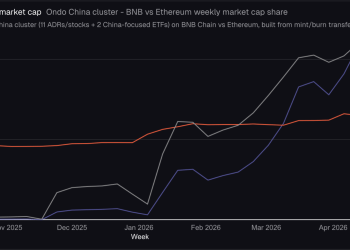
BNB Chain Tuyên Bố Dẫn Đầu Solana Về Khối Lượng Giao Dịch Cổ Phiếu Mã Hóa

BNB Chain tuyên bố đã vượt qua Solana về khối lượng giao dịch cổ phiếu được mã hóa (tokenized stocks), đạt 5,2 tỷ USD. Cột mốc này giúp BNB Chain củng cố vị thế trong lĩnh vực tài sản thế giới thực (RWA) - một trong những xu hướng tăng trưởng cạnh tranh nhất của crypto, nhằm kết nối tài chính truyền thống với blockchain. Khối lượng được thúc đẩy bởi các giao thức như Ondo, xStocks và bStocks, cho thấy một hệ sinh thái sản phẩm đang phát triển trên BNB Chain, không chỉ là một đợt phát hành token đơn lẻ. Trong khi đó, Solana vẫn mạnh ở các khía cạnh khác như hoạt động bán lẻ, meme coin và tốc độ DeFi. Sự kiện này có ý nghĩa quan trọng đối với BNB Chain, giúp mạng lưới mở rộng hình ảnh vượt ra ngoài các hoạt động giao dịch liên quan đến sàn tập trung, hướng tới một điểm nhấn thể chế hơn. Thách thức chính là tính bền vững: khối lượng giao dịch ổn định, thanh khoản sâu và nhiều tài sản được mã hóa hơn sẽ quyết định vị thế lâu dài của BNB Chain trong lĩnh vực RWA. Cuộc cạnh tranh về tài sản được mã hóa giữa các blockchain như Ethereum, Solana và BNB Chain đang trở nên thực tế hơn bao giờ hết.

bitcoinist1 giờ trước

BNB Chain Tuyên Bố Dẫn Đầu Solana Về Khối Lượng Giao Dịch Cổ Phiếu Mã Hóa

bitcoinist1 giờ trước

Giao dịch

Giao ngay

Bài viết Nổi bật

Làm thế nào để Mua AAVE

Chào mừng bạn đến với HTX.com! Chúng tôi đã làm cho mua Aave Protocol (AAVE) trở nên đơn giản và thuận tiện. Làm theo hướng dẫn từng bước của chúng tôi để bắt đầu hành trình tiền kỹ thuật số của bạn.Bước 1: Tạo Tài khoản HTX của BạnSử dụng email hoặc số điện thoại của bạn để đăng ký tài khoản miễn phí trên HTX. Trải nghiệm hành trình đăng ký không rắc rối và mở khóa tất cả tính năng. Nhận Tài khoản của tôiBước 2: Truy cập Mua Crypto và Chọn Phương thức Thanh toán của BạnThẻ Tín dụng/Ghi nợ: Sử dụng Visa hoặc Mastercard của bạn để mua Aave Protocol (AAVE) ngay lập tức.Số dư: Sử dụng tiền từ số dư tài khoản HTX của bạn để giao dịch liền mạch.Bên thứ ba: Chúng tôi đã thêm những phương thức thanh toán phổ biến như Google Pay và Apple Pay để nâng cao sự tiện lợi.P2P: Giao dịch trực tiếp với người dùng khác trên HTX.Thị trường mua bán phi tập trung (OTC): Chúng tôi cung cấp những dịch vụ được thiết kế riêng và tỷ giá hối đoái cạnh tranh cho nhà giao dịch.Bước 3: Lưu trữ Aave Protocol (AAVE) của BạnSau khi mua Aave Protocol (AAVE), lưu trữ trong tài khoản HTX của bạn. Ngoài ra, bạn có thể gửi đi nơi khác qua chuyển khoản blockchain hoặc sử dụng để giao dịch những tiền kỹ thuật số khác.Bước 4: Giao dịch Aave Protocol (AAVE)Giao dịch Aave Protocol (AAVE) dễ dàng trên thị trường giao ngay của HTX. Chỉ cần truy cập vào tài khoản của bạn, chọn cặp giao dịch, thực hiện giao dịch và theo dõi trong thời gian thực. Chúng tôi cung cấp trải nghiệm thân thiện với người dùng cho cả người mới bắt đầu và người giao dịch dày dạn kinh nghiệm.

Tổng lượt xem 513Xuất bản vào 2024.12.11Cập nhật vào 2026.06.02

Làm thế nào để Mua AAVE

Thảo luận

Chào mừng đến với Cộng đồng HTX. Tại đây, bạn có thể được thông báo về những phát triển nền tảng mới nhất và có quyền truy cập vào thông tin chuyên sâu về thị trường. Ý kiến ​​của người dùng về giá của AAVE (AAVE) được trình bày dưới đây.

活动图片