After Rising 11 Times in a Year, Micron's Earnings Report Becomes a Stress Test for the AI Memory Market

marsbitXuất bản vào 2026-06-22Cập nhật gần nhất vào 2026-06-22

Tóm tắt

**Micron's Upcoming Earnings: A Crucial Test for the AI Memory Rally** Investors in AI memory stocks face a critical moment on June 24th, when Micron Technology reports quarterly earnings. The stock, having surged approximately 11-fold from $103 to $1,134 over the past year, carries immense market expectations. Wall Street consensus forecasts a staggering ~932% year-over-year jump in EPS to around $19.72 and ~270% revenue growth to ~$345 billion, largely driven by sold-out HBM (High Bandwidth Memory) capacity through 2026. Analysts have aggressively revised estimates upward over the last 90 days, with EPS expectations rising 68%. This creates a high bar: even strong results risk a sell-off if they fail to meet these elevated projections. Notably, price forecasts from institutions like Citi (predicting ~200% DRAM price increases in 2026) are already among the most bullish on Wall Street, not conservative. The key metric to watch is gross margin, guided to a record ~81%. Such peak profitability raises questions about sustainability in the historically cyclical memory sector. While management has signaled continued strength, the stock's direction post-earnings will likely hinge more on forward guidance for the next quarter and details on HBM capacity expansion for 2027, rather than the already-anticipated stellar past results. The report represents a major pressure test for the high-flying AI memory trade.

Author: Claude, Deep Tide TechFlow

Deep Tide Intro: Those betting on AI memory face a crucial test on June 24. Micron will announce its quarterly earnings after the market closes that day. Its stock price has soared from $103 a year ago to $1,134, roughly an 11-fold increase, with a market cap of $1.28 trillion. The market is betting on continued growth, with the Wall Street consensus expecting earnings per share (EPS) to skyrocket by about 932% year-over-year and revenue to grow by about 270% for the quarter. The higher the climb, the higher the expectations the earnings report must meet. This report is the moment to validate this bet and represents the toughest hurdle for this year's AI memory market rally.

If you hold Micron stock or are watching the AI, chip, or memory sector, this earnings report after the close on June 24 is worth paying attention to.

Micron's stock price has risen from $103 to $1,134 over the past year, an increase of about 11 times. Its market cap is $1.28 trillion, up about 297% year-to-date. At this level, anyone buying further up is certainly thinking "how much longer can this rally last?" The earnings report is the moment to validate this bet.

Currently, the market consensus remains bullish.

According to cryptobriefing, Wall Street expects Micron's EPS for this fiscal quarter to be around $19.72, compared to just $1.91 in the same period last year, a year-over-year increase of about 932%; revenue is expected to be around $34.5 billion, a year-over-year increase of about 270%. These numbers are supported by High Bandwidth Memory (HBM, specialized high-speed memory chips for AI accelerators). Micron's HBM production capacity for the full year 2026 is already completely sold out, with orders booked through the end of the year.

Analysts Have Been Revising All Year, Expectations Keep Chasing Higher

This rally didn't come out of thin air. Over the past three months, Wall Street has been consistently raising its profit forecasts for Micron, and doing so urgently.

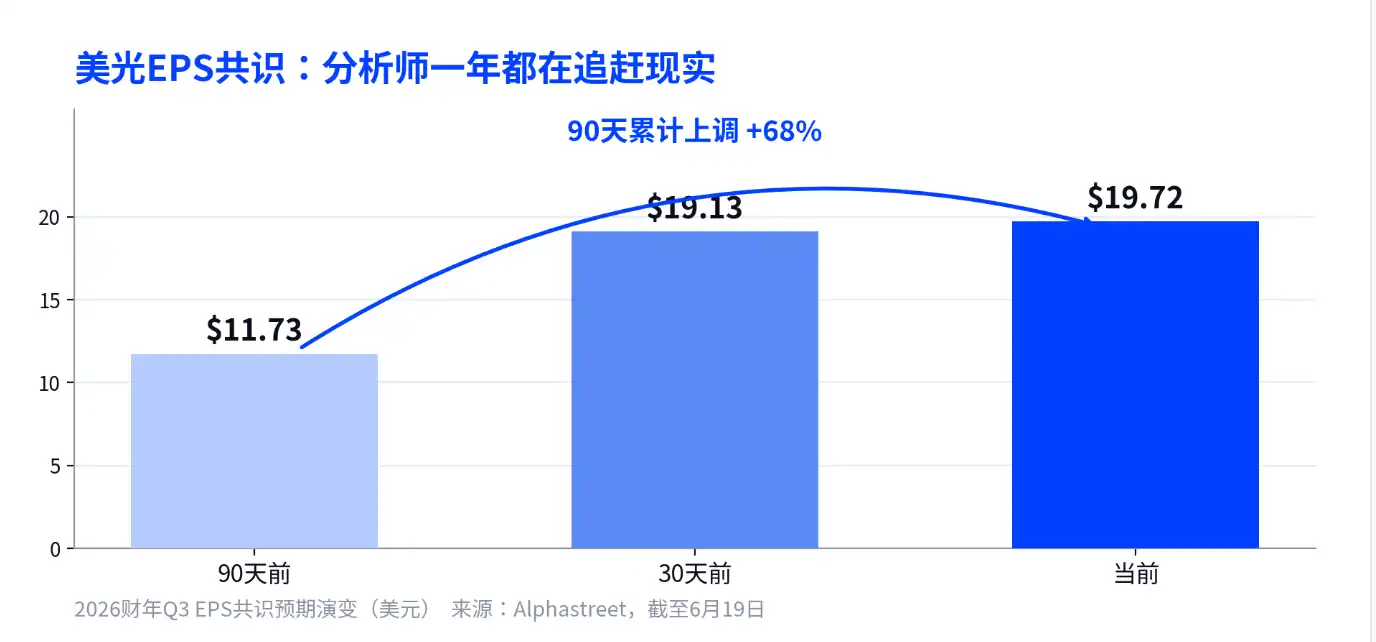
According to Alphastreet data, the consensus EPS for Micron this fiscal quarter was $11.73 90 days ago, rose to $19.13 30 days ago, and is now at $19.72, a cumulative increase of 68%. Wall Street's assessment of the company three months ago was nearly half of what it is now.

The 31 analysts' EPS forecasts range from $7.53 to $24.08, and revenue forecasts range from $19.7 billion to $40.1 billion, a huge gap. The steepness of this inflection point is something analysts themselves haven't fully figured out, forcing them to constantly revise estimates upwards based on actual data.

For the average investor, this is a double-edged signal.

Repeatedly raised expectations indicate that fundamentals are indeed exceeding expectations; but even if the earnings are good on report day, if they fall short of this pushed-to-the-limit consensus, the stock price could still fall.
Don't Believe "Citi Is Too Conservative," That's Actually One of the Most Aggressive Forecasts

There's a narrative on social platforms suggesting that Citi's assumptions on memory prices are too conservative, and that Micron's earnings will therefore significantly exceed expectations. This judgment has the direction wrong, and basing decisions on it could lead to pitfalls.

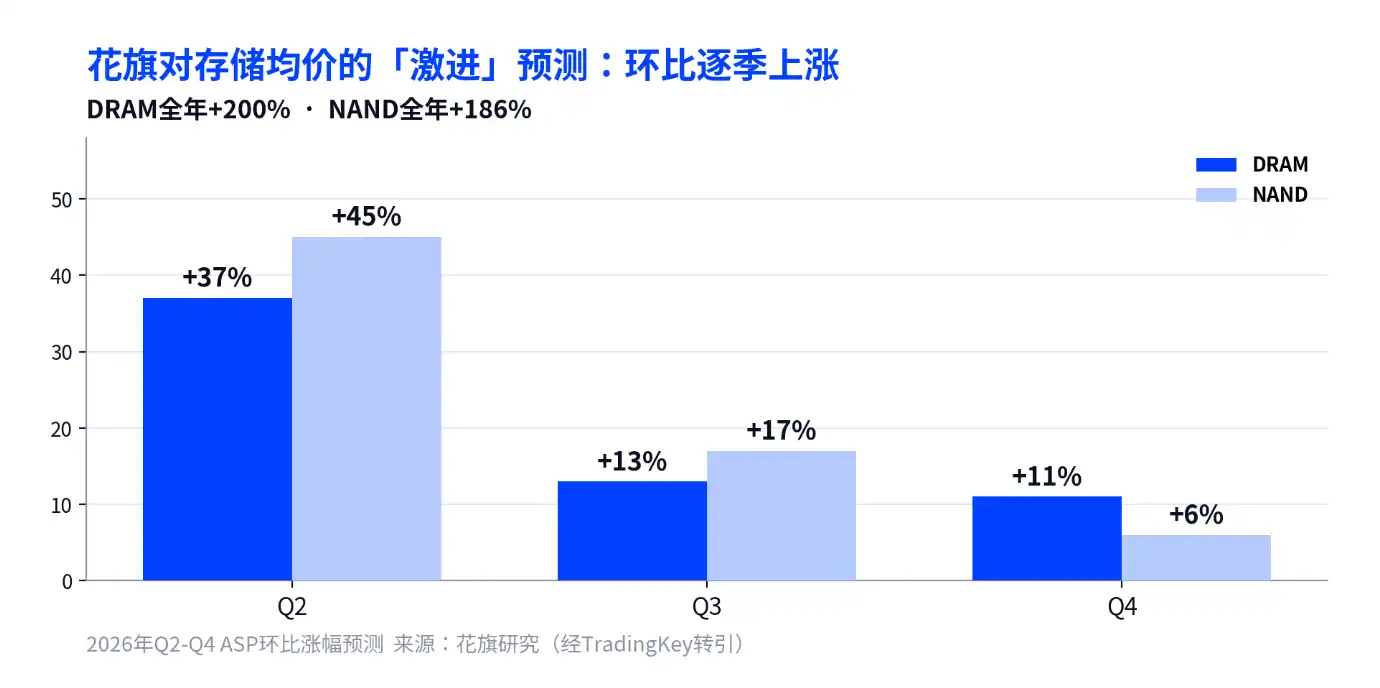
According to TradingKey, Citi forecasts DRAM average selling prices to rise about 200% for the full year 2026, with sequential increases of 37%, 13%, and 11% in Q2 to Q4, respectively; NAND flash prices to rise about 186% for the year, with sequential increases of 45%, 17%, and 6%. A 200% full-year increase is among the most aggressive forecasts on Wall Street for memory prices, not conservative. Based on this, Citi raised its price target to $1,200, while Deutsche Bank gave a target of $1,500; both extended their judgment of a memory shortage through 2028.
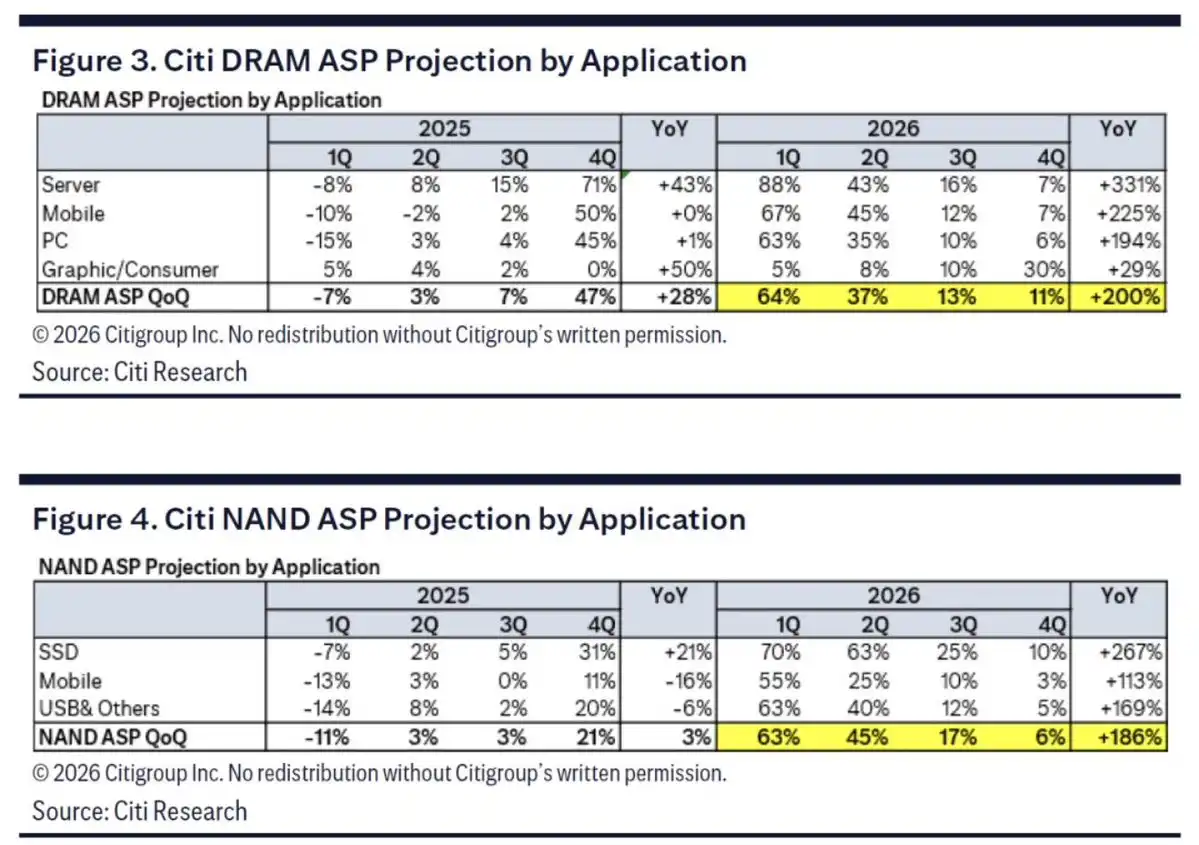
The risk lies here: even the most aggressive institutions have built their forecasts on "200% increases." The earnings report must surpass a bar that has already been repeatedly raised. Expecting to bet on an upside surprise based on "Citi underestimated" is not a solid logical foundation.
Gross Margin Around 81% is the Historical High, and Also the Day's Biggest Suspense

The figure to watch most closely in the earnings report is the gross margin.

According to TradingKey, Micron's own guidance is for revenue of $33.5 billion plus or minus $750 million, EPS around $19.15, and a gross margin around 81%. This is the company's highest historical gross margin and ranks among the top in the semiconductor industry. The net margin was 23.4% in the same period last year and 58.8% last quarter—more than doubling profitability in a year, a magnitude rarely seen in semiconductors.

The higher the gross margin, the more prominent the question of sustainability becomes. Micron has historically been one of the most cyclical tech stocks; everyone knows the boom and bust cycles of memory. On earnings day, any signs suggesting margins have peaked or that prices for mainstream memory categories are starting to soften, even if revenue numbers are impressive, will put pressure on the stock price.

According to TIKR, Micron's Executive Vice President of Global Operations, Manish Bhatia, said at a J.P. Morgan conference that the company's financial outlook is stronger than during the last earnings call, and this quarter is expected to set another free cash flow record; supply tightness for HBM, DRAM, and NAND will persist beyond 2026, and the ramp-up speed for HBM4 capacity is twice that of HBM3E last year. These statements are relatively optimistic, but they are all pre-earnings commentary; their truth will be verified by the day's data.

What Determines the Stock Price Direction is the Guidance, Not This Quarter's Performance

This quarter's revenue and profits are highly likely to be impressive—the market already expects that.

Which way the stock moves on the day depends more on Micron's guidance for the fourth fiscal quarter—for example, whether sequential growth can continue—that's the watershed. Next are the progress of HBM volume ramp and capacity allocation for 2027, as these two items determine whether the story for next year remains viable.

In the history of the memory industry, the easiest time to get caught is not when performance is worst, but when expectations are fullest. Micron is currently at the point of fullest expectations. If you plan to act after the earnings report, look at the guidance and HBM first, then at total revenue.


Tiền kỹ thuật số thịnh hành

Câu hỏi Liên quan

QWhat is the primary risk for Micron's stock price following its June 24th earnings report, according to the article?

AThe primary risk is failing to meet or exceed the extremely high market expectations that have been built up. Even if the reported earnings are excellent, the stock price could still fall if the results do not surpass the elevated consensus estimates, which have been revised upwards multiple times. Furthermore, any sign in the guidance of peaking margins or a loosening in pricing for commodity memory could pressure the stock.

QWhy does the article state that the view 'Citigroup's forecast is too conservative' is incorrect?

AThe article argues this view is incorrect because Citigroup's forecast of a ~200% full-year price increase for DRAM is actually one of the most aggressive predictions on Wall Street, not a conservative one. Therefore, expecting Micron to significantly beat earnings based on the idea that Citigroup underestimated price growth is flawed logic.

QWhat specific financial metric is highlighted as the most critical to watch in Micron's earnings report, and why?

AThe gross margin is highlighted as the most critical metric. Micron's guidance points to a gross margin of approximately 81%, which would be a record high for the company and among the best in the semiconductor industry. The sustainability of this extremely high profitability is a major focus, as any indication that margins have peaked could negatively impact the stock despite strong revenue.

QWhat is the more important factor for determining Micron's stock price direction on earnings day: the Q3 results or the Q4 guidance?

AThe more important factor is the guidance for the fourth fiscal quarter (Q4). While the Q3 results are expected to be strong, the market has already largely priced this in. The stock's direction will depend more on whether Micron's forward-looking guidance indicates continued growth, particularly regarding HBM progress and 2027 capacity planning, which are crucial for sustaining the investment narrative.

QWhat evidence does the article provide to show that Wall Street expectations for Micron have been rising rapidly?

AThe article cites data from Alphastreet showing that the consensus earnings per share (EPS) estimate for Micron's current quarter was $11.73 ninety days ago, rose to $19.13 thirty days ago, and is now $19.72. This represents a cumulative upward revision of 68% over just three months, demonstrating how analysts have been chasing the actual performance data with increasingly higher forecasts.

Nội dung Liên quan

AI cuốn phăng toàn cầu, Crypto + AI tại sao lại ảm đạm thế?

**Tóm tắt: Tại sao Crypto + AI lại ảm đạm khi AI đang bùng nổ toàn cầu?** Bối cảnh AI đang phát triển mạnh mẽ, nhưng lĩnh vực kết hợp Blockchain (Crypto) và AI lại chưa tạo được sức hút tương ứng. Phân tích từ góc độ nhu cầu, có thể thấy vấn đề chính nằm ở sự **lệch pha nghiêm trọng giữa cung và cầu** trong các phân khúc. Các dự án Blockchain+AI nhắm vào các điểm đau thực tế như: 1. **Điện toán phi tập trung & Lưu trữ phi tập trung:** Giải quyết độc quyền tài nguyên, chủ quyền dữ liệu. Tuy có logic hợp lý nhưng **thiếu ưu thế kỹ thuật áp đảo**, chưa đủ thuyết phục doanh nghiệp chuyển đổi từ các nhà cung cấp cloud truyền thống ổn định. 2. **Xác minh mô hình & Bảo vệ quyền riêng tư (ZKML):** Cung cấp tính minh bạch và kiểm toán. Tuy nhiên, đây chưa phải nhu cầu cấp thiết hiện tại của doanh nghiệp. Nhu cầu có thể sẽ **chậm hơn so với chính sách quản lý** (ví dụ: Luật AI của EU). 3. **Cơ sở hạ tầng cho Tác nhân AI (AI Agent):** Hướng tới nền kinh tế đa tác nhân tự trị. **Nhu cầu thị trường chưa chín muồi** vì doanh nghiệp hiện tập trung vào tự động hóa quy trình nội bộ, chưa sẵn sàng cho giai đoạn tác nhân hoạt động xuyên mạng. 4. **Thanh toán cho Tác nhân AI:** Là phân khúc **duy nhất** mà Blockchain có thể cạnh tranh trực tiếp ngang hàng với tài chính truyền thống, vì cả hai đều chưa giải quyết tốt các yêu cầu giao dịch tần suất cao, vi mô, thời gian thực. **Nguyên nhân cốt lõi:** Ngành công nghiệp AI truyền thống có nhu cầu rõ ràng: tăng hiệu suất, giảm chi phí ngắn hạn và độ ổn định tối đa. Trong khi đó, hầu hết các giải pháp Blockchain+AI lại tập trung vào các giá trị dài hạn như chủ quyền dữ liệu, tính minh bạch, phi tập trung - những yếu tố chưa phải là nút thắt cấp bách. Sự đánh đổi về hiệu suất và thiếu **case study thành công quy mô lớn** khiến tỷ lệ ROI không thuyết phục được các doanh nghiệp và vốn tổ chức. **Tương lai:** Sự kết hợp Blockchain và AI vẫn có giá trị lâu dài. Con đường phía trước phụ thuộc vào việc ngành này sẽ **chủ động thích ứng với tiêu chuẩn ngành AI hiện tại** để bù đắp điểm yếu hiệu suất ngắn hạn, hay **kiên trì với lộ trình hiện tại** để xây dựng cơ sở hạ tầng cho tương lai của AI. Kết quả cuối cùng phụ thuộc vào việc lộ trình nào phù hợp với nhu cầu thị trường thực tế trong tương lai.

Foresight News2 phút trước

AI cuốn phăng toàn cầu, Crypto + AI tại sao lại ảm đạm thế?

Foresight News2 phút trước

ETF Liên Tục Ròng Rút, Các Tổ Chức Đang Thoát Ra?

Trong 6 tuần qua, các quỹ ETF Bitcoin dạng vật chất ở Mỹ đã chứng kiến dòng tiền ròng rút ra khoảng 6 tỷ USD, đánh dấu đợt tháo chạy kéo dài nhất kể từ khi ra mắt vào năm 2024. Quỹ IBIT của BlackRock là nguồn chảy chính, riêng tuần gần nhất chiếm hơn 70% tổng lượng rút ra toàn ngành. Dữ liệu trên chuỗi cho thấy những người nắm giữ Bitcoin lâu dài (trên 155 ngày) vẫn không động đậy, nắm giữ ~83% lượng lưu thông. Áp lực bán chủ yếu đến từ các nhà đầu tư tổ chức thông qua tài khoản môi giới - những người đã dễ dàng vào lại cũng dễ dàng rút đi, tạo nên đợt "đầu hàng tập thể" đầu tiên sau khi Bitcoin được phố Wall chấp nhận. Lý do bán tháo có vẻ là điều chỉnh danh mục để giảm rủi ro trong bối cảnh lạm phát tăng, Cục Dự trữ Liên bang (Fed) có thể thắt chặt chính sách, và vốn đổ mạnh vào cơ sở hạ tầng AI hay các đợt IPO hấp dẫn. Bitcoin bị coi là tài sản rủi ro cao và bị bán tháo đầu tiên. Mặc dù tốc độ dòng tiền rút ra đã chậm lại đáng kể, từ 1.72 tỷ USD đầu tháng 6 xuống còn 226.8 triệu USD giữa tháng, vấn đề cấu trúc vẫn tồn tại: IBIT quá lớn nên chính việc rút tiền từ nó đã tạo ra áp lực bán. Thị trường giao ngay hiện phải tự chống đỡ mà không có sự hỗ trợ từ dòng tiền mua ETF, trong khi lượng mua mới và thanh khoản đều ở mức thấp. Tương lai thị trường phụ thuộc vào diễn biến sắp tới: Nếu dòng chảy từ IBIT chậm lại và Bitcoin phục hồi trên 60,000 USD, đây có thể chỉ là đợt điều chỉnh tích cực. Ngược lại, nếu IBIT tiếp tục rút mạnh và giá vỡ dưới 58,000 USD, điều đó cho thấy áp lực bán là lâu dài và thị trường phi ETF sẽ phải một mình hấp thụ cú sốc từ việc các tổ chức rút lui.

marsbit45 phút trước

ETF Liên Tục Ròng Rút, Các Tổ Chức Đang Thoát Ra?

marsbit45 phút trước

Dương Công Mộ Đạo, Ám Độ Trần Thương, Walsh Lót Đường Cho Việc 'Hạ Lãi Suất' Vào Tháng 9?

Tác giả Peter Tchir từ Academy Securities đưa ra quan điểm gây tranh cãi rằng Chủ tịch Fed Kevin Walsh đang sử dụng tư thế diều hâu như một bức màn khói. Mục tiêu thực sự có thể là chuẩn bị cho một lộ trình cắt giảm lãi suất vào tháng 9 và tháng 10, sát thời điểm bầu cử giữa kỳ. Lập luận dựa trên logic chính trị - kinh tế: chính quyền Trump luôn ưa chuộng lãi suất thấp. Walsh có thể đang đóng vai diều hâu để kiểm soát lợi suất trái phiếu dài hạn và bảo vệ vẻ ngoài độc lập của Fed, trước khi chuyển hướng sang nới lỏng với lý do "dựa vào dữ liệu". Tchir chỉ trích các thước đo lạm phát hiện tại như PCE là lỗi thời, đề xuất sử dụng các chỉ số thay thế như Chỉ số giá thuê mới (NTRR) của Fed Cleveland hoặc dữ liệu thời gian thực từ Truflation (hiện cho thấy lạm phát cốt lõi khoảng 1.45%). Ông cho rằng Fed có thể định nghĩa lại "gần 2%" thành "trong khoảng 2%", tạo không gian cho việc cắt giảm. Về lạm phát AI, ông lập luận rằng việc tăng giá của Apple cho thấy sức tiêu dùng mong manh, và lãi suất cao không thể kiềm chế đầu tư vào AI - vốn không nhạy cảm với lãi suất - nhưng lại làm tổn thương người đi vay thông thường. Khuyến nghị đầu tư: Tập trung vào lợi suất đầu kỳ (short-end), tăng tỷ trọng ngành năng lượng (đặc biệt hạt nhân), và thận trọng với định giá AI/trung tâm dữ liệu.

marsbit1 giờ trước

Dương Công Mộ Đạo, Ám Độ Trần Thương, Walsh Lót Đường Cho Việc 'Hạ Lãi Suất' Vào Tháng 9?

marsbit1 giờ trước

IBIT Ghi Nhận Dòng Tiền Ròng Rút 1.3 Tỷ USD Trong Một Tuần, ETF Bitcoin Lớn Nhất Đang Trở Thành Bức Tường Bán Áp Lực Mà Phe Mua Phải Vượt Qua

Bài viết phân tích về tình trạng ròng dòng tiền ra mạnh mẽ từ quỹ ETF Bitcoin trực tiếp lớn nhất của BlackRock, iShares Bitcoin Trust (IBIT), trong tuần giao dịch từ 22-26/6, với mức rút ròng lên tới 1,3 tỷ USD, chiếm gần 73% tổng dòng tiền ra từ toàn bộ nhóm ETF Bitcoin trực tiếp tại Mỹ. Điều này đánh dấu một sự thay đổi cấu trúc thị trường quan trọng: kênh tiếp cận hợp quy định chính từng thúc đẩy câu chuyện "nhu cầu thể chế" giờ đây có thể đang vận hành theo chiều ngược lại, trở thành một nguồn cung cấp áp lực bán tập trung. Áp lực tập trung vào IBIT, sản phẩm có quy mô lớn và tính thanh khoản cao nhất, khiến nó trở thành điểm thử nghiệm then chốt cho đà phục hồi của Bitcoin quanh ngưỡng 60.000 USD. Bài viết đặt ra hai kịch bản: Nếu dòng tiền ra từ IBIT chậm lại và Bitcoin giữ được vùng giá cao, đây có thể chỉ là đợt thanh lọc. Ngược lại, nếu IBIT tiếp tục dẫn đầu dòng tiền ra và Bitcoin không thể củng cố trên 60.000 USD, áp lực bán cấu trúc từ ETF có thể trở thành một rào cản lâu dài, buộc thị trường giao ngang phải hấp thụ lượng cung này mà không có sự hỗ trợ từ câu chuyện ETF trước đây. Các ngày giao dịch sắp tới sẽ có ý nghĩa quyết định trong việc xác định hướng đi tiếp theo của thị trường.

marsbit2 giờ trước

IBIT Ghi Nhận Dòng Tiền Ròng Rút 1.3 Tỷ USD Trong Một Tuần, ETF Bitcoin Lớn Nhất Đang Trở Thành Bức Tường Bán Áp Lực Mà Phe Mua Phải Vượt Qua

marsbit2 giờ trước

Giao dịch

Giao ngay

Bài viết Nổi bật

Làm thế nào để Mua F

Chào mừng bạn đến với HTX.com! Chúng tôi đã làm cho mua Synfutures (F) trở nên đơn giản và thuận tiện. Làm theo hướng dẫn từng bước của chúng tôi để bắt đầu hành trình tiền kỹ thuật số của bạn.Bước 1: Tạo Tài khoản HTX của BạnSử dụng email hoặc số điện thoại của bạn để đăng ký tài khoản miễn phí trên HTX. Trải nghiệm hành trình đăng ký không rắc rối và mở khóa tất cả tính năng. Nhận Tài khoản của tôiBước 2: Truy cập Mua Crypto và Chọn Phương thức Thanh toán của BạnThẻ Tín dụng/Ghi nợ: Sử dụng Visa hoặc Mastercard của bạn để mua Synfutures (F) ngay lập tức.Số dư: Sử dụng tiền từ số dư tài khoản HTX của bạn để giao dịch liền mạch.Bên thứ ba: Chúng tôi đã thêm những phương thức thanh toán phổ biến như Google Pay và Apple Pay để nâng cao sự tiện lợi.P2P: Giao dịch trực tiếp với người dùng khác trên HTX.Thị trường mua bán phi tập trung (OTC): Chúng tôi cung cấp những dịch vụ được thiết kế riêng và tỷ giá hối đoái cạnh tranh cho nhà giao dịch.Bước 3: Lưu trữ Synfutures (F) của BạnSau khi mua Synfutures (F), lưu trữ trong tài khoản HTX của bạn. Ngoài ra, bạn có thể gửi đi nơi khác qua chuyển khoản blockchain hoặc sử dụng để giao dịch những tiền kỹ thuật số khác.Bước 4: Giao dịch Synfutures (F)Giao dịch Synfutures (F) dễ dàng trên thị trường giao ngay của HTX. Chỉ cần truy cập vào tài khoản của bạn, chọn cặp giao dịch, thực hiện giao dịch và theo dõi trong thời gian thực. Chúng tôi cung cấp trải nghiệm thân thiện với người dùng cho cả người mới bắt đầu và người giao dịch dày dạn kinh nghiệm.

Tổng lượt xem 411Xuất bản vào 2024.12.21Cập nhật vào 2026.06.02

Làm thế nào để Mua F

Thảo luận

Chào mừng đến với Cộng đồng HTX. Tại đây, bạn có thể được thông báo về những phát triển nền tảng mới nhất và có quyền truy cập vào thông tin chuyên sâu về thị trường. Ý kiến ​​của người dùng về giá của F (F) được trình bày dưới đây.

活动图片