Behind the AI Report Card, Lies a Chinese 'Exam Setter'

marsbitXuất bản vào 2026-06-20Cập nhật gần nhất vào 2026-06-20

Tóm tắt

Beyond the familiar performance charts like MMLU-Pro and MMMU, which major AI models strive to ace, stands a key "examiner": Chinese-Canadian researcher Wenhu Chen. An assistant professor at the University of Waterloo and founder of TIGERLab, Chen addresses the crucial need for more rigorous AI evaluation. As models like GPT-4 began scoring near-perfect results on older benchmarks like MMLU, it became difficult to distinguish their true capabilities. In response, Chen introduced MMLU-Pro in 2024, featuring harder, more reasoning-focused questions with more answer choices, successfully reintroducing meaningful performance gaps. His work extends to multi-modal evaluation with MMMU and its enhanced version, MMMU-Pro. These benchmarks test a model's ability to understand and reason with complex information from images, charts, and text across diverse academic subjects, exposing the significant challenges even top models face in genuine comprehension. Chen's background in complex QA, table reasoning, and his experience at Google DeepMind on projects like Gemini inform his approach. He understands that effective benchmarks must anticipate how models might "cheat" by memorizing data or avoiding visual analysis. His lab also actively researches video understanding and generation models (e.g., UniVideo, Vamba), ensuring his evaluation work is grounded in practical model-building challenges. Now at Meta's Super Intelligence Lab, Chen continues his focus on multi-modal data and evalua...

Each time a cutting-edge model is released, the AI community focuses on a few familiar report cards.

MMLU-Pro, MMMU, MMMU-Pro... These names might sound foreign to ordinary users, but for model companies and researchers, they have almost become the "standard subjects." GPT, Claude, Gemini, Llama, Qwen, DeepSeek continuously submit their answers on these benchmarks.

"The proof is in the pudding." How good a model is often needs to be proven by these scores.
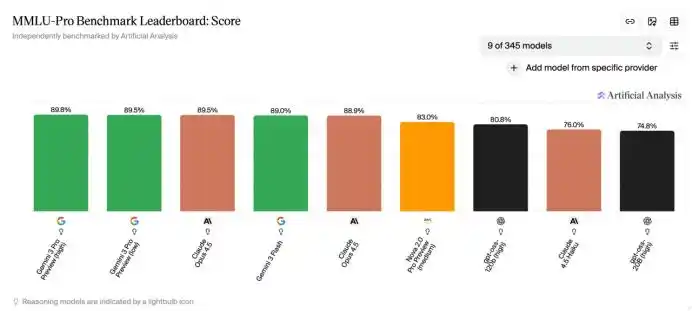
Many performance comparison charts in model launch presentations rely on them; some leaderboards on HuggingFace are also built upon these evaluation systems. It could even be said that today, when the AI industry discusses model capabilities, they are already using a common language defined by these benchmarks.

But interestingly, almost everyone focuses on the scores, yet few know who sets the questions. Behind MMLU-Pro, MMMU, and MMMU-Pro, the same name can be seen—Wenhu Chen.
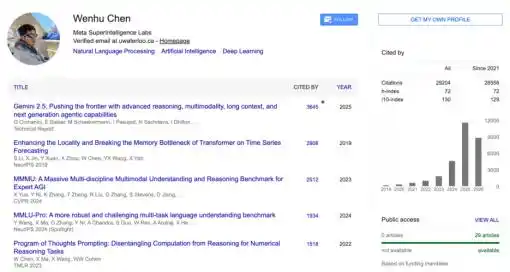
He is an Assistant Professor in the Department of Computer Science at the University of Waterloo in Canada. On Google Scholar, his papers have been cited over 30,000 times.

He is also the founder of TIGERLab. The English full name of this lab is Text and Image GEnerative Research Lab. Because the Chinese word for "tiger" is in his name, Wenhu Chen gave it a very distinctive Chinese name—Hutou Bang (Tiger Head Gang).

01

After the Old Exam Papers Lost Their Effectiveness

Wenhu Chen first caught wider attention because of MMLU-Pro.

MMLU was once one of the most commonly used benchmark evaluations for assessing the capabilities of large language models. It was like a comprehensive test paper, covering multiple subjects, used to measure a model's performance in knowledge understanding and reasoning tasks.

Early on, this paper was very useful. It could distinguish between models through scores, and the industry could also use it to observe whether large language models were truly improving.

But problems soon emerged.

As model capabilities continuously improved, MMLU gradually became "insufficiently challenging." The scores of cutting-edge models got higher and higher, and the gaps between them became smaller and smaller.
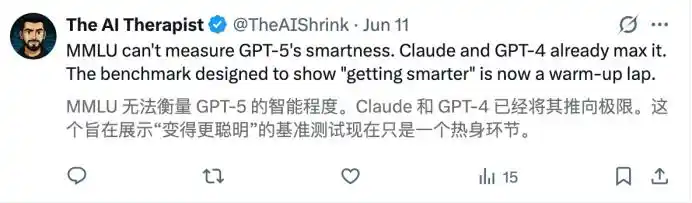
After OpenAI released o3, this problem became even more apparent. The accuracy of o3 on MMLU was already close to 100%, and other cutting-edge models also successively submitted scores approaching full marks.

This might sound like good news, but for evaluation, it actually meant trouble.

If everyone can get close to full marks on an exam paper, it becomes very difficult to continue judging who is stronger and where their strengths lie. It can still prove that models possess certain capabilities, but it is no longer suitable for measuring new progress.

The AI industry needed a harder, less easily "fooled" exam paper.

In 2024, Wenhu Chen and his team launched MMLU-Pro.

MMLU-Pro revamped this exam paper rather than simply expanding the question bank.
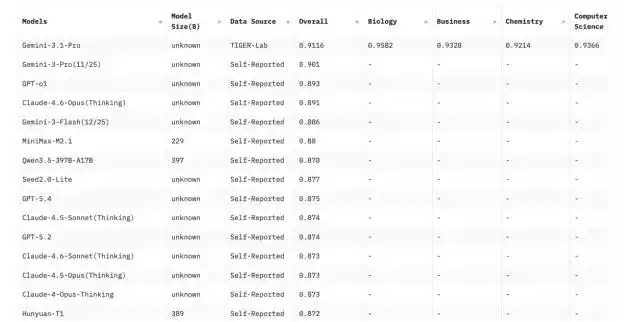
It contains 12,032 questions, covering 14 fields including mathematics, physics, chemistry, law, engineering, psychology, and health. Compared to the original MMLU, it expands the options from 4 to 10, reducing the probability of models guessing correctly. It also incorporates more reasoning-oriented questions and cleans up the original question bank of questions that were relatively simple, ambiguous, or lacked sufficient discriminative power.

The effect was direct.

The paper's results showed that model accuracy on MMLU-Pro decreased by 16% to 33% compared to the original MMLU. When the same model was tested under 24 different prompt styles, the score variation also decreased from 4% to 5% in the original MMLU to about 2%.

In other words, this new paper is not only harder but also more stable.

It reopened the gaps between models that all seemed excellent on the old exam paper. It also became easier to tell whether a model truly understands reasoning or is just better at handling old-style questions.

02

Usable Benchmark Evaluations

MMLU-Pro was quickly adopted by the industry.

MMLU-Pro later entered the NeurIPS 2024 Datasets and Benchmarks track and was also integrated into EleutherAI's lm-evaluation-harness framework. For the open-source model community, this meant it was no longer just a dataset in a paper but had entered the common evaluation toolchain.

Many models began reporting MMLU-Pro scores upon release. Some leaderboards on HuggingFace also incorporated it into their evaluation systems.

If MMLU-Pro solved the problem of the "old exam paper losing effectiveness" in language model evaluation, then MMMU pushed Wenhu Chen and TIGERLab to the center of multimodal evaluation.

The problems with multimodal models are more complex.

Language models answer questions, mainly processing text. Multimodal models, however, have to simultaneously process information in different forms like images, charts, diagrams, maps, tables, musical scores, chemical structures, etc. They not only need to understand the question stem but also truly comprehend the content in the images, and reason by integrating visual information, textual information, and domain knowledge.

The MMMU benchmark contains 11,500 multimodal questions sourced from university exams, quizzes, and textbooks, covering six major domains: Arts & Design, Business, Science, Health & Medicine, Humanities & Social Science, and Technology & Engineering, further subdivided into 30 subjects and 183 subfields.

These questions are not simply asking the model "what's in the picture." They require the model to combine image information with domain knowledge, much like a student tackling a professional problem.

When MMMU was released, the research team tested 14 open-source multimodal models, as well as representative closed-source models like GPT-4V and Gemini Ultra. Even the strongest closed-source models at the time, GPT-4V and Gemini Ultra, only achieved accuracy rates of 56% and 59% respectively.

These numbers indicate that while multimodal models appear to be progressing rapidly, they still have significant room for improvement when it comes to problems requiring genuine professional understanding and reasoning.

Later, Wenhu Chen's team released MMMU-Pro, further plugging the gaps that allowed models to bypass visual information. It filters out questions that could be answered by text-only models, expands answer choices, and introduces a vision-only setting where questions are embedded within images, requiring the model to perform both visual reading and text comprehension simultaneously.

Simply put, it prevents the model from "guessing the answer just by looking at the text."

This kind of work might sound somewhat tedious, but it is crucial. Because future multimodal models need to enter scenarios like healthcare, education, scientific research, design, and engineering; merely being able to describe a picture is not enough. They must be able to judge, reason, explain, and find the truly useful parts within complex visual information.

03

The People Behind the "Exam Papers"

Wenhu Chen's later work on MMLU-Pro and MMMU stems from his long-standing research direction.
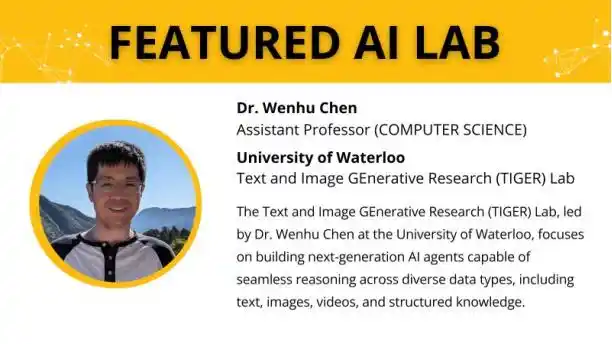
His research interests have always been related to complex information understanding, knowledge question answering, and reasoning.

He earned his bachelor's degree from Huazhong University of Science and Technology, then pursued a master's at RWTH Aachen University in Germany, followed by a Ph.D. in Computer Science from the University of California, Santa Barbara. During his Ph.D., he had already begun research in areas like complex question answering, table reasoning, and knowledge evidence localization.

These tasks share a common characteristic: the answer often does not lie within a single piece of text.

It might be hidden in a table, require combining a piece of text and an image, or might need the model to first retrieve information, then integrate, calculate, and reason. The model cannot just be good at reciting existing knowledge.

Projects Wenhu Chen participated in, such as HybridQA, TabFact, Program of Thoughts, and MAmmoTH, are all related to this line of work.

This also explains his sensitivity to loopholes in model evaluation.

A good benchmark evaluation is not simply about making questions increasingly difficult, but about anticipating where models are most likely to "guess correctly" or "appear competent."

A model might memorize the question bank, guess answers based on options, or use text to bypass visual information... Good evaluation needs to patch these loopholes well.

After his Ph.D., Wenhu Chen joined Google Research and later participated in the development and evaluation of Google DeepMind's Gemini multimodal model from 2021 to 2025. This experience was also important. Long-term exposure to cutting-edge model development gave him a clearer understanding of how model capabilities grow and made it easier to see potential biases and blind spots in evaluation.

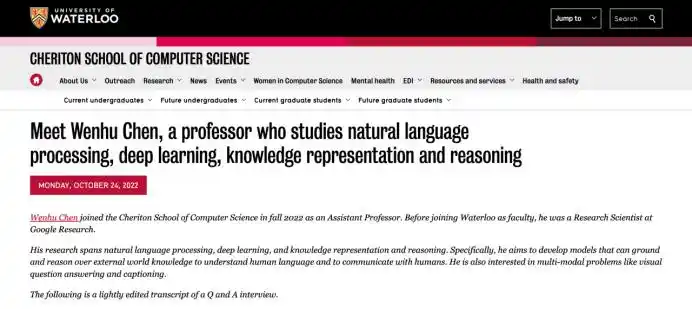
In the fall of 2022, Wenhu Chen joined the David R. Cheriton School of Computer Science at the University of Waterloo as an Assistant Professor. The same year, he was selected as a Canada CIFAR AI Chair. Subsequently, he founded "TIGERLab" (aka Hutou Bang), continuing research focused on foundation models, multimodal capabilities, and benchmark evaluations.
Hutou Bang doesn't just work on benchmark evaluations; they also conduct model and system research.

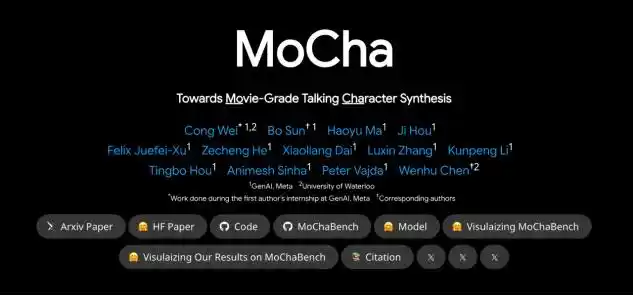
In the video direction, UniVideo attempts to place video understanding, generation, and editing within the same framework, allowing the model not only to generate a sequence of frames but also to understand content, respond to instructions, and complete edits. Vamba targets long video understanding, addressing the memory, computation, and training efficiency challenges posed by hour-long videos. MoCha, a collaboration with Meta's Generative AI team, focuses on talking virtual character generation, producing high-quality character videos from voice and text descriptions.
An exam setter who never takes tests themselves cannot set good questions. Building models themselves, in turn, makes them more suitable for evaluation.

Because truly good evaluation often comes from an understanding of model capability boundaries. Only by knowing how models are built and what problems they encounter in real tasks can one more easily design questions that can differentiate performance and expose weaknesses.

Now, Wenhu Chen has joined Meta's Superalignment Lab, where his work continues to focus on multimodal pretraining data and evaluation, serving Meta's foundation models.

The AI industry does not lack visible figures. Typically, the spotlight falls on entrepreneurs, star researchers, and heads of large model companies. New product launches, funding news, open-source models, and team adjustments often attract the most external attention, making these names more visible to the public.

But today, the participation of Chinese talent in the AI field extends far beyond these most conspicuous positions.

This article is from the WeChat public account "Letters AI", author: Jin Ya

Tiền kỹ thuật số thịnh hành

Câu hỏi Liên quan

QWho is the key person behind AI benchmark evaluations like MMLU-Pro and MMLU, and what is his background?

AThe key person behind AI benchmarks such as MMLU-Pro and MMLU is Wenhu Chen, an assistant professor in the Computer Science department at the University of Waterloo. He previously worked at Google Research and Google DeepMind on projects like the Gemini multimodal model. He is also the founder of TIGERLab (also known as the 'Tiger Gang'), which focuses on generative AI research for text and images.

QWhy was MMLU-Pro created, and how does it differ from the original MMLU benchmark?

AMMLU-Pro was created because the original MMLU benchmark became less effective as advanced AI models started achieving near-perfect scores, making it difficult to differentiate their capabilities. MMLU-Pro differs by expanding the number of answer choices from 4 to 10, reducing guesswork, and incorporating more reasoning-focused questions. It also removes simpler or ambiguous questions, resulting in a more challenging and stable evaluation that better distinguishes model performance.

QWhat is the MMLU benchmark designed to evaluate, and what challenges did it face over time?

AThe MMLU (Massive Multitask Language Understanding) benchmark is designed to evaluate large language models' knowledge comprehension and reasoning abilities across multiple academic subjects. Over time, as models like OpenAI's o3 achieved near-100% accuracy, MMLU became less effective at distinguishing between top-performing models, leading to the need for a more advanced benchmark like MMLU-Pro.

QWhat is the MMLU benchmark, and how does it assess multimodal AI models?

AThe MMLU (Massive Multidisciplinary Multimodal Understanding) benchmark is designed to assess multimodal AI models by testing their ability to integrate and reason with information from both text and visual inputs (e.g., images, charts, diagrams). It includes 11,500 questions from university exams and textbooks across six major fields, requiring models to combine visual understanding with domain knowledge to solve complex problems.

QHow does Wenhu Chen's work on AI benchmarks relate to his broader research interests and projects?

AWenhu Chen's work on AI benchmarks is closely tied to his broader research focus on complex information understanding, knowledge-based reasoning, and multimodal AI. His involvement in projects like HybridQA, TabFact, and UniVideo reflects his interest in tasks requiring integration of diverse data sources. By developing models himself, he gains insights into their limitations, enabling him to design more effective benchmarks that accurately assess true model capabilities.

Nội dung Liên quan

Mô Hình Đảo Chiều XRP Hình Thành Xung Quanh Mẫu Harmonic và Vùng Hỗ Trợ Chính

XRP đang ở trong một khu vực kỹ thuật quan trọng có thể định hình bước di chuyển lớn tiếp theo. Nhà phân tích The_Alchemist_Trader_ chỉ ra rằng XRPUSD đang giao dịch tại một vùng hỗ trợ tới hạn được củng cố bởi nhiều lớp hội tụ, bao gồm mức thoái lui Fibonacci 0.618 và điểm kiểm soát của phạm vi giao dịch hiện tại. Sự hội tụ này làm tăng tầm quan trọng của vùng giá này, biến nó thành chiến trường giữa người mua giá thấp và người bán. Luận thuyết biểu đồ cho thấy XRP có thể đang cố gắng xây dựng nền tảng cho một mô hình đảo chiều rộng hơn dựa trên cấu trúc Harmonic. Các thiết lập này cung cấp cho nhà giao dịch cách thức có cấu trúc để xác định các điểm xoay chiều tiềm năng, khu vực mất hiệu lực và mục tiêu đo lường. Câu hỏi then chốt là liệu vùng hỗ trợ này sẽ tạo ra một phản ứng dứt khoát hay chỉ đơn giản làm chậm đà giảm. Để xác nhận luận điểm đảo chiều, những người ủng hộ XRP cần thấy giá hồi phục mạnh từ vùng hội tụ, vượt qua được kháng cự gần đó, duy trì khối lượng và tránh tái kiểm tra vùng hỗ trợ ngay lập tức. Nếu không, thị trường có thể coi đây là một đợt bật tái phục hồi thất bại khác. Phân tích này nên được xem như một thiết lập để theo dõi hơn là một dự đoán. Vùng hỗ trợ rõ ràng, sự hội tụ đáng chú ý và cấu trúc đảo chiều tiềm năng rất đáng quan sát, nhưng thị trường vẫn cần xác nhận nó bằng hành động giá.

bitcoinist1 giờ trước

Mô Hình Đảo Chiều XRP Hình Thành Xung Quanh Mẫu Harmonic và Vùng Hỗ Trợ Chính

bitcoinist1 giờ trước

Ý tưởng về stablecoin thuật toán của Vitalik: Góc nhìn từ quyền chọn giải mã cơ chế và thách thức

Tác giả phân tích đề xuất về stablecoin thuật toán của Vitalik từ góc nhìn quyền chọn. Ý tưởng cốt lõi là chia 1 ETH thành hai phần: phần "Ổn định" (P) đảm bảo giá trị đến một mức giá thực hiện nhất định, hoạt động như một quyền chọn mua bán được bảo đảm (covered call); và phần "Tăng giá" (N) nhận toàn bộ lợi nhuận nếu giá vượt trên mức đó. Cơ chế này không cần nợ, ký quỹ hay thanh lý. Tuy nhiên, thách thức lớn nằm ở việc duy trì tính ổn định. Tài sản P cần liên tục gia hạn các quyền chọn mua có giá thực hiện sâu trong vùng có lãi, dẫn đến rủi ro trượt giá khi gia hạn, bị tận dụng giao dịch và thiếu thanh khoản. Vấn đề then chốt là ai sẽ liên tục nắm giữ phần N - một vị thế mua ETH có đòn bẩy không chịu phí funding và rủi ro thanh lý - để hệ thống mở rộng. Bài viết so sánh với kinh nghiệm từ Rysk, nơi quyền chọn đã thành công khi trở thành module cơ sở cho các sản phẩm như công cụ tạo thu nhập thay vì một sản phẩm giao dịch độc lập. Tác giả kết luận rằng tương lai của quyền chọn trong DeFi không phải là cạnh tranh với hợp đồng vĩnh cửu, mà là đóng vai trò là động cơ định giá và phân bổ rủi ro nền tảng cho thế hệ sản phẩm tài chính phức tạp tiếp theo như stablecoin, sản phẩm cấu trúc hoặc chỉ số.

marsbit1 giờ trước

Ý tưởng về stablecoin thuật toán của Vitalik: Góc nhìn từ quyền chọn giải mã cơ chế và thách thức

marsbit1 giờ trước

SpaceX, AI và XRP: Tại sao lần chuyển dịch tài sản tiếp theo có thể khác biệt?

Bài viết khám phá sự hội tụ tiềm năng của ba lĩnh vực công nghệ - Cơ sở hạ tầng vũ trụ (đại diện bởi SpaceX), Trí tuệ nhân tạo (AI) và mạng lưới thanh toán blockchain (như XRP) - như là động lực chính cho một đợt chuyển dịch tài sản và chu kỳ đầu tư cơ sở hạ tầng mới. Nội dung chính cho rằng, khi các động lực tăng trưởng truyền thống chậm lại, vốn toàn cầu đang tìm kiếm các hệ thống nền tảng mới. Các dự án cơ sở hạ tầng không gian, mạng lưới vệ tinh, trung tâm dữ liệu và năng lực tính toán AI sẽ thúc đẩy nhu cầu lớn về hàng hóa cơ bản. Đồng thời, các hoạt động kinh tế mới nổi này sẽ cần một lớp giải quyết thanh toán toàn cầu hiệu quả, nơi các tài sản kỹ thuật số tập trung vào thanh toán và khả năng tương tác như XRP có thể đóng vai trò then chốt. Bài viết nhấn mạnh sự chuyển dịch từ một "câu chuyện đầu cơ" sang một "câu chuyện cơ sở hạ tầng" trong thị trường tài sản kỹ thuật số, nơi giá trị sẽ ngày càng được xác định bởi tiện ích thực tế như khối lượng giao dịch, hoạt động thanh toán và sự tích hợp với AI (ví dụ: các tác nhân AI thực hiện giao dịch tự động). Sự rõ ràng về mặt quy định được coi là yếu tố quan trọng để thúc đẩy việc áp dụng rộng rãi hơn bởi các tổ chức. Tóm lại, tác giả đưa ra viễn cảnh về một nền kinh tế tương lai, nơi các hệ thống cơ sở hạ tầng vật chất (vũ trụ, AI), nhu cầu nguyên vật liệu và lớp tài chính kỹ thuật số (blockchain) hội tụ, tạo ra cơ hội đầu tư sớm cho những ai nhận ra xu hướng này.

marsbit2 giờ trước

SpaceX, AI và XRP: Tại sao lần chuyển dịch tài sản tiếp theo có thể khác biệt?

marsbit2 giờ trước

Đếm ngược GPT-5.6: Từ bỏ ảo tưởng API đơn nhất, tốc độ lặp lại sức mạnh tính toán nhanh đến mấy cũng không chống nổi một tờ quy định tuân thủ

Giữa tháng 6, ba sự kiện – Fable 5 bị giới hạn tuân thủ, GLM-5.2 được mã nguồn mở và thời điểm ra mắt GPT-5.6 bị rò rỉ – đánh dấu bước ngoặt cho ngành AI toàn cầu. Các logic vận hành cơ bản đang được định hình lại: 1. **"Khả năng sử dụng" quan trọng hơn "tính tiên tiến":** Chuỗi cung ứng mô hình lớn bước vào giai đoạn "hai luồng" với mã nguồn đóng được kiểm soát và mã nguồn mở triển khai cục bộ cùng tồn tại. 2. **Rào cản cạnh tranh thay đổi:** Các gã khổng lồ mã nguồn đóng chuyển trọng tâm từ "trí tuệ ngôn ngữ" sang "trí tuệ không gian (mô hình thế giới)" đòi hỏi lượng lớn sức mạnh tính toán. 3. **Thiết kế "phi mô hình" là yêu cầu sống còn:** Để đối phó rủi ro tuân thủ xuyên quốc gia, các nhà phát triển ứng dụng phải đảm bảo tính liên tục kinh doanh bằng cách tách biệt logic nghiệp vụ khỏi một mô hình cụ thể. Sự kiện Fable 5 của Anthropic bị hạn chế truy cập chỉ sau 72 giờ đối với người dùng không phải công dân Mỹ cho thấy rủi ro tuân thủ có thể vô hiệu hóa bất kỳ lợi thế công nghệ nào. Trong bối cảnh đó, các mô hình mã nguồn mở như GLM-5.2 của Trí Phổ AI trở thành lựa chọn dự phòng chiến lược, nhờ hiệu suất được cải thiện, chi phí thấp hơn đáng kể và khả năng triển khai cục bộ. Để tái khẳng định giá trị, các hãng mã nguồn đóng như OpenAI đang định vị lại. GPT-5.6 (dự kiến ra mắt) chuyển trọng tâm sang "trí tuệ không gian", nhằm tạo khoảng cách thế hệ mới trong các lĩnh vực như mô phỏng công nghiệp và robot – nơi đòi hỏi sức mạnh tính toán khổng lồ. Bài học rõ ràng: Trong môi trường hiện nay, việc đánh giá cơ sở hạ tầng AI không thể chỉ dựa trên hiệu suất kỹ thuật. Khả năng truy cập ổn định và tuân thủ quy định đã trở thành các yếu tố tiên quyết ngang bằng. Đối với các doanh nghiệp, việc phụ thuộc hoàn toàn vào API của một nhà cung cấp duy nhất là rủi ro cao. Thiết kế kiến trúc "phi mô hình" để có thể chuyển đổi linh hoạt giữa các giải pháp là điều tối cần thiết để đảm bảo tính liên tục trong kinh doanh.

marsbit4 giờ trước

Đếm ngược GPT-5.6: Từ bỏ ảo tưởng API đơn nhất, tốc độ lặp lại sức mạnh tính toán nhanh đến mấy cũng không chống nổi một tờ quy định tuân thủ

marsbit4 giờ trước

Cuộc Chiến 'Trợ Cấp Token' của Những Gã Khổng Lồ AI Sắp Kết Thúc Chưa?

Cuộc chiến trợ cấp Token giữa các gã khổng lồ AI như OpenAI, Anthropic và Google đang diễn ra quyết liệt. Hiện tại, người dùng đang được hưởng mức giá "bẻ gãy" khi các công ty này bù lỗ nặng để thu hút và giữ chân người dùng, đặc biệt là các gói cao cấp. Tuy nhiên, khác với các cuộc chiến trợ cấp thời internet, token AI hầu như không tạo ra hiệu ứng "khóa" người dùng do việc chuyển đổi giữa các nền tảng là quá dễ dàng. Bill Maris, người sáng lập Google Ventures, dự đoán 100% rằng Google - với lợi thế từ cỗ máy in tiền quảng cáo khổng lồ - có thể hạ giá token thêm 80%, gây áp lực khủng khiếp lên các đối thủ phụ thuộc vào vốn đầu tư như OpenAI và Anthropic. Điều này đặt ra câu hỏi về tính bền vững của mô hình kinh doanh khi họ phải công khai báo cáo tài chính sau IPO. Bài viết phân tích hai kịch bản có thể xảy ra: 1) Mô hình "dịch vụ internet" với một vài công ty thống trị rồi tăng giá, hoặc 2) Token trở thành cơ sở hạ tầng tiêu chuẩn như "điện, nước", nơi cạnh tranh đẩy giá xuống sát chi phí và lợi nhuận trở nên rất thấp. Do thiếu hiệu ứng khóa chân người dùng, kịch bản thứ hai có vẻ thực tế hơn. Cuộc chiến này có thể không có kẻ chiến thắng rõ ràng, mà là một cuộc chạy đua tiêu hao kéo dài nhằm giữ vị trí trên "bàn chơi", thúc đẩy AI trở thành một tiện ích cơ sở hạ tầng công cộng mà không công ty nào có thể độc chiếm. Đối với người dùng, điều này có nghĩa là họ có thể tiếp tục được hưởng lợi từ các giao dịch "hời" trong một thời gian dài hơn.

marsbit4 giờ trước

Cuộc Chiến 'Trợ Cấp Token' của Những Gã Khổng Lồ AI Sắp Kết Thúc Chưa?

marsbit4 giờ trước

Giao dịch

Giao ngay
Hợp đồng Tương lai

Bài viết Nổi bật

Làm thế nào để Mua EDGE

Chào mừng bạn đến với HTX.com! Chúng tôi đã làm cho mua edgeX (EDGE) trở nên đơn giản và thuận tiện. Làm theo hướng dẫn từng bước của chúng tôi để bắt đầu hành trình tiền kỹ thuật số của bạn.Bước 1: Tạo Tài khoản HTX của BạnSử dụng email hoặc số điện thoại của bạn để đăng ký tài khoản miễn phí trên HTX. Trải nghiệm hành trình đăng ký không rắc rối và mở khóa tất cả tính năng. Nhận Tài khoản của tôiBước 2: Truy cập Mua Crypto và Chọn Phương thức Thanh toán của BạnThẻ Tín dụng/Ghi nợ: Sử dụng Visa hoặc Mastercard của bạn để mua edgeX (EDGE) ngay lập tức.Số dư: Sử dụng tiền từ số dư tài khoản HTX của bạn để giao dịch liền mạch.Bên thứ ba: Chúng tôi đã thêm những phương thức thanh toán phổ biến như Google Pay và Apple Pay để nâng cao sự tiện lợi.P2P: Giao dịch trực tiếp với người dùng khác trên HTX.Thị trường mua bán phi tập trung (OTC): Chúng tôi cung cấp những dịch vụ được thiết kế riêng và tỷ giá hối đoái cạnh tranh cho nhà giao dịch.Bước 3: Lưu trữ edgeX (EDGE) của BạnSau khi mua edgeX (EDGE), lưu trữ trong tài khoản HTX của bạn. Ngoài ra, bạn có thể gửi đi nơi khác qua chuyển khoản blockchain hoặc sử dụng để giao dịch những tiền kỹ thuật số khác.Bước 4: Giao dịch edgeX (EDGE)Giao dịch edgeX (EDGE) dễ dàng trên thị trường giao ngay của HTX. Chỉ cần truy cập vào tài khoản của bạn, chọn cặp giao dịch, thực hiện giao dịch và theo dõi trong thời gian thực. Chúng tôi cung cấp trải nghiệm thân thiện với người dùng cho cả người mới bắt đầu và người giao dịch dày dạn kinh nghiệm.

Tổng lượt xem 719Xuất bản vào 2026.03.31Cập nhật vào 2026.06.02

Làm thế nào để Mua EDGE

Thảo luận

Chào mừng đến với Cộng đồng HTX. Tại đây, bạn có thể được thông báo về những phát triển nền tảng mới nhất và có quyền truy cập vào thông tin chuyên sâu về thị trường. Ý kiến ​​của người dùng về giá của EDGE (EDGE) được trình bày dưới đây.

活动图片