Recent On-Chain Review: No Clear Narrative Under U.S. Stock Market Pressure, Just Hype

marsbitXuất bản vào 2026-06-12Cập nhật gần nhất vào 2026-06-12

Tóm tắt

This article analyzes the current state of the Solana meme coin and community token ecosystem, highlighting a market caught between two dominant forces: attention-based PvP and a gradual return to community-centric projects. The first part explores the "Attention PvP" dynamic, where success is driven by celebrity endorsements, viral events, and speed. Examples include $JOTCHUA, which surged after its meme creator's social media activity, and $WORLDCUP, which outperformed a similar Base chain project ($PITCH) largely due to influencer support. The recent "pump.fun GO" feature, allowing bounty tasks for token promotion, is critiqued for fostering sensationalist and often negative stunts—like people getting token tickers tattooed on their bodies for rewards—reminiscent of old internet shock content. In contrast, the article points to a resurgence of organic, community-driven tokens that survive market volatility through strong holder bases and shared ideology, not just hype. Influencer Ansem is cited, arguing that durable meme coins rely on communities willing to endure losses and promote their core message daily. Examples given are older tokens like $neet (anti-work ethos), $troll, $buttcoin, and $triplet, which have maintained relative price stability. A prime example of this community-build model is the new project $KINS, the token for the browser-based MMORPG Kintara. Its success stems not from advanced graphics but from consistently delivering updates, fostering player t...

After the ETH mainnet gradually grew quiet, degens have returned to be active on Solana once again. Despite this, it's hard to say there is a clear main narrative for the activity on Solana. To summarize, it might be fitting to describe it as "oscillating between a return to community and attention PvP."

Attention PvP

Ever since Trump issued a token, the meme coin market has grown accustomed to the playbook of relying on celebrity endorsements, hot events, and competing on speed for a long time.

Everyone is used to it, so even with poor liquidity, people still follow this playbook to find opportunities, thus forming an inertia for this kind of strategy.

$JOTCHUA, a dog meme that became popular in Spanish and English-speaking circles in 2021. On January 24, 2021, Instagram user @_kingorange uploaded an inspirational poster featuring a crudely drawn dog picture with the text "JOTCHUA," which received over 29,000 likes within three months.
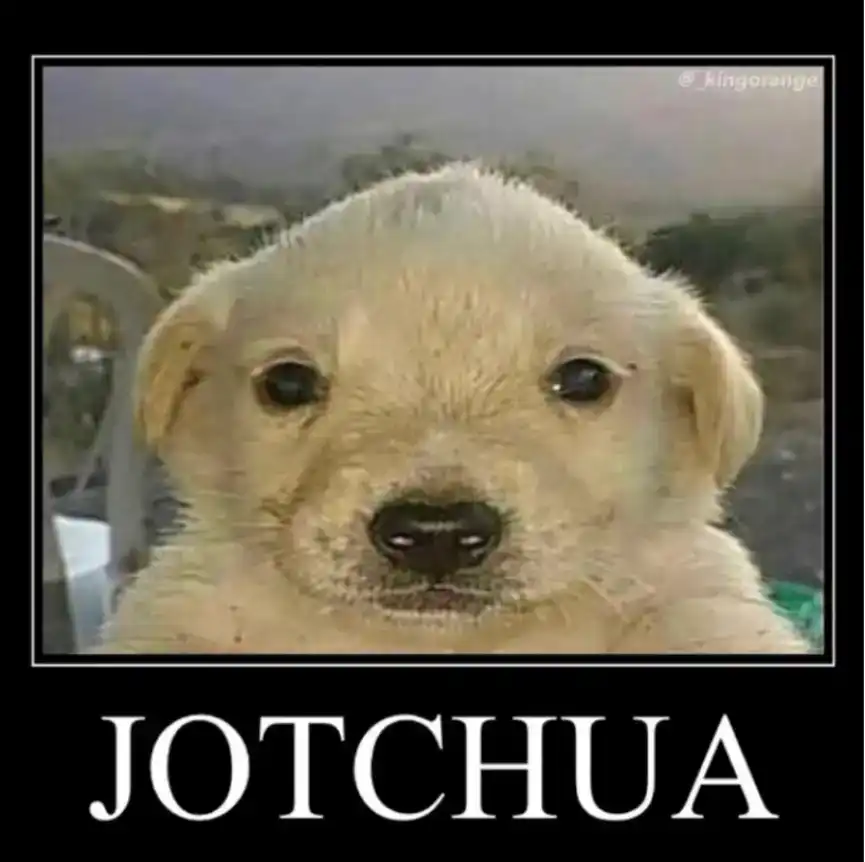
Its market cap once neared $9 million at its peak. The community has significant debates over whether this token is "organic," because its launch did not occur after the meme's creator @_kingorange claimed it, making it almost impossible to say the "claim" was the direct cause of the price surge.

Many players believe this token is another instance of "setting up a play," or attribute it to KOL Ansem sparking market speculation about his purchase being related to this token when he claimed on June 9th that he had returned to buying Solana meme coins for the first time in over a year.

The same concept, even the same ticker, but your coin just doesn't pump. $JOTCHUA on the ETH mainnet was deployed as early as December 2023, and has had consistent content and community, but it couldn't compete with getting the creator to click a few buttons and claim it.

A similar situation happened with the World Cup concept. $WORLDCUP on Solana, due to bonkguy's purchase and detailed analysis, saw its market cap surge from around $5 million to once break $12 million. Meanwhile, the World Cup concept project $PITCH on Base had fallen from a peak market cap of about $7 million to nearly $700,000.

Although $PITCH indeed has its own issues, mainly on the communication front. The project is not inactive, it keeps updating, but the dev rarely speaks up, and their X (Twitter) account got repeatedly suspended and still hasn't sorted out a new one. But admittedly, without any endorsements, similar concepts and playstyles lose out in the battle for attention.

The recent new feature from pump.fun, pump.fun GO, allows anyone to post paid bounty tasks on pump.fun.

This did attract mainstream media attention, but unfortunately, once again in a negative light reaching the masses.

$Bountywork, this token's market cap once approached $2.5 million at its peak. Its dev @ayushquantt's strategy is to continuously post new tasks on pump.fun, creating hype for this token.

He certainly succeeded—by offering a bounty of 40 SOL to have someone tattoo $bountywork on their forehead.

An Indian man actually got it tattooed, and strictly followed a typo the dev made in the description—missing an 'n', incorrectly writing the ticker as $boutywork.
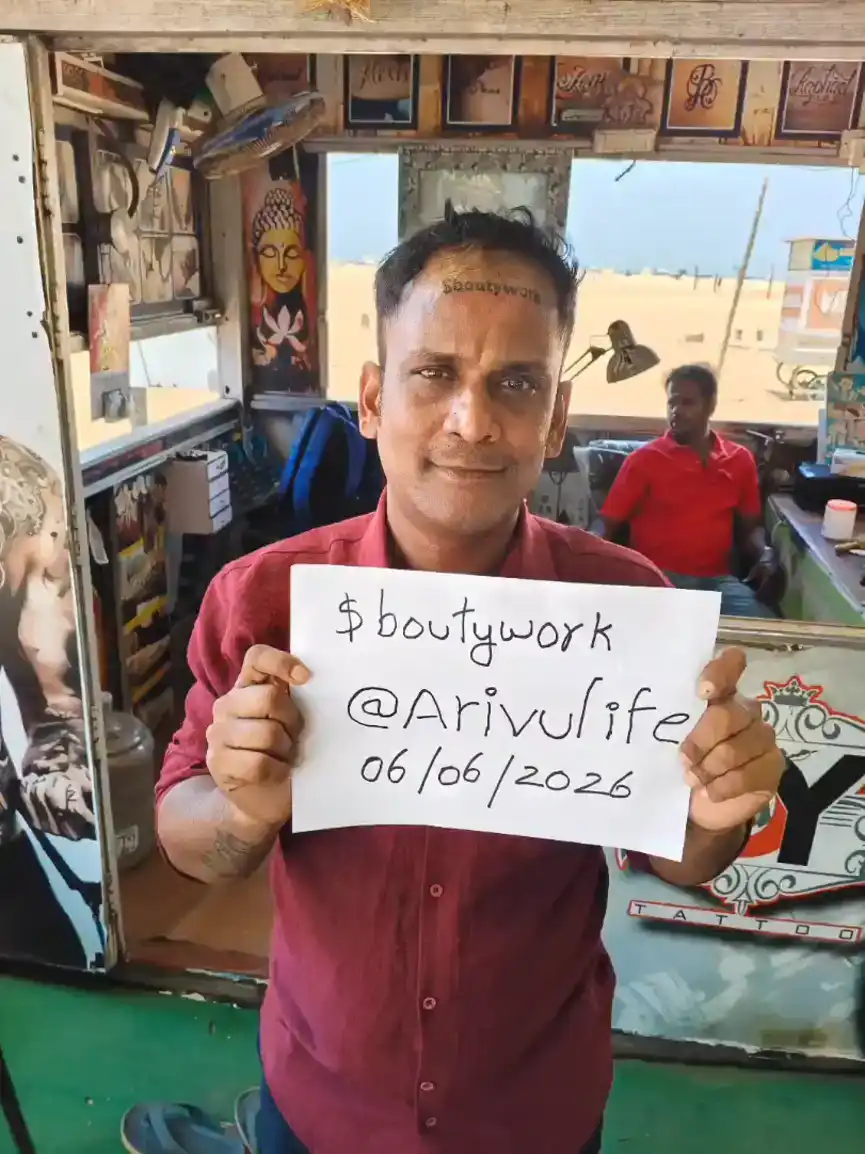
Initially, his bounty application was rejected because the tattoo was missing the letter 'n', and the dev demanded he correct the tattoo. Then, someone launched a new token using the incorrect tattoo as the ticker, $boutywork.

Finally, the 40 SOL bounty reward was still given to him, and the creator revenue from the new token was also given to him, earning him a total of about $48,000.

Then, as the hype faded, $boutywork has essentially gone to zero. The dev of $Bountywork is still continuously posting new bounties trying to replicate this "success," for example, having someone eat 3 insects on camera while wearing a $Bountywork t-shirt.
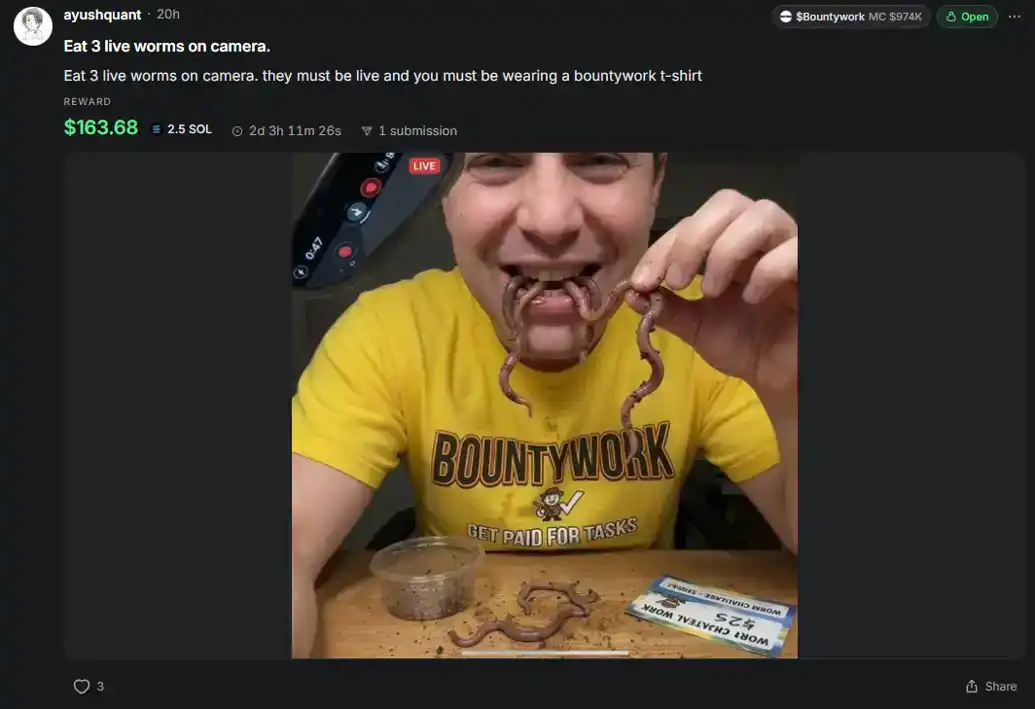
There are quite a few tattoo-related tasks on pump.fun; some have received up to 200 SOL in return for tattooing their own face.
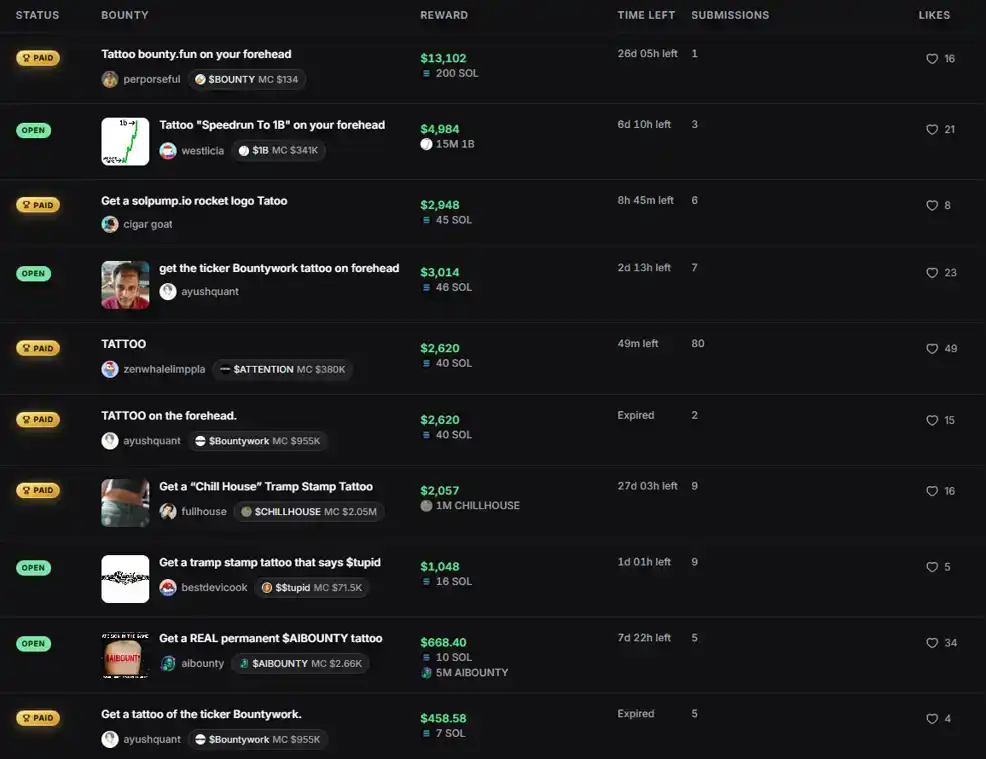
Honestly, this isn't much different from the days when big brothers on Kuaishou tipped people to eat raw eggs or gulp down white liquor...

The Return of Community

Let's continue the discussion around pump.fun's new feature. Almost all bounty tasks are related to generating attention-hype for specific tokens. The only one not treated as a joke might be this bounty task for $neet—organizing a gathering in New York for people who resist work.
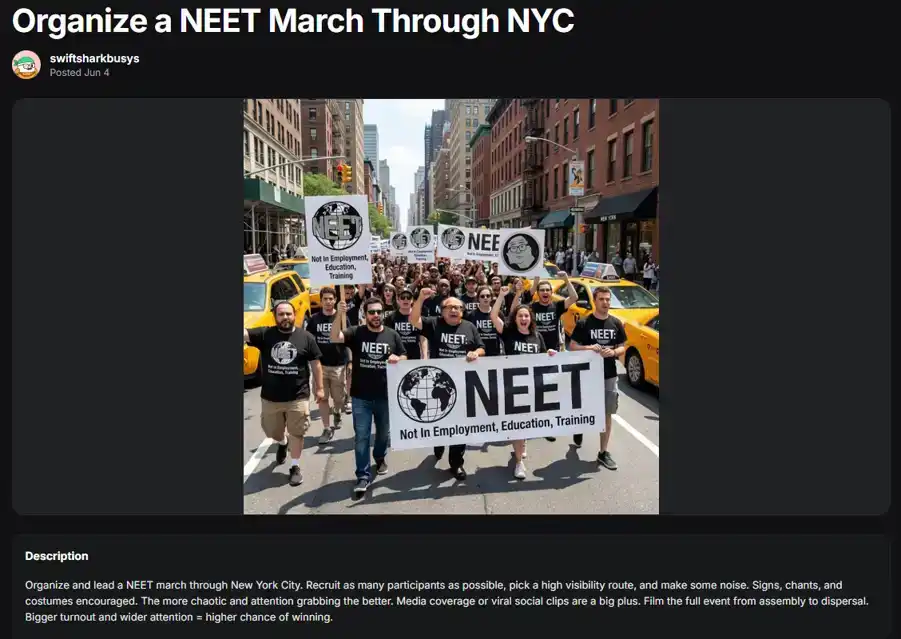
The reward for this bounty is paid in $neet, equivalent to over $15,000. The $neet community has previously self-organized 2 offline "anti-work gatherings" in the US; if this bounty is completed, it will be the 3rd.

Although it's unclear what pump.fun's intention is in supporting community-type meme coins, their official Twitter always features promotions for such community tokens. Although the performance of these tokens varies—for instance, $chillhouse's price has been sluggish for a while—the ones pump.fun officially picks out are generally quite community-driven and organic.

Currently, those with relatively stable visibility and price performance, besides $neet, include $troll, $buttcoin, and $triplet. A brief introduction to the survival status and themes of these community-type tokens:

- $neet: Deployed 410 days ago, peak market cap ~$51 million, current market cap ~$27 million. The community's mission is to make more people realize that dedicating most of one's life to work means losing one's own life.

- $troll: Deployed 416 days ago, holds the copyright to the classic meme Troll, listed on Coinbase. Peak market cap ~$290 million, current market cap ~$65 million.

- $triplet: Deployed 107 days ago, an abbreviation for "Tung Tung Tung Sahur," the hottest breakout character from last year's viral "Italian Classic of Mountains and Seas." Peak market cap ~$13.6 million, current market cap ~$6.6 million.

- $buttcoin: Deployed 153 days ago, originated from a 2011 joke on the Bitcoin forum, a pun on Bitcoin as "Buttcoin" (Butt coin). Peak market cap ~$68.6 million, current market cap ~$27 million.

Mentioning these tokens and the return of community-type coins brings us back to Ansem. After he mentioned returning to buy Solana memes, someone told him to just post the CA (contract address), and if he did, they would aggressively buy 1% to add to their position.
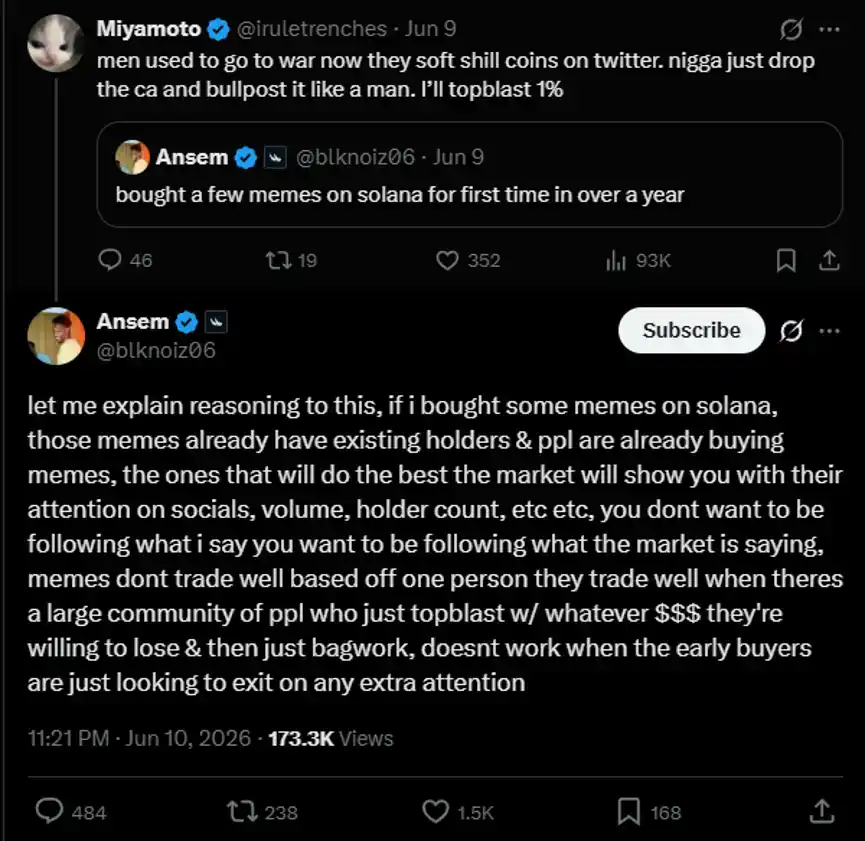
Ansem's response sparked much discussion:

"Let me explain why I don't post CAs. If I buy some Solana meme coins, and these coins already have good holders, the market will tell you which ones are good through social media performance, trading volume, holder count, etc. You shouldn't listen to me, but to the market. Meme coins relying on a group of holders who just compete on speed, wait for endorsements to dump, won't be good. Only tokens with a large community, where people within the community are willing to endure losses and promote their beliefs day after day, will succeed. Tokens dependent on a single celebrity won't do well."

Besides the older tokens mentioned above that have survived long and maintained relatively stable prices, there are indeed new tokens emerging that align with Ansem's view, such as $KINS.

$KINS is the token for Kintara, which is a blockchain game. Interestingly, Kintara hasn't led the Solana gaming sector because its rise wasn't due to the game's polish, but rather its step-by-step actions to earn community trust.

A brief introduction to $KINS' mechanism. This is an MMORPG playable in a browser; to play, your wallet needs 1,000 $KINS. Once in, you can chop wood, mine, fish, buy houses, fight monsters and bosses, and PvP.
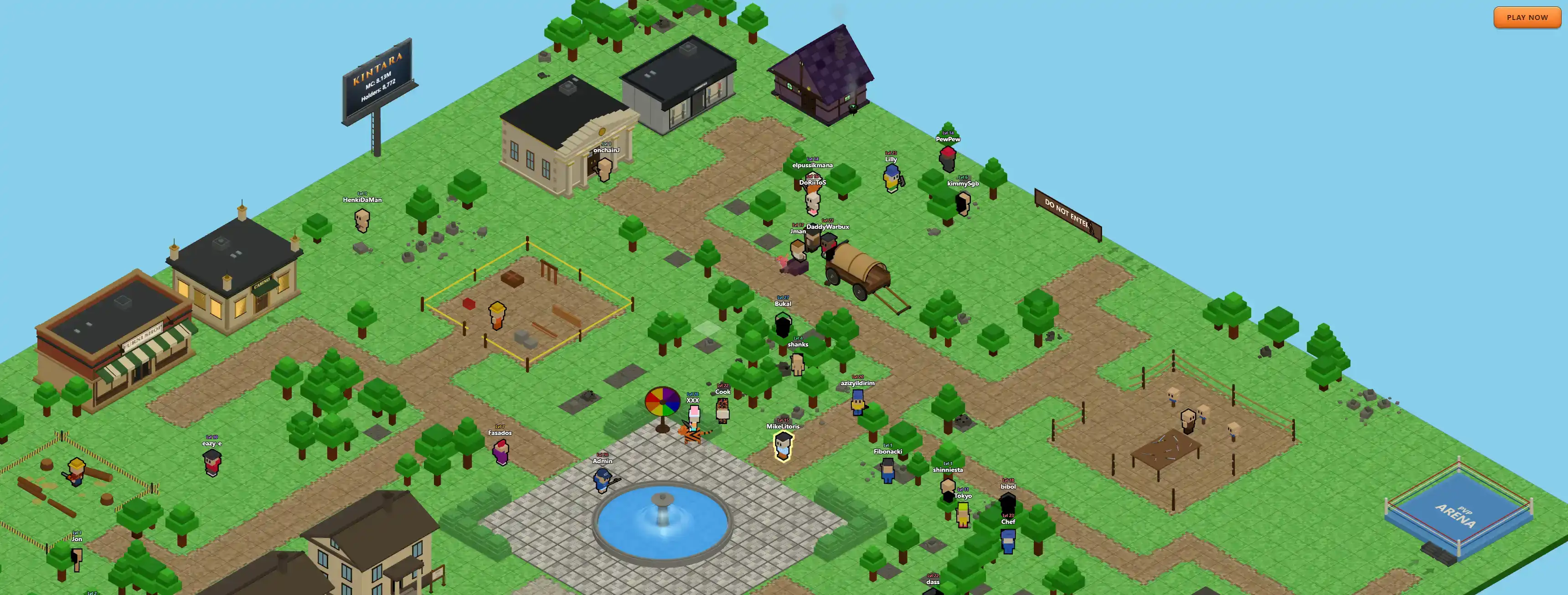
The game has no other pay-to-win options, only a reward wheel. If players don't want to spin only once a day, they can spend $3 worth of $KINS to continue spinning. 50% of this revenue is used for token buyback and burn, 50% for project maintenance and development.

The core gameplay loop is roughly: gather resources -> craft items -> challenge tougher monsters. If players lack resources, they need to use the in-game currency "Gold" to buy from other players. Players can sell "Gold" in the game priced in $KINS, with 5% going to the treasury and 95% to the player.

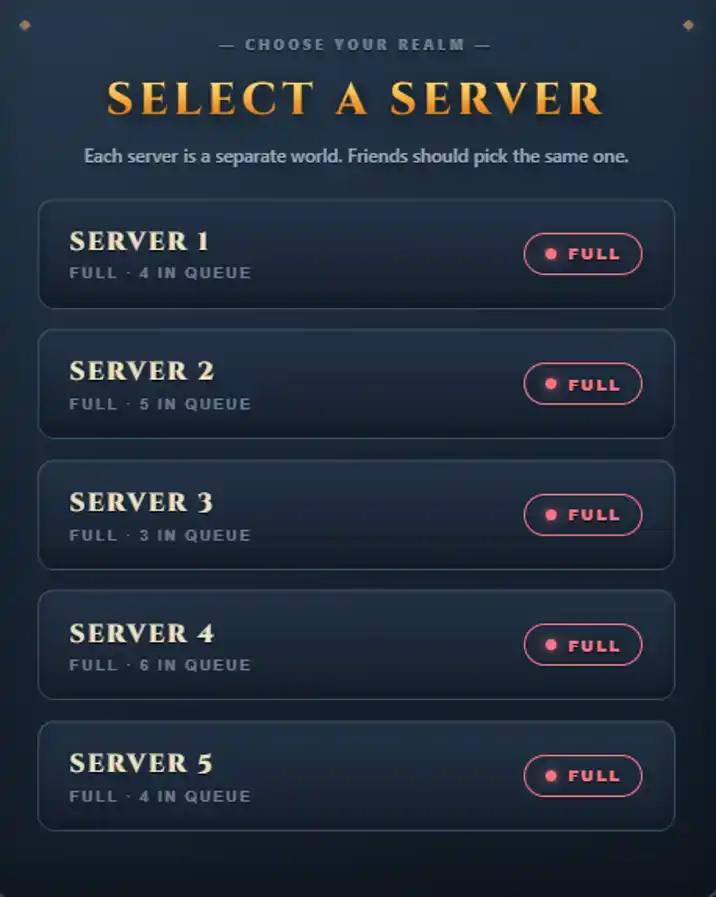
It sounds fairly ordinary, and the data isn't particularly impressive either (so far, 0.5% of $KINS has been repurchased), but the project's consistent delivery has built solid trust. Perhaps because the market is so disheartening, many players have genuinely gotten into it. The number of people fishing in the game daily is increasing. The project has expanded to 5 servers, but there's still a queue...
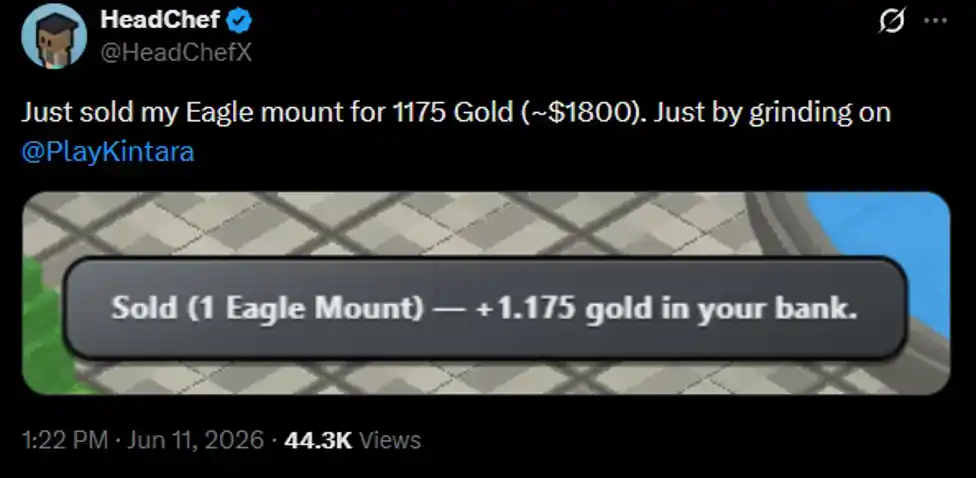
A player successfully sold a rare mount obtained from fishing and earned $1,800:
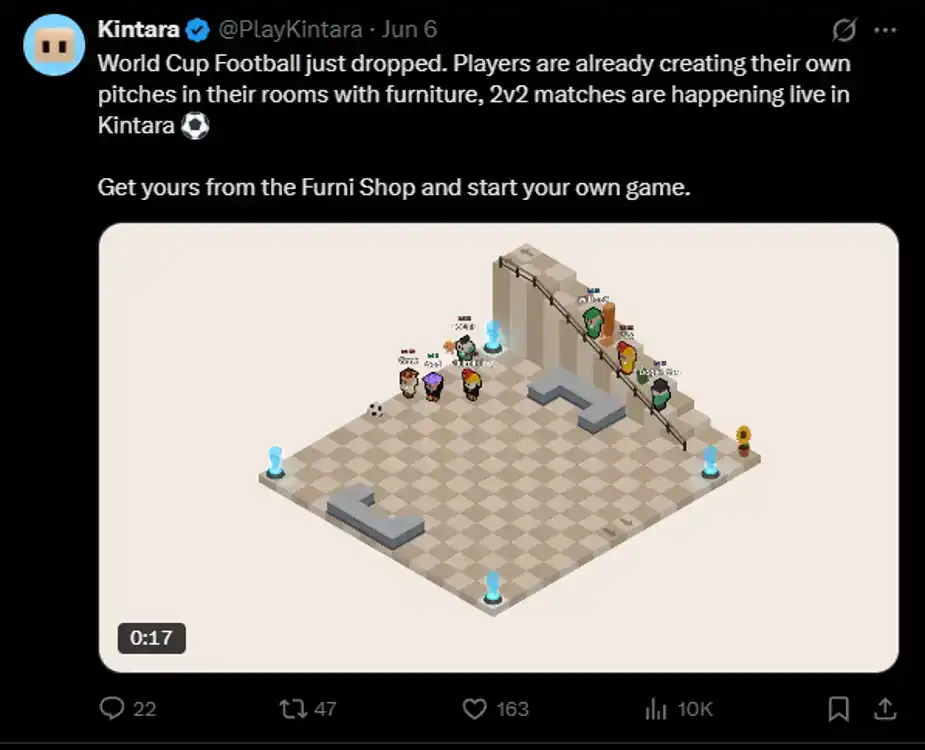
The project team of this game almost "doesn't promote play-to-earn," instead focusing heavily on "how to build network effects and a sense of player belonging." For example, integrating various Solana community meme coins or newly hot tokens into game elements, such as auctioning mansions in the game.

Or, promoting people organizing World Cup football matches in their houses:
When it was still obscure, with less than $40,000 market cap and 243 holders, this early phase of "unheard of and unknown" was written on the stats board in the game's main map. Everyone watched Kintara persistently and rapidly update game content, slowly gaining people's trust, gradually attracting KOLs like Gake and Ansem to become part of the game as players.
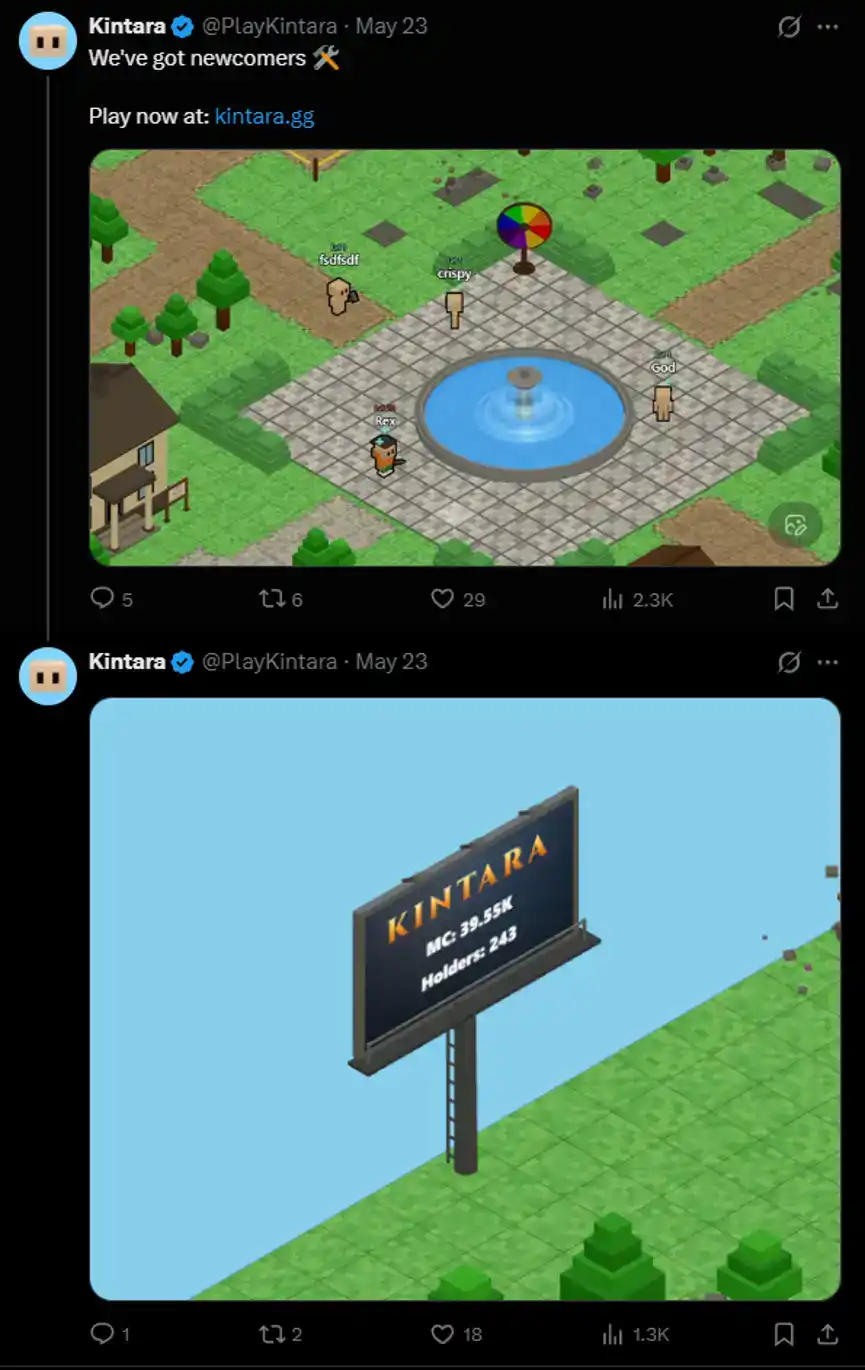
So no one calls this kind of project a "set-up play."

"What are we constantly chasing after all along? A game of mutual trust, or a game of mutual deception?"

This is a recent question Zhàn Háo has been asking himself.

Hopefully, such questioning can persist and ultimately lead to a healthier market.

Câu hỏi Liên quan

QWhat are the two main competing themes or approaches observed in the current Solana meme coin market, according to the article?

AThe two main competing themes are 'Attention PvP' and the 'Return of the Community'. Attention PvP relies on quick, hype-driven plays involving celebrity endorsements, hot events, and speed-based speculation. The Return of the Community focuses on meme coins with organic, long-term communities built around a shared culture or purpose, where members are willing to endure price fluctuations and consistently promote their project's ideals.

QHow did the $JOTCHUA meme coin benefit from the 'Attention PvP' dynamic, and what controversy surrounded its success?

AThe $JOTCHUA coin gained attention and its price surged largely after the meme's creator, @_kingorange, 'claimed' the coin on social media. However, its success is controversial because the coin's launch and initial pump did not happen after the creator's claim. Many believe the surge was due to market speculation triggered by KOL Ansem announcing his return to buying Solana meme coins, suggesting it was another 'pump group' setup rather than an organic community-driven event.

QWhat is the core mission of the $neet community, and how does it distinguish itself from typical 'Attention PvP' coins?

AThe core mission of the $neet community is to promote the idea that dedicating most of one's life to work means losing one's own life. It distinguishes itself from 'Attention PvP' coins by being a long-term, community-driven project. The community has organically organized offline 'anti-work' gatherings in the U.S. and focuses on a shared cultural belief rather than relying on short-term hype or celebrity endorsements for price action.

QAccording to Ansem's statement quoted in the article, what are the key characteristics of a successful meme coin that does not rely on a single influencer?

AAccording to Ansem, a successful meme coin that doesn't rely on a single influencer should have a large, genuine community. Members of this community should be willing to endure losses and consistently promote the project's underlying philosophy or culture day after day. Success should be indicated by market data like social media activity, trading volume, and holder count, not by the endorsement of any single key opinion leader (KOL).

QHow did the project behind the $KINS token (Kintara) build trust and a sustainable community, as described in the article?

AThe Kintara project ($KINS) built trust and a sustainable community through consistent delivery and focusing on player engagement rather than financial speculation. Key strategies included: rapidly updating game content, integrating other community meme coins into the game, organizing in-game community events (like house auctions and soccer tournaments), and having a transparent tokenomics model where 50% of optional spin revenue is used for token buyback/burns. This approach fostered a sense of belonging and network effect, attracting genuine players and even respected KOLs who became part of the community.

Nội dung Liên quan

Tín hiệu đáy lịch sử tái xuất? Messari từng định giá 3 tỷ USD bị bán tháo với 10 triệu USD

Tín hiệu đáy lịch sử tái xuất hiện? Messari từng định giá 300 triệu USD giờ chỉ bán được hơn 10 triệu. Nền tảng dữ liệu hàng đầu ngành crypto này, cùng nhiều công ty khác như DappRadar, Parsec, CoinDesk đang đóng cửa, bán rẻ hoặc cắt giảm nhân sự. Nguyên nhân đến từ sự xói mòn mô hình kinh doanh do AI và sự rút lui của vốn đầu tư mạo hiểm (VC). VC đang dồn tiền vào AI, khiến đầu tư vào crypto lao dốc hơn 80% trong 6 tháng. Các quỹ crypto cũ hoạt động khó khăn, quỹ mới khó gọi vốn. Nhiều nhân vật chủ chốt như Kyle Samani (Multicoin) cũng rời bỏ lĩnh vực này. Tuy nhiên, đây có thể là tín hiệu tích cực. Bitcoin đã giảm gần 50% từ đỉnh, chỉ số Sợ hãi & Tham lam xuống mức cực thấp, nhà đầu tư dài hạn nắm giữ gần 80% nguồn cung. Lịch sử cho thấy, khi những tín hiệu bi quan này đồng thời xuất hiện (như năm 2018, 2020), thường đánh dấu đáy của chu kỳ và mở ra đợt tăng trưởng mới. Một số quỹ như Dragonfly vẫn lạc quan, tiếp tục gọi vốn và đầu tư, trong khi Blockworks mua lại Messari để củng cố ngành. Sự sụp đổ của những gã khổng lồ một thời có thể là dấu hiệu cho một khởi đầu mới.

marsbit3 phút trước

Tín hiệu đáy lịch sử tái xuất? Messari từng định giá 3 tỷ USD bị bán tháo với 10 triệu USD

marsbit3 phút trước

Khối lượng xuất xưởng TPU của Google được điều chỉnh tăng 50%

Gần đây, giới AI tính toán đã chứng kiến một sự điều chỉnh kỳ vọng quan trọng. Nhiều tổ chức nước ngoài âm thầm nâng dự báo sản lượng xuất xưởng cho TPU của Google, trực tiếp thay đổi quan điểm bảo thủ trước đó của thị trường về nhu cầu phần cứng tính toán năm 2027. Dự báo ngành từ mức dưới 10 triệu chip TPU đã được điều chỉnh lên khoảng 15 triệu chip, tương ứng mức tăng mới 50%. Việc sản lượng TPU tăng mạnh sẽ lan tỏa đến toàn bộ chuỗi cung ứng, mang lại lợi ích đồng thời cho các lĩnh vực then chốt như động cơ quang NPO, mô-đun quang 1.6T, chuyển mạch quang OCS, nguồn server, cáp quang & MPO, và đặc biệt là làm mát bằng chất lỏng (liquid cooling). Trong đó, làm mát bằng chất lỏng là hướng thay đổi lớn nhất và được kỳ vọng mang lại lợi nhuận vượt trội. Công suất chip TPU thế hệ mới tăng cao khiến giải pháp tản nhiệt truyền thống không đáp ứng được, thúc đẩy việc áp dụng rộng rãi giải pháp làm mát bằng chất lỏng. Dự kiến năm 2026 sẽ là năm bùng nổ thực sự cho lĩnh vực này tại Google. Cửa sổ cạnh tranh cũng được định hình lại khi các nhà sản xuất nước ngoài gặp khó khăn về công nghệ và năng lực giao hàng, tạo cơ hội lớn cho các nhà sản xuất trong nước với ưu thế về tốc độ lặp, ổn định giao hàng và đủ công suất. Lĩnh vực cáp quang cũng có logic mới, chuyển từ sản phẩm chu kỳ sang nguồn tài nguyên chiến lược quan trọng cho các cụm tính toán AIDC. Nhu cầu bùng nổ từ việc xây dựng trung tâm dữ liệu AI vượt xa năng lực sản xuất trong ngắn hạn, dẫn đến tình trạng thiếu hụt. Các nhà sản xuất trong nước đang tận dụng lợi thế về năng lực và chi phí để chiếm thị phần lớn. Các mảng phụ trợ khác như động cơ quang NPO (tỷ lệ 1:1 với TPU), mô-đun quang 1.6T, chuyển mạch quang OCS và nguồn server cũng đều được hưởng lợi từ làn sóng này. Trọng tâm đầu tư trong chuỗi cung ứng AI đang dần chuyển từ "cạnh tranh sức mạnh chip" sang "sự tăng trưởng ổn định của cơ sở hạ tầng hỗ trợ tính toán". Việc điều chỉnh tăng mạnh dự báo cung ứng TPU của Google giúp củng cố tính chắc chắn về hiệu suất cho toàn bộ ngành trong 2-3 năm tới.

marsbit46 phút trước

Khối lượng xuất xưởng TPU của Google được điều chỉnh tăng 50%

marsbit46 phút trước

Cơn sốt tiền điện tử qua đi, Phố Wall thực sự muốn gì?

Tác giả: Bạch Thoại Khu Công Nghệ Sau cơn sốt tiền điện tử, Phố Wall không còn theo đuổi các câu chuyện đầu cơ hay tư tưởng "phi tập trung". Thay vào đó, họ đang kiên trì xây dựng một hệ thống tài chính tuân thủ, có thể kiểm soát và tạo ra thu nhập trên nền tảng sổ cái phân tán. Các ví dụ điển hình bao gồm: 1. **Chứng khoán hóa tài sản truyền thống:** Quỹ BUIDL của BlackRock (quản lý 25-28 tỷ USD) đầu tư vào trái phiếu kho bạc ngắn hạn và hoạt động trên blockchain, cung cấp tài sản thế chấp an toàn. Securitize, với định giá 12,5 tỷ USD, chuẩn bị niêm yết trên NYSE và hợp tác xây dựng hệ thống thanh toán chứng khoán hoạt động 24/7 trên chuỗi. 2. **Tạo thu nhập từ Bitcoin:** BlackRock sắp ra mắt ETF BITA, sử dụng chiến lược bán quyền chọn mua có bảo hiểm trên danh mục nắm giữ Bitcoin để tạo ra dòng thu nhập (cổ tức) ổn định cho nhà đầu tư, biến Bitcoin thành tài sản sinh lời. 3. **Ổn định tiền tệ như công cụ thanh toán:** Các stablecoin tuân thủ (như USDC) đang được Stripe và Mastercard tích hợp để xử lý thanh toán xuyên biên giới tức thì với chi phí thấp. SWIFT cũng công bố kế hoạch phát triển sổ cái phân tán để giải quyết tình trạng kẹt vốn trong thanh toán toàn cầu. Đạo luật GENIUS 2025 định hình stablecoin là công cụ thanh toán thuần túy (không trả cổ tức) và tăng cường kiểm soát tuân thủ. Tóm lại, Phố Wall đang sử dụng công nghệ blockchain để tái tạo và nâng cấp các sản phẩm tài chính truyền thống (quỹ trái phiếu, quyền chọn, mạng lưới thanh toán), gắn chúng với uy tín của đồng USD và hệ thống quy định hiện có, nhằm xây dựng các kênh dẫn vốn hiệu quả và có lợi nhuận.

marsbit1 giờ trước

Cơn sốt tiền điện tử qua đi, Phố Wall thực sự muốn gì?

marsbit1 giờ trước

Đặt Cược Tương Lai Trên Chiến Xa SpaceX: Con Đường Tăng Trưởng 600 Tỷ Đô Của Cursor

Tóm tắt: Câu chuyện về sự trỗi dậy nhanh chóng của Cursor, công ty khởi nghiệp AI lập trình do Michael Truell (CEO) đồng sáng lập. Từ một công cụ chỉnh sửa mã dựa trên mô hình AI của Anthropic, Cursor đã phát triển với tốc độ chóng mặt, đạt doanh thu hàng tỷ USD. Tuy nhiên, họ sớm đối mặt với thách thức cấu trúc khi Anthropic - nhà cung cấp mô hình then chốt - tự ra mắt công cụ cạnh tranh Claude Code. Để giảm sự phụ thuộc và đảm bảo tương lai, Cursor bắt đầu phát triển mô hình tự lập Composer. Nhu cầu về sức mạnh tính toán khổng lồ đã dẫn họ đến với thỏa thuận hợp tác chiến lược, đồng thời là thương vụ mua lại tiềm năng trị giá 600 tỷ USD với SpaceX của Elon Musk. Thỏa thuận này mang lại cho Cursor nguồn lực chip AI, đổi lại hỗ trợ khả năng lập trình cho Grok (AI của Musk). Hành trình của Cursor đặt ra câu hỏi lớn: Liệu họ sẽ trở thành một công ty phần mềm thế hệ mới độc lập, hay cuối cùng sẽ trở thành một mảnh ghép trong cuộc chiến AI giữa các gã khổng lồ? Dù kết quả thế nào, Cursor đã định hình lại cách các nhà phát triển viết mã và trở thành một hiện tượng đáng chú ý trong làn sóng AI.

marsbit1 giờ trước

Đặt Cược Tương Lai Trên Chiến Xa SpaceX: Con Đường Tăng Trưởng 600 Tỷ Đô Của Cursor

marsbit1 giờ trước

Kraken Lên Kế Hoạch Cung Cấp Hợp Đồng Tương Lai Vĩnh Viễn Được CFTC Quy Định Cho Nhà Giao Dịch Chuyên Nghiệp Hoa Kỳ

Kraken đang chuẩn bị ra mắt hợp đồng tương lai vĩnh viễn được CFTC quản lý cho các nhà giao dịch chuyên nghiệp đủ điều kiện tại Hoa Kỳ. Sản phẩm sẽ được cung cấp thông qua sàn phái sinh Bitnomial mà Kraken đã mua lại và dự kiến tích hợp vào nền tảng Kraken Pro. Hợp đồng tương lai vĩnh viễn là sản phẩm phái sinh crypto lớn toàn cầu, cho phép giao dịch không ngày đáo hạn. Tại Mỹ, các hạn chế quy định trước đây khiến nhà giao dịch có ít lựa chọn trong nước. Động thái của Kraken nhằm thu hẹp khoảng cách này, cung cấp một con đường được quản lý để tiếp cận sản phẩm chi phối khối lượng giao dịch crypto ở nước ngoài. Việc ra mắt sẽ tập trung vào các nhà giao dịch chuyên nghiệp đủ điều kiện. Các yếu tố cần theo dõi bao gồm điều khoản về tính đủ điều kiện, thiết kế hợp đồng, tài sản được hỗ trợ và quan trọng nhất là thanh khoản khi ra mắt. Thành công của sản phẩm có thể mở đường cho nhiều sản phẩm tương lai vĩnh viễn được quản lý khác tại thị trường Mỹ, đưa sản phẩm phái sinh chủ chốt này tiến gần hơn đến cơ sở hạ tầng thị trường nội địa được quản lý.

bitcoinist11 giờ trước

Kraken Lên Kế Hoạch Cung Cấp Hợp Đồng Tương Lai Vĩnh Viễn Được CFTC Quy Định Cho Nhà Giao Dịch Chuyên Nghiệp Hoa Kỳ

bitcoinist11 giờ trước

Giao dịch

Giao ngay
Hợp đồng Tương lai

Bài viết Nổi bật

Làm thế nào để Mua HYPE

Chào mừng bạn đến với HTX.com! Chúng tôi đã làm cho mua Hyperliquid (HYPE) trở nên đơn giản và thuận tiện. Làm theo hướng dẫn từng bước của chúng tôi để bắt đầu hành trình tiền kỹ thuật số của bạn.Bước 1: Tạo Tài khoản HTX của BạnSử dụng email hoặc số điện thoại của bạn để đăng ký tài khoản miễn phí trên HTX. Trải nghiệm hành trình đăng ký không rắc rối và mở khóa tất cả tính năng. Nhận Tài khoản của tôiBước 2: Truy cập Mua Crypto và Chọn Phương thức Thanh toán của BạnThẻ Tín dụng/Ghi nợ: Sử dụng Visa hoặc Mastercard của bạn để mua Hyperliquid (HYPE) ngay lập tức.Số dư: Sử dụng tiền từ số dư tài khoản HTX của bạn để giao dịch liền mạch.Bên thứ ba: Chúng tôi đã thêm những phương thức thanh toán phổ biến như Google Pay và Apple Pay để nâng cao sự tiện lợi.P2P: Giao dịch trực tiếp với người dùng khác trên HTX.Thị trường mua bán phi tập trung (OTC): Chúng tôi cung cấp những dịch vụ được thiết kế riêng và tỷ giá hối đoái cạnh tranh cho nhà giao dịch.Bước 3: Lưu trữ Hyperliquid (HYPE) của BạnSau khi mua Hyperliquid (HYPE), lưu trữ trong tài khoản HTX của bạn. Ngoài ra, bạn có thể gửi đi nơi khác qua chuyển khoản blockchain hoặc sử dụng để giao dịch những tiền kỹ thuật số khác.Bước 4: Giao dịch Hyperliquid (HYPE)Giao dịch Hyperliquid (HYPE) dễ dàng trên thị trường giao ngay của HTX. Chỉ cần truy cập vào tài khoản của bạn, chọn cặp giao dịch, thực hiện giao dịch và theo dõi trong thời gian thực. Chúng tôi cung cấp trải nghiệm thân thiện với người dùng cho cả người mới bắt đầu và người giao dịch dày dạn kinh nghiệm.

Tổng lượt xem 413Xuất bản vào 2024.12.11Cập nhật vào 2026.06.02

Làm thế nào để Mua HYPE

Thảo luận

Chào mừng đến với Cộng đồng HTX. Tại đây, bạn có thể được thông báo về những phát triển nền tảng mới nhất và có quyền truy cập vào thông tin chuyên sâu về thị trường. Ý kiến ​​của người dùng về giá của HYPE (HYPE) được trình bày dưới đây.

活动图片