From Madison Square Garden to Kalshi: Prediction Markets Break into the NBA Finals

marsbitXuất bản vào 2026-06-06Cập nhật gần nhất vào 2026-06-06

Tóm tắt

From Madison Square Garden to Kalshi: Prediction Markets Break into the NBA Finals Prediction markets are playing a significant role in the 2026 NBA Finals, particularly around the New York Knicks' unexpected 2-0 series lead. Platforms like Kalshi and Polymarket have seen massive trading volumes, exceeding hundreds of millions of dollars on championship and related markets. Their influence extends beyond online trading. Kalshi's official partnership with Madison Square Garden has given it prominent physical branding at the arena. Furthermore, local businesses like The Jeffrey bar are using prediction market contracts to hedge the risk of game-result-based promotions, turning potential losses into manageable costs—a concept similar to the famous "Mattress Mack" strategy from traditional sports betting. These markets differentiate themselves by offering a wider, more entertainment-focused range of "event contracts" beyond typical game outcomes, such as predicting celebrity attendance. They also have broader accessibility across the U.S. compared to age- and location-restricted traditional sportsbooks. However, their rapid integration into sports raises regulatory and ethical questions. The NBA is cautiously engaging, discussing integrity frameworks with regulators like the CFTC. While the league permits minor investments like Giannis Antetokounmpo's stake in Kalshi, it advocates for strict rules to prevent insider trading. Many fans express concern on platforms like Reddit,...

Author: Zen, PANews

On June 6th, the visiting New York Knicks narrowly defeated the San Antonio Spurs 105-104 in Game 2 of the NBA Finals. The Knicks, who were not favored before the series began, had already upset the Spurs 105-95 on the road in Game 1. Winning both road games to start the series was an unexpected outcome for virtually everyone.

For a franchise returning to the Finals for the first time since 1999 and last winning a championship in 1973, this dream 2-0 start, bringing the series back to their home court at Madison Square Garden, has undoubtedly pushed generations of New York fans' fervor to its peak.

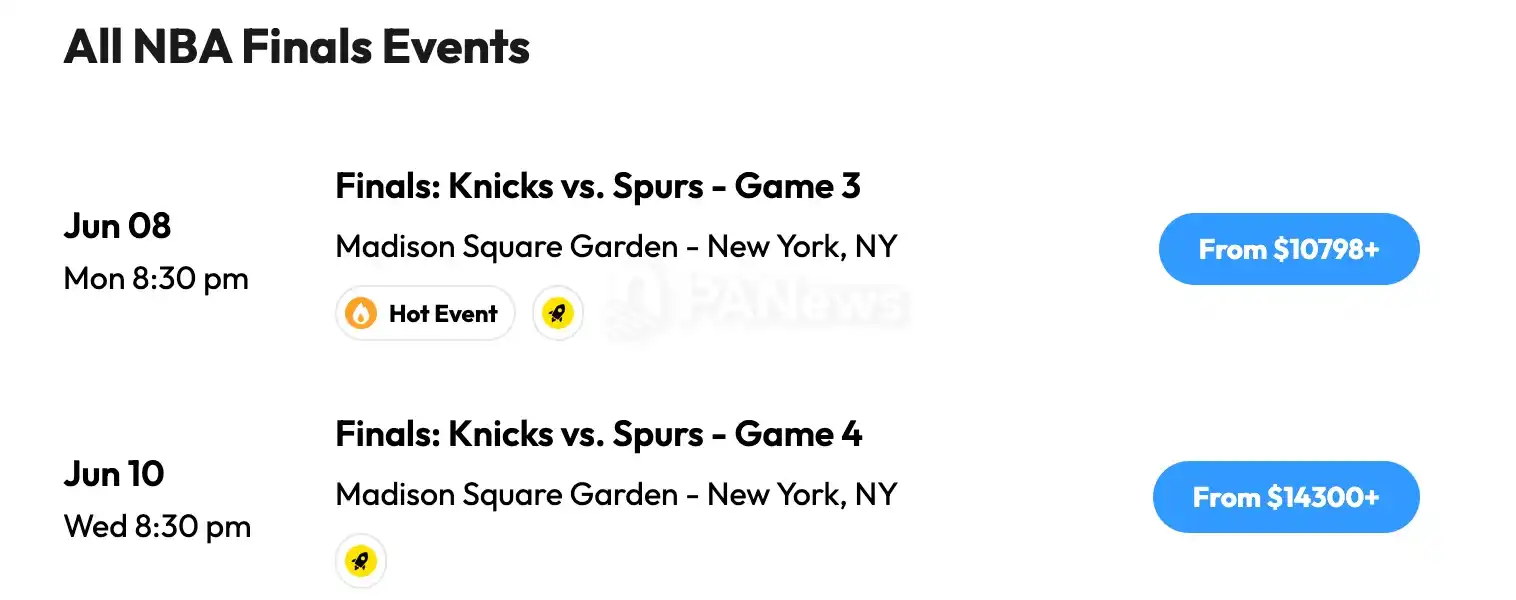
According to the latest data from ticket site TickPick, after Game 2, the lowest price for a ticket to Game 3 at Madison Square Garden has exceeded $10,000, with Game 4 prices soaring above $14,000. With the first NBA championship in 52 years seemingly within reach, the frenzy in the 'World's Capital,' New York, has been completely ignited, making this Finals series one of the most expensive live sporting events in NBA history.
What's different this time is the increasingly visible presence of prediction markets in this New York celebration. From prediction market platform Kalshi partnering with Madison Square Garden as an official partner, gaining massive exposure, to widespread fan and merchant participation in betting around probabilities, attention, and entertainment consumption. This NBA Finals is not just a major sporting event; it's also a celebration for prediction market platforms.

Prediction Markets Enter Arenas, Bars, and Fans' Daily Lives

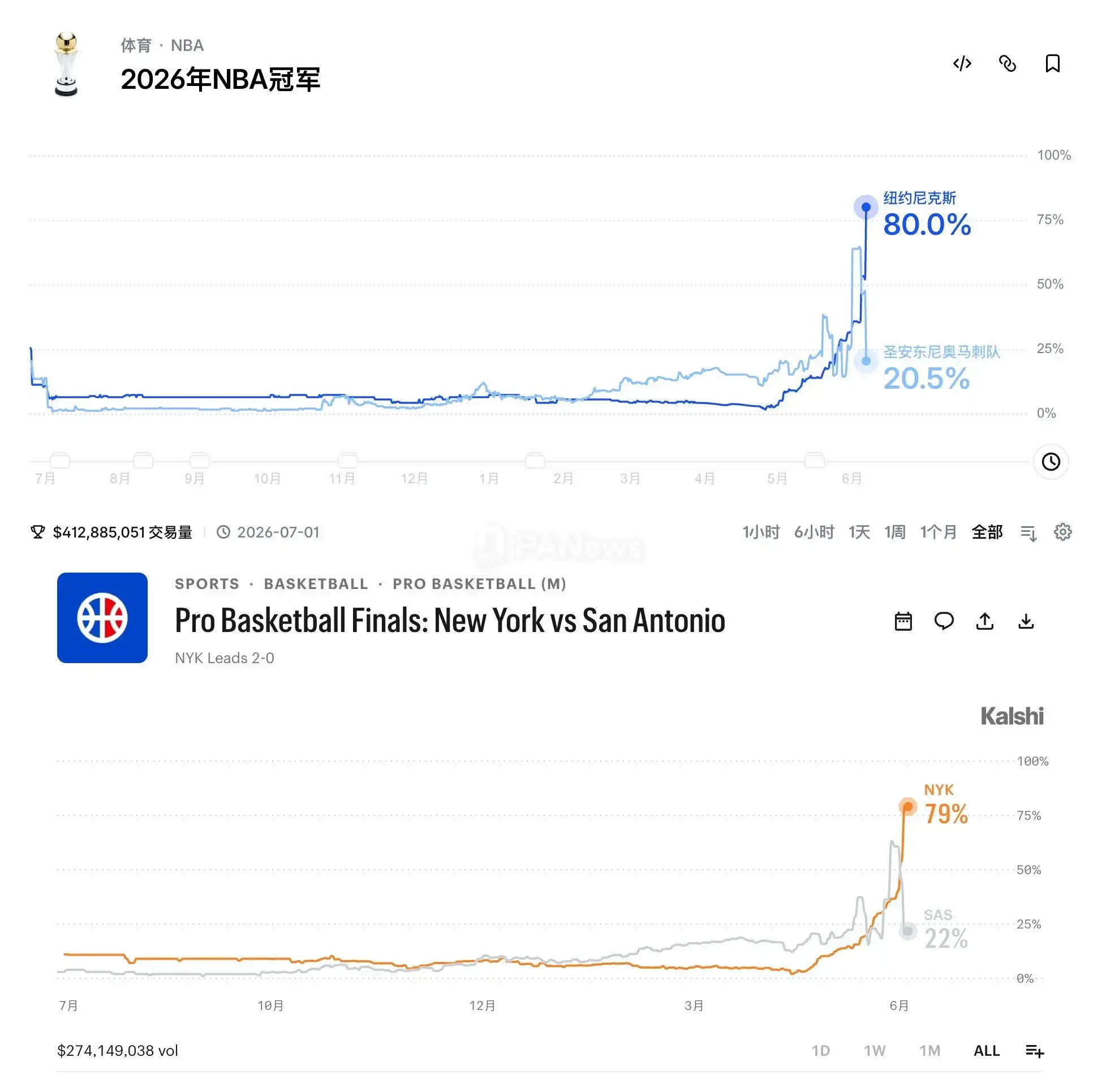
After the Finals began, prediction markets themselves became part of the game's hype. As of June 6th, Polymarket's '2026 NBA Champion' market page shows a cumulative trading volume exceeding $413 million, with a daily volume of around $2 million. Kalshi's trading volume for NBA Finals-related markets reached approximately $274 million. Additionally, derivative markets around Finals MVP, series score, player statistics, celebrity attendance, etc., continue to attract traders.
The influence of prediction markets isn't limited to online. As the Knicks' playoff run heated up, prediction markets also entered bars, arenas, and offline viewing scenarios, becoming new tools for businesses to design promotions and manage cost risks. Before Game 1 of the Finals, the Upper East Side Manhattan bar The Jeffrey launched a promotion: if the Knicks won, drinks for customers that night would be on the house.

For a small business, fulfilling such a major promotion could create significant cost pressure. The Jeffrey's approach was to buy $5,000 worth of Knicks-related contracts on Kalshi. If the Knicks won, the contract payout would cover the cost of the free drinks. Conversely, if the Knicks lost, the bar wouldn't have to provide free drinks, and the customer traffic attracted by the promotion, along with increased consumption, could offset or even cover the cost of the wager.

From an industry perspective, this case demonstrates that prediction markets aren't just tools for fans to trade on game outcomes; they can also serve as a means for businesses to manage event risk. The Jeffrey tied post-win fan enthusiasm and increased traffic to the cost of free drinks, while the Kalshi contract transformed the uncertainty of the promotion into a quantifiable, hedgeable risk. It doesn't change or rely on the game's outcome but alters how businesses design promotions around the game. It also shows the "insurance"-like utility of prediction markets.
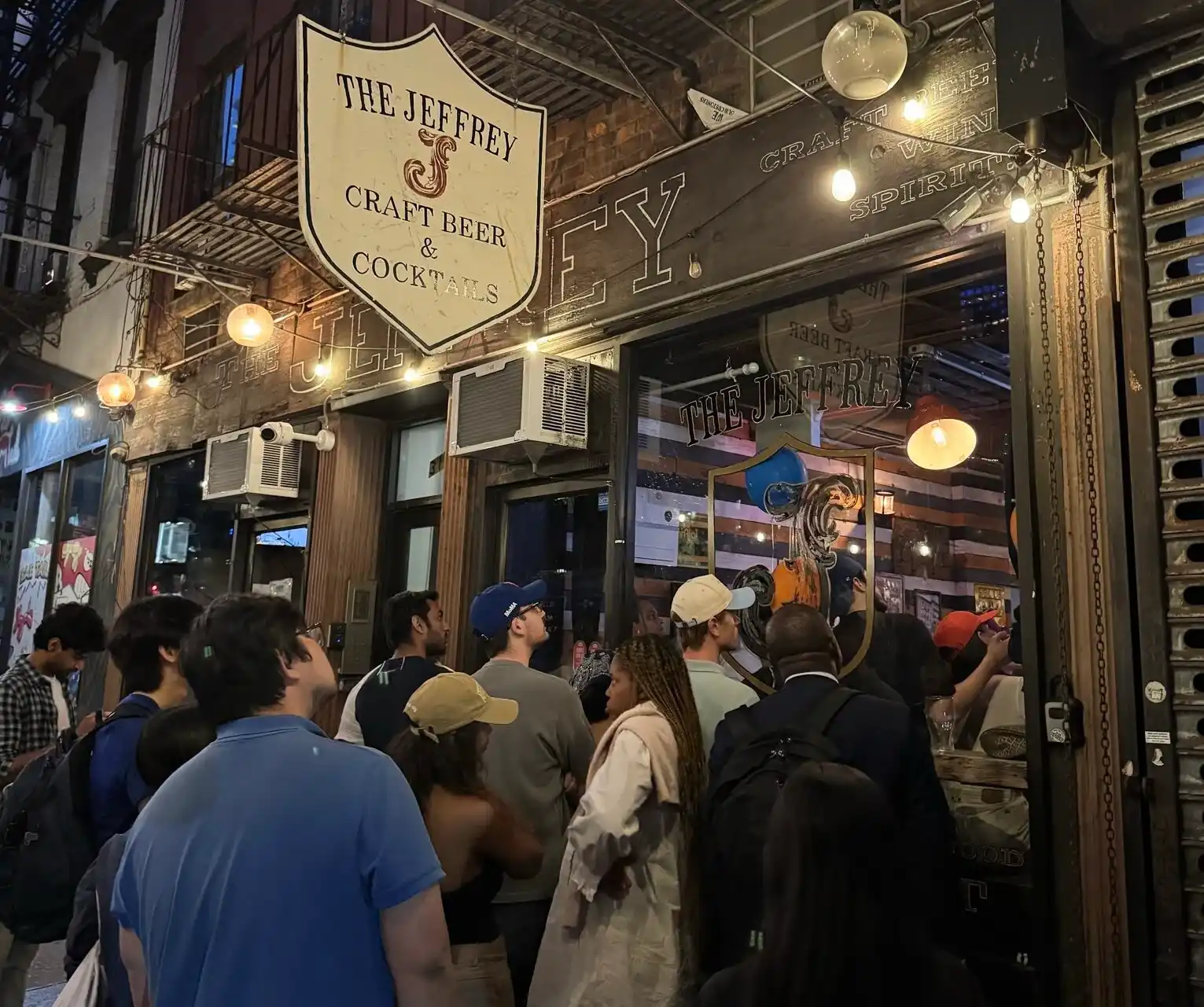
The Jeffrey's marketing strategy attracted a large number of customers

Beyond indirect marketing by small businesses, Kalshi's official partnership with Madison Square Garden has placed prediction market platforms in an even more prominent position.

In early May, Kalshi and Madison Square Garden (MSG) announced a multi-year partnership, making Kalshi the official prediction markets partner. Additionally, the MSG Concourse on the 6th floor was named the "Kalshi Concourse," and Kalshi gained exposure on in-arena and out-of-home digital screens, in-arena LEDs, MSG Networks advertising, and branded content.
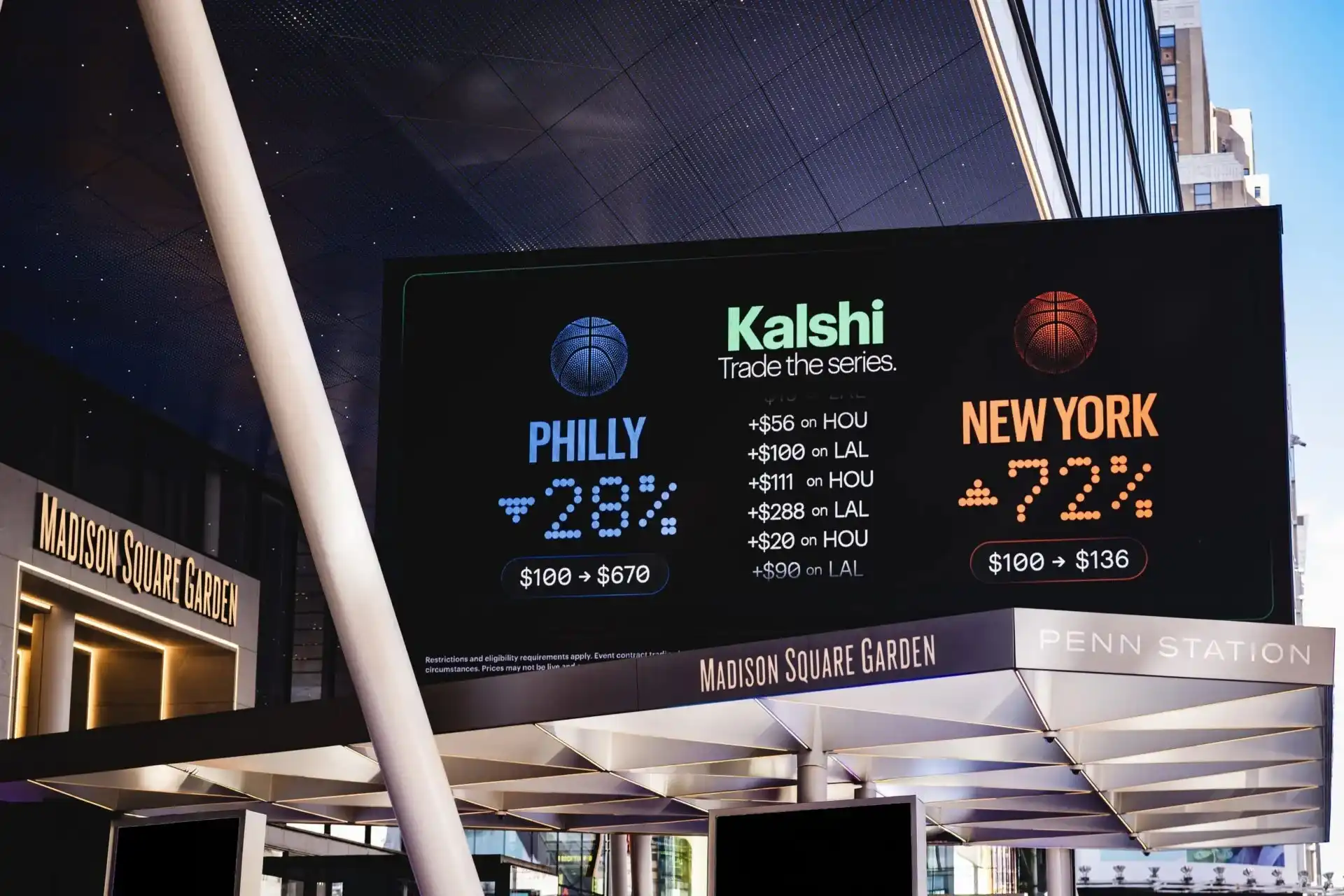
Kalshi, whose core business is predicting future events, seems to have also 'called' its own offline expansion this time. Securing the MSG partnership rights just weeks ago has now, with the Knicks reaching the Finals, rapidly become a highly representative offline branding investment. Kalshi almost perfectly timed its move. When Madison Square Garden became the focal point of national sports media and the epicenter of New York City's emotions, Kalshi had already secured a position in one of America's most iconic sports venues, moving from online trading pages to a higher-density offline exposure environment.

The Boundaries of Sports Betting Are Being Pushed Further by Prediction Markets

In reality, turning sports hype into a commercial hedging tool is not an original idea from prediction markets.

The most classic precedent is Houston furniture merchant Jim McIngvale, known as "Mattress Mack." His promotional tactic is to offer customers a refund on furniture purchases above a certain amount if a local Houston team wins a championship. Before the games, he places large bets on traditional sportsbooks supporting his hometown team.
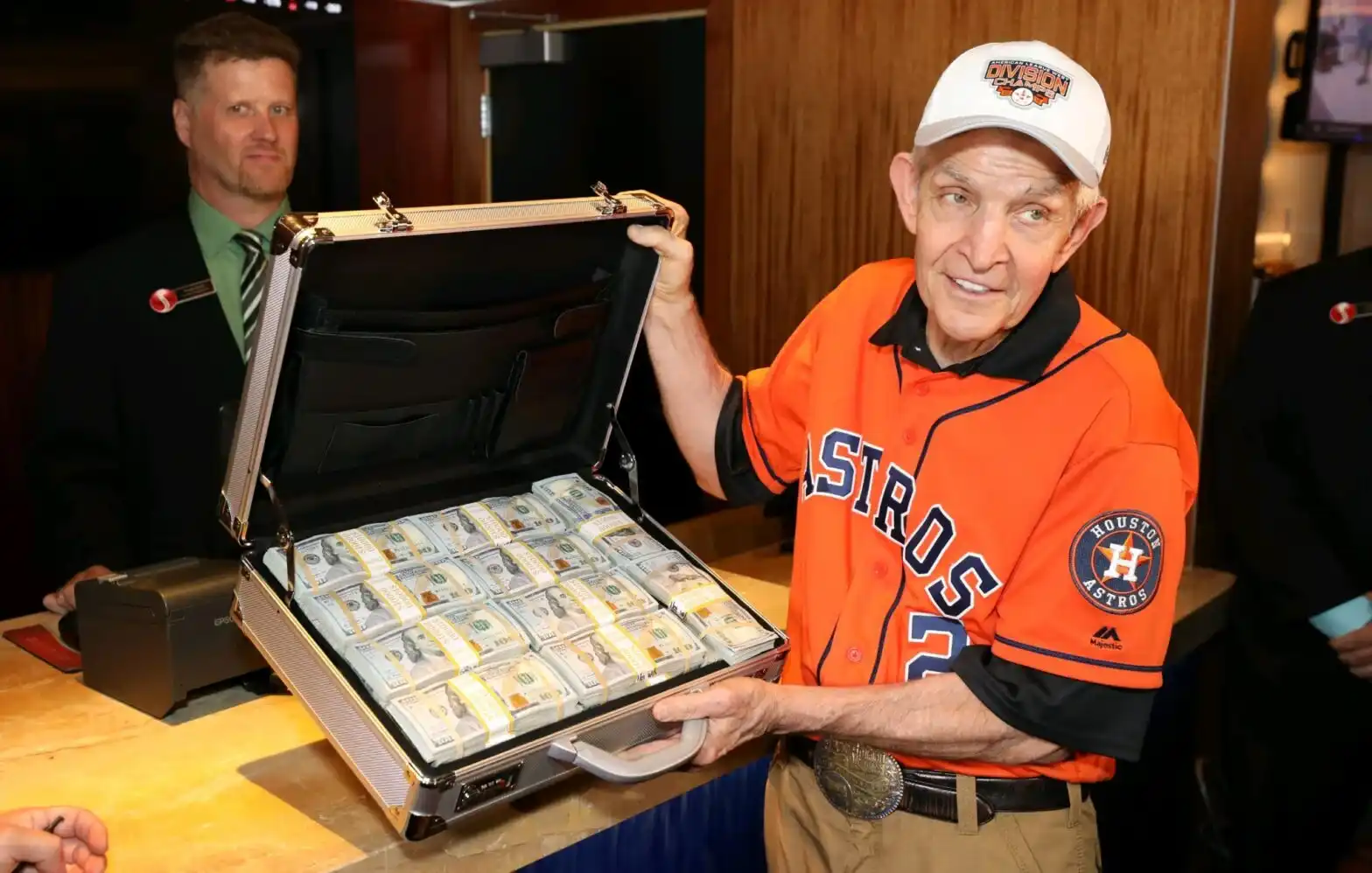
"Mattress Mack" carrying a suitcase with $3.5 million to bet on the Houston Astros

The logic behind bar The Jeffrey and Mattress Mack is essentially the same. If the team wins, Mattress Mack refunds customers, but the sportsbook payout covers that cost. If the team loses, he loses his bet, but no refunds are issued for furniture sales, and the promotion itself has already generated sales and media exposure. When the Astros won the World Series in 2022, Mattress Mack received a payout of approximately $75 million, making this model a classic case in American sports marketing.

Compared to traditional sportsbooks, prediction markets also expand the ways fans can engage with games.

Sports markets on Polymarket and Kalshi allow fans to trade around the broader narratives spilling out from a game, covering more entertaining, fragmented topics. Of course, traditional sports betting doesn't only offer win/loss markets. For example, platforms like FanDuel and DraftKings release numerous novelty bets around the Super Bowl each year, including "entertainment props" like the length of the national anthem or songs performed during the halftime show. However, restrictions on such markets vary by state, with some legal sports betting jurisdictions prohibiting them.

The difference with prediction markets is that they further expand this fun, entertainment-focused play. Traditional sportsbooks typically still revolve around the game itself and official statistics; even with novelty props, they're concentrated around a few mega-events like the Super Bowl.

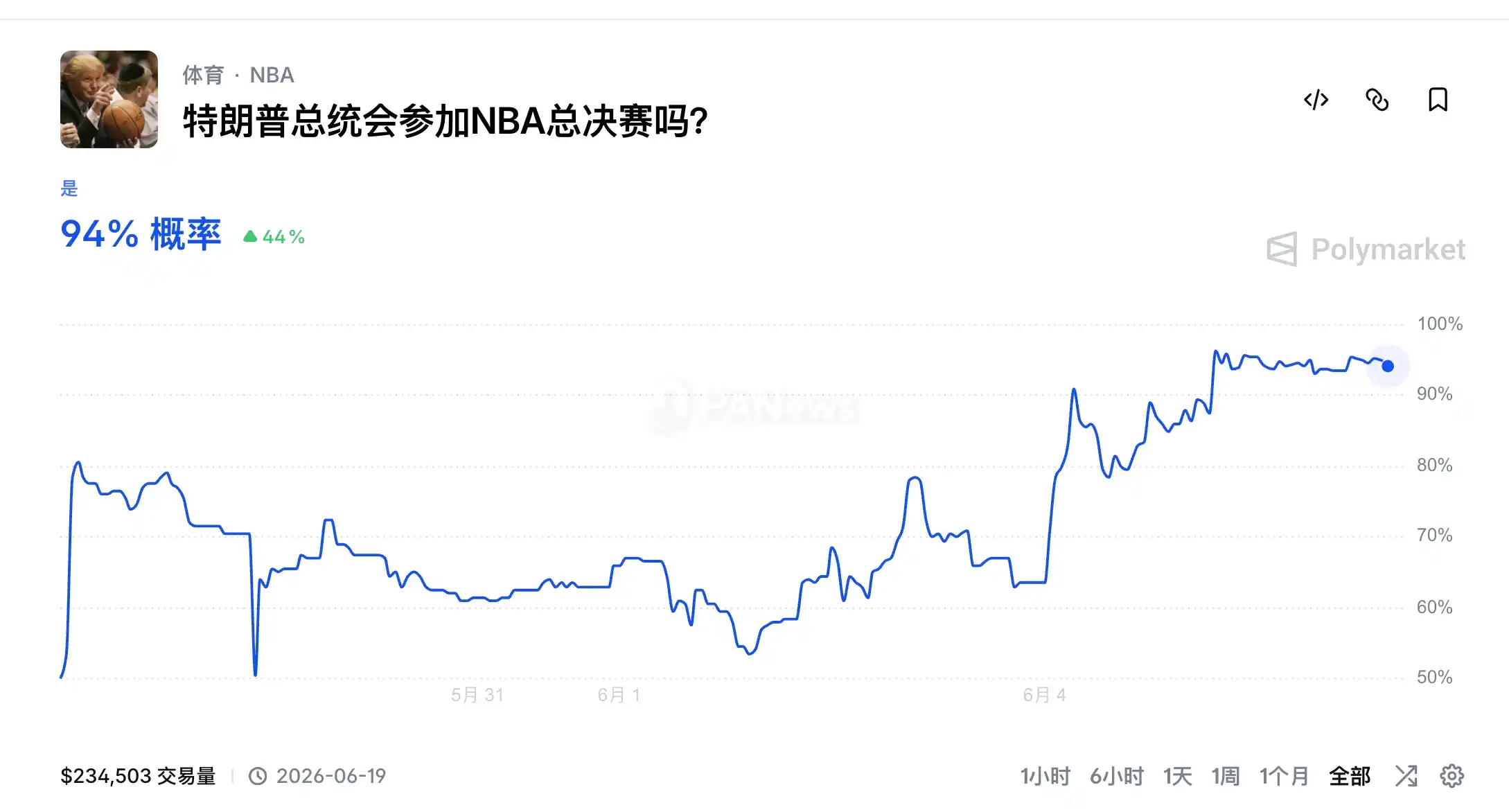
Prediction markets are better at breaking down "verifiable real-world events" into contracts, making "any event priceable." For example, whether Trump will attend NBA Finals Game 3, or whether actor 'Timothee Chalamet' will attend all Knicks home games, clearly pushes the boundaries of novelty markets.
Beyond the variety of events, there are also differences in geographic and user demographic reach between the two types of platforms. Prediction markets in the U.S. can reach users 18 and older, while traditional sports betting typically requires users to be 21+. Simultaneously, prediction markets are available in all 50 states, while sports betting is currently legal in only 39 states. To some extent, the expansion of prediction markets in sports isn't just due to richer market offerings but also their ability to reach demographics and geographies that traditional sportsbooks cannot.

This is also a source of regulatory controversy. Prediction market platforms emphasize they are trading event contracts, with users buying and selling among themselves, a form closer to derivatives trading. Critics argue that when these contracts revolve around the NBA, NFL, elections, or celebrity events, the user experience is already highly similar to gambling. Especially when platforms attract younger users through social media, memes, and sports marketing, the boundaries between financial trading, entertainment, and gambling become increasingly blurred.

Players Get Involved First, NBA League Approaches Cautiously

With the rise of prediction markets, the NBA league has recognized that these platforms are becoming a new variable beyond traditional sports betting. Therefore, for the commercially-driven NBA, its attitude towards prediction markets has historically been ambiguous, characterized by cautious engagement.

At the player level, Giannis Antetokounmpo, who has become a Kalshi shareholder and will participate in the platform's marketing and offline activities, is the most representative case. This has sparked controversy. Fans worry that when an NBA superstar becomes a shareholder in a prediction market platform that can create markets around player trades, team performance, and game outcomes, even if the player themselves cannot trade NBA-related contracts, ethical boundaries are continually being nudged.

Related reading: "After $23.3 Million Bet on His Future, Why Did NBA Star Giannis Investing in Kalshi Spark Outrage?"

At the official league level, the NBA has engaged in in-depth discussions with the CFTC regarding an integrity framework for prediction markets. In its filing to the CFTC, the NBA emphasized that sports event contracts require comprehensive regulation to protect game integrity and public trust. The NBA also argued that athletes, referees, league and team personnel should be prohibited from trading contracts related to their league's games and events, that platforms should provide specific trader identities to the league during suspicious transaction investigations, and that official league data should be used for settlement.

NBA Commissioner Adam Silver's public statements reflect this stance. Discussing Giannis's investment in Kalshi during All-Star Weekend, he said the league is viewing prediction markets similarly to how it views sportsbooks. He noted that under the collective bargaining agreement, players can make minimal investment percentages in sports betting companies, and the league applies this rule to prediction markets. Silver further stated that Giannis's investment in Kalshi, being below 1%, did not violate relevant rules. However, he acknowledged that prediction markets are developing rapidly, and their ultimate permissible form may depend on courts and Congress.
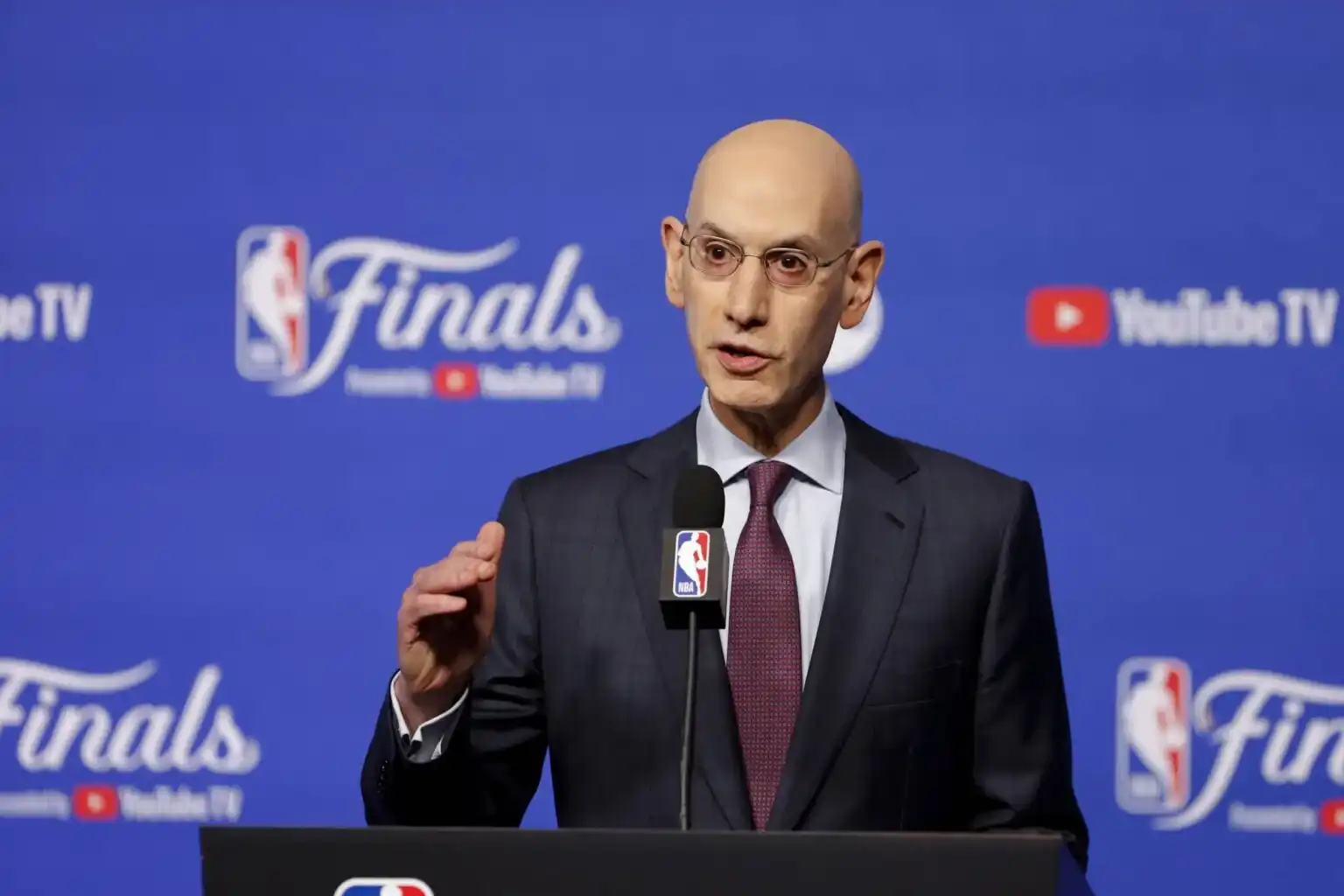
NBA Commissioner Adam Silver tried to quell controversy over Giannis becoming a Kalshi shareholder, calling the investment "minuscule"

But among fan communities, the NBA's increasingly close ties with prediction markets have drawn strong opposition. On the r/nba subreddit, numerous posts about the potential for insider trading risks involving Kalshi, Polymarket, and the NBA have sparked extensive discussion and criticism.

Many fans believe that if player investment or endorsement of prediction markets becomes normalized, future games could become "untrustworthy" due to insider trading and conflicts of interest. Many users also express concerns about league commercialization, younger user addiction, and game integrity. Comments on news about Giannis now almost invariably include fan jabs suggesting he'll participate in betting on prediction markets.
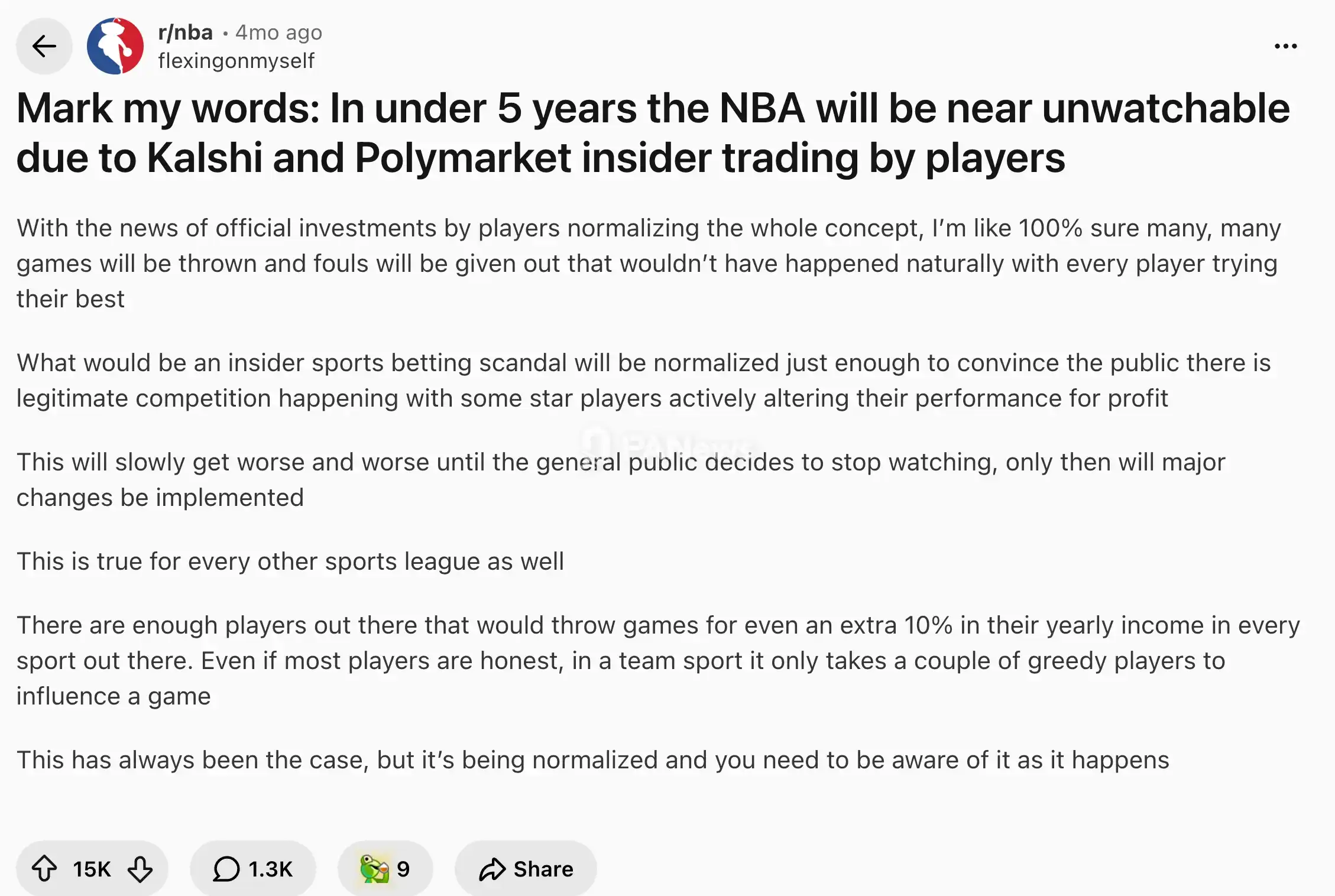
These Reddit discussions don't represent all NBA fans, but they reflect a very real sentiment. Many fans aren't just objecting to 'betting'; they worry that the NBA's official, extensive cooperation with betting companies and prediction markets might increasingly influence games and players through odds and trading contracts.

This concern isn't entirely unfounded. Recently, former U.S. Representative George Santos was investigated for allegedly engaging in suspicious trading on Kalshi related to whether he would attend the State of the Union address. While not a sports case, it highlights the most sensitive risk of prediction markets: when event outcomes can be influenced by a few insiders, market trading is no longer just 'prediction' but can become an incentive for the behavior itself.

And the NBA Finals are becoming a stress test for prediction markets entering mainstream sports. For both the platforms and the NBA, this represents both a new commercial opportunity and a new test of trust.


Câu hỏi Liên quan

QWhat are the main examples of how prediction markets are being used during the 2026 NBA Finals, according to the article?

APrediction markets like Kalshi and Polymarket are being used in several ways: first, Kalshi is the official partner of Madison Square Garden, gaining major offline exposure. Second, venues like the bar The Jeffrey use prediction market contracts to hedge the financial risk of promotional offers tied to the Knicks' performance. Third, the platforms themselves have attracted billions in trading volume on outcomes like the champion and Finals MVP. Finally, prediction markets offer more diverse and accessible entertainment-focused contracts than traditional sportsbooks, such as betting on celebrity appearances at games.

QHow did the bar 'The Jeffrey' use a prediction market to manage the risk of its promotion?

ABefore Game 1, The Jeffrey offered a promotion: if the Knicks won, drinks for the night would be free. To hedge the potential cost of this promotion, the bar purchased $5,000 worth of Knicks-related contracts on Kalshi. If the Knicks won, the payout from the contracts would cover the free-drinks cost. If the Knicks lost, the bar wouldn't have to offer free drinks, and the increased traffic and sales from the promotion would likely offset the cost of the initial contract purchase.

QWhat is a key regulatory and public perception concern regarding prediction markets in sports, as mentioned in the article?

AA key concern is the blurring line between financial trading, entertainment, and gambling, especially regarding the integrity of the game. Critics argue that when contracts are based on NBA games or player-related events, it closely resembles sports betting. There is particular worry about conflicts of interest if players, like Giannis Antetokounmpo (a Kalshi investor), have a stake in these markets, even if they don't bet on NBA events directly. The article cites the case of former Congressman George Santos, whose alleged trading on his own attendance at an event shows the risk of 'insider' actions influencing market outcomes.

QWhat is the traditional marketing model that 'Mattress Mack' represents, and how does it compare to The Jeffrey's use of prediction markets?

AJim 'Mattress Mack' McIngvale represents the traditional model of using sports betting to hedge business promotions. He would offer customers refunds on furniture purchases if a local Houston team won a championship. Simultaneously, he would place large bets on that team winning with traditional sportsbooks. The payout from a win would cover the refund costs; a loss meant he lost his bet but kept the sales revenue. The Jeffrey's model is similar in concept but uses prediction market contracts instead of traditional sportsbooks to hedge its promotional risk, demonstrating a new tool for achieving the same risk management goal.

QWhat advantages do prediction markets like Kalshi and Polymarket have over traditional sports betting platforms in the US, according to the article?

APrediction markets have two main advantages over traditional sports betting platforms in the US. First, they offer greater accessibility: they are available to users 18 and older (vs. 21+ for most sports betting) and are accessible in all 50 states (vs. only 39 states where sports betting is legal). Second, they offer a wider and more granular range of event contracts. While traditional sportsbooks may offer novelty bets for mega-events like the Super Bowl, prediction markets can create contracts on virtually any verifiable real-world event, such as whether a specific celebrity will attend a game, expanding the boundary of entertainment-focused 'bets'.

Nội dung Liên quan

Xiaopeng, NIO đua tranh sức mạnh tính toán, Lixiang thay đổi kiến trúc

Ngày 15/6, Lixiang (Lý Tưởng) đã công bố chip tự nghiên cứu Makhê M100 dành cho L9 Livis thế hệ mới, tập trung vào việc thay đổi kiến trúc cốt lõi thay vì chỉ chạy đua về hiệu năng TOPS như các hãng xe NIO (Vị Lai), Xpeng (Tiểu Bằng) hay Huawei (Hoa Vi). Chip này sử dụng kiến trúc luồng dữ liệu động nhằm tối ưu việc xử lý dữ liệu cho mô hình AI lớn, hứa hẹn hiệu suất tính toán hiệu dụng cao gấp 3 lần và giảm độ trễ 40% so với một số chip đối thủ. Thiết kế của M100 đã được công nhận tại hội nghị học thuật ISCA 2026. Buổi ra mắt cũng giới thiệu tầm nhìn "xe thông minh thể hiện" (embodied AI) của Lixiang, tích hợp khả năng tự lái, trợ lý AI và trải nghiệm tương tác. Hãng cam kết mô hình tự lái Makhê VLA sẽ ngang bằng Tesla FSD V14 vào Q4/2026, với các bản cập nhật OTA cụ thể theo từng tháng. Bối cảnh tài chính của Lixiang đang thách thức khi doanh thu và lợi nhuận giảm, nhưng ngân sách R&D cho AI vẫn được duy trì. Mục tiêu doanh số năm 2026 là 550.000 xe. Chip M100 mang lại lợi thế tối ưu hóa toàn bộ hệ thống tự nghiên cứu, nhưng cũng đi kèm rủi ro về chi phí chuyển đổi nếu công nghệ thay đổi. Hiệu quả thực tế sẽ được kiểm chứng từ đợt OTA tháng 7 và mục tiêu cuối năm.

marsbit26 phút trước

Xiaopeng, NIO đua tranh sức mạnh tính toán, Lixiang thay đổi kiến trúc

marsbit26 phút trước

Năm Ứng Dụng AI Chỉ Biết "Có", Bỏ Qua Rủi Ro? Nhật Ký Hành Trình Phát Triển Phần Mềm Hoàn Toàn Mã Nguồn Mở

Năm 2026, mã nguồn được tạo ra ngày càng nhanh nhưng lại được triển khai với ít sự kiểm tra hơn. Các rủi ro từ AI tạo code thường ẩn trong những đoạn mã trông có vẻ chính xác, có thể dẫn đến rò rỉ dữi liệu hoặc tổn thất tài sản. Sự cố cấu hình oracle cbETH của Moonwell là một ví dụ điển hình, khi một lỗi ngữ nghĩa giá trị vượt qua tất cả các bước kiểm tra và gây thiệt hại 1.78 triệu USD. Dự án mã nguồn mở **Narwhal AI Code Risks** từ Phòng thí nghiệm Narwhal, Đại học Bắc Kinh, tập hợp các rủi ro thành một "nhật ký hành trình" công khai, giúp nhà phát triển nhận diện sớm nguy cơ. Dự án phân loại thông tin thành ba lớp: `cases/` (sự kiện thực tế), `inferred/` (tín hiệu cảnh báo sớm) và `scenarios/` (kịch bản rủi ro điển hình), đồng thời chia rủi ro thành 7 loại chính: chuỗi cung ứng, lỗ hổng cấp mã, cấu hình đám mây & hạ tầng, rủi ro Agent, rủi ro lĩnh vực chuyên sâu, rủi ro sở hữu trí tuệ & tuân thủ, và yếu tố con người. Mục đích của dự án là biến các bài học từ sự cố thành tri thức có thể tái sử dụng, giúp cộng đồng tránh lặp lại sai lầm tương tự trong kỷ nguyên ứng dụng AI.

marsbit26 phút trước

Năm Ứng Dụng AI Chỉ Biết "Có", Bỏ Qua Rủi Ro? Nhật Ký Hành Trình Phát Triển Phần Mềm Hoàn Toàn Mã Nguồn Mở

marsbit26 phút trước

Nền tảng định giá nghìn tỷ của SpaceX: Ai đang chia sẻ khoản chi tiêu vốn hàng tỷ USD hàng năm của Musk?

Bài viết phân tích chuỗi cung ứng của SpaceX, tập trung vào các công ty đang hưởng lợi từ ngân sách đầu tư hàng tỷ USD hàng năm của tập đoàn này. Tác giả so sánh cơ hội hiện tại với các chuỗi cung ứng lịch sử như Apple, Tesla và NVIDIA, nơi các nhà cung cấp thường thu được lợi nhuận lớn. SpaceX hoạt động dựa trên ba mảng chính: Starlink (tạo doanh thu), tên lửa (giảm chi phí phóng) và AI (đầu tư cho tương lai). Dòng tiền từ Starlink được tái đầu tư để phát triển các lĩnh vực khác, tạo ra hàng trăm tỷ USD đơn hàng mua sắm hàng năm. Các nhà cung cấp được chia thành ba loại: 1. **Khó thay thế:** NVIDIA (GPU & nền tảng CUDA), Eutelsat (phổ tần số vệ tinh), Filtronic (bộ khuếch đại tín hiệu), Materion (kim loại Beryllium), STMicroelectronics (chip antenna). 2. **Có thể thay thế nhưng tốn kém:** Honeywell (hệ thống điều khiển), Carpenter Technology (hợp kim thép), Hexcel (sợi carbon), Broadcom (chuyển mạch dữ liệu), Linde (khí công nghiệp). 3. **Sản xuất số lượng lớn, yếu tố chi phí quan trọng:** Các công ty như Wistron NeWeb (gia công thiết bị đầu cuối), cùng nhiều nhà cung cấp linh kiện từ Trung Quốc (như Sunway, Paixin, Western Material, Yingliu) và các công ty Mỹ (Trimble, Astronics, CTS) chuyên về các bộ phận thiết yếu như đồng hồ, phân phối điện, giải nhiệt. Bài viết cho rằng thời điểm hiện tại là lý tưởng để xem xét chuỗi cung ứng SpaceX vì: khối lượng mua hàng mới bắt đầu tăng, dữ liệu trở nên minh bạch hơn sau khi IPO, và vị thế tương tự như Tesla năm 2018 - giai đoạn trước khi tăng trưởng bùng nổ. Thay vì đầu tư trực tiếp vào cổ phiếu SpaceX có định giá cao, việc tìm hiểu các nhà cung cấp ổn định có thể là một chiến lược thay thế để nắm bắt cơ hội từ sự phát triển của tập đoàn này.

marsbit1 giờ trước

Nền tảng định giá nghìn tỷ của SpaceX: Ai đang chia sẻ khoản chi tiêu vốn hàng tỷ USD hàng năm của Musk?

marsbit1 giờ trước

Nền tảng định giá nghìn tỷ của SpaceX: Ai đang chia phần trăm tỷ chi tiêu vốn hàng năm của Musk?

Bài viết phân tích cơ hội đầu tư vào chuỗi cung ứng của SpaceX, cho rằng thay vì mua cổ phiếu SpaceX trực tiếp với định giá cao, nhà đầu tư có thể xem xét các công ty cung cấp linh kiện, vật liệu và dịch vụ quan trọng cho tập đoàn này. Bài viết chia các nhà cung cấp thành ba loại dựa trên mức độ thay thế: 1. **Khó thay thế trong ngắn hạn:** Bao gồm NVIDIA (GPU và nền tảng CUDA), Eutelsat (phổ tần số vệ tinh), Filtronic (bộ khuếch đại tín hiệu milimet), Materion (kim loại beryllium) và STMicroelectronics (chip cho ăng-ten phased array). 2. **Có thể thay thế về kỹ thuật nhưng chi phí chuyển đổi cao:** Bao gồm Honeywell (hệ thống điều khiển chuyến bay và dẫn đường), Carpenter Technology (hợp kim thép đặc biệt cho động cơ), Hexcel (sợi carbon), Broadcom (chuyển mạch dữ liệu) và Linde (khí công nghiệp). 3. **Đòi hỏi sản xuất ổn định với chi phí thấp:** Đây chủ yếu là các nhà sản xuất linh kiện điện tử và cơ khí, như Wistron NeWeb (gia công thiết bị đầu cuối Starlink), cùng một số công ty Trung Quốc (như Sunway Communication, Paike New Materials, Western Superconducting, Yingliu Shares) cung cấp các bộ phận kết nối, rèn, hợp kim và đúc then chốt. Ngoài ra còn có các công ty chuyên về cảm biến, ăng-ten, đồng hồ, phân phối điện và tản nhiệt. Bài viết lập luận rằng cơ hội hiện tại đến từ việc khối lượng mua hàng của SpaceX mới chỉ bắt đầu tăng (với mục tiêu 100 lần phóng vào năm 2026 và 30 triệu thiết bị đầu cuối Starlink), tính minh bạch được cải thiện sau khi SpaceX lên sàn, và chu kỳ phát triển tương tự các chuỗi cung ứng Apple hay Tesla trong quá khứ. Lưu ý: Bài viết không phải là lời khuyên đầu tư và cảnh báo về các rủi ro như tính chu kỳ của nguyên liệu, rủi ro địa chính trị hay sự thay đổi công nghệ.

链捕手1 giờ trước

Nền tảng định giá nghìn tỷ của SpaceX: Ai đang chia phần trăm tỷ chi tiêu vốn hàng năm của Musk?

链捕手1 giờ trước

Giao dịch

Giao ngay
Hợp đồng Tương lai

Bài viết Nổi bật

Làm thế nào để Mua ZEN

Chào mừng bạn đến với HTX.com! Chúng tôi đã làm cho mua Horizen (ZEN) trở nên đơn giản và thuận tiện. Làm theo hướng dẫn từng bước của chúng tôi để bắt đầu hành trình tiền kỹ thuật số của bạn.Bước 1: Tạo Tài khoản HTX của BạnSử dụng email hoặc số điện thoại của bạn để đăng ký tài khoản miễn phí trên HTX. Trải nghiệm hành trình đăng ký không rắc rối và mở khóa tất cả tính năng. Nhận Tài khoản của tôiBước 2: Truy cập Mua Crypto và Chọn Phương thức Thanh toán của BạnThẻ Tín dụng/Ghi nợ: Sử dụng Visa hoặc Mastercard của bạn để mua Horizen (ZEN) ngay lập tức.Số dư: Sử dụng tiền từ số dư tài khoản HTX của bạn để giao dịch liền mạch.Bên thứ ba: Chúng tôi đã thêm những phương thức thanh toán phổ biến như Google Pay và Apple Pay để nâng cao sự tiện lợi.P2P: Giao dịch trực tiếp với người dùng khác trên HTX.Thị trường mua bán phi tập trung (OTC): Chúng tôi cung cấp những dịch vụ được thiết kế riêng và tỷ giá hối đoái cạnh tranh cho nhà giao dịch.Bước 3: Lưu trữ Horizen (ZEN) của BạnSau khi mua Horizen (ZEN), lưu trữ trong tài khoản HTX của bạn. Ngoài ra, bạn có thể gửi đi nơi khác qua chuyển khoản blockchain hoặc sử dụng để giao dịch những tiền kỹ thuật số khác.Bước 4: Giao dịch Horizen (ZEN)Giao dịch Horizen (ZEN) dễ dàng trên thị trường giao ngay của HTX. Chỉ cần truy cập vào tài khoản của bạn, chọn cặp giao dịch, thực hiện giao dịch và theo dõi trong thời gian thực. Chúng tôi cung cấp trải nghiệm thân thiện với người dùng cho cả người mới bắt đầu và người giao dịch dày dạn kinh nghiệm.

Tổng lượt xem 321Xuất bản vào 2024.12.12Cập nhật vào 2026.06.02

Làm thế nào để Mua ZEN

Thảo luận

Chào mừng đến với Cộng đồng HTX. Tại đây, bạn có thể được thông báo về những phát triển nền tảng mới nhất và có quyền truy cập vào thông tin chuyên sâu về thị trường. Ý kiến ​​của người dùng về giá của ZEN (ZEN) được trình bày dưới đây.

活动图片