Why We No Longer Love Crypto

比推Xuất bản vào 2026-03-11Cập nhật gần nhất vào 2026-03-11

Tóm tắt

The article "Why We No Longer Passionate About Crypto" explores the growing sense of disillusionment among crypto veterans. Many who once found excitement in the space now feel stuck, particularly those not working on stablecoins, financial infrastructure, or DeFi. The author notes that the previous era—where developer-focused products thrived on vibes rather than revenue—ended about 18 months ago. The crypto market for non-financial applications is now seen as limited, with an estimated annual addressable market of only $200–300 million, leading many builders to feel they have few viable paths forward. The rise of AI has intensified this frustration, as it offers faster innovation and more tangible product development compared to crypto’s current constraints. The author outlines several unappealing options for those exploring crypto-AI intersections: tokenizing traditional AI products without real utility, building decentralized AI infrastructure (which lacks immediate feedback), or competing with giants in AI-focused stablecoin infrastructure. Despite this pessimism, the author concludes with a note of optimism: Crypto’s unique value lies in its ability to serve as "capital superconductor" for growth. The convergence of AI-driven product innovation and crypto’s programmable capital mechanisms could fuel a new generation of "agent-based companies," creating a renewed sense of purpose for those who remain.

Author: Kydo (@0xkydo)

Original Title: Why crypto is not that fun anymore

Compiled and Arranged: BitpushNews


These days, a tweet struck a chord. It revealed a shared, yet rarely mentioned sense of helplessness—many of us no longer enjoy working here (in crypto) anymore.
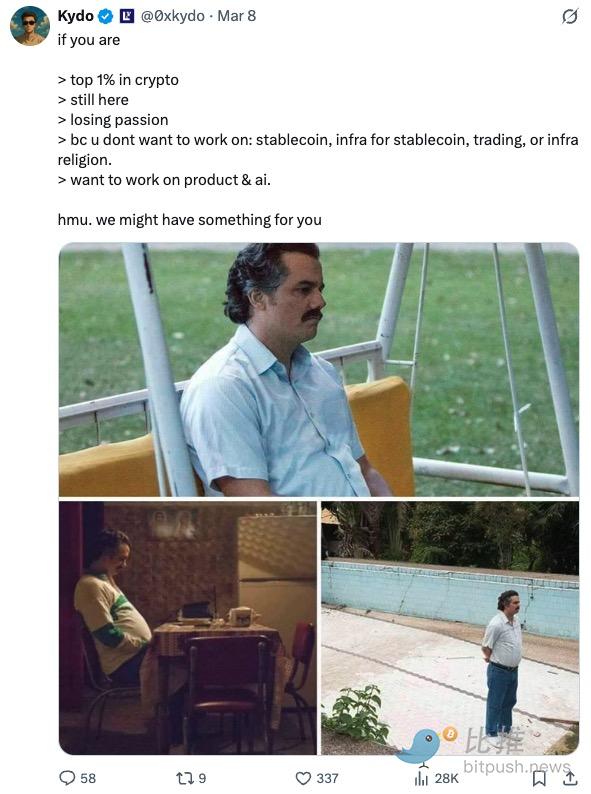
Tweet:

If you are

> in the top 1% of the crypto space

> still here

> but losing passion

> because you don't want to work on: stablecoins, stablecoin infrastructure, trading, or infrastructure-level "evangelism"

> want to build products and AI

Contact me. We might have something for you.

I want to elaborate.

If you are not working on stablecoins or are not someone extremely passionate about financial markets, you are likely not happy in the cryptocurrency space right now.

Worse, you are seeing the AI field developing at a pace and with an excitement that makes your daily work feel like standing still. I understand this all too well because that's exactly how I felt. That's why I wrote that tweet.

And the fact that it resonated with so many people (I've received 60 DMs so far) tells me that many of you feel the same way but haven't said it out loud.

So, let me say the "unsaid" things.

Selling to Crypto Developers is No Longer Viable

In the previous "meta," selling things to crypto developers worked. Back then, metrics were more important than revenue. Partner logos were more important than revenue. A "vibe" was more important than revenue. You were a cost center for others, and everyone was spending money.

That "meta" died about 18 months ago. We wish we had pivoted earlier.

There is also a growing consensus today: cryptocurrency is only suitable for finance. Haseeb from Dragonfly has said it, Kyle from Multicoin has said it, Toly from Solana has said it. Most of you think so too, even if you won't say it publicly.

I understand why people reach this conclusion. Most tokens are meme coins. They don't own anything and can't owe you anything because the only thing that can truly be "owned" is on-chain state, which is extremely limited.

This is also why crypto-native applications like trading and lending are currently the only two categories that can truly make money on-chain.

But many of us are not building in DeFi. Many of us build infrastructure to enable new use cases beyond DeFi.

Here's an uncomfortable truth: according to our analysis, the total addressable market for this kind of work is only about $200-300 million per year. This pie is to be divided among hundreds of institutions. The most successful companies can only achieve tens of millions in annual revenue. After years of maturation, this is the ceiling.

If you are building a venture-scale enterprise, this gives you a very clear set of choices. If you want to serve crypto developers, the market is small. So, you either put on a suit and sell your infrastructure to traditional finance; or, like many others, choose to pack up and switch to AI.

Many are switching to AI because they understand their strengths. They understand their team's expertise. They know their competitive advantage is not in long, complex B2B sales in traditional finance. This is why so many of you feel lost right now.
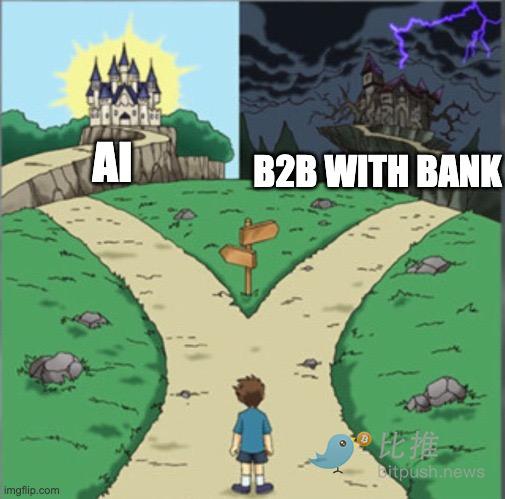
The Dead End of Crypto x AI

So you look at the only area that still feels vibrant—the intersection of crypto and AI—trying to find your footing. But the options laid out there aren't great either.

Option One: Traditional business + AI + issue a token. This token has no real utility, like most other tokens. You're essentially building a regular product and slapping a layer of financialization on top. It's frustrating because you've been playing this game for five years.

Option Two: Decentralized AI infrastructure. Privacy, security, verifiability: this is the missionary route, the old "meta." But I guess this doesn't interest many of you: not many want to embark on another long-term "building a religion" style endeavor with no immediate feedback, no revenue.

Option Three: Stablecoin infrastructure for AI agents. This is interesting from a business perspective, but extremely competitive. Circle, Stripe, and all the major stablecoin players are going all in. As a startup, going to war with them without any clear beachhead to capture is frustrating.

The Choices Faced, and Why People Are Leaving

So, these are the actual choices on the table today:

You can stay in the "religious realm" of crypto, building for a resilient, decentralized future.

You can put on a suit and join the big players to evangelize the gospel of stablecoins.

You can build a "shovel-selling" company for the stablecoin ecosystem.

You can stay in DeFi: trading, lending, and the financial plumbing of the internet.

Or, you can build a niche vertical product that, while not a billion-dollar venture target, actually makes money and satisfies real users.

Beyond that, you don't have better options. This is why you are likely to switch to AI. Honestly, I understand.

This is why cryptocurrency is no longer that fun.

The above is my diagnosis. This is the conclusion I reached after six months of feeling, analyzing, and stress-testing. If you came here for an honest take on "why crypto feels stuck," you've got it. You can close this article now. Go for a walk, touch some grass.

But I'll tell you this: I have never been so excited about the work I'm doing. The last time I felt this way was probably when I first heard about cryptocurrency and its potential. And it's not just me—everyone around me feels the same. So, if you want to hear the short version of what I believe in, read on.

Just know that from here on out, I'm selling my beliefs.

What I Truly Find Interesting

The question I've been trying to answer for the past six months is: How do you find a market large enough, with a clear business model rooted in crypto, and a product-oriented, non-financial solution that can be used by people both inside and outside the crypto space?

The answer I kept coming back to is: Cryptocurrency is a superconductor for capital. Capital fuels growth. The problem in the past was that we were fueling things that weren't growing—pouring gasoline on ice and expecting it to burn brighter.

AI has dramatically reduced the difficulty of starting and growing things—from a product perspective. Now one person can build what used to require a fifty-person team. The cost of creating a real product, a real business, is plummeting. These things are growing fast, with revenue, real users, and real feedback loops. They need fuel to accelerate. And cryptocurrency is the best fuel mechanism ever invented for this purpose.

This is the only interesting problem I see now: How do you take crypto's superpower—instant, global, programmable capital formation—and point it at things that are actually growing?

We think the answer is "agentic companies." To achieve this, you first need tokens to be able to "own" things, and coincidentally, we've spent the last five years building that foundation. Now, we're going to turn it into a product and achieve that goal.


Twitter:https://twitter.com/BitpushNewsCN

Bitpush TG Discussion Group:https://t.me/BitPushCommunity

Bitpush TG Subscription: https://t.me/bitpush

Original article link:https://www.bitpush.news/articles/7618924

Câu hỏi Liên quan

QWhy does the author believe that many people in the crypto space are no longer enjoying their work?

AThe author believes that many are no longer enjoying their work because the focus has shifted heavily towards financial applications like stablecoins and trading, which may not align with their interests. Additionally, the rapid and exciting progress in AI makes their current work in crypto feel stagnant in comparison.

QWhat are the main options available for crypto developers today, according to the article?

AThe main options are: staying in the 'religious' crypto space for a decentralized future, selling infrastructure to traditional finance, building 'picks and shovels' for the stablecoin ecosystem, continuing in DeFi (trading and lending), or creating a niche product that generates real revenue but isn't a billion-dollar venture-scale business.

QWhat is the estimated annual market size for non-DeFi crypto infrastructure work mentioned in the article?

AThe estimated annual addressable market size for non-DeFi crypto infrastructure work is about $200-300 million, which is shared among hundreds of organizations, with the most successful companies generating tens of millions in annual revenue.

QWhat does the author identify as the core problem with previous attempts to fuel growth in crypto?

AThe author states that the core problem was that capital was being provided to things that weren't growing—'pouring gasoline on ice and expecting it to burn hotter'—instead of fueling things that are actually growing.

QWhat is the author's proposed solution to make crypto fun and impactful again?

AThe author's proposed solution is to leverage crypto's superpower as an instant, global, programmable capital formation mechanism and direct it towards things that are genuinely growing, specifically 'agentic companies,' by enabling tokens to 'own' things and using this foundation to build products.

Nội dung Liên quan

Kraken Lên Kế Hoạch Cung Cấp Hợp Đồng Tương Lai Vĩnh Viễn Được CFTC Quy Định Cho Nhà Giao Dịch Chuyên Nghiệp Hoa Kỳ

Kraken đang chuẩn bị ra mắt hợp đồng tương lai vĩnh viễn được CFTC quản lý cho các nhà giao dịch chuyên nghiệp đủ điều kiện tại Hoa Kỳ. Sản phẩm sẽ được cung cấp thông qua sàn phái sinh Bitnomial mà Kraken đã mua lại và dự kiến tích hợp vào nền tảng Kraken Pro. Hợp đồng tương lai vĩnh viễn là sản phẩm phái sinh crypto lớn toàn cầu, cho phép giao dịch không ngày đáo hạn. Tại Mỹ, các hạn chế quy định trước đây khiến nhà giao dịch có ít lựa chọn trong nước. Động thái của Kraken nhằm thu hẹp khoảng cách này, cung cấp một con đường được quản lý để tiếp cận sản phẩm chi phối khối lượng giao dịch crypto ở nước ngoài. Việc ra mắt sẽ tập trung vào các nhà giao dịch chuyên nghiệp đủ điều kiện. Các yếu tố cần theo dõi bao gồm điều khoản về tính đủ điều kiện, thiết kế hợp đồng, tài sản được hỗ trợ và quan trọng nhất là thanh khoản khi ra mắt. Thành công của sản phẩm có thể mở đường cho nhiều sản phẩm tương lai vĩnh viễn được quản lý khác tại thị trường Mỹ, đưa sản phẩm phái sinh chủ chốt này tiến gần hơn đến cơ sở hạ tầng thị trường nội địa được quản lý.

bitcoinist1 giờ trước

Kraken Lên Kế Hoạch Cung Cấp Hợp Đồng Tương Lai Vĩnh Viễn Được CFTC Quy Định Cho Nhà Giao Dịch Chuyên Nghiệp Hoa Kỳ

bitcoinist1 giờ trước

Sự Ra Mắt Của Warsh: Chủ Tịch Fed Hiểu Crypto Nhất Lịch Sử Sẽ Mang Đến Bất Ngờ Hay Cú Sốc Cho Thị Trường?

Tân Chủ tịch Cục Dự trữ Liên bang Kevin Warsh, người được mệnh danh là chủ tịch FED "hiểu rõ về Crypto nhất trong lịch sử", sắp có buổi họp báo chính sách đầu tiên trong bối cảnh thử thách ba mặt: lạm phát quay trở lại, áp lực giảm lãi suất từ Tổng thống Trump và kỳ vọng thị trường về việc tăng lãi suất. Khác với người tiền nhiệm, Warsh có cái nhìn sâu sắc về tài sản số, từng coi Bitcoin như "cảnh sát tốt cho chính sách" và nhấn mạnh giá trị sản xuất của ngành công nghiệp blockchain. Tuy nhiên, ông cũng nổi tiếng là người theo chủ nghĩa diều hâu về lạm phát. Sự kết hợp giữa "lãi suất chặt chẽ" và "quy định thân thiện" từ ông có thể trở thành yếu tố cốt lõi định giá tài sản mã hóa. Bài viết phân tích tác động từ ba khía cạnh: 1. **Chuyển đổi khuôn mẫu kỳ vọng quy định:** Từ phòng thủ sang tích hợp và đổi mới, có thể thúc đẩy các khung pháp lý rõ ràng hơn, hỗ trợ ổn định do khu vực tư nhân phát hành. 2. **Định giá lại lộ trình lãi suất và phần bù rủi ro:** Một chủ tịch hiểu biết và giao tiếp rõ ràng có thể giảm bớt phí bảo hiểm bất định, có lợi về cấu trúc cho thị trường. 3. **Tái phân bổ dòng vốn toàn cầu:** Kinh nghiệm đầu tư cá nhân của Warsh truyền tải tín hiệu về sự chấp nhận chính thống, có thể thúc đẩy các quỹ thể chế truyền thống phân bổ tài sản số. Hai kịch bản chính được đưa ra: * **Ngạc nhiên thú vị:** Nếu Warsh thể hiện thái độ ôn hòa và công nhận giá trị của tài sản số, thị trường có thể được tiếp thêm sức mạnh. * **Cú sốc:** Nếu ông phát tín hiệu tăng lãi suất mạnh mẽ, tài sản rủi ro, bao gồm crypto, có thể chịu áp lực bán. Mặc dù Warsh đã bán các khoản nắm giữ liên quan đến crypto để tuân thủ quy tắc đạo đức, nhưng sự hiểu biết thực sự của ông về công nghệ blockchain được kỳ vọng sẽ đặt nền tảng cho việc chính thống hóa tài sản số về lâu dài, vượt ra ngoài các phản ứng thị trường ngắn hạn.

marsbit1 giờ trước

Sự Ra Mắt Của Warsh: Chủ Tịch Fed Hiểu Crypto Nhất Lịch Sử Sẽ Mang Đến Bất Ngờ Hay Cú Sốc Cho Thị Trường?

marsbit1 giờ trước

XRP Ledger Ra Mắt Rebrand XRPLd Cùng Với Bản Nâng Cấp Phiên Bản 3.2.0

Phiên bản 3.2.0 của XRP Ledger đã chính thức ra mắt, đánh dấu một bước nâng cấp quan trọng cho cơ sở hạ tầng blockchain cốt lõi. Lần này, các nhà phát triển đã đổi tên phần mềm vận hành mạng từ "rippled" thành "xrpld" để phù hợp hơn với toàn bộ hệ sinh thái của dự án. Bản cập nhật tập trung chủ yếu vào các cải tiến back-end và hiệu suất thay vì tính năng người dùng mới. Các tối ưu hóa bộ nhớ được giới thiệu có khả năng tiết kiệm tới 40% lượng bộ nhớ máy chủ, đồng thời chuẩn bị kiến trúc phần mềm cho việc mở rộng quy mô trong tương lai. Về mặt bảo mật, bản sửa đổi `fixCleanup3_2_0` mang lại nhiều cải thiện cho các mô-đun như kho lưu ký tài sản đơn, giao thức cho vay, sàn giao dịch phi tập trung và mã thông báo đa năng. Các kiểm tra bất biến mới được thêm vào để đảm bảo tính toàn vẹn của sổ cái khi tài khoản bị xóa. Một khả năng mới cho nhà phát triển là ứng dụng có thể truy xuất thông tin định nghĩa giao thức và máy chủ XRP Ledger mà không cần kết nối trực tiếp, hỗ trợ đáng kể việc phát triển ví, công cụ khám phá chuỗi khối và API. Các thay đổi về khả năng mở rộng và ổn định bao gồm kích thước khối có thể cấu hình, hỗ trợ lưu trữ cơ sở dữ liệu hiệu quả qua nuDB, và việc hỗ trợ máy chủ gRPC cho TLS/mutual TLS trở thành tùy chọn. Cổng kết nối ngang hàng mặc định cũng được đổi từ 51235 sang 2459. Các tính năng kiểm tra bất biến giao dịch tạm thời bị vô hiệu hóa trong phiên bản 3.2.0 do ảnh hưởng đến hiệu suất, nhưng không gây rủi ro bảo mật.

TheNewsCrypto2 giờ trước

XRP Ledger Ra Mắt Rebrand XRPLd Cùng Với Bản Nâng Cấp Phiên Bản 3.2.0

TheNewsCrypto2 giờ trước

AGI không phải là điểm kết thúc, nghiên cứu mới của DeepMind: Hướng tới ASI, tiến bộ AI thực sự mới chỉ bắt đầu

DeepMind mới đây công bố nghiên cứu cho rằng AGI (Trí tuệ nhân tạo phổ quát) không phải là điểm cuối. AI sẽ tiếp tục phát triển vượt qua khả năng của các nhóm chuyên gia con người hàng đầu, hướng tới ASI (Trí tuệ siêu nhân tạo). Báo cáo phân biệt ba khái niệm: AGI (năng lực nhận thức tương đương mức trung bình của con người), ASI (vượt trội con người trong hầu hết lĩnh vực quan tâm), và UAI (giới hạn lý thuyết tối thượng). Nghiên cứu đề xuất bốn con đường tiềm năng để chuyển từ AGI sang ASI: 1. Mở rộng quy mô tính toán, mô hình và dữ liệu. 2. Tiến hóa thuật toán, có thể thay đổi mô hình mới. 3. Tự cải thiện đệ quy, tạo phản hồi tích cực. 4. Điều phối đa tác tử và trí tuệ tập thể. Đồng thời, báo cáo chỉ ra sáu điểm nghẽn chính: giới hạn dữ liệu chất lượng cao, áp lực tài nguyên và kinh tế, hạn chế của mô hình mạng nơ-ron hiện tại, nghiên cứu ngày càng khó khăn, rào cản trừu tượng, cùng các vấn đề quản lý và phản ứng xã hội. Khi AI vượt con người, các phương pháp đánh giá truyền thống sẽ mất ý nghĩa. Cần xây dựng hệ thống đánh giá mới cho thời kỳ hậu AGI. ASI không phải là hệ thống toàn năng, vẫn chịu ràng buộc bởi các quy luật vật lý, độ phức tạp tính toán, dữ liệu, tài nguyên và tốc độ phản hồi thực tế. Tương lai phát triển của AI vẫn chứa nhiều bất định, đòi hỏi một nỗ lực liên ngành quy mô lớn để theo dõi và ứng phó.

marsbit3 giờ trước

AGI không phải là điểm kết thúc, nghiên cứu mới của DeepMind: Hướng tới ASI, tiến bộ AI thực sự mới chỉ bắt đầu

marsbit3 giờ trước

Kraken Ra Mắt Hợp Đồng Perpetual Trước IPO Cho OpenAI Và Anthropic Với Đòn Bẩy Lên Đến 5x

Kraken đã ra mắt hợp đồng tương lai vĩnh viễn (perps) tiền IPO cho hai công ty trí tuệ nhân tạo hàng đầu là OpenAI và Anthropic. Các hợp đồng này cho phép các nhà giao dịch đủ điều kiện mở vị thế mua (long) hoặc bán (short) đối với các công ty tư nhân được theo dõi sát sao này trước khi họ lên sàn chứng khoán, với đòn bẩy lên tới 5x. Sản phẩm này đánh dấu một bước tiến trong việc mở rộng cơ sở hạ tầng phái sinh tiền mã hóa sang các tài sản ngoài chuỗi, cung cấp cho các nhà giao dịch một cách tiếp cận thay thế để có thể tiếp xúc với các công ty tư nhân vốn thường khó tiếp cận. Tuy nhiên, hợp đồng tiền IPO có những rủi ro đặc thù. Khác với các hợp đồng vĩnh viễn cho tiền mã hóa có giá cả minh bạch, định giá công ty tư nhân phụ thuộc vào nhiều yếu tố như các vòng gọi vốn, giao dịch thứ cấp và kỳ vọng về thời điểm IPO. Điều này khiến việc định giá và quản lý rủi ro trở nên phức tạp hơn. Việc sử dụng đòn bẩy cao có thể khuếch đại lợi nhuận nhưng cũng làm gia tăng đáng kể rủi ro thua lỗ và thanh lý. Do đó, các nhà giao dịch cần hiểu rõ bản chất của sản phẩm mới và các rủi ro độc đáo của thị trường tư nhân trước khi tham gia.

bitcoinist3 giờ trước

Kraken Ra Mắt Hợp Đồng Perpetual Trước IPO Cho OpenAI Và Anthropic Với Đòn Bẩy Lên Đến 5x

bitcoinist3 giờ trước

Giao dịch

Giao ngay
Hợp đồng Tương lai

Bài viết Nổi bật

Làm thế nào để Mua FUN

Chào mừng bạn đến với HTX.com! Chúng tôi đã làm cho mua FUNTOKEN (FUN) trở nên đơn giản và thuận tiện. Làm theo hướng dẫn từng bước của chúng tôi để bắt đầu hành trình tiền kỹ thuật số của bạn.Bước 1: Tạo Tài khoản HTX của BạnSử dụng email hoặc số điện thoại của bạn để đăng ký tài khoản miễn phí trên HTX. Trải nghiệm hành trình đăng ký không rắc rối và mở khóa tất cả tính năng. Nhận Tài khoản của tôiBước 2: Truy cập Mua Crypto và Chọn Phương thức Thanh toán của BạnThẻ Tín dụng/Ghi nợ: Sử dụng Visa hoặc Mastercard của bạn để mua FUNTOKEN (FUN) ngay lập tức.Số dư: Sử dụng tiền từ số dư tài khoản HTX của bạn để giao dịch liền mạch.Bên thứ ba: Chúng tôi đã thêm những phương thức thanh toán phổ biến như Google Pay và Apple Pay để nâng cao sự tiện lợi.P2P: Giao dịch trực tiếp với người dùng khác trên HTX.Thị trường mua bán phi tập trung (OTC): Chúng tôi cung cấp những dịch vụ được thiết kế riêng và tỷ giá hối đoái cạnh tranh cho nhà giao dịch.Bước 3: Lưu trữ FUNTOKEN (FUN) của BạnSau khi mua FUNTOKEN (FUN), lưu trữ trong tài khoản HTX của bạn. Ngoài ra, bạn có thể gửi đi nơi khác qua chuyển khoản blockchain hoặc sử dụng để giao dịch những tiền kỹ thuật số khác.Bước 4: Giao dịch FUNTOKEN (FUN)Giao dịch FUNTOKEN (FUN) dễ dàng trên thị trường giao ngay của HTX. Chỉ cần truy cập vào tài khoản của bạn, chọn cặp giao dịch, thực hiện giao dịch và theo dõi trong thời gian thực. Chúng tôi cung cấp trải nghiệm thân thiện với người dùng cho cả người mới bắt đầu và người giao dịch dày dạn kinh nghiệm.

Tổng lượt xem 429Xuất bản vào 2025.06.25Cập nhật vào 2026.06.02

Làm thế nào để Mua FUN

Thảo luận

Chào mừng đến với Cộng đồng HTX. Tại đây, bạn có thể được thông báo về những phát triển nền tảng mới nhất và có quyền truy cập vào thông tin chuyên sâu về thị trường. Ý kiến ​​của người dùng về giá của FUN (FUN) được trình bày dưới đây.

活动图片