Programmers Must Read: Job Hunting in Web3, Avoid These Four Types of High-Risk Gambling-Related Platforms

marsbitXuất bản vào 2026-02-25Cập nhật gần nhất vào 2026-02-25

Tóm tắt

Chinese programmer "Xiao Wang" considers a Web3 career transition but faces job offers involving "perpetual contracts, on-chain gambling, and prediction markets," raising legal concerns. A legal team advises caution, identifying four high-risk platform types that may constitute illegal operations under Chinese law, despite attractive salaries and remote work: 1. **Web3 Gaming Platforms**: Often disguised as decentralized games (GameFi) but operate as on-chain casinos using USDT/ETH as chips, with smart contracts handling bets and payouts. Developers building betting logic, random number generators, or fund pools are considered key technical support in gambling operations. 2. **Perpetual Contract Development**: High-leverage crypto trading platforms (e.g., 150x) where users bet on price directions. Courts increasingly view these as gambling, and developers working on matching engines, liquidation systems, or referral programs face liability. 3. **Prediction Markets**: Framed as financial innovation for event forecasting, they essentially function as binary betting on outcomes (e.g., price movements or macro events). Technologists designing prediction contracts or oracle integrations are seen as enabling gambling mechanisms. 4. **Gambling Payment Platforms**: High-risk payment/clearing services for gambling sites, often masked as "payment solutions" or "USDT gateways." Developers building fiat/crypto deposit/withdrawal systems or currency exchange logic may be implicated i...

Author: Lawyer Shao Shiwei's Team

Xiao Wang is a programmer at a large tech company. In recent years, wanting to break through his professional bottleneck and seek new career possibilities, he began considering a transition to Web3. After communicating with headhunters and seeking referrals from friends in the industry, Xiao Wang received multiple job offers in Web3. The job descriptions (JDs) roughly stated:

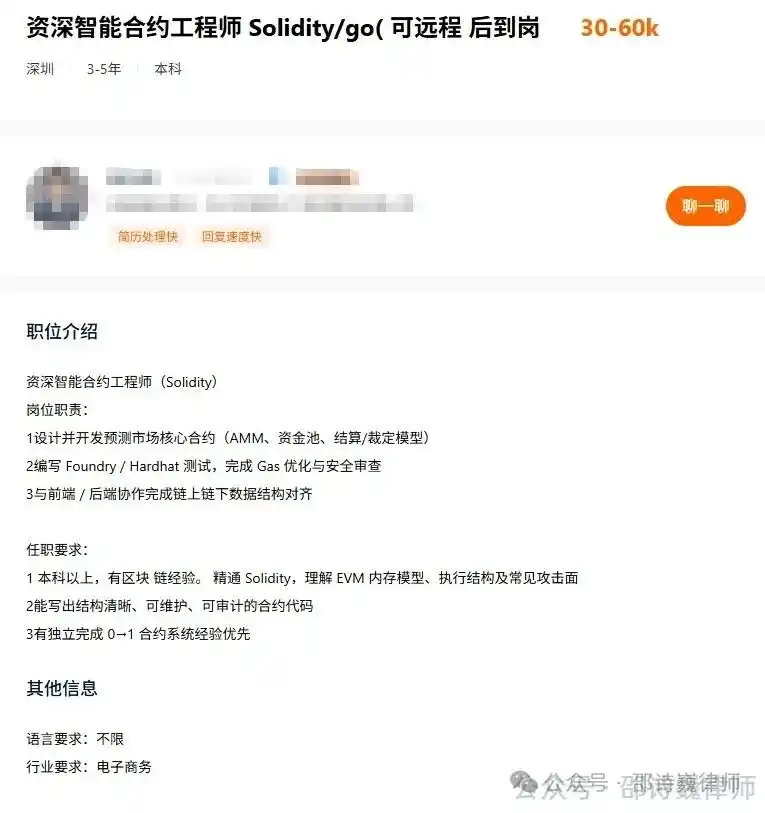
Design and develop core prediction market contracts (AMM, liquidity pools, settlement, adjudication models);

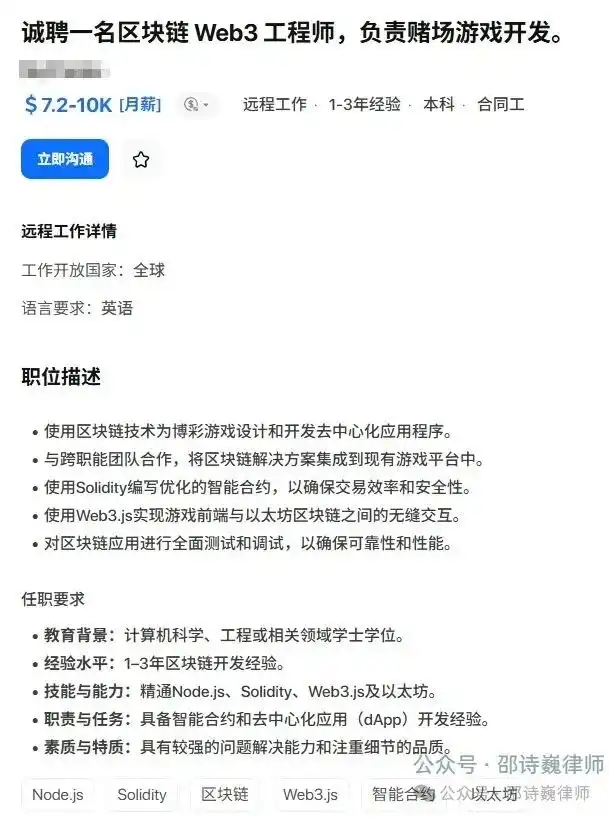
Design and develop decentralized applications for gambling games;

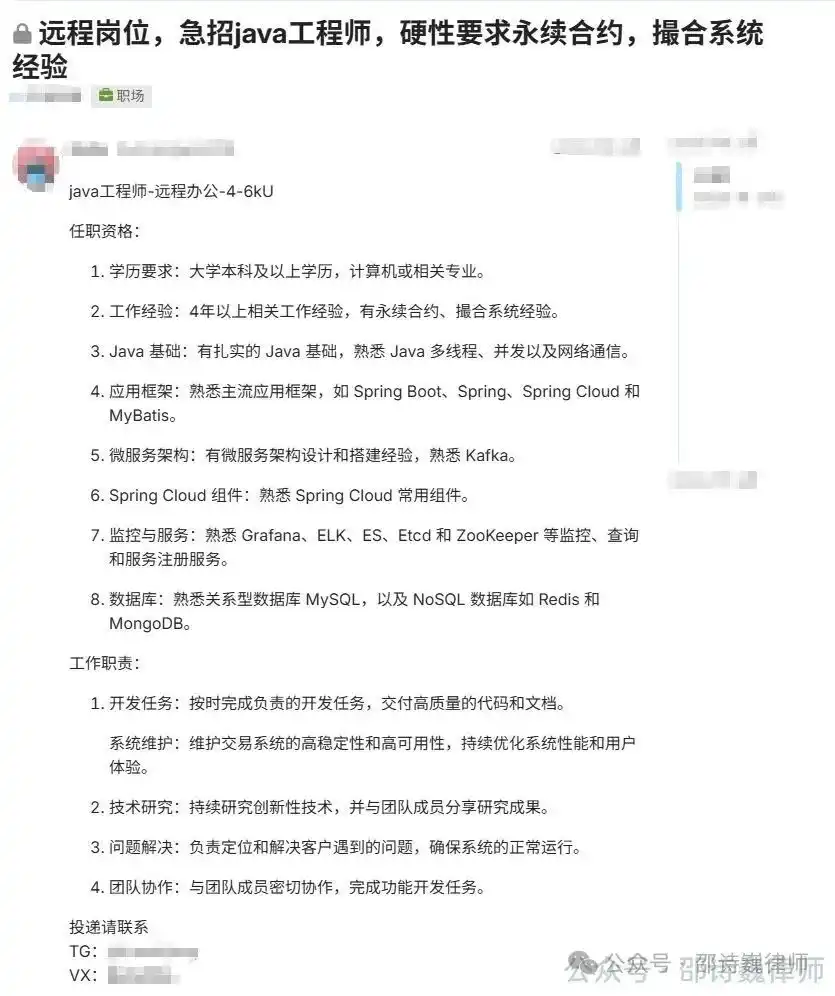
Urgently hiring Java engineers, mandatory experience with perpetual contracts, matching systems, etc.
Faced with terms like "perpetual contracts, on-chain gambling, prediction markets," Xiao Wang felt he somewhat understood but also vaguely uneasy: the salary offered by the headhunter was good, significantly higher than his current income, and most importantly, it offered remote work—a lifestyle of a digital nomad he had always yearned for.

But, "Is there domestic risk in this type of work? But even if the project is risky, so what? I'm just a technician; even if something happens, it shouldn't implicate me, right?"... This conflicting psychology kept him in a state of persistent hesitation.

In daily case handling and consultations, Lawyer Shao has found that many job seekers share similar thoughts: attracted by the high salary and remote work on one hand, yet worried about crossing legal red lines on the other. So, for programmers transitioning to Web3, how should they choose job positions? How can they "avoid pitfalls" to stay clear of legal risks?

This article will summarize common types of high-risk projects related to gambling from the perspective of Web3 job seekers, helping you "identify them at a glance." You can compare the job description, project whitepaper, and official website introduction to self-check if the job you're about to take is a Web3 project involved in gambling, avoiding unintentionally working for a "casino."

1. Web3 Gaming Platforms: The Disguised Packaging of On-Chain Gambling

Many Web3 job seekers first encounter this type of position with JDs that often sound very appealing:

Decentralized chain games, fair on-chain gambling, smart contract automatic settlement, USDT instant settlement—at first glance, it seems like a cutting-edge Web3 game (GameFi) or innovative project.

But if you strip away these buzzwords and just look at how the money flows, you'll find the business essence is not that complicated: users use USDT, ETH, or other virtual currencies as chips, choose a game style (dice, roulette, lottery, sports betting, etc.) on the front end, and then write the transaction into a smart contract via a Web3 library; after the contract receives the funds, it determines win/loss based on preset random number + odds rules, then pays profits to the winner from the fund pool, while the platform and the house take a commission.

What's transparent on the chain is only the process; its essence is still organizing an unspecified majority to bet online on wins and losses, with the platform profiting through commissions.

In such projects, the programmer's daily work is often akin to a technical architect for a casino:

Responsible for writing betting contracts, drawing logic, fund pool management; researching on-chain random numbers to ensure apparent fairness; creating various betting interfaces, odds displays, drawing animations; setting up data dashboards in the backend to track wins/losses and agent rebates.

Many technical personnel believe they are just ordinary employees writing code, or that "technology is neutral." However, from the judicial authorities' perspective, technical personnel are identified as key roles providing technical support for the gambling platform.

For example, in the EOS gambling case 【Case: (2023) Su 09 Xing Zhong No. 372】, the involved parties developed a gambling platform named BigGame on the EOS blockchain and accepted bets. The technical personnel were responsible for platform product design, contract code writing, and platform client code writing, and were identified as accomplices in the crime of operating a gambling establishment. Practice has clearly established that using blockchain and other technologies to establish gambling websites and accepting bets from participants using virtual currency as chips constitutes the "operation of a gambling establishment" behavior specified in the second paragraph of Article 303 of the Criminal Law.

2. Perpetual Contract Development: The Gambling Nature of High-Leverage Trading

Another very common type in Web3 job hunting is positions under the guise of digital currency exchanges or contract platforms. JD descriptions include: responsible for perpetual contract matching engine development, participating in high-concurrency trading system design, building risk control and forced liquidation mechanisms... If the job seeker has experience in traditional finance or matching systems, it's easy to interpret this as working on a high-end financial product.

But the reality is often: the platform focuses on high-leverage perpetual contracts. Users use USDT to bet whether a coin's price will rise or fall, configuring up to 150x leverage. If the direction is wrong, they are instantly liquidated to zero, while the platform steadily collects fees and continuously takes a cut from liquidations, settlements, and funding rates.

In Web3 contract projects, programmers are often working on the underlying support of the "trading engine": implementing high-performance matching systems, margin models, liquidation, and forced closing logic; building so-called risk control systems, but more to prevent platform losses; simultaneously cooperating with product design for signal following, agent rebates, partnership systems, and other user acquisition and裂变 mechanisms.

Although similar contract businesses may operate legally in some regions overseas, in publicly available judgments in China, the courts'定性 of such businesses is becoming increasingly clear: high-leverage contracts are in most cases regarded as gambling activities using virtual currency as chips. Relevant technical, operational, and agency personnel find it difficult to completely sever responsibility with "I'm just an employee."

For example, in the CCFOX case 【Case No.: (2024) Ji 06 Xing Zhong No. 10】, the court determined that the virtual currency contract trading provided by the CCFOX platform had speculative and偶然性 characteristics and was not supervised by the state. The CCFOX platform should be identified as a gambling platform. Shen某, as a technical developer for the CCFOX website, responsible for website function development and providing technical services, was identified as an accomplice in the crime of operating a gambling establishment.

3. On-Chain Prediction Markets: Betting Games Under the Guise of Financial Innovation

Another type of seemingly more advanced position in Web3 job hunting involves so-called prediction markets, event contracts, and price prediction games. These platforms like to use flashy narratives:

Using market prices to aggregate collective wisdom, using trading to predict the future, assetizing all events... It sounds like a financial experiment.

But if you actually click into the official website to see the gameplay, you'll find the core logic is still the same set: the platform launches predictions on whether a coin price will reach a certain level by a certain date, whether a macro event will occur (e.g., the possibility of Trump being impeached again before the end of 2026, when the Fed will cut rates, the end time of the Russia-Ukraine conflict, etc.). Users use virtual currency to bet yes or no, rise or fall. Upon expiration, the platform or an oracle determines the result, pays out according to the odds, and the platform takes a cut. This is no different in substance from binary options or betting on big/small, just wrapped in a "prediction market" cloak.

Technical positions are often packaged to sound very technical: designing prediction contract mechanisms, implementing event creation, betting, expiration settlement contract logic, integrating oracles, arbitration systems... But what you are actually doing is still fund pool management, odds curve design, and settlement rules—from a judicial perspective, this is a complete set of 'bet on results, divide the赌资' casino rules.

Judging from the spirit of the Supreme People's Court's guiding Case No. 146, the玩法 of such prediction markets is not本质上 different from the traditional "betting on big/small, winning/losing"玩法. What technicians consider financial innovation projects will most likely be evaluated and handled according to their gambling attributes in domestic judicial practice.

4. Gambling Payment Platforms: High-Risk Payment and Clearing Services

This last category is the one where many Web3 job seekers are most likely to let their guard down, yet it carries extremely high criminal risk: providing the underlying payment system for gambling platforms (i.e., gambling platforms or betting websites) for充值, withdrawal, and exchange.

Some companies often package themselves externally as payment technology, clearing and settlement platforms, or fourth-party payment, focusing on keywords like aggregated payment, cross-border settlement, USDT payment gateways; the team rhetoric claims they are "USDT payment solution or wallet service providers."

If you only look at the work content, it seems like just对接 various payment channels and wallets, all very normal business. But the actual business model is often:

  • Packaging legal payment tools like Alipay, WeChat Pay, and bank cards into an "aggregated channel" and connecting it to overseas gambling websites;

  • Or using USDT, game coins, points as an intermediate medium to help players complete the two-way conversion between RMB and chips;

  • Then using multi-layer accounts, channels, or中转 wallets to "launder" the funds.

In such companies, programmers' daily work often focuses on:

Developing充值/withdrawal systems, integrating fiat and on-chain wallet interfaces, writing currency and chip exchange logic, building transaction流水 and clearing and settlement backends, and even optimizing "pass-through rates" and reducing risk control interceptions.

But from a criminal judicial perspective, these behaviors are often summarized in one sentence: "providing fund settlement and exchange services for gambling websites." For example, in the cross-province arrest case of Web3 wallet company employees previously discussed by Lawyer Shao (➡️《Reflections Triggered by the Cross-Province Arrest Case of a Web3 Programmer: Three Legal Cognitive Blind Spots for Practitioners》), the team where the当事人 worked was investigated because some of its partner merchants were suspected of operating online gambling establishments, leading to employees being taken away for investigation.

5. Lawyer Shao's Advice: Two-Step Self-Check to Stay Away from Legal Risks

Based on the four common types of gambling platforms above, Lawyer Shao's core advice for Web3 job seekers is as follows:

First,刻下 a red line in your mind:凡是 the business essence is "someone uses money to bet on wins and losses, and the platform profits through odds or leverage commissions," regardless of whether it's called contracts, GameFi, prediction markets, or payment technology, it will most likely be treated as a gambling-related project in judicial practice.

When具体 job hunting, you can judge the risk using the "two-step self-check method":

First, look at the platform's overall model (look at the big picture): Carefully study the project whitepaper, official website introduction, and product gameplay. As long as the overall logic is similar to the Web3 gambling platforms, contract gambling, or gambling payment channels described above, be highly vigilant and carefully consider joining.

Then, look at your own job responsibilities (look at the details): Clarify whether the functions you are actually responsible for involve high-risk links such as betting logic, drawing rules, odds models, forced liquidation mechanisms,充值/withdrawal, credit/debit points, or fund clearing and settlement; as long as you are deeply involved, it is difficult to sever responsibility with "I just write code."

If you can identify risks in advance and decisively refuse offers, you can often avoid criminal implication. Once involved in such projects, job seekers often face not just "changing jobs," but the dual代价 of loss of personal freedom and interruption of their professional career.


Câu hỏi Liên quan

QWhat are the four types of high-risk gambling-related platforms that Web3 developers should avoid when job hunting?

AThe four types are: 1) Web3 gaming platforms (disguised on-chain gambling), 2) Perpetual contract development platforms (high-leverage trading with gambling essence), 3) On-chain prediction markets (betting games under the guise of financial innovation), and 4) Gambling payment platforms (high-risk payment and settlement services for gambling sites).

QIn the context of Web3 job opportunities, why are perpetual contract development positions considered high-risk?

APerpetual contract development is high-risk because these platforms often offer high-leverage trading (e.g., up to 150x) where users bet on cryptocurrency price movements. In Chinese judicial practice, such activities are frequently classified as gambling using virtual currencies as chips, and technical staff involved in developing matching systems, liquidation logic, or risk controls can be held liable as accomplices in operating a gambling establishment.

QHow can a Web3 job seeker identify if a 'prediction market' platform is essentially a gambling operation?

AA prediction market platform is likely a gambling operation if its core activity involves users betting virtual currencies on outcomes (e.g., price movements or event results) with payouts determined by odds, and the platform profits by taking a cut. Despite being marketed as 'financial innovation' or 'collective intelligence aggregation,' it functions similarly to betting on binary outcomes, which is treated as gambling in Chinese judicial rulings.

QWhat is the 'two-step self-check method' recommended for Web3 developers to avoid legal risks when considering job offers?

AThe two-step self-check method involves: 1) Examining the platform's overall model: Review the whitepaper, official website, and product mechanics—if the logic aligns with gambling-like operations (e.g., betting on outcomes with platform profit from odds/leverage), be highly cautious. 2) Reviewing personal job responsibilities: Assess if the role involves high-risk functions like developing betting logic, payout rules, odds models, liquidation mechanisms, or payment settlement systems for gambling-related activities.

QWhy might developers working on payment systems for Web3 platforms face severe legal consequences, even if they are not directly involved in gambling operations?

ADevelopers working on payment systems (e.g., deposit/withdrawal interfaces, currency exchange logic, or transaction clearing) for platforms later identified as gambling sites can be legally implicated as providing essential financial settlement services for gambling. Under Chinese law, such support is often interpreted as aiding gambling operations, leading to potential criminal charges as accomplices, regardless of claiming 'just writing code' or technical neutrality.

Nội dung Liên quan

Đừng nói rằng thị trường gấu không có việc gì làm, 4 kiểu người thông minh này đang âm thầm kiếm tiền

Tác giả Zun chỉ ra rằng trong thị trường Crypto hiện tại, cơ hội kiếm tiền vẫn tồn tại dù hình thức đã thay đổi so với các xu hướng trước đây như Play-to-Earn, Move-to-Earn hay Airdrop testnet. Thay vì lãng phí thời gian vào mạng xã hội đầy tin nhiễu, bốn nhóm người sau đang âm thầm kiếm thu nhập ổn định: 1. **Kiếm tiền từ nền tảng X (Twitter)**: Tận dụng chương trình chia sẻ doanh thu cho creator, nhiều người kiếm 500-2000 USD/tháng nhờ lượt tương tác. 2. **Tham gia chương trình Đại sứ**: Các dự án trả lương hàng tháng (ví dụ Alchemy Pay trả 200 USDT + thưởng) cho công việc quảng bá thực tế. 3. **Quản lý Discord**: Kiếm thu nhập ổn định bằng cách hỗ trợ, quản lý cộng đồng và giải quyết sự cố. 4. **Chương trình dành cho nhà phát triển (Developer)**: Xây dựng ứng dụng, công cụ hoặc tham gia bounty (ví dụ Zama, Arc, Ink) để nhận tài trợ hoặc phần thưởng lên đến 200,000 USDC. Bài viết nhấn mạnh: thay vì chờ đợi xu hướng mới, hãy tự đánh giá kỹ năng của bản thân (sáng tạo nội dung, quản lý, lập trình) và tìm cơ hội phù hợp. Cơ hội không biến mất, chúng chỉ thay đổi hình thức.

marsbit7 phút trước

Đừng nói rằng thị trường gấu không có việc gì làm, 4 kiểu người thông minh này đang âm thầm kiếm tiền

marsbit7 phút trước

Dưới đà cao mới của thị trường chứng khoán, trái phiếu và dầu thô vẫn 'bỏ phiếu chống'

Tóm tắt: Trong khi thị trường chứng khoán Mỹ phục hồi mạnh mẽ và tiến gần mức đỉnh lịch sử sau căng thẳng địa chính trị, thị trường trái phiếu và dầu thô đang đưa ra tín hiệu cảnh báo trái ngược. Lợi suất trái phiếu kho bạc kỳ hạn 10 năm tăng 30 điểm cơ bản so với trước xung đột, phản ánh lo ngại về lạm phát dai dẳng. Giá dầu thô WTI tăng 37% cho thấy thị trường năng lượng không tin tưởng vào giải pháp nhanh chóng cho xung đột Trung Đông. Lợi suất trái phiếu 2 năm tăng 40 điểm cơ bản ám chỉ không gian chính sách của Fed hạn chế hơn kỳ vọng. Tác giả nhận định đà tăng hiện tại chủ yếu do động lực giao dịch (FOMO) hơn là cơ bản vững chắc, đồng thời cảnh báo về khoảng cách giữa định giá "hoàn hảo" của thị trường chứng khoán và thực tế từ trái phiếu/dầu. Sự phân kỳ này có thể được giải quyết bằng việc chứng khoán điều chỉnh giảm hoặc các thị trường khác bắt kịp đà tăng – với kịch bản đầu tiên được cho là khả thi hơn. Dữ liệu CPI ngày 12/5 sẽ là thử nghiệm quan trọng cho kỳ vọng giảm lãi suất năm 2026.

marsbit1 giờ trước

Dưới đà cao mới của thị trường chứng khoán, trái phiếu và dầu thô vẫn 'bỏ phiếu chống'

marsbit1 giờ trước

Giao dịch

Giao ngay
Hợp đồng Tương lai

Bài viết Nổi bật

AGENT S là gì

Agent S: Tương Lai của Tương Tác Tự Động trong Web3 Giới thiệu Trong bối cảnh không ngừng phát triển của Web3 và tiền điện tử, các đổi mới đang liên tục định nghĩa lại cách mà cá nhân tương tác với các nền tảng kỹ thuật số. Một dự án tiên phong như vậy, Agent S, hứa hẹn sẽ cách mạng hóa tương tác giữa con người và máy tính thông qua khung tác nhân mở của nó. Bằng cách mở đường cho các tương tác tự động, Agent S nhằm đơn giản hóa các nhiệm vụ phức tạp, cung cấp các ứng dụng chuyển đổi trong trí tuệ nhân tạo (AI). Cuộc khám phá chi tiết này sẽ đi sâu vào những phức tạp của dự án, các tính năng độc đáo của nó và những tác động đối với lĩnh vực tiền điện tử. Agent S là gì? Agent S đứng vững như một khung tác nhân mở đột phá, được thiết kế đặc biệt để giải quyết ba thách thức cơ bản trong việc tự động hóa các nhiệm vụ máy tính: Thu thập Kiến thức Cụ thể theo Miền: Khung này học một cách thông minh từ nhiều nguồn kiến thức bên ngoài và kinh nghiệm nội bộ. Cách tiếp cận kép này giúp nó xây dựng một kho lưu trữ phong phú về kiến thức cụ thể theo miền, nâng cao hiệu suất của nó trong việc thực hiện nhiệm vụ. Lập Kế Hoạch Qua Các Tầm Nhìn Nhiệm Vụ Dài Hạn: Agent S sử dụng lập kế hoạch phân cấp tăng cường kinh nghiệm, một cách tiếp cận chiến lược giúp phân chia và thực hiện các nhiệm vụ phức tạp một cách hiệu quả. Tính năng này nâng cao đáng kể khả năng quản lý nhiều nhiệm vụ con một cách hiệu quả và hiệu suất. Xử Lý Các Giao Diện Động, Không Đều: Dự án giới thiệu Giao Diện Tác Nhân-Máy Tính (ACI), một giải pháp đổi mới giúp nâng cao tương tác giữa các tác nhân và người dùng. Sử dụng các Mô Hình Ngôn Ngữ Lớn Đa Phương Thức (MLLMs), Agent S có thể điều hướng và thao tác các giao diện người dùng đồ họa đa dạng một cách liền mạch. Thông qua những tính năng tiên phong này, Agent S cung cấp một khung vững chắc giải quyết các phức tạp liên quan đến việc tự động hóa tương tác giữa con người với máy móc, mở ra nhiều ứng dụng trong AI và hơn thế nữa. Ai là Người Tạo ra Agent S? Mặc dù khái niệm về Agent S là hoàn toàn đổi mới, thông tin cụ thể về người sáng lập vẫn còn mơ hồ. Người sáng lập hiện vẫn chưa được biết đến, điều này làm nổi bật giai đoạn sơ khai của dự án hoặc sự lựa chọn chiến lược để giữ kín các thành viên sáng lập. Bất chấp sự ẩn danh, sự chú ý vẫn tập trung vào khả năng và tiềm năng của khung này. Ai là Các Nhà Đầu Tư của Agent S? Vì Agent S còn tương đối mới trong hệ sinh thái mã hóa, thông tin chi tiết về các nhà đầu tư và những người tài trợ tài chính của nó không được ghi chép rõ ràng. Sự thiếu vắng thông tin công khai về các nền tảng đầu tư hoặc tổ chức hỗ trợ dự án dấy lên câu hỏi về cấu trúc tài trợ và lộ trình phát triển của nó. Hiểu biết về sự hỗ trợ là rất quan trọng để đánh giá tính bền vững và tác động tiềm năng của dự án. Agent S Hoạt Động Như Thế Nào? Tại cốt lõi của Agent S là công nghệ tiên tiến cho phép nó hoạt động hiệu quả trong nhiều bối cảnh khác nhau. Mô hình hoạt động của nó được xây dựng xung quanh một số tính năng chính: Tương Tác Giống Như Con Người: Khung này cung cấp lập kế hoạch AI tiên tiến, cố gắng làm cho các tương tác với máy tính trở nên trực quan hơn. Bằng cách bắt chước hành vi của con người trong việc thực hiện nhiệm vụ, nó hứa hẹn nâng cao trải nghiệm người dùng. Ký Ức Tường Thuật: Được sử dụng để tận dụng các trải nghiệm cấp cao, Agent S sử dụng ký ức tường thuật để theo dõi lịch sử nhiệm vụ, từ đó nâng cao quy trình ra quyết định của nó. Ký Ức Tình Huống: Tính năng này cung cấp cho người dùng hướng dẫn từng bước, cho phép khung này cung cấp hỗ trợ theo ngữ cảnh khi các nhiệm vụ diễn ra. Hỗ Trợ OpenACI: Với khả năng chạy cục bộ, Agent S cho phép người dùng duy trì quyền kiểm soát đối với các tương tác và quy trình làm việc của họ, phù hợp với tinh thần phi tập trung của Web3. Tích Hợp Dễ Dàng với Các API Bên Ngoài: Tính linh hoạt và khả năng tương thích với nhiều nền tảng AI khác nhau đảm bảo rằng Agent S có thể hòa nhập liền mạch vào các hệ sinh thái công nghệ hiện có, làm cho nó trở thành lựa chọn hấp dẫn cho các nhà phát triển và tổ chức. Những chức năng này cùng nhau góp phần vào vị trí độc đáo của Agent S trong không gian tiền điện tử, khi nó tự động hóa các nhiệm vụ phức tạp, nhiều bước với sự can thiệp tối thiểu của con người. Khi dự án phát triển, các ứng dụng tiềm năng của nó trong Web3 có thể định nghĩa lại cách mà các tương tác kỹ thuật số diễn ra. Thời Gian Phát Triển của Agent S Sự phát triển và các cột mốc của Agent S có thể được tóm tắt trong một dòng thời gian nêu bật các sự kiện quan trọng của nó: 27 tháng 9, 2024: Khái niệm về Agent S được ra mắt trong một bài nghiên cứu toàn diện mang tên “Một Khung Tác Nhân Mở Sử Dụng Máy Tính Như Một Con Người,” trình bày nền tảng cho dự án. 10 tháng 10, 2024: Bài nghiên cứu được công bố công khai trên arXiv, cung cấp một cái nhìn sâu sắc về khung và đánh giá hiệu suất của nó dựa trên tiêu chuẩn OSWorld. 12 tháng 10, 2024: Một video trình bày được phát hành, cung cấp cái nhìn trực quan về khả năng và tính năng của Agent S, thu hút thêm sự quan tâm từ người dùng và nhà đầu tư tiềm năng. Những dấu mốc trong dòng thời gian không chỉ minh họa sự tiến bộ của Agent S mà còn chỉ ra cam kết của nó đối với sự minh bạch và sự tham gia của cộng đồng. Những Điểm Chính Về Agent S Khi khung Agent S tiếp tục phát triển, một số thuộc tính chính nổi bật, nhấn mạnh tính đổi mới và tiềm năng của nó: Khung Đổi Mới: Được thiết kế để cung cấp cách sử dụng máy tính trực quan giống như tương tác của con người, Agent S mang đến một cách tiếp cận mới cho việc tự động hóa nhiệm vụ. Tương Tác Tự Động: Khả năng tương tác tự động với máy tính thông qua GUI đánh dấu một bước tiến tới các giải pháp tính toán thông minh và hiệu quả hơn. Tự Động Hóa Nhiệm Vụ Phức Tạp: Với phương pháp mạnh mẽ của nó, nó có thể tự động hóa các nhiệm vụ phức tạp, nhiều bước, làm cho các quy trình nhanh hơn và ít sai sót hơn. Cải Tiến Liên Tục: Các cơ chế học tập cho phép Agent S cải thiện từ các trải nghiệm trước đó, liên tục nâng cao hiệu suất và hiệu quả của nó. Tính Linh Hoạt: Khả năng thích ứng của nó trên các môi trường hoạt động khác nhau như OSWorld và WindowsAgentArena đảm bảo rằng nó có thể phục vụ một loạt các ứng dụng rộng rãi. Khi Agent S định vị mình trong bối cảnh Web3 và tiền điện tử, tiềm năng của nó để nâng cao khả năng tương tác và tự động hóa quy trình đánh dấu một bước tiến quan trọng trong công nghệ AI. Thông qua khung đổi mới của mình, Agent S minh họa cho tương lai của các tương tác kỹ thuật số, hứa hẹn một trải nghiệm liền mạch và hiệu quả hơn cho người dùng trên nhiều ngành công nghiệp khác nhau. Kết luận Agent S đại diện cho một bước nhảy vọt táo bạo trong sự kết hợp giữa AI và Web3, với khả năng định nghĩa lại cách chúng ta tương tác với công nghệ. Mặc dù vẫn còn ở giai đoạn đầu, những khả năng cho ứng dụng của nó là rộng lớn và hấp dẫn. Thông qua khung toàn diện của mình giải quyết các thách thức quan trọng, Agent S nhằm đưa các tương tác tự động lên hàng đầu trong trải nghiệm kỹ thuật số. Khi chúng ta tiến sâu hơn vào các lĩnh vực tiền điện tử và phi tập trung, các dự án như Agent S chắc chắn sẽ đóng một vai trò quan trọng trong việc định hình tương lai của công nghệ và sự hợp tác giữa con người với máy tính.

Tổng lượt xem 564Xuất bản vào 2025.01.14Cập nhật vào 2025.01.14

AGENT S là gì

Làm thế nào để Mua S

Chào mừng bạn đến với HTX.com! Chúng tôi đã làm cho mua Sonic (S) trở nên đơn giản và thuận tiện. Làm theo hướng dẫn từng bước của chúng tôi để bắt đầu hành trình tiền kỹ thuật số của bạn.Bước 1: Tạo Tài khoản HTX của BạnSử dụng email hoặc số điện thoại của bạn để đăng ký tài khoản miễn phí trên HTX. Trải nghiệm hành trình đăng ký không rắc rối và mở khóa tất cả tính năng. Nhận Tài khoản của tôiBước 2: Truy cập Mua Crypto và Chọn Phương thức Thanh toán của BạnThẻ Tín dụng/Ghi nợ: Sử dụng Visa hoặc Mastercard của bạn để mua Sonic (S) ngay lập tức.Số dư: Sử dụng tiền từ số dư tài khoản HTX của bạn để giao dịch liền mạch.Bên thứ ba: Chúng tôi đã thêm những phương thức thanh toán phổ biến như Google Pay và Apple Pay để nâng cao sự tiện lợi.P2P: Giao dịch trực tiếp với người dùng khác trên HTX.Thị trường mua bán phi tập trung (OTC): Chúng tôi cung cấp những dịch vụ được thiết kế riêng và tỷ giá hối đoái cạnh tranh cho nhà giao dịch.Bước 3: Lưu trữ Sonic (S) của BạnSau khi mua Sonic (S), lưu trữ trong tài khoản HTX của bạn. Ngoài ra, bạn có thể gửi đi nơi khác qua chuyển khoản blockchain hoặc sử dụng để giao dịch những tiền kỹ thuật số khác.Bước 4: Giao dịch Sonic (S)Giao dịch Sonic (S) dễ dàng trên thị trường giao ngay của HTX. Chỉ cần truy cập vào tài khoản của bạn, chọn cặp giao dịch, thực hiện giao dịch và theo dõi trong thời gian thực. Chúng tôi cung cấp trải nghiệm thân thiện với người dùng cho cả người mới bắt đầu và người giao dịch dày dạn kinh nghiệm.

Tổng lượt xem 1.1kXuất bản vào 2025.01.15Cập nhật vào 2025.03.21

Làm thế nào để Mua S

Thảo luận

Chào mừng đến với Cộng đồng HTX. Tại đây, bạn có thể được thông báo về những phát triển nền tảng mới nhất và có quyền truy cập vào thông tin chuyên sâu về thị trường. Ý kiến ​​của người dùng về giá của S (S) được trình bày dưới đây.

活动图片