Nibbling Away at a Hundred-Billion-Dollar Gambling Cake, Prediction Markets Face Bans from Multiple States

比推Xuất bản vào 2026-01-12Cập nhật gần nhất vào 2026-01-12

Tóm tắt

Prediction markets are facing regulatory crackdowns in multiple U.S. states, with Tennessee’s Sports Wagering Council (SWC) recently issuing cease-and-desist orders to platforms including Kalshi, Polymarket, and Crypto.com. These platforms, though registered with the CFTC as designated contract markets, are accused of offering illegal sports betting products without state licensing. They must halt operations in Tennessee by January 31 or face penalties. The conflict stems from the rapid growth of both the legal U.S. sports betting market—which reached $148.7 billion in handle in 2024—and prediction markets, which saw trading volume surge to $40 billion in 2025, up 400% year-over-year. Sports-related event contracts now dominate prediction market activity. While sports betting is regulated at the state level, prediction markets subject to federal oversight argue they offer “event contracts” rather than gambling, creating a regulatory loophole. This has led to legal battles in several states, including Nevada, New Jersey, and Maryland, with mixed court rulings so far. The outcome of ongoing appeals could set a national precedent, determining whether prediction markets must comply with state gambling regulations or can operate under federal rules alone.

Author: Azuma

Original Title: Eating Into the Hundred-Billion-Dollar Gambling Industry, Prediction Markets Are Being Chased Down by the Old Order


The booming prediction markets are now facing a real challenge.

On January 9, US local time, the Tennessee Sports Wagering Council (SWC) issued cease-and-desist orders to prediction market platforms such as Kalshi, Polymarket, and Crypto.com, demanding that these platforms stop offering sports event prediction contracts to residents of the state. The reason given was that these companies were engaged in illegal gambling operations without obtaining a license from the state government.

In the notice, the SWC accused these three companies of illegally offering sports betting products under the guise of "event contracts." Although these platforms are registered with the U.S. Commodity Futures Trading Commission (CFTC) as designated contract markets, according to Tennessee state law, any entity offering sports event betting services in the state must hold a license issued by the SWC.

The SWC demanded that Kalshi, Polymarket, and Crypto.com must cease all activities in the state by January 31, cancel open contracts, and refund resident deposits. Failure to comply by the deadline could result in civil penalties of up to $25,000 per violation and even criminal charges.

The Rapidly Growing Sports Betting Market

To understand why Tennessee is taking such a hard line against prediction market platforms, one must look at the current state of the U.S. sports betting market.

Since the U.S. Supreme Court overturned the federal law, the Professional and Amateur Sports Protection Act (PASPA), which had prohibited commercial sports betting, on May 14, 2018, individual states have gained the authority to decide whether to legalize sports betting within their jurisdictions. Currently, sports betting in the U.S. is regulated by state-level agencies responsible for licensing, compliance, and enforcement, with each state setting its own tax rates, market entry thresholds, and responsible gambling requirements.

According to a report by the sports betting media Legal Sports Report, as of now, 38 states (including Washington D.C. and Puerto Rico) have allowed the legal operation of sports betting services (both online and offline), with 30 states permitting online sports betting services — Tennessee is one of them and is the first state to allow only online sports betting while prohibiting physical betting venues.

Home to multiple popular leagues such as the NFL, MLB, NBA, and NHL, the United States is undoubtedly a sports powerhouse, and sports betting is a gambling service clearly defined and heavily taxed and regulated by state governments.

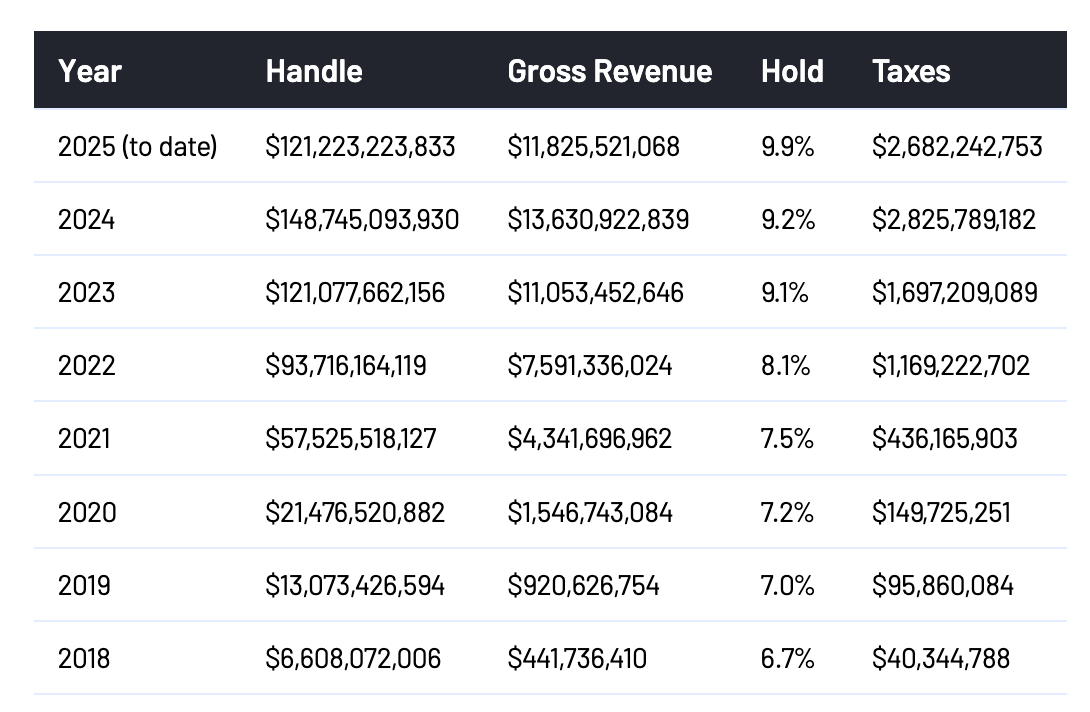
Statistics from another major sports betting media, Sports Book Review (chart below, data as of August 2025), show that since the regulatory relaxation in 2018, the total betting volume (Handle) and tax revenue (Taxes) of the U.S. sports betting market have shown a remarkably exaggerated growth trend over the past few years — the total market betting volume reached $148.74 billion in 2024, with tax contributions reaching $2.82 billion; in the first 8 months of 2025 alone, the total betting volume ($121.22 billion) and tax revenue ($2.68 billion) have nearly reached the full-year 2024 levels.
Focus on Tennessee: What Does Sports Betting Mean?

Now let's focus on Tennessee, the protagonist of this incident.

In 2019, Tennessee passed the Tennessee Sports Gaming Act, formally legalizing sports betting. Although the then-Governor Bill Lee had reservations about gambling, he still allowed the bill to pass without exercising his veto power. Between 2021 and 2022, the Tennessee state legislature passed laws establishing a dedicated regulatory council to be fully responsible for licensing and supervision. This council was initially called the Sports Wagering Advisory Council and was later renamed the Tennessee Sports Wagering Council, the SWC that issued the ban to Kalshi, Polymarket, and Crypto.com at the beginning of this article.
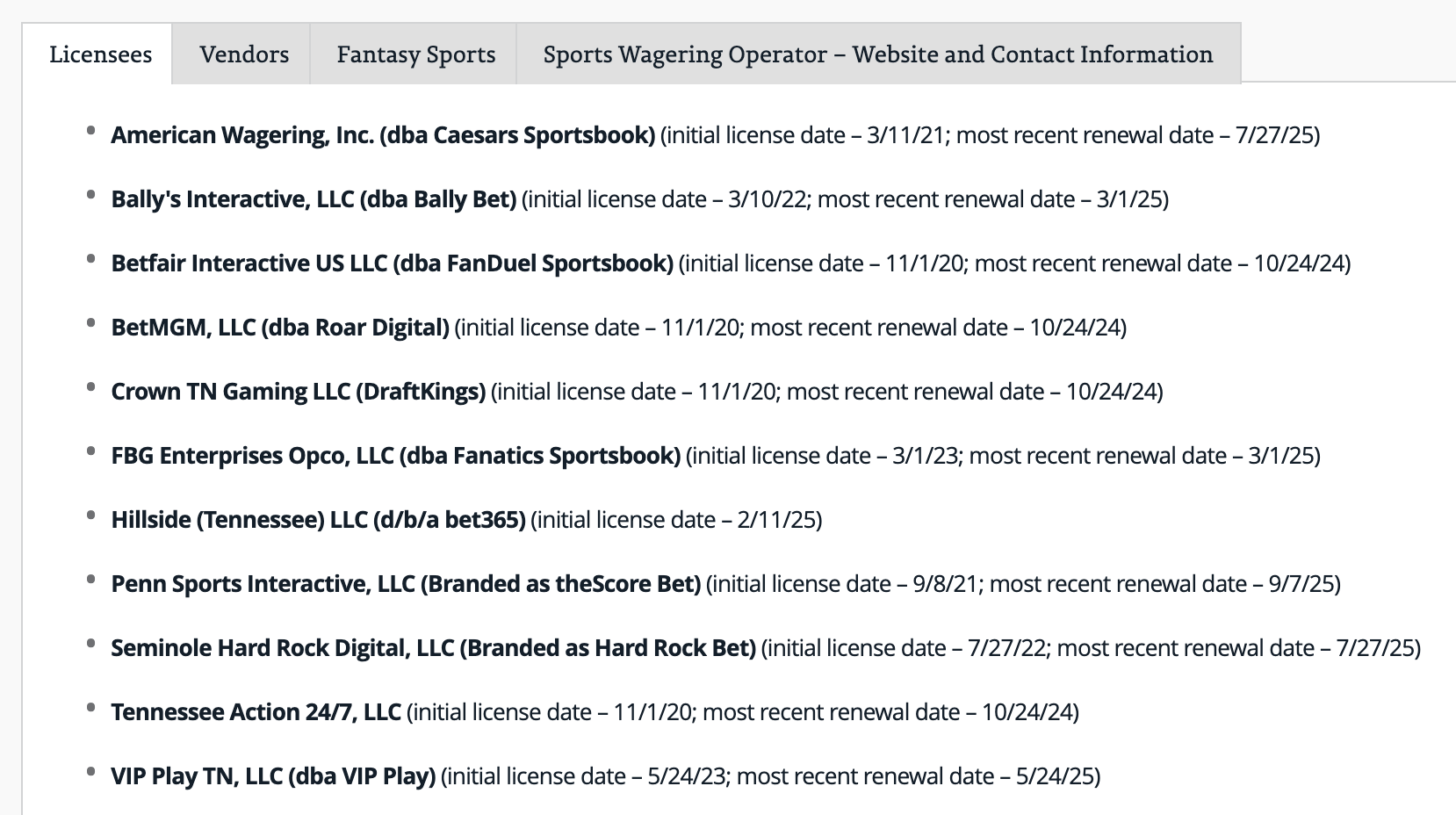
Currently, the SWC is Tennessee's sole sports betting regulatory body, responsible for operational licensing, compliance supervision, rule-making, and enforcement. The SWC stipulates that all sports betting providers must obtain a license from the SWC to offer services in the state. A total of 11 licenses have been issued so far (see chart above); only residents aged 21 and over can access related services, and they must pass geolocation verification to ensure bets are placed within the state. Regarding taxation, the state levies a 1.85% tax rate on the total betting handle — an income-based taxation scheme was used initially, but it was changed to taxation based on the total betting handle after 2023.

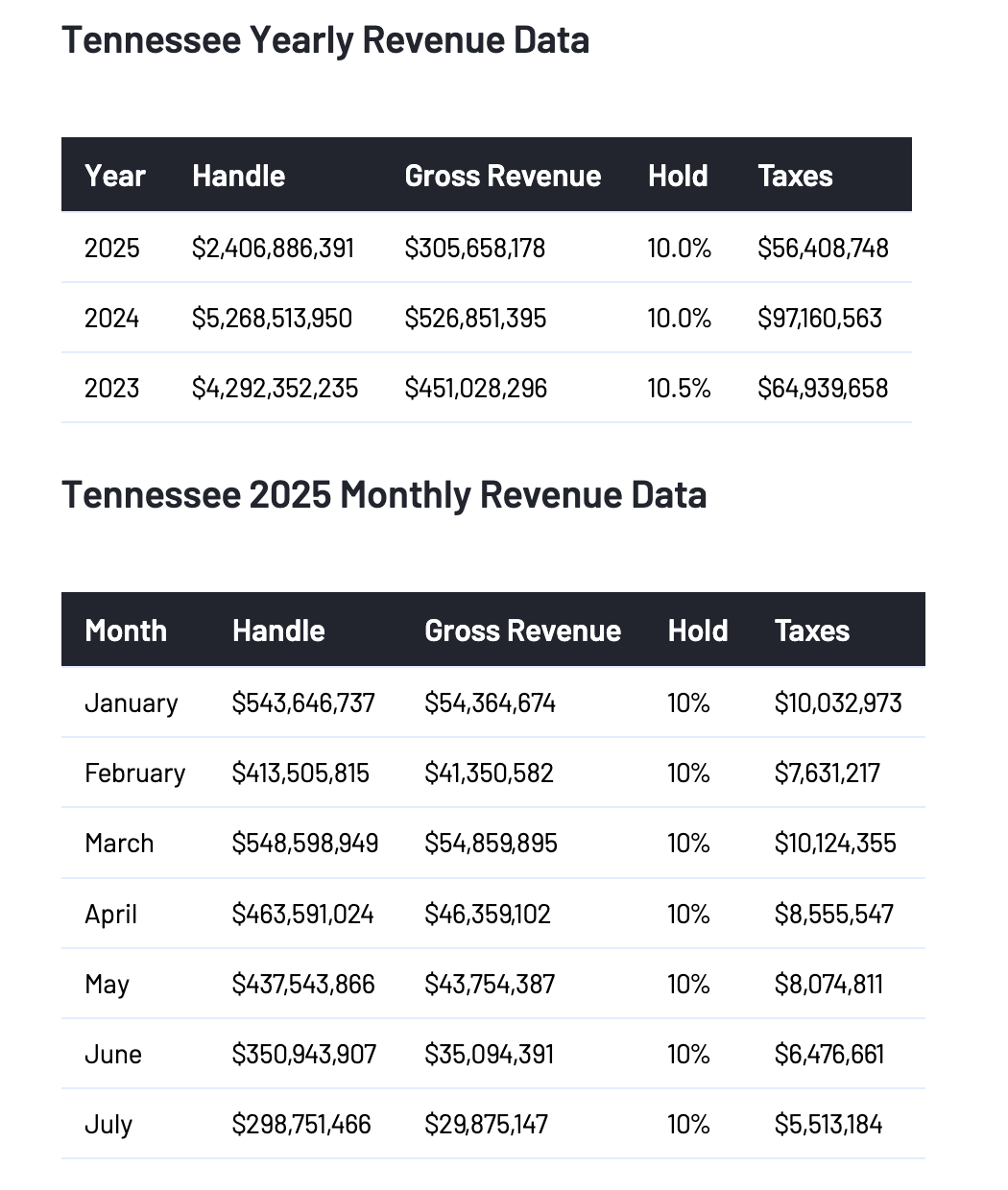
The sports betting market has contributed substantial tax revenue to Tennessee. Statistics from Sports Book Review (chart below, data as of July 2025) show that in 2024, the total sports betting handle in Tennessee reached $5.268 billion, with tax contributions reaching $97.16 million; the total betting handle for the first 7 months of 2025 has already reached $2.4 billion, with tax contributions reaching $56.4 million.
But this huge and still growing cake is now being gradually nibbled away by the likes of Polymarket.

How Are Prediction Markets Eating Into the Old World?

On December 3, 2025, Polymarket announced that it had obtained CFTC approval to return to the U.S. market after nearly four years; even earlier, Kalshi and Crypto.com's prediction market platform Truth Predict had already opened their doors to U.S. users under CFTC licensing.

The current regulatory situation is that sports betting is clearly classified as a gambling service, with regulatory authority belonging to the states. However, prediction market platforms like Polymarket are generally regarded as new entities providing "event contract" trading services, and "event contracts" are considered financial derivatives in terms of asset nature, falling under the regulatory purview of the CFTC. This allows prediction markets to bypass the stringent regulations of gambling services — no need for state-level licenses, no need to follow user protection regulations like addiction control, no need to pay high gambling taxes to the states; but at the same time, they can offer sports event outcome betting services similar to gambling,客观上 forming a certain "regulatory arbitrage."

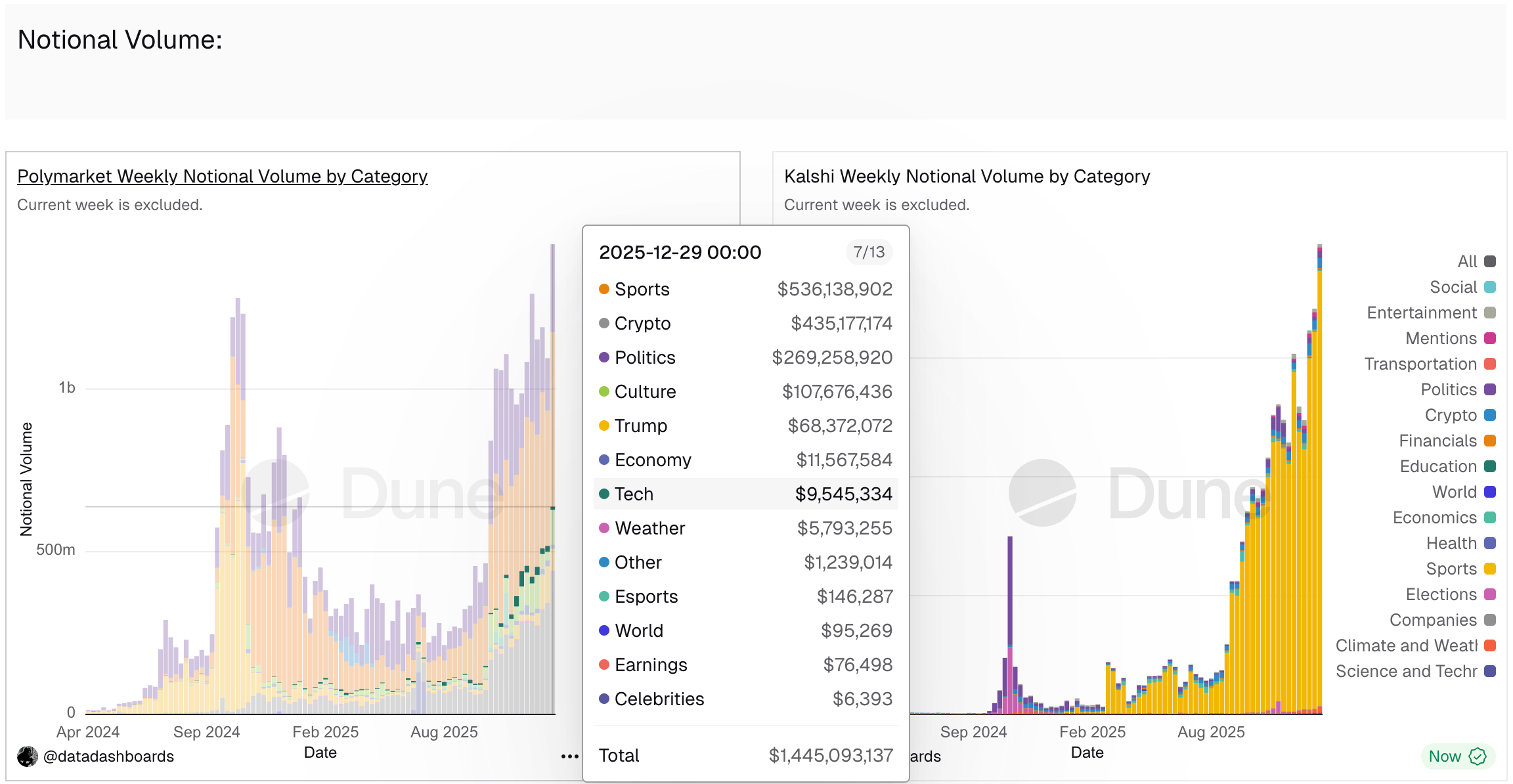
If prediction markets were still just small experimental fields, it might be one thing, but the fact is that the growth rate of prediction markets is even more outrageous than the already exaggerated sports betting market — in 2025, the total trading volume of prediction markets was approximately $40 billion, an increase of about 400% from $9 billion in 2024. A data dashboard compiled by Data Dashboards on Dune (chart below) shows that sports-related event contracts have long become the category with the highest trading volume share in the prediction market.
The capital market has long sensed the growing threat posed by Polymarket to traditional sports betting services. The two giants of the sports betting market, DraftKings and Flutter Entertainment, recorded declines of 11.7% and 16.1% respectively over the past year — during the same period, the US stock market was in a bull run, with the Dow Jones rising 12.97% for the year, the Nasdaq up 20.36%, and the S&P 500 up 16.39%; and the size of the sports betting market continued its eight-year upward trend.
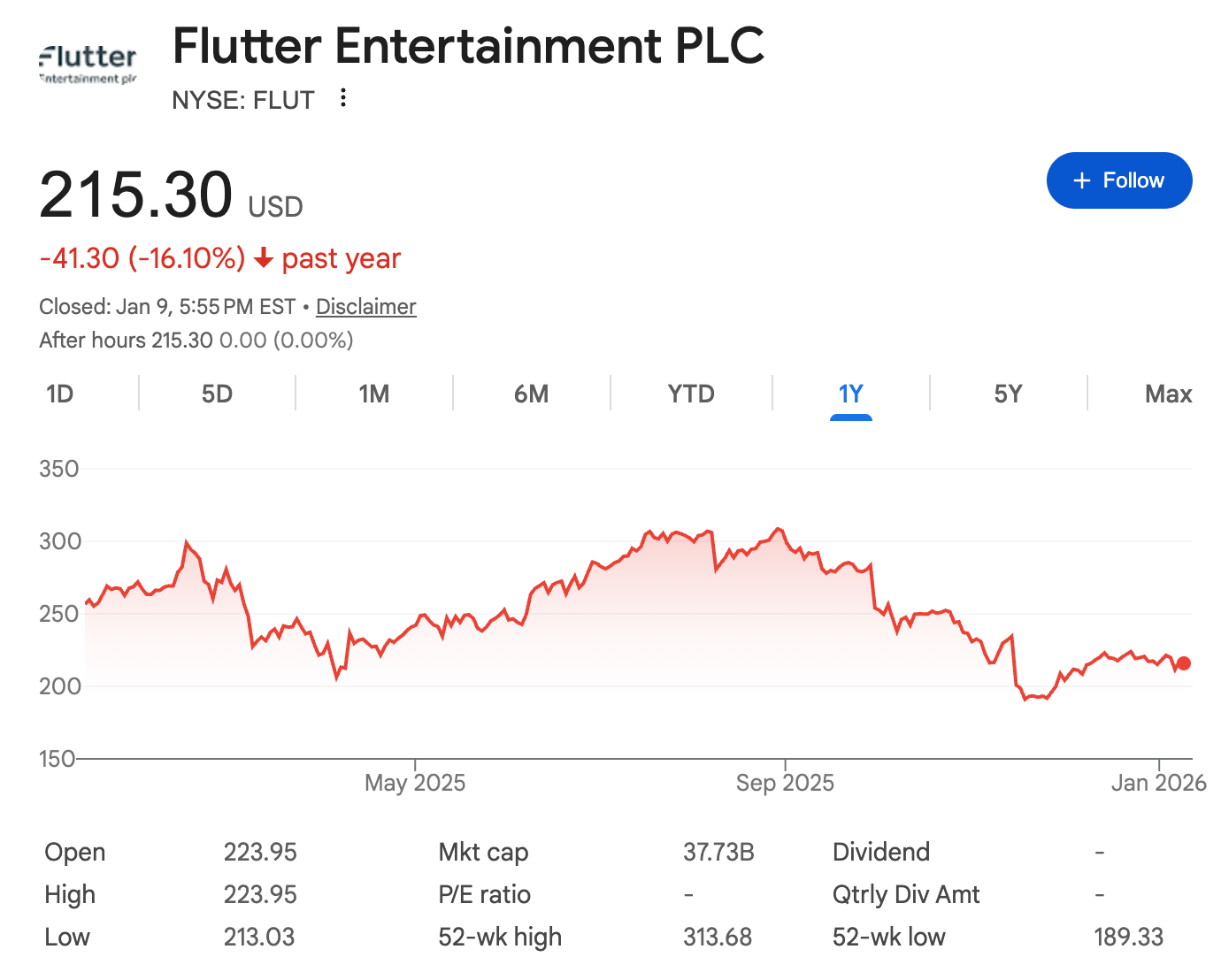
Whether it's Tennessee, which needs sports betting as a source of tax revenue, or the capital forces that actually control the sports betting market, it is difficult to agree to let prediction markets, this new player, come and share the pie.

Friction Is Not an Isolated Case, How Do Prediction Markets Fight Back?

In fact, Tennessee's ban on prediction markets is not an isolated incident. Maryland, Ohio, Illinois, New Jersey, Nevada, Montana, Michigan, and Connecticut have all cracked down on prediction markets for similar reasons. And since Polymarket only returned to the U.S. market last December, Kalshi has borne the brunt of more regulatory impacts.

In response, Kalshi has filed lawsuits against three states — Nevada, New Jersey, and Maryland — on the grounds that it "already complies with higher-priority federal regulations and does not need to comply with state-level regulations." But the results have not been ideal.

  • The lawsuit in Nevada was the first to proceed. The district court initially supported Kalshi, but then turned around and ruled against Kalshi last November. Judge Andrew Gordon determined that sports event contracts on Kalshi were very similar to sports betting wagers and therefore fell under the regulatory scope of Nevada's gambling laws. Kalshi has appealed to the U.S. Court of Appeals for the Ninth Circuit;

  • In New Jersey, the district court chose to support Kalshi, but the state's gambling regulatory agency has appealed to the U.S. Court of Appeals for the Third Circuit;

  • In Maryland, the district court sided with the gambling regulatory agency's demands. Judge Adam B. reasoned that Kalshi failed to prove that "Congress has clearly and manifestly intended to deprive states of their power to regulate gambling." Kalshi has appealed this to the U.S. Court of Appeals for the Fourth Circuit.

The law firm Benesch commented on this, stating that as the national debate continues, similar divisions are expected at the appellate court level, which will lay the groundwork for the Supreme Court to resolve this issue in the coming years...... If the appellate courts happen to consistently support Kalshi's position, other prediction markets might emulate its model and proceed with similar businesses before the Supreme Court hears the matter; but if the appellate courts reach different conclusions, companies in similar situations might wait for clearer legal signals before taking action. In any case, Kalshi's lawsuit will create a precedent with direct and profound implications for the national sports betting and gambling industry.

In summary, whether prediction markets need to follow state gambling regulations remains an unresolved question for now, and the fundamental contradiction of this issue lies in the similarity of products and services between prediction markets and sports betting and the differences in regulatory requirements.

This is a tug-of-war over institutional adaptation. Before the appellate courts or even the Supreme Court give a final verdict, the gray area between prediction markets and sports betting will persist for a long time, and regulatory conflicts will be hard to avoid. In the short term, states will likely continue to defend their regulatory authority and tax base through enforcement and litigation; while prediction market platforms will try to use federal compliance and innovation narratives as a shield to fight for more living space.


Twitter:https://twitter.com/BitpushNewsCN

Bitpush TG Discussion Group:https://t.me/BitPushCommunity

Bitpush TG Subscription: https://t.me/bitpush

Original article link:https://www.bitpush.news/articles/7601952

Câu hỏi Liên quan

QWhat is the main reason why the Sports Wagering Council (SWC) of Tennessee issued cease-and-desist orders to prediction market platforms like Kalshi, Polymarket, and Crypto.com?

AThe SWC issued the orders because these platforms were offering sports event prediction contracts to Tennessee residents without obtaining the required state license, which the state classifies as illegal gambling operations.

QHow has the legalization of sports betting in the United States since 2018 impacted the market's growth?

ASince the Supreme Court overturned the federal ban on commercial sports betting in 2018, the market has grown significantly, with the total handle reaching $148.74 billion in 2024 and tax contributions amounting to $2.82 billion that year.

QWhat regulatory advantage do prediction market platforms like Polymarket have over traditional sports betting services in the United States?

APrediction market platforms are regulated by the CFTC as 'event contracts,' which are classified as financial derivatives, allowing them to operate without needing state-level gambling licenses, adhering to strict user protection rules, or paying high state gambling taxes.

QWhich states, besides Tennessee, have taken regulatory action against prediction market platforms for similar reasons?

AOther states that have taken action include Maryland, Ohio, Illinois, New Jersey, Nevada, Montana, Michigan, and Connecticut, all citing similar concerns about unlicensed gambling operations.

QWhat was the outcome of Kalshi's legal challenges against state gambling regulators in Nevada, New Jersey, and Maryland?

AIn Nevada, Kalshi initially had some support but ultimately lost in district court and has appealed; in New Jersey, the district court supported Kalshi, but the state has appealed; in Maryland, the district court sided with the regulator, and Kalshi has appealed the decision.

Nội dung Liên quan

Thị trường chứng khoán Mỹ hứng chịu đợt lao dốc tồi tệ nhất từ năm 2025, ba ngòi nổ kích hoạt đánh giá lại định giá cổ phiếu công nghệ

Ngày 5/6, thị trường chứng khoán Mỹ trải qua một ngày sụt giảm mạnh nhất kể từ sau cuộc khủng hoảng thuế quan tháng 4/2025. Chỉ số Nasdaq Composite lao dốc 4,18%, S&P 500 giảm 2,64% và Dow Jones mất 695 điểm. Sự đảo chiều đột ngột này chỉ sau 48 giờ được thúc đẩy bởi ba yếu tố chính. **Thứ nhất: Báo cáo tài chính của Broadcom làm rạn nứt câu chuyện AI.** Dù doanh thu chip AI của Broadcom tăng 143%, nhưng dự báo cho quý tới thấp hơn kỳ vọng, làm dấy lên lo ngại tốc độ tăng trưởng AI có thể đang chậm lại. Điều này kích hoạt đợt bán tháo trên toàn ngành bán dẫn. **Thứ hai: Dữ liệu việc làm Mỹ quá mạnh.** Báo cáo phi nông nghiệp tháng 5 cho thấy 172.000 việc làm mới, gấp đôi dự báo, củng cố kỳ vọng Cục Dự trữ Liên bang (Fed) có thể không giảm lãi suất mà thậm chí còn tăng. Kỳ vọng lãi suất cao hơn gây áp lực lên định giá cổ phiếu công nghệ. **Thứ ba: Bóng ma lạm phát từ cuộc chiến Iran.** Giá dầu duy trì trên 90 USD/thùng do tình hình căng thẳng leo thang từ tháng 2 tiếp tục đè nặng lên áp lực lạm phát, khiến công cụ chính sách của Fed trở nên phức tạp hơn. Ba yếu tố trên cùng lúc làm suy yếu niềm tin vào các câu chuyện thị trường then chốt: tăng trưởng AI vô hạn, Fed sắp cắt giảm lãi suất và lạm phát đã được kiểm soát. Sự sụt giảm nhanh chóng lan rộng sang thị trường toàn cầu. Đây có thể là một đợt điều chỉnh định giá lại đối với các cổ phiược được định giá quá cao, chứ chưa hẳn là sự kết thúc của câu chuyện AI. Hướng đi tiếp theo của thị trường sẽ phụ thuộc vào cuộc họp sắp tới của Fed, các báo cáo tài chính từ các công ty AI khác và diễn biến tình hình địa chính trị.

marsbit3 giờ trước

Thị trường chứng khoán Mỹ hứng chịu đợt lao dốc tồi tệ nhất từ năm 2025, ba ngòi nổ kích hoạt đánh giá lại định giá cổ phiếu công nghệ

marsbit3 giờ trước

Từ Madison Square Garden đến Kalshi: Thị trường dự đoán xông vào Chung kết NBA

Bài viết đề cập đến sự xuất hiện ngày càng phổ biến của các thị trường dự đoán (prediction markets) trong loạt trận chung kết NBA 2026 giữa New York Knicks và San Antonio Spurs, đặc biệt là ở thành phố New York. Hai nền tảng chính được nhắc đến là Polymarket và Kalshi, với khối lượng giao dịch hàng trăm triệu USD xoay quanh kết quả chung kết và các sự kiện liên quan. Điểm nổi bật là sự thâm nhập của các thị trường này vào đời sống thực tế. Họ đã hợp tác chính thức với nhà thi đấu Madison Square Garden, mang lại sự tiếp cận rộng rãi. Một quán bar tên The Jeffrey đã sử dụng hợp đồng trên Kalshi để bảo hiểm cho chương trình khuyến mãi "miễn phí hóa đơn nếu Knicks thắng", minh họa cách các doanh nghiệp nhỏ có thể dùng công cụ này để quản lý rủi ro. Bài viết so sánh thị trường dự đoán với cá cược thể thao truyền thống. Chúng cho phép người tham gia đặt cược vào nhiều sự kiện giải trí đa dạng hơn (như sự xuất hiện của người nổi tiếng), có phạm vi tiếp cận địa lý rộng hơn và độ tuổi tham gia thấp hơn (từ 18 tuổi). Tuy nhiên, điều này cũng gây tranh cãi về ranh giới giữa giao dịch tài chính và cờ bạc. NBA có thái độ thận trọng. Trong khi siêu sao như "Giannis Antetokounmpo" đã đầu tư vào Kalshi, gây lo ngại về xung đột lợi ích, thì ban lãnh đạo NBA lại nhấn mạnh sự cần thiết của khung quy định chặt chẽ để bảo vệ tính toàn vẹn của trận đấu. Nhiều cổ động viên bày tỏ lo ngại rằng sự liên kết sâu rộng giữa liên đoàn với các nền tảng này có thể làm suy giảm độ tin cậy của các trận đấu. Chung kết NBA năm nay đang trở thành một phép thử quan trọng cho sự hội nhập của thị trường dự đoán vào thể thao chính thống, vừa mở ra cơ hội thương mại mới, vừa đặt ra những thách thức về niềm tin và quản lý.

marsbit5 giờ trước

Từ Madison Square Garden đến Kalshi: Thị trường dự đoán xông vào Chung kết NBA

marsbit5 giờ trước

RSI - Khi AI tự xây dựng chính mình đang nổi lên, Google dội nước lạnh, DeepSeek đã chạm đến mép giới hạn

Gần đây, thuật ngữ "RSI" (Recursive Self-Improvement – Tự cải tiến đệ quy) đang trở thành tâm điểm chú ý trong ngành AI. Khái niệm này đề cập đến việc để AI tự huấn luyện và cải thiện chính mình, hướng tới một hệ thống có thể tự động hóa toàn bộ quá trình nghiên cứu và phát triển, từ đó tạo ra sự tiến bộ vượt bậc. Một số công ty khởi nghiệp như Recursive Superintelligence và dự án Auto-Research của Andrej Karpathy đang tích cực theo đuổi hướng đi này. Tuy nhiên, CEO Google Sundar Pichai tỏ ra thận trọng, cho rằng ngành công nghiệp vẫn chưa đạt đến cột mốc tăng tốc đột biến mà RSI hứa hẹn. Trong khi đó, các công ty AI Trung Quốc như DeepSeek và Baidu mặc dù ít công khai nhắc đến RSI, nhưng trên thực tế đã áp dụng các nguyên lý tương tự – như tối ưu hóa thuật toán cực độ hay sử dụng vòng lặp phản hồi tự động – để cải thiện mô hình của họ một cách hiệu quả. Dù vậy, RSI vẫn đối mặt với nhiều thách thức lớn: hiện tượng "sụp đổ mô hình" khi dữ liệu do AI tạo ra bị suy giảm chất lượng qua mỗi vòng lặp, yêu cầu về nguồn lực tính toán khổng lồ, và môi trường nghiên cứu toàn cầu đang ngày càng bị phân mảnh. Về cơ bản, RSI đại diện cho xu hướng tự động hóa ngày càng sâu trong phát triển AI, dần đẩy con người ra khỏi chuỗi quyết định trực tiếp. Đây là một quá trình có thể mang lại bước nhảy vọt về công nghệ, nhưng cũng tiềm ẩn rủi ro và sự thay đổi khó lường.

marsbit5 giờ trước

RSI - Khi AI tự xây dựng chính mình đang nổi lên, Google dội nước lạnh, DeepSeek đã chạm đến mép giới hạn

marsbit5 giờ trước

Anthropic cảnh báo toàn cầu, OpenAI đã vượt qua 'ngưỡng tin cậy': AI tự kích hoạt tăng tốc

Cộng đồng AI đang chấn động bởi cảnh báo từ Anthropic: nghiên cứu AI cần dừng lại! Hãng này lo ngại AI đang tiến gần đến điểm "tự tạo ra chính mình", với quá trình tự cải tiến đệ quy diễn ra nhanh hơn dự kiến. Đồng thời, Yann Dubois của OpenAI chia sẻ một quan điểm then chốt: sự phát triển của AI là liên tục, nhưng người dùng cảm nhận một bước nhảy vọt khi nó vượt qua "ngưỡng độ tin cậy". OpenAI đã đạt được ngưỡng này vào khoảng tháng 12 năm ngoái. Khi AI đủ tin cậy, nó từ một "thực tập sinh" trở thành một "nhân viên" thực thụ và bắt đầu tự gia tốc, đặc biệt trong việc hỗ trợ lập trình, tạo ra một vòng lặp phát triển ngày càng nhanh. Dubois nhấn mạnh việc xây dựng AI giống "nghề thủ công" hơn là khoa học thuần túy, dựa nhiều vào thử nghiệm và trực giác. Ông cũng đưa ra một tuyên bố gây chú ý: nếu đóng băng các mô hình hiện tại và chỉ tập trung vào hệ thống điều phối (Harness) cho các lĩnh vực chuyên sâu, chúng ta có thể đã đạt được cảm giác của AGI (Trí tuệ nhân tạo phổ quát). Rào cản thực sự không nằm ở bộ não mô hình, mà ở "quyền truy cập, kết nối và dữ liệu" – công việc khó khăn của "chặng đường cuối cùng" để đưa AI vào thực tế. Tuy vậy, một thách thức lớn vẫn tồn tại: khả năng học liên tục (continual learning). Hiện tại, AI thường đạt hiệu suất cao ban đầu nhưng sau đó không cải thiện nhiều trong môi trường cụ thể. Giải quyết vấn đề này là chìa khóa quan trọng cho tương lai. Dubois kết luận rằng vẫn có không gian rộng lớn cho các công ty khởi nghiệp trong việc tạo ra các ứng dụng chuyên sâu, tập trung vào tích hợp và giải quyết các vấn đề thực tế.

marsbit5 giờ trước

Anthropic cảnh báo toàn cầu, OpenAI đã vượt qua 'ngưỡng tin cậy': AI tự kích hoạt tăng tốc

marsbit5 giờ trước

Giao dịch

Giao ngay
Hợp đồng Tương lai

Bài viết Nổi bật

Làm thế nào để Mua CAKE

Chào mừng bạn đến với HTX.com! Chúng tôi đã làm cho mua PancakeSwap (CAKE) trở nên đơn giản và thuận tiện. Làm theo hướng dẫn từng bước của chúng tôi để bắt đầu hành trình tiền kỹ thuật số của bạn.Bước 1: Tạo Tài khoản HTX của BạnSử dụng email hoặc số điện thoại của bạn để đăng ký tài khoản miễn phí trên HTX. Trải nghiệm hành trình đăng ký không rắc rối và mở khóa tất cả tính năng. Nhận Tài khoản của tôiBước 2: Truy cập Mua Crypto và Chọn Phương thức Thanh toán của BạnThẻ Tín dụng/Ghi nợ: Sử dụng Visa hoặc Mastercard của bạn để mua PancakeSwap (CAKE) ngay lập tức.Số dư: Sử dụng tiền từ số dư tài khoản HTX của bạn để giao dịch liền mạch.Bên thứ ba: Chúng tôi đã thêm những phương thức thanh toán phổ biến như Google Pay và Apple Pay để nâng cao sự tiện lợi.P2P: Giao dịch trực tiếp với người dùng khác trên HTX.Thị trường mua bán phi tập trung (OTC): Chúng tôi cung cấp những dịch vụ được thiết kế riêng và tỷ giá hối đoái cạnh tranh cho nhà giao dịch.Bước 3: Lưu trữ PancakeSwap (CAKE) của BạnSau khi mua PancakeSwap (CAKE), lưu trữ trong tài khoản HTX của bạn. Ngoài ra, bạn có thể gửi đi nơi khác qua chuyển khoản blockchain hoặc sử dụng để giao dịch những tiền kỹ thuật số khác.Bước 4: Giao dịch PancakeSwap (CAKE)Giao dịch PancakeSwap (CAKE) dễ dàng trên thị trường giao ngay của HTX. Chỉ cần truy cập vào tài khoản của bạn, chọn cặp giao dịch, thực hiện giao dịch và theo dõi trong thời gian thực. Chúng tôi cung cấp trải nghiệm thân thiện với người dùng cho cả người mới bắt đầu và người giao dịch dày dạn kinh nghiệm.

Tổng lượt xem 450Xuất bản vào 2024.12.11Cập nhật vào 2025.03.21

Làm thế nào để Mua CAKE

Thảo luận

Chào mừng đến với Cộng đồng HTX. Tại đây, bạn có thể được thông báo về những phát triển nền tảng mới nhất và có quyền truy cập vào thông tin chuyên sâu về thị trường. Ý kiến ​​của người dùng về giá của CAKE (CAKE) được trình bày dưới đây.

活动图片













