Polymarket 2025: In-Depth Report on Six Profit Models, Starting from 95 Million On-Chain Transactions

marsbitXuất bản vào 2025-12-29Cập nhật gần nhất vào 2025-12-29

Tóm tắt

This report analyzes six proven profit strategies on Polymarket, a decentralized prediction market with over 95 million transactions and $21.5 billion in nominal volume in 2025. Based on an analysis of 86 million on-chain transactions, the strategies are: 1. **Information Arbitrage**: Exemplified by a French trader who made $85M on the 2024 US election by conducting unique "neighbor effect" polls, exploiting systematic market pricing errors. 2. **Cross-Platform Arbitrage**: Earning risk-free profits by capitalizing on price discrepancies for the same event across different prediction markets (e.g., Polymarket vs. Kalshi), netting over $40M collectively. 3. **High-Probability "Bonding"**: Consistently buying high-probability outcomes (e.g., >95% certainty) for steady, short-term returns, with potential yields exceeding 1800% annualized. 4. **Liquidity Providing (LP)**: Acting as a market maker to earn spreads and rewards, though returns have diminished post-2024 election due to increased competition and lower rewards. 5. **Domain Specialization**: Achieving high win rates (e.g., 96%) by developing deep expertise in a niche area (e.g., sports, specific event mentions), making infrequent but high-conviction bets. 6. **Speed Trading**: Using automated systems and low-latency tech to profit from brief information advantages, a strategy increasingly dominated by institutional players. The analysis concludes that successful traders systematically identify market inefficienci...

Original Author: Lin Wanwan's Cat (X: @linwanwan823)

On the night of the 2024 U.S. election, a French trader netted $85 million on Polymarket.

This figure surpassed the annual performance of the vast majority of hedge funds.

Polymarket, a decentralized prediction market that has processed over $9 billion in trading volume and attracted 314,000 active traders, is redefining the boundaries of "voting with money."

But first, we must be honest: prediction markets are a zero-sum game.

Only 0.51% of Polymarket wallets have achieved profits exceeding $1,000.

So, what did the winners do right?

I recently wrote a series of strategies and attempted to systematically analyze over 86 million on-chain transactions,

(Data is based on academic research from IMDEA Networks Institute, covering complete on-chain records of over 86 million transactions and 17,218 market conditions from April 1, 2024, to April 1, 2025.

According to Dune Analytics data, Polymarket processed over 95 million transactions in 2025, with a nominal trading volume exceeding $21.5 billion, though there is some double-counting.)

dissecting the position logic and entry/exit timing of top traders,

and summarizing six proven profitable strategies: from the French whale's "neighbor poll" information arbitrage to a high-probability bond strategy with 1800% annualized returns; from cross-platform spread capture to a niche specialization approach with a 96% win rate.

Our retrospective analysis reveals that the common trait of top traders is not "predictive ability,"

but three things:

systematically capturing market mispricing,近乎偏执的严格风险管理, and the patience to build a碾压级 information advantage in a single领域.

If you've read this far, I suspect that sooner or later in 2026, you will try it yourself.

Of course, this is not a guide on "how to gamble,"

but rather aims to provide a systematic strategic framework and replicable methodological reference for prediction market participants, especially beginners.

Keywords: Prediction Markets; Polymarket; Trading Strategies; Arbitrage; Risk Management; Blockchain

I will cover this in five parts. If you only want to see the strategies, jump directly to Part Three.

I. Research Background

II. Evaluation Dimensions and Criteria

III. Six Core Strategies for 2025

IV. Position Management and Strategy

V. Conclusion

I. Research Background

In October 2025, ICE, the parent company of the NYSE, wrote a $2 billion check to Polymarket, valuing it at $9 billion.

A month later, Polymarket acquired a CFTC-licensed exchange, officially returning to the U.S. The "gray area project" expelled by regulators three years prior had become a darling of traditional finance.

The turning point was the 2024 election.

When all mainstream polls were saying "too close to call," Polymarket's odds steadily pointed to Trump. $3.7 billion in bets ultimately predicted the result earlier and more accurately than professional polling agencies. Academia began re-examining an old question: Does forcing people to "put their money where their mouth is" truly elicit more honest judgments?

The first thirty years of the internet created three types of infrastructure: search engines tell you "what happened," social media tells you "what others think," and algorithmic recommendations tell you "what you might want to see." But one piece was always missing: a place that could reliably answer "what will happen next."

Polymarket is filling this gap and has become crypto's first truly breakout application, targeting the rigid demand for "information pricing."

When media outlets start checking odds before writing news, when investors start consulting the market for decisions, when political teams start monitoring Polymarket instead of polls.

It is evolving from gambling toward a form of "pricing consensus."

A market that makes Wall Street pay, regulators relent, and polls sweat is worth serious study.

II. Research Methods and Evaluation Criteria

2.1 Data Sources

This study uses multiple data sources for cross-validation:

(1) Polymarket official leaderboard data;

(2) Polymarket Analytics third-party analysis platform (updated every 5 minutes);

(3) PolyTrack trader tracking tool;

(4) Dune Analytics on-chain data dashboard;

(5) Chainalysis blockchain analysis reports.

Data covers the complete on-chain records of over 86 million transactions and 17,218 market conditions from April 2024 to December 2025.

2.2 Evaluation Dimensions and Weights

Strategy evaluation uses a multi-dimensional comprehensive assessment system, including:

Absolute Profitability (Weight 30%):

Core metric is cumulative profit and loss (PnL),统计策略产生的总利润金额. Data shows that wallets with PnL exceeding $1,000 account for only 0.51% of the total, and whale accounts with trading volume over $50,000 account for only 1.74%.

Risk-Adjusted Returns (Weight 25%):

Calculating metrics like Return on Investment (ROI) and Sharpe Ratio. Excellent traders typically maintain a 60-70% win rate while controlling single-position risk exposure to 20-40% of total capital.

Strategy Replicability (Weight 20%):

Assessing the systematic and rule-based nature of the strategy. Profits purely reliant on insider information or luck are excluded.

Sustainability and Stability (Weight 15%):

Examining the strategy's consistency across different market cycles, excluding "one-hit wonder" gambling-style gains.

Scalability (Weight 10%):

Analyzing the strategy's applicability at larger capital scales, considering liquidity constraints and market impact costs.

2.3 Exclusion Criteria

The following situations are excluded from the best strategy评选:

(1) Suspected market manipulation, such as the UMA token governance attack in March 2025, where a whale holding 5 million UMA tokens (25% voting power) manipulated the settlement of a market worth $7 million;

(2) Gambling-style trades with single positions exceeding 40-50% of capital;

(3) Unverifiable or non-replicable "black box" strategies;

(4) Insider trading relying on non-public information.

III. Review of the Six Core Profit Strategies for 2025

1. Information Arbitrage Strategy: When a Frenchman Understood the Election Better Than All U.S. Polling Agencies

In the early hours of November 5, 2024, when CNN and Fox News anchors were still cautiously saying "the race is tight,"

an anonymous account, Fredi9999, was already showing an unrealized gain of over $50 million.

A few hours later, Trump declared victory. This account, along with its 10 associated wallets, ultimately harvested $85 million in profits.

The person behind the account was Théo, a French trader who had previously worked on Wall Street.

When all mainstream polls showed Harris and Trump neck and neck,

he did something seemingly crazy: sold almost all his liquid assets, raised $80 million, and went all-in on Trump winning.

Théo didn't ask voters "who are you voting for," but commissioned YouGov to conduct a special poll in the swing states of Pennsylvania, Michigan, and Wisconsin, asking: "Who do you think your neighbor will vote for?"

The logic of this "neighbor effect" poll was simple: some people are ashamed to admit they support Trump, but they don't mind saying their neighbor does.

The results were "stunningly in favor of Trump." The moment he got the data, Théo went from a 30% position to All-in.

This case reveals the essence of information arbitrage: not knowing more than others, but asking the right questions. Théo spent less than $100,000 on the poll for an $85 million return.

This might be the highest ROI market research in human history. He currently ranks first in total profits on Polymarket.
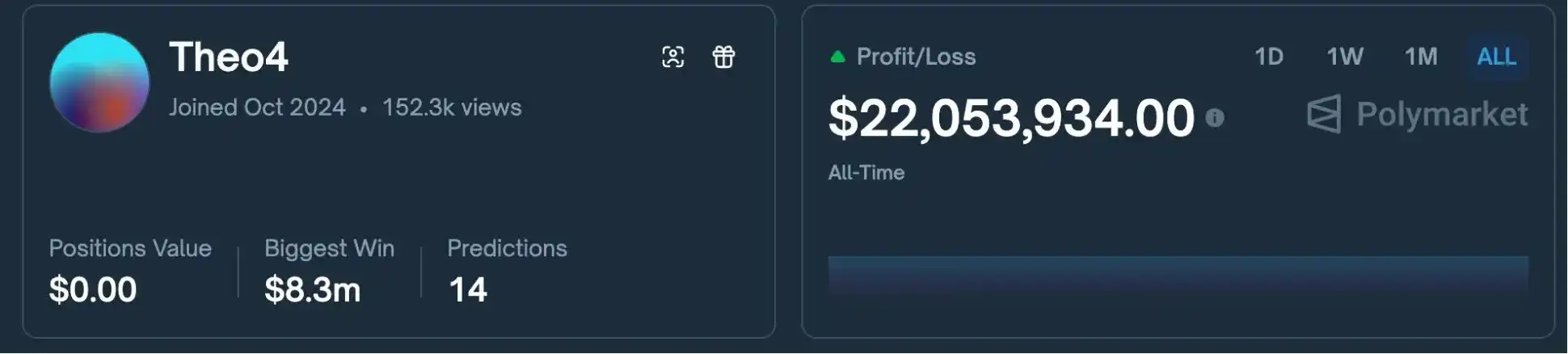
Replicability Assessment: The barrier to information arbitrage is extremely high, requiring original research methodology, large capital, and the psychological fortitude to stick to your judgment when "everyone says you're wrong." But its core idea—finding systematic biases in market pricing—applies to any contentious prediction market.

2. Cross-Platform Arbitrage Strategy: The Art of "Picking Up Money" Between Two Markets

If information arbitrage is an "intellectual game," cross-platform arbitrage is "manual labor": tedious, mechanical, but almost risk-free.

Its principle is simple enough for a child to understand: the same event sells for $45 in Store A and $48 in Store B. You buy both sides to hedge, profiting from the差价 regardless of the outcome.

From April 2024 to April 2025, academic research recorded a number: arbitrageurs extracted over $40 million in "risk-free profits" from Polymarket. The top three wallets alone made $4.2 million.

A real案例: On a certain day in 2025, for the question "Will Bitcoin break $95,000 within one hour?", the YES price was $0.45 on Polymarket, while the NO price for the same event on competitor Kalshi was $0.48.

A smart trader bought both sides simultaneously for a total cost of $0.93. Whether Bitcoin rose or not, he would get back $1, a 7.5% risk-free return, realized in one hour.

But there is a "critical detail": the definition of the "same event" may differ between platforms.

During the 2024 U.S. government shutdown event, a group of arbitrageurs found that Polymarket resolved "shutdown occurred" (YES), while Kalshi resolved "shutdown did not occur" (NO).

Their supposedly guaranteed hedged positions lost money on both sides.

Reason? Polymarket's settlement standard was "OPM announces shutdown," while Kalshi required "actual shutdown lasting over 24 hours."

Arbitrage isn't just picking up money blindly. Behind every cent of price difference lies the detail of settlement rules.

Replicability Assessment: This is the lowest barrier to entry among the six strategies. All you need is accounts on multiple platforms, some starting capital, and the patience to compare spreads. There are even open-source arbitrage bot codes on GitHub. However, as institutional capital floods in, the arbitrage window is visibly narrowing.

3. High-Probability Bond Strategy: Turning "Almost Certain" into a Business with 1800% Annualized Returns

Most people come to Polymarket for the thrill: betting on dark horses, predicting upsets.

But the real "smart money" does the exact opposite: they专门 buy things that are "already in the bag."

Data shows that over 90% of large orders exceeding $10,000 on Polymarket occur at prices above $0.95. What are these "whales" doing? They are "Bonding," buying almost certain events like bonds.

An example: Three days before the December 2025 Fed meeting, the YES contract for "a 25 basis point rate cut" was at $0.95. Economic data was clear, Fed officials' speeches heavily hinted—no room for surprise. You spend $0.95 to buy, get back $1 upon settlement three days later, a 5.2% return in 72 hours.

5% doesn't sound like much? Do the math: if you can find two such opportunities per week, that's 52 weeks × 2 times × 5% = 520% simple return per year. Considering compounding, annualized returns easily exceed 1800%. And the risk you take is接近 zero.

Some traders, using this strategy, make only a few trades per week and earn over $150,000 annually.

Of course, "almost certain" is not "absolutely certain."

The biggest enemy of the bond strategy is the black swan, those 0.01% probability surprises. One mistake can wipe out the profits of dozens of successes. So the core skill of top bond players is not finding opportunities, but identifying "false certainty": things that look like sure bets but hide risks.

Replicability Assessment: This is the most suitable strategy for beginners. It requires no deep research, no speed advantage, just patience and discipline. But its profit ceiling is also the lowest. When your capital reaches a certain size, there simply aren't enough 95%+ opportunities in the market for you to "harvest."

4. Liquidity Provider (LP) Strategy: Just Earning "Toll Fees"? Not That Simple

Why does the casino always win? Because it doesn't bet against you; it just takes a cut.

On Polymarket, some people choose to "be the casino" rather than "be the gambler"—they are Liquidity Providers (LPs).

The LP's job: place both buy and sell orders on the order book, earning the spread in between. For example, you place a buy order at $0.49 and a sell order at $0.51. No matter who trades, you earn the $0.02 difference. You don't care about the event outcome, only if someone trades.

Polymarket sees new markets every day. New markets are characterized by: poor liquidity, wide spreads, many retail traders. For LPs, this is heaven. Data shows that providing liquidity in new markets can yield annualized equivalent returns of 80%-200%.

A trader named @defiance_cr was interviewed by Polymarket官方, detailing how he built an automated market-making system. At its peak, this system generated $700-800 in profit daily.

He started with $10,000 capital, initially earning about $200 per day. As the system optimized and capital grew, profits increased to $700-800 daily. The core was utilizing Polymarket's liquidity reward program, where placing orders on both sides of the market could yield nearly 3x the rewards.
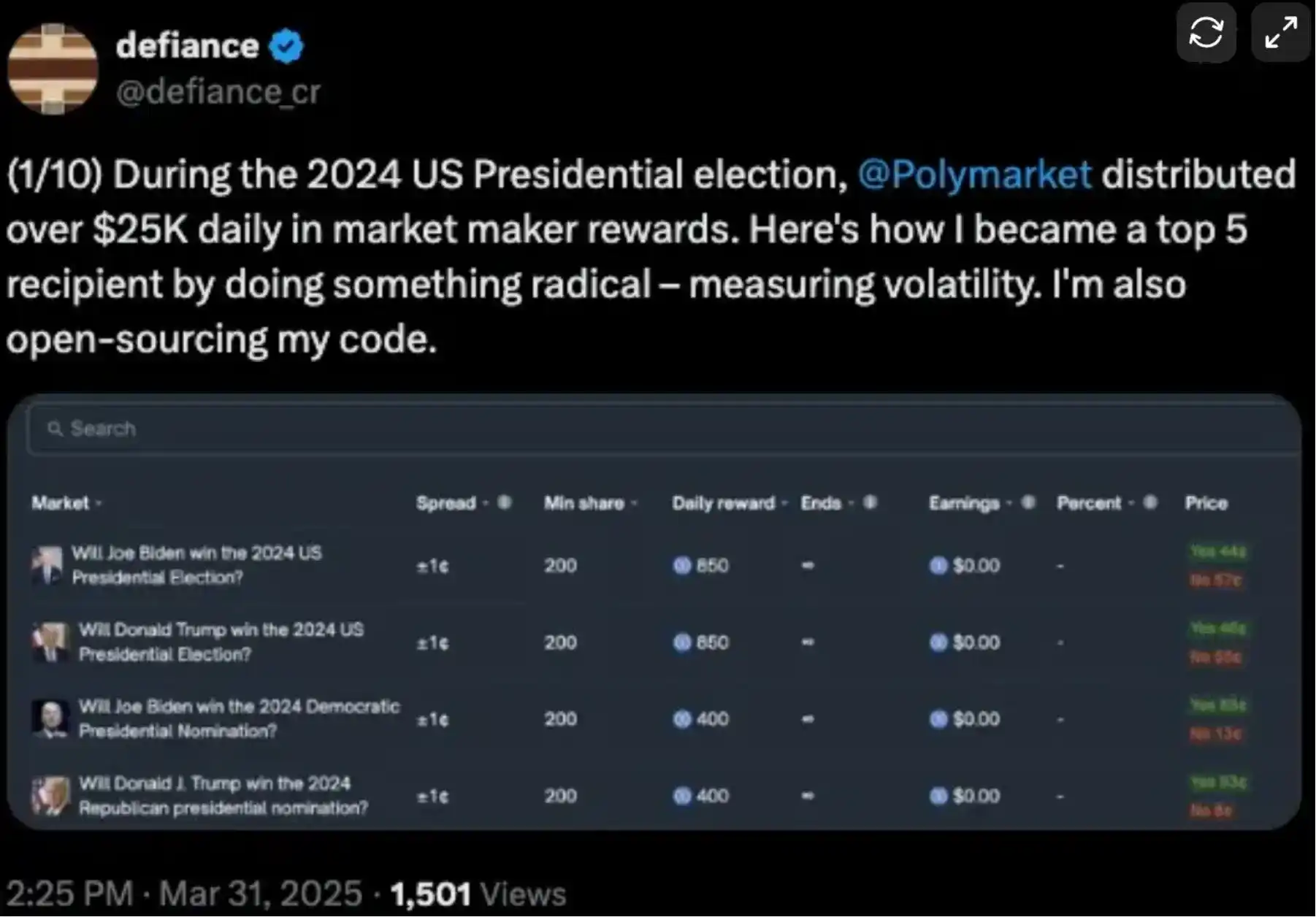
His system consisted of two core modules: a data collection module pulling historical prices from the Polymarket API, calculating volatility indicators, estimating expected returns per $100 invested, and sorting by risk-adjusted returns; a trade execution module automatically placing orders based on preset parameters—narrow spreads for liquid markets, wide spreads for volatile markets.

But after the election, Polymarket's liquidity rewards significantly decreased.

The LP strategy remained viable in late 2025, but with lower returns and increased competition. The cost of high-frequency trading infrastructure is higher than an average employee's salary. High-end VPS infrastructure needs to be hosted near Polymarket's servers. Quant algorithms are optimized for fast execution.

So don't envy "those traders making $200,000 a month确实存在. They are the top 0.5%."

This combination of "market making + prediction" is the standard for high-level players.

Replicability Assessment: The LP strategy requires a deep understanding of market microstructure, including order book dynamics, spread management, inventory risk control, etc. It's not as mechanical as arbitrage, nor does it require unique insight like information arbitrage, but sits between, requiring skill, but skill that can be learned.

5. Niche Specialization Strategy: The 10,000-Hour Rule in Prediction Markets

An interesting phenomenon on the Polymarket leaderboard: the most profitable people are almost all "specialists." They are not generalists who know a little about everything, but experts with a碾压级 advantage in a narrow field.

Look at some real cases:

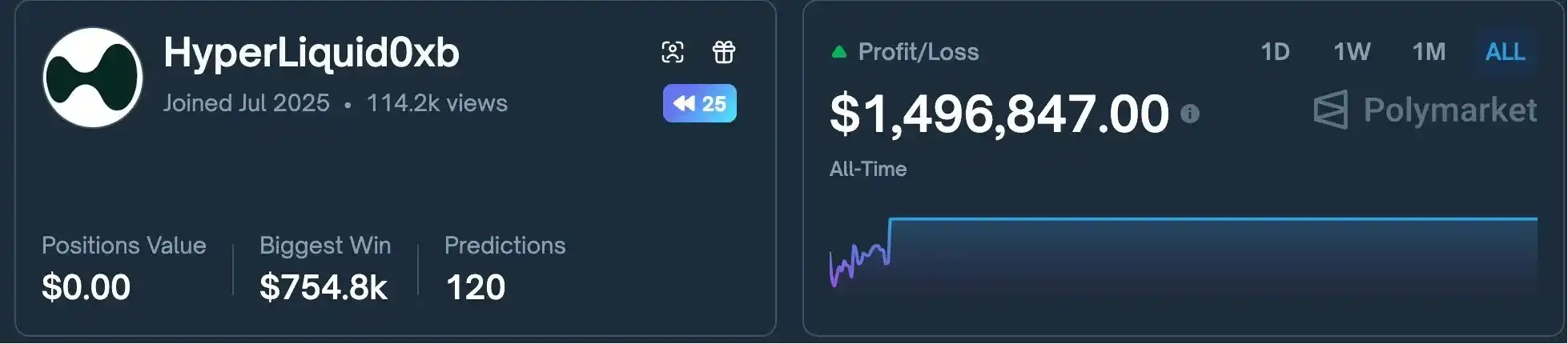
Sports Market Dominator HyperLiquid0xb: Total profits over $1.4 million, single largest gain of $755,000 from predicting a baseball game. His familiarity with MLB data rivals that of professional analysts, allowing him to quickly adjust judgments mid-game based on pitcher rotations, weather changes.
Mention Market Wizard Axios: Maintains a terrifying 96% win rate in markets like "Will Trump say 'crypto' in his speech?". His method is simple but extremely time-consuming: analyze all past public speeches of the target person,统计 the frequency and context of specific words, build a prediction model. While others are "gambling," he is "calculating."
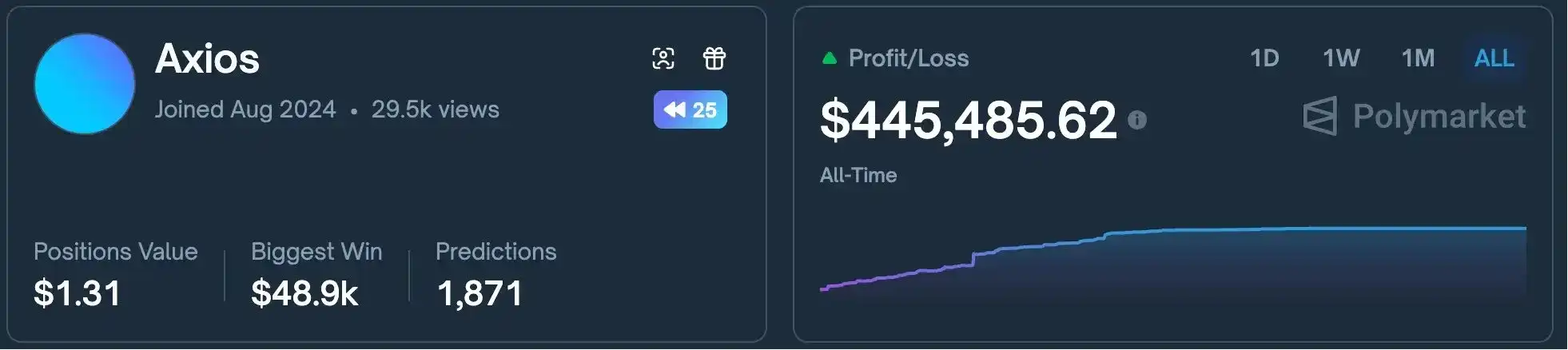
These cases share a common point: expert traders may only engage in 10-30 trades per year, but each has extremely high confidence and profit potential.

So specialization is more profitable than breadth.

Of course, I also saw a sports expert, SeriouslySirius, lose $440,000 on a single World Series bet, followed by losses in a series of events.
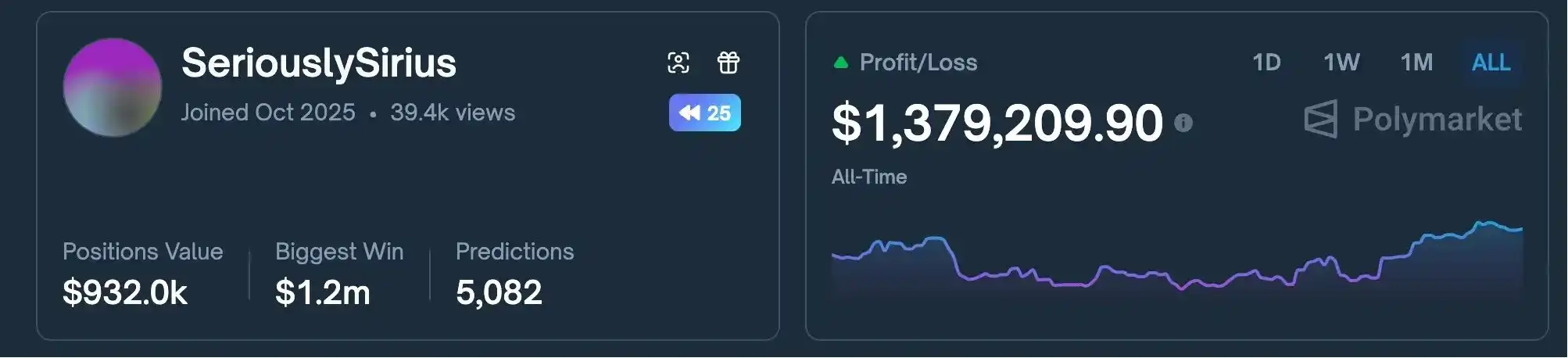
If you are only "somewhat knowledgeable," you are giving money to the experts. Of course,所谓的“懂”, is also another form of gambling.

Replicability Assessment: This is the strategy requiring the most time investment, but also the one with the highest barriers. Once you build an information advantage in a field, it's hard to replicate.建议 choosing an area where you already have knowledge or professional experience.

6. Speed Trading Strategy: Beating the World to the Punch

One Wednesday afternoon in 2024 at 2 PM, Fed Chair Powell began speaking. Within 8 seconds of him saying "we will adjust policy at the appropriate time," the price of the "Fed December rate cut" contract on Polymarket jumped from $0.65 to $0.78.

What happened in those 8 seconds? A small group of "speed traders," monitoring the live feed with preset triggers, placed their orders before the average person could even "understand" what Powell said.

Trading legend GCR once said the core of speed trading is "reaction." It exploits the time window between information generation and its digestion by the market, usually only a few seconds to minutes.

This strategy is particularly effective in "Mention markets." For example, "Will Biden mention China in his speech today?" If you can know the answer 30 seconds faster than others (by monitoring the White House live stream instead of waiting for news alerts), you can build a position before the price moves.

Some quant teams have industrialized this strategy. According to on-chain data analysis, between 2024-2025, top algorithmic traders executed over 10,200 speed trades, generating累计 $4.2 million in profits. Their tools include: low-latency API access, real-time news monitoring systems, preset decision rule scripts, and capital distributed across multiple platforms.

But speed trading is becoming increasingly difficult. As more institutional capital enters, the arbitrage window has compressed from "minutes" to "seconds," making it almost impossible for retail to participate. It's an arms race, and散户 tools are far inferior to institutions.

Replicability Assessment: Unless you have a technical background and time to invest in developing a trading system, it's not recommended. The alpha in speed trading is disappearing fast, leaving little room for retail. If you must try, start practicing in low-competition niche markets (like local elections, niche sports).

IV. Risk Management and Strategy Portfolio

4.1 Position Management Principles

Successful traders generally follow these position management principles:

Hold 5-12 uncorrelated positions simultaneously; Mix short-term (days) and long-term (weeks/months) holdings;

Keep 20-40% of capital as reserve for new opportunities;

Single trade risk exposure not exceeding 5-10% of total capital.

Over-diversification (30+ positions) dilutes returns, while over-concentration (1-2 positions) is too risky.

The optimal number of positions is usually between 6-10.

4.2 Strategy Portfolio Suggestions

Strategy allocation suggestions based on risk appetite are as follows.

  • Conservative Investors: 70% Bond Strategy + 20% Liquidity Providing + 10% Copy Trading.
  • Balanced Investors: 40% Niche Specialization + 30% Arbitrage + 20% Bonds + 10% Event-Driven.
  • Aggressive Investors: 50% Information Arbitrage + 30% Niche Specialization + 20% Speed Trading.

Regardless of the combination, avoid allocating over 40% of capital to a single event or a group of highly correlated events.

V. Conclusion

2025 was a pivotal year for Polymarket's transition from fringe experiment to mainstream finance.

The six盈利 strategies reviewed here—information arbitrage, cross-platform arbitrage, high-probability bonds, liquidity providing, niche specialization, and speed trading—represent proven sources of alpha in prediction markets.

In 2026, prediction markets will face fiercer competition and higher专业化门槛.

It is recommended that newcomers focus on: (1) Choosing a vertical field where they can build an information advantage; (2) Starting with small-scale bond strategies to accumulate experience; (3) Using tools like PolyTrack to跟踪和学习头部交易者的模式; (4) Maintaining close attention to regulatory changes and platform rule updates.

The essence of prediction markets is a "truth discovery mechanism powered by monetary votes."

In this market, the true edge comes not from luck, but from better information, more rigorous analysis, and more rational risk management. May this review provide you with a systematic map for navigating this new world.

References

[1] Chainalysis. "Polymarket Whale Analysis Report." November 2024.

[2] The Free Press. "How a French Whale Made $85 Million off Trump's Win." November 2024.

[3] Polymarket Analytics. "Trader Leaderboard and Performance Metrics." December 2025.

[4] PolyTrack. "Best Polymarket Traders to Follow 2025." November 2025.

[5] Dune Analytics. "Prediction Market Volume and Open Interest Data." September 2025.

[6] Wall Street Journal. "The French Trader Who Bet Big on Trump." November 2024.

[7] Bloomberg. "Trump Whale's Polymarket Haul Boosted to $85 Million." November 2024.

[8] CBS News 60 Minutes. "How a French 'whale' made over $80 million on Polymarket." December 2025.

Original Article Link

Câu hỏi Liên quan

QWhat are the six core profit strategies identified in the Polymarket 2025 report?

AThe six core profit strategies are: 1. Information Arbitrage, 2. Cross-Platform Arbitrage, 3. High-Probability Bond Strategy, 4. Liquidity Providing, 5. Domain Specialization, and 6. Speed Trading.

QWhat was the key insight behind the French trader Théo's successful $85 million information arbitrage bet on the 2024 U.S. election?

AThéo's key insight came from a unique poll he commissioned that asked voters in swing states 'Who do you think your neighbor will vote for?' instead of who they would vote for themselves. This 'neighbor effect' poll revealed a significant, hidden bias towards Trump that mainstream polls missed.

QWhat is the main risk associated with the seemingly low-risk Cross-Platform Arbitrage strategy?

AThe main risk is that different platforms may have subtly different definitions or settlement criteria for what constitutes the 'same event'. A trader's hedged position can lose money on both sides if one platform resolves to YES and another to NO based on these differing rules.

QAccording to the report, what is the common characteristic of the most profitable traders, beyond prediction skill?

AThe most profitable traders systematically identify market pricing errors, practice extremely strict and近乎偏执 (paranoid) risk management, and patiently build a crushing information advantage in a single, specialized domain.

QWhat recommendation does the report give to new entrants for building experience in 2026?

AThe report recommends that new entrants should: 1. Focus on a vertical domain where they can build an information advantage, 2. Start by accumulating experience with small-scale Bond strategies, 3. Use tools like PolyTrack to learn from the patterns of top traders, and 4. Maintain close attention to regulatory changes and platform rule updates.

Nội dung Liên quan

Khoản phí đăng ký bạn trả cho Claude, các công ty module quang có thể nhận được bao nhiêu?

Bản tóm tắt: Một bức tranh ước tính phân bổ 20 USD phí đăng ký Claude Pro hàng tháng của Mỹ cho công ty mô hình, điện toán đám mây, khấu hao GPU, điện năng và chuỗi cung ứng đang khiến các nhà đầu tư thảo luận lại về cách định giá doanh thu ứng dụng AI. Khác với SaaS truyền thống có chi phí biên gần bằng 0, mỗi lần người dùng gọi mô hình AI (suy luận) đều tiêu tốn tài nguyên tính toán, tạo ra mâu thuẫn giữa thuê bao cố định và chi phí biến đổi. Hiện tại, sự tăng trưởng về mức độ sử dụng AI chủ yếu chảy về cơ sở hạ tầng (GPU, HBM, điện, trung tâm dữ liệu), nơi có doanh thu xác định hơn và được định giá cao. Các công ty mô hình cần chứng minh họ có thể cải thiện hiệu quả đủ nhanh (thông qua tối ưu hóa mô hình, bộ nhớ đệm, chip tự nghiên cứu...) để giảm chi phí suy luận trên mỗi đơn vị, vượt qua sự gia tăng về mức độ sử dụng và độ phức tạp tác vụ, từ đó khôi phục cấu trúc lợi nhuận cao như phần mềm. Giá trị của bức tranh này là cảnh báo định giá: nhà đầu tư cần thận trọng với giả định "doanh thu ứng dụng AI bằng doanh thu SaaS", và tập trung vào dữ liệu về tỷ suất lợi nhuận gộp được gia quyền theo mức độ sử dụng thay vì chỉ số người đăng ký.

marsbit3 phút trước

Khoản phí đăng ký bạn trả cho Claude, các công ty module quang có thể nhận được bao nhiêu?

marsbit3 phút trước

Mô hình định giá pre-IPO của OpenAI trên Hyperliquid: Tại sao chỉ tồn tại được nửa năm?

Bài báo phân tích sự thất bại của nền tảng Ventuals, chuyên cung cấp hợp đồng phái sinh giá trước niêm yết (pre-IPO) cho các công ty như OpenAI và Anthropic trên Hyperliquid, chỉ sau 9 tháng hoạt động. Trong khi đó, Trade.xyz, một đối thủ ẩn danh, lại thành công lớn với hợp đồng SpaceX. Sự khác biệt chính nằm ở việc lựa chọn tài sản cơ sở. Trade.xyz chọn SpaceX – một công ty có ngày niêm yết xác định, cung cấp "mức giá thật" để định hướng và kiểm chứng giá trên sàn. Ngược lại, Ventuals chọn OpenAI và Anthropic – những công ty chưa có lịch IPO rõ ràng. Giá hợp đồng của Ventuals phụ thuộc vào một cơ chế oracle thiếu sót: một nửa dựa trên giao dịch cổ phần nội bộ kín và một nửa dựa trên chính đường trung bình giá của hợp đồng, tạo ra một vòng lặp tự tham chiếu đẩy giá lên cao một cách giả tạo, không phản ánh đúng cung cầu thực. Khi đóng cửa, Ventuals định giá thanh lý cuối cùng cho OpenAI là 1.341,80 USD/cổ phiếu và Anthropic là 1.618,90 USD, những con số bị nghi ngờ về độ chính xác. Điều trớ trêu là ngay cả nhân viên và nhà đầu tư của các công ty này lại tham khảo giá này. Sự thất bại của Ventuals làm lộ rõ điểm yếu then chốt của mô hình định giá pre-IPO: thiếu một thị trường công khai, minh bạch để điều chỉnh và xác định giá trị thực. Dù nhu cầu giao dịch tài sản khan hiếm này là có thật và các sàn lớn như Coinbase đang tham gia, thách thức cơ bản về tính hợp lệ của giá cả vẫn tồn tại cho đến khi các công ty này chính thức lên sàn.

marsbit19 phút trước

Mô hình định giá pre-IPO của OpenAI trên Hyperliquid: Tại sao chỉ tồn tại được nửa năm?

marsbit19 phút trước

Nhật hoạt vượt gấp 3-4 lần sản phẩm đứng thứ hai ngành, Tencent WorkBuddy đã xé toang vết nứt nào trong cuộc đua Agent văn phòng?

Vào tháng 6/2026, OpenAI công bố dữ liệu cho thấy người dùng không phải lập trình viên là động lực tăng trưởng chính của Codex. Trùng thời điểm, tại Trung Quốc, WorkBuddy của Tencent đạt DAU cao gấp 3-4 lần sản phẩm đứng thứ hai ngành. Điểm chung: cả hai đều hướng đến người dùng không chuyên kỹ thuật (HR, hành chính, kinh doanh...). Tuy nhiên, cách tiếp cận khác biệt. WorkBuddy không được lên kế hoạch từ đầu. Tiền thân là CodeBuddy - trợ lý AI cho lập trình viên. Nhóm phát triển nhận thấy nhiều nhân viên không kỹ thuật tự dùng nó cho công việc văn phòng (tra cứu, tổng hợp báo cáo...). Từ nhận thức "mã code chỉ là phương tiện, sản phẩm cuối cùng mới là mục đích", đội ngũ đã tạo ra WorkBuddy phiên bản 0.01 vào tháng 1/2026 - một giao diện trò chuyện tối giản, tích hợp sẵn các "Skill" cho tác vụ cụ thể, mở ra là dùng được ngay. Ba quyết định thiết kế then chốt giúp WorkBuddy dễ tiếp cận: 1. **Ngôn ngữ tự nhiên thay thế khái niệm kỹ thuật:** Người dùng chỉ cần nói yêu cầu (ví dụ: "lập bảng so sánh số liệu bán hàng"), hệ thống tự xử lý các bước phức tạp phía sau. 2. **Mẫu kịch bản được đóng gói sẵn:** Tích hợp hơn 20 Skill cho xử lý dữ liệu, nghiên cứu, sáng tạo nội dung... người dùng không cần tự thiết kế quy trình. 3. **Tích hợp nguyên sinh vào hệ sinh thái:** WorkBuddy "trú" trực tiếp trong Tencent Docs và WeChat, trở thành một phần của luồng công việc hiện có, thay vì một công cụ rời rạc. Những yếu tố này phá bỏ rào cản về nhận thức, kịch bản và môi trường, dẫn đến tăng trưởng ấn tượng. Theo báo cáo, lưu lượng truy cập PC của WorkBuddy tháng 5/2026 dẫn đầu thị trường, tốc độ tăng trưởng cao. Làn sóng người dùng không chuyên kỹ thuật bắt đầu từ tháng 3, trùng với thời điểm mở beta công khai. Các sản phẩm nước ngoài như Codex (OpenAI) và Claude Code/Claude Cowork (Anthropic) cũng nhận ra xu hướng này và đang điều chỉnh để thu hút người dùng không kỹ thuật. Tuy nhiên, việc chuyển đổi từ công cụ dành cho nhà phát triển (với giao diện dòng lệnh, IDE) sang giải pháp cho đại chúng cần thời gian. WorkBuddy tận dụng được "khoảng trống" thời gian này nhờ xuất phát điểm gần hơn với người dùng văn phòng phổ thông thông qua các ứng dụng phổ biến sẵn có. Sự khác biệt cơ bản nằm ở triết lý: WorkBuddy theo đuổi "đóng gói theo ngữ cảnh" - đưa agent vào ngay trong phần mềm người dùng đang dùng, giúp đường đi đến agent là ngắn nhất. Trong khi Codex/Claude tập trung vào "năng lực cốt lõi" mạnh mẽ và linh hoạt, đòi hỏi người dùng phải tìm đến và học cách tương tác. Lợi thế dẫn đầu của WorkBuddy hiện tại có thể kéo dài khoảng nửa năm. Để củng cố, Tencent đã ra mắt bản doanh nghiệp với tính năng quản lý và "nhân viên kỹ thuật số" chuyên gia. Tuy nhiên, các đối thủ toàn cầu với nền tảng mô hình mạnh sẽ là thách thức lớn khi họ hoàn thiện lớp tương tác thân thiện hơn. Thành công hiện tại của WorkBuddy cho thấy, khi rào cản sử dụng được gỡ bỏ, người dùng không chuyên sẵn sàng chấp nhận và tạo ra sự bùng nổ về số lượng.

marsbit27 phút trước

Nhật hoạt vượt gấp 3-4 lần sản phẩm đứng thứ hai ngành, Tencent WorkBuddy đã xé toang vết nứt nào trong cuộc đua Agent văn phòng?

marsbit27 phút trước

Trung tâm Khai thác Bitcoin Chuyển thành Trung tâm Dữ liệu AI: Lựa chọn “Bán thân” của Sangha

Tác giả: Tính Toán Lực Tháng 12/2025, Spencer Marr cắt băng khánh thành trang trại khai thác bitcoin Genesis tại Hạt Ector, Texas. Chỉ nửa năm sau, vào tháng 6/2026, công ty Sangha của ông đã xem xét bán, liên doanh hoặc tìm đối tác chiến lược cho Genesis. Lý do không phải là thua lỗ, mà vì nó quá giá trị. Trang trại công suất 19.9MW này được kết nối trực tiếp với một trang trại năng lượng mặt trời 180MW của Hanwha, sử dụng mô hình cung cấp điện "đằng sau đồng hồ" với giá toàn bộ chỉ khoảng $32/MWh, thấp hơn nhiều so với mức trung bình $60-80/MWh. Điều này thu hút sự chú ý của các công ty AI đang khát nguồn điện ổn định và giá rẻ để vận hành GPU. Sangha còn điều chỉnh thỏa thuận kết nối lưới điện để mở rộng công suất trang trại lên 110.4MW, biến Genesis thành một địa điểm sẵn sàng cho AI. Thay vì tự đầu tư mở rộng, Sangha tính toán rằng việc bán "tài sản điện" này cho một bên mua giàu có, như các công ty AI, ở thời điểm định giá cao sẽ có lợi hơn. Câu chuyện của Sangha phản ánh một xu hướng rộng hơn: nhiều doanh nghiệp khai thác bitcoin đang chuyển hướng hoặc kết hợp sang lĩnh vực AI/HPC để nắm bắt cơ hội. Khác với các công ty khai thác đã niêm yết, Sangha hoạt động theo mô hình dự án (SPV), linh hoạt hơn và là mục tiêu hấp dẫn để mua lại. Mô hình "ba bên cùng thắng" ban đầu - nhà sản xuất điện kiếm thêm lợi nhuận, nhà đầu tư nhận bitcoin giá thấp, lưới điện ổn định hơn - giờ có thể kết thúc bằng một thương vụ bán đứt cho bên trả giá cao nhất. Điều này đặt ra câu hỏi về tương lai của những thợ đào bitcoin khi các nguồn điện và vị trí tốt dần chuyển sang phục vụ AI.

marsbit59 phút trước

Trung tâm Khai thác Bitcoin Chuyển thành Trung tâm Dữ liệu AI: Lựa chọn “Bán thân” của Sangha

marsbit59 phút trước

Giao dịch

Giao ngay
Hợp đồng Tương lai

Bài viết Nổi bật

AGENT S là gì

Agent S: Tương Lai của Tương Tác Tự Động trong Web3 Giới thiệu Trong bối cảnh không ngừng phát triển của Web3 và tiền điện tử, các đổi mới đang liên tục định nghĩa lại cách mà cá nhân tương tác với các nền tảng kỹ thuật số. Một dự án tiên phong như vậy, Agent S, hứa hẹn sẽ cách mạng hóa tương tác giữa con người và máy tính thông qua khung tác nhân mở của nó. Bằng cách mở đường cho các tương tác tự động, Agent S nhằm đơn giản hóa các nhiệm vụ phức tạp, cung cấp các ứng dụng chuyển đổi trong trí tuệ nhân tạo (AI). Cuộc khám phá chi tiết này sẽ đi sâu vào những phức tạp của dự án, các tính năng độc đáo của nó và những tác động đối với lĩnh vực tiền điện tử. Agent S là gì? Agent S đứng vững như một khung tác nhân mở đột phá, được thiết kế đặc biệt để giải quyết ba thách thức cơ bản trong việc tự động hóa các nhiệm vụ máy tính: Thu thập Kiến thức Cụ thể theo Miền: Khung này học một cách thông minh từ nhiều nguồn kiến thức bên ngoài và kinh nghiệm nội bộ. Cách tiếp cận kép này giúp nó xây dựng một kho lưu trữ phong phú về kiến thức cụ thể theo miền, nâng cao hiệu suất của nó trong việc thực hiện nhiệm vụ. Lập Kế Hoạch Qua Các Tầm Nhìn Nhiệm Vụ Dài Hạn: Agent S sử dụng lập kế hoạch phân cấp tăng cường kinh nghiệm, một cách tiếp cận chiến lược giúp phân chia và thực hiện các nhiệm vụ phức tạp một cách hiệu quả. Tính năng này nâng cao đáng kể khả năng quản lý nhiều nhiệm vụ con một cách hiệu quả và hiệu suất. Xử Lý Các Giao Diện Động, Không Đều: Dự án giới thiệu Giao Diện Tác Nhân-Máy Tính (ACI), một giải pháp đổi mới giúp nâng cao tương tác giữa các tác nhân và người dùng. Sử dụng các Mô Hình Ngôn Ngữ Lớn Đa Phương Thức (MLLMs), Agent S có thể điều hướng và thao tác các giao diện người dùng đồ họa đa dạng một cách liền mạch. Thông qua những tính năng tiên phong này, Agent S cung cấp một khung vững chắc giải quyết các phức tạp liên quan đến việc tự động hóa tương tác giữa con người với máy móc, mở ra nhiều ứng dụng trong AI và hơn thế nữa. Ai là Người Tạo ra Agent S? Mặc dù khái niệm về Agent S là hoàn toàn đổi mới, thông tin cụ thể về người sáng lập vẫn còn mơ hồ. Người sáng lập hiện vẫn chưa được biết đến, điều này làm nổi bật giai đoạn sơ khai của dự án hoặc sự lựa chọn chiến lược để giữ kín các thành viên sáng lập. Bất chấp sự ẩn danh, sự chú ý vẫn tập trung vào khả năng và tiềm năng của khung này. Ai là Các Nhà Đầu Tư của Agent S? Vì Agent S còn tương đối mới trong hệ sinh thái mã hóa, thông tin chi tiết về các nhà đầu tư và những người tài trợ tài chính của nó không được ghi chép rõ ràng. Sự thiếu vắng thông tin công khai về các nền tảng đầu tư hoặc tổ chức hỗ trợ dự án dấy lên câu hỏi về cấu trúc tài trợ và lộ trình phát triển của nó. Hiểu biết về sự hỗ trợ là rất quan trọng để đánh giá tính bền vững và tác động tiềm năng của dự án. Agent S Hoạt Động Như Thế Nào? Tại cốt lõi của Agent S là công nghệ tiên tiến cho phép nó hoạt động hiệu quả trong nhiều bối cảnh khác nhau. Mô hình hoạt động của nó được xây dựng xung quanh một số tính năng chính: Tương Tác Giống Như Con Người: Khung này cung cấp lập kế hoạch AI tiên tiến, cố gắng làm cho các tương tác với máy tính trở nên trực quan hơn. Bằng cách bắt chước hành vi của con người trong việc thực hiện nhiệm vụ, nó hứa hẹn nâng cao trải nghiệm người dùng. Ký Ức Tường Thuật: Được sử dụng để tận dụng các trải nghiệm cấp cao, Agent S sử dụng ký ức tường thuật để theo dõi lịch sử nhiệm vụ, từ đó nâng cao quy trình ra quyết định của nó. Ký Ức Tình Huống: Tính năng này cung cấp cho người dùng hướng dẫn từng bước, cho phép khung này cung cấp hỗ trợ theo ngữ cảnh khi các nhiệm vụ diễn ra. Hỗ Trợ OpenACI: Với khả năng chạy cục bộ, Agent S cho phép người dùng duy trì quyền kiểm soát đối với các tương tác và quy trình làm việc của họ, phù hợp với tinh thần phi tập trung của Web3. Tích Hợp Dễ Dàng với Các API Bên Ngoài: Tính linh hoạt và khả năng tương thích với nhiều nền tảng AI khác nhau đảm bảo rằng Agent S có thể hòa nhập liền mạch vào các hệ sinh thái công nghệ hiện có, làm cho nó trở thành lựa chọn hấp dẫn cho các nhà phát triển và tổ chức. Những chức năng này cùng nhau góp phần vào vị trí độc đáo của Agent S trong không gian tiền điện tử, khi nó tự động hóa các nhiệm vụ phức tạp, nhiều bước với sự can thiệp tối thiểu của con người. Khi dự án phát triển, các ứng dụng tiềm năng của nó trong Web3 có thể định nghĩa lại cách mà các tương tác kỹ thuật số diễn ra. Thời Gian Phát Triển của Agent S Sự phát triển và các cột mốc của Agent S có thể được tóm tắt trong một dòng thời gian nêu bật các sự kiện quan trọng của nó: 27 tháng 9, 2024: Khái niệm về Agent S được ra mắt trong một bài nghiên cứu toàn diện mang tên “Một Khung Tác Nhân Mở Sử Dụng Máy Tính Như Một Con Người,” trình bày nền tảng cho dự án. 10 tháng 10, 2024: Bài nghiên cứu được công bố công khai trên arXiv, cung cấp một cái nhìn sâu sắc về khung và đánh giá hiệu suất của nó dựa trên tiêu chuẩn OSWorld. 12 tháng 10, 2024: Một video trình bày được phát hành, cung cấp cái nhìn trực quan về khả năng và tính năng của Agent S, thu hút thêm sự quan tâm từ người dùng và nhà đầu tư tiềm năng. Những dấu mốc trong dòng thời gian không chỉ minh họa sự tiến bộ của Agent S mà còn chỉ ra cam kết của nó đối với sự minh bạch và sự tham gia của cộng đồng. Những Điểm Chính Về Agent S Khi khung Agent S tiếp tục phát triển, một số thuộc tính chính nổi bật, nhấn mạnh tính đổi mới và tiềm năng của nó: Khung Đổi Mới: Được thiết kế để cung cấp cách sử dụng máy tính trực quan giống như tương tác của con người, Agent S mang đến một cách tiếp cận mới cho việc tự động hóa nhiệm vụ. Tương Tác Tự Động: Khả năng tương tác tự động với máy tính thông qua GUI đánh dấu một bước tiến tới các giải pháp tính toán thông minh và hiệu quả hơn. Tự Động Hóa Nhiệm Vụ Phức Tạp: Với phương pháp mạnh mẽ của nó, nó có thể tự động hóa các nhiệm vụ phức tạp, nhiều bước, làm cho các quy trình nhanh hơn và ít sai sót hơn. Cải Tiến Liên Tục: Các cơ chế học tập cho phép Agent S cải thiện từ các trải nghiệm trước đó, liên tục nâng cao hiệu suất và hiệu quả của nó. Tính Linh Hoạt: Khả năng thích ứng của nó trên các môi trường hoạt động khác nhau như OSWorld và WindowsAgentArena đảm bảo rằng nó có thể phục vụ một loạt các ứng dụng rộng rãi. Khi Agent S định vị mình trong bối cảnh Web3 và tiền điện tử, tiềm năng của nó để nâng cao khả năng tương tác và tự động hóa quy trình đánh dấu một bước tiến quan trọng trong công nghệ AI. Thông qua khung đổi mới của mình, Agent S minh họa cho tương lai của các tương tác kỹ thuật số, hứa hẹn một trải nghiệm liền mạch và hiệu quả hơn cho người dùng trên nhiều ngành công nghiệp khác nhau. Kết luận Agent S đại diện cho một bước nhảy vọt táo bạo trong sự kết hợp giữa AI và Web3, với khả năng định nghĩa lại cách chúng ta tương tác với công nghệ. Mặc dù vẫn còn ở giai đoạn đầu, những khả năng cho ứng dụng của nó là rộng lớn và hấp dẫn. Thông qua khung toàn diện của mình giải quyết các thách thức quan trọng, Agent S nhằm đưa các tương tác tự động lên hàng đầu trong trải nghiệm kỹ thuật số. Khi chúng ta tiến sâu hơn vào các lĩnh vực tiền điện tử và phi tập trung, các dự án như Agent S chắc chắn sẽ đóng một vai trò quan trọng trong việc định hình tương lai của công nghệ và sự hợp tác giữa con người với máy tính.

Tổng lượt xem 870Xuất bản vào 2025.01.14Cập nhật vào 2025.01.14

AGENT S là gì

Làm thế nào để Mua S

Chào mừng bạn đến với HTX.com! Chúng tôi đã làm cho mua Sonic (S) trở nên đơn giản và thuận tiện. Làm theo hướng dẫn từng bước của chúng tôi để bắt đầu hành trình tiền kỹ thuật số của bạn.Bước 1: Tạo Tài khoản HTX của BạnSử dụng email hoặc số điện thoại của bạn để đăng ký tài khoản miễn phí trên HTX. Trải nghiệm hành trình đăng ký không rắc rối và mở khóa tất cả tính năng. Nhận Tài khoản của tôiBước 2: Truy cập Mua Crypto và Chọn Phương thức Thanh toán của BạnThẻ Tín dụng/Ghi nợ: Sử dụng Visa hoặc Mastercard của bạn để mua Sonic (S) ngay lập tức.Số dư: Sử dụng tiền từ số dư tài khoản HTX của bạn để giao dịch liền mạch.Bên thứ ba: Chúng tôi đã thêm những phương thức thanh toán phổ biến như Google Pay và Apple Pay để nâng cao sự tiện lợi.P2P: Giao dịch trực tiếp với người dùng khác trên HTX.Thị trường mua bán phi tập trung (OTC): Chúng tôi cung cấp những dịch vụ được thiết kế riêng và tỷ giá hối đoái cạnh tranh cho nhà giao dịch.Bước 3: Lưu trữ Sonic (S) của BạnSau khi mua Sonic (S), lưu trữ trong tài khoản HTX của bạn. Ngoài ra, bạn có thể gửi đi nơi khác qua chuyển khoản blockchain hoặc sử dụng để giao dịch những tiền kỹ thuật số khác.Bước 4: Giao dịch Sonic (S)Giao dịch Sonic (S) dễ dàng trên thị trường giao ngay của HTX. Chỉ cần truy cập vào tài khoản của bạn, chọn cặp giao dịch, thực hiện giao dịch và theo dõi trong thời gian thực. Chúng tôi cung cấp trải nghiệm thân thiện với người dùng cho cả người mới bắt đầu và người giao dịch dày dạn kinh nghiệm.

Tổng lượt xem 1.6kXuất bản vào 2025.01.15Cập nhật vào 2026.06.02

Làm thế nào để Mua S

Thảo luận

Chào mừng đến với Cộng đồng HTX. Tại đây, bạn có thể được thông báo về những phát triển nền tảng mới nhất và có quyền truy cập vào thông tin chuyên sâu về thị trường. Ý kiến ​​của người dùng về giá của S (S) được trình bày dưới đây.

活动图片