Curve Governance Upheaval: 17 Million CRV Funding Proposal Rejected, Capital Entities Become New Decision-Making Core

marsbitXuất bản vào 2025-12-26Cập nhật gần nhất vào 2025-12-26

Tóm tắt

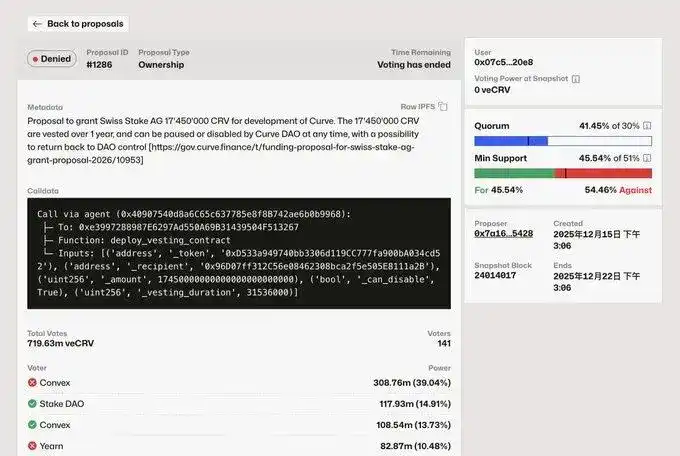
A significant governance proposal within the Curve DAO, requesting 17 million CRV in funding for development team Swiss Stake AG, was recently rejected. Major veCRV holders, including Convex and Yearn, voted against the proposal, effectively blocking its passage. The rejection reflects two key concerns within the community: a demand for greater transparency and accountability regarding the use of previous grants and future spending plans, and a reluctance from large token holders to dilute the value of their veCRV holdings without a clear, direct return on investment. The article highlights a shift in DeFi governance, moving away from a model of automatic funding approval. It contrasts the veToken model, used by Curve, with standard governance systems. The ve model binds voting power to long-term token lock-ups, attracting capital-heavy players focused on long-term gains. This, combined with the prevalence of vote-aggregating protocols like Convex, is centralizing decision-making power with large capital providers rather than the broader community or even project founders. The outcome of this vote suggests that future governance power in Curve may lie primarily with these major stakeholders.

Original Author: CM(X:@cmdefi)

A few days ago, a funding proposal on Curve was rejected. It involved allocating 17M $CRV in development funds to the development team (Swiss Stake AG). Both Convex and Yearn voted against it, and their voting power was sufficient to influence the final outcome.

Since the governance issues at Aave began to gain attention, governance has started to be scrutinized by the market, and the habitual practice of approving funding requests is being broken. Behind this Curve proposal lie two key points:

1. Some voices in the community are not opposed to funding AG, but they want clarity on how previous funds were used, future plans for usage, sustainability, and whether the projects have generated returns for the protocol. Simultaneously, this primitive grant model means that once funds are disbursed, there are no constraints. In the future, the DAO needs to establish a Treasury, ensure transparent revenue and expenditure, or add governance constraints.

2. The large veCRV holders do not want to dilute their value. This is a clear conflict of interest. If the projects supported by CRV grants cannot foreseeably create benefits for veCRV holders, they likely won't receive support. Of course, Convex and Yearn also have their own private interests and agendas, but we won't delve into those issues here.

This proposal was initiated by Curve founder Mich. AG is also one of the teams that has been maintaining the core codebase since 2020. For this funding round, AG's presented roadmap included continuing to advance llamalend, including support for PT and LP, as well as expansion into on-chain foreign exchange markets and crvUSD. These seem like worthwhile endeavors, but whether they justify a 17M $CRV grant is another calculation. Particularly because Curve's governance differs significantly from Aave's; its power is distributed among several teams with distinct stances.

Let's compare the ve model with conventional governance models:

First, the conclusion: most conventional governance models currently have essentially no design advantages. Of course, if a DAO is mature enough, traditional structures can also function well, but unfortunately, no project in Crypto has yet matured to that level, as evidenced by the problems even at market-consensus leaders like Aave.

So, if we talk specifically about model design, the ve model has some advanced aspects. Firstly, it has cash flow; it is backed by liquidity control rights. When there is external demand for liquidity, this power is "bribed." Therefore, even if you don't want to lock your tokens long-term, you can delegate them to proxy projects like Convex/Yearn to earn收益 (yield).

Thus, the ve model binds voting rights with cash flow. Its future evolution will likely follow the path of "governance capitalism." The vetoken binds voting rights with "long-term locking," essentially筛选 (screening for) those with large capital, the ability to bear liquidity loss, and the capacity for long-term博弈 (game theory). Over time, the result is that governors gradually shift from ordinary users to the "capital class."

Furthermore, due to the existence of proxy layers like Convex/Yearn, many ordinary users, even loyal ones, who wish to gain yield without losing liquidity and flexibility, will increasingly choose to delegate their governance power to these projects.

This vote also reveals some clues. In the future, Mich may not be the main character in Curve's governance; instead, power lies with these large vote holders. When governance issues arose at Aave, some proposed ideas of "delegated governance/elite governance," which is quite similar to the current structure of Curve. As for whether this is good or bad, it will take time to tell.
Tiền kỹ thuật số thịnh hành

Câu hỏi Liên quan

QWhat was the main reason for the rejection of the 17M CRV grant proposal for Swiss Stake AG?

AThe proposal was rejected primarily because major veCRV holders, such as Convex and Yearn, voted against it. They were concerned about the dilution of their token value and the lack of a clear, sustainable plan for how the funds would be used to generate tangible benefits for veCRV holders.

QHow does the ve (vote-escrowed) tokenomics model differ from conventional governance models according to the article?

AThe ve model binds voting rights to long-term token lock-ups, which inherently attracts large capital providers who can afford illiquidity and engage in long-term planning. This contrasts with conventional governance models, which the article argues have few inherent design advantages and often struggle without a highly mature DAO structure. The ve model also provides direct cash flow to holders through 'bribes' from protocols seeking liquidity.

QWhat role do proxy platforms like Convex and Yearn play in the Curve ecosystem?

AProxy platforms like Convex and Yearn allow ordinary CRV holders to delegate their voting power and locked tokens to them. In return, the users receive a share of the platform's revenue (e.g., from bribes) while maintaining liquidity and flexibility, as they are not locking tokens directly with Curve. This consolidation of voting power makes these platforms major decision-makers in governance.

QWhat does the article suggest about the future of Curve's governance power dynamics?

AThe article suggests that future governance power in Curve will increasingly reside with large capital holders and proxy platforms like Convex and Yearn, rather than with the founder, Michael Egorov, or the broader community. This shift represents a move towards 'governance capitalism,' where decision-making is concentrated among those with significant financial stakes.

QWhat were the key community concerns regarding the grant proposal, beyond simple opposition to funding?

ABeyond simply rejecting the grant, a part of the community wanted greater transparency and accountability. Their concerns included how previous funds had been used, the sustainability of the development plan, whether the projects would generate measurable returns for the protocol, and a desire for a more structured Treasury with transparent revenue and expenditure reporting, rather than an open-ended grant model.

Nội dung Liên quan

Bạn sẽ ngạc nhiên về mức độ khác biệt giữa WeChat và Telegram ở cấp độ kiến trúc

WeChat và Telegram thể hiện hai triết lý kiến trúc nền tảng số trái ngược, tập trung vào lưu trữ dữ liệu, mô hình kinh tế và độ mở. **Lưu trữ & Đồng bộ:** Telegram lưu trữ không giới hạn trên đám mây, cho phép đồng bộ lịch sử trên mọi thiết bị. WeChat lưu trữ cục bộ trên thiết bị, việc chuyển đổi thiết bị cần dùng mã QR và phiên bản desktop luôn yêu cầu điện thoại xác nhận. **Tương tác & Nội dung:** Telegram tích hợp bình luận trực tiếp dưới bài đăng kênh. WeChat yêu cầu bình luận cho bài viết tài khoản chính thức phải được kiểm duyệt trước và không có hệ thống thảo luận tích hợp tương tự. **Phát triển & Hệ sinh thái:** Bot API của Telegram mở và miễn phí. Mini Programs (Tiểu trình) của WeChat vận hành trong hệ sinh thái khép kín, yêu cầu xác minh và có rào cản gia nhập cao hơn. Tuy nhiên, hệ sinh thái này rất lớn với hơn 4,8 triệu tiểu trình hoạt động (06/2025). **Truyền tệp & Thanh toán:** Telegram cho phép tải lên tới 2-4 GB. WeChat giới hạn ở 200 MB cho hầu hết tệp. Sự khác biệt lớn nhất nằm ở thanh toán: WeChat Pay ăn sâu vào đời sống và kinh tế Trung Quốc, trong khi Telegram chủ yếu dựa vào bot bên thứ ba và tiền mã hóa, phản ánh triết lý phi tập trung. **Quan điểm kỹ thuật (Phân tích bổ sung):** Việc WeChat kết hợp chặt chẽ nhắn tin và thanh toán trong một ứng dụng mà không có mã hóa end-to-end mở rộng làm gia tăng rủi ro bảo mật. Bề mặt tấn công rộng hơn, minh chứng bởi các vụ lừa đảo ở Singapore. Câu hỏi đặt ra là kiến trúc tích hợp chặt này có đủ sức chống chịu khi số tính năng trong một cửa sổ ứng dụng tiếp tục tăng. Tóm lại, WeChat xây dựng một hệ sinh thái khép kín, tích hợp sâu để thống trị thị trường, trong khi Telegram ưu tiên giao thức mở, lưu trữ linh hoạt và rào cản thấp cho nhà phát triển.

cryptonews.ru44 phút trước

Bạn sẽ ngạc nhiên về mức độ khác biệt giữa WeChat và Telegram ở cấp độ kiến trúc

cryptonews.ru44 phút trước

Mở khóa Token Trong Tuần: H Mở khóa Token chiếm 7.9% lượng lưu hành

**Tóm tắt: Giải phóng Token Tuần Này (Unlock Token)** Bài viết liệt kê thông tin giải phóng token (token unlock) của ba dự án tiền mã hóa trong tuần, bao gồm số lượng, giá trị và mô tả ngắn gọn. **1. Humanity Protocol (H)** * **Số lượng giải phóng:** 270 triệu token. * **Giá trị:** Khoảng 19.88 triệu USD (tương đương 7.9% lượng token đang lưu hành). * **Mô tả:** Một mạng lưới blockchain chống Sybil, cung cấp cơ chế xác minh danh tính con người độc đáo cho nhà phát triển và quyền sở hữu dữ liệu đầy đủ cho người dùng. * **Nguồn:** Có biểu đồ lộ trình giải phóng token chi tiết. **2. SoSoValue** * **Số lượng giải phóng:** 23.45 triệu token. * **Giá trị:** Khoảng 7.27 triệu USD. * **Mô tả:** Một nền tảng nghiên cứu đầu tư được hỗ trợ bởi AI, kết hợp hiệu quả của CeFi với tính minh bạch của DeFi để giải quyết các thách thức như quá tải thông tin trong thị trường tiền mã hóa. * **Nguồn:** Có biểu đồ lộ trình giải phóng token chi tiết. **3. Collector** * **Số lượng giải phóng:** 28.86 triệu token. * **Giá trị:** Khoảng 5.57 triệu USD. * **Mô tả:** Một nền tảng kết hợp quyền sở hữu vật chất với thị trường kỹ thuật số Web3 để biến đổi thị trường sưu tầm. Người dùng có thể số hóa, giao dịch và thậm chí thế chấp bộ sưu tập của mình. * **Nguồn:** Có biểu đồ lộ trình giải phóng token chi tiết. Bài viết cung cấp liên kết đến trang Twitter và website chính thức của từng dự án.

marsbit1 giờ trước

Mở khóa Token Trong Tuần: H Mở khóa Token chiếm 7.9% lượng lưu hành

marsbit1 giờ trước

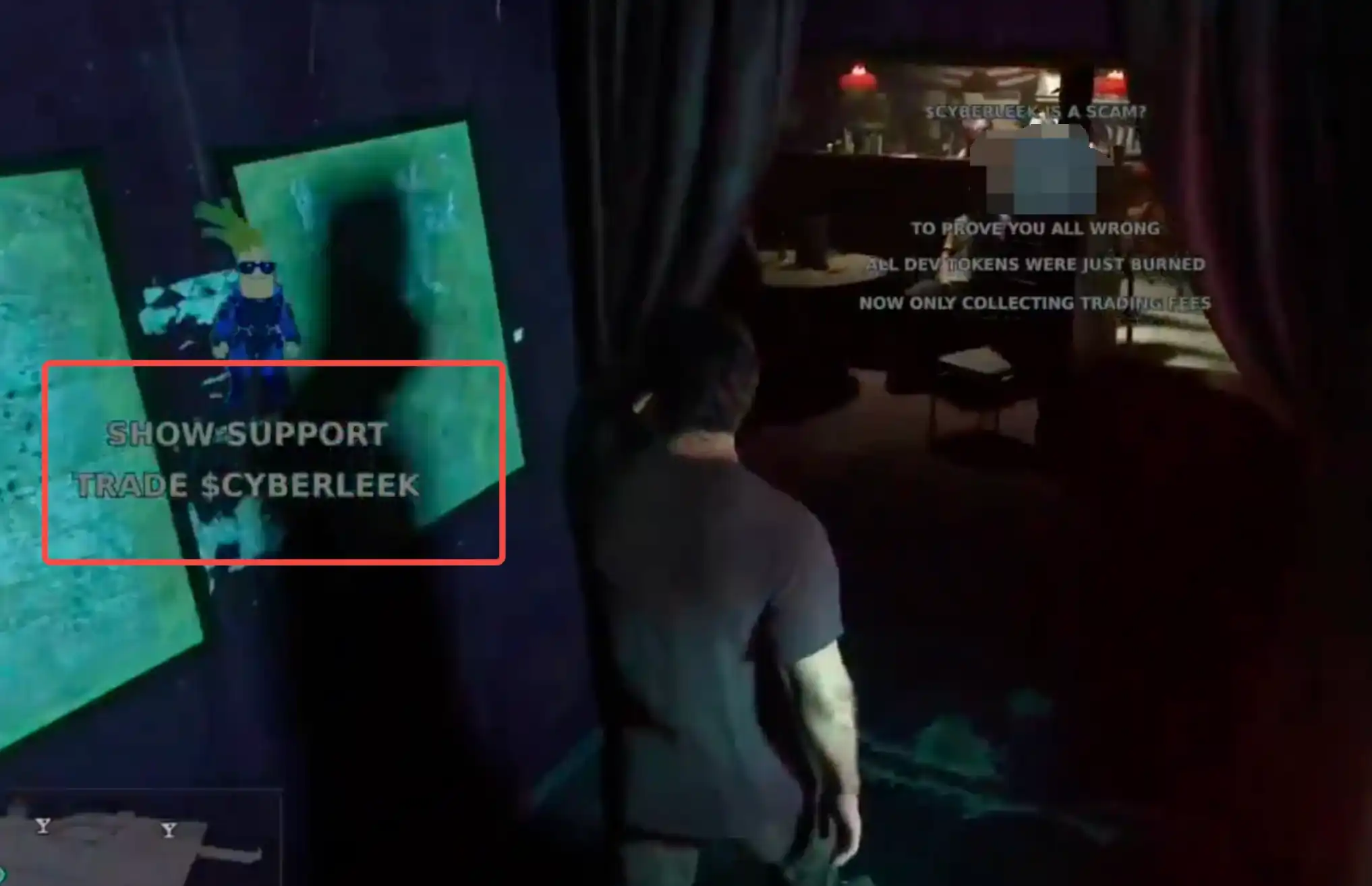
Tin tặc rò rỉ GTA 6 và phát hành tiền mã hóa: Video lộ trở thành 'bảng quảng cáo' cho $CYBERLEEK, muốn xem phần tiếp theo phải mua coin để bỏ phiếu

Ngày 18/8, một nhóm hacker tự xưng là CyberLeek bắt đầu rò rỉ các đoạn video được cho là từ phiên bản phát triển của tựa game được chờ đợi nhất - GTA 6. Mỗi đoạn video đều có hình mờ quảng cáo cho đồng meme token $CYBERLEEK trên Solana. Điều đáng chú ý, token này đã được tạo ra trước khi nội dung rò rỉ xuất hiện khoảng 7 tiếng 47 phút. Cùng một ví tiền đã chi trả chi phí tạo miền web, token và thanh khoản. Nhóm hacker tuyên bố sẽ dựa trên kết quả bỏ phiếu của chủ sở hữu token để quyết định cảnh hoặc tính năng game nào sẽ bị rò rỉ tiếp theo, biến việc xem nội dung thành động lực mua token. $CYBERLEEK đạt khối lượng giao dịch 15 triệu USD trong ngày đầu, mang về khoản phí giao dịch ước tính 3 nghìn USD, trong khi tổng chi phí thực tế ban đầu chưa đến 3.5 nghìn USD. Nhóm sau đó đã đốt 27% tổng cung token (trị giá trên 1 triệu USD) để xây dựng lòng tin, nhưng cơ chế thu phí giao dịch vẫn tiếp tục tạo ra lợi nhuận. Hành động này tạo ra một mô hình kinh doanh khép kín: nội dung rò rỉ thu hút sự chú ý và thúc đẩy nhu cầu mua token, và chỉ những người nắm giữ token mới có thể bỏ phiếu để xem nội dung tiếp theo. Nhà phát triển game Take-Two Interactive đã bắt đầu hành động pháp lý, nhưng số tiền trên blockchain có thể đã được thu về. Sự việc cho thấy cách một IP toàn cầu có thể bị lợi dụng làm tài sản thế chấp cho một đồng meme token, biến sự tò mò của cộng đồng thành công cụ kiếm tiền.

marsbit2 giờ trước

Tin tặc rò rỉ GTA 6 và phát hành tiền mã hóa: Video lộ trở thành 'bảng quảng cáo' cho $CYBERLEEK, muốn xem phần tiếp theo phải mua coin để bỏ phiếu

marsbit2 giờ trước

Giao dịch

Giao ngay

Bài viết Nổi bật

Làm thế nào để Mua CRV

Chào mừng bạn đến với HTX.com! Chúng tôi đã làm cho mua Curve DAO Token (CRV) trở nên đơn giản và thuận tiện. Làm theo hướng dẫn từng bước của chúng tôi để bắt đầu hành trình tiền kỹ thuật số của bạn.Bước 1: Tạo Tài khoản HTX của BạnSử dụng email hoặc số điện thoại của bạn để đăng ký tài khoản miễn phí trên HTX. Trải nghiệm hành trình đăng ký không rắc rối và mở khóa tất cả tính năng. Nhận Tài khoản của tôiBước 2: Truy cập Mua Crypto và Chọn Phương thức Thanh toán của BạnThẻ Tín dụng/Ghi nợ: Sử dụng Visa hoặc Mastercard của bạn để mua Curve DAO Token (CRV) ngay lập tức.Số dư: Sử dụng tiền từ số dư tài khoản HTX của bạn để giao dịch liền mạch.Bên thứ ba: Chúng tôi đã thêm những phương thức thanh toán phổ biến như Google Pay và Apple Pay để nâng cao sự tiện lợi.P2P: Giao dịch trực tiếp với người dùng khác trên HTX.Thị trường mua bán phi tập trung (OTC): Chúng tôi cung cấp những dịch vụ được thiết kế riêng và tỷ giá hối đoái cạnh tranh cho nhà giao dịch.Bước 3: Lưu trữ Curve DAO Token (CRV) của BạnSau khi mua Curve DAO Token (CRV), lưu trữ trong tài khoản HTX của bạn. Ngoài ra, bạn có thể gửi đi nơi khác qua chuyển khoản blockchain hoặc sử dụng để giao dịch những tiền kỹ thuật số khác.Bước 4: Giao dịch Curve DAO Token (CRV)Giao dịch Curve DAO Token (CRV) dễ dàng trên thị trường giao ngay của HTX. Chỉ cần truy cập vào tài khoản của bạn, chọn cặp giao dịch, thực hiện giao dịch và theo dõi trong thời gian thực. Chúng tôi cung cấp trải nghiệm thân thiện với người dùng cho cả người mới bắt đầu và người giao dịch dày dạn kinh nghiệm.

Tổng lượt xem 758Xuất bản vào 2024.12.11Cập nhật vào 2026.06.02

Làm thế nào để Mua CRV

Thảo luận

Chào mừng đến với Cộng đồng HTX. Tại đây, bạn có thể được thông báo về những phát triển nền tảng mới nhất và có quyền truy cập vào thông tin chuyên sâu về thị trường. Ý kiến ​​của người dùng về giá của CRV (CRV) được trình bày dưới đây.

活动图片