Major Japanese Banks Plan Joint Stablecoin Rollout By Year-End – Report

bitcoinistXuất bản vào 2025-10-18Cập nhật gần nhất vào 2025-10-18

Tóm tắt

Amid the global push for stablecoin adoption, recent reports claim that three major Japanese banks are preparing to issue a...

Trusted Editorial content, reviewed by leading industry experts and seasoned editors. Ad Disclosure

Amid the global push for stablecoin adoption, recent reports claim that three major Japanese banks are preparing to issue a yen-pegged token for global settlements before the end of the year.

Japanese Megabanks To Rollout Stablecoin This Year

On Friday, news media outlet Nikkei Asia reported that Mitsubishi UFJ Financial Group (MUFG) Bank, Sumitomo Mitsui Banking Corp., and Mizuho Bank are preparing to jointly launch a stablecoin “to promote settlements made with pegged cryptocurrencies.”

According to the report, the three major banks, which serve over 300,000 clients combined, plan to establish a framework for the stablecoin utilizing the system of Tokyo-based fintech company Progmat.

Notably, MUFG launched the platform in 2023 to facilitate the issuance of bank-backed stablecoins after the enactment of a 2022 bill that prohibited non-banking institutions from issuing stablecoins.

The megabanks are set to standardize their token for payments within the companies and between them. Japanese trading house Mitsubishi Corp., which has over 240 major operating companies under its umbrella, will be the first institution to use the soon-to-be-launched token for internal financial settlements.

Nikkei noted that the company expects to reduce remittance fees and administrative burdens, both internally and externally, if the token becomes widely used.

The banks will initially focus on a yen-pegged stablecoin, but plan to issue a USD-pegged version in the future. Additionally, they anticipate a rollout before the end of the year following a proof-of-concept trial.

Regulatory Efforts Push Adoption In Asia

The megabanks’ rollout plan comes as the sector gains significant momentum in Japan and Asia. In August, Japan’s Financial Services Agency (FSA) was preparing to approve the first yen-backed stablecoin this fall. Under Japan’s framework, only licensed money transfer companies, trust companies, and banks are allowed to issue the tokens.

The token would be issued by Tokyo fintech company JPYC, which was in the process of registering as a money transfer company at the time. Additionally, it would be backed by Japanese yen reserves, including bank deposits and government debt.

Noritaka Okabe, CEO of JPYC, asserted that yen-pegged stablecoins could boost Japan’s bond market, as issuers would increase demand for government bonds. He highlighted that Tether and Circle have become major buyers of US Treasuries, also noted by the US Treasury Secretary, Scott Bessent, in August.

Meanwhile, Hong Kong has been working to establish itself as one of the leading crypto hubs worldwide, advancing crucial legislation to regulate the sector. Hong Kong’s Legislative Council passed the Stablecoin Ordinance in May, which was enacted on August 1, and is expected to issue the first batch of licenses at the start of next year.

Similarly, South Korea has seen multiple bills related to the issuance and distribution of KRW-pegged stablecoins introduced in the National Assembly. The highly anticipated regulatory framework is expected to be released this quarter. In September, digital assets custodian BDACS and financial giant Woori Bank launched the first KRW-pegged stablecoin, KRW1.

It’s worth noting that Japan emerged as the fastest-growing crypto market in the Asia-Pacific (APAC) region in 2025, according to Chainalysis. The report attributed the growth in the Japanese ecosystem to the favorable policy developments in recent years.

As a result, Japan surpassed other leading nations, including India, South Korea, and Vietnam, in terms of on-chain value received, which grew by 120% in the 12 months leading to June 2025.
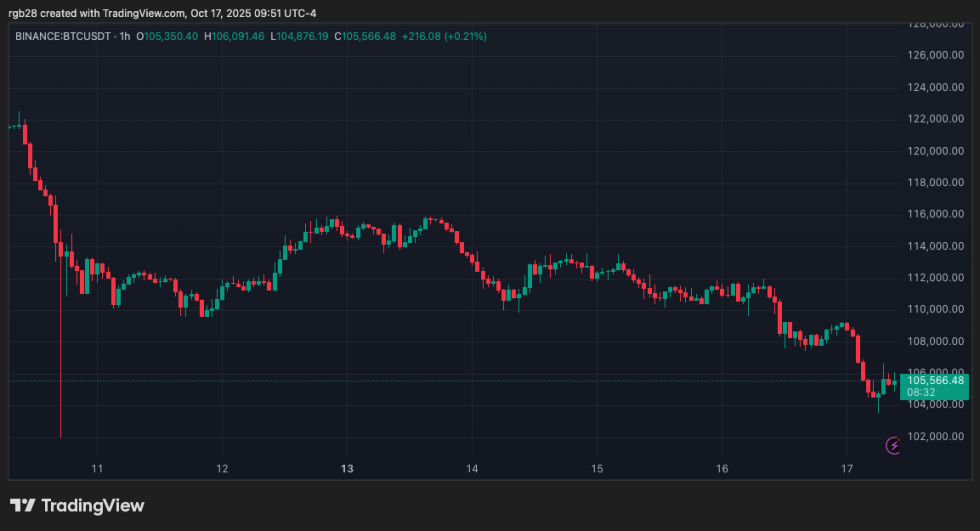
Stablecoin, bitcoin, BTC, btcusdt

Bitcoin (BTC)'s performance in the one-week chart. Source: BTCUSDT on TradingView
Featured Image from Unsplash.com, Chart from TradingView.com
Editorial Process for bitcoinist is centered on delivering thoroughly researched, accurate, and unbiased content. We uphold strict sourcing standards, and each page undergoes diligent review by our team of top technology experts and seasoned editors. This process ensures the integrity, relevance, and value of our content for our readers.

Rubmar is a crypto enthusiast who likes learning and improving constantly. She enjoys reporting on the latest news and developments in the crypto industry. Rubmar also enjoys scrapbooking, crafting, simulation games, and watching football.

Nội dung Liên quan

Upbit lo lắng, một cuộc phản công vội vàng nhằm lấy lại thị phần stablecoin

Upbit đã tung ra một loạt hành động từ ngày 26/7 đến 9/8, bao gồm miễn phí giao dịch stablecoin và niêm yết nhanh nhiều đồng stablecoin mới như RLUSD, USDG, nhằm mục đích kích thích khối lượng giao dịch stablecoin và giành lại thị phần đang bị thu hẹp. Thị trường stablecoin Hàn Quốc đã thay đổi đáng kể trong 18 tháng qua. Từ vị trí dẫn đầu với 53,5% thị phần vào tháng 1/2025, Upbit đã tụt xuống thứ ba (30,1%) vào tháng 6/2026, sau Coinone (34,8%) và Bithumb (31,1%). Nguyên nhân chính là do Coinone áp dụng chính sách miễn phí giao dịch USDC vĩnh viễn từ tháng 10/2025, thu hút dòng tiền nhạy cảm với phí. Trong khi đó, tổng khối lượng giao dịch stablecoin trên toàn thị trường đã giảm mạnh 80,3% từ đầu năm 2026. Stablecoin đóng vai trò là kênh chuyển vốn xuyên biên giới quan trọng. Dữ liệu cho thấy liên tục trong 18 tháng có dòng tiền ròng chảy ra khỏi Hàn Quốc qua stablecoin, ngay cả trong thị trường downtrend, cho thấy nhu cầu bền vững. Chiến lược của Upbit mang lại hiệu quả ngắn hạn: khối lượng giao dịch stablecoin hàng ngày tăng 162% trong đợt khuyến mãi, chủ yếu nhờ USDT. Tuy nhiên, khối lượng đã bắt đầu giảm dần trong tuần thứ hai và các stablecoin mới niêm yết không thu hút được nhiều giao dịch. Một khi chương trình khuyến mãi kết thúc, Upbit có thể khó giữ chân khách hàng nếu không áp dụng chính sách miễn phí vĩnh viễn như đối thủ. Bối cảnh quản lý đang thay đổi có thể là lý do cho động thái này. Với kế hoạch phát hành stablecoin Won trong tương lai gần và việc Dunamu (công ty mẹ của Upbit) trở thành công ty con toàn phần của Naver, việc mở rộng nền tảng stablecoin hiện tại có ý nghĩa chiến lược. Mặc dù có thể có hạn chế pháp lý trong việc niêm yết stablecoin Won do chính Naver phát hành, việc trở thành trung tâm phân phối stablecoin USD tại Hàn Quốc vẫn là cơ hội quan trọng mà Upbit đang nắm bắt.

marsbit2 giờ trước

Upbit lo lắng, một cuộc phản công vội vàng nhằm lấy lại thị phần stablecoin

marsbit2 giờ trước

Michael Saylor So Sánh Bitcoin Với Vàng!

Người sáng lập Strategy Michael Saylor tuyên bố Bitcoin đang cách mạng hóa việc lưu trữ và chuyển giao của cải bằng cách chuyển đổi sự khan hiếm kỹ thuật số thành giá trị kinh tế. Ông mô tả Bitcoin là "mạng lưới tiền tệ kỹ thuật số đầu tiên trong lịch sử", kết hợp máy tính, mạng kỹ thuật số và mật mã để số hóa hoàn toàn tài sản tiền tệ. So sánh với vàng, Saylor cho rằng việc tăng nguồn cung Bitcoin khó khăn hơn, nhưng tích hợp với phần mềm và chuyển giao lại dễ dàng hơn. Cơ chế bằng chứng công việc (Proof-of-Work) gắn Bitcoin với thế giới vật lý, tiêu thụ năng lượng thực để đổi lấy bảo mật sổ cái, khiến "năng lượng tiền tệ kỹ thuật số" là thuật ngữ chính xác hơn "vàng kỹ thuật số". Saylor nhấn mạnh Bitcoin là một hệ thống thích ứng, với mục tiêu cốt lõi là tạo ra một sổ cái an toàn, đáng tin cậy cho tài sản kỹ thuật số khan hiếm. Kiến trúc đơn giản này tạo nền tảng để giá trị kinh tế được truyền tải và hỗ trợ đổi mới trong các dịch vụ tài chính. Tác động sâu sắc hơn của Bitcoin là tạo ra một hình thức chủ quyền kỹ thuật số mới, nơi cá nhân kiểm soát quyền lực kinh tế thông qua khóa riêng tư mà không cần sự cho phép, với quyền sở hữu được xác minh bằng toán học thay vì thể chế. Ông kết luận: "Sự khan hiếm vật lý biến vàng thành tiền tệ, và sự khan hiếm kỹ thuật số của Bitcoin cũng vậy", mô tả Bitcoin như một dạng "năng lượng tiền tệ" của thời đại kỹ thuật số.

cryptonews.ru4 giờ trước

Michael Saylor So Sánh Bitcoin Với Vàng!

cryptonews.ru4 giờ trước

Giao dịch

Giao ngay
活动图片





