$30 Billion DeFi Capital Exodus: LayerZero Stumbles, Chainlink Feasts

marsbitXuất bản vào 2026-05-13Cập nhật gần nhất vào 2026-05-13

Tóm tắt

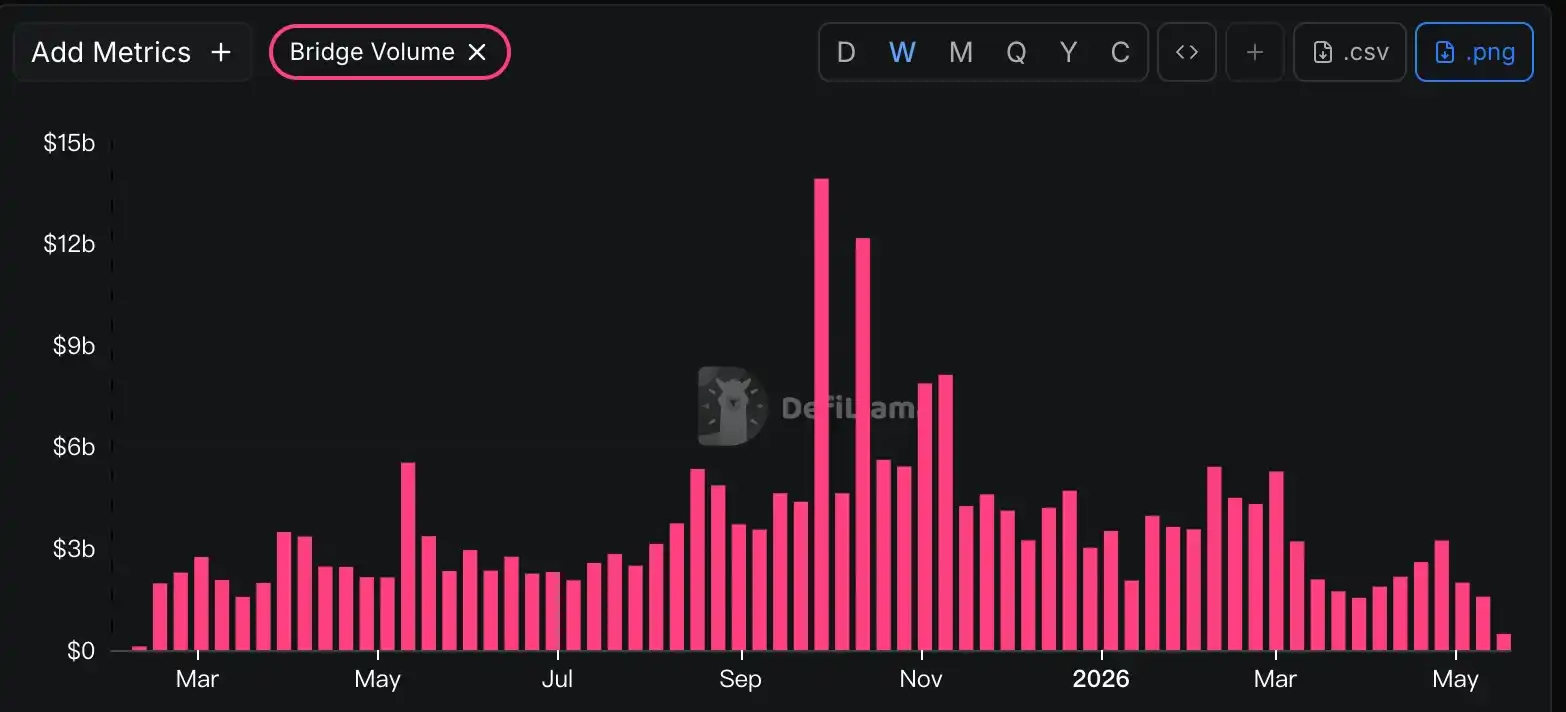
Following the major DeFi security incident involving Kelp DAO, a significant migration of funds is underway from the cross-chain protocol LayerZero to Chainlink's CCIP (Cross-Chain Interoperability Protocol). Over $30 billion in Total Value Locked (TVL) from protocols like Kelp DAO, Solv Protocol, Re, and Tydro has moved to Chainlink in the past week, driven by security concerns. LayerZero is facing a severe trust crisis after the attack. Initially denying responsibility, LayerZero Labs has now issued a public apology, acknowledging management oversights. These include a vulnerable "1/1" single-node configuration for its Decentralized Verification Network (DVN) and past misuse of a multi-signature wallet by a team member. The protocol's weekly bridge volume has slumped to near-historic lows of around $470 million. In contrast, Chainlink is experiencing a surge in adoption and activity. Its independent active addresses recently hit multi-month highs, and whales have been accumulating LINK tokens. Beyond DeFi, Chainlink is securing partnerships with traditional finance giants like DTCC, European stock exchange operator SIX Group, and asset manager Amundi. While LayerZero has announced security upgrades—such as migrating to stronger multi-signature configurations and developing a second DVN client—and contributed to a rescue fund, the event underscores that security is becoming a decisive competitive factor as DeFi matures.

Author: Nancy, PANews

With several leading protocols stepping in to inject capital, quickly covering the funding gap and advancing on-chain recovery, the rescue efforts for the Kelp DAO attack incident have recently seen substantial progress. However, compared to the financial repairs, the harder thing to restore remains market trust.

At the center of this vortex, cross-chain leader LayerZero is facing accelerating withdrawals from many protocols and was forced to make a dramatic shift in attitude within just a few weeks—from initially shifting blame and denying responsibility to now publicly apologizing and initiating rectifications. Meanwhile, Chainlink has unexpectedly become a beneficiary of this crisis, with its CCIP protocol absorbing a large portion of migrating liquidity, showing notable growth in on-chain data.

Securing $30 Billion in Migration in a Single Week, Chainlink Reaps Security Dividends

As the largest DeFi security incident to date in 2026, the Kelp DAO attack has accelerated the migration of on-chain liquidity.

As LayerZero's security controversy continues to ferment, an increasing number of DeFi protocols are reevaluating cross-chain risks and proactively seeking more reliable havens. Over the past week, Chainlink has intensively announced multiple migration cases.

On May 9, Chainlink officially disclosed that four protocols, including Kelp DAO, Solv Protocol, Re, and Tydro, had recently abandoned their original cross-chain bridge or oracle solutions and migrated to Chainlink CCIP. The combined TVL of these related protocols exceeds $30 billion. The official even specifically added the phrase "The Great Migration" to hype this ecosystem shift, revealing strong competitive undertones.

Behind this migration wave is a realignment centered on security.

And besides DeFi protocols realigning due to security concerns, Chainlink has also been continuously gaining favor from traditional financial institutions and crypto projects in recent months.

In March of this year, Coinbase directly put its exchange market data on-chain for the first time via Chainlink's newly launched DataLink service; Europe's largest asset management firm, Amundi, collaborated with Spiko to launch a tokenized public fund based on Chainlink.

In April, OpenAssets formed a strategic partnership with Chainlink, launching an asset tokenization infrastructure solution for institutions; major European stock exchange operator SIX Group partnered with Chainlink to push Swiss and Spanish stock market data on-chain; AWS Marketplace listed Chainlink data services, connecting traditional cloud and blockchain.

In May, the US Depository Trust & Clearing Corporation (DTCC) announced the introduction of Chainlink to build a blockchain collateral management platform, aiming to achieve near-real-time settlement around the clock; Huma Finance partnered with Chainlink to introduce institutional-grade yield products into the multi-chain ecosystem.

Accompanying the ongoing ecosystem expansion, Chainlink's on-chain activity has also noticeably heated up. According to Santiment monitoring, Chainlink's number of unique active addresses broke 282,000 and 264,000 on May 9 and 10, respectively, hitting the highest records since September 2025, and noted this was primarily influenced by the recent large-scale migration of DeFi protocol infrastructure.
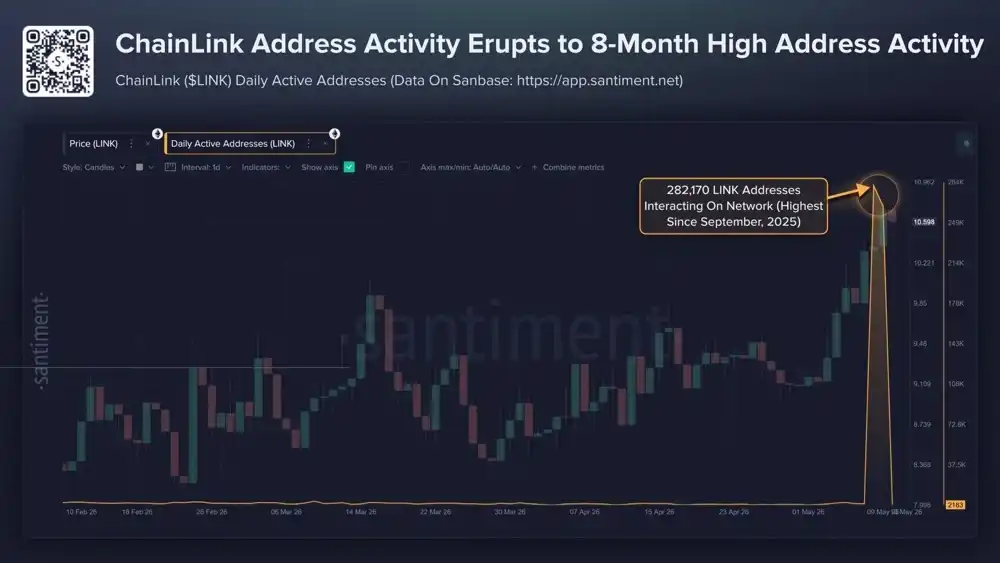
Meanwhile, official Chainlink data shows that the total value of its cross-chain tokens has exceeded $61.8 billion, with CCIP transaction volume reaching $19.5 billion.

Market confidence is also reflected in changes in LINK token holdings. According to Santiment monitoring earlier this month, over the past month, Chainlink whale and shark addresses holding between 100,000 and 10 million LINK cumulatively added 32.93 million LINK. Historically, this has often been a strong bullish signal. Over the past 30 days, LINK has risen approximately 19.7%.

LayerZero Faces Trust Crisis, Officials Issue Emergency Apology and Overhaul

Currently, LayerZero is mired in a trust crisis.

According to DefiLlama data, LayerZero's weekly Bridge transaction volume has now declined to about $470 million, approaching historical lows. This attack incident has plunged LayerZero into a trust crisis.
In the early stages of the hack, Kelp DAO attributed the vulnerability exploit to LayerZero's security issues. Subsequently, LayerZero quickly denied responsibility, stating that multiple accusations by Kelp DAO in the rsETH security incident were completely false.

But the controversy did not subside. Last week, LayerZero Labs co-founder and CEO Bryan Pellegrino engaged in heated debates with several security researchers in the ETHSecurity Community Telegram group.

The focal point of contention is that LayerZero Labs could immediately upgrade the default library contract without a timelock, theoretically allowing forged cross-chain messages. This exposed over $3 billion in LZ OFT assets to potential risk for a period. Security researcher Banteg pointed out that several mainstream projects, including Ethena and EtherFi, were still using this default library weeks ago, and about $178 million in assets remain exposed to risk.

Simultaneously, on-chain data also showed that LayerZero's multi-signature address had conducted Meme coin trading, DEX swaps, and cross-chain bridging operations unrelated to multi-signature duties, further raising community concerns about key security. In response, Bryan admitted that related operations were indeed performed by multi-signature team members but denied they constituted "Meme coin speculation trading," claiming the purpose was merely "testing PEPE OFT functionality," and stated that the involved members had been removed.

To mitigate risks, Bryan also publicly advised project teams to promptly adopt a "fixed configuration" to replace the default configuration. Subsequently, Banteg published a list of LayerZero projects still using the default library contract and called on related protocols to migrate as soon as possible.

These remarks quickly sparked industry discussion and skepticism. Chainlink Strategy Lead Zach Rynes had previously criticized LayerZero Labs, stating that its multi-signature keys had long suffered from serious OPSEC (operational security) failures, directly exposing tens of billions in OFT assets to security risks. He further stated that if LayerZero and the industry had truly heeded the persistent warnings from security researchers over the past few years, such attack incidents could have been entirely avoided.

Facing market舆论 and ongoing ecosystem bleeding, LayerZero's attitude shifted noticeably. On May 9, LayerZero officially released a public apology statement, addressing the security incidents and communication issues over the past three weeks.

LayerZero Labs stated that the internal RPC it used had been attacked by the Lazarus Group over the past three weeks, compromising the authenticity source of its DVN (Decentralized Verification Network), while external RPC providers suffered DDoS attacks. The incident affected only 0.14% of applications and approximately 0.36% of asset value, the LayerZero protocol itself was unaffected, and over $9 billion in assets continued normal cross-chain flow after the incident.

However, LayerZero Labs also acknowledged for the first time that it was responsible for management oversight in previously allowing DVNs to provide security for high-value transactions with a "1/1" single-node configuration, which posed a single point of failure risk. The official also disclosed that three and a half years ago, a multi-signature signer mistakenly used a multi-signature hardware wallet for personal transactions. That signer has been removed, and the relevant wallet has been rotated.

Regarding subsequent rectifications, LayerZero Labs announced a series of security upgrade measures, including: already ceasing services for the 1/1 DVN configuration, currently migrating all path default configurations to a 5/5 multi-signature setup with a minimum of 3/3; developing a second DVN client based on Rust to achieve client diversity; launching the dedicated multi-signature tool OneSig to enhance signature security; and launching the unified management platform Console for asset issuance configuration and abnormal behavior detection.

Additionally, LayerZero also contributed over 10,000 ETH to this DeFi United rescue effort, of which 5,000 ETH will be used for the fund, and the remaining 5,000 ETH will be reserved for Aave.

Despite the escalating controversy, LayerZero has not completely lost its market. Major assets, including Ethena's USDe product, EtherFi's weETH asset, and BitGo's WBTC, continue to use LayerZero's OFT standard.

Every major security crisis triggers a redistribution of liquidity and discourse power. As the crypto industry increasingly moves towards mainstream financial markets, the criteria for evaluating underlying infrastructure will become ever more stringent, with security capabilities becoming one of the core competitive advantages.


Câu hỏi Liên quan

QWhat was the immediate consequence of the Kelp DAO hack on the cross-chain infrastructure landscape?

AIt triggered a rapid migration of DeFi liquidity away from LayerZero due to security concerns, with over $30 billion in TVL from protocols like Kelp DAO moving to Chainlink's CCIP within a week.

QAccording to the article, what were two key security issues highlighted by researchers regarding LayerZero?

AFirst, LayerZero's default library contract, which could be upgraded instantly without a timelock, potentially allowing forged cross-chain messages. Second, suspicious non-multisig-related activities from a multisig signer address, raising concerns about key security.

QHow did Chainlink's on-chain activity and LINK token react to the migration trend mentioned in the article?

AChainlink's daily active unique addresses surged to over 282,000 and 264,000, the highest since September 2025. Furthermore, whales and sharks holding 100k to 10M LINK accumulated over 32.9 million LINK in a month, while the LINK token price rose approximately 19.7% in 30 days.

QWhat specific corrective measures did LayerZero announce in its public apology on May 9th?

ALayerZero announced several measures: stopping service for 1/1 DVN configurations, migrating all paths to at least 3/3 or 5/5 multisig setups, developing a second DVN client in Rust for client diversity, launching a dedicated multisig tool called OneSig, and releasing a management platform called Console for configuration and anomaly detection.

QDespite the crisis, which major assets and protocols were mentioned as still continuing to use LayerZero's technology?

AMajor assets and protocols continuing to use LayerZero's OFT standard include Ethena's USDe, EtherFi's weETH, and BitGo's WBTC.

Nội dung Liên quan

Crypto.com Ra Mắt OTC Options Được Tài Trợ Đầy Đủ Cho Nhà Giao Dịch Tổ Chức

Chúng tôi vui mừng thông báo ra mắt dịch vụ Quyền chọn OTC Được Tài trợ Toàn phần trên sàn Crypto.com, một bổ sung tinh vi cho các dịch vụ thể chế của chúng tôi. Lần đầu tiên, các tổ chức và khách hàng VIP có thể giao dịch quyền chọn kiểu châu Âu cơ bản một cách trực tiếp và an toàn ngoài sổ lệnh thông qua đội ngũ giao dịch viên kinh nghiệm. **Lợi thế OTC:** Giải pháp này khắc phục tình trạng trượt giá và rò rỉ thông tin thường gặp khi giao dịch khối lượng lớn trên sổ lệnh công khai, bằng cách cung cấp một diễn đàn riêng tư để thực hiện các hợp đồng tùy chỉnh phù hợp với nhu cầu và chiến lược đầu tư. **Quyền chọn OTC Được Tài trợ Toàn phần là gì?** Đây là các hợp đồng quyền chọn kiểu châu Âu cơ bản, được thanh toán bằng tài sản thực khi đáo hạn. * **Kỳ hạn Tùy chỉnh:** Điều chỉnh ngày đáo hạn lên đến ba tháng. * **Đảm bảo 100%:** Bên bán phải khóa trước tài sản cơ sở hoặc tiền để thanh toán, nhằm giảm thiểu rủi ro thanh lý. * **Thanh toán Vật chất:** Tài sản được chuyển giao trực tiếp khi vị thế có lãnh khi đáo hạn. **Tính năng nổi bật:** * **Quyền chọn USD:** Lý tưởng cho các tổ chức muốn bán quyền chọn mua có bảo đảm để tạo thu nhập từ tài sản nắm giữ. * **Báo giá Đơn giản:** Nhận báo giá tức thì qua các kênh giao dịch độc quyền trên Telegram và Slack. * **Đặt chỗ Tùy chỉnh:** Nhân viên của chúng tôi hỗ trợ đặt và xác nhận lệnh thủ công thông qua Cổng thông tin Bán hàng được bảo vệ. * **Thanh toán Minh bạch:** Tính toán tự động trạng thái có lãi/không có lãi dựa trên chỉ số giá từ sàn giao dịch.

TheNewsCrypto12 phút trước

Crypto.com Ra Mắt OTC Options Được Tài Trợ Đầy Đủ Cho Nhà Giao Dịch Tổ Chức

TheNewsCrypto12 phút trước

Agent tiếp quản quyền phân phối lưu lượng, Tencent, Byte, Alibaba đang tranh giành điều gì?

Bài viết phân tích cuộc cạnh tranh khốc liệt của ba gã khổng lồ công nghệ Trung Quốc - Alibaba, ByteDance và Tencent - trong việc giành quyền kiểm soát "cửa ngõ" thời đại AI, chính là các Agent thông minh. **Alibaba:** Chiến lược "song tử" với Ứng dụng Qianwen và Quark. Qianwen hướng tới trở thành một "siêu Agent" có khả năng điều phối nhiều dịch vụ trong hệ sinh thái Alibaba và mở rộng kết nối với các thương hiệu bên ngoài (như Luckin Coffee, KFC). Trong khi đó, Quark tập trung vào tra cứu thông minh cho giới trẻ. Alibaba cũng ra mắt nền tảng Agent doanh nghiệp "Wukong". **ByteDance:** Theo đuổi chiến lược "mọi lúc mọi nơi" với Doubao. Với 300 triệu người dùng hàng tháng, Doubao App là cửa ngõ AI phổ biến. Nền tảng phát triển Agent "Kouzi" đóng vai trò là "nhà máy lắp ráp" phía sau, hỗ trợ tạo và phối hợp nhiều Agent. ByteDance còn tích cực mở rộng sang phần cứng như điện thoại AI và kính thông minh để nhúng Doubao vào mọi thiết bị. **Tencent:** Sở hữu "lá bài tẩy" tiềm ẩn trong WeChat. Thay vì tạo một ứng dụng AI mới, Tencent đang phát triển một Agent thông minh được tích hợp sâu vào WeChat, cho phép người dùng trượt sang phải để gọi và ra lệnh. Agent này có thể hiểu yêu cầu và tự động gọi hàng triệu mini-program trên WeChat để thực thi nhiệm vụ (như đặt đồ uống, đặt vé), biến WeChat thành một "hệ điều hành dịch vụ". Đây là lợi thế khổng lồ với 1.4 tỷ người dùng. **Lõi cuộc chiến:** Cuộc cạnh tranh này không chỉ là về sản phẩm, mà là về sự thay đổi căn bản trong phân phối lưu lượng và quyền lực kinh doanh. Trong tương lai, quyền quyết định tiếp cận dịch vụ sẽ dần chuyển từ việc người dùng tự nhấp chuột sang việc Agent đại diện ra quyết định dựa trên "ý định" của người dùng. Công ty nào kiểm soát được điểm tiếp xúc đầu tiên với ý định người dùng và trở thành "lớp thực thi" mặc định, sẽ nắm giữ quyền lực phân phối lưu lượng Token và định hình lại toàn bộ hệ sinh thái thương mại. Thách thức với Tencent nằm ở năng lực hạ tầng máy tính để phục vụ số người dùng khổng lồ. Tóm lại, đây là thời điểm tái phân phối quyền lực, khi hình thái cửa ngõ chuyển từ Web (PC) sang App (di động) và giờ là Agent (AI). Cuộc đua đang diễn ra quyết liệt để định nghĩa lại cách người dùng kết nối với thế giới số.

marsbit28 phút trước

Agent tiếp quản quyền phân phối lưu lượng, Tencent, Byte, Alibaba đang tranh giành điều gì?

marsbit28 phút trước

Sàn Nasdaq Một Đêm Sụt 4%, 1.3 Nghìn Tỷ USD Bốc Hơi, Chứng Khoán Mỹ Đối Mặt Với Ba Đòn Chí Tử

**Sự Sụt Giảm Mạnh Trên Nasdaq: 4%, 1.3 Nghìn Tỷ USD Bốc Hơi, Chứng Khoán Mỹ Hứng Chịu "Ba Đòn Chí Tử"** Ngày 5 tháng 6 đánh dấu một phiên giao dịch tồi tệ nhất kể từ khủng hoảng thuế quan tháng 4/2025. Chỉ số Nasdaq lao dốc 4.18%, S&P 500 mất 2.64% và Dow Jones giảm 695 điểm. Ba nguyên nhân chính đồng thời gây ra sự sụp đổ: 1. **Báo cáo của Broadcom làm rạn nứt câu chuyện AI:** Dù doanh thu chip AI của Broadcom tăng 143%, dự báo cho quý tới thấp hơn kỳ vọng, gợi ý về tốc độ tăng trưởng có thể chậm lại. Điều này kích hoạt làn sóng bán tháo trên toàn ngành bán dẫn, với chỉ số Philadelphia Semiconductor giảm 10.26% và tổng vốn hóa các công ty chip Mỹ bốc hơi khoảng 1.3 nghìn tỷ USD. 2. **Dữ liệu việc làm mạnh bất ngờ trở thành "thuốc độc":** Báo cáo phi nông nghiệp tháng 5 cho thấy 172,000 việc làm mới, gấp đôi dự báo, cùng với việc điều chỉnh tăng số liệu các tháng trước. Trong bối cảnh giá dầu cao do chiến tranh Iran, dữ liệu này làm dấy lên lo ngại Cục Dự trữ Liên bang (Fed) không những không giảm lãi suất mà còn có thể tăng lãi. Kỳ vọng lãi suất tăng gây áp lực nén định giá lên cổ phiếu công nghệ và kích thích luân chuyển vốn sang tài sản an toàn hơn. 3. **Bóng ma lạm phát từ chiến tranh Iran:** Giá dầu duy trì trên 90 USD/thùng do tình trạng bất ổn ở eo biển Hormuz tiếp tục gây áp lực lạm phát, khiến Fed rơi vào tình thế khó xử và hạn chế không gian chính sách. Ba yếu tố này cùng lúc tấn công vào các trụ cột niềm tin thị trường: câu chuyện tăng trưởng vô hạn của AI, kỳ vọng Fed nới lỏng tiền tệ và nhận định lạm phát đã được kiểm soát. Sự sụt giảm lan rộng ra toàn cầu, ảnh hưởng đến chứng khoán châu Á, châu Âu và cả thị trường tiền mã hóa. Đây có thể là một đợt "định giá lại" cần thiết hơn là sự kết thúc của câu chuyện AI. Nhu cầu chip AI vẫn thực tế và mạnh mẽ, nhưng thị trường đang điều chỉnh kỳ vọng về tốc độ tăng trưởng và mức định giá phù hợp. Hướng đi tiếp theo của thị trường sẽ phụ thuộc vào cuộc họp sắp tới của Fed, các báo cáo từ các công ty AI khác và diễn biến của tình hình Iran.

marsbit51 phút trước

Sàn Nasdaq Một Đêm Sụt 4%, 1.3 Nghìn Tỷ USD Bốc Hơi, Chứng Khoán Mỹ Đối Mặt Với Ba Đòn Chí Tử

marsbit51 phút trước

Solana Có Thể Là Thị Trường Giao Dịch Spot Tốt Nhất Toàn Cầu? Một Chuyên Gia Crypto Nghĩ Vậy

Dù giá Solana (SOL) đang chịu áp lực giảm, giao dịch quanh mốc 64 USD, một chuyên gia tiền mã hóa vẫn bày tỏ quan điểm lạc quan mạnh mẽ về tiềm năng của mạng lưới này. Chase, một nhân sự tại Solana Mobile, sau khi đánh giá cấu trúc thị trường, đã đưa ra nhận định táo bạo rằng Solana có cơ sở hạ tầng để trở thành thị trường giao dịch giao ngay (spot) tốt nhất toàn cầu và có khả năng tạo ra nhiều doanh thu hơn bất kỳ blockchain nào. Ông nhấn mạnh Solana đã định vị là trung tâm cho việc hình thành vốn và giao dịch, với đầy đủ tài sản, tính thanh khoản, nhưng nhiều người vẫn chưa nhận ra đó là nơi tốt nhất để giao dịch spot. Việc thu hút thêm người dùng retail và trader lên chuỗi được xem là chìa khóa cho sự tăng trưởng. Báo cáo từ Zensei củng cố sức mạnh hệ sinh thái, cho thấy Tổng Vốn Huy Động (TCG) hàng tuần trên Solana đạt mức cao kỷ lục 73,6 triệu USD. Hơn nữa, Solana đã vượt Ethereum để trở thành blockchain dẫn đầu về vốn hóa thị trường cổ phiếu được mã hóa (tokenized stocks), với mức tăng hơn 54% lên 724,1 triệu USD trong tuần qua, chứng tỏ sự thu hút vốn mạnh mẽ vào mạng lưới.

bitcoinist1 giờ trước

Solana Có Thể Là Thị Trường Giao Dịch Spot Tốt Nhất Toàn Cầu? Một Chuyên Gia Crypto Nghĩ Vậy

bitcoinist1 giờ trước

Từ ‘cấm cửa’ Doubao đến ‘ôm lấy’ Honor: Tại sao WeChat bất ngờ thay đổi thái độ?

Từ chặn Doubao đến bắt tay Honor: Tại sao WeChat đột nhiên “thay đổi thái độ”? Bài viết phân tích về việc WeChat của Tencent, sau một thời gian dài phong tỏa các trợ lý AI của hãng điện thoại, đã đột ngột hợp tác với các nhà sản xuất như Huawei, Honor, Xiaomi, OPPO, vivo để phát triển khả năng trợ lý A2A (Agent-to-Agent). Động thái này diễn ra trong bối cảnh Tencent đang chịu áp lực cạnh tranh lớn về AI so với các đối thủ như ByteDance và Alibaba. Trước đây, WeChat kiên quyết chống lại các phương pháp như GUI Agent (AI mô phỏng thao tác màn hình) mà Doubao của ByteDance sử dụng, coi đó là sự “xâm phạm”. Giờ đây, Tencent chọn giải pháp A2A, trong đó trợ lý AI hệ thống điện thoại phân tích ý định người dùng và gửi lệnh được ủy quyền tới WeChat để thực thi nội bộ. Cách tiếp cận này cho phép WeChat duy trì quyền kiểm soát hệ sinh thái và bảo mật dữ liệu trong khi vẫn mở rộng tiếp cận thông qua cổng vào AI cấp hệ thống. Các hãng điện thoại, dẫn đầu là Honor, nhiệt tình tham gia vì con đường GUI đã bị chứng minh là không khả thi. Hợp tác A2A mang lại cho họ sự ổn định, tuân thủ và cơ hội tập trung phát triển các khả năng AI độc lập khác. Cơ chế ủy quyền kép (người dùng + ứng dụng) được nhấn mạnh để đảm bảo quyền riêng tư và an ninh. Bài viết kết luận rằng đây là một liên minh chiến lược tạm thời. Tencent muốn biến WeChat thành “hệ điều hành dịch vụ” trong kỷ nguyên AI, trong khi các nhà sản xuất điện thoại muốn củng cố vị thế là trung tâm hệ sinh thái AI của riêng họ. Cuộc chiến giành cổng vào AI thời đại mới chỉ vừa bắt đầu.

marsbit2 giờ trước

Từ ‘cấm cửa’ Doubao đến ‘ôm lấy’ Honor: Tại sao WeChat bất ngờ thay đổi thái độ?

marsbit2 giờ trước

Giao dịch

Giao ngay
Hợp đồng Tương lai
活动图片




