Terra remained the focus of the majority of headlines throughout May for its spiral collapse leading to a loss of over $40 billion in investors’ money. Despite some early resistance from the community and heavy backlash, Terra co-founder Do Kwon managed to relaunch the collapsed network with a new chain called Terra 2.0 (Phoenix-1).
The amended proposal for the relaunch of the network by increasing the genesis liquidity, which introduces a new liquidity profile for pre-attack Luna Classic (LUNC) holders and decreases the distribution to post-attack TerraUSD Classic (USTC) holders, was approved by the community with a 65% vote in favor.
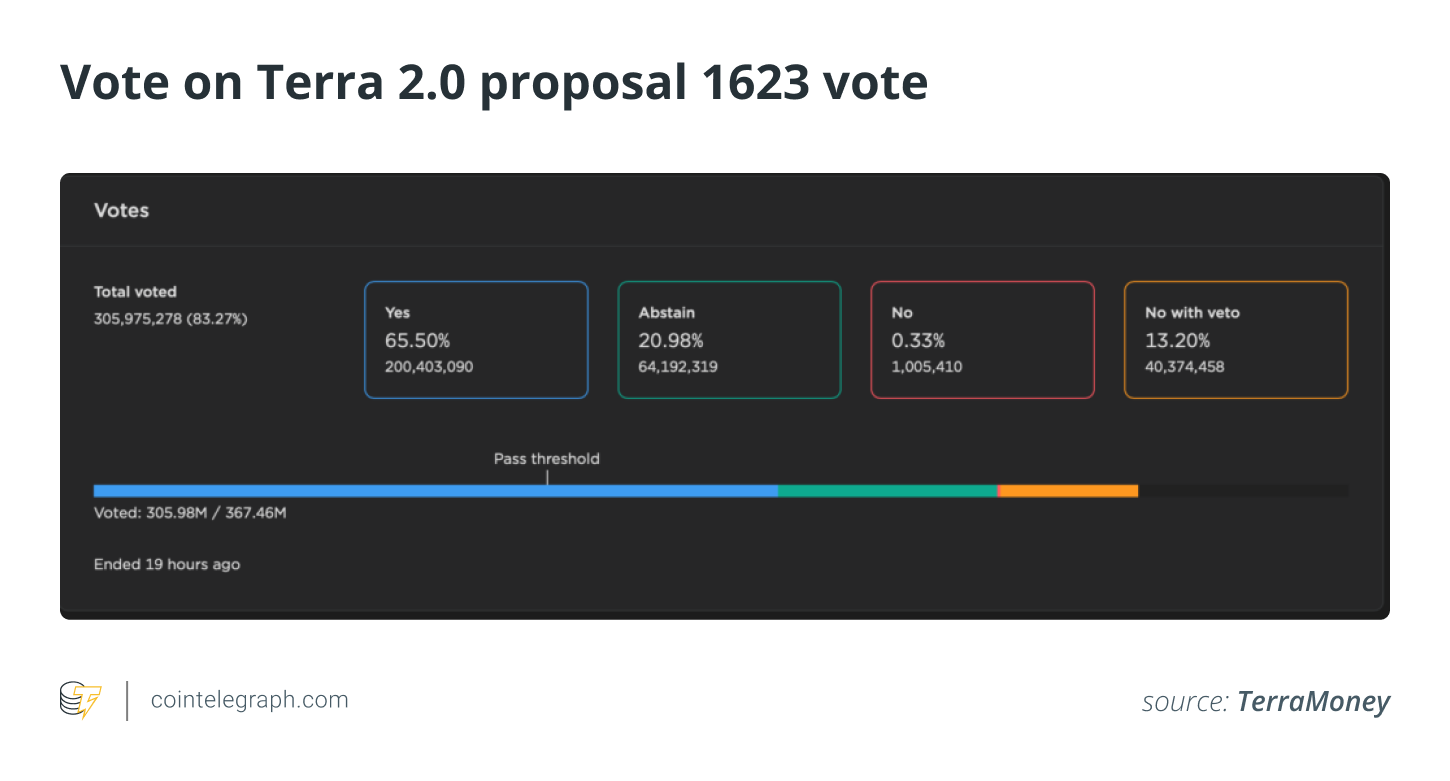
The new blockchain went live on May 28 after a hard fork. The new token stays Terra (LUNA) and the old one was rebranded to Luna Classic. With the new network launch, the holders of LUNC, USTC and Anchor Protocol UST (aUST) were eligible to receive the new tokens.
Despite industry-wide outrage against Do Kwon — the co-founder and the parent company Terraform Labs are facing lawsuits and investigations in South Korea — major crypto exchanges announced support for the Terra 2.0 chain.
Terra 2.0 sees heavy volatility
The launch of the new network was nothing less than a frenzy. To begin with, many investors claimed that they were not appropriately compensated for the new airdrop. The Terra 2.0 team acknowledged the issue and said they are working to resolve the issue soon.
Many users also joked about how the new airdrop is a mockery, given that people have lost hundreds of thousands of dollars and received about $50 worth of new tokens in return.
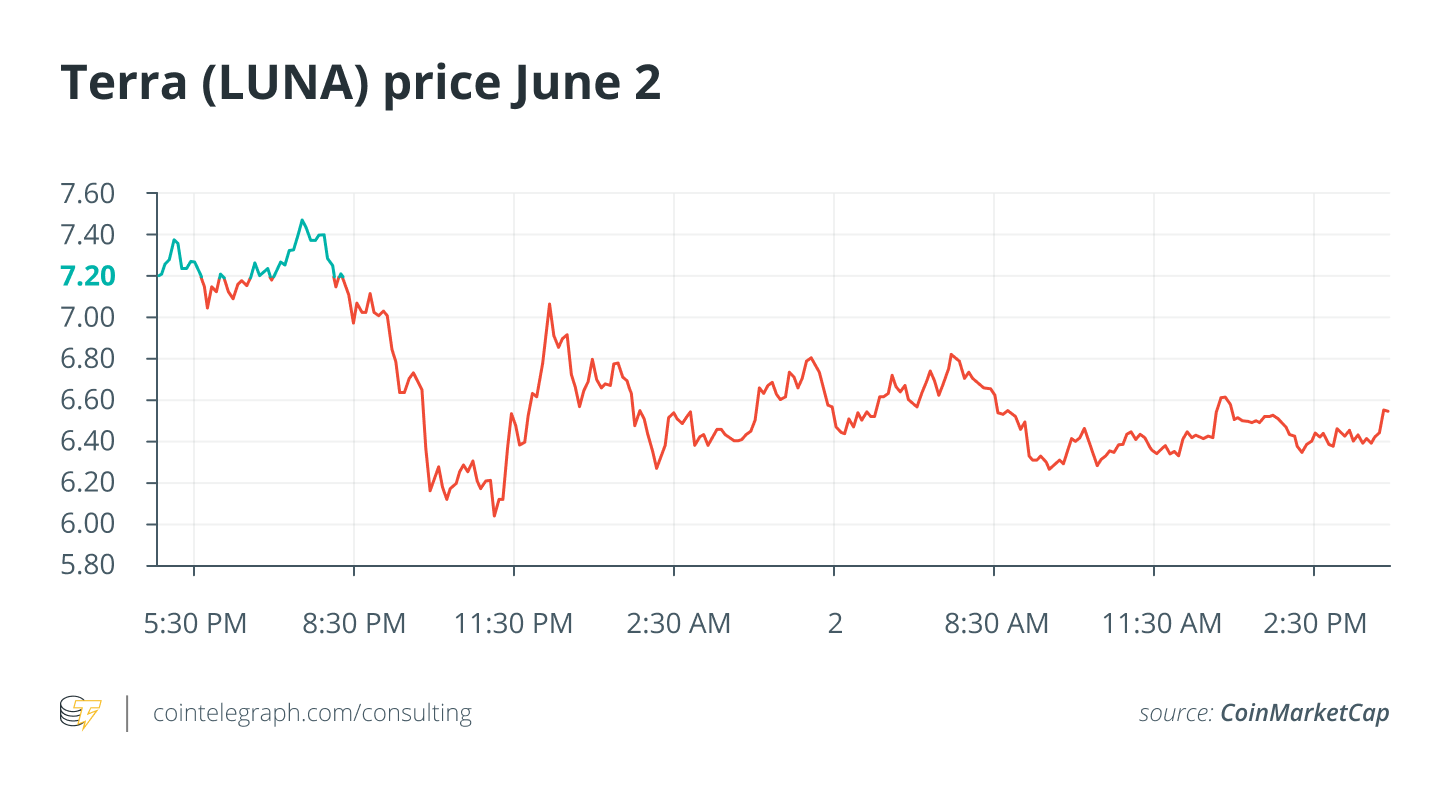
The new airdropped token started trading across multiple crypto exchanges on May 28. However, as warned by many, the new token showed very high price volatility on the very first day of the relaunch, dropping by over 70%. Many investors who received the new LUNA started selling as soon as they received it, showing a lack of confidence in the new ecosystem.
LUNA was listed for $18.85 on the relaunch day but subsequently plummeted to $5.71 before recovering half of its losses a day before the Binance listing. The token is currently trading at $6.44, according to Cointelegraph data, nearly one-third of its listing price.
A user who reportedly lost a significant amount of money investing in LUNC wrote:
“I don’t see any fundamentals here & I see whatever I get as a bonus since I already wrote everything off as a loss & $0. If not that the others are vesting, I’ll sell ‘em all.”
Do Kwon has a track record of failed projects
There is a famous meme going around on Crypto Twitter that compares the fate of two fund managers, who each lost investors billions of dollars. One is Bernie Madoff, the notorious financier who was sentenced to 150 years in prison after running a $60 billion Ponzi scheme — the world’s largest — and Do Kwon, who managed to relaunch a new network just two weeks after losing billions of dollars.
The meme highlights the lack of regulatory oversight in the crypto space, where multi-billion-dollar mistakes and scams have little to no checks or balances.
Terra’s algorithmic stablecoin collapse was not the first time Kwon has launched a failed experimental project. At the peak of the Terra collapse saga, it was revealed that Do Kwon was also behind another failed stablecoin project called Basis Cash (BAC).
Many experts also believe that even though exchanges are liable to listen to the community and list the new token, a future project led by Do Kwon would be hard to accept. Zachary Greene, who runs crypto-investing and finance website the Greenery Financial, told Cointelegraph:
“I believe Do Kwon heading operations will hold Terra 2.0 from being accepted and seen as a legitimate reboot. Whether he was responsible for the mismanagement of the reserves or not, he seems to be blamed by the community and crypto space for the disaster that was the collapse of LUNC and USTC. In my opinion, any project with him as the lead, at least for the next few years, will be dogged on by the crypto community.”
The Terra and Terra 2.0 story is still unfolding. Whether anything malicious happened with the stablecoin or if it was just a failed experiment, only time will tell.
Even in traditional markets, however, we’ve seen time and time again how failed executives hop from one executive position to another. It’s not shocking to see Do Kwon at the helm of Terra 2.0, but it should definitely make investors pause and think twice before investing.
What makes the case against Kwon is his reluctance to foresee the problems and act accordingly. Many have been warning against USTC’s peg being backed by volatile assets and Terra using community funds to buy Bitcoin (BTC), but most of it went unnoticed amid tall promises from the project’s management.
The Terra co-founder and the majority of the employees at Terraform Labs is currently under investigation on various charges including tax evasion, market manipulation and more. While the community can’t be blamed for approving the relaunch plan since they hoped to recover some of their funds with the airdrop, Kwon’s leading the charge once again could prove problematic for the community in the long term.