DeepSeek Secretly Builds AI Chip, Specializing in Inference, Project Started a Year Ago with No Public Recruitments

marsbitPublished on 2026-07-08Last updated on 2026-07-08

Abstract

DeepSeek, the Chinese AI company known for its algorithmic models, is secretly developing its own AI chip to reduce dependence on Nvidia, according to a Reuters report. The chip is designed specifically for AI inference, not training, and the project began approximately a year ago. Currently in early stages, DeepSeek is reportedly in discussions with chip design firms, foundries, and memory suppliers. The company, historically focused on algorithmic efficiency, has been discreetly hiring chip design engineers without public job postings. This move aligns with a global trend where major AI model companies like OpenAI and Anthropic are also pursuing custom chip development. DeepSeek founder Liang Wenfeng previously highlighted chip shortages as a challenge. While the company initially trained models on Nvidia H800s and later adapted to Huawei's Ascend chips, it now seeks greater control over its hardware foundation. Designing a competitive AI chip is a significant challenge, requiring years and substantial investment with no guarantee of success. However, DeepSeek's efforts are backed by a recent major funding round of approximately 51 billion RMB (about $7.4 billion) raised in June 2026. The funds are designated for expanding data centers based on domestic chips, developing proprietary AI chips, and recruiting top global talent. Infrastructure plans are also advancing, with job postings for data center design engineers, including projects in locations like Ulanqab, Inner Mon...

DeepSeek is building its own chip!

Goal: Reduce reliance on NVIDIA.

According to Reuters, this Chinese AI company, which has shaken Silicon Valley with its model algorithms, is secretly developing a self-developed AI chip.

The chip is positioned for inference rather than training, and the project is estimated to have started about a year ago.

Currently, the project is still in its early stages. Sources reveal that DeepSeek has already engaged with chip design companies, wafer foundries, and memory suppliers.

From Algorithm Company to Hardware Player

DeepSeek has always been labeled as a company focused on extreme optimization of algorithms.

From the R1 inference model that ignited the world in January 2025 to the later V4 series adapted for Huawei's Ascend, this company has consistently demonstrated the ability to do more with less computing power.

But now, it is stepping onto the hardware field itself.

Informed sources reveal that DeepSeek has been recruiting chip design engineers in recent months, but the recruitment method has been extremely low-key, with no job postings on any public recruitment platforms.

It's not an isolated case for model companies to develop their own chips.

Globally, it has become a trend for AI model companies to develop their own chips. Last month, OpenAI just announced its first custom inference chip Jalapeño developed in cooperation with Broadcom, and Anthropic was also reported in April this year to be considering developing its own AI chip.

In a rare media interview in 2024, DeepSeek founder Liang Wenfeng revealed that chip shortages posed a challenge to the company.

The foundation of the R1 model was trained on NVIDIA H800s. Subsequently, DeepSeek shifted to Huawei's Ascend. The V4 model released this April has already been adapted for Ascend chips, and Huawei also confirmed that its processors participated in part of the training of V4-Flash.

But putting eggs in two baskets is still not enough for DeepSeek.
DeepSeek's self-developed chip is specifically designed for inference.

As AI applications are deployed on a large scale, the focus of industry computing power demand is rapidly shifting from training to inference. Training is a one-time investment, while inference is an ongoing consumption. Every query from every user requires inference computing power to respond.

Dedicated chips customized for inference scenarios can achieve lower power consumption and lower unit costs compared to general-purpose GPUs, which is crucial for an AI company moving towards commercialization.

DeepSeek has already laid the groundwork for hardware-software co-design at the model architecture level.

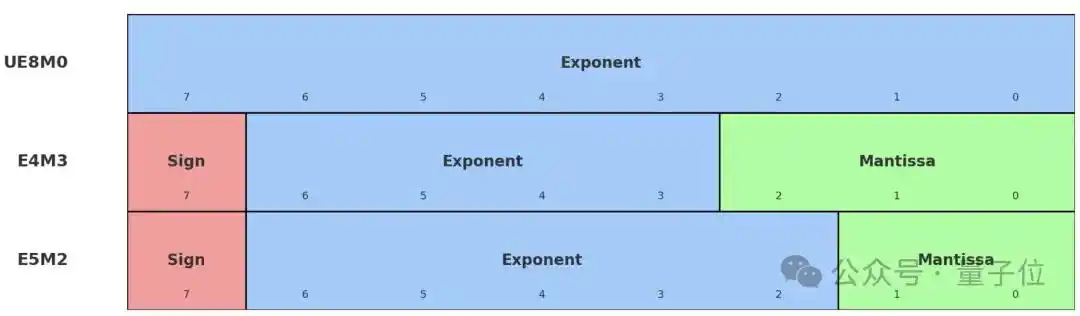
The UE8M0 FP8 data format introduced in DeepSeek-V3.1 is believed to be specifically designed for the hardware characteristics of next-generation domestic chips. The algorithm team was thinking about chips while writing the model.
However, the challenges are equally immense. Designing a competitive AI chip typically requires several years and massive capital investment, and success cannot be guaranteed at this stage.

51 Billion Yuan Funding Secured, Computing Infrastructure Simultaneously Deployed

This plan is backed by real money.

In June 2026, DeepSeek completed its first external financing round since its founding, raising approximately 51 billion yuan (about $7.4 billion), with a post-investment valuation between $52 billion and $59 billion. The company, which had refused external investment for many years, opening up to financing itself represents a major strategic shift.

The use of funds is already clear: expanding computing centers primarily based on domestic chips, developing self-developed AI chips, and expanding the team of global top talent.

Infrastructure-level actions are also advancing. DeepSeek has released job postings for IDC design and planning engineers, planning to participate in the planning and construction of data centers ranging from megawatt to gigawatt scale. The recruitment information explicitly mentions construction locations such as Ulanqab in Inner Mongolia.

DeepSeek itself maintains its characteristic low profile. Three informed sources all requested anonymity, and the company has not made any public response.

Nevertheless, this company, which has changed the pace of global AI competition, is now aiming to change the hardware foundation beneath its feet.

Reference Links:

[1]https://www.reuters.com/world/china/chinas-deepseek-developing-its-own-ai-chip-sources-say-2026-07-07/

This article is from the WeChat public account "QbitAI", author: Meng Chen

Trending Cryptos

Related Questions

QWhat is the main purpose of DeepSeek's secret in-house AI chip development project?

AThe main purpose is to reduce DeepSeek's dependence on NVIDIA and lower the cost and power consumption specifically for AI inference tasks, as the industry's computing demand shifts from training to large-scale, continuous inference.

QWhen did DeepSeek reportedly start its AI chip project, and what is its current stage?

AThe project started approximately one year ago from the article's publication date and is currently in its early stages, with DeepSeek already engaging with chip design firms, foundries, and memory suppliers.

QHow did DeepSeek conduct recruitment for its chip project according to the article?

AThe recruitment was conducted with extreme discretion; DeepSeek did not post any job openings on public recruitment platforms but has been quietly hiring chip design engineers in recent months.

QWhat recent financial development supports DeepSeek's chip and infrastructure plans?

AIn June 2026, DeepSeek completed its first external funding round, raising about 51 billion RMB (approximately $7.4 billion), which will be used for building data centers based on domestic chips, developing its own AI chip, and expanding its global talent team.

QWhich other major AI companies are mentioned as also pursuing in-house AI chip development?

AThe article mentions that OpenAI recently announced its first custom inference chip, 'Jalapeño,' developed in collaboration with Broadcom, and that Anthropic was reported in April of the same year to be considering developing its own AI chips.

Related Reads

Memecoins Reclaim 29% of Spot Trading Volume on Solana DEX, Highest Since August 2025

Memecoins on Solana have surged back to account for 29% of the network's decentralized exchange (DEX) spot trading volume for the week of July 20-26, marking their highest share since August 2025. This represents a significant jump from the 10-15% levels seen just weeks prior. The resurgence is largely attributed to the explosive rise of the memecoin $ANSEM ("The Black Bull"), which saw an 18,000% surge in three days after its June launch and peaked at a market cap near $449 million, revitalizing trading activity on platforms like Pump.fun. Despite this memecoin rally, the data refutes the simplified view of Solana as a memecoin-dominated chain. SOL-stablecoin pairs accounted for 37% of weekly volume, stablecoin-to-stablecoin swaps made up 22%, with foreign tokens, project tokens, and tokenized assets comprising smaller shares. Memecoins ranked second, not first. The article highlights Solana's underlying strength beyond speculative activity. The network's stablecoin supply surpassed $15 billion in July and remained resilient during the 2026 market downturn. Furthermore, Solana leads all networks in the number of tokenized real-world assets (RWAs), hosting 2,582 such assets valued over $3.5 billion. Institutional adoption, evidenced by firms like Western Union and B2C2 utilizing the chain for settlements, underscores its growing utility. While memecoin volumes are cyclical, Solana's stablecoin and RWA ecosystems have shown consistent, counter-cyclical growth.

cryptonews.ru1m ago

Memecoins Reclaim 29% of Spot Trading Volume on Solana DEX, Highest Since August 2025

cryptonews.ru1m ago

Low Probability, High Impact: Citi Issues Nine Extreme Risk Warnings for Commodities in H2 2026

Citigroup Global Research has released a commodity tail risk report focusing on low-probability, high-impact scenarios for late 2026. The report argues that traditional supply-demand frameworks are now regularly disrupted by geopolitical, climate, and technological shocks. Nine key "wildcard" risks are identified: 1. **U.S.-Iran conflict** escalating to a persistent, multi-year disruption of Gulf oil production, potentially pushing crude above $150/bbl and retail gasoline above $6/gallon. 2. **Russia-Ukraine war escalation** triggering new restrictions on Russian energy exports, particularly impacting global natural gas and refined products markets more than crude oil. 3. **Aggressive stockpiling of critical minerals**, such as copper, potentially driving prices above $20,000/ton. 4. **Gold prices** potentially falling another 15-20% in the near term before potentially doubling to around $6,000/oz in the longer term. 5. **A record-strength El Niño** severely disrupting agricultural supplies, possibly pushing cocoa back above $10,000/ton. 6. **AI boom or bust** creating a two-way risk: a boom would boost demand for power-related commodities (electricity, gas, uranium, copper, aluminum), while a bust could cause a deflationary demand shock, though gold could benefit in either scenario. 7. **Renewed U.S.-China trade war** impacting American farm exports, potentially pushing corn below $4.20/bushel and soybeans below $10/bushel. 8. **Finalization of the Russia-China "Power of Siberia 2" gas pipeline** deal, which would drastically reduce China's LNG import needs post-2030, exacerbating a looming global LNG glut and pressuring prices towards $5-6/MMBtu. 9. **An extreme "Monroe Doctrine" scenario** where the U.S. blocks all oil exports from the Americas, causing a severe benchmark dislocation (high global prices like Brent above $100/bbl, but a steep discount for trapped American crude). The report advises investors to stress-test portfolios against these poorly priced extreme scenarios, as "once-in-a-decade" shocks have become more frequent.

marsbit15m ago

Low Probability, High Impact: Citi Issues Nine Extreme Risk Warnings for Commodities in H2 2026

marsbit15m ago

Trading

Spot

Hot Articles

How to Buy CHIP

Welcome to HTX.com! We've made purchasing USD.AI (CHIP) simple and convenient. Follow our step-by-step guide to embark on your crypto journey.Step 1: Create Your HTX AccountUse your email or phone number to sign up for a free account on HTX. Experience a hassle-free registration journey and unlock all features.Get My AccountStep 2: Go to Buy Crypto and Choose Your Payment MethodCredit/Debit Card: Use your Visa or Mastercard to buy USD.AI (CHIP) instantly.Balance: Use funds from your HTX account balance to trade seamlessly.Third Parties: We've added popular payment methods such as Google Pay and Apple Pay to enhance convenience.P2P: Trade directly with other users on HTX.Over-the-Counter (OTC): We offer tailor-made services and competitive exchange rates for traders.Step 3: Store Your USD.AI (CHIP)After purchasing your USD.AI (CHIP), store it in your HTX account. Alternatively, you can send it elsewhere via blockchain transfer or use it to trade other cryptocurrencies.Step 4: Trade USD.AI (CHIP)Easily trade USD.AI (CHIP) on HTX's spot market. Simply access your account, select your trading pair, execute your trades, and monitor in real-time. We offer a user-friendly experience for both beginners and seasoned traders.

3.4k Total ViewsPublished 2026.04.21Updated 2026.06.02

How to Buy CHIP

Discussions

Welcome to the HTX Community. Here, you can stay informed about the latest platform developments and gain access to professional market insights. Users' opinions on the price of CHIP (CHIP) are presented below.

活动图片