Whale moves $16M into altcoins – Are DeFi tokens near a bottom?

ambcryptoОпубліковано о 2026-03-24Востаннє оновлено о 2026-03-24

Анотація

A whale withdrew $16.06 million from Binance on March 24, 2026, to acquire a basket of DeFi-related altcoins, signaling potential early positioning amid a prolonged market downturn. The purchases included $4.07M in ENA, $3.64M in AAVE, $2.37M in AVAX, $2.13M in UNI, $2.05M in ONDO, and $1.81M in PENDLE. Most of these tokens remain more than 80% below their 2025 highs, but some show tentative signs of stabilization or minor bullish momentum. While one whale’s action doesn’t confirm a market-wide reversal, it suggests strategic accumulation at perceived lows. If these assets hold their current structure and begin to recover, it could indicate an early rotation into DeFi tokens.

Altcoins are under pressure, but whales are beginning to circle back in.

Most tokens remain far below their 2025 highs, while many holders have endured four years of pain with almost nothing to show for it. However, this wallet did not chase strength. It targeted battered DeFi-linked names near the floor. So, what exactly did it buy?

Whale pulls $16M in altcoins from Binance

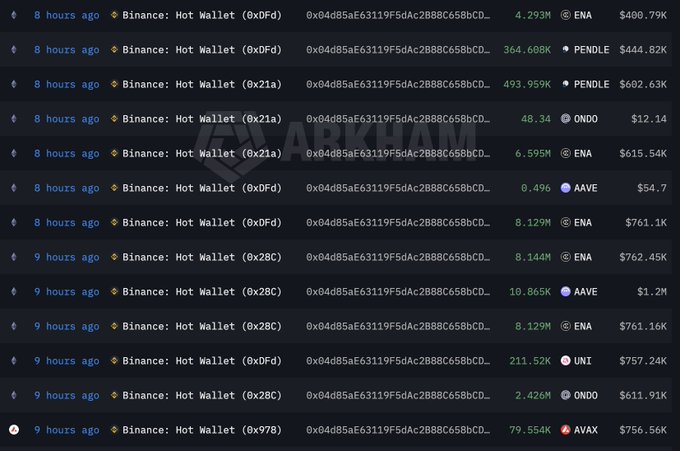
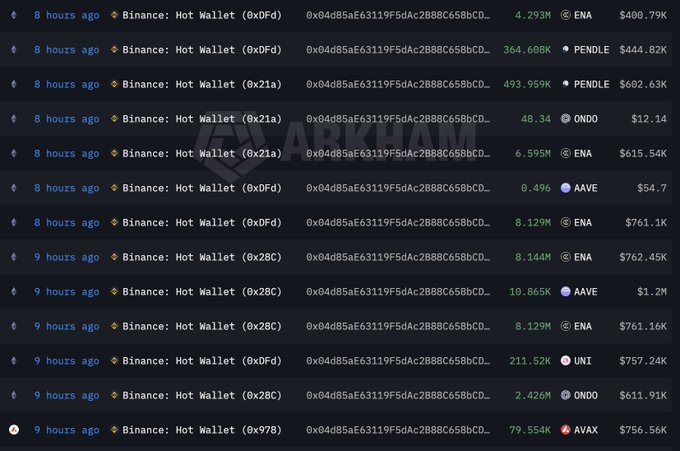
On the 24th of March 2026, whale 0x04d8 pulled $16.06 million from Binance.
Source: Lookonchain

The wallet loaded 43.49 million ENA valued at $4.07 million, 32,872 AAVE worth $3.64 million, 249,741 AVAX worth $2.37 million, 595,886 UNI worth $2.13 million, 8.07 million ONDO worth $2.05 million, and 1.49 million PENDLE valued at $1.81 million.

Was that random? No. The wallet leaned hard into DeFi-linked names. Therefore, this looked less like blind gambling and more like early positioning. Someone stepped into weakness while most of the market kept staring at broken charts and broken confidence.

Big bet lands on DeFi-linked names

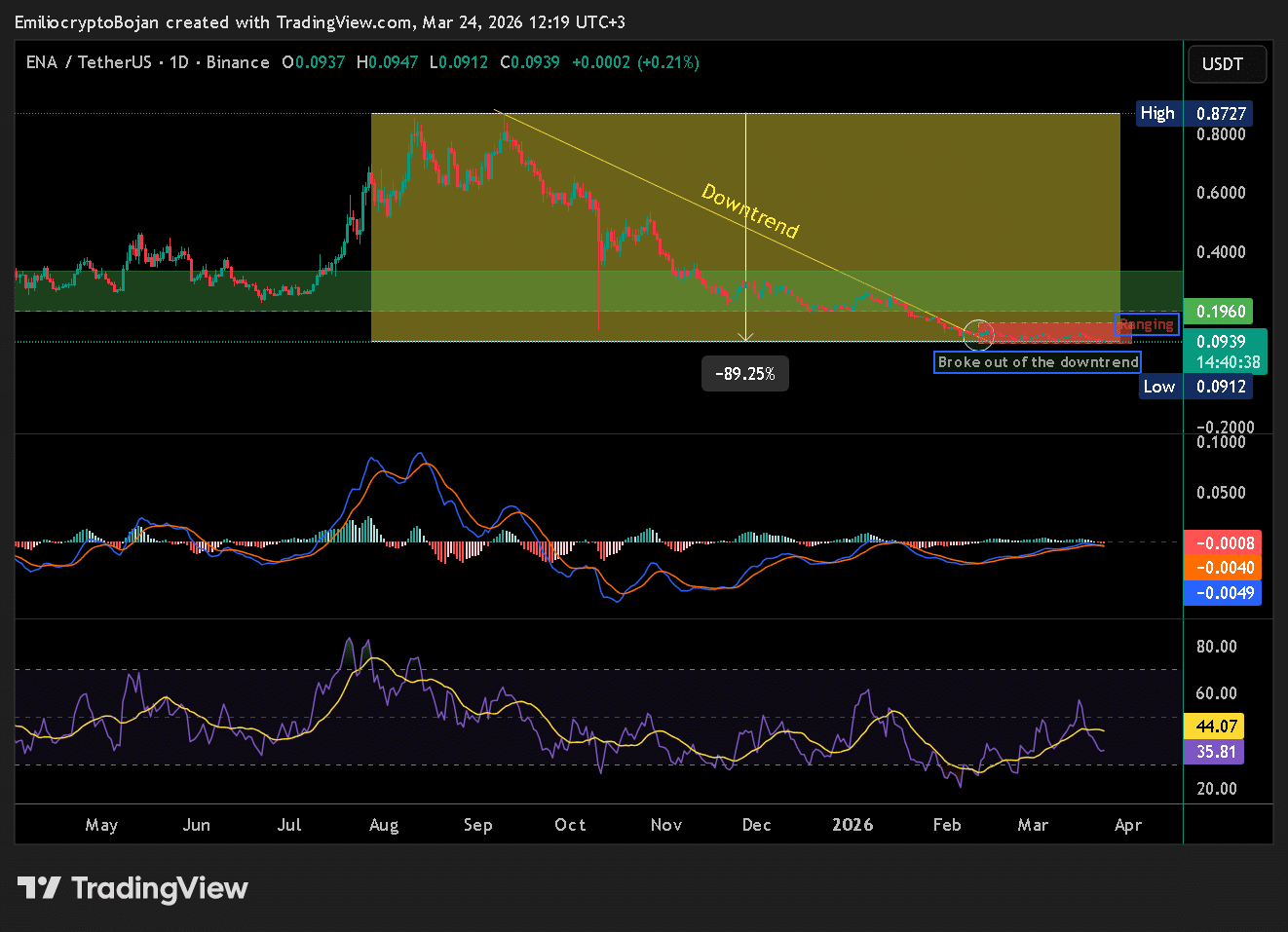
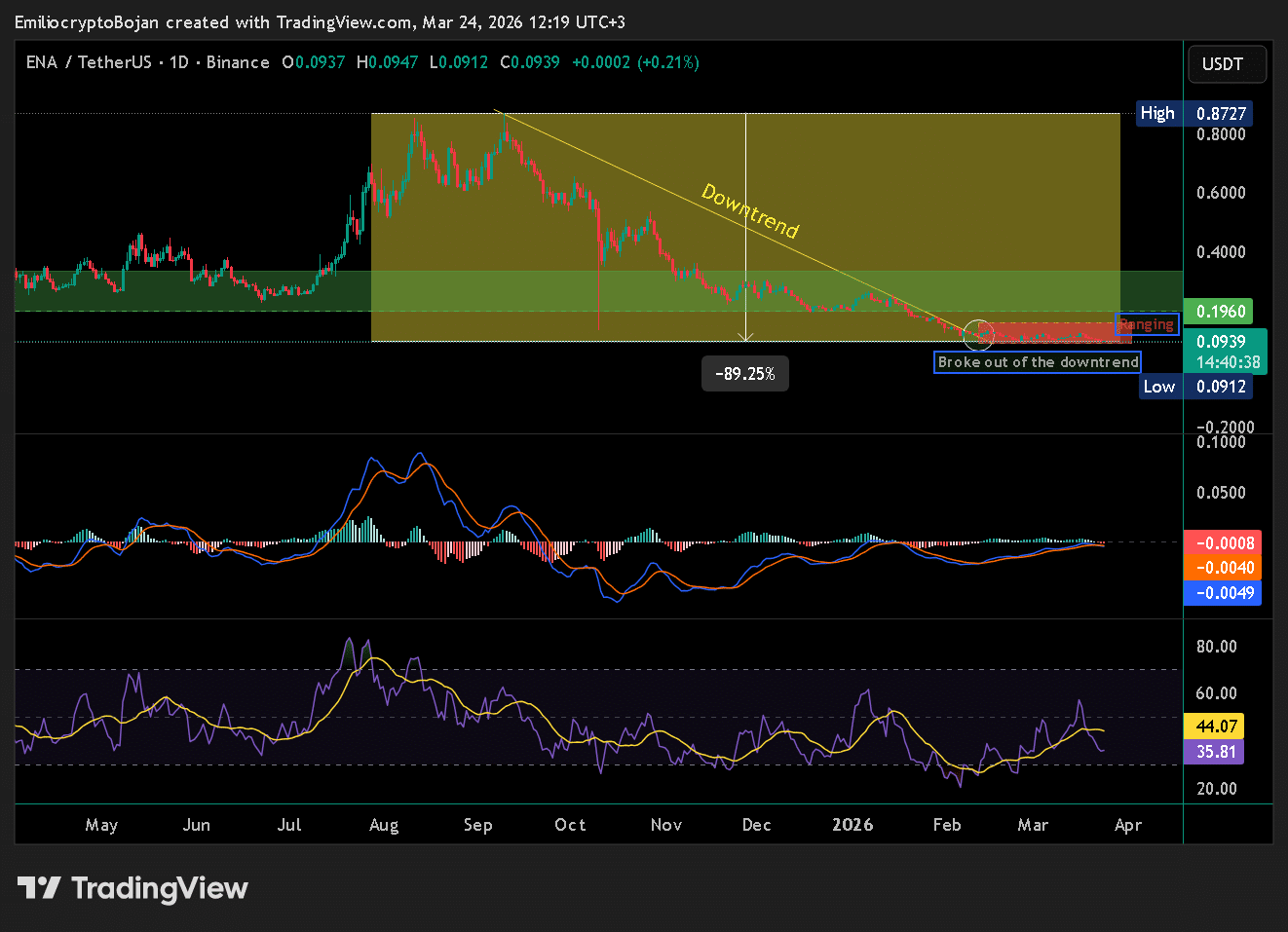
At press time, Ethena [ENA] had broken out of its downtrend after an 89% collapse from its 2025 high near $0.8727, then started ranging sideways near the lows.
Source: TradingView

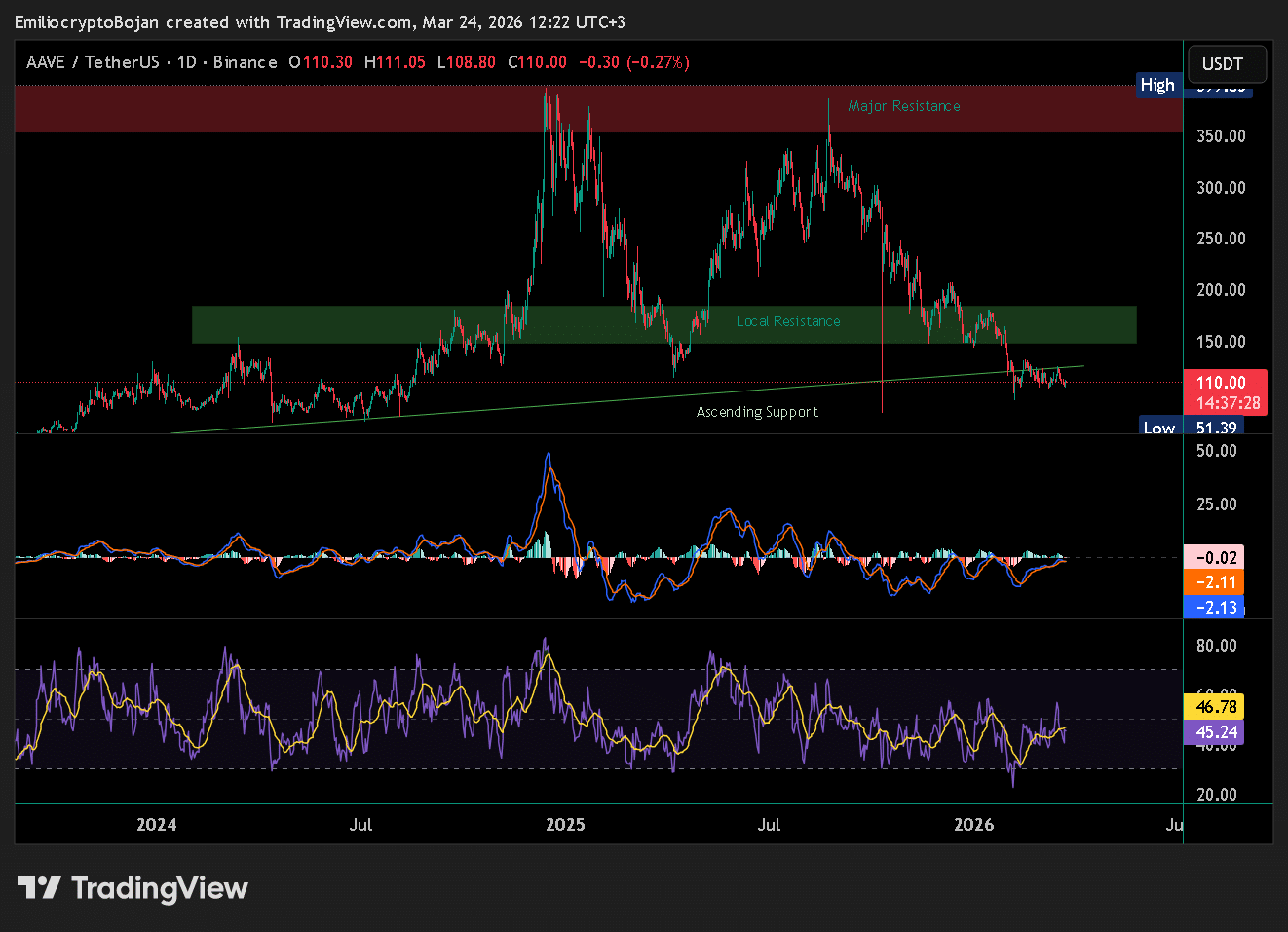
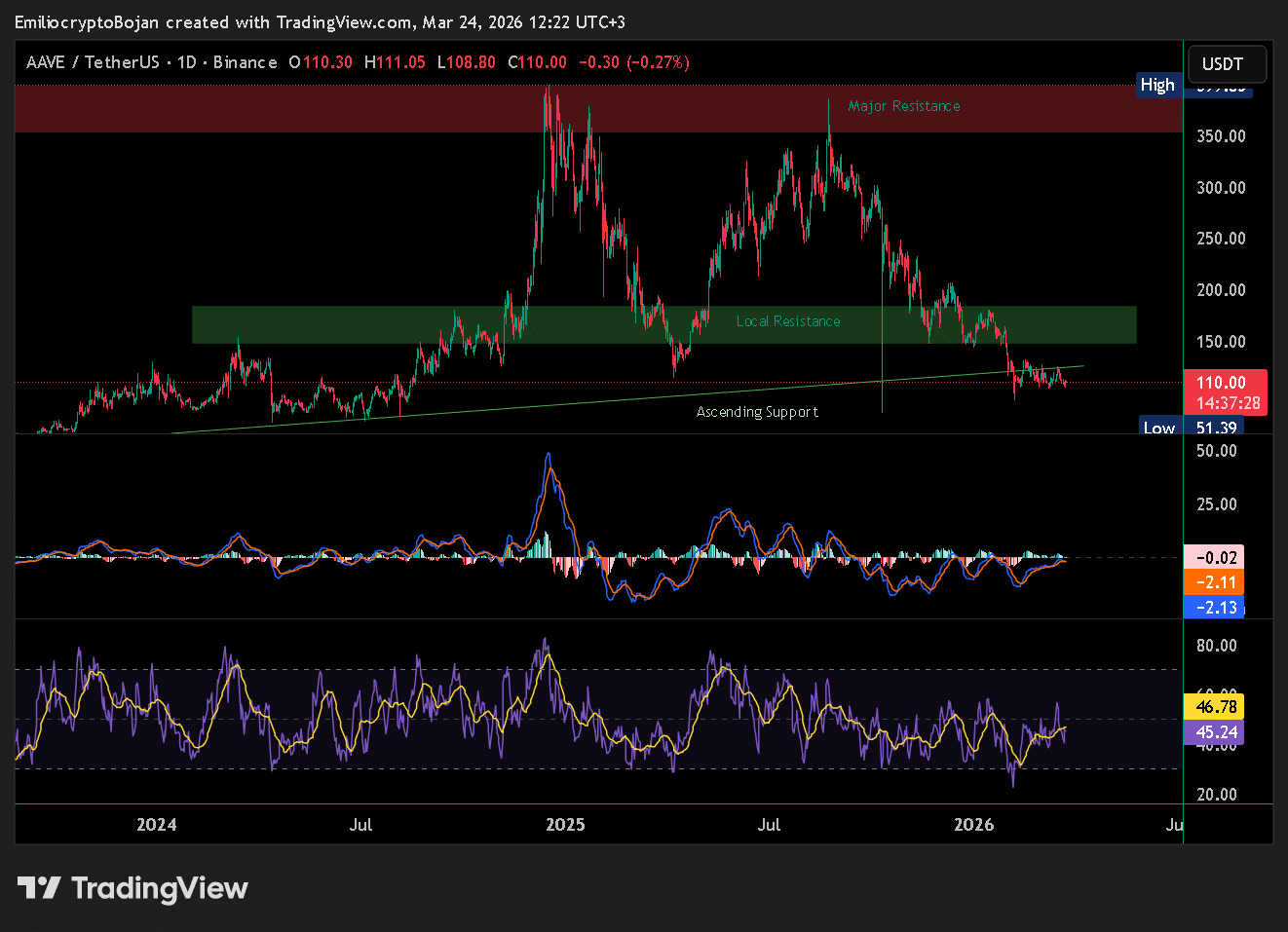
Aave [AAVE] showed signs of weakness. After peaking near 399 in 2024 and 387 later, it completed a double top, dropped hard, and even lost ascending support around 123.
Source: TradingView

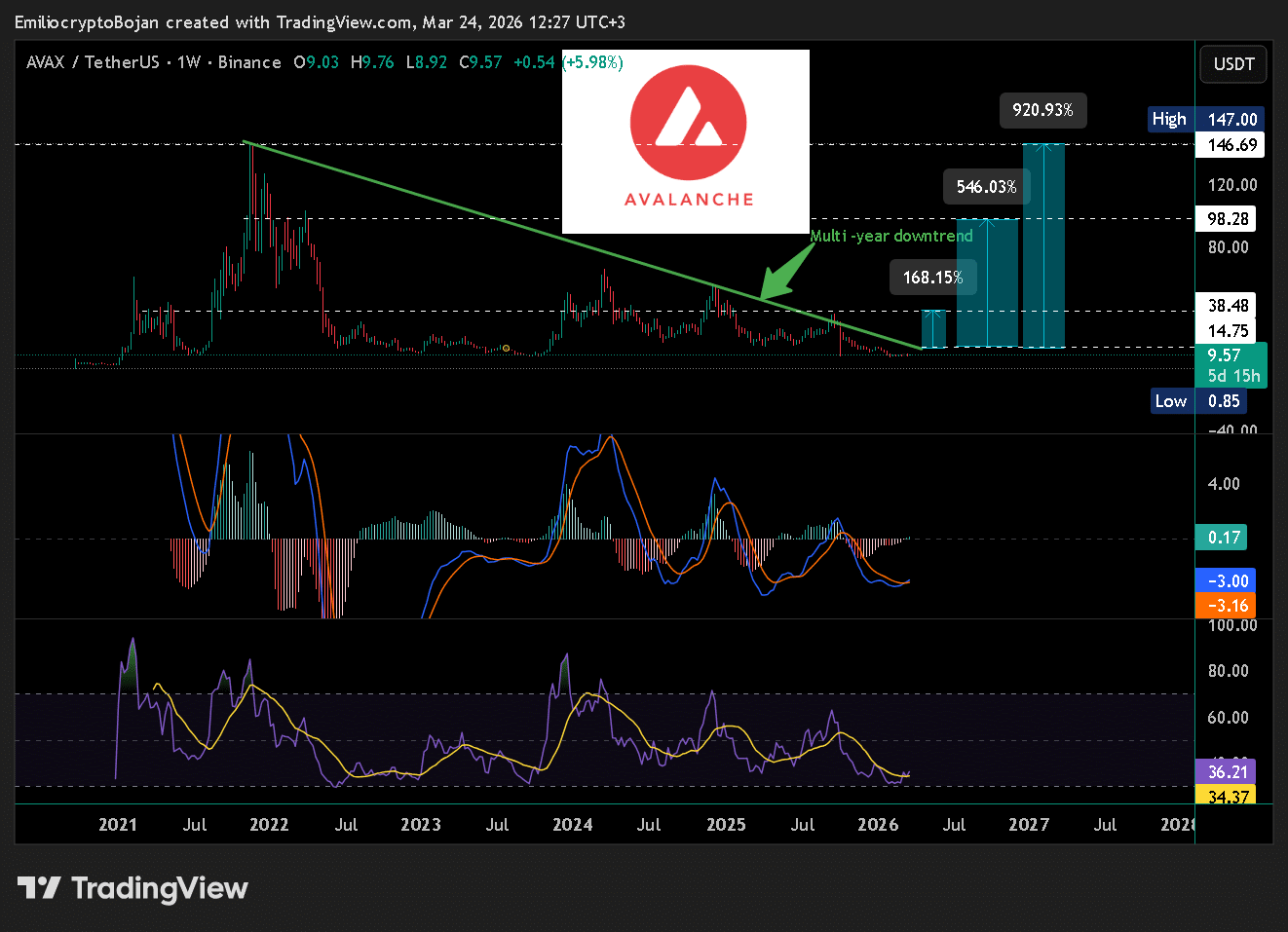
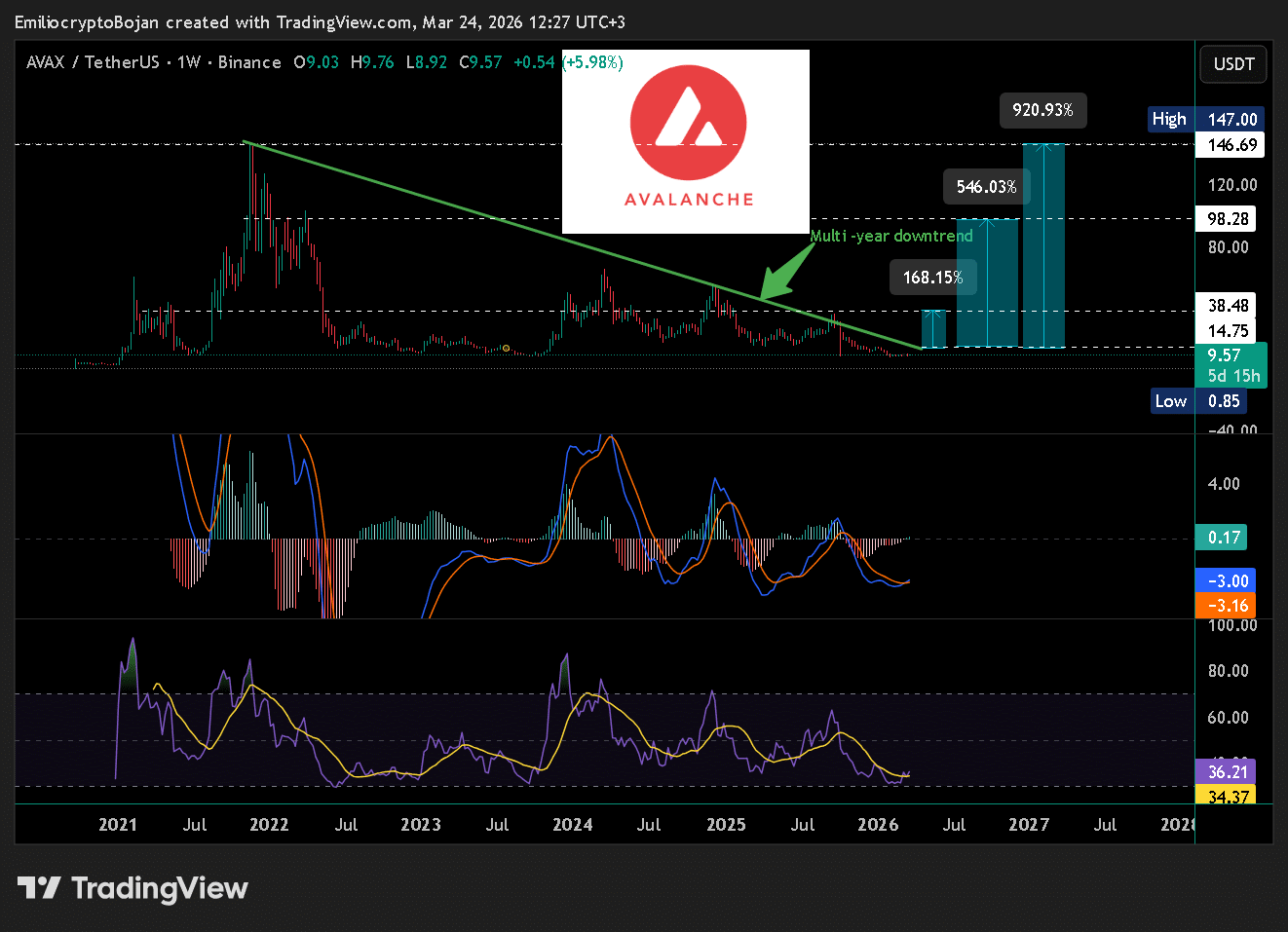
Avalanche [AVAX] looked more constructive. It had flashed a bullish MACD crossover and started pressing against a multiyear downtrend, with $14.75 and $38.48 as early targets if that line broke.
Source: TradingView

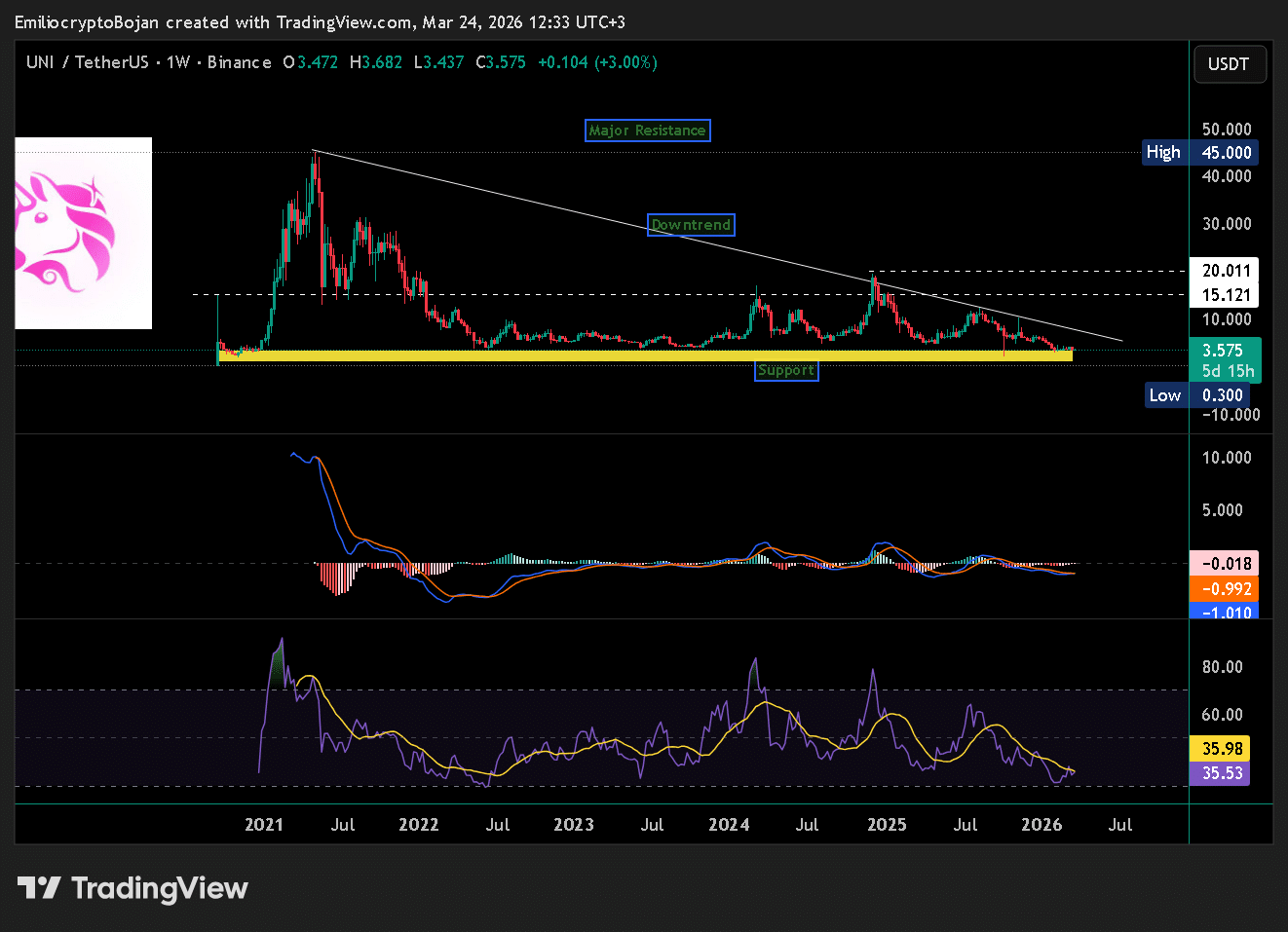
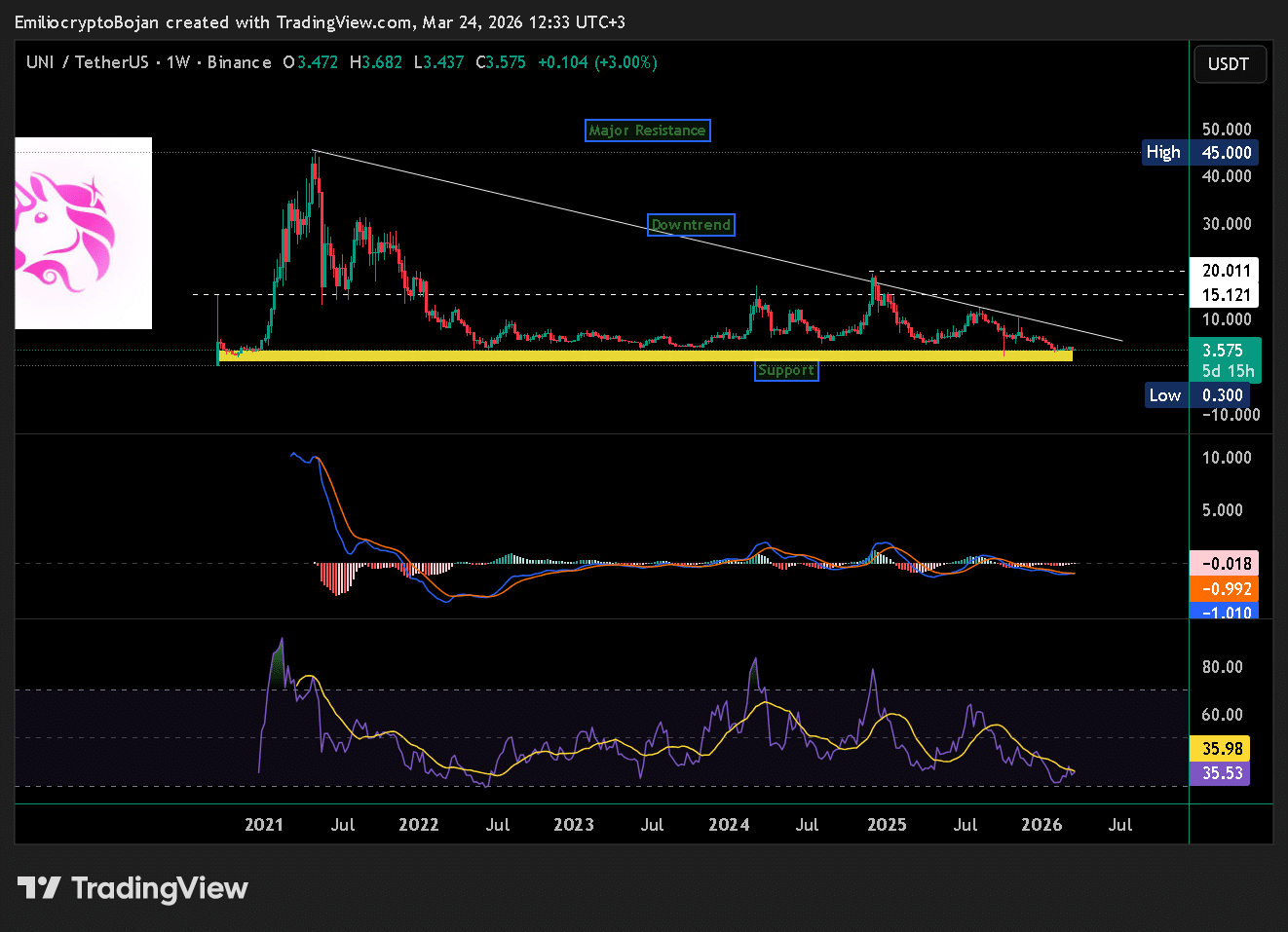
Uniswap [UNI] followed a similar script, still trading near support while leaning toward its own multiyear downtrend, with $15 and $20 standing out before any real test of $45.
Source: TradingView

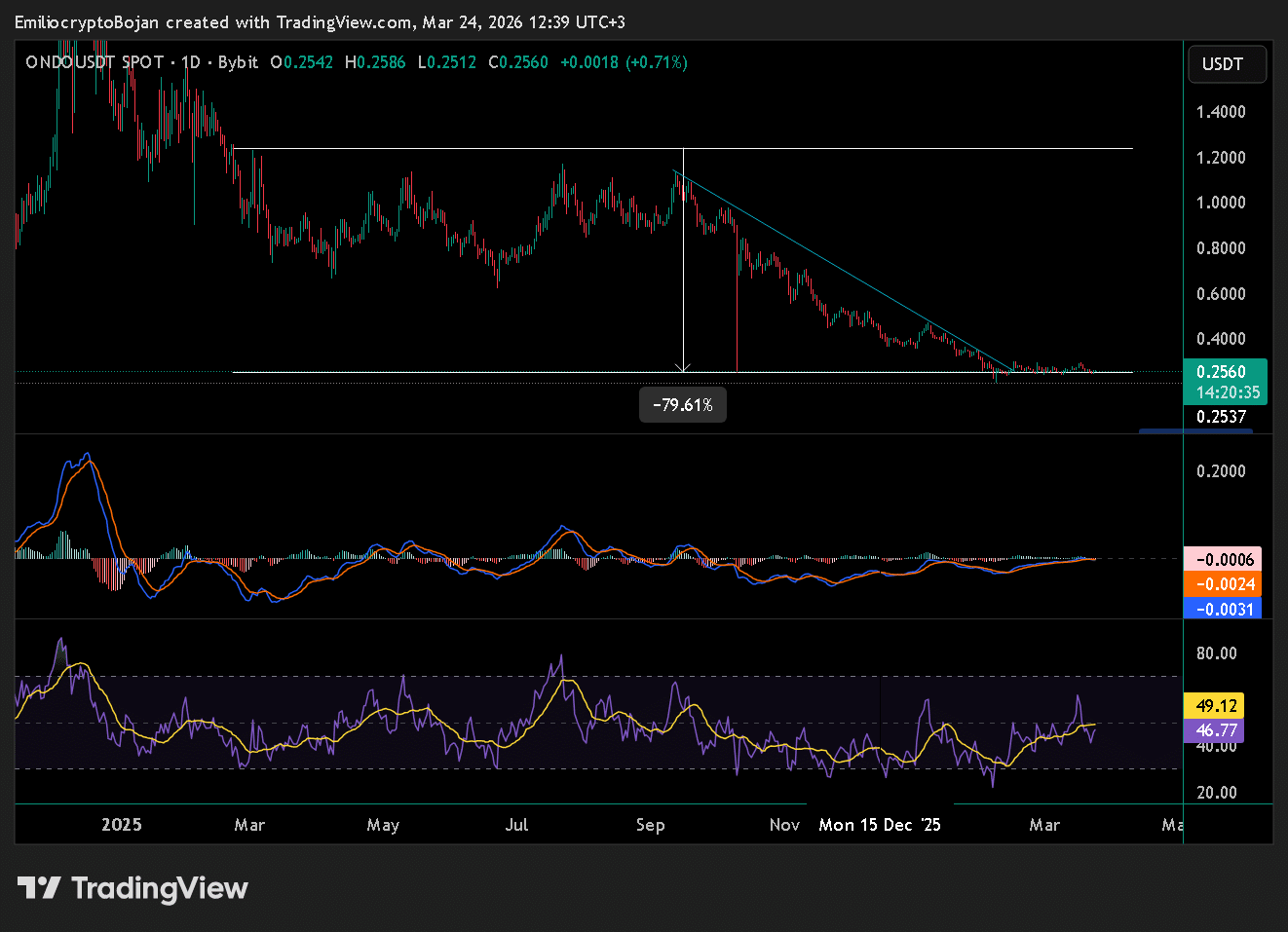
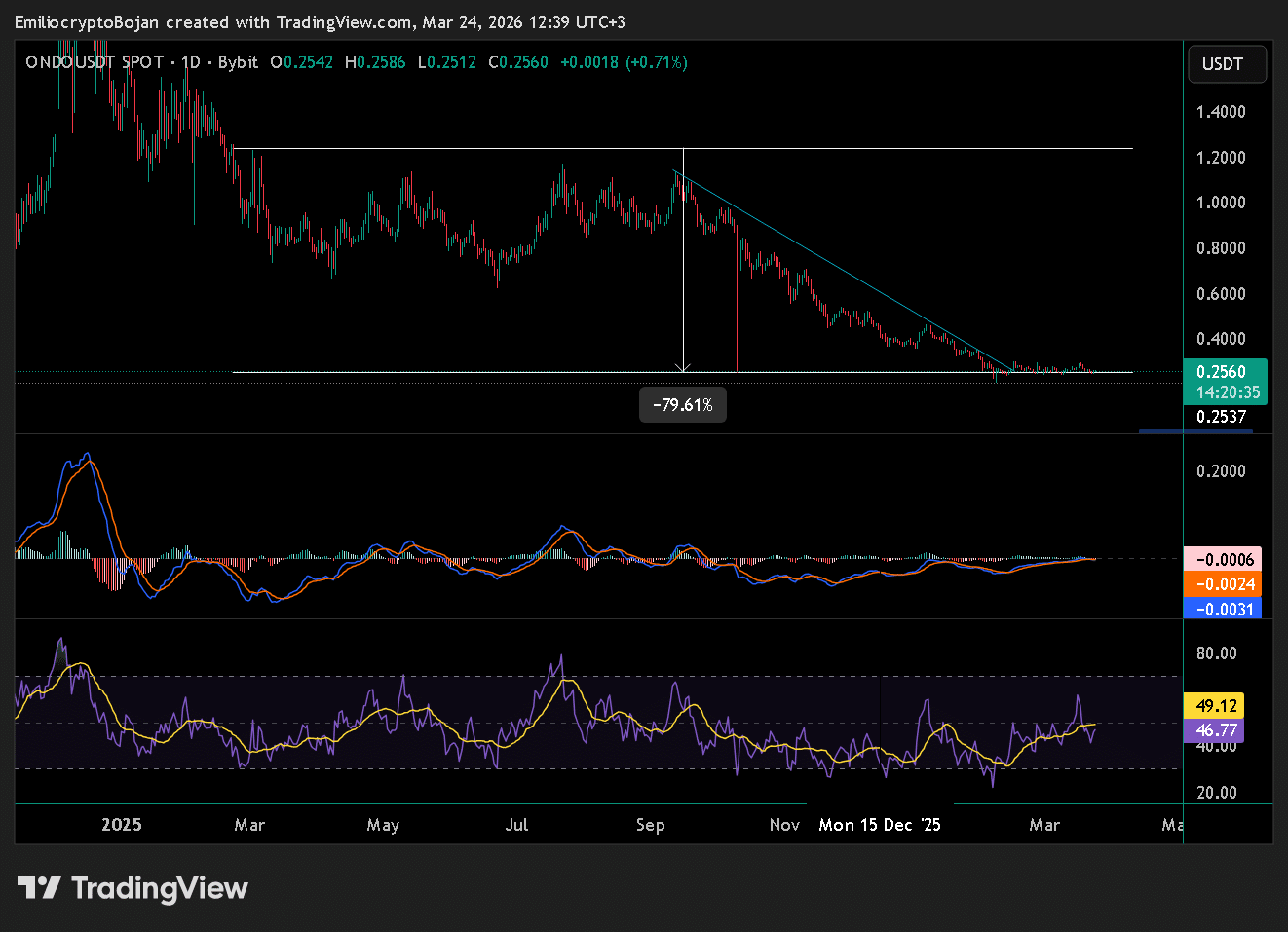
Ondo [ONDO] had already broken out of its downtrend after a 78%+ drawdown from its 2025 high and then moved sideways.
Source: TradingView

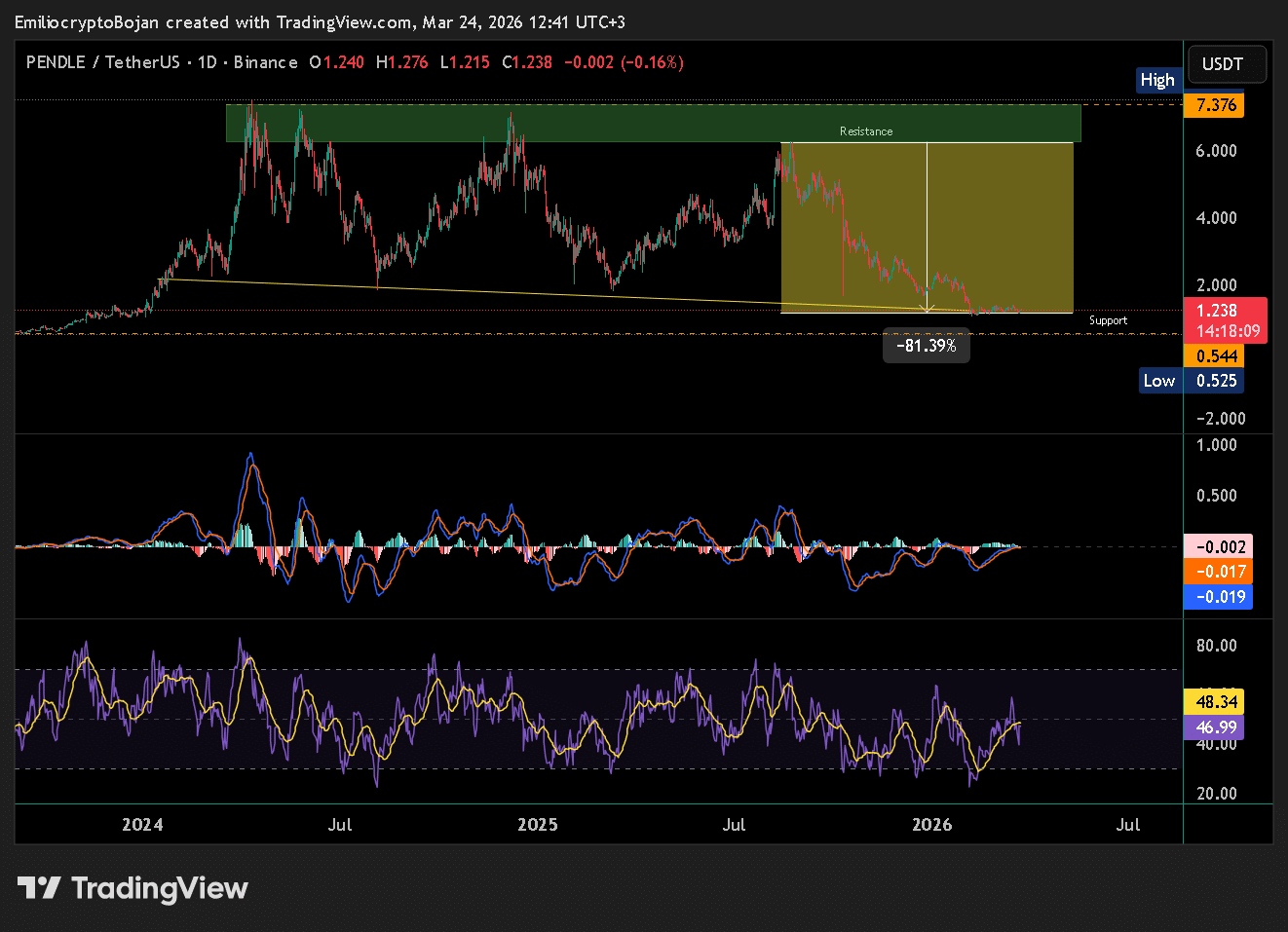
Pendle [PENDLE] stayed above the $1 support zone, while lower-timeframe momentum started picking up.
Source: TradingView

Even so, most of these names were still trading more than 80% below their 2025 highs.

Is a DeFi rotation about to begin?

Was this the sign of a DeFi rotation? Not yet. One wallet did not repair a market that had punished altcoin holders for years. However, these were the kind of withdrawals whales made near bottoms, not tops.

The real takeaway is that the wallet bought into altcoin weakness. If these assets continue to hold sideways and begin reclaiming structure, talk of a DeFi rotation will quickly stop sounding premature.


Final Summary

  • This whale targeted damaged DeFi names at depressed levels, and that made the move serious.
  • If structure kept improving across this basket, the market could be witnessing early rotation.

Пов'язані питання

QWhat specific altcoins did the whale purchase with the $16 million withdrawn from Binance, and what were their respective values?

AThe whale purchased 43.49 million ENA ($4.07M), 32,872 AAVE ($3.64M), 249,741 AVAX ($2.37M), 595,886 UNI ($2.13M), 8.07 million ONDO ($2.05M), and 1.49 million PENDLE ($1.81M).

QAccording to the article, what common characteristic did all of the purchased tokens share?

AAll of the purchased tokens were DeFi-linked names, indicating the whale was making a targeted bet on the decentralized finance sector.

QWhat was the technical condition of Avalanche (AVAX) at the time of the article, and what were its potential price targets?

AAvalanche (AVAX) had flashed a bullish MACD crossover and was pressing against a multiyear downtrend. The early price targets if the downtrend broke were $14.75 and $38.48.

QDoes the article conclude that a DeFi market rotation is definitively underway based on this single whale's action?

ANo, the article states that one wallet does not repair a market and that it is not yet a sign of a DeFi rotation. However, it notes that these are the types of withdrawals whales make near bottoms.

QWhat is the key takeaway from the whale's investment strategy as described in the final summary?

AThe key takeaway is that the whale targeted damaged DeFi names at depressed levels, making the move serious. If the price structure improves across this basket of tokens, it could signal an early stages of a market rotation.

Пов'язані матеріали

Who Will Define the Rules of the AI Era? Anthropic Discusses the 2028 US-China AI Landscape

This article, based on Anthropic's analysis, outlines the intensifying systemic competition between the U.S./allies and China for AI leadership by 2028. It argues that access to advanced computing power ("compute") is the critical bottleneck, where the U.S. currently holds a significant advantage through chip export controls and allied innovation. However, China's AI labs remain competitive by exploiting policy loopholes—via chip smuggling, overseas data center access, and "model distillation" attacks to copy U.S. model capabilities—keeping them close to the frontier. The piece presents two contrasting scenarios for 2028. In the first, decisive U.S. action to tighten compute controls and curb distillation locks in a 12-24 month AI capability lead, cementing democratic influence over global AI norms, security, and economic infrastructure. In the second, policy inaction allows China to achieve near-parity through continued access to U.S. technology, enabling Beijing to promote its AI stack globally and integrate advanced AI into its military and governance systems, altering the strategic balance. Anthropic contends that maintaining a decisive U.S. lead is essential for shaping safe AI development and governance. The core recommendation is for U.S. policymakers to urgently close compute and model access loopholes while promoting global adoption of the U.S. AI technology stack to secure a lasting strategic advantage.

marsbit1 год тому

Who Will Define the Rules of the AI Era? Anthropic Discusses the 2028 US-China AI Landscape

marsbit1 год тому

“Why Didn’t You Buy 2x Long SK Hynix?”

The article discusses the immense popularity of the "2x Long SK Hynix ETF" (07709.HK) in Hong Kong, which became the world's largest single-stock leveraged ETF by May 2026. Launched in October 2025, the ETF's net value soared over 1000% in seven months, significantly outperforming the 324% gain of SK Hynix's underlying stock, driven by the AI boom and a critical shift in industry demand from computing power to memory. It highlights the mechanics and risks of daily-rebalanced leveraged ETFs. In a smooth bullish market, they generate amplified returns, but during volatile periods—exemplified by market swings during geopolitical tensions in the Strait of Hormuz in March-April 2026—they suffer severe "volatility decay," where choppy price action can cause losses far exceeding twice the drop of the underlying asset. The piece frames SK Hynix, as NVIDIA's primary HBM supplier, within the classic cycle of the memory chip industry—a commoditized sector prone to boom-and-bust cycles of shortage, price hikes, overcapacity, and crashes. While current AI-driven demand and high margins (Q1 2026毛利率~79%) create a "super cycle," the article questions its sustainability. It warns that extreme profits will inevitably tempt competitors like Samsung and Micron to ramp up HBM production, potentially eroding scarcity. Furthermore, the entire narrative remains tethered to the massive AI capital expenditure of tech giants. In conclusion, the ETF's trajectory symbolizes the accelerated, all-in nature of the current AI revolution, where timeframes are compressed and market moves are extreme. However, it also underscores that while industry trends define ultimate returns, macro-geopolitical risks dictate the volatile and uncertain path to get there.

marsbit1 год тому

“Why Didn’t You Buy 2x Long SK Hynix?”

marsbit1 год тому

a16z Crypto: A Guide to the CLARITY Act for Crypto Entrepreneurs

The CLARITY Act, a bipartisan crypto market structure bill, has advanced through the Senate Banking Committee, marking a potential historic shift in U.S. digital asset regulation. For years, a lack of clear rules has stifled innovation, pushed development overseas, and exposed consumers to risk. This bill aims to establish a comprehensive framework, providing long-needed regulatory clarity for blockchain networks and digital assets. It builds upon previous legislative efforts like FIT21 and the House version of CLARITY, which gained strong bipartisan support. CLARITY is crucial because it recognizes that blockchain networks are fundamentally different from traditional companies. Networks operate through decentralized, shared rules rather than centralized control. Applying corporate legal frameworks to networks forces them into a centralized model, concentrating power and value. In contrast, decentralized blockchain networks can function as user-owned public infrastructure, distributing value more equitably among participants. The bill seeks to enable the safe launch of networks in the U.S., clarify regulatory jurisdiction between the SEC and CFTC, oversee crypto exchanges, and enhance consumer protections. Its passage would align U.S. law with the nature of decentralized technology, allowing builders to operate transparently and fund projects domestically without structural compromises due to regulatory uncertainty. Similar to the positive impact seen after the stablecoin-focused GENIUS Act, CLARITY could unlock a new wave of innovation, helping the U.S. reclaim leadership in the crypto space while combating fraud and abuse.

链捕手1 год тому

a16z Crypto: A Guide to the CLARITY Act for Crypto Entrepreneurs

链捕手1 год тому

Торгівля

Спот
Ф'ючерси
活动图片