# Пов'язані статті щодо USDC

Центр новин HTX надає останні статті та поглиблений аналіз на тему "USDC", що охоплює ринкові тренди, оновлення проєктів, технологічні розробки та регуляторну політику в криптоіндустрії.

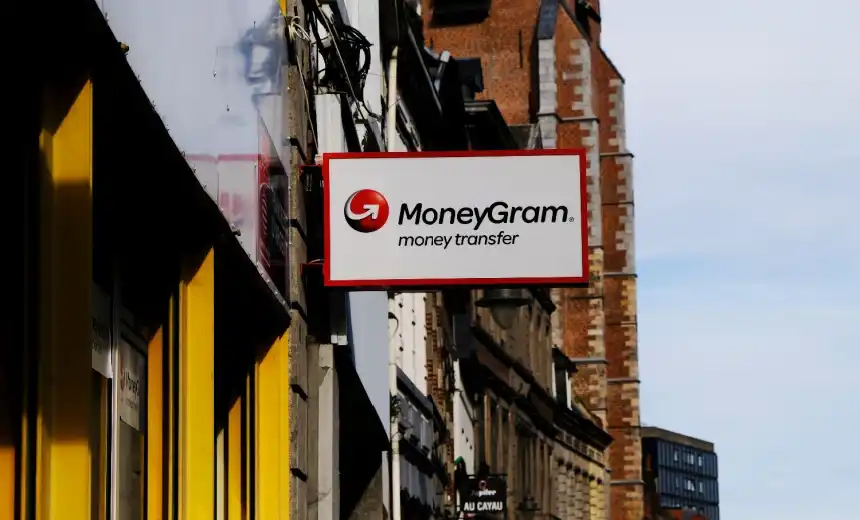
The Last Mile of Stablecoins: MoneyGram Connects Crypto Wallets to Cash Outlets in Over 170 Countries

Stablecoins have revolutionized cross-border payments with speed and low cost, but a fundamental barrier remains: converting digital money into physical cash in most parts of the world. On August 11th, global remittance giant MoneyGram announced its "MoneyGram Ramps" crypto-cash service is now live on the Solana blockchain. This allows developers, via a simple API, to connect their applications to MoneyGram's network of nearly 500,000 cash agent locations across over 170 countries. Users can now walk into a local MoneyGram agent to convert their USDC into local currency cash or use cash to purchase USDC for their wallets. Solana wallet Rift is the first to integrate the service. MoneyGram, founded in 1940 and historically second only to Western Union in global remittance volume, was privatized in 2023. Since then, it has accelerated its shift into a fintech platform, opening its compliance capabilities, cash network, and settlement infrastructure as services for developers. Its involvement with crypto is not new, having previously partnered with Ripple, Stellar, and Circle, and even issuing its own stablecoin, MGUSD, on Stellar in 2026. The Ramps API solves a critical physical obstacle to stablecoin adoption. While a USDC transfer from New York to Lagos takes seconds and costs cents on-chain, the recipient often lacks a bank account to access the funds. MoneyGram's extensive physical agent network, prevalent in regions like Sub-Saharan Africa, Southeast Asia, and Latin America, bridges this gap, connecting on-chain dollars to the offline cash-based economy. No crypto-native company could replicate this network quickly. MoneyGram chose Solana for its multi-chain expansion due to its extremely low transaction fees (often less than a cent) and fast confirmation times, making it ideal for small-value, frequent remittances. Solana's developer ecosystem is also geared toward consumer-facing applications. This partnership represents a pragmatic path for stablecoins in everyday remittances. Users don't need to understand blockchain or have a bank account; they simply visit a trusted local agent. The underlying settlement shifts from SWIFT to Solana, but the user experience remains familiar. The true path to stablecoin adoption is being paved by an 85-year-old remittance company, using its physical network to solve the "last mile" problem for crypto.

marsbit08/12 04:31
The Last Mile of Stablecoins: MoneyGram Connects Crypto Wallets to Cash Outlets in Over 170 Countries

marsbit08/12 04:31

Understanding Crypto Payment Cards in 5 Charts: Stablecoins Move from On-Chain to Real-World Spending

5 Charts to Understand Crypto Payment Cards: Stablecoins Move from On-Chain to Real-World Spending Stablecoins are increasingly used for everyday purchases through crypto payment cards, a sector now processing over $750 million monthly. These cards allow users to spend cryptocurrencies at any merchant accepting traditional card networks, with the crypto (primarily stablecoins) instantly converted to fiat currency at checkout. Merchants receive standard payments. Users don't necessarily need a bank account. Some products require holding stablecoins with the issuer, while others work directly with self-custody wallets. These cards provide global access to USD-denominated services. Data shows monthly transaction volume reached $759 million in July 2026, a 2.5x increase from $306 million a year prior, with nearly 9 million transactions that month. The average transaction value is about $86. Initially concentrated on Gnosis Chain (home to Gnosis Pay, the first Visa card linked to a self-custody wallet), transaction volume has diversified across blockchains. As of July, Optimism leads with 29%, followed by Solana and Base at 19% each, while Gnosis Chain has fallen to 2%. Euro-pegged stablecoins, once dominant (88% in early 2024), now represent only 2% of volume. Dollar-pegged stablecoins USDC and USDT now lead, accounting for 58% and 26% of transactions respectively. While still small compared to traditional card networks, the sector is growing rapidly. It leverages existing infrastructure, with nearly all covered products operating on the Visa network. Regulatory developments like the GENIUS Act have contributed to this acceleration.

marsbit08/10 04:40

Understanding Crypto Payment Cards in 5 Charts: Stablecoins Move from On-Chain to Real-World Spending

marsbit08/10 04:40

How Does Circle Incentivize USDC Distribution Channels? From the Hyperliquid Collaboration and On-Chain 9:1 Attribution

How Circle Incentivizes USDC Distribution Channels: Insights from Hyperliquid Partnership and 9:1 On-Chain Allocation Circle employs economic incentives to drive USDC growth, product development, and distribution. The company has signed distribution partnership agreements with over 150 firms, offering tailored incentives for key channels that substantially expand USDC usage. For major partnerships, Circle can co-design arrangements with Coinbase. Their revenue-sharing model for off-platform USDC allocates 50% of the net "Ecosystem Economic Interest" to each after approved third-party incentives. The Hyperliquid partnership illustrates this framework, involving Coinbase, Circle, and Hyperliquid. At quarter-end, approximately 90% of Hyperliquid's USDC reserves were allocated to Coinbase's platform and 10% to Circle's platform, observable on-chain via specific addresses maintaining this ~9:1 balance. However, this allocation ratio represents fund attribution for accounting purposes and does not disclose the precise final revenue split among the three parties, which remains confidential. In summary, Circle's channel incentive program is a long-standing strategy to expand USDC's distribution scale collaboratively with partners, with significant cases like Hyperliquid demonstrating the operational model despite undisclosed exact profit-sharing terms.

marsbit08/08 14:56

How Does Circle Incentivize USDC Distribution Channels? From the Hyperliquid Collaboration and On-Chain 9:1 Attribution

marsbit08/08 14:56

活动图片