# Пов'язані статті щодо Narratives

Центр новин HTX надає останні статті та поглиблений аналіз на тему "Narratives", що охоплює ринкові тренди, оновлення проєктів, технологічні розробки та регуляторну політику в криптоіндустрії.


L1 Value Capture Shrinks Significantly, ETH, SOL, HYPE Struggle to Return to Price Peaks

This analysis examines the structural decline in fee-based revenue capture by Layer 1 (L1) blockchains, arguing that high transaction fees are systematically eroded by innovation, making them unsustainable as a primary valuation driver. Bitcoin’s fee spikes during congestion periods (e.g., 2017 and 2021 rallies) were rapidly mitigated by scaling solutions like SegWit, batching, and the Lightning Network. By 2025, daily fees fell to just $300k, under 1% of miner revenue, despite higher USD transaction volumes. Ordinals and Runes provided brief fee surges but were short-lived. Ethereum’s DeFi and NFT booms drove quarterly fees to $4.3 billion in late 2021. However, competing L1s and L2 rollups (e.g., Arbitrum, Optimism) diverted activity. The Dencun upgrade (EIP-4844) drastically reduced data costs for L2s, causing Ethereum’s L1 fee revenue to collapse by over 90% from its peak, falling below $15 million per quarter by late 2025. Solana’s revenue relies heavily on MEV and priority fees from memecoin trading, which peaked in early 2025. However, private AMMs (e.g., HumidiFi) and off-chain order flow (e.g., Hyperliquid’s HyperCore) have captured over 50% of DEX volume, reducing Solana’s MEV fees by more than 90% from their January 2025 highs. Hyperliquid currently dominates perps trading, earning $600 million in 2025, but its fee model (4.5 bps per trade) is vastly more expensive than traditional finance (e.g., CME). As institutional adoption grows, pressure to compress fees will intensify, challenging its token valuation. The report concludes that L1 tokens are increasingly weak as fee-capturing assets. Valuation drivers have shifted toward staking yields, ETF flows, RWA narratives, and macro liquidity—factors more tied to speculative demand than fundamental utility. Bitcoin remains an exception: its security depends not on fees but on continuous price appreciation to offset halvings, making its model uniquely fragile and narrative-dependent.

Odaily星球日报02/26 08:39

L1 Value Capture Shrinks Significantly, ETH, SOL, HYPE Struggle to Return to Price Peaks

Odaily星球日报02/26 08:39

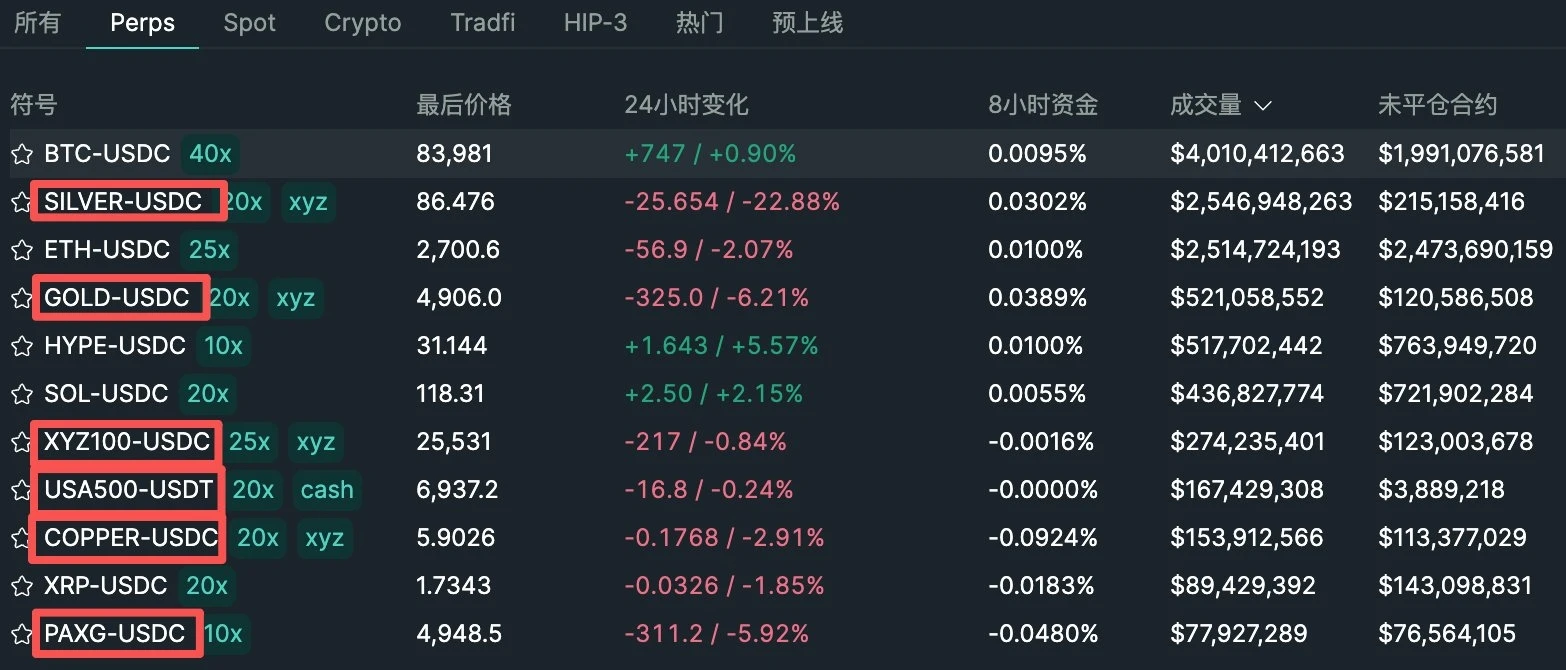
When Crypto Projects Run Out of Supply, What Can Traders Trade?

The article examines the severe downturn in the crypto market, particularly the sharp decline in Bitcoin and altcoin prices, and raises a critical question: what will traders be able to trade in a year if the supply of new crypto-native projects dries up? Data shows a structural collapse in early-stage funding for crypto projects (like L1s, L2s, DeFi), with a 63.9% drop in seed/angel rounds over four years. This "first-level market death" means fewer new tokens will launch, leaving exchanges and traders with a shrinking pool of native assets. Even established crypto funds are struggling with poor returns and low cash distributions post-2020. While memes surged as an alternative, they have evolved into short-term, attention-based assets driven by liquidity and speculation—not sustainable replacements for traditional altcoins. The industry is now looking outward for solutions: - **Tokenization of real-world assets (RWA)**: Platforms are listing tokenized stocks, metals, and indices to attract traders with traditional market volatility and narratives. - **Prediction markets**: Platforms like Polymarket are growing rapidly by allowing direct betting on real-world events (e.g., elections, macro trends), simplifying speculation to yes/no outcomes based on probability. In conclusion, as native project pipelines shrink, the market is shifting from "new token-driven trading" to speculating on external uncertainties and tradable narratives from the broader world. Traders must adapt to this new paradigm.

比推02/02 16:23

When Crypto Projects Run Out of Supply, What Can Traders Trade?

比推02/02 16:23

The Divergence in Value Logic Between Eastern and Western Crypto KOLs

The article explores the fundamental differences in value logic between Eastern and Western crypto KOLs. The author, drawing from experience with venture capitalists in both regions, observes that Eastern perspectives focus heavily on practical, tactical aspects of projects—such as revenue models, tokenomics, and operational logistics—treating crypto ventures like traditional businesses. In contrast, Western narratives prioritize grand, aspirational stories capable of promising 10x to 100x returns, often glossing over practical details to attract major capital. This divergence leads to opposing definitions of "key opinion." Eastern KOLs tend to deconstruct and critically analyze, while Western ones build on ambitious, high-concept narratives aimed at securing large-scale investments. The author notes that although the most influential narratives and capital formations often originate from the West (e.g., restaking, Rollup, FHE), many of the industry’s most profitable ventures (like CEXs, DEXs, payment systems) are dominated by Eastern players. Structural factors, such as lower capital costs in the West due to institutional backing, and cultural differences—Eastern societies being more pragmatic and battle-tested—contribute to this divide. The author concludes that Eastern KOLs shouldn’t be seen as "degenerate" but as fundamentally oppositional in approach. Success, they argue, lies in challenging Western narratives with Eastern value logic, forcing the global conversation to engage with a more grounded, critical perspective.

marsbit01/16 10:06

The Divergence in Value Logic Between Eastern and Western Crypto KOLs

marsbit01/16 10:06

Scrolling Through Crypto Twitter, But No More Profit Opportunities

The article "Scrolling Through Crypto Twitter, But No More Profit Effect" discusses the transition into the "Post-Crypto Twitter (CT)" era, where CT—as a mechanism for market discovery and capital allocation—is losing its ability to repeatedly generate significant market-wide events. CT previously functioned by compressing three key market functions into one interface: narrative discovery (creating shared focus and converting attention into common knowledge), trust routing (enabling informal reputation-based capital allocation), and reflexivity (where narratives drive prices, which in turn validate and amplify narratives). This allowed a "monoculture" to form around simple, widely understood "toys" or narratives that coordinated the entire ecosystem. However, the Post-CT era has emerged due to several failures: "toys" are industrialized and exploited faster, reducing inefficiency windows and concentrating profits; value extraction overwhelms value creation, leading to widespread cynicism; and attention has fragmented across niches, weakening shared context and synchronized liquidity flows. CT is not dead but has evolved from an engine driving market-wide coordination to an interface layer. Real capital allocation now occurs more in high-trust, private "subgraphs" (e.g., closed groups), while CT serves as a surface for signals and narratives. The author argues that the era of CT reliably coordinating the entire market around a single meta-narrative and creating broad, nonlinear returns is over, though the industry continues with shifted dynamics.

比推01/08 03:01

Scrolling Through Crypto Twitter, But No More Profit Opportunities

比推01/08 03:01

活动图片