The Sense of Contrast: The Core Element That Makes Web3 Narratives Stand Out?

比推Опубліковано о 2025-12-29Востаннє оновлено о 2025-12-29

Анотація

The article "The Sense of Contrast: The Core Element That Makes Web3 Narratives Stand Out?" argues that the key to compelling Web3 storytelling is not necessarily creativity, but the effective use of contrast. Many Web3 creators produce content that is too straightforward—listing features, data, and benefits—which fails to engage the audience. The brain is activated by unexpected changes, not linear information. Contrast, defined as a shift or transformation (e.g., from "before" to "after," or from "expectation" to "reality"), creates memorable moments and makes content relatable. The author provides an example: instead of stating "Solana is fast and cheap," a narrative with contrast would describe the personal experience of a transaction completing almost instantly. This approach often requires admitting past mistakes or uncertainties, which feels uncomfortable but builds authenticity and connection with the audience. To incorporate contrast, creators should ask what changed in their story and include elements like a former false assumption, a moment of hesitation, or an unexpected outcome. In the noisy Web3 space, contrast helps content stand out through genuine transformation rather than loud promotion.

Author:Noir

Compiled by: Deep Tide TechFlow

Original title: Today in Web3 Narratives, Everyone Loves the Sense of Contrast


Most Web3 content creators think they are not good at storytelling because they feel they "lack creativity."

But friend, that is usually not the real issue.

In fact, the real problem is:

—Your content lacks contrast.

Hey, either the content:

sounds the same,

feels flat,

or has no variation.

And when nothing changes, there is no story to tell.

What is Contrast?
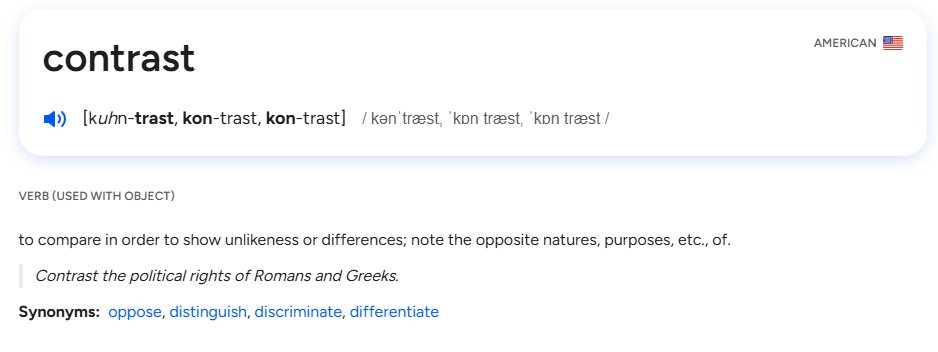
Contrast actually refers to something being different from what came before.

Yes, it's that simple.

It doesn't require:

flowery language,

surprising plot twists,

or background music.

Essentially, contrast is a transformation, such as:

from "before" to "after"

from "expectation" to "reality"

from "belief" to "realization"

Without this transformation, your content is just information.

Yes, maybe it's useful, but memorable? Hmm... unlikely.

Why does a lack of contrast make content weak?

The Web3 world is full of:

features, data, promises, roadmaps......

But most content is presented too straightforwardly:

"This is what it does."

"These are its benefits."

"This is why you should care about it."

However, the brain isn't interested in this linear information.

It wakes up when something unexpected happens.

Why Content Loses Appeal Without Contrast

The Web3 world is flooded with:

features, data, promises, roadmaps......

But most content is presented too directly:

"This is its function."

"Why it's good."

"Why you need to care about it."

However, the brain isn't activated by this straight-line information.

It only wakes up when something unexpected occurs.

A Simple Example of "Contrast"

(You must have seen it countless times)

Expression without contrast:

Solana's transactions are fast and cheap.

Your brain responds: Okay... so what?

Expression with contrast:

I clicked send, switched pages, and then realized the transaction was already completed.

The same idea, but with a completely different impact.

The second expression creates a "moment." Got it?

Why Does "Contrast" Feel Uncomfortable?

(And why this matters)

Contrast often requires you to admit:

You were wrong, you were confused, you underestimated something.

That's why most people avoid it.

But this discomfort is precisely what makes content feel authentic.

People don't like flawless things.

They connect more easily with resonance and vulnerability.

When someone thinks: "Wait... I've felt that way too."

Congratulations, you've succeeded.

How to Add "Contrast" to Your Content?

Before publishing, ask yourself one question:

"What changed here?"

If you can't answer, try adding:

  • A mistaken assumption you once had

  • A moment of hesitation

  • An unexpected result

  • A "small decision" you almost didn't make

It really doesn't require a dramatic plot.

You just need a little relatable change.

Weirdo's Summary

Don't get me wrong, creativity does play an important role in storytelling.

But not everyone is naturally creative. This article is specifically for those who truly want to learn storytelling techniques.

Its core lies in: being sincere enough to show "transformation."

In the complex and noisy world of Web3,

"Contrast" is the way to stand out without having to shout.

Remember to follow me, or else you'll...


Twitter:https://twitter.com/BitpushNewsCN

BitPush TG Group:https://t.me/BitPushCommunity

BitPush TG Subscription: https://t.me/bitpush

Original link:https://www.bitpush.news/articles/7598938

Трендові криптовалюти

Пов'язані питання

QWhat is the core element that the article suggests makes Web3 narratives stand out?

AThe article suggests that 'contrast' is the core element that makes Web3 narratives stand out.

QAccording to the article, what is the simple definition of 'contrast' in storytelling?

AThe article defines 'contrast' simply as something that is different from what came before it, representing a shift or transformation.

QWhy does the lack of contrast make content uninteresting, as explained in the article?

AThe lack of contrast makes content uninteresting because the human mind is not engaged by straightforward, linear information; it is awakened when something unexpected happens.

QWhat is an example the article gives to demonstrate a narrative with contrast about Solana?

AThe article contrasts a flat statement ('Solana's transactions are fast and cheap') with a narrative that creates a 'moment': 'I clicked send, switched pages, and then realized the transaction was already complete.'

QWhy is the discomfort of admitting being wrong or confused important for creating effective content?

AThis discomfort is important because it makes the content feel authentic and relatable, allowing people to connect with vulnerability and shared experiences rather than perfection.

Пов'язані матеріали

Stocks Fell Even More Violently Than Crypto, Where Did the Money Go?

From June to late July 2026, global stock markets, particularly technology and semiconductor stocks, experienced severe declines, with South Korea's KOSPI index facing historic circuit breakers and shedding 40% from its June peak. Key catalysts included SK Hynix's earnings miss despite record profits and competitive pressures from China's CXMT IPO. A global forced deleveraging event unfolded, devastating highly leveraged instruments like the 2x leveraged SK Hynix ETF, which lost over 80% of its value. Surprisingly, Bitcoin showed relative stability during this period, rising roughly 15% from its July low. The article clarifies this wasn't due to an inflow of equity flight capital but because Bitcoin had already undergone a significant correction in May and June, with U.S. spot Bitcoin ETFs seeing record outflows. True safe-haven flows went to gold, severing Bitcoin's short-term "digital gold" narrative. The sell-off is characterized not as an AI story collapse but a liquidity-driven清算 of crowded leveraged positions, potentially halfway through according to some analysts. For substantial capital to return to Bitcoin, the article cites necessary conditions: eased global liquidity pressure, a soft-landing Fed rate cut, and regulatory clarity from the stalled U.S. CLARITY Act. The conclusion is that Bitcoin is not a current safe haven but a pre-cleared asset. Its decoupling from tech stocks highlights its potential future role as a non-correlated asset for institutional portfolios, positioning it favorably for when global capital reallocates post-crisis.

marsbit13 хв тому

Stocks Fell Even More Violently Than Crypto, Where Did the Money Go?

marsbit13 хв тому

"The Final Phase Before the New Cycle". What Will Happen to Bitcoin in August

"Bitcoin Faces Crucial Test in August: Experts Predict Consolidation or Further Decline" The price of Bitcoin (BTC) is expected to remain under pressure in August, with experts anticipating either consolidation within a narrow range or a potential drop below $60,000. Despite a double-digit recovery from its July low near $58,000, BTC ended the month trading around $63,500, still roughly 50% below its October 2025 peak of $126,200. Analysts cite several headwinds: a challenging macroeconomic environment with high US interest rates and persistent inflation, which makes fixed-income assets more attractive than speculative ones like crypto. Furthermore, competition for capital is intense, with many investors favoring AI-related stocks. This is reflected in significant outflows from US spot Bitcoin ETFs, with a record $4.5 billion leaving in June and a net outflow of $5.4 billion for the first half of the year. Historically, August is a weak month for crypto, with a median return of -7.49% from 2013 to 2025. Experts also note regulatory uncertainty in the US, particularly the stalled CLARITY Act, as a dampening factor. Despite the bearish near-term outlook, several experts view the current phase as the "last phase before a new Bitcoin cycle" begins, potentially in Q4 2024. This makes it a favorable time for accumulating Bitcoin for the long term. Key price levels to watch are support at $60,000-$61,000, with a break below $58,000 potentially leading to $53,000-$55,000. A move above $67,000 could target $70,000-$75,000, though this is considered a lower probability scenario.

cryptonews.ru19 хв тому

"The Final Phase Before the New Cycle". What Will Happen to Bitcoin in August

cryptonews.ru19 хв тому

Торгівля

Спот

Популярні статті

Як купити CORE

Ласкаво просимо до HTX.com! Ми зробили покупку CORE (CORE) простою та зручною. Дотримуйтесь нашої покрокової інструкції, щоб розпочати свою криптовалютну подорож.Крок 1: Створіть обліковий запис на HTXВикористовуйте свою електронну пошту або номер телефону, щоб зареєструвати обліковий запис на HTX безплатно. Пройдіть безпроблемну реєстрацію й отримайте доступ до всіх функцій.ЗареєструватисьКрок 2: Перейдіть до розділу Купити крипту і виберіть спосіб оплатиКредитна/дебетова картка: використовуйте вашу картку Visa або Mastercard, щоб миттєво купити CORE (CORE).Баланс: використовуйте кошти з балансу вашого рахунку HTX для безперешкодної торгівлі.Треті особи: ми додали популярні способи оплати, такі як Google Pay та Apple Pay, щоб підвищити зручність.P2P: Торгуйте безпосередньо з іншими користувачами на HTX.Позабіржова торгівля (OTC): ми пропонуємо індивідуальні послуги та конкурентні обмінні курси для трейдерів.Крок 3: Зберігайте свої CORE (CORE)Після придбання CORE (CORE) збережіть його у своєму обліковому записі на HTX. Крім того, ви можете відправити його в інше місце за допомогою блокчейн-переказу або використовувати його для торгівлі іншими криптовалютами.Крок 4: Торгівля CORE (CORE)Легко торгуйте CORE (CORE) на спотовому ринку HTX. Просто увійдіть до свого облікового запису, виберіть торгову пару, укладайте угоди та спостерігайте за ними в режимі реального часу. Ми пропонуємо зручний досвід як для початківців, так і для досвідчених трейдерів.

366 переглядів усьогоОпубліковано 2024.12.13Оновлено 2026.06.02

Як купити CORE

Обговорення

Ласкаво просимо до спільноти HTX. Тут ви можете бути в курсі останніх подій розвитку платформи та отримати доступ до професійної ринкової інформації. Нижче представлені думки користувачів щодо ціни CORE (CORE).

活动图片