# Пов'язані статті щодо Market Competition

Центр новин HTX надає останні статті та поглиблений аналіз на тему "Market Competition", що охоплює ринкові тренди, оновлення проєктів, технологічні розробки та регуляторну політику в криптоіндустрії.

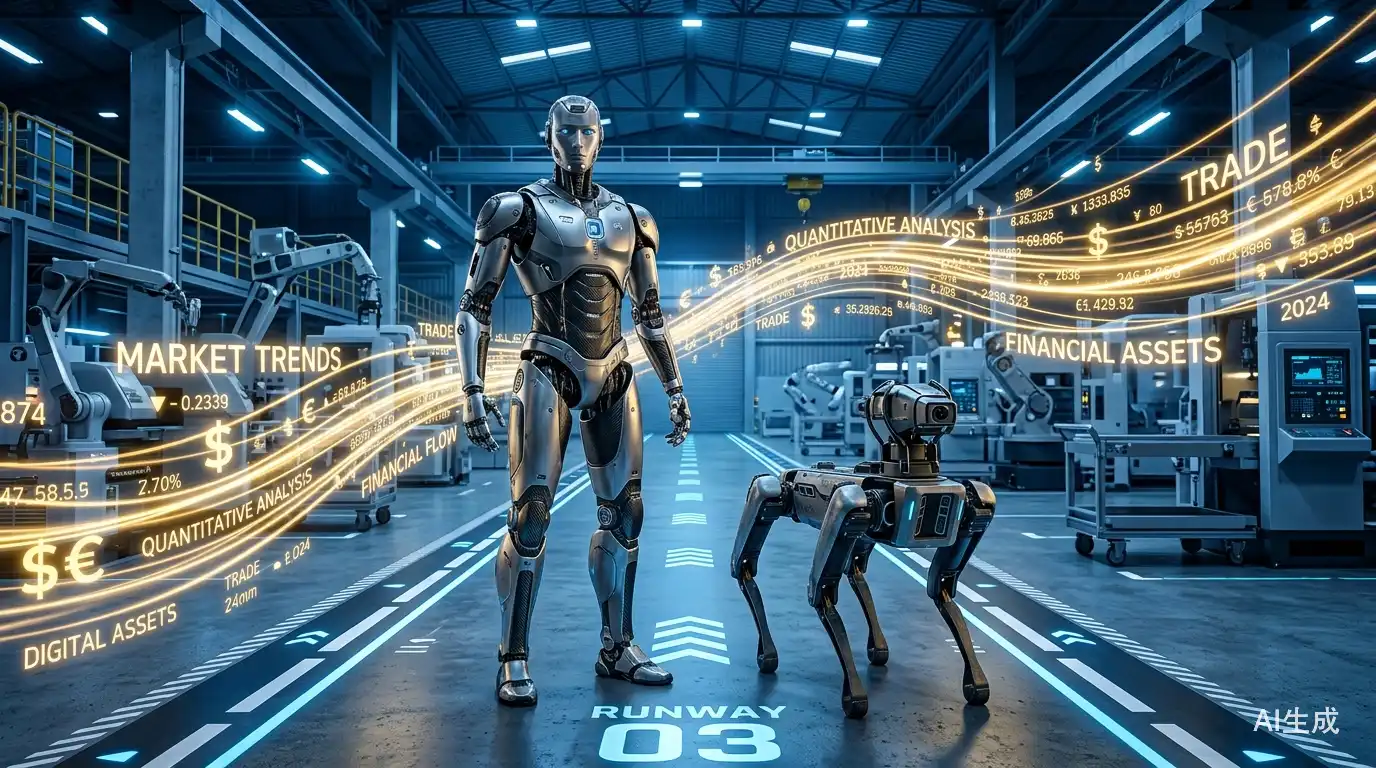
Unitree's IPO Frenzy: The Real Mystery is How It Will Spend the 42 Billion Raised

Unitree, a Chinese robotics company, is set for a public listing after its IPO registration was approved by regulators. The company, which started with quadruped robots and has expanded into humanoids, plans to raise approximately 4.2 billion yuan through its offering. The article traces Unitree's rapid growth from its founding in 2016 to its current status. It highlights key milestones like the 2021 CCTV Spring Festival Gala performance, the 2023 launch of its affordable Go2 robot dog and the H1 humanoid robot, and a series of subsequent product launches. By 2025, the company reported revenue of 1.71 billion yuan, profitability, and sales exceeding 5,500 humanoid robots. As the first publicly-listed humanoid robot company on China's STAR Market, Unitree's main challenges are sustaining growth and deploying its newly raised capital effectively. The humanoid robot sector in China is crowded, with over 140 companies. Competitors include UBTech (focusing on industrial and consumer markets), Fourier, and international players like Tesla Optimus and 1X NEO. The article outlines three critical challenges for Unitree: establishing a strong second product line beyond its quadruped robots, maintaining its price advantage while ensuring quality, and successfully advancing its embodied AI capabilities through partnerships like the one with NVIDIA for the H2 Plus platform. Unitree's likely strategy involves a "developer tools + industry benchmarks" approach: using low-cost models like the R1 and G1 to build developer adoption and volume, leveraging high-end platforms for AI training, and securing pilot projects in sectors like logistics and manufacturing to build case studies. The company's future success hinges on converting its current momentum in shipments and pilot programs into sustainable, large-scale commercial contracts as the broader market evolves.

marsbit07/07 09:32

Unitree's IPO Frenzy: The Real Mystery is How It Will Spend the 42 Billion Raised

marsbit07/07 09:32

Tencent, Alibaba, ByteDance in a Battle for the Skill Store

Skill is becoming a key concept in the AI field, essentially serving as a structured "instruction manual" for AI Agents that specifies tool calls, decision logic, and output standards. This allows Agents to execute predefined tasks. As the number of Skills grows, distribution platforms have emerged. Major tech companies are swiftly entering this space. In March, Tencent, Alibaba, and ByteDance launched Skill stores within their respective Agent platforms. Subsequently, players like Zhipu AI, Meituan, and Xiaohongshu joined the fray. This competition for the "Skill store" is fundamentally a battle for the AI-era user entry point; whoever controls distribution controls the users. While ByteDance's Coze has experimented with paid Skills, most platforms offer them for free. The real value lies not in the stores themselves but in using them to attract and retain users within an ecosystem, driving revenue from services like cloud computing, model calls, or advertising. The landscape features three main player types: 1) **Internet giants** (e.g., Alibaba, ByteDance, Tencent, Meituan), leveraging Skills to drive traffic and monetize through their broader ecosystems (cloud services, transactions, ads). 2) **Large model companies** (e.g., Zhipu AI, Moonshot AI), using Skill stores to increase user engagement and monetize model API calls. 3) **Content platforms** (e.g., Xiaohongshu), treating Skills as a new content format to generate traffic and ad revenue. However, transforming Skill stores into a sustainable business faces significant hurdles. Key challenges include: the **difficulty in pricing Skills** due to inconsistent outputs across different models and contexts; **lack of cost transparency** (varying token consumption); **security risks** like Skill poisoning; and the **absence of standardized protocols** for development and evaluation. Unlike standardized mobile apps, Skills are often personalized workflows resistant to uniformity, which hinders the establishment of a reliable review and monetization system akin to the App Store. While there is genuine user demand for paid Skills—particularly in enterprise (e.g., contract review) and certain personal productivity scenarios—current platforms offer developers limited and unpredictable distribution. The future of Skill stores depends on overcoming these standardization, evaluation, and safety challenges to make acquiring a Skill as straightforward as downloading an app. For now, the stores function more as display shelves than robust marketplaces.

marsbit06/03 12:30

Tencent, Alibaba, ByteDance in a Battle for the Skill Store

marsbit06/03 12:30

Behind Changxin Technology, Stands a Group of A-Share Companies

Changxin Technology, a leading Chinese DRAM (Dynamic Random Access Memory) manufacturer, has passed the review by the STAR Market listing committee, moving closer to an IPO. The company, seeking to raise 29.5 billion yuan, is the first to utilize the new "pre-review mechanism" on the STAR Market, expediting its approval process within five months. As China's largest and most technologically advanced integrated DRAM company, Changxin has achieved mass production of mainstream DDR5 and LPDDR5X products. It holds the fourth-largest global market share and ranks first in China, though it still trails behind industry leaders Samsung, SK Hynix, and Micron in areas like HBM technology. The company reported its first annual profit in 2025, with net profit surging to 24.762 billion yuan in Q1 2026, driven by booming AI-related demand. The IPO has drawn significant market attention due to Changxin's extensive and prestigious shareholder base. This includes state-backed funds like the National Integrated Circuit Industry Investment Fund II, industrial partner GigaDevice, internet giants (Xiaomi, Alibaba, Tencent), and several securities firms and A-share listed companies such as InfoMotion, Shangfeng Cement, and Hefei Urban Construction, which stand to benefit from the listing. The company's founder, Zhu Yiming, a pivotal figure in China's semiconductor industry who also founded GigaDevice, has committed to an unprecedented long-term lock-up of his shares and a massive personal equity incentive plan worth an estimated over 20 billion yuan for employees, excluding himself, upon listing.

marsbit05/28 03:25

Behind Changxin Technology, Stands a Group of A-Share Companies

marsbit05/28 03:25

China's AI Fronts: From Yan'an to Midway

This article analyzes the competitive landscape of China's AI industry through a dual-front war analogy: the "Eastern Front" of business model competition and the "Western Front" of global strategic positioning. **The Eastern Front: The Scramble for Supply Lines and Monetization** The "Eastern Front" examines the contrasting strategies of three Chinese tech giants—Tencent, Alibaba, and ByteDance—in the face of AI's high marginal costs. Tencent integrates AI as a catalyst within its existing ecosystems (advertising, gaming, cloud) for monetization, prioritizing high-value scenarios over user growth. Alibaba bets on a full-stack, self-developed approach from chips to applications, aiming to control costs and ecosystem, though this requires immense patience and resources. ByteDance, with Doubao as its flagship, pursues a traditional traffic-driven, "super app" strategy but faces severe monetization challenges as its massive user base incurs unsustainable operational costs. The central challenge for all is building a reliable "supply line" (sustainable funding/profit) and achieving efficient monetization, moving beyond being mere "token factories." **The Western Front: "Preserving Land" vs. "Preserving People"** The "Western Front" frames a global strategic divergence. The U.S. model ("preserving land") focuses on closed-source, high-premium models (e.g., Anthropic) targeting lucrative enterprise markets. China's strategy ("preserving people") leverages open-source models (e.g., Alibaba's Qwen, DeepSeek) and extremely low pricing to attract global developers and capture long-tail markets, akin to a "surround the cities from the countryside" approach. The goal is to make Chinese models the default infrastructure, locking in future ecosystem value. However, the critical test is whether this open-source ecosystem can achieve a commercial闭环, converting developer adoption into tangible revenue (e.g., via cloud services), and bridging the monetization gap with Western models that charge for value, not just tokens. **Conclusion: The Long March from Factory to Brand** The article concludes that China's AI industry possesses technology, users, and scenarios but must integrate them to create and capture value. Its ultimate success depends on navigating both fronts: companies must establish sustainable monetization on the Eastern Front, while the industry's Western strategy must evolve from simply "preserving people" (developer adoption) to truly "preserving both people and land" — transforming open-source ecosystem dominance into commercial success and premium brand value. This journey from being a "token factory" to a "value highland" will require strategic patience and the ability to outlast competitors in a prolonged contest.

marsbit05/26 10:18

China's AI Fronts: From Yan'an to Midway

marsbit05/26 10:18

Google and Microsoft Battle in the AI PC Arena: Is Local Computing Power an IQ Tax? Is the Cloud PC the Ultimate Form?

Google and Microsoft are competing in the AI PC arena, with the article questioning whether powerful local AI hardware is necessary. It argues that current "AI PCs" often rely heavily on cloud AI for complex tasks, making premium local AI silicon potentially less critical. Google recently unveiled "Android PCs," a new high-end productivity-focused product line. Unlike traditional AI PCs that add AI features to existing Windows systems, Android PCs position cloud-based AI, specifically Google's Gemini, as their core. The system deeply integrates AI, allowing context-aware assistance directly where the user is working, regardless of the underlying device hardware (x86 or ARM). The piece suggests that cloud computing might be the future for AI PCs. Unlike cloud gaming, which demands ultra-low latency, AI tasks are more tolerant of network delays, as users already expect some processing time. This makes the cloud-computing model well-suited for AI. Examples like Alibaba's "Wuying AI Cloud Computer" show how cloud services can offer robust AI capabilities without requiring powerful local hardware. This shift challenges the traditional PC model. With rising memory costs and limitations in consumer-grade local AI performance, the "light local, heavy cloud" approach offers an alternative. It could lead to devices that primarily need a good display and network connection, with heavy AI lifting done remotely. However, the transition is just beginning. Traditional players like Microsoft are pushing both local AI standards (e.g., 40+ TOPS NPU requirements) and deeply integrating cloud AI (Copilot with GPT) into Windows. Apple leverages its tight ecosystem and has found success with more affordable MacBooks, potentially positioning it well for AI integration later. Chipmakers like Intel and AMD, while promoting local AI, also benefit massively from supplying data centers for the cloud AI infrastructure. The conclusion is that AI is redefining the PC. The future battle will involve cloud integration, OS-level AI, and cross-device ecosystems. While questions about network reliability, data privacy, and user adaptation remain, the era of the AI cloud computer seems to be on the horizon.

marsbit05/15 06:35

Google and Microsoft Battle in the AI PC Arena: Is Local Computing Power an IQ Tax? Is the Cloud PC the Ultimate Form?

marsbit05/15 06:35

Was the Prediction Market the Biggest Winner of This Year's Super Bowl?

This year's Super Bowl marked a potential turning point, with prediction markets emerging as a serious competitor to traditional sports betting. Platforms Kalshi and Polymarket offered markets on the game, halftime show, and ads. While the American Gaming Association projected a record $1.76 billion in traditional sports bets, an analyst estimated prediction markets could capture 80% of the year-over-year growth, with a forecast of $630 million in volume for the event. However, available data suggests prediction markets fell short of this forecast. Kalshi's top Super Bowl-specific markets saw a combined volume of approximately $233 million. Its season-long "Who will win the Super Bowl" contract accumulated over $500 million in volume, but this was spread over the entire NFL season. Kalshi's significant growth is aided by its CFTC regulatory status, allowing a US mobile app, leading to 1.9 million downloads in January alone. Polymarket, lacking direct US app access for most users, saw about $76 million in volume across its top three Super Bowl markets. Its strength was demonstrated in information discovery, as its market accurately predicted Lady Gaga's surprise halftime show appearance days in advance. The activity occurs amidst an unresolved regulatory conflict, with Kalshi operating under federal CFTC oversight while state gaming regulators challenge it in court. Although prediction markets did not meet the $630 million hype for the Super Bowl weekend, their rapid user growth and informational advantages present a clear and growing threat to established sportsbooks.

比推02/10 01:02

Was the Prediction Market the Biggest Winner of This Year's Super Bowl?

比推02/10 01:02

活动图片