# Пов'язані статті щодо MaaS

Центр новин HTX надає останні статті та поглиблений аналіз на тему "MaaS", що охоплює ринкові тренди, оновлення проєктів, технологічні розробки та регуляторну політику в криптоіндустрії.

How Token Economy Reshapes the Business Rules of AI 'Measurement' | ToB Industry Observation

"Token Economy: How It Reshapes the Business Rules of AI's 'Metrics' | ToB Industry Observation" The article discusses how the token economy is fundamentally changing the business landscape for AI, moving from a phase of explosive technical supply to a focus on measurable value for enterprise demand. It highlights the astronomical growth in daily token usage in China, framing tokens as the new "measurement standard" or "electricity" of the intelligent era. A central challenge is determining a token's value, which varies drastically—up to 100,000x—across different applications, from drug discovery to casual chat. The concept of "high-quality tokens" that deliver real intelligence, versus "noise," is emphasized as crucial. Lenovo's Vice President shares three proposed "laws" of token economics: 1. **Law of Inertia:** The cost per token will continuously decline due to technological innovation, system optimization, and intelligent runtime scheduling. 2. **Law of Acceleration:** The value generated per token accelerates based on the depth of AI integration into business workflows, the level of engineering support, and organizational readiness. 3. **Law of the Singularity:** A tipping point where the value curve of AI application surpasses its cost curve, shifting from cost-saving to generating incremental, previously impossible value—enabling "innovation at scale." The article notes real-world struggles, such as companies exceeding AI budgets due to unpredictable token pricing and "token inflation" from agentic AI workflows. Solutions being explored include standardized metrics for token quality, transparent pricing, and new infrastructure like "Token Factories" for efficient, on-demand token production. The ultimate goal is for businesses to move past anxiety and reach the "singularity," where AI drives scalable innovation, akin to how electricity enabled countless modern appliances.

marsbit07/07 02:35

How Token Economy Reshapes the Business Rules of AI 'Measurement' | ToB Industry Observation

marsbit07/07 02:35

Can Alibaba Cloud Rewrite Itself?

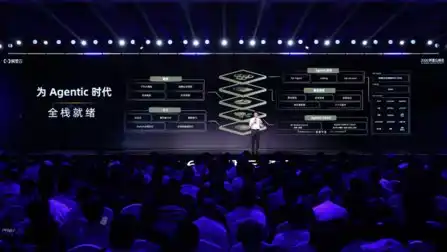
Over the past five months, Alibaba Cloud's MaaS (Model as a Service) revenue has surged 15x, marking a strategic overhaul where the company is shifting its 17-year-old system designed for "humans using cloud" to a new paradigm centered on "Agents consuming Tokens." At its recent summit, Alibaba Cloud announced a full-stack upgrade encompassing "chip-cloud-model-inference," all optimized for AI Agents. Key launches include the new AI product portal "QianWen Cloud," hyper-node servers powered by the in-house AI chip Zhenwu M890, and the latest flagship model, Qwen3.7-Max. Senior VP Liu Weiguang described this as building "China's largest AI factory," where chips are raw materials, the cloud is the workshop, models are machines, and the inference platform is the assembly line, with Tokens as the final product. The company is now emphasizing its chip strategy, unveiling the Zhenwu M890 and a two-year roadmap for future chips. With over 560,000 chips deployed across 400+ clients, Alibaba Cloud aims to control the marginal cost per Token, mirroring Google's integration of TPU and Gemini for optimal cost-performance. The cloud infrastructure itself is being rewritten. Traditional cloud interfaces are being transformed into standardized, Agent-callable Skills. A new scheduling logic focuses on "task scheduling" over "resource scheduling" to handle the unpredictable, elastic workloads of Agents. Liu noted that AI applications now automatically provision cloud resources, with one customer's daily automated provisioning equaling two weeks of manual work. For models, the focus has shifted from conversational prowess to execution capability. Qwen3.7-Max demonstrated this by autonomously writing and optimizing a production-grade AI compute kernel for the new Zhenwu M890 chip over 35 hours, achieving a 10x performance improvement. The underlying Bailian platform was upgraded for efficiency, and it maintains an open ecosystem, hosting third-party models. This restructuring extends beyond technology to sales, organization, and metrics. Alibaba Cloud has established dedicated MaaS sales teams, separated from traditional IaaS, with new KPIs focusing on high-quality Tokens that solve real problems, the number of core business systems integrated with models, and the efficiency of Agent task completion. The underlying bet is clear: AI represents an opportunity orders of magnitude larger than before. Despite the uncertainty, Alibaba Cloud is aggressively rebuilding its entire system, betting on an AI-driven future where Tokens could become its largest product line.

marsbit05/20 10:22

Can Alibaba Cloud Rewrite Itself?

marsbit05/20 10:22

Racing to Be the First Stock: The Substance, Capabilities, and Ambition of China's Largest Independent Model Company

Zhipu AI, China's largest independent large language model (LLM) company by revenue, has passed its listing hearing on the Hong Kong Stock Exchange with a valuation of RMB 24.377 billion. Its IPO filing provides the first clear look at the financials of a major Chinese LLM player. From 2022 to 2024, Zhipu's revenue grew at a 130% CAGR, reaching RMB 310 million in 2024. Nearly 85% of its revenue comes from on-premise model deployments for enterprise clients, with the remainder from its MaaS (Model-as-a-Service) platform. Despite rapid revenue growth, the company reported significant adjusted net losses, driven overwhelmingly by R&D expenses which reached RMB 1.59 billion in H1 2025. A major portion of these costs is attributed to computing power, essential for training its flagship models. A key part of Zhipu's strategy is a "land and expand" approach: using strategic price cuts on its MaaS platform to attract a large user base (over 1.2 million enterprise developers) and then converting them into high-value on-premise clients. The release of its powerful open-source base model, GLM-4.5/4.6, which ranks among the top global models in several benchmarks, led to an exponential increase in API calls and token consumption. The company is betting that continued heavy R&D investment is necessary to stay at the forefront of the intensely competitive global AI market. Its leadership believes that possessing a superior base model is the ultimate product and the key to long-term growth, even if it requires substantial short-term losses. As one of the first Chinese LLM firms to file for an IPO, Zhipu's market debut is poised to be a major test for valuing China's independent AI industry.

marsbit12/23 11:13

Racing to Be the First Stock: The Substance, Capabilities, and Ambition of China's Largest Independent Model Company

marsbit12/23 11:13

活动图片