# Пов'язані статті щодо Lockup

Центр новин HTX надає останні статті та поглиблений аналіз на тему "Lockup", що охоплює ринкові тренди, оновлення проєктів, технологічні розробки та регуляторну політику в криптоіндустрії.
SpaceX Shares Predicted to Recover No Earlier Than Early 2027

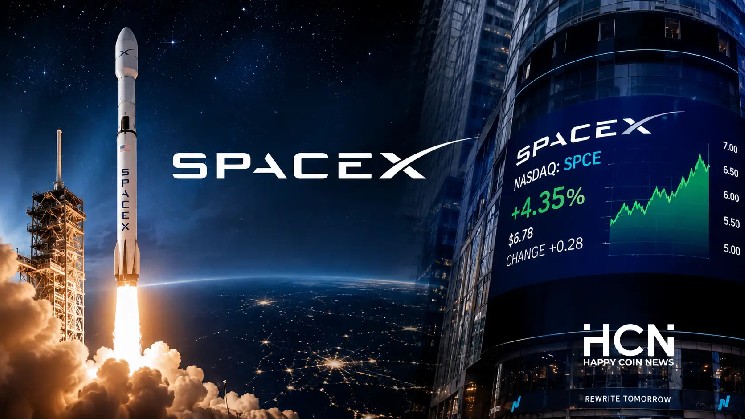
Analysts predict that a significant recovery in SpaceX's share price is unlikely before early 2027, when the current insider lock-up period is scheduled to end. Recently, shares have traded in a narrow range around $118-$124, still 48% below their 52-week high of $225.64. The short-term outlook depends heavily on potential insider selling, especially with the 52-week low of $110.85 acting as a floor. SpaceX's market capitalization stands at $1.56 trillion, but the company is not yet profitable, as evidenced by a $4.9 billion net loss in 2025 and an additional $4.28 billion loss in Q1 2026, attributed to heavy investments in Starship and AI infrastructure. The stock is currently trading at over 84 times trailing revenue, a valuation analysts say depends on a substantial future increase in Starlink's cash flow. The unlocking of 911.5 million shares worth ~$116 billion on August 6, 2026, followed by a phased release schedule, adds significant uncertainty. Quarterly results on August 4, 2026, could provide a short-term catalyst if Starlink performs strongly or Starship milestones are met. Wall Street analyst consensus for a 12-month price target is around $240, but individual forecasts vary widely from $63 to $800, reflecting deep divisions over the company's recovery prospects and future valuation. Key ratings include Morgan Stanley's $300 target and Oppenheimer's more modest $190 target.

cryptonews.ru2 дні тому 11:04

SpaceX Shares Predicted to Recover No Earlier Than Early 2027

cryptonews.ru2 дні тому 11:04

How Will the Price Move Before SpaceX's Next Share Unlock?

TL;DR Investors buying SPCX after SpaceX's IPO are not simply investing in a typical tech stock. It’s a high-valuation asset driven by Musk's narrative, Starlink, and space transport potential, but with a key twist: a very small initial float of ~4% has led to significant post-listing price appreciation. The current price action reflects a timing gap. Before the first lock-up expiration (estimated around August, subject to official confirmation), scarcity and high demand could continue to push prices up. Short-term bulls focus on low float, FOMO, and potential index inclusion. However, bears point to the supply dynamics that will change post-lockup. Existing shareholders still hold over 95% of shares, which will be released in stages starting from the first unlock window. This introduces future selling pressure from low-cost holders. The upcoming Q2 earnings report is a critical catalyst before the unlock. It will test whether the company's fundamentals can justify the current ~$2.1T valuation. Strong results could support the pre-unlock momentum, while weak figures could amplify concerns about future supply. The trading thesis is shifting from immediate scarcity ("can't buy enough") to evaluating future absorption capacity ("who will buy when more supply hits"). The path ahead hinges on the specifics of the unlock schedule, Q2 earnings performance, and whether anticipated passive index buying materializes.

marsbit06/15 06:31

How Will the Price Move Before SpaceX's Next Share Unlock?

marsbit06/15 06:31

The Backside of Musk's Trillion-Dollar Fortune: 85% Can't Be Sold

Elon Musk becomes the world's first trillionaire, driven by SpaceX's IPO valuing the company at $1.77 trillion. However, his vast wealth is largely illiquid: he holds over 85% voting control, likely through super-voting shares that are subject to lock-ups and selling restrictions. While his net worth surpasses $1 trillion across SpaceX, Tesla, and private holdings, only a tiny fraction (potentially under 2% annually) could be converted to cash without jeopardizing control and market confidence. SpaceX's IPO also creates paper millionaires for roughly 4,400 employees, but their holdings face lock-up periods, exercise costs, and taxes, delaying and reducing actual cash proceeds. Only 4.2% of total shares are initially available for public trading, making the stock price highly sensitive to limited net buying or selling pressure. A major test will come when lock-ups expire for the remaining 96% of shares. The article contrasts SpaceX's wealth distribution with potential AI IPOs. Anthropic and OpenAI could generate employee wealth pools 20 times larger than SpaceX's in paper value, due to their higher valuations relative to revenue and potentially more distributed ownership. However, sustaining those high price-to-sales multiples post-IPO is uncertain. A key financial puzzle for SpaceX investors is its xAI unit. While it has locked in an estimated $26 billion in annual compute revenue from clients like Anthropic and Google, the unit reported a $6.4 billion loss in 2025. More critically, estimated annual capital expenditures of ~$30.8 billion exceed that revenue. The long-term viability of SpaceX's AI narrative hinges on whether this compute income can eventually cover the unit's massive ongoing investments and losses.

链捕手06/13 02:39

The Backside of Musk's Trillion-Dollar Fortune: 85% Can't Be Sold

链捕手06/13 02:39

SpaceX's Core Window for Listed Trading: July 7th Nasdaq Inclusion Date and Post-Q2 Earnings Lockup Expiration

SpaceX is set for its historic IPO on June 12 at $135 per share, with a paper valuation of $1.75 trillion. A key insight from analyst Alexandra Mertz highlights the IPO's unique structure, where an extremely low initial public float of only 4.3% is expected to create a significant supply vacuum. This scarcity is set to collide with massive forced buying from index funds like Vanguard, CRSP, and FTSE Russell, which are scheduled to start adding SpaceX to their indices as early as June 18/22 and July 7 (NASDAQ 100 inclusion). This could propel the stock price sharply higher, with AI models like Grok predicting a potential doubling from the IPO price around July 7. Another critical date is the post-Q2 earnings call (estimated late July), when early insider shareholders (excluding Elon Musk, who has a 366-day lock-up) become eligible to sell. However, actual selling pressure may be only 10-15% of shares, as major holders like Ron Baron and BlackRock have expressed intentions to hold or buy more. The discussion introduces a compelling "Goldilocks scenario": a potential stock-for-stock merger announcement between SpaceX and Tesla in the window between the July 7 price peak and the late-July unlock period. This timing could help Elon Musk manage a personal $7 billion tax liability related to exercising Tesla stock options by August 15, while leveraging high valuations for both companies. Furthermore, the inclusion of former Tesla adversaries like Charles Schwab, Morgan Stanley, and J.P. Morgan as SpaceX IPO underwriters is seen as a strategic move to secure their "yes" votes for a potential Tesla merger approval in a November shareholder vote. The rationale for SpaceX acquiring Tesla, rather than the reverse, centers on SpaceX's superior governance structure, which offers Musk stronger control through super-voting shares and mandatory arbitration clauses, protecting the combined entity from activist investors and legal challenges.

marsbit06/10 12:20

SpaceX's Core Window for Listed Trading: July 7th Nasdaq Inclusion Date and Post-Q2 Earnings Lockup Expiration

marsbit06/10 12:20

活动图片