# Пов'язані статті щодо Doubao

Центр новин HTX надає останні статті та поглиблений аналіз на тему "Doubao", що охоплює ринкові тренди, оновлення проєктів, технологічні розробки та регуляторну політику в криптоіндустрії.

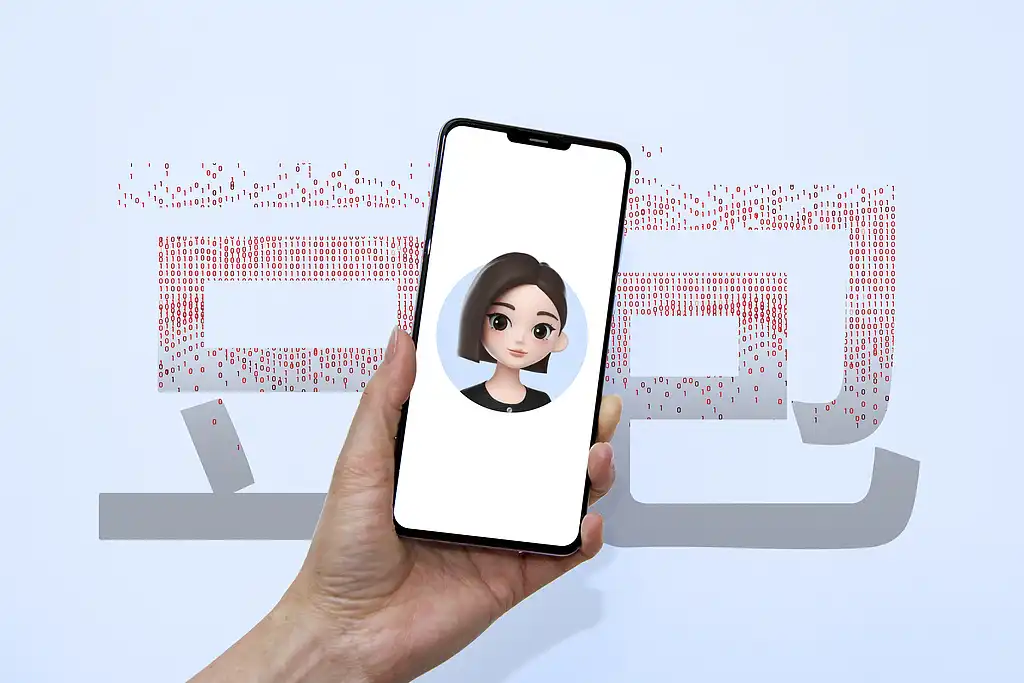
Agents Take Over Traffic Distribution Power: What Are Tencent, ByteDance, and Alibaba Competing For?

In the race to dominate the AI era's entry point, China's tech giants—Tencent, ByteDance, and Alibaba—are aggressively deploying AI Agents to control the future of traffic distribution. Alibaba is pursuing a dual-track "closed loop + openness" strategy. Its Qianwen app is evolving into a super-Agent integrated across its ecosystem (Taobao, Alipay, etc.) to handle complex tasks like travel planning. Concurrently, it is opening its platform to external brands (Luckin Coffee, KFC) and has launched a B2B Agent platform, "Wukong," targeting enterprise automation. Its other flagship, Quark, aims to be an "AI super search box" for information and tasks. ByteDance is executing an omnipresent "sprawl strategy." Its Doubao app boasts over 300 million monthly active users and is evolving into a default AI entry point for daily life, with plans for paid versions and e-commerce integration. Its core weapon is the Kouzi platform, a visual "AI assembly factory" for developers to build custom Agents. ByteDance is also pushing hardware integration, collaborating on AI phones and developing smart glasses to embed Doubao everywhere. Tencent is playing its long-held "ultimate card" by quietly embedding an AI Agent directly into WeChat. This Agent, accessible via a swipe, can understand user commands and automatically execute tasks by calling upon WeChat's millions of mini-programs (e.g., finding and ordering coffee). This leverages WeChat's unparalleled 1.4-billion-user ecosystem to position the app as an AI-powered "service operating system," a move that could dramatically reshape the competitive landscape. The core battleground is shifting from competing for "user screen time" to competing to be the "default execution layer" for user intent. The business model is evolving from an "attention economy" to an "intent economy," where the Agent that can most efficiently fulfill a user's need gains control over service access and token flow. This represents a fundamental change in how users connect with digital services, making the fight for the Agent入口 (entry point) a pivotal moment for redefining industry leadership in the AI age.

marsbit06/06 03:22

Agents Take Over Traffic Distribution Power: What Are Tencent, ByteDance, and Alibaba Competing For?

marsbit06/06 03:22

Doubao Phone Makes a Comeback: From 'Being Surrounded' to 'Counter-Siege'

Doubao Phone, a smartphone project by ByteDance, re-emerges after facing a major setback. In December 2025, its first-generation model, developed in partnership with ZTE’s Nubia, was quickly "besieged" by major internet platforms—including Meituan, WeChat, and Alibaba—due to its AI agent accessing core app data without authorization, nearly crippling its functionality. Despite this, ByteDance is pushing forward. A second-generation Doubao Phone is slated for release in Q2 2026, with higher expectations. To avoid another blockade, ByteDance is negotiating permissions with various app providers and has already reached agreements with some companies in ride-hailing, food delivery, and ticketing. The core strategy remains a system-level GUI Agent, which enables AI to operate the phone by simulating screen interactions, bypassing the need for API approvals. Additionally, ByteDance is pursuing partnerships with other smartphone makers. For major brands like OPPO and vivo, collaboration is limited to technical integration, such as model interoperability or modular products like "Doubao Input Method." For smaller manufacturers like Transsion, Meizu, and Lenovo, ByteDance is pushing for deeper integration—embedding Doubao AI directly into the OS, with phone makers paying tech licensing and subscription fees. Beyond phones, ByteDance is developing other AI hardware, including smart glasses (with and without displays, set for release in 2026) and AI-enabled earphones with cameras. These devices are designed to work seamlessly with Doubao’s ecosystem, enabling hands-free interaction. The broader vision is to make Doubao’s AI agent a standard interface across hardware, capturing user habits and building ecosystem loyalty. Rivals like Google are pursuing similar strategies with Gemini. ByteDance is also exploring overseas expansion, negotiating with manufacturers like vivo to pre-install Doubao Assistant on international models. With strong resources in models, talent, and data, ByteDance aims to establish Doubao as a central AI hardware platform, despite the challenges.

marsbit01/30 01:41

Doubao Phone Makes a Comeback: From 'Being Surrounded' to 'Counter-Siege'

marsbit01/30 01:41

活动图片