# Пов'язані статті щодо ByteDance

Центр новин HTX надає останні статті та поглиблений аналіз на тему "ByteDance", що охоплює ринкові тренди, оновлення проєктів, технологічні розробки та регуляторну політику в криптоіндустрії.

Feishu Has Become Doubao

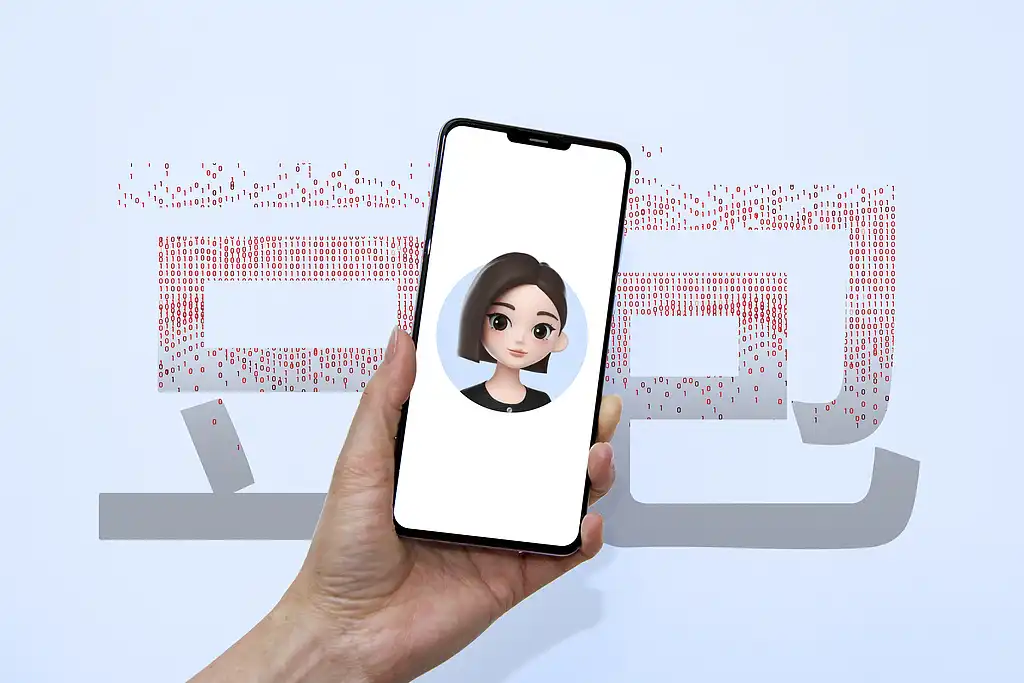
This may be the most important day in the ten-year history of Feishu. On July 30, ByteDance announced a major restructuring via internal email. Feishu, an independent operation for a decade, will no longer function separately and will lose its independent sales and marketing teams. Its product team is being integrated into Doubao AI, and its Go-to-Market strategy merges into the Volcano Engine's To B system. This move signals a strategic pivot, not a failure of Feishu. The era where Feishu sought to be an all-encompassing super-app for productivity is ending. AI has become the dominant logic. Industry trends show a shift from building platform "entrances" to embedding AI directly into workflows, as seen with Microsoft Copilot and Google's Gemini. Data reveals the driver: over 90% of Feishu's new clients in Q2 2026 purchased its AI products. Enterprises are now buying integrated AI solutions, not standalone software. By integrating Feishu's deep enterprise workflow scenarios, Doubao evolves from a consumer-facing chatbot into a powerful enterprise productivity engine. This gives Doubao a critical asset: real-world business application. Concurrently, ByteDance established the "Creative Services Platform," unifying its previously fragmented sales fronts (Feishu, Doubao, Volcano Engine) into a single customer-facing entity. This represents ByteDance's first genuine shift to thinking like a true To B company, organizing around client needs rather than internal product silos. The restructuring underscores that AI is no longer just a business line but foundational infrastructure. Doubao is becoming the new organizational core, mirroring TikTok's past ascendancy. This demonstrates a profound shift: AI is beginning to reshape corporate structures, determining resource allocation and strategic priorities. ByteDance is likely just the first of many companies to undergo such an AI-driven reorganization.

marsbit2 дні тому 10:37

Feishu Has Become Doubao

marsbit2 дні тому 10:37

Exclusive | ByteDance's AI Drug Discovery Unit Initiates Spinoff and Funding, AI4S Enters Industrialization Phase

Exclusive | ByteDance’s AI Drug Discovery Unit Initiates Spin-off for Financing, Signaling Industrialization Phase for AI4S. ByteDance’s AI drug discovery business line has begun the process of spinning off as an independent entity to raise outside funding, marking a key step toward industrializing its AI for Science (AI4S) efforts. Post-spin-off, ByteDance will remain the controlling shareholder. The new company will inherit the core team, algorithms, technology platform, and existing pipeline assets. It will also continue to receive computing power support from ByteDance's Volcano Engine. The AI drug discovery team, established in 2021 and led by Liu Kai with a core team of about 50 AI and pharmaceutical experts, has been responsible for foundational model research and industrialization. It has consolidated ByteDance's protein structure prediction model team and launched several key technologies. These include the molecular structure prediction models Protenix and Seedfold, the protein design tool PXDesign, and the AI drug discovery platform "Anew Labs." Anew Labs has produced research covering protein-ligand dynamics, molecular generation, and free energy calculation, and has developed early-stage drug pipelines like IL-17 and IL4R inhibitors. Notably, its IL-17 small molecule program, presented in April 2026, demonstrated the first small-molecule blockade of three IL-17 dimers, a significant step in autoimmune disease research. This progress demonstrates ByteDance’s AI capabilities have advanced from model development to validating specific drug targets and molecules. The company believes the opportunity to transition from research to industry is now ripe. The spin-off aims to establish an organizational structure better suited to the business's unique needs—long R&D cycles and complex validation processes involving wet labs and clinical trials—to attract top talent and drive deeper integration of AI with the pharmaceutical industry. The move responds to the pharmaceutical industry's pressing need to improve efficiency amid high R&D costs, long timelines, and high failure rates. The field of AI4S is rapidly advancing, as seen with tools like AlphaFold evolving from protein prediction to modeling complex biological interactions and the emergence of multimodal molecular generation models for drug design. ByteDance has been building its AI4S capabilities for years, exploring areas like computational biology, molecular simulation, and materials science. This spin-off represents its first major attempt to industrialize AI4S. An insider stated the company attaches great importance to this move, hoping that an independent entity with greater decision-making flexibility can pioneer a viable industrial path for AI4S in China.

marsbit06/10 06:26

Exclusive | ByteDance's AI Drug Discovery Unit Initiates Spinoff and Funding, AI4S Enters Industrialization Phase

marsbit06/10 06:26

Agents Take Over Traffic Distribution Power: What Are Tencent, ByteDance, and Alibaba Competing For?

In the race to dominate the AI era's entry point, China's tech giants—Tencent, ByteDance, and Alibaba—are aggressively deploying AI Agents to control the future of traffic distribution. Alibaba is pursuing a dual-track "closed loop + openness" strategy. Its Qianwen app is evolving into a super-Agent integrated across its ecosystem (Taobao, Alipay, etc.) to handle complex tasks like travel planning. Concurrently, it is opening its platform to external brands (Luckin Coffee, KFC) and has launched a B2B Agent platform, "Wukong," targeting enterprise automation. Its other flagship, Quark, aims to be an "AI super search box" for information and tasks. ByteDance is executing an omnipresent "sprawl strategy." Its Doubao app boasts over 300 million monthly active users and is evolving into a default AI entry point for daily life, with plans for paid versions and e-commerce integration. Its core weapon is the Kouzi platform, a visual "AI assembly factory" for developers to build custom Agents. ByteDance is also pushing hardware integration, collaborating on AI phones and developing smart glasses to embed Doubao everywhere. Tencent is playing its long-held "ultimate card" by quietly embedding an AI Agent directly into WeChat. This Agent, accessible via a swipe, can understand user commands and automatically execute tasks by calling upon WeChat's millions of mini-programs (e.g., finding and ordering coffee). This leverages WeChat's unparalleled 1.4-billion-user ecosystem to position the app as an AI-powered "service operating system," a move that could dramatically reshape the competitive landscape. The core battleground is shifting from competing for "user screen time" to competing to be the "default execution layer" for user intent. The business model is evolving from an "attention economy" to an "intent economy," where the Agent that can most efficiently fulfill a user's need gains control over service access and token flow. This represents a fundamental change in how users connect with digital services, making the fight for the Agent入口 (entry point) a pivotal moment for redefining industry leadership in the AI age.

marsbit06/06 03:22

Agents Take Over Traffic Distribution Power: What Are Tencent, ByteDance, and Alibaba Competing For?

marsbit06/06 03:22

Alibaba 'Stocks Up', ByteDance 'Trains'

"In late May, two closely timed events in China's AI industry clearly revealed the divergent strategic approaches of two tech giants: Alibaba and ByteDance. Alibaba is aggressively integrating AI into its existing commercial ecosystem, prioritizing immediate monetization. Its Qwen App now fully integrates with Taobao, leveraging the platform's 4-billion-item database for AI-powered shopping features like virtual try-on and price comparison. Internally, Alibaba has reorganized to incentivize AI-driven business growth, notably through the 'Agentic Commerce Trust Protocol' to enable AI-agent transactions. Financially, it emphasizes ROI, with CEO Daniel Wu stating every AI chip purchased is generating revenue. Alibaba's strategy bets that foundational AI model capabilities won't be leapfrogged in the next five years, allowing its 'AI-as-a-utility' approach to succeed. In stark contrast, ByteDance's Seed division focuses on pushing the frontiers of AGI with a long-term, research-oriented mindset. Its video generation model, Seedance 2.0, topped international benchmarks. The division, led by researchers Wu Yonghui and product head Zhu Wenjia, is tasked with 'exploring the upper limits of intelligence,' even considering open-sourcing its models—a rare move among Chinese firms. ByteDance is investing heavily, with reports of its 2026 capital expenditure plan being nearly triple that of 2024, funded by its substantial private profits. This allows it to pursue projects like an 8-month research paper questioning if video models are true 'world models,' devoid of immediate commercial pressure. The core divergence is less about corporate philosophy and more about structural constraints. As a publicly traded company, Alibaba is bound to quarterly financial expectations, forcing a pragmatic, revenue-focused AI integration. As a private entity, ByteDance has the luxury to fund long-term, high-risk foundational research without answering to public markets. The article concludes that the true determinant of a Chinese company's AI path is its IPO status, suggesting that if ByteDance were public, or if Alibaba were private, their strategies might well be reversed."

marsbit06/01 00:08

Alibaba 'Stocks Up', ByteDance 'Trains'

marsbit06/01 00:08

We Captured Thousands of Job Postings and Discovered ByteDance is Reviving Smartphone R&D

This article analyzes ByteDance's recent hiring activities, revealing a potential restart of smartphone hardware development. By scraping and analyzing thousands of ByteDance job postings, the authors identify three key categories: roles for the "Doubao Phone Assistant" (an AI agent), for a "Mobile OS" (system-level development), and for hardware/engineering positions in Shenzhen (a manufacturing hub). The piece traces the context to the 2025 launch of the "Doubao Phone," a concept device that integrated an AI agent directly into a smartphone, allowing it to see the screen, operate apps, and perform tasks like shopping or booking tickets. While innovative as an early AI Agent prototype, it faced operational restrictions from major platforms like WeChat and Alipay. The new hiring signals a deeper commitment. "Doubao Phone Assistant" roles focus on core Agent capabilities (task execution, memory, cross-app operation). "Mobile OS" positions involve deep system work (kernel, chip adaptation, power/thermal management) necessary for a responsive, always-on AI. Shenzhen-based hardware roles (structure design, testing, production) suggest preparation for physical device manufacturing. The article concludes that in the AI era, where phones may become an Agent's "body," controlling the operating system and hardware is critical. For a company like ByteDance, being merely an app within others' ecosystems is no longer sustainable if it aims to own the next-generation user interface. Therefore, while a consumer phone brand isn't confirmed, ByteDance is decisively moving beyond app development into the complex domain of system-level and hardware-integrated AI.

marsbit05/25 07:31

We Captured Thousands of Job Postings and Discovered ByteDance is Reviving Smartphone R&D

marsbit05/25 07:31

Introducing a 'Paid Subscription' in the Chinese Market, What's Doubao Thinking?

Chinese AI assistant "Doubao" (from ByteDance) has announced it will launch a paid subscription service alongside its free version, with plans priced at 68, 200, and 500 yuan per month. This move follows its achievement of over 345 million monthly active users and 1.8 billion daily interactions. The paid tiers aim to serve professional users with advanced features for complex tasks like PPT generation and data analysis, while basic functions remain free. The timing is strategic: user growth from free services is plateauing, and the market is now more receptive to paying for high-value AI tools. ByteDance leverages its technical edge in model efficiency and cost control to support this shift. However, significant challenges remain. The Chinese market is characterized by low long-term subscription loyalty, with users often paying only for immediate needs. Doubao's premium features face competition from free alternatives offered by rivals. Furthermore, the core business model of AI subscriptions struggles with scalability—more paying users mean higher compute costs, potentially creating a cycle where revenue fails to cover expenses. Intense price competition from rivals could also force difficult choices between maintaining premium pricing or engaging in a race to the bottom. In summary, while Doubao's massive user base ensures short-term subscription uptake, its long-term success depends on creating uniquely valuable, "sticky" services within ByteDance's ecosystem and solving the fundamental industry dilemmas of low renewal rates and unsustainable cost structures. The outcome will serve as a critical test case for the viability of premium C-end AI subscriptions in China.

marsbit05/14 02:50

Introducing a 'Paid Subscription' in the Chinese Market, What's Doubao Thinking?

marsbit05/14 02:50

More and More 'Model Supermarkets' Are Opening: ByteDance, Alibaba, and Tencent Compete to Integrate

Chinese tech giants like ByteDance, Alibaba, and Tencent are accelerating the rollout of integrated AI model subscription services—dubbed “model supermarkets”—to provide developers with bundled access to multiple leading domestic large language models (LLMs). ByteDance’s Volcengine recently upgraded its "Coding Plan" by adding newer models like GLM-5.1, Minimax M2.7, and Kimi k2.6, allowing subscribers to use various top models under a single monthly fee starting at ¥40. However, user feedback reveals significant issues, including rapid consumption of usage limits (e.g., hitting caps within hours), frequent server errors (like HTTP 429), and slow response times during peak hours. Complaints about misleading deduction rates—where calls to advanced models consume more quota—are also common. The trend is industry-wide: Alibaba, Tencent, and Baidu have all launched similar multi-model coding plans. While these platforms reduce trial costs for developers, they also expose challenges in balancing affordability with service quality and computational stability. Amid this shift, independent AI companies like Zhipu, MiniMax, and Moonlight Face (Kimi) are developing strategies to avoid becoming mere “pipes” in this ecosystem—focusing on vertical applications, autonomous agents, and long-context models to retain competitiveness. Analysts suggest that, while platform aggregation may pressure model firms in the short term, specialized and vertical AI capabilities will remain differentiated in the long run.

marsbit04/24 04:07

More and More 'Model Supermarkets' Are Opening: ByteDance, Alibaba, and Tencent Compete to Integrate

marsbit04/24 04:07

Doubao Phone Makes a Comeback: From 'Being Surrounded' to 'Counter-Siege'

Doubao Phone, a smartphone project by ByteDance, re-emerges after facing a major setback. In December 2025, its first-generation model, developed in partnership with ZTE’s Nubia, was quickly "besieged" by major internet platforms—including Meituan, WeChat, and Alibaba—due to its AI agent accessing core app data without authorization, nearly crippling its functionality. Despite this, ByteDance is pushing forward. A second-generation Doubao Phone is slated for release in Q2 2026, with higher expectations. To avoid another blockade, ByteDance is negotiating permissions with various app providers and has already reached agreements with some companies in ride-hailing, food delivery, and ticketing. The core strategy remains a system-level GUI Agent, which enables AI to operate the phone by simulating screen interactions, bypassing the need for API approvals. Additionally, ByteDance is pursuing partnerships with other smartphone makers. For major brands like OPPO and vivo, collaboration is limited to technical integration, such as model interoperability or modular products like "Doubao Input Method." For smaller manufacturers like Transsion, Meizu, and Lenovo, ByteDance is pushing for deeper integration—embedding Doubao AI directly into the OS, with phone makers paying tech licensing and subscription fees. Beyond phones, ByteDance is developing other AI hardware, including smart glasses (with and without displays, set for release in 2026) and AI-enabled earphones with cameras. These devices are designed to work seamlessly with Doubao’s ecosystem, enabling hands-free interaction. The broader vision is to make Doubao’s AI agent a standard interface across hardware, capturing user habits and building ecosystem loyalty. Rivals like Google are pursuing similar strategies with Gemini. ByteDance is also exploring overseas expansion, negotiating with manufacturers like vivo to pre-install Doubao Assistant on international models. With strong resources in models, talent, and data, ByteDance aims to establish Doubao as a central AI hardware platform, despite the challenges.

marsbit01/30 01:41

Doubao Phone Makes a Comeback: From 'Being Surrounded' to 'Counter-Siege'

marsbit01/30 01:41

活动图片