BIT Trading Moment: BTC Buying Pressure Rises but Bearish Sentiment Remains Strong, 50-Month EMA Difficult to Break, SK Hynix Attempts to Stabilize Memory

marsbitОпубліковано о 2026-08-19Востаннє оновлено о 2026-08-19

Анотація

BIT Trading Hours: BTC Buying Rebounds but Bearish Sentiment Persists; 50-Month EMA Presents Resistance; SK Hynix Attempts to Stabilize the Memory Sector. Bitcoin briefly reclaimed $65,000, its first time since August 10th, showing a temporary decoupling from traditional risk assets pressured by soaring long-term U.S. Treasury yields. Key support is seen at $62k-$63k, with resistance near the 50-month Exponential Moving Average around $65.4k. While on-chain data indicates recovering spot demand, potentially signaling a local bottom, the options market remains skewed bearish. BIT analysis notes significant downside risk remains if historical bear market patterns repeat, with a potential drop to ~$45.5k. Global equity markets faced intense selling pressure, driven by a bond market storm. The U.S. 30-year yield hit a multi-year high above 5.33%, raising global funding costs. The AI sector was at the epicenter of the sell-off, with the Philadelphia Semiconductor Index plunging ~5% as investors questioned the sustainability of massive AI capital expenditures amid high debt costs. Storage stocks like Micron led declines. SK Hynix's announcement of a major share buyback provided some stability to the memory sector during after-hours trading. However, most tech stocks remained under pressure. In Asia, South Korean and Japanese indices fell sharply, heavily impacted by chip stock declines. Chinese robotics company Unitree Tech had a volatile market debut on Shanghai's STAR Market,...

This article is jointly produced by PANews and BIT U.S. Stocks. BIT U.S. Stocks provides 10,000+ mainboard U.S. stocks and ETFs, supports stablecoin deposits/withdrawals and traditional USD wire transfers, and allows for full shareholder rights including dividends and voting.

Bitcoin On-Chain Buying Pressure Warms Up, Downside Risks Remain

Bitcoin returned above $65,000 yesterday, touching this level for the first time since August 10. Meanwhile, U.S. stock risk assets are still pressured by the surge in long-term Treasury yields. The 30-year Treasury yield once rose to a multi-year high of 5.34%, indicating a temporary divergence between BTC and traditional risk assets.

Most traders focus key support around the $62,000 to $63,000 range. If this level breaks, a drop to $60,000 to $61,000 to sweep liquidity is possible. Resistance above is concentrated around the 50-month Exponential Moving Average near approximately $65,400 and the potential head-and-shoulders bottom neckline area. Analyst Aksel Kibar pointed out that if the head-and-shoulders bottom structure holds, the rebound target could be as high as $76,000; however, if it fails, a drop to $53,000 is possible.

On-chain data research firm CryptoQuant noted that Bitcoin's 30-day apparent spot demand has significantly recovered from negative 206,000 BTC on July 23 to the current negative 5,000 BTC, approaching the critical point of turning positive for the first time since February 26. Historically, after spot demand turns from negative to positive, the median BTC gain over the next 60 days is 18.1%, with a win rate of 78%.

VanEck also believes Bitcoin may be nearing the end of its correction. Its model shows that 8 out of 12 "capitulation indicators" have been triggered, and BTC has already entered its 11th month of adjustment; the average time from peak to trough in the past three cycles (excluding 2011) was about 12.7 months, suggesting September to November could be an important window for the accumulation phase this round. However, VanEck also emphasized that capitulation signals do not have a stable excess return advantage over the next 90 and 180 days. The real thing to wait for is the reconfirmation of capital demand.
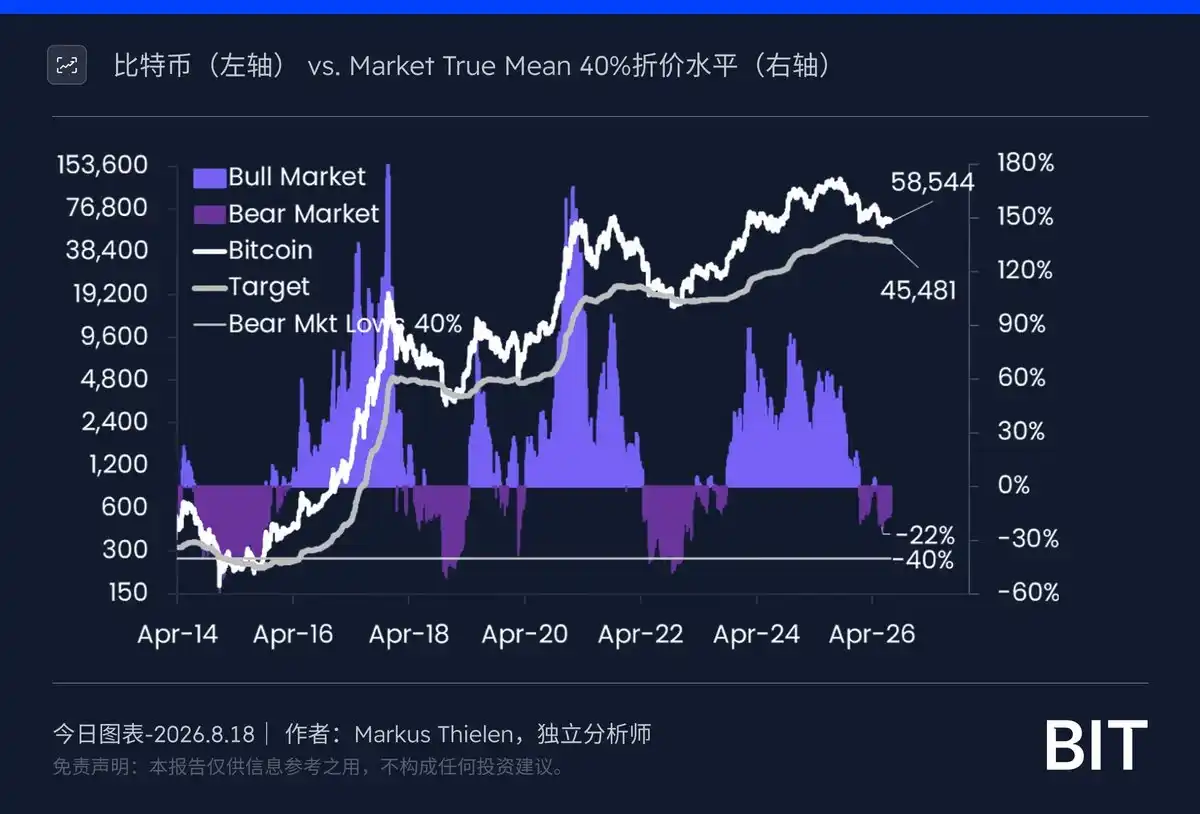
The options market still shows strong bearish sentiment, with put option premiums significantly higher than calls, but open interest and funding rates indicate a gradual unwinding of leverage. BIT's view is that, based on historical data, Bitcoin has traded about 40% below its long-term market average during bear markets. If this pattern repeats, the price could drop to around $45,500. Currently, the potential downside risk from the current price is about 20%, corresponding to an upside potential of about 60%. The risk-reward ratio is gradually improving, but macro risks could still drive another downturn. The real test is whether spot demand can sustainably turn positive and hold above the cost basis.

The key focus for BTC moving forward is two things: whether the Fed meeting minutes are hawkish, and whether the U.S. 20-year Treasury auction goes smoothly. If the bond market remains concerning, BTC may test around $63,000; if interest rate pressure eases, BTC has a chance to challenge the $66,000 to $70,000 range again.

Key Points for Today:

  • Ethereum will conduct the Glamsterdam upgrade fork on the Platåberget testnet on August 20.

  • KAITO (KAITO) unlocks approximately 32.6 million tokens, valued around $11.5 million.

  • LayerZero (ZRO) unlocks approximately 25.72 million tokens, valued around $19.62 million.

  • Upbit 24-hour trading volume ranking: BTC, XRP, ETH, LA, DOS.

  • Bitcoin Spot ETF: +$189 million.

  • Ethereum Spot ETF: +$71.468 million.

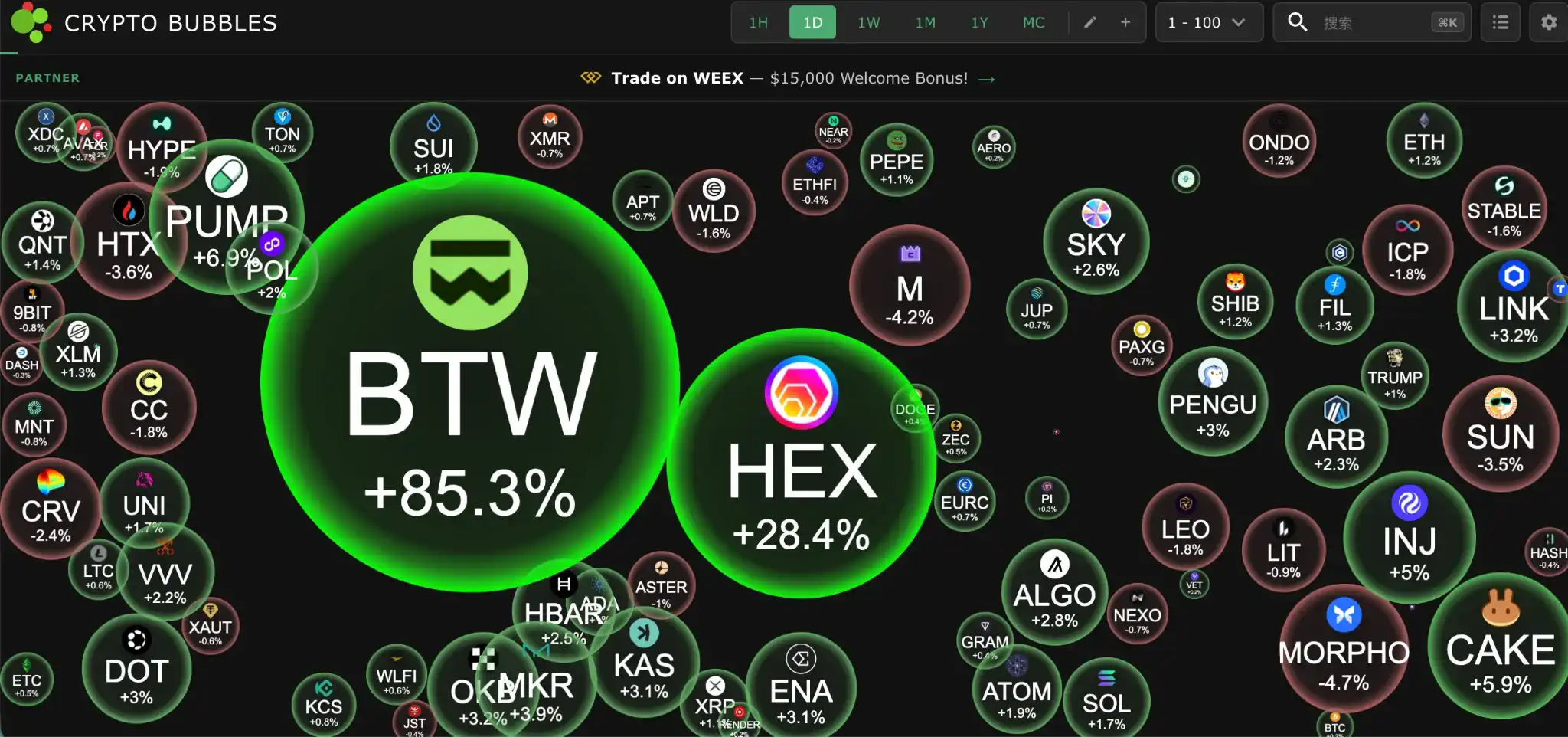
Today's top gainers among the top 100 cryptocurrencies by market cap: BTW up 85.3%, HEX up 28.4%, PUMP up 6.9%, CAKE up 5.9%, INJ up 5%.
Stock Index Futures Test Rebound, AI Sector Remains the Eye of the Storm

U.S. stock index futures showed mixed performance, with Dow futures up 0.06%, Nasdaq 100 futures down 0.04%, and S&P 500 futures up 0.02%.
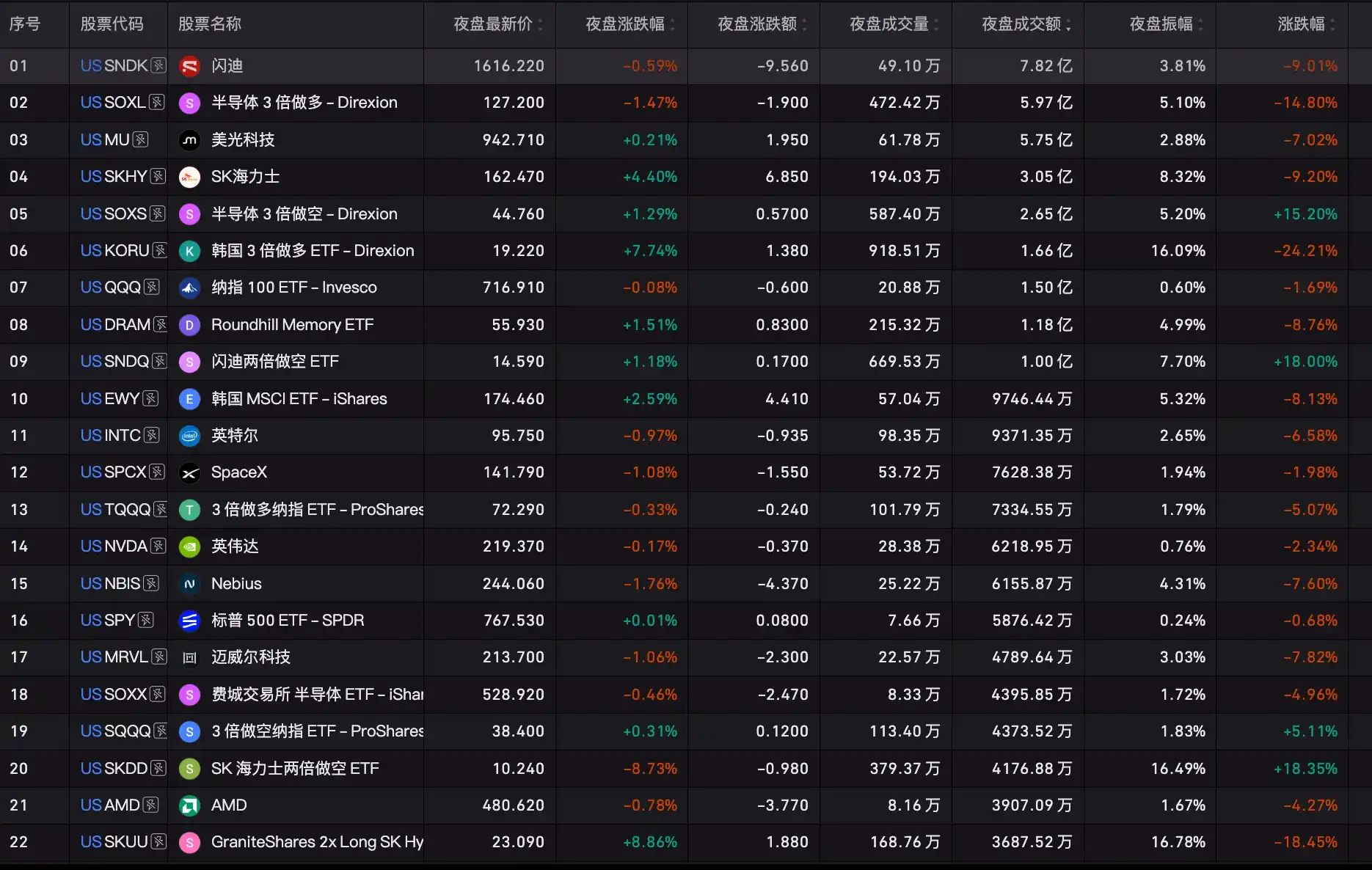
BIT after-hours data shows that SK Hynix was the most watched stock in after-hours trading, rising over 4%. The company announced a stock buyback plan worth 40 trillion won. The repurchased shares will be canceled to enhance shareholder returns. This move temporarily stabilized sentiment in the memory sector. The memory ETF DRAM rose 1.51%, Micron Technology rose slightly by 0.21%, while SanDisk fell 0.59%.

However, most U.S. stocks remained in a downtrend: NVIDIA fell 0.17%, AMD fell 0.78%, Nebius fell 1.76%, and Marvell Technology fell 1.06%.

Bond Market Storm Overwhelms AI Narrative, Funds Turn Defensive
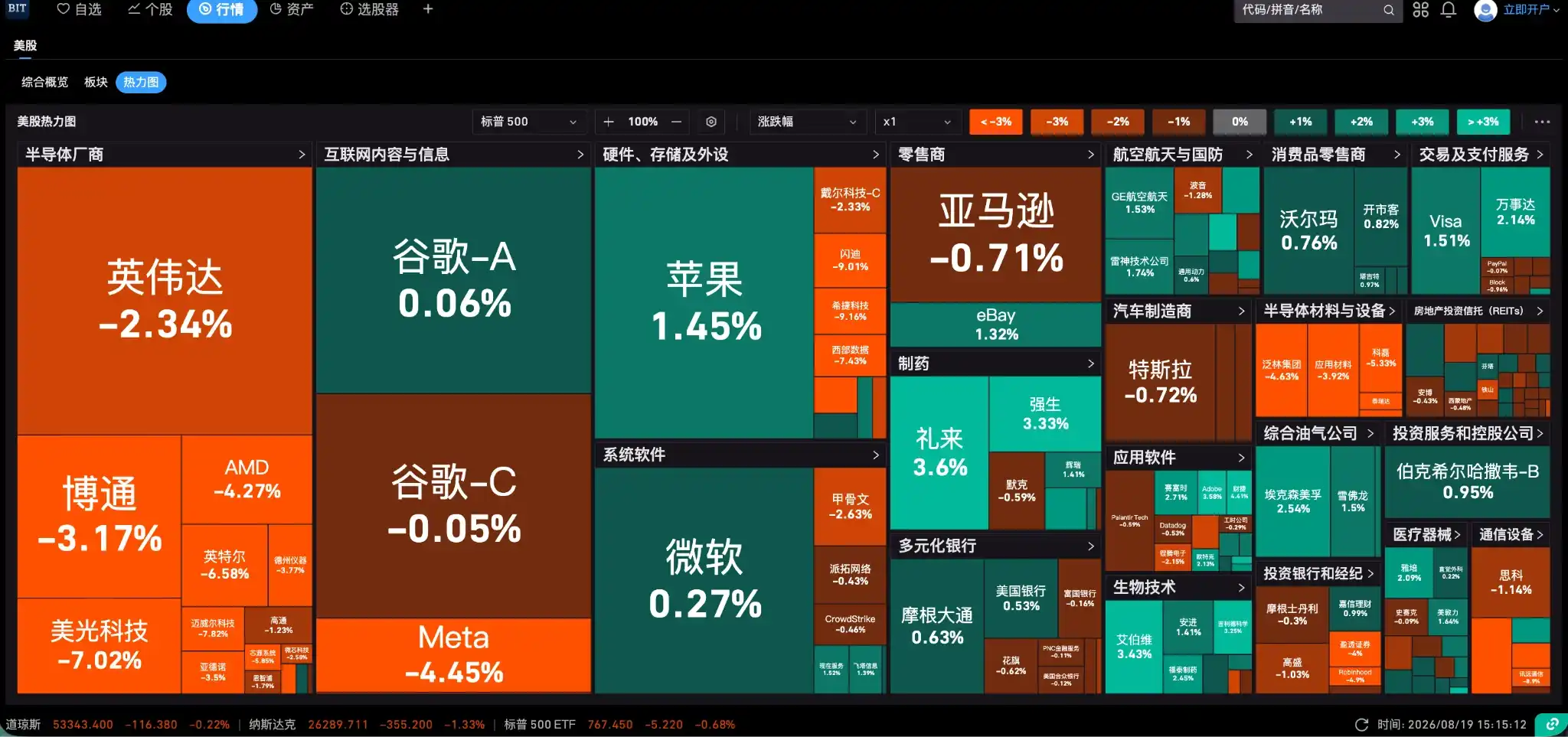
Last night's main theme in U.S. stocks wasn't equities, but bonds. The U.S. 30-year Treasury yield touched 5.338% intraday, hitting its highest level since 2007, while the 10-year yield approached 4.75%. Long-term bond yields in France, Germany, the UK, and Japan also surged simultaneously, raising global funding costs together.

The AI sector became the center of selling. The Philadelphia Semiconductor Index fell about 5% as market logic regarding AI capital expenditures wavered, with concerns shifting from a "growth story" to a "debt story." Goldman Sachs data shows that AI-related bond issuance this year has reached $489 billion, far exceeding the full-year 2025 level. Meanwhile, OpenAI's Q2 operating loss widened to $12.3 billion, and Anthropic's annualized revenue run rate fell short of market expectations, further intensifying investor anxiety over the mismatch between high AI investment and return cycles.

Memory stocks, as the most elastic segment in AI server expansion, led the decline: Micron Technology fell about 7%, Seagate fell over 9%, and SK Hynix ADR fell over 9%. Optical communication and AI cloud service providers faced more intense valuation reassessments: Applied Optoelectronics fell about 15%, Coherent fell over 12%, and CoreWeave fell over 12%. BIT analysis points out that for companies whose business models heavily rely on continuous financing, their valuation elasticity has an inverse amplification effect in the environment of surging long-term rates.

Meta fell 4.45% amid a joint lawsuit from 29 states. In contrast, Apple, which is not deeply involved in the "arms race" of AI data center capital expenditures, was viewed as a tech defensive stock by the market and rose 1.45%. Microsoft, Google, and Amazon performed relatively steadily.

Analysts note that the core of the current bond market turmoil lies in the U.S. fiscal deficit outlook for the next decade. Currently, nearly one out of every five dollars of U.S. government revenue is used to pay interest. This "normalization" is forcing the market to re-evaluate the intrinsic value of high-valuation tech stocks.
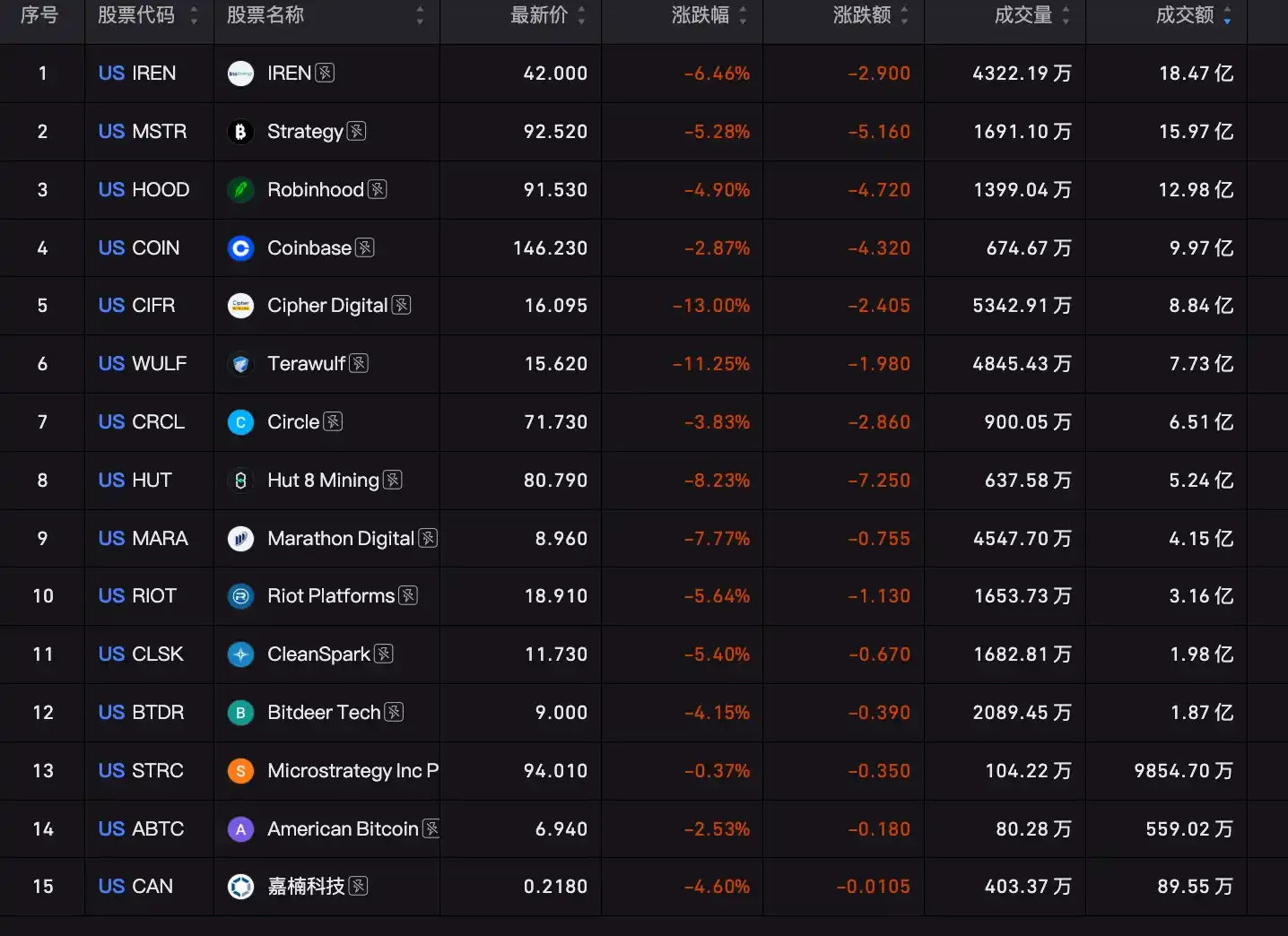
Crypto-related stocks fell sharply. According to BIT U.S. Stocks data, Coinbase fell 2.87%, Robinhood fell 4.9%, Strategy fell 5.28%, and Circle fell 3.83%.

Among mining companies: Cipher Digital fell 13%, TeraWulf fell 11.25%, Hut 8 fell 8.23%, MARA fell 7.77%, IREN fell 6.46%; CleanSpark, Canaan, Riot, and Bitdeer fell between 5% and 6%. VanEck remains optimistic about the long-term value of some miners transitioning to AI data centers, but short-term factors like rising rates, data center scrutiny, and AI capex concerns will pressure the sector.

Seoul and Tokyo Slam the Brakes, Chip Stocks Become Core of Asia-Pacific Sell-off, Unitree Tech IPO Sets New Benchmark for Humanoid Robot Valuations

High global bond yields and oil price inflation concerns directly impacted Asian risk assets. South Korea's KOSPI index closed down 5.80%, with chip stocks being the main drag. SK Hynix closed down about 10%, and Samsung Electronics fell nearly 8%. Although revenue and net profit for listed companies on Korea's main board saw significant growth in the first half (with semiconductor leaders contributing significantly), short-term sentiment was dominated by U.S. bond and stock sell-offs.

The Japanese market also opened low and moved lower, with the Nikkei 225 closing down 3.16% and the Topix index also falling significantly by about 2%. Heavyweight tech giants like SoftBank Group, Tokyo Electron, and memory chip maker Kioxia faced concentrated profit-taking. Tech giants like SoftBank were hit by a double whammy of valuation concerns and bond market volatility.

A-shares opened low and moved lower throughout the day. The Shanghai Composite Index fell about 2.4%, the Shenzhen Component Index fell about 5%, the ChiNext Index fell over 6%, and the STAR 50 Index once fell nearly 7%. Over 5,000 stocks declined across the market. Robotics, computing hardware, semiconductors, and MLCC concepts were heavily hit, with many stocks limit-down. Coal and some shipping and banking sectors showed relative resilience.

Unitree Technology became the strongest narrative and the biggest source of volatility in A-shares. On its first day of listing on the STAR Market, the stock surged 629.44% at open to 1,100 yuan per share, with total market capitalization once reaching 444.9 billion yuan. Subsequently, gains moderated to around 460%, with the stock price around 845 yuan. Chairman Wang Xingxing's shareholding value exceeded 100 billion yuan, making him the new richest person among those born in the 1990s. Lei Jun's Shunwei Capital, Liang Wenfeng's DeepSeek, and Huanfang Quantitative also profited handsomely. Nomura Securities assigned a "Buy" rating, forecasting its 2026-2028 revenue CAGR at 122%. However, the overall robotics sector was hit hard, with stocks like Julong Intelligence, Wuzhou Xinchun, Qinchuan Machine Tool, and many others limit-down. This indicates a rapid switch between "leader frenzy" and "sector pullback" in the market.

In Hong Kong stocks, the Hang Seng Index rose slightly by 0.09%, while the Hang Seng Tech Index fell 1.21%. Tech stocks fell broadly: MINIMAX fell about 8%, Baidu Group fell about 11%, while China Unicom, Huahong Grace, and Cambridge Technology all fell around 12%. Kuaishou Technology released its 2026 Q2 earnings, with revenue of 35.54 billion yuan and adjusted net profit of 3.91 billion yuan, both exceeding market expectations. Average monthly active users reached 800 million, significantly surpassing the estimated 740 million. Among these, Kling AI performed brilliantly, with quarterly revenue exceeding 850 million yuan, a year-on-year increase of over 200%, continuing to lead the commercialization of the global AI video generation industry. Despite solid earnings, Hong Kong-listed internet stocks still faced significant selling pressure amid market risk-off sentiment.

What to Watch Next:

August 19 (Wednesday)

  • Seoul AI Summit held from August 19-21: Tech leaders including Google DeepMind, Google Cloud, Microsoft Research, NVIDIA, LG AI Research, and Hyundai Motor are attending. Market focus is on new collaborations in large models, AI cloud, autonomous driving, AI chips, and enterprise applications. Related signals may catalyze global AI software, cloud computing, chip, and robotics supply chains.

  • World Robot Conference held in Beijing from August 19-23: Unitree, Ubtech, Siasun, Galaxy General, Tiangang, and others will showcase humanoid robots and industrial robot solutions. If mass production progress, order fulfillment, or cost reductions exceed expectations, it could catalyze sentiment in the A-share robotics supply chain (reducers, servos, motors, sensors, controllers, and OEMs).

  • HKEX, Kuaishou (19:00 conference call), Hengrui Medicine, ZTO Express, Kingsoft, Kingsoft Cloud, Weibo earnings: For Kuaishou, focus on e-commerce GMV, advertising recovery, profit margins, and AI video tools; HKEX - watch trading volume, IPO pipeline, and derivatives business; Hengrui Medicine - validates innovative drug overseas expansion and R&D delivery; Kingsoft Cloud - an observation point for elasticity in China-concept AI cloud demand.

August 20 (Thursday)

  • 01:00 U.S. Treasury auctions 20-year bonds: Following last week's surge in yields for 10-year and 30-year bond auctions, the bid-to-cover ratio and foreign demand for this 20-year auction will serve as a "super stress test" for the bond market. If demand is weak, it could directly push the 30-year Treasury yield above the 5.35% level, triggering a severe chain reaction in global fixed income markets.

  • 02:00 Release of Fed's July Monetary Policy Meeting Minutes: The market will scrutinize internal discussion details, especially regarding tolerance for inflation (including energy-driven) and the inclination of some members towards rate hikes. Hawkish wording could push long-end yields higher, increasing pressure on high-valuation assets like AI. If it shows increased focus on economic slowdown, it may moderate the pace of rate increases.

  • 09:00 China's 1-year Loan Prime Rate (LPR) announcement: If July economic data was weak, whether the LPR is cut will serve as a litmus test for policy stance. A rate cut would benefit property-related sectors, consumption, Hong Kong-listed internet stocks, and high-dividend assets. If unchanged, the market may turn to waiting for RRR cuts, fiscal expansion, or further property policy easing.

  • 20:30 U.S. Initial Jobless Claims: Employment data will influence Fed pricing together with the previously weak Non-Farm Payrolls. If claims rise, it will reinforce expectations of economic cooling and a September pause in rate hikes. If the job market remains strong, market confidence in "no action" may decrease.

  • Alibaba (20:00 conference call), Pop Mart, NetEase, Walmart, Ping An Insurance, China Telecom, AIA Group, Li Ning, Futu Holdings earnings: Alibaba is the top focus among China concepts. Watch e-commerce GMV, Cloud Intelligence revenue, AI investment, and commercialization of Tongyi Qianwen. For Pop Mart, focus on IP overseas expansion, store expansion, and gross margin. NetEase validates gaming revenue and AI tools. Walmart is a key bellwether for U.S. consumer resilience.

August 21 (Friday)

  • 07:30 Japan's July Core CPI: If inflation is higher than expected, expectations for a BOJ rate hike in September will heat up, potentially causing volatility in the yen and global yield curves. If inflation cools, it will ease pressure on global carry trade unwinding and reduce upward pressure on global long-term rates.

  • 08:00 South Korea's August 1-20 Export Data: Previous data showed a year-on-year increase as high as 52.3%, driven mainly by memory price increases and AI chip exports. This data is a leading indicator for the global semiconductor cycle and the sustainability of AI capital expenditures, directly impacting sentiment for Samsung, SK Hynix, Micron, TSMC, AMD, NVIDIA, and the A-share semiconductor supply chain.

  • Announcement of Q2 Hang Seng Index Series review results: CICC predicts Zijing Mining International, Zhipu AI, MINIMAX-W, etc., are high on the potential inclusion candidate list. If inclusion expectations materialize, it will bring passive fund allocation and short-term liquidity catalysts. If expectations are dashed, related stocks may face selling pressure.

  • NYMEX September Crude Oil Futures contract rollover: Against the backdrop of Hormuz Strait risks and expectations of U.S. sanctions on Iran, the rollover could amplify volatility in near-month contracts. If the spot premium widens, it indicates tight physical supply. If the spread narrows, upward momentum in oil prices may weaken.

  • ZTE, Zijing Mining, Zhongji Innolight, Yangtze Optical Fibre and Cable, KE Holdings, Sinopec earnings: Zhongji Innolight and Yangtze Optical Fibre will validate AI optical module and fiber demand. Watch ZTE's computing power network and carrier capex. Zijing Mining is driven by gold and copper prices. KE Holdings reflects recovery in China's property transaction chain. Sinopec is directly influenced by oil prices and refining margins.


Трендові криптовалюти

Пов'язані питання

QWhat are the key technical resistance and support levels for Bitcoin mentioned in the article?

AThe key resistance level for Bitcoin is concentrated around $65.4K near the 50-month Exponential Moving Average (EMA) and the potential head-and-shoulders bottom neckline. The main support is focused on the $62K to $63K range. If this support fails, the price could test the $60K to $61K range to sweep out liquidity. Analyst Aksel Kibar notes that if the head-and-shoulders bottom pattern holds, the rebound target could be $76K; otherwise, it might drop to $53K.

QHow has the bond market impacted AI and tech stocks according to the article?

AThe surge in long-term U.S. Treasury yields, with the 30-year yield hitting a multi-year high of 5.338%, has increased global funding costs and triggered a sell-off in AI and high-valuation tech stocks. AI is now at the center of the sell-off, with the Philadelphia Semiconductor Index dropping about 5%. The market is questioning the AI capital expenditure narrative, fearing it may be shifting from a 'growth story' to a 'debt story'. Companies with business models heavily reliant on continuous financing, such as those in AI cloud services and optical communication, are facing severe valuation reassessment.

QWhat actions did SK Hynix take, and what was the market reaction?

ASK Hynix announced a share buyback plan worth 40 trillion won. The repurchased shares will be cancelled to enhance shareholder returns. This move provided short-term stability for the memory sector sentiment. In the U.S. stock overnight market, SK Hynix's stock rose over 4%, the memory ETF DRAM rose 1.51%, and Micron Technology rose slightly by 0.21%.

QWhat significant event occurred for Unitree Robotics, and how did the broader robotics sector react?

AUnitree Robotics debuted on the STAR Market, with its stock price surging 629.44% at the opening to 1,100 yuan per share, giving it a peak market cap of approximately 444.9 billion yuan. Chairman Wang Xingxing's holdings exceeded 100 billion yuan, making him the richest post-90s individual. However, the broader robotics sector in the A-share market experienced a significant downturn. Stocks like Julong Intelligent, Wuzhou Xinchun, and Qinchuan Machine Tool fell to their daily limit-downs, indicating a rapid market shift between 'leader frenzy' and 'sector pullback'.

QWhat are the two upcoming events the article suggests are critical to watch for Bitcoin's near-term price direction?

AThe article highlights two critical upcoming events for Bitcoin's near-term price direction: 1) The release of the Federal Reserve's July FOMC meeting minutes, to see if the tone is hawkish. 2) The U.S. 20-year Treasury bond auction, to gauge its success. If bond market pressures persist, Bitcoin could test around $63K. If interest rate pressures ease, Bitcoin may have another chance to challenge the $66K to $70K range.

Пов'язані матеріали

BONK Crypto Treasury Company Has Only $2.14 Million Cash Left, 70% of Revenue Comes from Founder's Own Platform

BONK Inc. (BNKK), the NASDAQ-listed company associated with the Solana meme coin BONK, reported stark financials for the first half of the year. While revenue skyrocketed 6,218% year-over-year to $5.5 million, the company posted a net loss of $7.88 million and its cash reserves plummeted to just $214,000. Its auditors issued a "going concern" warning, citing cumulative losses of $191.4 million, negative operating cash flow, and critically low liquidity. A critical detail is that $3.92 million, or 71%, of its revenue came from an "affiliate revenue share" with LetsBonk.fun, a meme coin launchpad. This platform is linked to founder Mitchell Rudy, whose entity, Lucky Dog Holdings, beneficially owns approximately 40.2% of common stock and all C Series preferred shares. These preferred shares grant the holder the right to elect half of the company's board. The company's financial structure is further intertwined with Rudy; it sold $50 million worth of stock to his entities, accepting payment in BONK tokens. Fluctuations in the value of these and other held digital assets led to an $8.17 million unrealized loss, the primary driver of the net loss. With operating cash outflows of $4.17 million for the half-year, the remaining cash covers roughly nine days of operations at the current burn rate, highlighting severe financial strain despite top-line growth.

marsbit26 хв тому

BONK Crypto Treasury Company Has Only $2.14 Million Cash Left, 70% of Revenue Comes from Founder's Own Platform

marsbit26 хв тому

CryptoQuant Noted a Signal of a Bitcoin Reversal

CryptoQuant has highlighted a potential reversal signal for Bitcoin, suggesting the bearish phase might be nearing its end as on-chain metrics show initial signs of spot demand recovery. Their analysis indicates that the 30-day spot demand metric has recovered from -206,000 BTC in late July to approximately -5,000, close to turning positive for the first time since February 2026. Historically, such a reversal has been followed by a median 60-day price gain of 18.1%, with a win rate of 78% (increasing to 87% when valuations are depressed). However, they caution that this is a favorable sign, not a guarantee. Analysts from Bitfinex Alpha note that two of three conditions for a sustainable Bitcoin recovery are already met: improved Federal Reserve rate expectations and relatively accommodative financial conditions, thanks to easing inflation and reduced odds of a near-term rate hike. The missing third catalyst is a capital rotation from traditional markets (like stocks and AI infrastructure) into cryptocurrencies. If this occurs, Bitcoin could reclaim $70,000. Conversely, continued negative flows might see support tested around $57,000. Current headwinds include significant weekly outflows from US spot Bitcoin ETFs (roughly $385 million) and reduced stablecoin supply. Wintermute offers a more cautious outlook, pointing to the same large ETF outflows and ongoing miner selling pressure. They note that Bitcoin has failed to rally despite the improved Fed outlook, which is typically bullish for risk assets. As an example, they cite miner Riot Platforms, which sold a substantial portion of its Bitcoin reserves in Q2 as its mining cost (~$91,000 per BTC) remains far above the current market price, forcing sales for liquidity. This combination of ETF outflows and miner selling is suppressing new demand.

cryptonews.ru28 хв тому

CryptoQuant Noted a Signal of a Bitcoin Reversal

cryptonews.ru28 хв тому

Is a Strong Ruble Good? Not for the Budget: Treasury Already Short 1.5 Trillion

The Russian budget has lost about 1.5 trillion rubles in revenue since the start of 2026 due to the ruble being stronger than the government's planned exchange rate. The budget was based on an average annual rate of 92.2 rubles per US dollar, but the actual average for the first seven and a half months was just 76.9 rubles. This discrepancy creates a significant shortfall, as every ruble of appreciation against the dollar reduces annual budget revenues by 140–160 billion rubles. When accounting for oil and gas revenues, the sensitivity is even higher, with potential annual losses reaching up to 2.5 trillion rubles. So far this year, the budget has already missed out on roughly 1.7 trillion rubles. The ruble's exchange rate has shown considerable volatility in 2026, ranging from a low near 71 rubles per dollar in May to over 85 rubles by mid-August. Despite this recent weakening, the year's average remains well below the budget target, creating a structural deficit in oil and gas revenues. Forecasts suggest the final average rate for 2026 will be around 80–82 rubles, which would result in a budget shortfall of about 1.6 trillion rubles. A strong ruble reduces import costs and inflation but also cuts the ruble earnings of exporters and threatens the funding of social obligations. The gap between the planned and actual rate is attributed not only to oil price dynamics but also to the fiscal rule mechanism, which can influence the currency's direction. The Ministry of Finance recently halted foreign currency sales under this rule, removing dollar supply from the market and contributing to pressure on the exchange rate. The budget policy is now forced to adapt to a stronger ruble than originally planned.

cryptonews.ru29 хв тому

Is a Strong Ruble Good? Not for the Budget: Treasury Already Short 1.5 Trillion

cryptonews.ru29 хв тому

Торгівля

Спот

Популярні статті

Що таке BITCOIN

Розуміння HarryPotterObamaSonic10Inu (ERC-20) та його позиції у крипто-просторі Останніми роками ринок криптовалют спостерігав за зростанням популярності мем-коінів, які привертають інтерес не тільки трейдерів, але й тих, хто шукає спілкування та розважальну цінність. Серед цих унікальних токенів є HarryPotterObamaSonic10Inu (ERC-20), інтригуючий проект, що поєднує культурні посилання з тканинами криптовалюти. Ця стаття досліджує ключові аспекти HarryPotterObamaSonic10Inu, вивчаючи його механізми, спільноту та його взаємодію з ширшим крипто-ландшафтом. Що таке HarryPotterObamaSonic10Inu (ERC-20)? Як випливає з його назви, HarryPotterObamaSonic10Inu є мем-коіном, побудованим на блокчейні Ethereum, класифікованим за стандартом ERC-20. На відміну від традиційних криптовалют, які можуть підкреслювати практичну корисність або інвестиційний потенціал, цей токен процвітає завдяки розважальній цінності та силі своєї спільноти. Проект спрямований на створення середовища, де зацікавлені користувачі можуть об'єднуватися, ділитися ідеями та брати участь у заходах, натхненних різноманітними культурними явищами. Однією з примітних особливостей HarryPotterObamaSonic10Inu є нульовий податок на транзакції. Цей привабливий елемент має на меті заохочувати торгівлю та участь у спільноті, позбавлену додаткових витрат, які можуть відлякувати дрібних трейдерів. Загальна пропозиція монет становить один мільярд токенів, що позначає намір підтримувати суттєву циркуляцію в межах спільноти. Творець HarryPotterObamaSonic10Inu (ERC-20) Походження HarryPotterObamaSonic10Inu дещо окутане таємницею; деталі про творця залишаються невідомими. Розвиток цього токена позбавлений впізнаваної команди або чіткої стратегії, що не є рідкістю в секторі мем-коінів. Натомість проект виник органічно, а його розвиток значною мірою залежить від ентузіазму та участі його спільноти. Інвестори HarryPotterObamaSonic10Inu (ERC-20) Щодо зовнішніх інвестицій та підтримки, HarryPotterObamaSonic10Inu також залишається невизначеним. Токен не зазначає жодних відомих інвестиційних фондів або значної організаційної підтримки. Натомість життєва сила проекту полягає в його базовій спільноті, яка інформує про його зростання та стійкість через колективні дії та залученість у крипто-просторі. Як працює HarryPotterObamaSonic10Inu (ERC-20)? Як мем-коін, HarryPotterObamaSonic10Inu функціонує передусім поза традиційними рамками, що часто регулюють вартість активів. Є кілька відмінних аспектів, що визначають, як працює проект: Транзакції без податку: Завдяки відсутності податкових зборів на транзакції, користувачі можуть вільно купувати та продавати токен, не турбуючись про приховані витрати. Залучення спільноти: Проект процвітає завдяки взаємодії спільноти, використовуючи соціальні медіа для створення шуму та сприяння залученню. Обговорення, обмін контентом та залученість є ключовими елементами, що допомагають розширити його охоплення та зміцнити лояльність серед прихильників. Відсутність практичної корисності: Слід зазначити, що HarryPotterObamaSonic10Inu не пропонує конкретної корисності в рамках фінансової екосистеми. Натомість він класифікується як токен, що призначений в основному для розваги та спільнотних активностей. Культурне посилання: Токен кмітливо вплітає елементи популярної культури, щоб привернути інтерес, зв'язуючи з ентузіастами мемів та крипто-стежками. HarryPotterObamaSonic10Inu ілюструє, як мем-коіни функціонують інакше, ніж традиційні криптовалютні проекти, увійшовши на ринок як інноваційні соціальні конструкти, а не утилітарні активи. Хронологія HarryPotterObamaSonic10Inu (ERC-20) Історія HarryPotterObamaSonic10Inu відзначена кількома значними етапами: Створення: Токен виник з вірусного мему, захопивши уяву багатьох крипто-ентузіастів. Конкретні дати створення недоступні, що підкреслює його органічний розвиток. Лістинг на біржах: HarryPotterObamaSonic10Inu з'явився на різних біржах, дозволяючи зручніший доступ і торгівлю спільноти. Ініціативи залучення спільноти: Ведення діяльності, спрямованої на покращення взаємодії спільноти, включаючи конкурси, кампанії в соціальних мережах та створення контенту від фанатів та прихильників. Плани на майбутнє: Дорожня карта проекту включає запуск колекції NFT, мерчандайзинг та електронну комерцію, пов'язану з його культурними темами, що далі залучає спільноту та намагається додати більше вимірів до його екосистеми. Ключові моменти про HarryPotterObamaSonic10Inu (ERC-20) Спільнотний підхід: Проект надає пріоритет колективному внеску та креативності, забезпечуючи, щоб участь користувачів була в центрі його розвитку. Класифікація як мем-коін: Це є його епігенез розважальної криптовалюти, що відрізняється від традиційних інвестиційних інструментів. Жодного прямого відношення до Bitcoin: Незважаючи на схожість у назві, HarryPotterObamaSonic10Inu є відмінним і не має жодного зв’язку з Bitcoin або іншими усталеними криптовалютами. Зосередженість на співпраці: HarryPotterObamaSonic10Inu створено для того, щоб надати простір для співпраці та обміну історіями серед його власників, забезпечуючи шлях для творчості та спільного зв'язку. Перспективи на майбутнє: Амбіція розширитися за межі початкової концепції в NFT та мерчандайз відкриває шлях для проекту потенційно потрапити в більш мейнстрімні сфери цифрової культури. Оскільки мем-коіни продовжують захоплювати уяву спільноти криптовалют, HarryPotterObamaSonic10Inu (ERC-20) вирізняється своїми культурними зв'язками та орієнтованим на спільноту підходом. Хоча він може не відповідати типовій моделі утилітарного токена, його суть полягає в радощах і товариськості, що підтримуються серед його прихильників, підкреслюючи еволюційну природу криптовалют в усе більш цифрову епоху. Оскільки проект продовжує розвиватися, важливо спостерігати за тим, як динаміка спільноти вплине на його траєкторію в постійно змінюваному ландшафті технології блокчейн.

2.8k переглядів усьогоОпубліковано 2024.04.01Оновлено 2024.12.03

Що таке BITCOIN

Як купити BTC

Ласкаво просимо до HTX.com! Ми зробили покупку Bitcoin (BTC) простою та зручною. Дотримуйтесь нашої покрокової інструкції, щоб розпочати свою криптовалютну подорож.Крок 1: Створіть обліковий запис на HTXВикористовуйте свою електронну пошту або номер телефону, щоб зареєструвати обліковий запис на HTX безплатно. Пройдіть безпроблемну реєстрацію й отримайте доступ до всіх функцій.ЗареєструватисьКрок 2: Перейдіть до розділу Купити крипту і виберіть спосіб оплатиКредитна/дебетова картка: використовуйте вашу картку Visa або Mastercard, щоб миттєво купити Bitcoin (BTC).Баланс: використовуйте кошти з балансу вашого рахунку HTX для безперешкодної торгівлі.Треті особи: ми додали популярні способи оплати, такі як Google Pay та Apple Pay, щоб підвищити зручність.P2P: Торгуйте безпосередньо з іншими користувачами на HTX.Позабіржова торгівля (OTC): ми пропонуємо індивідуальні послуги та конкурентні обмінні курси для трейдерів.Крок 3: Зберігайте свої Bitcoin (BTC)Після придбання Bitcoin (BTC) збережіть його у своєму обліковому записі на HTX. Крім того, ви можете відправити його в інше місце за допомогою блокчейн-переказу або використовувати його для торгівлі іншими криптовалютами.Крок 4: Торгівля Bitcoin (BTC)Легко торгуйте Bitcoin (BTC) на спотовому ринку HTX. Просто увійдіть до свого облікового запису, виберіть торгову пару, укладайте угоди та спостерігайте за ними в режимі реального часу. Ми пропонуємо зручний досвід як для початківців, так і для досвідчених трейдерів.

5.6k переглядів усьогоОпубліковано 2024.12.12Оновлено 2026.06.02

Як купити BTC

Що таке $BITCOIN

ЦИФРОВЕ ЗОЛОТО ($BITCOIN): Комплексний аналіз Вступ до ЦИФРОВОГО ЗОЛОТА ($BITCOIN) ЦИФРОВЕ ЗОЛОТО ($BITCOIN) — це проект на основі блокчейну, що працює в мережі Solana, який має на меті поєднати характеристики традиційних дорогоцінних металів з інноваціями децентралізованих технологій. Хоча він має таку ж назву, як і Bitcoin, який часто називають “цифровим золотом” через його сприйняття як засобу збереження вартості, ЦИФРОВЕ ЗОЛОТО є окремим токеном, розробленим для створення унікальної екосистеми в ландшафті Web3. Його мета — позиціонувати себе як життєздатний альтернативний цифровий актив, хоча деталі щодо його застосувань і функціональностей все ще розробляються. Що таке ЦИФРОВЕ ЗОЛОТО ($BITCOIN)? ЦИФРОВЕ ЗОЛОТО ($BITCOIN) — це токен криптовалюти, спеціально розроблений для використання в блокчейні Solana. На відміну від Bitcoin, який виконує широко визнану роль зберігання вартості, цей токен, здається, зосереджується на більш широких застосуваннях і характеристиках. Помітні аспекти включають: Інфраструктура блокчейну: Токен побудований на блокчейні Solana, відомому своєю здатністю обробляти швидкі та низьковартісні транзакції. Динаміка постачання: ЦИФРОВЕ ЗОЛОТО має максимальне постачання, обмежене 100 квадрильйонами токенів (100P $BITCOIN), хоча деталі щодо його обігового постачання наразі не розголошуються. Утиліта: Хоча точні функціональності не викладені, є вказівки на те, що токен може бути використаний для різних застосувань, потенційно пов'язаних з децентралізованими додатками (dApps) або стратегіями токенізації активів. Хто є творцем ЦИФРОВОГО ЗОЛОТА ($BITCOIN)? На даний момент особа творців і команди розробників, що стоять за ЦИФРОВИМ ЗОЛОТОМ ($BITCOIN), залишається невідомою. Ця ситуація є типовою для багатьох інноваційних проектів у сфері блокчейну, особливо тих, що пов'язані з децентралізованими фінансами та феноменом мем-коінів. Хоча така анонімність може сприяти культурі, орієнтованій на спільноту, вона посилює занепокоєння щодо управління та підзвітності. Хто є інвесторами ЦИФРОВОГО ЗОЛОТА ($BITCOIN)? Доступна інформація вказує на те, що ЦИФРОВЕ ЗОЛОТО ($BITCOIN) не має жодних відомих інституційних спонсорів або помітних венчурних капіталовкладень. Проект, здається, працює за моделлю “рівний до рівного”, зосереджуючись на підтримці та прийнятті спільноти, а не на традиційних шляхах фінансування. Його активність і ліквідність переважно розташовані на децентралізованих біржах (DEX), таких як PumpSwap, а не на встановлених централізованих торгових платформах, що ще більше підкреслює його підхід знизу вгору. Як працює ЦИФРОВЕ ЗОЛОТО ($BITCOIN) Операційні механізми ЦИФРОВОГО ЗОЛОТА ($BITCOIN) можна детальніше розглянути на основі його дизайну блокчейну та характеристик мережі: Механізм консенсусу: Використовуючи унікальний proof-of-history (PoH) Solana в поєднанні з моделлю proof-of-stake (PoS), проект забезпечує ефективну валідацію транзакцій, що сприяє високій продуктивності мережі. Токеноміка: Хоча конкретні дефляційні механізми не були детально описані, велике максимальне постачання токенів вказує на те, що воно може задовольняти мікротранзакції або нішеві випадки використання, які ще потрібно визначити. Інтероперабельність: Існує потенціал для інтеграції з більш широкою екосистемою Solana, включаючи різні платформи децентралізованих фінансів (DeFi). Однак деталі щодо конкретних інтеграцій залишаються невизначеними. Хронологія ключових подій Ось хронологія, яка підкреслює значні віхи, пов'язані з ЦИФРОВИМ ЗОЛОТОМ ($BITCOIN): 2023: Початкове розгортання токена відбувається на блокчейні Solana, позначене його адресою контракту. 2024: ЦИФРОВЕ ЗОЛОТО набуває видимості, оскільки стає доступним для торгівлі на децентралізованих біржах, таких як PumpSwap, що дозволяє користувачам торгувати ним проти SOL. 2025: Проект спостерігає спорадичну торгову активність і потенційний інтерес до ініціатив, очолюваних спільнотою, хоча на даний момент не зафіксовано жодних значних партнерств або технічних досягнень. Критичний аналіз Сильні сторони Масштабованість: Основна інфраструктура Solana підтримує високі обсяги транзакцій, що може підвищити утиліту $BITCOIN у різних сценаріях транзакцій. Доступність: Потенційно низька торгова ціна за токен може привабити роздрібних інвесторів, сприяючи більш широкій участі завдяки можливостям дробового володіння. Ризики Відсутність прозорості: Відсутність публічно відомих спонсорів, розробників або процесу аудиту може викликати скептицизм щодо стійкості та надійності проекту. Волатильність ринку: Торгова активність сильно залежить від спекулятивної поведінки, що може призвести до значної волатильності цін і невизначеності для інвесторів. Висновок ЦИФРОВЕ ЗОЛОТО ($BITCOIN) постає як цікавій, але неоднозначний проект у швидко розвиваючійся екосистемі Solana. Хоча він намагається використати наратив “цифрового золота”, його відхід від встановленої ролі Bitcoin як засобу збереження вартості підкреслює необхідність чіткішого розмежування його передбачуваної утиліти та структури управління. Майбутнє прийняття та адаптація, ймовірно, залежатиме від вирішення поточної непрозорості та більш чіткого визначення його операційних та економічних стратегій. Примітка: Цей звіт охоплює синтезовану інформацію, доступну станом на жовтень 2023 року, і можуть відбутися події, що виходять за межі дослідницького періоду.

512 переглядів усьогоОпубліковано 2025.05.13Оновлено 2025.05.13

Що таке $BITCOIN

Обговорення

Ласкаво просимо до спільноти HTX. Тут ви можете бути в курсі останніх подій розвитку платформи та отримати доступ до професійної ринкової інформації. Нижче представлені думки користувачів щодо ціни BTC (BTC).

活动图片