2025 Year-End Final Exam: Crypto Asset Allocation Guide After the FOMC Decision

marsbitОпубліковано о 2025-12-18Востаннє оновлено о 2025-12-18

Анотація

Crypto markets face a critical juncture in late 2025. Bitcoin hovers near $90,000, with the Fear & Greed Index at 25 (Extreme Fear) and short-term holder capitulation at historic highs. The December FOMC meeting delivered an expected 25bps rate cut but adopted a hawkish tone, projecting only one more cut in 2026, causing a brief BTC sell-off. However, the Fed also initiated a $40B/month Reserve Management Purchases (RMP) plan, a form of "stealth QE" injecting liquidity. Key themes emerge: - **Macro Impact**: Hawkish guidance creates short-term pressure, but ending QT and launching RMP set the stage for a 2026 liquidity surge, historically bullish for crypto. - **Institutional Shift**: 2025 marked a pivot to institutional dominance. While BTC remains core, portfolios are diversifying into ETH, Solana, stablecoins, and tokenized real-world assets (RWA). Pension and sovereign wealth funds are increasing exposure. - **Historical Pattern & On-Chain Data**: A potential "Santa Low-Chinese New Year Rally" pattern is anticipated due to seasonal liquidity shifts. On-chain metrics signal a likely bottom: massive STH capitulation, declining exchange reserves, and valuation indicators (MVRV Z-Score, Puell Multiple) in historic buy zones. The confluence of extreme fear, strong underlying accumulation signals, and impending macro liquidity shifts presents a strategic entry point for long-term investors, framing the current pullback as a mid-cycle correction within a broader upward trend.

At the end of 2025, the crypto market is at a critical juncture. Bitcoin (BTC) is hovering around $90,000, the market Fear & Greed Index has dropped to 25 (Extreme Fear), and short-term holder capitulation has reached the second-highest level in history, second only to the bottom of the 2024 Yen carry trade crash. The December 10th FOMC meeting has concluded, with the Federal Reserve (Fed) cutting interest rates by 25 basis points as expected by the market, lowering the federal funds rate to 3.50%-3.75%, but the forward guidance turned hawkish—only one rate cut is expected in 2026. This caused BTC to briefly fall below the $90,000 mark, with a muted market reaction and a "buy the rumor, sell the news" pullback.

However, the Fed also initiated a "Reserve Management Purchases" (RMP) plan, injecting $40 billion in short-term Treasury liquidity monthly, which is seen as a "non-QE" signal of moderate easing that could reshape market dynamics in 2026. In this "year-end final exam," should one "hold coins for the holiday" to welcome a potential rebound, or "take profits off the table" to lock in gains? This article combines the impact of the FOMC, on-chain data, institutional trends, and historical patterns to discuss allocation strategies and outlooks for 2026 positioning.

FOMC Decision Interpretation
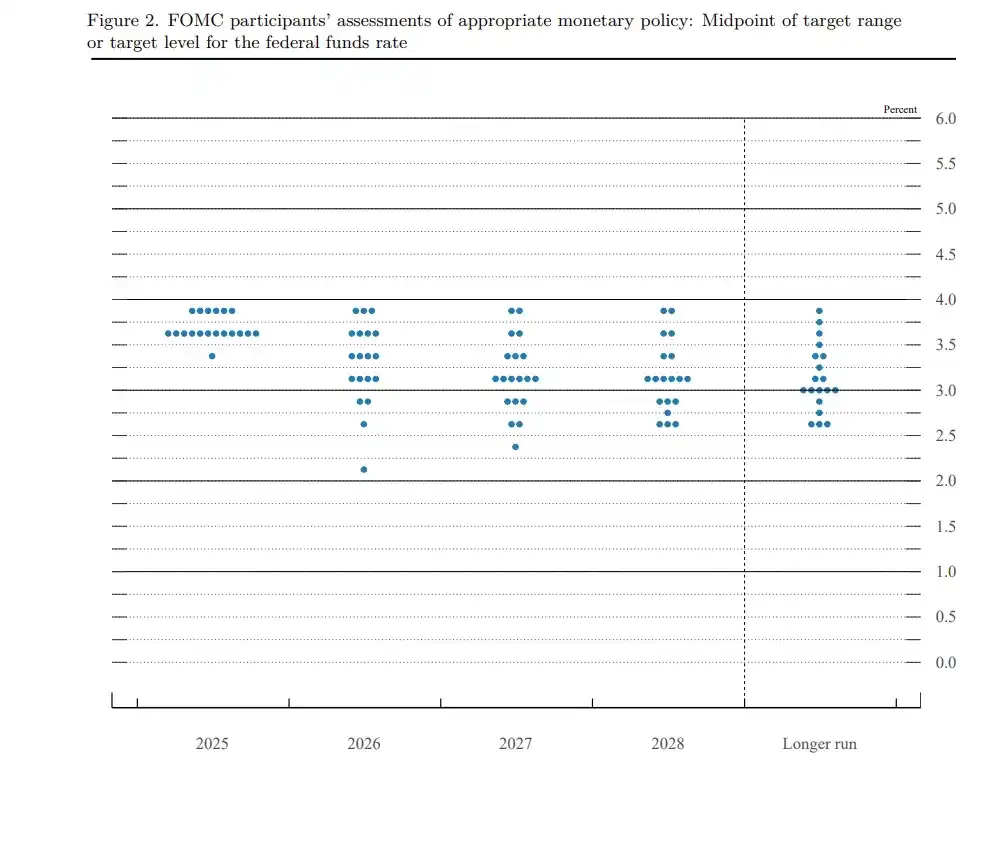
Liquidity Turning Point Under Hawkish Rate Cut The FOMC meeting was the final monetary policy decision of 2025. This one passed the rate cut with a 9:3 split, but the "dot plot" showed a slower rate cut path for 2026, with only one 25 basis point cut remaining.

This reinforces the "hawkish cut" narrative: the Fed is worried about rebounding inflation and a soft landing in the job market and is unwilling to ease too aggressively in the short term. The market had priced in an 89% probability of a cut, leading to only minor BTC fluctuations after the event, while ETH consolidated around $3,000.

Dual impact on crypto:

  • Short-term pressure: Hawkish guidance increases risk aversion. BTC did not rebound to the expected high of $94,000 but instead triggered tens of billions of dollars in leveraged liquidations. Year-end thin liquidity (e.g., perpetual open interest down 40%-50% from October), combined with the Bank of Japan (BOJ) decision, makes the market prone to "pump and dump" behavior.
  • Long-term positive: QT (Quantitative Tightening) officially ended on December 1st. The Fed's balance sheet shrank from $9 trillion to $6.5 trillion before starting to rise again. The RMP plan is equivalent to "stealth QE," expected to inject trillions in liquidity in 2026, driving a reassessment of risk assets. Historical data shows liquidity turning points often trigger crypto rebounds (e.g., BTC surged after the Fed pivot in 2024). Furthermore, explosive growth in global M2 money supply, a weakening DXY US Dollar Index, and stimulus policies from China/the EU will further tilt capital towards risk assets.

The FOMC reinforced the "macro-dominated" narrative. Crypto is no longer driven solely by cycles but is increasingly correlated with stocks/AI assets. Short-term volatility is intensifying, but liquidity injections are paving the way for 2026.
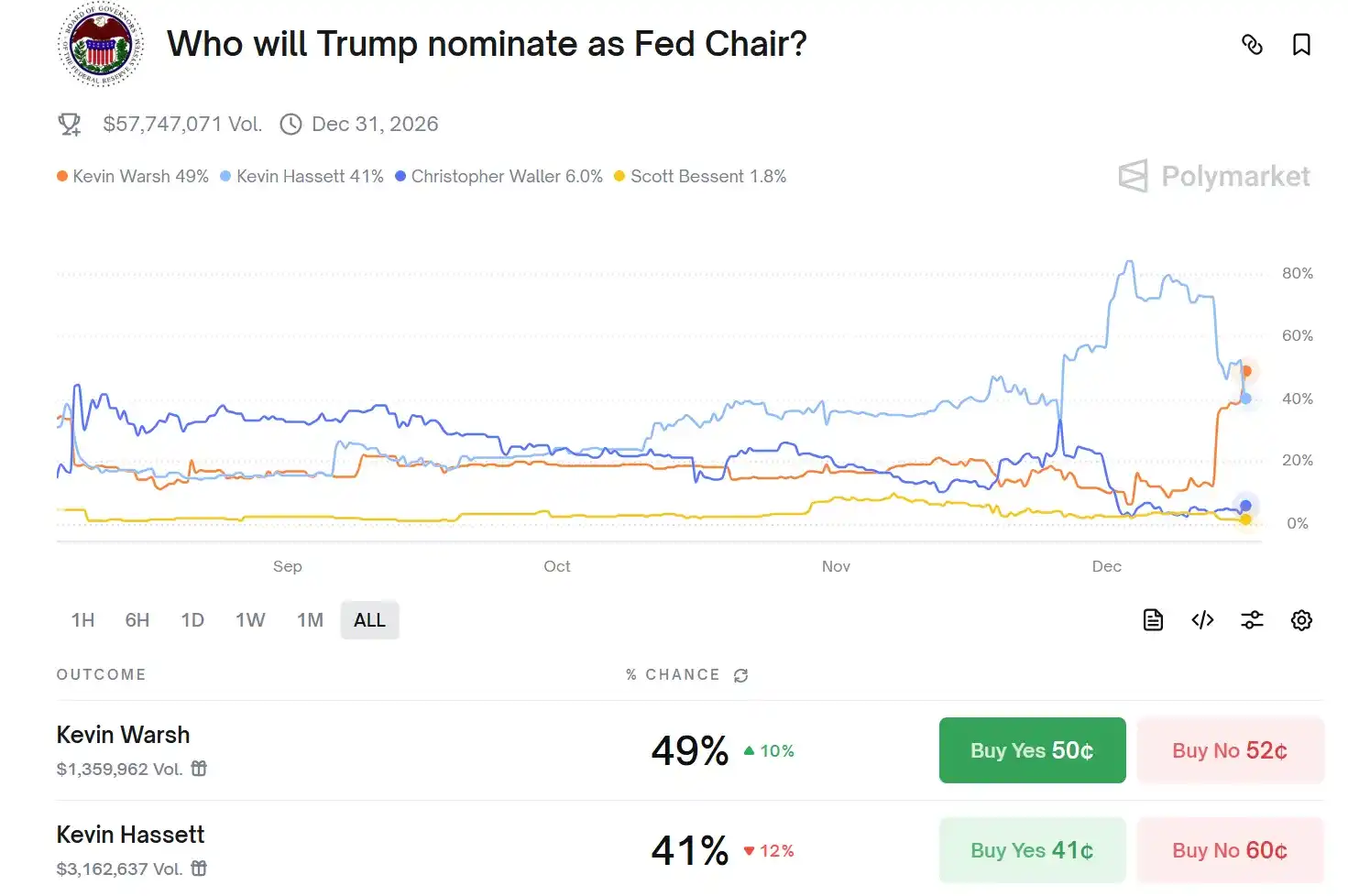
The appointment of the new Fed Chair will also be a key variable for the 2026 liquidity environment. Jerome Powell's term as Chair officially ends in May 2026 (his term as Governor lasts until January 2028). President Trump has stated he will announce the successor nominee in early 2026. Current top candidates focus on the "two Kevins": National Economic Council Director Kevin Hassett (advocates for more aggressive rate cuts) and former Fed Governor Kevin Warsh (recently visited the White House, emphasizing consulting the President on interest rate views).

A Chair more aligned with Trump and more inclined towards easing policies could strengthen the 2026 rate cut path and accelerate liquidity injection, resonating with policies like the RMP plan and a national Bitcoin reserve, further boosting confidence in risk assets.

Institutional Trends Preview: 2026 Layout—From "Defense" to "Structural Participation"

2025 is seen as the "Year of Crypto Mainstreaming." Institutional entry is no longer an edge experiment but a systemic shift. According to a16z's "State of Crypto 2025 Report," traditional financial institutions like Visa, BlackRock, Fidelity, and JPMorgan Chase have fully launched crypto products, while tech-native players like PayPal and Stripe are doubling down on payment infrastructure.

This marks a paradigm shift from "retail-led" to "institution-led": A joint survey by EY-Parthenon and Coinbase shows 83% of institutional investors plan to increase crypto allocation in 2025, with DeFi exposure expected to jump from 24% to 75%, focusing on derivatives, lending, and yield opportunities.

Institutional Allocation Trends: From Single BTC Allocation to Multi-Asset Portfolios

  • BTC remains core, but its share is declining: BTC as "digital gold" continues to dominate institutional positions (ETF AUM exceeds $168 billion, accounting for 60-80% of institutional crypto exposure), but institutions see it as a low-correlation diversification tool rather than a single speculative asset.
  • Expansion into ETH, Altcoins, and emerging assets: Institutions are adding ETH (attracted by staking yields), Solana (high TPS and institutional partnerships), stablecoins (payment infrastructure), and RWA (real-world asset tokenization). A Coinbase report shows 76% of institutions plan to invest in tokenized assets in 2026, focusing on tokenized Treasuries, private equity, and bonds, offering instant settlement and fractional ownership.
  • Pension funds and sovereign wealth funds testing the waters: Although mostly indirect exposure (e.g., Norwegian fund holding BTC via MicroStrategy), direct allocations of 0.5-3% are expected to increase in 2026 (via ETFs or tokenized instruments). Reports from BlackRock et al. indicate sovereign and pension funds are seriously considering crypto as a long-term diversification hedge, with gradually increasing allocation ratios.

Historical Pattern: BTC's Year-End "Spring Festival Effect"
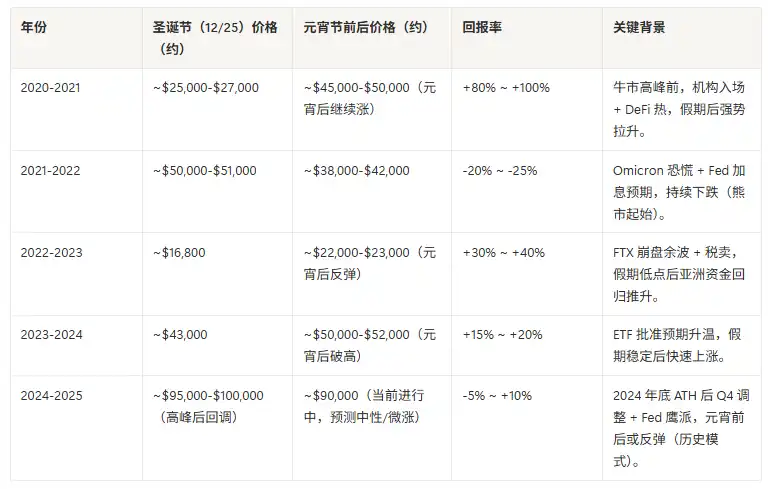
Drivers of the "Christmas Low - Spring Festival Rally" Pattern

Western liquidity drought: From December 20th to early January, European and US institutions enter holiday mode, and trading volume plummets. In a low-liquidity environment, any selling pressure amplifies volatility, forming technical lows.

Asian capital回流 (inflow): Around the Spring Festival (late January to mid-February), year-end bonuses and red packets are distributed in Mainland China, Hong Kong, Singapore, etc., leading retail and high-net-worth individuals to increase risk asset allocations. Historical data shows that BTC buying volume on Asian exchanges (like Binance, OKX) typically rises in the two weeks before the Lunar New Year.

Institutional rebalancing: January marks the start of the new fiscal year for institutions. Pension funds and hedge funds reassess asset allocations. If BTC shows relative resilience in December (e.g., only a 5-10% pullback in 2025), institutions tend to add positions in January to catch up with benchmark returns.

On-Chain Data: Dense Appearance of Bottom Signals

After the hawkish FOMC rate cut landed, the crypto market entered a typical "year-end low liquidity" phase. Bitcoin (BTC) fluctuated repeatedly in the $88,000-$92,000 range, and the Fear & Greed Index fell to 25 (Extreme Fear). Superficially, this is a "sell the news" pullback. But on-chain data reveals more structural signals: deep capitulation by short-term holders, continued accumulation by long-term holders, accelerated outflow from exchange reserves, and bottoming characteristics in medium-to-long-term indicators. This data suggests the current situation is not a simple bear market but rather a "mid-cycle adjustment + washout" phase within a bull market.

1. Short-Term Holder (STH) Capitulation: Pain Nearing its End
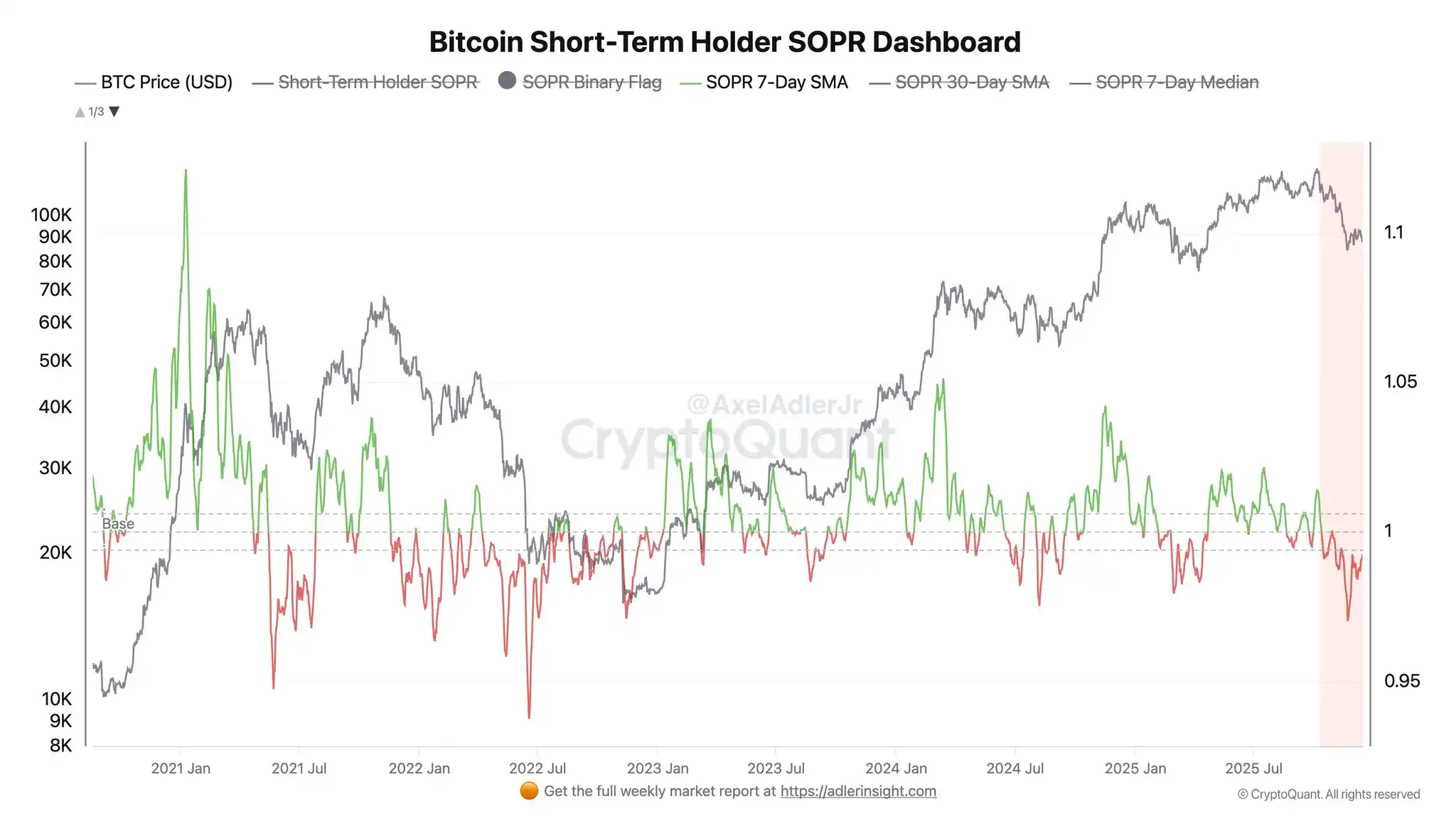
  • Realized Loss Scale: Over the past 30 days, short-term holders (holding <155 days) realized losses exceeding $4.5 billion, second only to the $5.2 billion during the August 2024 Yen carry trade crash (Glassnode data). This indicates leveraged players and FOMO retail have largely capitulated.
  • SOPR Indicator: The Short-Term Holder SOPR (Spent Output Profit Ratio) has remained below 1 (average selling at a loss) for over 3 weeks. History shows that after such deep capitulation, BTC often finds a阶段性 bottom within 1-3 months.

2. Exchange Reserves & Withdrawals: Strengthening De-platforming Trend
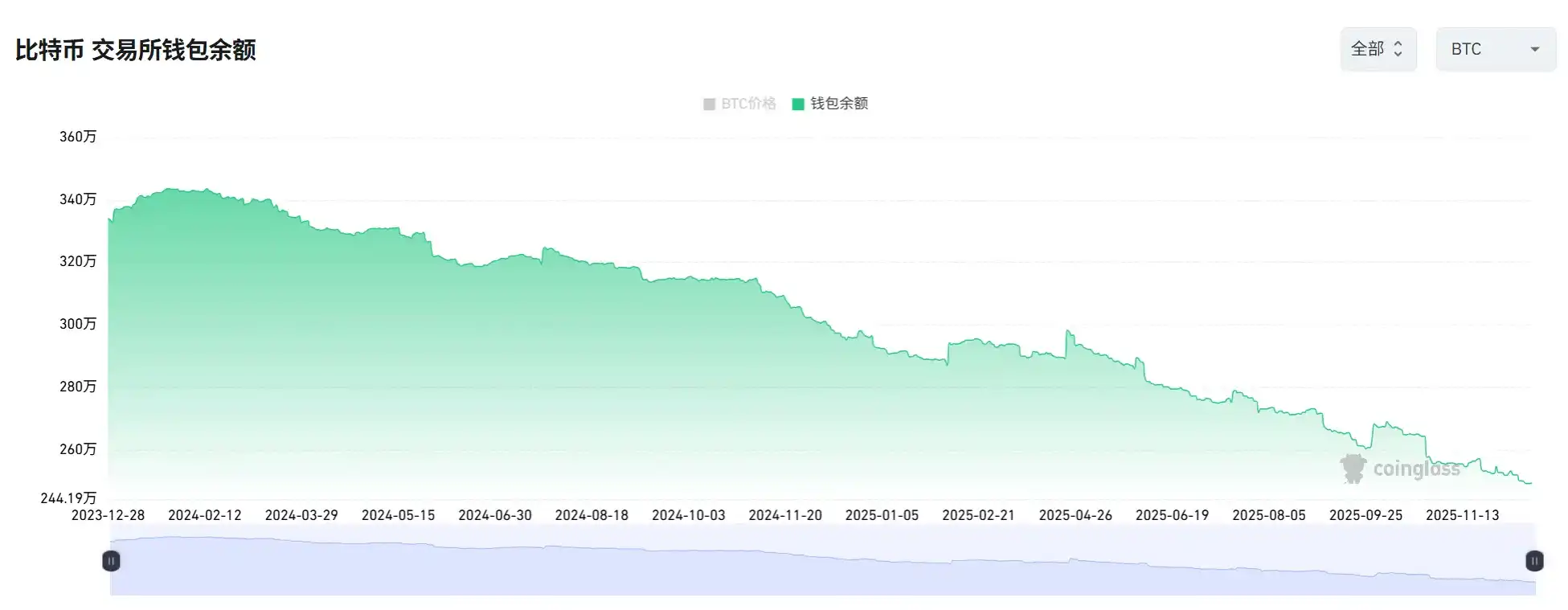
  • Exchange BTC Balance: Over the past 30 days, BTC reserves across all exchanges decreased by approximately 120,000 BTC (about 2.5%), falling below 2.6 million (CryptoQuant), the lowest level since 2018.
  • ETH Exchange Reserves: Decreased by about 1.2 million ETH during the same period, with withdrawal speeds hitting a 2025 high, reflecting strong staking and self-custody demand.
  • Stablecoin Reserves: Exchange balances of USDT/USDC saw seasonal declines, but active on-chain addresses and transfer volumes remained stable, indicating capital has not left the market but moved to cold storage awaiting re-entry.

Capital outflow from exchanges often预示 a price bottom, reducing selling pressure while building momentum for a subsequent rebound.

3. Medium-to-Long-Term Indicators: Dense Bottom Signals
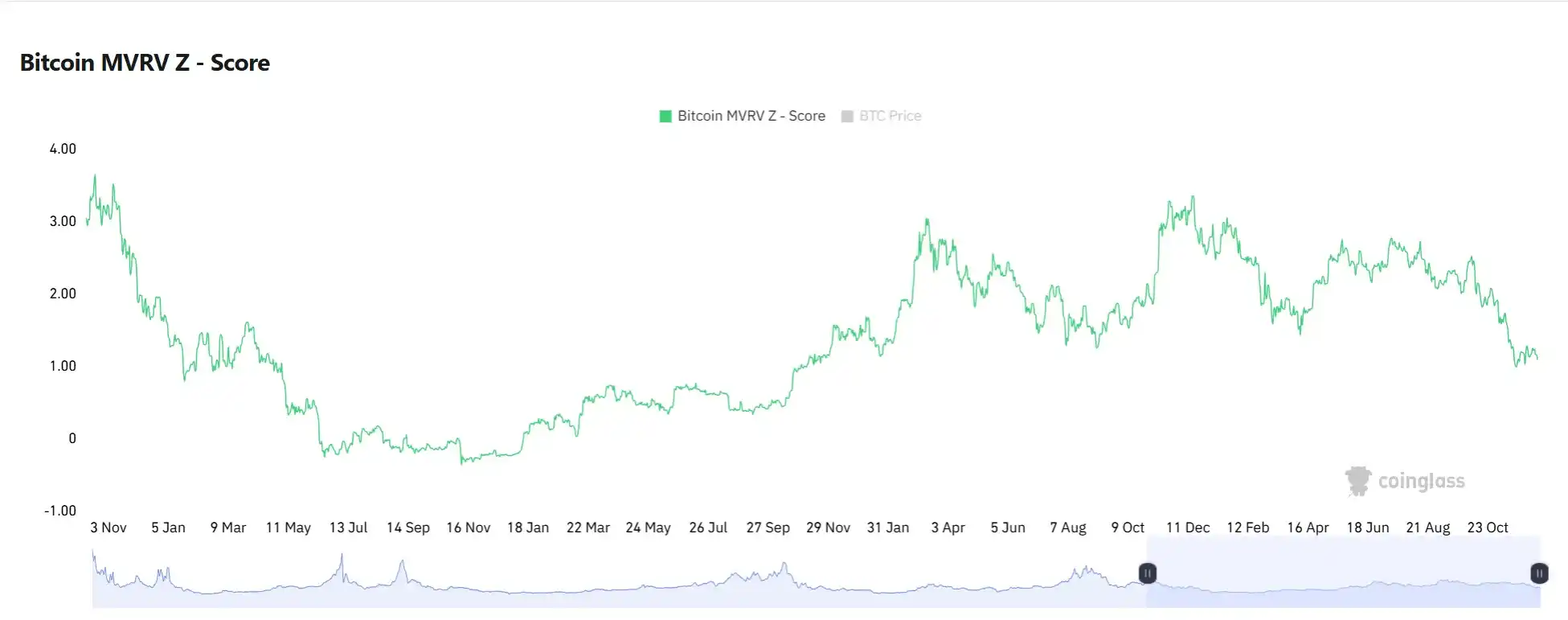
  • MVRV Z-Score: Currently at 1.1, entering the historical "green buy zone."
  • RHODL Ratio: Has fallen to levels seen at the bottom of the 2022 bear market, indicating market fervor has completely cooled.
  • Puell Multiple: The miner revenue indicator fell back to 0.6. Historical lows often accompany price reversals after mining capitulation.
  • Active Addresses & Volume: Although sluggish short-term, the 30-day MA has not seen a cliff-like drop, unlike the "activity exhaustion" at the 2021 bull market top.

Allocation Strategy: Finding Certainty Amid Uncertainty

The market is at a rare confluence:

  • Short-term sentiment is extremely fearful (Fear & Greed Index 25), but on-chain data shows密集 bottom特征
  • The historical "Christmas Low - Spring Festival Rally" pattern provides seasonal support, validated three times in the past five years
  • Macro liquidity is about to turn (QT end, RMP start), but is still suppressed by hawkish guidance short-term
  • The institutionalization process is accelerating, shifting market structure from "speculation-driven" to "allocation-driven"

For investors seeking long-term value, the current environment provides a relatively clear risk-reward framework: deep capitulation by short-term holders, accelerated outflow from exchange reserves, continued accumulation by long-term holders, and valuation indicators like MVRV and RHODL entering historical buy zones—these signals have historically marked the opening of medium-to-long-term allocation windows. For traders focused on liquidity management, December's liquidity drought period is both a risk and an opportunity. Maintaining sufficient flexibility, preserving ammunition during market panic, and acting顺势 when the Spring Festival effect is validated might be wiser than chasing short-term fluctuations.

Data for this report was compiled by WolfDAO editorial team; please contact us for updates if you have questions;

Author: Nikka / WolfDAO ( X : @10xWolfdao )

Пов'язані питання

QWhat was the outcome of the December 10, 2025 FOMC meeting and its immediate impact on Bitcoin?

AThe FOMC meeting resulted in a 25 basis point rate cut, lowering the federal funds rate to 3.50%-3.75%. However, the forward guidance turned hawkish, projecting only one more rate cut in 2026. This caused Bitcoin to briefly fall below the $90,000 mark in a 'buy the rumor, sell the news' reaction.

QWhat is the 'Reserve Management Purchasing' (RMP) plan announced by the Fed, and why is it significant for crypto assets?

AThe Fed announced a 'Reserve Management Purchasing' (RMP) plan to inject $40 billion per month in short-term Treasury liquidity. It is seen as a form of 'stealth QE' or mild easing signal that could inject trillions in liquidity by 2026, potentially drive a re-rating of risk assets like crypto, and reshape market dynamics.

QAccording to the article, what are the three key trends in institutional cryptocurrency allocation for 2026?

AThe three key institutional trends are: 1) Bitcoin remains the core holding but its allocation share is decreasing. 2) Diversification into ETH, altcoins (like Solana), stablecoins, and Real World Assets (RWA) tokenization. 3) Growing试探性entry by pension funds and sovereign wealth funds, who are beginning to view crypto as a long-term diversification hedge.

QWhat historical seasonal pattern does the article describe for Bitcoin's price action around year-end, and what drives it?

AThe article describes a 'Christmas Low - Spring Festival Rally' pattern. It is driven by: 1) Western liquidity drying up in late December, amplifying volatility and creating technical lows. 2) Asian capital inflows around the Lunar New Year from year-end bonuses, increasing buy-side volume on Asian exchanges. 3) Institutional rebalancing at the start of the new fiscal year in January.

QWhat do key on-chain metrics, such as STH Capitulation and exchange outflows, suggest about the current market phase?

AOn-chain metrics suggest the market is in a 'mid-cycle correction + washout' phase within a bull market. Signals include: deep capitulation by Short-Term Holders (STH) with massive realized losses, accelerated outflows of BTC and ETH from exchanges indicating strong self-custody trends, and valuation metrics like MVRV Z-Score entering historical 'buy zones'.

Пов'язані матеріали

Торгівля

Спот
Ф'ючерси

Популярні статті

Що таке BITCOIN

Розуміння HarryPotterObamaSonic10Inu (ERC-20) та його позиції у крипто-просторі Останніми роками ринок криптовалют спостерігав за зростанням популярності мем-коінів, які привертають інтерес не тільки трейдерів, але й тих, хто шукає спілкування та розважальну цінність. Серед цих унікальних токенів є HarryPotterObamaSonic10Inu (ERC-20), інтригуючий проект, що поєднує культурні посилання з тканинами криптовалюти. Ця стаття досліджує ключові аспекти HarryPotterObamaSonic10Inu, вивчаючи його механізми, спільноту та його взаємодію з ширшим крипто-ландшафтом. Що таке HarryPotterObamaSonic10Inu (ERC-20)? Як випливає з його назви, HarryPotterObamaSonic10Inu є мем-коіном, побудованим на блокчейні Ethereum, класифікованим за стандартом ERC-20. На відміну від традиційних криптовалют, які можуть підкреслювати практичну корисність або інвестиційний потенціал, цей токен процвітає завдяки розважальній цінності та силі своєї спільноти. Проект спрямований на створення середовища, де зацікавлені користувачі можуть об'єднуватися, ділитися ідеями та брати участь у заходах, натхненних різноманітними культурними явищами. Однією з примітних особливостей HarryPotterObamaSonic10Inu є нульовий податок на транзакції. Цей привабливий елемент має на меті заохочувати торгівлю та участь у спільноті, позбавлену додаткових витрат, які можуть відлякувати дрібних трейдерів. Загальна пропозиція монет становить один мільярд токенів, що позначає намір підтримувати суттєву циркуляцію в межах спільноти. Творець HarryPotterObamaSonic10Inu (ERC-20) Походження HarryPotterObamaSonic10Inu дещо окутане таємницею; деталі про творця залишаються невідомими. Розвиток цього токена позбавлений впізнаваної команди або чіткої стратегії, що не є рідкістю в секторі мем-коінів. Натомість проект виник органічно, а його розвиток значною мірою залежить від ентузіазму та участі його спільноти. Інвестори HarryPotterObamaSonic10Inu (ERC-20) Щодо зовнішніх інвестицій та підтримки, HarryPotterObamaSonic10Inu також залишається невизначеним. Токен не зазначає жодних відомих інвестиційних фондів або значної організаційної підтримки. Натомість життєва сила проекту полягає в його базовій спільноті, яка інформує про його зростання та стійкість через колективні дії та залученість у крипто-просторі. Як працює HarryPotterObamaSonic10Inu (ERC-20)? Як мем-коін, HarryPotterObamaSonic10Inu функціонує передусім поза традиційними рамками, що часто регулюють вартість активів. Є кілька відмінних аспектів, що визначають, як працює проект: Транзакції без податку: Завдяки відсутності податкових зборів на транзакції, користувачі можуть вільно купувати та продавати токен, не турбуючись про приховані витрати. Залучення спільноти: Проект процвітає завдяки взаємодії спільноти, використовуючи соціальні медіа для створення шуму та сприяння залученню. Обговорення, обмін контентом та залученість є ключовими елементами, що допомагають розширити його охоплення та зміцнити лояльність серед прихильників. Відсутність практичної корисності: Слід зазначити, що HarryPotterObamaSonic10Inu не пропонує конкретної корисності в рамках фінансової екосистеми. Натомість він класифікується як токен, що призначений в основному для розваги та спільнотних активностей. Культурне посилання: Токен кмітливо вплітає елементи популярної культури, щоб привернути інтерес, зв'язуючи з ентузіастами мемів та крипто-стежками. HarryPotterObamaSonic10Inu ілюструє, як мем-коіни функціонують інакше, ніж традиційні криптовалютні проекти, увійшовши на ринок як інноваційні соціальні конструкти, а не утилітарні активи. Хронологія HarryPotterObamaSonic10Inu (ERC-20) Історія HarryPotterObamaSonic10Inu відзначена кількома значними етапами: Створення: Токен виник з вірусного мему, захопивши уяву багатьох крипто-ентузіастів. Конкретні дати створення недоступні, що підкреслює його органічний розвиток. Лістинг на біржах: HarryPotterObamaSonic10Inu з'явився на різних біржах, дозволяючи зручніший доступ і торгівлю спільноти. Ініціативи залучення спільноти: Ведення діяльності, спрямованої на покращення взаємодії спільноти, включаючи конкурси, кампанії в соціальних мережах та створення контенту від фанатів та прихильників. Плани на майбутнє: Дорожня карта проекту включає запуск колекції NFT, мерчандайзинг та електронну комерцію, пов'язану з його культурними темами, що далі залучає спільноту та намагається додати більше вимірів до його екосистеми. Ключові моменти про HarryPotterObamaSonic10Inu (ERC-20) Спільнотний підхід: Проект надає пріоритет колективному внеску та креативності, забезпечуючи, щоб участь користувачів була в центрі його розвитку. Класифікація як мем-коін: Це є його епігенез розважальної криптовалюти, що відрізняється від традиційних інвестиційних інструментів. Жодного прямого відношення до Bitcoin: Незважаючи на схожість у назві, HarryPotterObamaSonic10Inu є відмінним і не має жодного зв’язку з Bitcoin або іншими усталеними криптовалютами. Зосередженість на співпраці: HarryPotterObamaSonic10Inu створено для того, щоб надати простір для співпраці та обміну історіями серед його власників, забезпечуючи шлях для творчості та спільного зв'язку. Перспективи на майбутнє: Амбіція розширитися за межі початкової концепції в NFT та мерчандайз відкриває шлях для проекту потенційно потрапити в більш мейнстрімні сфери цифрової культури. Оскільки мем-коіни продовжують захоплювати уяву спільноти криптовалют, HarryPotterObamaSonic10Inu (ERC-20) вирізняється своїми культурними зв'язками та орієнтованим на спільноту підходом. Хоча він може не відповідати типовій моделі утилітарного токена, його суть полягає в радощах і товариськості, що підтримуються серед його прихильників, підкреслюючи еволюційну природу криптовалют в усе більш цифрову епоху. Оскільки проект продовжує розвиватися, важливо спостерігати за тим, як динаміка спільноти вплине на його траєкторію в постійно змінюваному ландшафті технології блокчейн.

1.7k переглядів усьогоОпубліковано 2024.04.01Оновлено 2024.12.03

Що таке BITCOIN

Як купити BTC

Ласкаво просимо до HTX.com! Ми зробили покупку Bitcoin (BTC) простою та зручною. Дотримуйтесь нашої покрокової інструкції, щоб розпочати свою криптовалютну подорож.Крок 1: Створіть обліковий запис на HTXВикористовуйте свою електронну пошту або номер телефону, щоб зареєструвати обліковий запис на HTX безплатно. Пройдіть безпроблемну реєстрацію й отримайте доступ до всіх функцій.ЗареєструватисьКрок 2: Перейдіть до розділу Купити крипту і виберіть спосіб оплатиКредитна/дебетова картка: використовуйте вашу картку Visa або Mastercard, щоб миттєво купити Bitcoin (BTC).Баланс: використовуйте кошти з балансу вашого рахунку HTX для безперешкодної торгівлі.Треті особи: ми додали популярні способи оплати, такі як Google Pay та Apple Pay, щоб підвищити зручність.P2P: Торгуйте безпосередньо з іншими користувачами на HTX.Позабіржова торгівля (OTC): ми пропонуємо індивідуальні послуги та конкурентні обмінні курси для трейдерів.Крок 3: Зберігайте свої Bitcoin (BTC)Після придбання Bitcoin (BTC) збережіть його у своєму обліковому записі на HTX. Крім того, ви можете відправити його в інше місце за допомогою блокчейн-переказу або використовувати його для торгівлі іншими криптовалютами.Крок 4: Торгівля Bitcoin (BTC)Легко торгуйте Bitcoin (BTC) на спотовому ринку HTX. Просто увійдіть до свого облікового запису, виберіть торгову пару, укладайте угоди та спостерігайте за ними в режимі реального часу. Ми пропонуємо зручний досвід як для початківців, так і для досвідчених трейдерів.

4.3k переглядів усьогоОпубліковано 2024.12.12Оновлено 2025.03.21

Як купити BTC

Що таке $BITCOIN

ЦИФРОВЕ ЗОЛОТО ($BITCOIN): Комплексний аналіз Вступ до ЦИФРОВОГО ЗОЛОТА ($BITCOIN) ЦИФРОВЕ ЗОЛОТО ($BITCOIN) — це проект на основі блокчейну, що працює в мережі Solana, який має на меті поєднати характеристики традиційних дорогоцінних металів з інноваціями децентралізованих технологій. Хоча він має таку ж назву, як і Bitcoin, який часто називають “цифровим золотом” через його сприйняття як засобу збереження вартості, ЦИФРОВЕ ЗОЛОТО є окремим токеном, розробленим для створення унікальної екосистеми в ландшафті Web3. Його мета — позиціонувати себе як життєздатний альтернативний цифровий актив, хоча деталі щодо його застосувань і функціональностей все ще розробляються. Що таке ЦИФРОВЕ ЗОЛОТО ($BITCOIN)? ЦИФРОВЕ ЗОЛОТО ($BITCOIN) — це токен криптовалюти, спеціально розроблений для використання в блокчейні Solana. На відміну від Bitcoin, який виконує широко визнану роль зберігання вартості, цей токен, здається, зосереджується на більш широких застосуваннях і характеристиках. Помітні аспекти включають: Інфраструктура блокчейну: Токен побудований на блокчейні Solana, відомому своєю здатністю обробляти швидкі та низьковартісні транзакції. Динаміка постачання: ЦИФРОВЕ ЗОЛОТО має максимальне постачання, обмежене 100 квадрильйонами токенів (100P $BITCOIN), хоча деталі щодо його обігового постачання наразі не розголошуються. Утиліта: Хоча точні функціональності не викладені, є вказівки на те, що токен може бути використаний для різних застосувань, потенційно пов'язаних з децентралізованими додатками (dApps) або стратегіями токенізації активів. Хто є творцем ЦИФРОВОГО ЗОЛОТА ($BITCOIN)? На даний момент особа творців і команди розробників, що стоять за ЦИФРОВИМ ЗОЛОТОМ ($BITCOIN), залишається невідомою. Ця ситуація є типовою для багатьох інноваційних проектів у сфері блокчейну, особливо тих, що пов'язані з децентралізованими фінансами та феноменом мем-коінів. Хоча така анонімність може сприяти культурі, орієнтованій на спільноту, вона посилює занепокоєння щодо управління та підзвітності. Хто є інвесторами ЦИФРОВОГО ЗОЛОТА ($BITCOIN)? Доступна інформація вказує на те, що ЦИФРОВЕ ЗОЛОТО ($BITCOIN) не має жодних відомих інституційних спонсорів або помітних венчурних капіталовкладень. Проект, здається, працює за моделлю “рівний до рівного”, зосереджуючись на підтримці та прийнятті спільноти, а не на традиційних шляхах фінансування. Його активність і ліквідність переважно розташовані на децентралізованих біржах (DEX), таких як PumpSwap, а не на встановлених централізованих торгових платформах, що ще більше підкреслює його підхід знизу вгору. Як працює ЦИФРОВЕ ЗОЛОТО ($BITCOIN) Операційні механізми ЦИФРОВОГО ЗОЛОТА ($BITCOIN) можна детальніше розглянути на основі його дизайну блокчейну та характеристик мережі: Механізм консенсусу: Використовуючи унікальний proof-of-history (PoH) Solana в поєднанні з моделлю proof-of-stake (PoS), проект забезпечує ефективну валідацію транзакцій, що сприяє високій продуктивності мережі. Токеноміка: Хоча конкретні дефляційні механізми не були детально описані, велике максимальне постачання токенів вказує на те, що воно може задовольняти мікротранзакції або нішеві випадки використання, які ще потрібно визначити. Інтероперабельність: Існує потенціал для інтеграції з більш широкою екосистемою Solana, включаючи різні платформи децентралізованих фінансів (DeFi). Однак деталі щодо конкретних інтеграцій залишаються невизначеними. Хронологія ключових подій Ось хронологія, яка підкреслює значні віхи, пов'язані з ЦИФРОВИМ ЗОЛОТОМ ($BITCOIN): 2023: Початкове розгортання токена відбувається на блокчейні Solana, позначене його адресою контракту. 2024: ЦИФРОВЕ ЗОЛОТО набуває видимості, оскільки стає доступним для торгівлі на децентралізованих біржах, таких як PumpSwap, що дозволяє користувачам торгувати ним проти SOL. 2025: Проект спостерігає спорадичну торгову активність і потенційний інтерес до ініціатив, очолюваних спільнотою, хоча на даний момент не зафіксовано жодних значних партнерств або технічних досягнень. Критичний аналіз Сильні сторони Масштабованість: Основна інфраструктура Solana підтримує високі обсяги транзакцій, що може підвищити утиліту $BITCOIN у різних сценаріях транзакцій. Доступність: Потенційно низька торгова ціна за токен може привабити роздрібних інвесторів, сприяючи більш широкій участі завдяки можливостям дробового володіння. Ризики Відсутність прозорості: Відсутність публічно відомих спонсорів, розробників або процесу аудиту може викликати скептицизм щодо стійкості та надійності проекту. Волатильність ринку: Торгова активність сильно залежить від спекулятивної поведінки, що може призвести до значної волатильності цін і невизначеності для інвесторів. Висновок ЦИФРОВЕ ЗОЛОТО ($BITCOIN) постає як цікавій, але неоднозначний проект у швидко розвиваючійся екосистемі Solana. Хоча він намагається використати наратив “цифрового золота”, його відхід від встановленої ролі Bitcoin як засобу збереження вартості підкреслює необхідність чіткішого розмежування його передбачуваної утиліти та структури управління. Майбутнє прийняття та адаптація, ймовірно, залежатиме від вирішення поточної непрозорості та більш чіткого визначення його операційних та економічних стратегій. Примітка: Цей звіт охоплює синтезовану інформацію, доступну станом на жовтень 2023 року, і можуть відбутися події, що виходять за межі дослідницького періоду.

75 переглядів усьогоОпубліковано 2025.05.13Оновлено 2025.05.13

Що таке $BITCOIN

Обговорення

Ласкаво просимо до спільноти HTX. Тут ви можете бути в курсі останніх подій розвитку платформи та отримати доступ до професійної ринкової інформації. Нижче представлені думки користувачів щодо ціни BTC (BTC).

活动图片