# WWDC İlgili Makaleler

HTX Haber Merkezi, kripto endüstrisindeki piyasa trendleri, proje güncellemeleri, teknoloji gelişmeleri ve düzenleyici politikaları kapsayan "WWDC" hakkında en son makaleleri ve derinlemesine analizleri sunmaktadır.

The First to Bring an AI OS to 1.4 Billion People Might Actually Be WeChat?

WeChat has introduced a significant AI update, allowing mini-program developers to integrate their services with WeChat AI. Developers can choose an "automatic mode," where WeChat AI autonomously analyzes and operates mini-programs without additional coding, or a "development mode" for creating customized skills. This move effectively transforms WeChat's vast ecosystem—including millions of mini-programs, WeChat Pay, and official accounts—into an execution layer for AI. The technical documentation reveals that WeChat's approach aligns with industry standards like MCP (Model Context Protocol) and incorporates practical lessons from AI-agent development. Key design principles include a clear "attention weight" system for API calls and a "fact + action" response structure to ensure reliable operations. Unlike Apple's Siri, which struggles with third-party app integration, WeChat's centralized control over mini-program code provides a "God's-eye view," enabling seamless AI orchestration across services. This development revives the concept of "WeChat OS," where the app could function as a natural-language-operated platform for daily tasks—from booking flights to ordering food—all within a chat interface. While challenges remain in areas like payment security and user trust, WeChat's existing service network and massive user base position it uniquely to advance AI agents from conversation to actionable assistance, potentially making complex tasks feel effortless for its 1.432 billion monthly active users.

marsbit06/10 00:21

The First to Bring an AI OS to 1.4 Billion People Might Actually Be WeChat?

marsbit06/10 00:21

Apple Finally Admits, Siri Is Getting Old

In a significant shift, Apple has rebranded Siri to "Siri AI" at WWDC 2026, acknowledging the assistant's limitations after years of stagnation. The company announced a deep partnership with Google, leveraging Gemini's model capabilities to train its new Apple Foundation Models. This collaboration extends Apple's Private Cloud Compute to Google Cloud and Nvidia GPUs for the first time. The article traces Siri's history from its groundbreaking 2011 debut to its subsequent confinement within Apple's closed ecosystem, prioritizing control and privacy over expansive functionality. While Apple integrated AI into its hardware and systems over the years (e.g., Neural Engine, Core ML), it missed the paradigm shift brought by generative AI models like ChatGPT. Facing pressure, Apple restructured its AI leadership and opted to license Google's Gemini technology—reportedly paying around $1 billion annually—to power the revamped Siri. The strategy involves "distilling" knowledge from the large Gemini model into smaller, on-device models. Apple also plans to use Google Cloud's Nvidia GPUs for complex cloud inference tasks. The core vision for "Apple Intelligence" is a system-level assistant that reduces cognitive load: summarizing notifications and emails, drafting context-aware replies, and retrieving relevant information across apps. Siri gains a dedicated app with memory and cross-device sync. However, this AI push comes with hardware requirements, potentially excluding older iPhones. A major challenge is China, where Apple Intelligence will likely be a different product due to local regulations, requiring partnership with a domestic AI provider. The article concludes by questioning the future of personal AI, noting that true understanding involves more than data access—it requires knowing where to stop. Apple's partnership marks a humble beginning in its quest to build a genuinely helpful, yet respectful, personal assistant.

marsbit06/09 07:16

Apple Finally Admits, Siri Is Getting Old

marsbit06/09 07:16

WWDC26 Ultimate Preview: The All-New Siri is the Main Course, iOS 27 is Another Year of Refinements

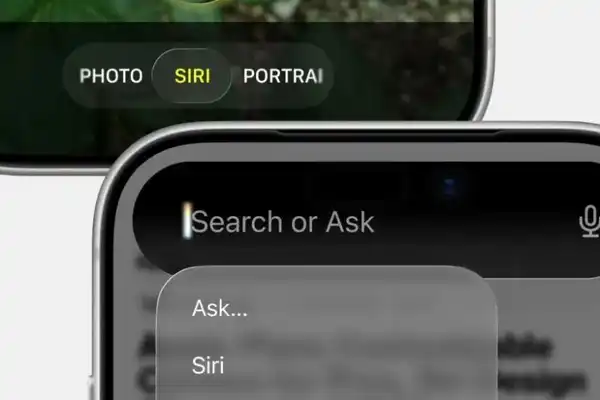
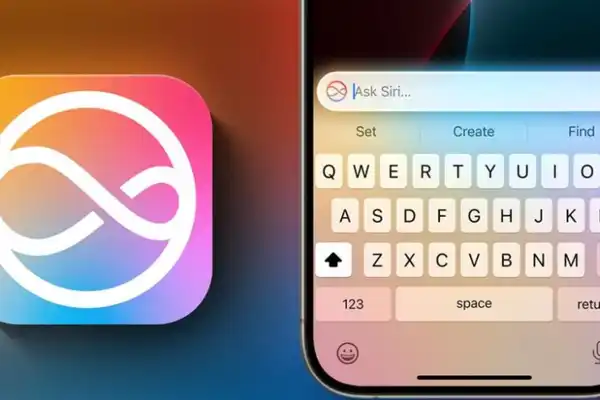
Apple has confirmed WWDC26 will begin on June 8, with the keynote at 10 AM PT (1 AM Beijing Time, June 9). This year's focus is expected to shift significantly from routine OS updates to Apple's progress in AI, particularly a major overhaul of Siri. Reports indicate the highlight will be a new Siri, reportedly powered by Google's Gemini technology. This upgraded assistant is expected to appear as a lightweight bubble from the Dynamic Island and be accessible via a unified "Search or Ask" system-wide entry point. It aims to deeply integrate with iOS 27, iPadOS 27, and macOS 27, accessing personal data like messages, photos, and documents, with a potential standalone Siri app also in development. For iOS 27, leaks suggest incremental improvements rather than major redesigns. Key updates may include a redesigned, more customizable Camera app, enhanced photo editing tools within the Photos app, and potential early system optimizations for a future foldable iPhone. The update is also rumored to prioritize bug fixes, stability, and performance optimization. iPadOS 27 is anticipated to focus on improving productivity features like window management, file systems, and external display support to better utilize the iPad's hardware. macOS 27 is seen as a core platform for Apple Intelligence, likely receiving an optimized Siri, new AI features, and continued refinement of the "Liquid Glass" design language. Notably, macOS 27 may finally drop support for Intel-based Macs. The overarching theme for WWDC26 is whether Apple can effectively integrate AI across its ecosystem. The success of the new Siri and Apple Intelligence will be judged on their ability to move beyond standalone features and become a cohesive, context-aware system layer that understands user workflows across iPhone, iPad, Mac, and other devices, while maintaining Apple's emphasis on privacy and stability. The conference represents Apple's critical attempt to catch up and redefine the AI assistant experience after a perceived slow start in the generative AI era.

marsbit06/03 23:26
WWDC26 Ultimate Preview: The All-New Siri is the Main Course, iOS 27 is Another Year of Refinements

marsbit06/03 23:26

This Could Be the AI-Powered Siri We Get

Apple is set to unveil a major overhaul of Siri at its upcoming WWDC event, marking its most significant update since the AI assistant's debut in 2011. Faced with criticism for lagging behind competitors like ChatGPT and Google Gemini, the new Siri will feature a completely redesigned interface with a dark theme and chatbot-style interaction, deeply integrated with the Dynamic Island. Key upgrades include persistent conversation memory, addressing a long-standing user complaint. Most notably, Apple will reportedly allow third-party AI models, such as Google Gemini and Anthropic's Claude, to be integrated directly into Siri, transforming it into an AI model distribution platform. This strategic shift positions iOS not as having the single best AI model, but as the best platform for accessing and utilizing various AI models through superior system-level integration. Apple's approach leverages its strengths in hardware-software integration, privacy, and access to user data (contacts, calendar, photos) to create a differentiated experience, even while potentially relying on external infrastructure like Google's for some queries. This move represents a calculated bet that the ultimate AI advantage lies not in having the most powerful model, but in which system can integrate and utilize AI most seamlessly for the user. The success of this strategy will be tested by whether the new Siri can win back users who have grown accustomed to more advanced standalone AI tools.

marsbit05/29 07:15

This Could Be the AI-Powered Siri We Get

marsbit05/29 07:15

Cook's Curtain Call and Ternus Takes the Helm: The Disruption and Reboot of Apple's 4 Trillion Dollar Empire

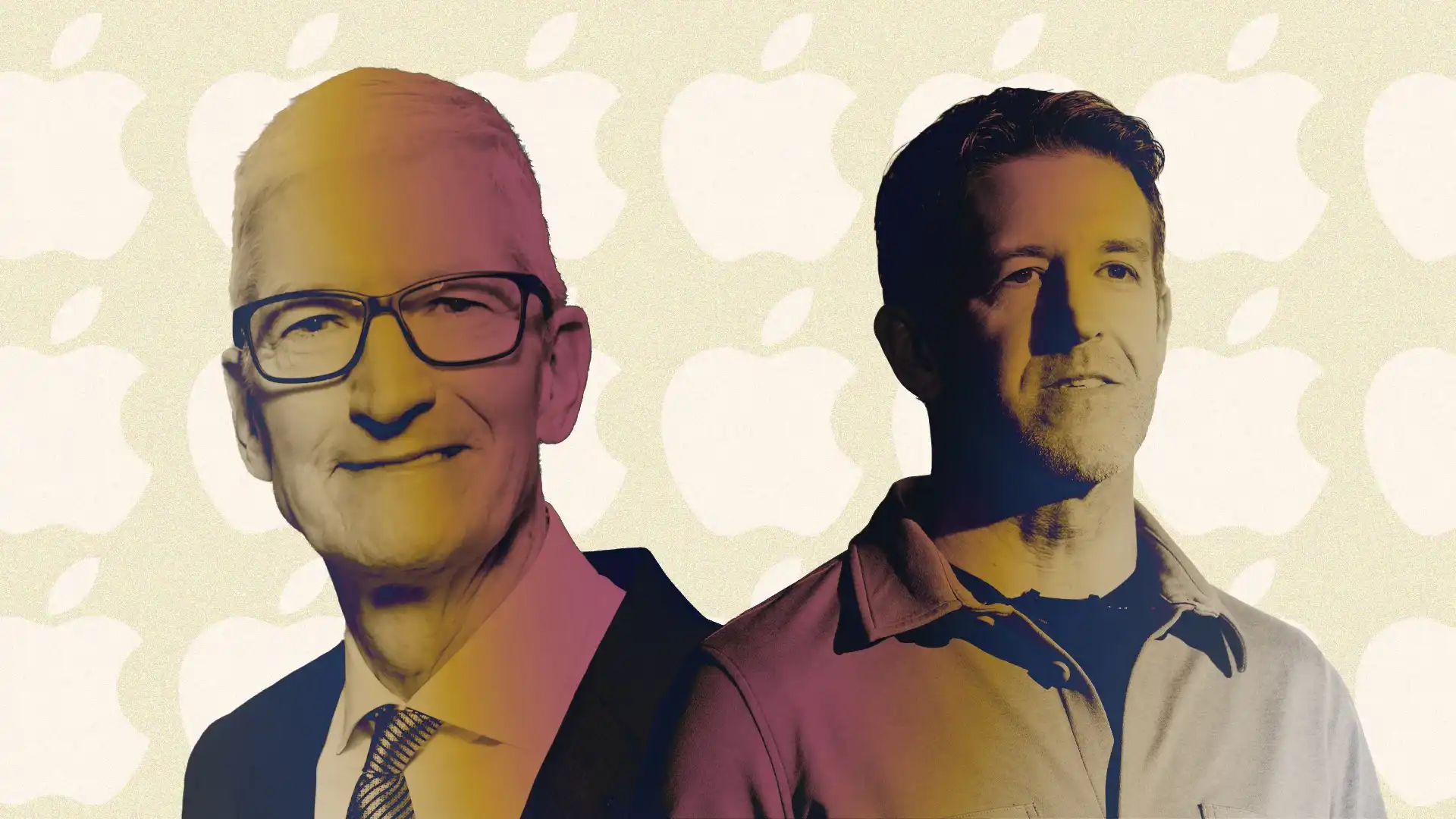
Tim Cook has officially announced he will step down as CEO of Apple in September, transitioning to executive chairman after a 15-year tenure during which he grew the company’s market value from around $350 billion to nearly $4 trillion. He will be succeeded by John Ternus, a 50-year-old hardware engineering veteran who has been groomed for the role through increasing public visibility and internal responsibility. Ternus’s appointment signals a strategic shift toward hardware and engineering leadership, with Johny Srouji—head of Apple Silicon—taking on an expanded role as Chief Hardware Officer. This consolidation aims to strengthen Apple’s core technological capabilities. However, Cook’s departure highlights a significant unresolved issue: Apple’s delayed and fragmented approach to artificial intelligence. Despite early efforts, such as hiring John Giannandrea from Google in 2018, Apple’s AI initiatives—particularly around Siri—have struggled with internal restructuring and reliance on external partnerships, including with Google. The transition comes at a critical moment as Apple faces paradigm shifts with the rise of artificial general intelligence (ASI). The company’s closed ecosystem of hardware, software, and services—once a major advantage—now presents challenges in adapting to an AI-centric world where intelligence may matter more than the device itself. Ternus must quickly articulate a clear AI strategy, possibly starting at WWDC, to reassure markets and redefine Apple’s role in a new technological era. His task is not only to maintain Apple’s operational excellence but also to reinvigorate its capacity to innovate and lead in the age of AI.

marsbit04/22 00:08

Cook's Curtain Call and Ternus Takes the Helm: The Disruption and Reboot of Apple's 4 Trillion Dollar Empire

marsbit04/22 00:08

Siri's "Androidization" Turning Point? iOS 27 to Launch AI App Store, Supporting Free Installation of Third-Party Bots

Apple is reportedly planning a major strategic shift for Siri and its AI ecosystem with iOS 27, moving towards a more open platform. According to Mark Gurman, the core of this strategy involves a "two-pronged" approach: deeply integrating its own Apple Intelligence while also opening Siri's underlying interfaces to third-party services. A key feature will be the introduction of a dedicated "AI App Store" section. This will allow users to freely install and use various third-party AI chatbots, not just ChatGPT, directly within Siri, functioning like an AI plugin marketplace. To bolster its capabilities, Apple is also considering deeply integrating Google's Gemini technology to enhance Siri and other system-level AI functions. This complementary strategy allows Apple to avoid direct competition with leading model developers and instead leverage external products to address its own weaknesses. The business logic behind this move is to defend its hardware dominance by offering a highly customizable AI experience to prevent users from switching to Android. Furthermore, Apple stands to generate significant revenue by applying its standard App Store commission model to subscriptions for these third-party AI services. This new AI vision is expected to be unveiled at WWDC26. This potential shift from a "walled garden" to an open "AI port" represents a significant change in Apple's philosophy, aiming to redefine smartphone interaction by making Siri a super-container for the world's best AI models.

marsbit03/30 01:18

Siri's "Androidization" Turning Point? iOS 27 to Launch AI App Store, Supporting Free Installation of Third-Party Bots

marsbit03/30 01:18

Apple Gains Full Access to Google's Gemini, Accelerates On-Device AI Model Development with Distillation Technology

Apple has secured full access to Google's Gemini model, aiming to accelerate the development of its on-device lightweight AI systems using advanced data distillation techniques. The company will utilize Gemini’s high-quality answers and chain-of-thought reasoning as training data to “feed” its own smaller, proprietary models. This approach, known as model distillation, enables compact models to achieve reasoning capabilities comparable to top-tier large models while maintaining computational efficiency. Although Gemini was originally designed for chatbots and enterprise applications—differing from Apple’s system-level integration vision for Siri—this collaboration significantly addresses Apple's need for high-quality synthetic data. In parallel, Apple continues its in-house development efforts through its Apple Foundation Models team. New AI features leveraging this distilled technology are expected to debut at Apple’s Worldwide Developers Conference (WWDC) in June. This partnership highlights a shift in the AI industry from pure computing power competition toward more efficient training strategies. By investing in access to leading model capabilities to enhance its edge computing advantages, Apple illustrates the ongoing balance between general-purpose large models and private on-device AI. This move also signals a future where edge devices will possess stronger local inference and complex task-handling abilities, further advancing the democratization of AI.

marsbit03/27 01:28

Apple Gains Full Access to Google's Gemini, Accelerates On-Device AI Model Development with Distillation Technology

marsbit03/27 01:28

活动图片