The First to Bring an AI OS to 1.4 Billion People Might Actually Be WeChat?

marsbit2026-06-10 tarihinde yayınlandı2026-06-10 tarihinde güncellendi

Özet

WeChat has introduced a significant AI update, allowing mini-program developers to integrate their services with WeChat AI. Developers can choose an "automatic mode," where WeChat AI autonomously analyzes and operates mini-programs without additional coding, or a "development mode" for creating customized skills. This move effectively transforms WeChat's vast ecosystem—including millions of mini-programs, WeChat Pay, and official accounts—into an execution layer for AI. The technical documentation reveals that WeChat's approach aligns with industry standards like MCP (Model Context Protocol) and incorporates practical lessons from AI-agent development. Key design principles include a clear "attention weight" system for API calls and a "fact + action" response structure to ensure reliable operations. Unlike Apple's Siri, which struggles with third-party app integration, WeChat's centralized control over mini-program code provides a "God's-eye view," enabling seamless AI orchestration across services. This development revives the concept of "WeChat OS," where the app could function as a natural-language-operated platform for daily tasks—from booking flights to ordering food—all within a chat interface. While challenges remain in areas like payment security and user trust, WeChat's existing service network and massive user base position it uniquely to advance AI agents from conversation to actionable assistance, potentially making complex tasks feel effortless for its 1.432 bi...

WeChat's AI has finally moved.

On the very same day as Apple's WWDC, WeChat did something potentially more significant than Apple, releasing an unassuming announcement: "Guidance for Developers to Access the WeChat AI Ecosystem."
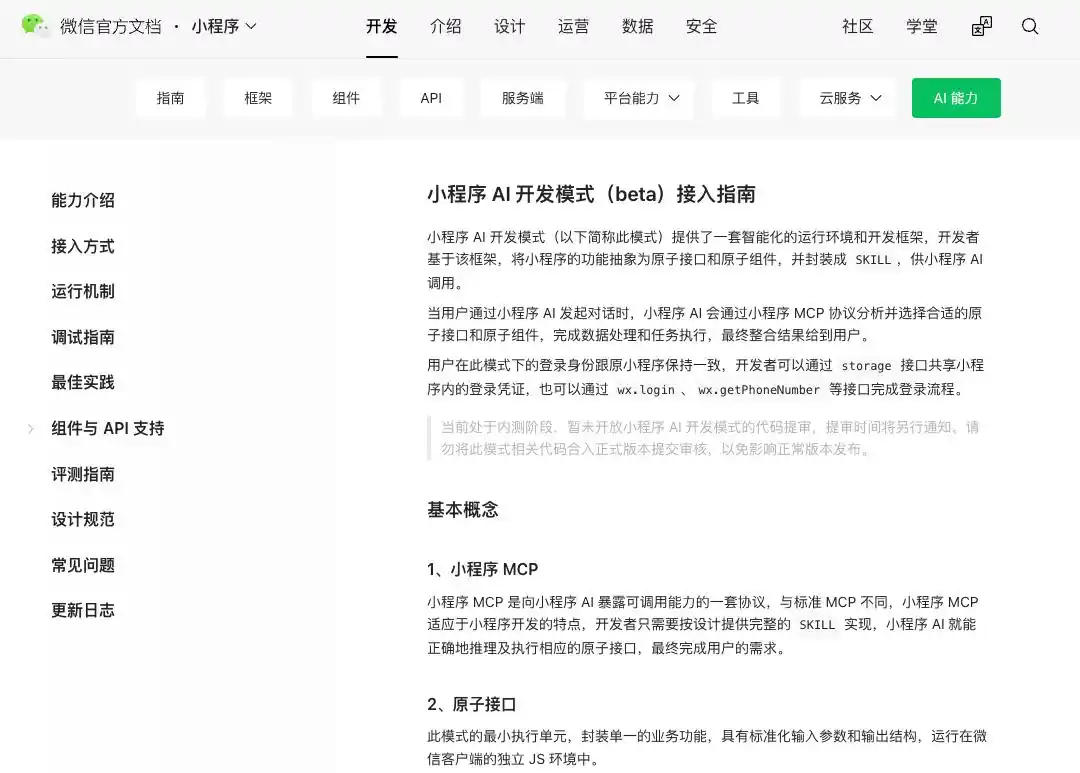
Starting today, Mini Program developers can grant authorization, allowing WeChat AI to read, operate, and invoke the functionalities of Mini Programs.

WeChat offers two access modes. The first is "Automatic Mode," with a nearly zero barrier to entry. Developers simply toggle a switch, and the platform itself reads the source code, analyzes pages, figures out what the Mini Program can do, and then the AI can directly operate it, all without writing a single line of code.

The other mode is called "Developer Mode," where developers create customized Skills, which are called by the AI after passing review. Both modes can be enabled simultaneously. Meituan has already announced its integration.

This should not be understood merely as the launch of another new feature. Instead, it signals that WeChat is turning its entire ecosystem—millions of Mini Programs, WeChat Pay, service notifications, Official Accounts—into the execution layer for AI.

Examining the Skill Documentation: How WeChat AI Invokes Mini Programs

The WeChat open documentation publicly shares the technical specifications for Mini Programs to integrate AI Skills. A close look reveals many design details hidden within.

Official skill documentation guide 👇🏻:

https://developers.weixin.qq.com/miniprogram/dev/ai/best-practices.html
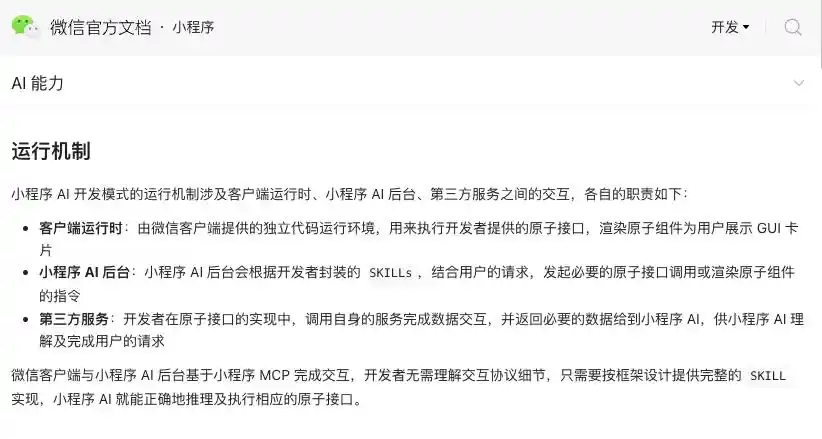
From an architectural perspective, those familiar with AI development will immediately recognize it: it's essentially MCP (Model Context Protocol). The `mcp.json` declares the function and parameters of each atomic interface, and `SKILL.md` describes how the entire business process runs. This is almost identical to the MCP+Skills architecture found in Claude, Cursor, or VS Code. WeChat didn't reinvent the wheel; it directly adopted the industry-standard that is currently converging.

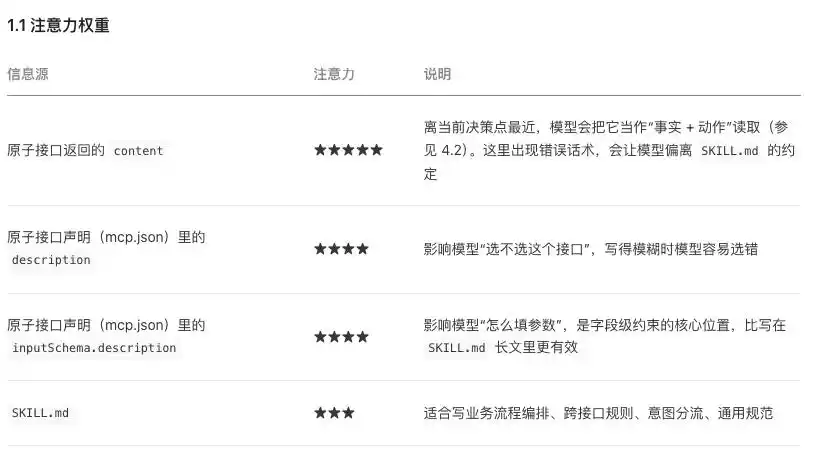
In the guidance, WeChat provides a clear "attention weight" system. When the AI decides which interface to call and what parameters to generate, it gives the highest priority to the content returned by the interface (five stars), followed by the interface description (four stars) and parameter descriptions (four stars) in `mcp.json`. `SKILL.md` ranks last (three stars). This means where developers write something matters more than what they write—the weight the AI gives to the same rule is completely different if it's written in the interface return versus in `SKILL.md`.
At the interface return level, there is a core specification: a two-stage "Fact + Action" format. First, tell the AI "what happened," then tell it "what to do next." If only the action is written without the fact, the AI might interpret "display card" as "prepare to call the next interface" and skip user confirmation. This is a rule learned after stepping into many pitfalls.
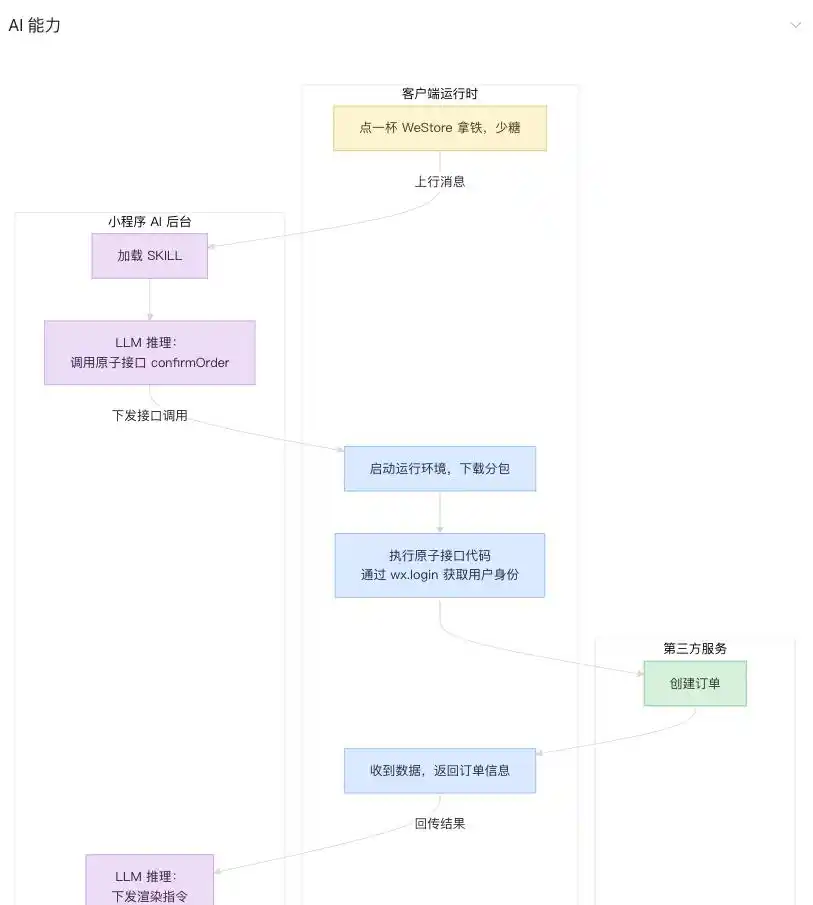
Fourth, parameter passing prioritizes using IDs over natural language. Taking the "Coffee Ordering" scenario in the diagram as an example, after the user states a need, the AI understands the vague intent and handles selection, modification, specification changes, and payment processing, all without leaving the chat dialog.

This design reveals a signal: WeChat has already run enough practical cases, knows where the pitfalls lie in AI calling external services, and has solidified these experiences into developer norms.

In fact, comparing WeChat Mini Programs, which are also known for their "ecosystem," to Apple's apps, WeChat possesses a kind of "God's-eye view" over its own ecosystem. This is the prerequisite for all this implementation.

Why It Might Be More Important Than Apple's AI

This year at WWDC, Apple released the new Siri AI. Despite having Google Gemini integrated at the underlying level and supporting natural language creation for Shortcuts, it didn't spark much discussion.
A closer look reveals the gap: Apple is making AI coordinate some native functions within the iOS system. Once it involves third-party applications—those apps installed on your phone—it becomes strained.

Take Ele.me, for example. Its code runs on Ele.me's own servers, which Apple cannot read. For Siri to call Ele.me, Ele.me's engineers must proactively connect to the App Intents API, negotiating and integrating one by one, a time-consuming and labor-intensive process.
What WeChat is doing is enabling AI to directly operate millions of third-party services, because Mini Programs are different. The code for every Mini Program, from developer submission, through WeChat's review, to finally running on the user's phone, remains entirely within WeChat's technical system throughout the entire process. During the review phase, WeChat can scan the code, automatically analyzing "what pages this Mini Program has, what it can do, what its inputs and outputs are."

This is why "Automatic Mode" is possible—developers don't need to write a single line of code. They just flip a switch, and WeChat itself can translate your Mini Program into a tool the AI can invoke. WeChat's foundational architecture naturally supports this. It possesses a "God's-eye view," enabling scheduling based on centralization.

Apple does not have this architectural advantage, and neither does Google.

Also noteworthy is the recent rumor that WeChat is collaborating with Huawei, Honor, Xiaomi, OPPO, and vivo to launch A2A (Agent-to-Agent) assistant capabilities, allowing users to directly initiate WeChat audio/video calls or send messages via their phone's voice assistant.
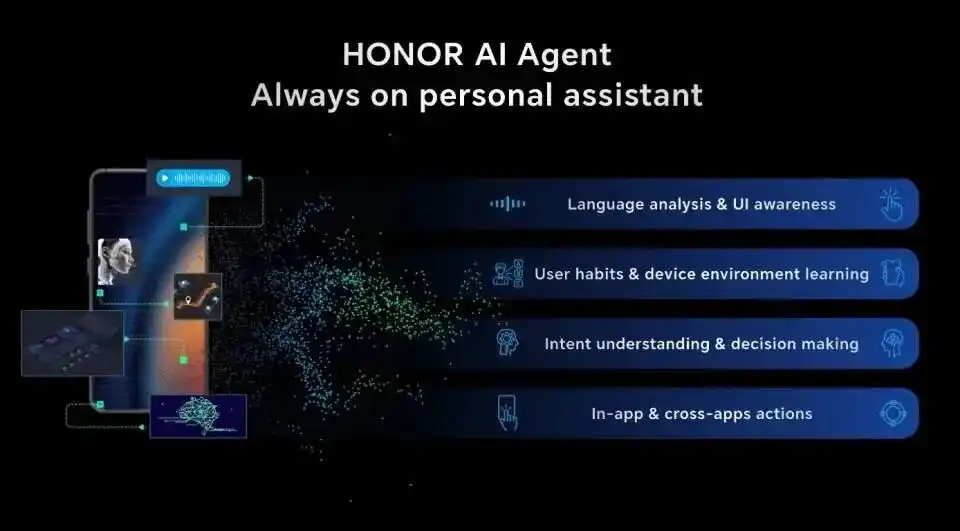
Internally, WeChat AI can invoke millions of Mini Programs. Externally, smartphone manufacturers' AI assistants can invoke WeChat. WeChat is becoming the super connector of the AI era, a service hub that all AIs can access.

The Old Prophecy of "WeChat OS"

When Mini Programs were launched, many joked that WeChat wanted to become "WeChat OS." Back then, it was more of a figure of speech—Mini Programs replaced some app functionalities but were essentially a "light application platform."

More coincidentally, the centralized review mechanism designed at the time was for quality and security control. Nine years later, this design, initially criticized as "excessive control," has unexpectedly become an infrastructure advantage in the AI era. The distributed App ecosystem (Apple/Android) seemed more "free" at the time, but now it has become an obstacle to AI integration.
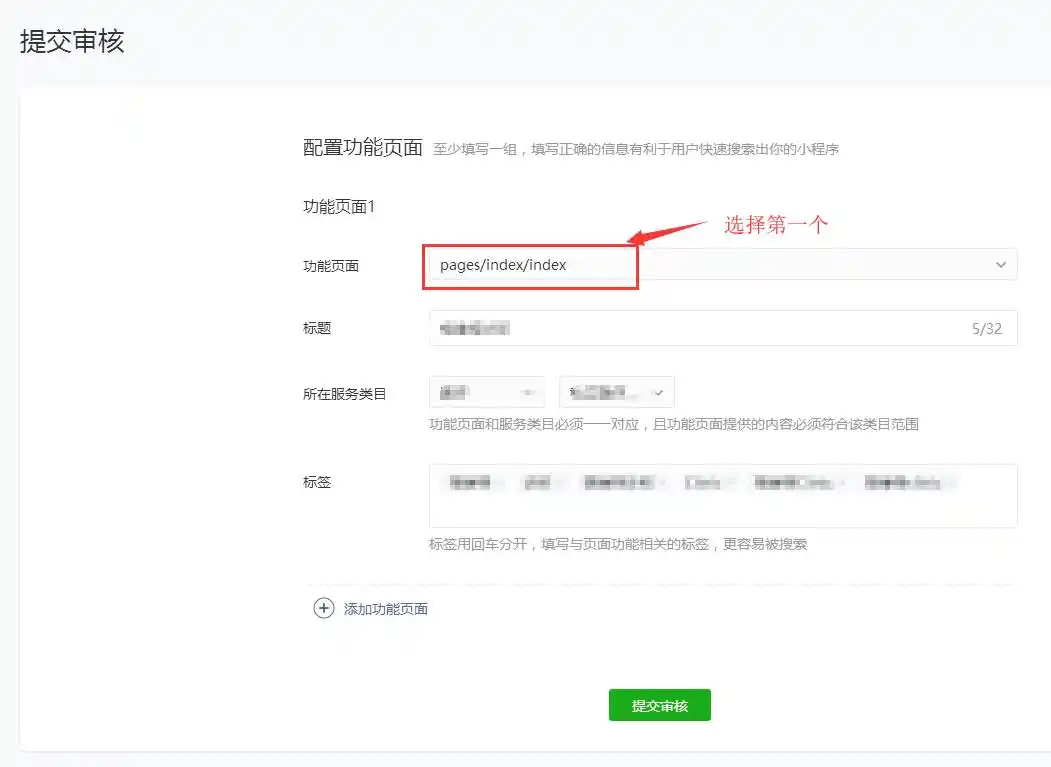
An old prophecy, due to the emergence of new-era technology—AI—has taken on a transformative change.

Previously, when writing about OpenClaw and Feishu, I mentioned a judgment: IM (Instant Messaging) is the most natural entry point for AI Agents because dialogue itself is the most natural interaction between humans and AI, and the service ecosystem (bots, payments, mini-programs) inherent to IM allows AI not only to "chat" but also to "do." Feishu is already moving in this direction, launching enhanced Bot APIs and AI Agent nodes.
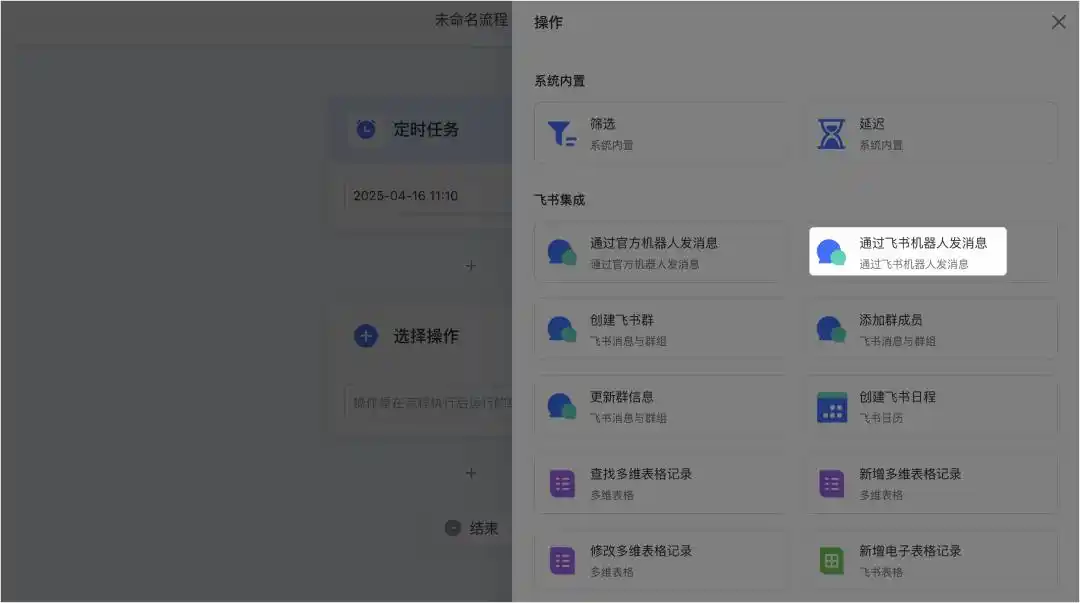
However, Feishu is an enterprise collaboration tool, covering work scenarios. WeChat has a distinctly different breadth—1.432 billion monthly active users, hundreds of Mini Programs across niche sectors, covering almost all service needs of a person's daily life, from ordering takeout to hospital registration to buying flight tickets to paying utility bills.
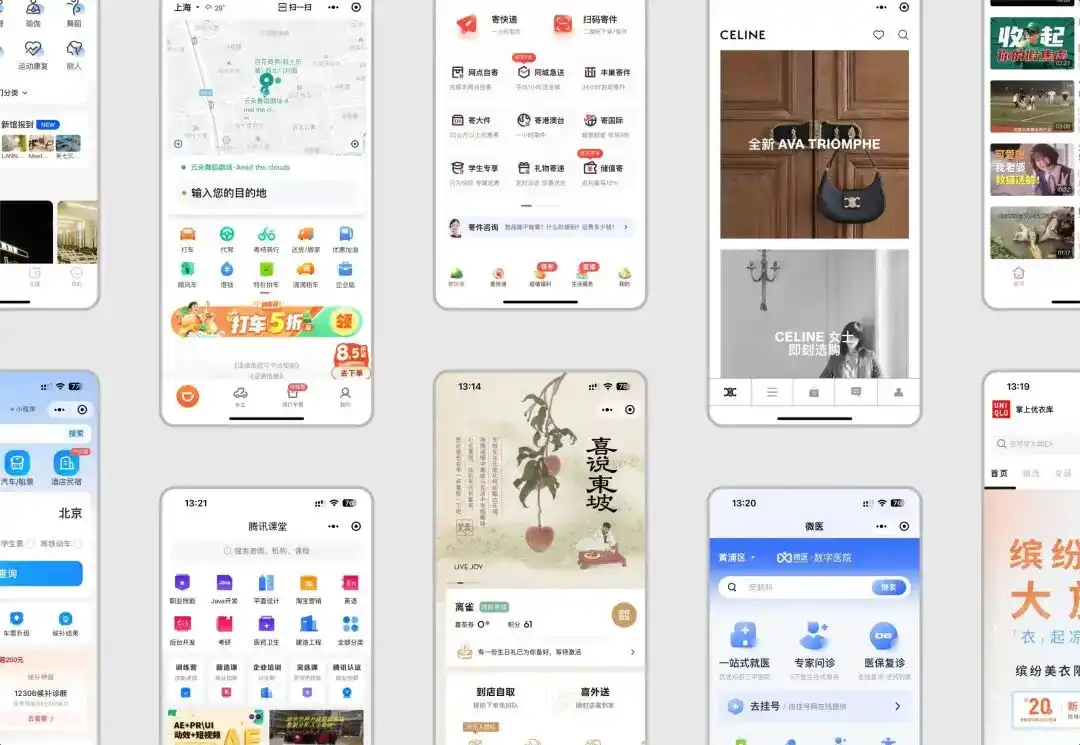
If WeChat AI can indeed smoothly invoke these Mini Programs to complete tasks, then, as the prophecy said, it becomes an operating system operated with natural language.

A user says, "Help me book a high-speed rail ticket from Beijing to Shanghai for tomorrow at 3 pm." The AI deconstructs the intent, invokes the 12306 Mini Program to check tickets, select seats, completes the order via WeChat Pay, all without leaving WeChat. This path can theoretically be executed today.

Of course, there is distance between theory and reality. AI invocation involving payment scenarios requires a near-zero error tolerance—ordering the wrong coffee is a minor issue, but buying the wrong flight ticket is a major one. The accuracy requirements for the underlying model are far higher than for conversational scenarios. This is also a common bottleneck facing AI Agent implementation globally: the gap between "able to chat" and "able to get things done" is not measured by technical metrics but by trust.
But WeChat has at least done one thing right: it didn't build a service network from scratch. Over the years, what ChatGPT has been doing is first having a smart brain, then connecting one by one to Shopify, DoorDash, Stripe, each connection built from the ground up. To this day, transaction-related queries still account for less than 3%.

The real change that is about to happen might be imperceptible to most users. One day, you type into WeChat, "Help me book a ticket to Shanghai for 9 pm tonight," and then it's done. You might not even know which Mini Program was called in the background or what payment process was followed.

This "imperceptible completion" is the true mark of a mature AI Agent. WeChat is closer to this step than anyone else.

This article is from the WeChat Official Account "APPSO", author: APPSO discovering tomorrow's products


İlgili Sorular

QWhat is the core change that WeChat announced regarding its AI and Mini Programs?

AWeChat announced that Mini Program developers can now grant permission for its AI to read, operate, and call upon their Mini Programs. This allows AI to directly execute tasks within these programs.

QWhat is the key architectural advantage WeChat has over Apple's iOS in integrating AI with third-party services?

AWeChat has a 'God's-eye view' due to its centralized ecosystem. Every Mini Program's code runs within WeChat's technical framework, from submission to review and execution. This allows WeChat to automatically analyze and translate a program's functions for AI use without requiring developers to write new code for the AI integration.

QWhat industry-standard architecture did WeChat adopt for its AI Skill system, and what does it allow?

AWeChat adopted the MCP (Model Context Protocol) architecture for its AI Skill system. This industry-standard approach allows its AI to understand the functions and parameters of Mini Program interfaces and the overall business workflow, enabling seamless AI-agent interaction.

QAccording to the article, what is the 'final sign of true maturity' for an AI Agent like WeChat's?

AThe final sign of true maturity is 'unconscious completion.' This is when a user makes a request in natural language (e.g., 'Book me a ticket to Shanghai for 9 PM tonight'), and the AI completes the task using the necessary services and payment processes in the background without the user needing to know which specific Mini Program or flow was used.

QWhy does the article suggest WeChat's move might be more significant than Apple's new Siri AI announced at WWDC?

AIt's more significant because Apple's Siri AI is largely limited to coordinating native iOS functions. To integrate with third-party apps, each developer must manually adapt their app using Apple's App Intents framework. In contrast, WeChat's architecture gives it direct, centralized access to millions of third-party Mini Programs, allowing for broader and more immediate AI-powered service automation for its vast user base.

İlgili Okumalar

U.S. Stock Market Trend: Nasdaq Plunges 3.5% Intraday Before a Remarkable Recovery, All Eyes on CPI Tomorrow

"US Stock Market Trends: Nasdaq Plunges 3.5% Before Dramatic Recovery, Eyes on Tomorrow's CPI" On Tuesday, US markets experienced a wild swing. The Nasdaq initially surged nearly 0.7% before plummeting to a 3.5% intraday loss following a post by Donald Trump on Truth Social. He stated that Iran had shot down a US Apache helicopter in the Strait of Hormuz and that the US "must...respond." The index, however, staged a remarkable recovery in the final two hours, closing down only 0.97%, as subsequent remarks from Trump and Vice President Vance suggested a potential Iran deal within days. The S&P 500 fell 0.26%, while the Dow Jones gained 0.17%, supported by its non-tech components. This incident marked the first loss of a US military asset since tensions with Iran escalated in late February. Despite the event, crude oil prices fell sharply (WTI -3.93%) due to expectations of a near-term deal, OPEC+ plans to increase output, and fears that strong jobs data could lead to Fed rate hikes. Market attention is now laser-focused on the May CPI data release Wednesday morning. This report is seen as critical evidence for whether hot job growth is fueling inflation and will heavily influence expectations for the Federal Reserve's upcoming meeting. A hotter-than-expected reading could trigger further sell-offs, particularly in tech, while a cooler print could spark a significant rebound. The article notes a clear sector rotation, with money flowing out of tech (Nasdaq down over 5% in a week) into defensive sectors like healthcare and consumer staples. Other assets like gold and Bitcoin also remain under pressure. The overarching sentiment is one of "war fatigue," with markets desperately awaiting concrete results from the prolonged Iran negotiations rather than reacting to each new headline.

marsbit24 dk önce

U.S. Stock Market Trend: Nasdaq Plunges 3.5% Intraday Before a Remarkable Recovery, All Eyes on CPI Tomorrow

marsbit24 dk önce

Second Only to GPUs and Memory: MLCCs Are Becoming the Next Billion-Dollar Windfall for AI Computing Power

After GPU and memory, MLCC (Multi-Layer Ceramic Capacitors) is emerging as the next critical component in AI compute, potentially a multi-billion-dollar market. The article highlights a significant, industry-wide price increase for MLCCs, driven not by inventory cycles but by a fundamental, structural demand surge from AI and automotive sectors. AI servers require exponentially more MLCCs than traditional servers—from 2,000 to over 350,000 units per high-end AI rack—primarily to stabilize power for increasingly powerful, low-voltage GPUs. A key AI server's MLCC cost can reach thousands of dollars, making it the third-largest cost component after GPUs and memory. This demand is compounded by the automotive shift to EVs and advanced ADAS. Supply, however, struggles to keep up. Manufacturing high-end MLCCs involves extreme precision and faces six major barriers: proprietary technology, long customer certification cycles (12-18 months for AI), high capital intensity, patent thickets, specialized talent, and massive scale. Industry capacity grows at only ~10% annually, creating a persistent supply-demand gap projected to last until 2030. Three companies dominate this high-end market. **Murata** (40% global share) is the stable leader. **Samsung Electro-Mechanics** offers the highest growth elasticity with aggressive expansion. **Taiyo Yuden** is the purest MLCC play. While their current P/E ratios appear high, they are expected to compress rapidly as earnings surge, powered by significant pricing power and operational leverage. Key risks include a potential slowdown in AI capex, high valuations, competition from Chinese manufacturers in lower tiers, yen appreciation, and consumer electronics weakness. The article concludes that MLCCs are transforming from a commoditized component into a strategic, capacity-constrained asset essential for the AI-powered future.

marsbit54 dk önce

Second Only to GPUs and Memory: MLCCs Are Becoming the Next Billion-Dollar Windfall for AI Computing Power

marsbit54 dk önce

İşlemler

Spot
Futures

Popüler Makaleler

PEOPLE Nasıl Satın Alınır

HTX.com’a hoş geldiniz! ConstitutionDAO (PEOPLE) satın alma işlemlerini basit ve kullanışlı bir hâle getirdik. Adım adım açıkladığımız rehberimizi takip ederek kripto yolculuğunuza başlayın. 1. Adım: HTX Hesabınızı OluşturunHTX'te ücretsiz bir hesap açmak için e-posta adresinizi veya telefon numaranızı kullanın. Sorunsuzca kaydolun ve tüm özelliklerin kilidini açın. Hesabımı Aç2. Adım: Kripto Satın Al Bölümüne Gidin ve Ödeme Yönteminizi SeçinKredi/Banka Kartı: Visa veya Mastercard'ınızı kullanarak anında ConstitutionDAO (PEOPLE) satın alın.Bakiye: Sorunsuz bir şekilde işlem yapmak için HTX hesap bakiyenizdeki fonları kullanın.Üçüncü Taraflar: Kullanımı kolaylaştırmak için Google Pay ve Apple Pay gibi popüler ödeme yöntemlerini ekledik.P2P: HTX'teki diğer kullanıcılarla doğrudan işlem yapın.Borsa Dışı (OTC): Yatırımcılar için kişiye özel hizmetler ve rekabetçi döviz kurları sunuyoruz.3. Adım: ConstitutionDAO (PEOPLE) Varlıklarınızı SaklayınConstitutionDAO (PEOPLE) satın aldıktan sonra HTX hesabınızda saklayın. Alternatif olarak, blok zinciri transferi yoluyla başka bir yere gönderebilir veya diğer kripto para birimlerini takas etmek için kullanabilirsiniz.4. Adım: ConstitutionDAO (PEOPLE) Varlıklarınızla İşlem YapınHTX'in spot piyasasında ConstitutionDAO (PEOPLE) ile kolayca işlemler yapın.Hesabınıza erişin, işlem çiftinizi seçin, işlemlerinizi gerçekleştirin ve gerçek zamanlı olarak izleyin. Hem yeni başlayanlar hem de deneyimli yatırımcılar için kullanıcı dostu bir deneyim sunuyoruz.

472 Toplam GörüntülenmeYayınlanma 2024.12.12Güncellenme 2026.06.02

PEOPLE Nasıl Satın Alınır

Tartışmalar

HTX Topluluğuna hoş geldiniz. Burada, en son platform gelişmeleri hakkında bilgi sahibi olabilir ve profesyonel piyasa görüşlerine erişebilirsiniz. Kullanıcıların PEOPLE (PEOPLE) fiyatı hakkındaki görüşleri aşağıda sunulmaktadır.

活动图片












