# Vertical Integration İlgili Makaleler

HTX Haber Merkezi, kripto endüstrisindeki piyasa trendleri, proje güncellemeleri, teknoloji gelişmeleri ve düzenleyici politikaları kapsayan "Vertical Integration" hakkında en son makaleleri ve derinlemesine analizleri sunmaktadır.

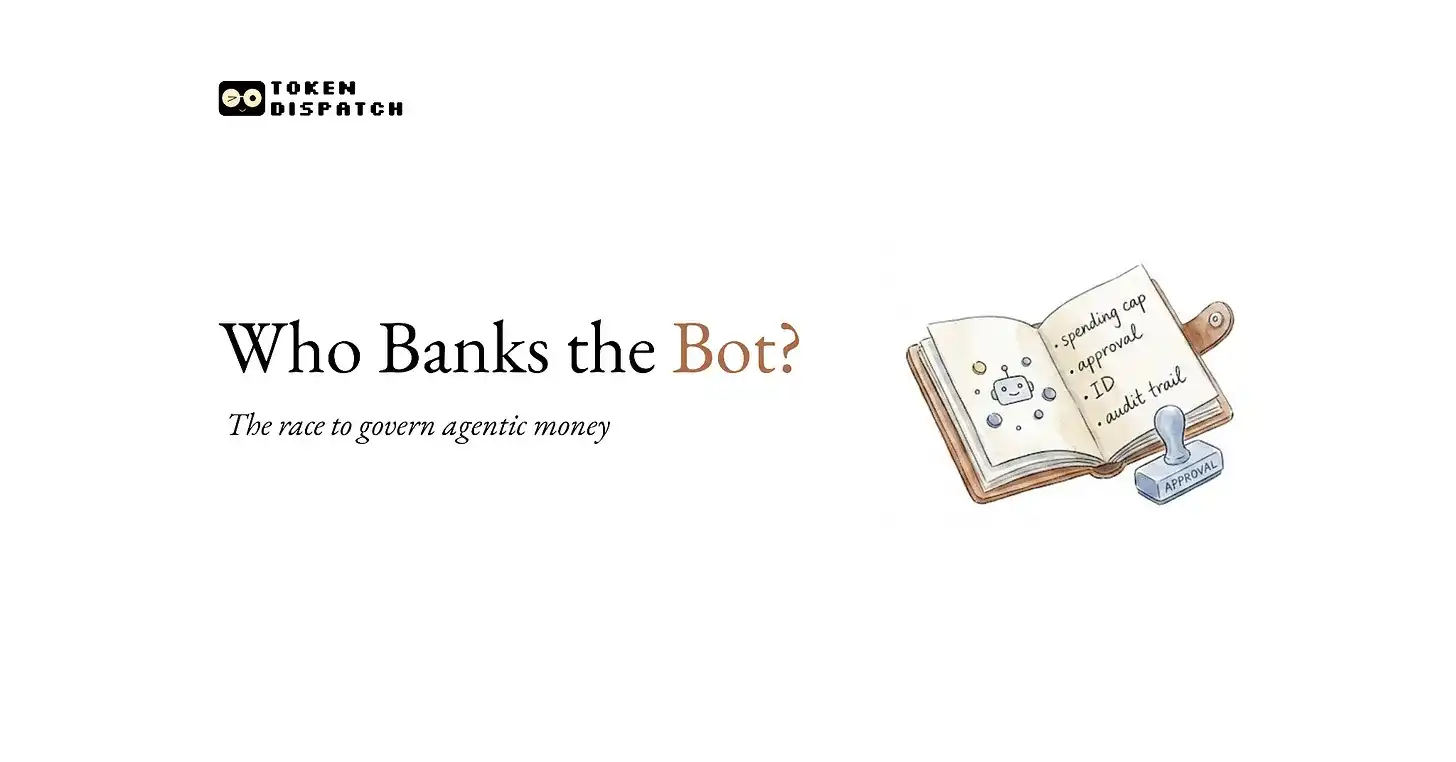
Who Funds the Agents?

**Summary: Who Funds AI Agents?** OpenAI recently shut down a feature allowing AI agents to shop for users, highlighting the challenge of creating a secure and regulated environment for agent-driven transactions. While payment infrastructure exists, a crucial governance layer—defining spending limits, fraud detection, tax handling, and return policies—is largely missing. The potential is enormous: AI agents already processed $73M across 176M transactions last year, with McKinsey forecasting this could grow to $3-5T in global consumer commerce by 2030. The core competition isn't just about processing payments, which can be very cheap (especially with crypto-based settlement), but about controlling the rules that govern agent spending. Key players like Stripe and Coinbase are racing to dominate this governance layer. Stripe's acquisition of wallet provider Privy allows it to set spending policies, identity checks, and human-in-the-loop approvals directly at the wallet level. Similarly, Coinbase's stack, including its x402 protocol and AgentKit, embeds governance rules. This vertical integration across settlement, wallet, and governance layers is becoming the dominant strategy. Control over the governance layer is where significant future value lies. If agents handle trillions in transactions, even a small fee for managing compliance, fraud prevention, and policy enforcement could generate billions in annual revenue. The companies that successfully integrate across the payment stack will capture value from idle agent balances, transaction fees, and governance services, positioning themselves as the foundational banks of the AI agent economy.

marsbit06/04 01:47

Who Funds the Agents?

marsbit06/04 01:47

Will OpenAI Swallow the Application Layer? a16z Says Real Opportunities Lie Outside General Models

As large language models (LLMs) from companies like OpenAI and Anthropic become more powerful, many fear they will dominate the AI application layer, leaving no room for startups. However, this article argues that the real opportunity lies not on the "Yellow Brick Road"—the high-profile, general-purpose tasks like code and text generation that model labs are directly pursuing—but in the "rest of Oz": complex, vertical-specific applications. On the Yellow Brick Road, model companies have inherent advantages: control over the model, better margins, pricing power, and strong distribution. Startups building generic, horizontal "co-pilot" tools for standard tasks are competing directly on this path and are vulnerable. True defensibility and value are found in specialized, vertical applications. These involve deep integration into messy, multi-step business workflows (e.g., sales, insurance, legal), handling legacy systems, data quality issues, compliance, and governance. The "scaffolding" around the model—the specialized tools, automations, workflows, and industry knowledge—becomes more critical than the raw model power itself. Vertical AI companies can build defensible moats through: * **Data & Learning Flywheels:** Capturing unwritten industry practices and specific customer feedback not found in public training data. * **Managing Model Complexity:** Routinely evaluating and routing queries across multiple models (including open-source) to optimize for performance and cost, and absorbing the migration burden of model upgrades for clients. * **Cost Optimization:** Using cheaper, fine-tuned models for specific sub-tasks instead of always calling the most expensive, general-purpose model. * **Governance & Compliance:** Providing the control plane for permissions, auditing, and ensuring compliance with industry-specific regulations (e.g., HIPAA, FINRA). Examples from sales (11x) and insurance (FurtherAI) illustrate that clients pay for systems that drive specific business outcomes (e.g., sales pipeline, policy underwriting), not for generic intelligence. These systems become the "operational memory" of a business, a layer that is hard to replace, even as the underlying LLMs commoditize and improve. To test if a startup is building in the "rest of Oz," it should pass checks like the **Tool & Steps Test** (requires complex, multi-step workflows), the **System Test** (owns the end-to-end workflow, not just a tool on top), and the **Hedge Fund / P&L Test** (measured by client business outcomes, not benchmark scores). Both model labs and vertical application companies will win. The next generation of enterprise software will be built in the specialized, complex, and high-value territory beyond the Yellow Brick Road.

marsbit05/28 04:28

Will OpenAI Swallow the Application Layer? a16z Says Real Opportunities Lie Outside General Models

marsbit05/28 04:28

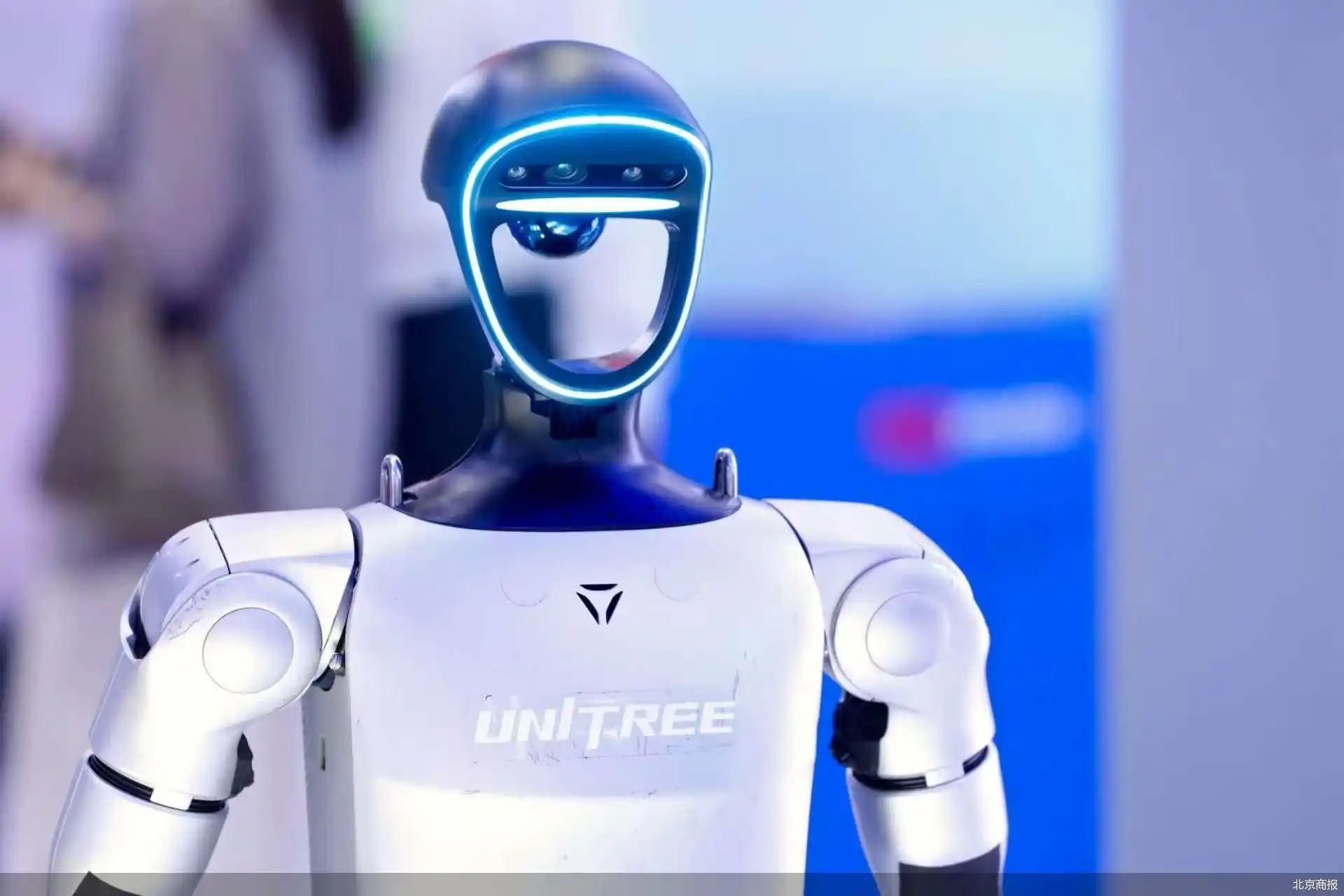
Unitree Robotics' IPO Hearing Countdown! Dissecting the 'Ice and Fire' in the Prospectus of the 'First Humanoid Robot Stock'

Unitree Robotics, poised to become China's first publicly listed humanoid robot company, is set for its IPO review on the Shanghai Stock Exchange. Its prospectus reveals a company undergoing a rapid transformation. Once primarily a quadruped robot (robodog) maker, humanoids now account for over half of its revenue as of 2025, with the company selling approximately 5,500 units in that year—reportedly the highest global volume. Current demand, however, is heavily concentrated in research and education (74% of humanoid sales), while commercial and consumer use is largely for promotional "display" purposes. Industrial applications remain limited (~9% of sales), though quadruped robots see more mature use in industrial inspections. A key strength is Unitree's vertically integrated model, self-designing and manufacturing critical components like motors and actuators. This has driven manufacturing costs down and pushed gross margins up to nearly 60%—exceptionally high for a hardware company. Financially, revenue surged 335% to about $252 million in 2025, with the company achieving profitability. Its IPO targets a valuation of $6-7 billion, planning to invest nearly half the raised capital into AI model development. This includes funding for Vision-Language-Action (VLA) and World Model + Action (WMA) models, highlighting its strategic focus on building a software "brain" to complement its hardware leadership and secure a long-term competitive edge. The prospectus showcases Unitree's manufacturing prowess and growth but also underscores the early, niche stage of widespread humanoid robot commercialization beyond academia and demonstration.

marsbit05/26 03:22

Unitree Robotics' IPO Hearing Countdown! Dissecting the 'Ice and Fire' in the Prospectus of the 'First Humanoid Robot Stock'

marsbit05/26 03:22

55 Billion Dollars: Musk's 'Chip Factory' Becomes a Reality

Elon Musk's "Terafab" Chip Factory Vision Begins with a $55 Billion Bet SpaceX has formally proposed investing $55 billion to initiate construction of a "Terafab" chip manufacturing facility in Grimes County, Texas, with the total cost potentially reaching $119 billion in later phases. This massive project, a joint initiative by SpaceX and Tesla, marks a pivotal step in Elon Musk's strategy of vertical integration for his company ecosystem. The core logic is that Musk's ventures—SpaceX, Tesla, xAI, and future projects like the Optimus robot—consume enormous amounts of AI computing power. Terafab is envisioned not merely as a factory but as a "full-stack AI infrastructure strategy," aiming to bring chip production, energy sourcing, and compute deployment under one umbrella to secure a self-sufficient supply of this critical resource. Analysts describe this as a bold "15-year strategy" with significant execution risks. Building a leading-edge semiconductor fab requires 3-5 years, specialized equipment like ASML's EUV lithography machines, and a skilled workforce, with the earliest chip output not expected until mid-2028 at best. It mirrors a broader industry trend where giants like Microsoft and Google are also pouring billions into custom AI chips, driven by the belief that in the AI era, controlling computing power means controlling the future. Timed alongside SpaceX's impending IPO, the Terafab announcement also serves as a powerful narrative, linking Tesla to SpaceX's and AI's growth story. Whether the vision translates into a functioning foundry remains uncertain, but Musk's move to have a rocket company build chips is redefining industry boundaries once again.

marsbit05/08 13:54

55 Billion Dollars: Musk's 'Chip Factory' Becomes a Reality

marsbit05/08 13:54

活动图片