# Tsinghua İlgili Makaleler

HTX Haber Merkezi, kripto endüstrisindeki piyasa trendleri, proje güncellemeleri, teknoloji gelişmeleri ve düzenleyici politikaları kapsayan "Tsinghua" hakkında en son makaleleri ve derinlemesine analizleri sunmaktadır.

AI Token Factory Explosion: Tsinghua University Team Raises 10 Billion in Half a Year

Qijing Tech, a company founded by a Tsinghua University team of faculty and students, has rapidly become a significant player in China's AI infrastructure sector, focusing on high-quality AI token production. Over the past six months, the startup has secured over 1 billion RMB in funding. The company specializes in AI inference—the efficient use of AI models—positioning itself as a "high-quality AI token factory." Unlike many competitors initially focused on model training, Qijing Tech believes inference is where real economic value is generated. Its core technology optimizes the entire AI token production chain through innovations like "full-system heterogeneous collaboration," aiming for stable, efficient, and low-cost output suitable for enterprise use. This strategy has attracted significant investor interest. Major funding rounds have been led by institutions such as Henan Investment Group Huirong Fund, with continued backing from existing investors. The company's "less models, deeper optimization" approach, concentrating resources on key models and high-value scenarios, is resonating in a market where a few top models dominate token usage. The results are promising. Since early 2026, Qijing Tech reports a threefold increase in token production efficiency per unit of computing power and a thirtyfold increase in total high-quality token output. Monthly revenue for June 2026 alone surpassed its entire 2025 revenue. Operating on a "Token as a Service" (TaaS) model, Qijing Tech engages in both direct token sales and collaborative operations, helping partners like state-owned enterprises transition from traditional computing power leasing to high-value token production. As AI token usage in China surges, Qijing Tech aims to be a key enabler in the emerging AI token economy, building the essential infrastructure for the AI era.

marsbit07/13 03:42

AI Token Factory Explosion: Tsinghua University Team Raises 10 Billion in Half a Year

marsbit07/13 03:42

Tsinghua University's Special Award Winner, Gu Yuxian, Joins DeepSeek

Tsinghua University's prestigious Graduate Special Scholarship recipient and 2021 Ph.D. candidate, Yuxian Gu, has officially joined DeepSeek. This news coincides with DeepSeek's major recruitment drive and the imminent launch of DeepSeek V4, on whose research paper Gu is listed as an author. A doctoral student in the Conversational AI group under Professor Minlie Huang at Tsinghua, Gu's research focuses on enhancing efficiency throughout the entire lifecycle of large language models. His key contributions span three areas: innovative methods for pre-training data selection (e.g., PDS), advanced knowledge distillation techniques for model compression (notably MiniLLM), and the development of efficient model architectures like Jet-Nemotron. His work has gained significant recognition, with nearly 5,000 citations on Google Scholar. Key publications include the highly cited surveys and papers on pre-trained models and the MiniLLM distillation method. As first author, he has presented at top-tier AI conferences including NeurIPS, ICLR, and ACL. One of his notable achievements is the Jet-Nemotron architecture, which combines Post-Neural Architecture Search (PostNAS) and a novel linear attention module called JetBlock. This model series demonstrates state-of-the-art performance rivaling larger models while achieving substantial efficiency gains in inference. Gu's expertise in creating powerful yet efficient AI systems aligns with industry needs, as evidenced by the adoption of his MiniLLM method by leading tech companies. His move to DeepSeek is anticipated to contribute further advancements in the field.

marsbit07/06 02:08

Tsinghua University's Special Award Winner, Gu Yuxian, Joins DeepSeek

marsbit07/06 02:08

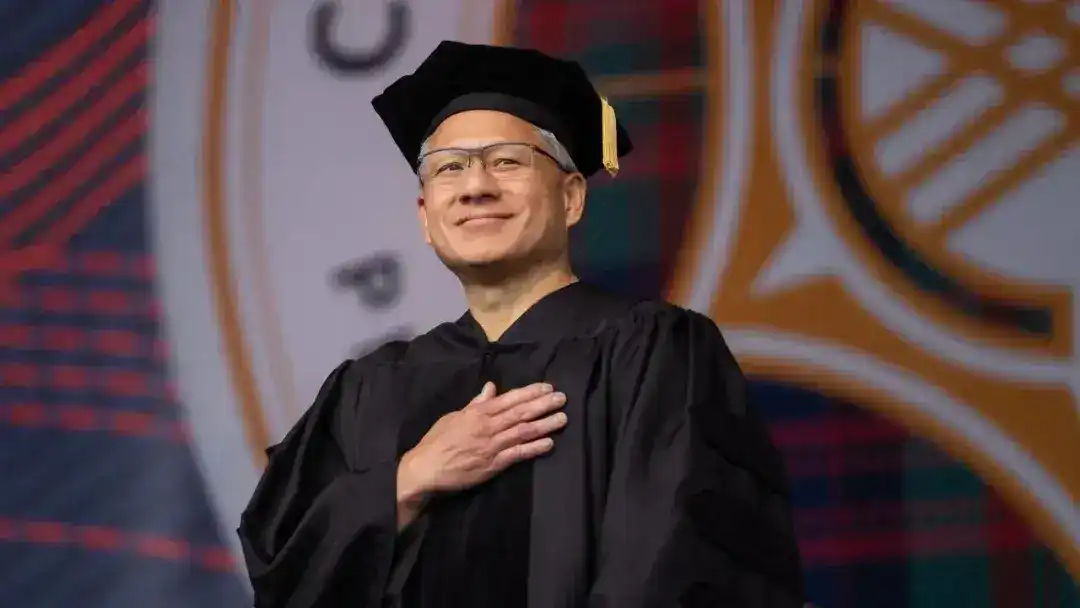
Jensen Huang Joins Tsinghua, But Did Musk Actually Arrive Ten Years Ago?

Jensen Huang, founder of NVIDIA, is set to join the Advisory Board of Tsinghua University's School of Economics and Management. This marks his first appointment to an advisory body at a mainland Chinese university, following similar roles at institutions like National Taiwan University, Stanford, and Harvard. The article explores why his entry comes now, a decade after Elon Musk joined the same prestigious committee in 2015. The Tsinghua advisory board, established in 2000, is a high-level strategic body comprising global business elites like Apple's Tim Cook (Chair), Tesla's Elon Musk, Microsoft's Satya Nadella, and Meta's Mark Zuckerberg, alongside financial giants and leading Chinese entrepreneurs. The timing is attributed to a confluence of factors: Huang's current eligibility driven by NVIDIA's dominant role in AI, a recent vacancy on the board, the rising challenge from domestic Chinese chips necessitating stronger local ties, and a recent thaw in U.S.-China relations following high-level diplomatic visits. In contrast, Musk's 2015 entry occurred during a period of warmer bilateral ties, where his disruptive innovation profile aligned well with the board's needs without significant political friction. Huang is noted for his active engagement with academia, holding several honorary doctorates and advisory roles at other universities. His appointment is framed as a reflection of shifting geopolitics, market dynamics, and strategic recalculations over the past decade, underscoring the enduring importance of the Chinese market for NVIDIA.

marsbit05/29 02:51

Jensen Huang Joins Tsinghua, But Did Musk Actually Arrive Ten Years Ago?

marsbit05/29 02:51

Tsinghua's Prediction 2 Years Ago Is Becoming Global Consensus: Meta and Two Other Major AI Institutions Have Reached the Same Conclusion

Summary: In a remarkable validation of Chinese AI research, Meta and METR have independently reached conclusions that align perfectly with the "Density Law" proposed by a Tsinghua University and FaceWall Intelligent team two years ago. Published in Nature Machine Intelligence in late 2025, the law states that the computational power required to achieve a specific level of AI performance halves every 3.5 months. This convergence was starkly evident in April 2026. METR reported that AI capabilities are doubling every 88.6 days, while Meta's new model, Muse Spark, demonstrated it could match the performance of a model from the previous year using less than one-tenth of the training compute. When plotted, the growth curves from all three sources—using different metrics (parameters, compute, task length)—show an almost identical exponential slope. The findings have profound implications: AI inference costs are collapsing faster than anticipated, powerful edge-computing AI is becoming rapidly feasible, and the industry's strategy of simply scaling model size is becoming economically inefficient. The Chinese team, which has been building its "MiniCPM" model series based on this law since 2024, is seen as having a significant two-year lead in practical engineering experience, marking a rare instance where Chinese researchers pioneered a fundamental predictive trend in AI.

marsbit04/13 12:14

Tsinghua's Prediction 2 Years Ago Is Becoming Global Consensus: Meta and Two Other Major AI Institutions Have Reached the Same Conclusion

marsbit04/13 12:14

活动图片