# Probability İlgili Makaleler

HTX Haber Merkezi, kripto endüstrisindeki piyasa trendleri, proje güncellemeleri, teknoloji gelişmeleri ve düzenleyici politikaları kapsayan "Probability" hakkında en son makaleleri ve derinlemesine analizleri sunmaktadır.

Spain Held to a Draw by Cape Verde, Jucom Prediction Market Witnesses Historic Upset

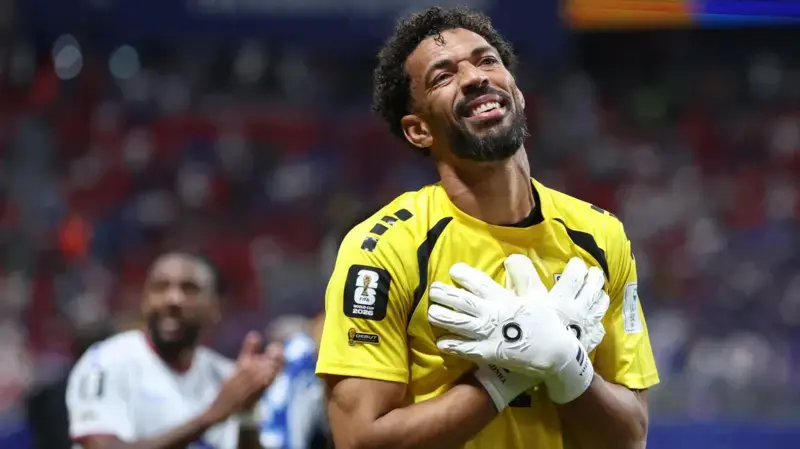
In a major upset at the 2026 FIFA World Cup, tournament favorites Spain were held to a surprising 0-0 draw by debutants Cape Verde in their Group H opener on June 16, Beijing time. Despite dominating possession (74%) and recording 27 shots with an expected goals figure of 2.16, Spain failed to break down a resilient Cape Verde defense, with their 40-year-old goalkeeper Vozinha making 7 saves to earn Man of the Match. Pre-match predictions on the Jucom prediction market had heavily favored Spain, assigning them a 92% win probability. The actual result, a goalless draw, triggered significant volatility across related prediction markets. This outcome forces a market-wide reassessment of several key probabilities, including Spain's likelihood of winning the group and the tournament itself, while Cape Verde's previously near-zero chance of advancing is now being re-evaluated. The event highlights both the efficiency and the inherent limitations of prediction markets. While prices aggregate known information, football's low-scoring, high-variance nature means unquantifiable in-game factors can lead to unlikely results. The core value of such markets lies not in perfect foresight but in their ability to dynamically reflect how new information is incorporated into collective expectations. Platforms like Jucom, which track outcomes from single matches to the final champion, provide a real-time lens into how global consensus evolves with each game.

链捕手06/16 10:14

Spain Held to a Draw by Cape Verde, Jucom Prediction Market Witnesses Historic Upset

链捕手06/16 10:14

Probability in the Price: How World Cup Odds Are Calculated

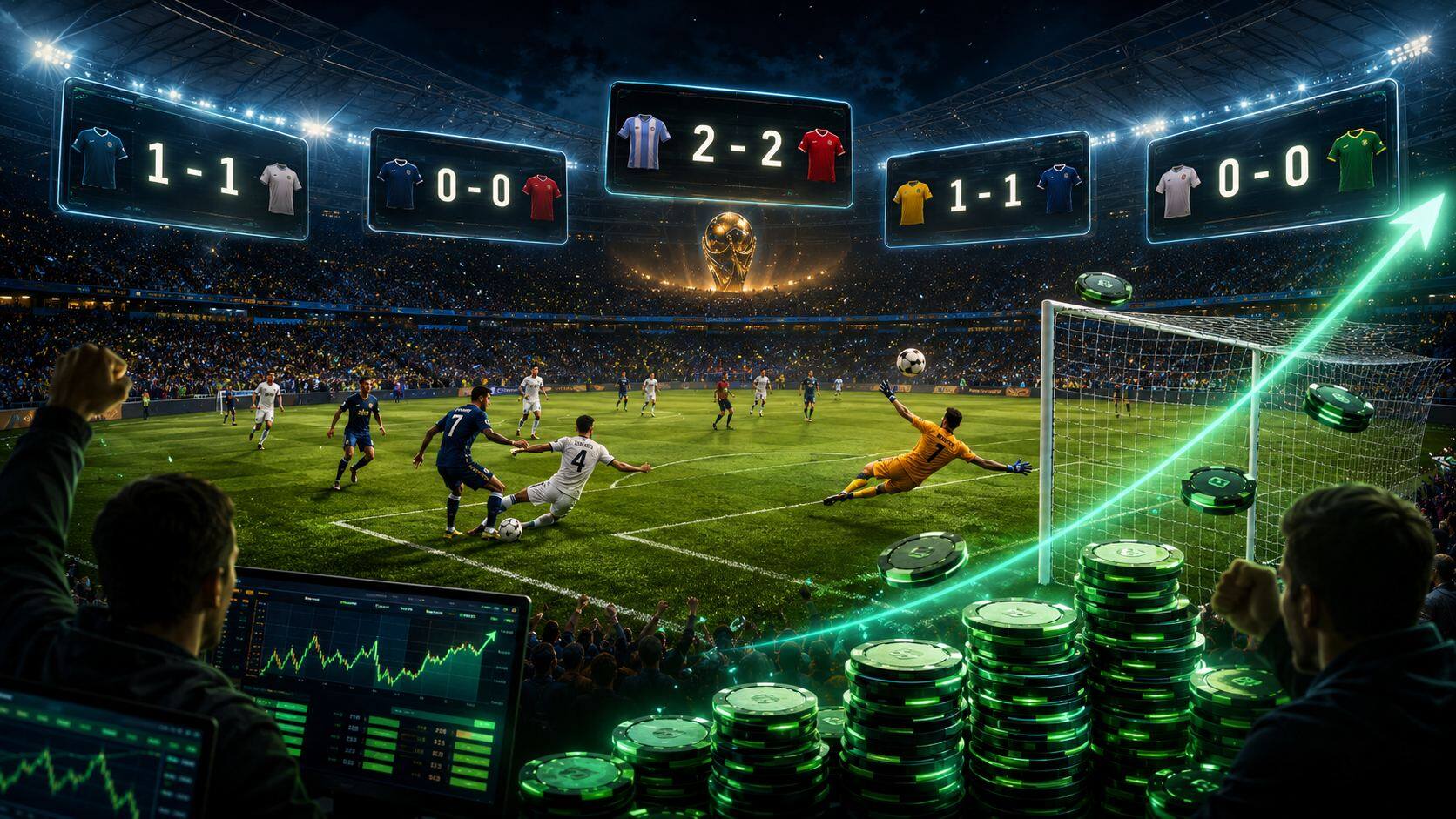
**The Probability in the Price: How World Cup Odds Are Calculated** Two major systems released their "championship probabilities" before the 2026 World Cup, and they disagreed on the favorite. Prediction market aggregators listed France at around **17%**, while the Opta supercomputer gave European champion Spain **16.1%**. These numbers look similar, but their production methods are fundamentally different. The market's **17%** is the **price** that clears after hundreds of millions of dollars in trading across platforms like Polymarket and Kalshi, where contracts trade between 0 and 100 cents, directly representing implied probability. This liquidity is provided by crypto-native market makers like Wintermute, though the market still has "the liquidity profile of an early-stage" asset class. In contrast, Opta's **16.1%** is a **simulated frequency**. Its model uses team data (including betting market odds as an input) to estimate match probabilities, then runs **10,000 full tournament simulations**, counting how often each team wins. Which is more accurate? There is **no rigorous, cross-tournament academic study** directly comparing their track records. However, a persistent **longshot bias**—where low-probability outcomes are systematically overvalued—observed in traditional betting for nearly a century, has also been found in modern crypto prediction markets. Research shows low-price contracts on Kalshi/Polymer less likely to pay out than their implied odds suggest. Unlike traditional bookmakers, prediction markets operate on **public blockchain ledgers**, making every transaction auditable and enabling such research. However, price formation is also influenced by **regulatory uncertainty**, as seen in recent US state-level bans and legal battles over jurisdiction. In summary, the "probability" you see is either a **market-clearing price** subject to behavioral biases and liquidity constraints, or a **model-simulated frequency** that partially incorporates market data. The question of which method is more reliable remains open, highlighting the importance of asking: **How was this number produced?**

marsbit06/05 00:26
Probability in the Price: How World Cup Odds Are Calculated

marsbit06/05 00:26

a16z Crypto's Latest Article: Why Do We Need Prediction Markets?

Prediction markets allow people to trade on the outcome of future events. They function as markets that aggregate dispersed information into a price signal, which represents the collective probability of an event occurring. By creating assets that pay out only if a specific outcome happens, these markets enable participants to bet based on their knowledge and beliefs. These markets have historical precedents, like 16th-century papal selection bets, and modern foundations in economics and market design. They offer advantages over traditional forecasting tools like polls: they provide direct probability estimates, update in real-time, and incentivize participants with real financial stakes to contribute accurate information. This can lead to more informed predictions, even for highly specific questions—such as which AI model performs best on certain tasks—that aren't covered by traditional commodity or stock markets. However, prediction markets face challenges. Infrastructure is needed to verify outcomes and ensure transparent, auditable operations. Market design must encourage participation from diverse, informed individuals while mitigating issues like insider trading or manipulation attempts aimed at distorting public perception. Despite these hurdles, with proper design focusing on transparency and participation management, prediction markets have significant potential as a core tool for forecasting the future.

marsbit06/02 14:34

a16z Crypto's Latest Article: Why Do We Need Prediction Markets?

marsbit06/02 14:34

Can You Make a Steady Profit by Blindly Following Polymarket's Pre-Game Win Probability to Bet on NBA Games?

**Can You Consistently Profit by Blindly Following Pre-Game Win Probabilities on Polymarket for NBA Games?** A backtest of the entire NBA 2025-26 regular season (1,096 games) was conducted to test the strategy of always betting $100 on the team with the higher pre-game win probability on Polymarket. The results show that this strategy is not profitable. The total amount wagered was $109,600, with a return of $107,545.20, resulting in a net loss of $2,054 and a Return on Investment (ROI) of -1.87%. This indicates that the market is highly efficient, and pre-game probabilities are accurately priced, leaving no simple arbitrage opportunity. In fact, blindly following the market would have been slightly less profitable than betting against it. However, a deeper analysis by team revealed significant differences. Certain teams consistently outperformed market expectations when they were favored to win: * Portland Trail Blazers (POR): 19% ROI * Philadelphia 76ers (PHI): 14% ROI * San Antonio Spurs (SAS): 12% ROI * Los Angeles Lakers (LAL): 11% ROI * Charlotte Hornets (CHA): 9% ROI In contrast, the market was highly efficient for the top-performing teams, offering minimal returns (e.g., Boston Celtics ROI: 4%, Denver Nuggets ROI: -5%). Results for the weakest teams were too inconsistent due to small sample sizes. The key finding is that team-specific factors, rather than the probability percentage itself, drive potential value, making a one-size-fits-all strategy ineffective.

Odaily星球日报04/17 06:58

Can You Make a Steady Profit by Blindly Following Polymarket's Pre-Game Win Probability to Bet on NBA Games?

Odaily星球日报04/17 06:58

Oscars Preview: Who Are the Big Players in Prediction Markets Betting On?

"Oscar Predictions 2026: Where Are the Prediction Market Whales Placing Their Bets?" As the 98th Academy Awards approach on March 15, 2026, the crypto prediction market Polymarket is offering its own forecasts on the winners, with significant trading volume indicating where large bettors, or "whales," are placing their capital. In the high-stakes Best Picture category, "One Battle After Another" is the current frontrunner with a 76% probability, followed by "Sinners" at 20%. Analysis of top wallets shows one address holds a substantial "YES" position on this outcome with an 89.7% win rate. The Best Actor race has seen a major shift; Timothée Chalamet was previously the favorite with an 80% probability, but Michael B. Jordan has now surged ahead to a 57% chance. Notably, the top wallet betting "YES" on Jordan has a negative historical profit, while a major "NO" bettor on Chalamet has profited over $2.82 million. Several categories appear to be near-certain "sure bets" or "savings plans." Paul Thomas Anderson is the overwhelming favorite for Best Director with a 91% probability. For Best Actress, Jessie Buckley leads with a 97% chance. "Sinners" also dominates Best Original Screenplay with a 96% probability. Other closely watched categories include Best Supporting Actress, where Amy Madigan leads at 52%, and Best Supporting Actor, where Sean Penn is the favorite at 73%. "One Battle After Another" also leads in Best Cinematography with a 73% probability.

Odaily星球日报03/12 02:44

Oscars Preview: Who Are the Big Players in Prediction Markets Betting On?

Odaily星球日报03/12 02:44

活动图片