# Investment İlgili Makaleler

HTX Haber Merkezi, kripto endüstrisindeki piyasa trendleri, proje güncellemeleri, teknoloji gelişmeleri ve düzenleyici politikaları kapsayan "Investment" hakkında en son makaleleri ve derinlemesine analizleri sunmaktadır.
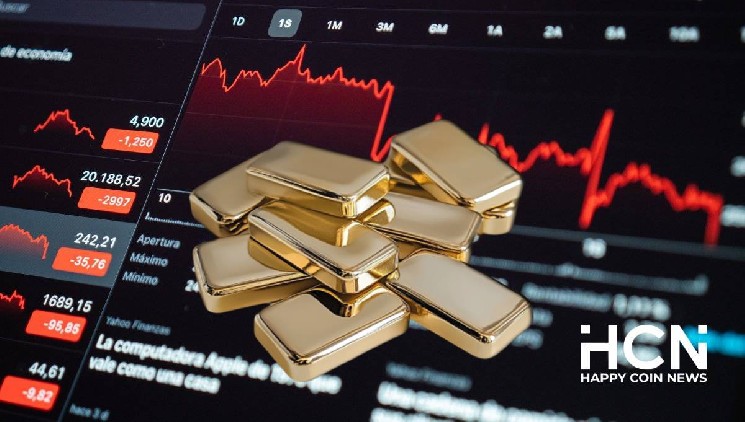

The End of the Gold Rush? Global Demand for Precious Metals Is Changing

Global demand for precious metals is shifting. Gold started 2026 strongly, surpassing $5,500 per ounce, but experienced a sharp correction to below $4,000 by mid-year. It now behaves more like a risk asset, sensitive to interest rate changes, rather than a traditional safe haven. However, Chinese central bank purchases continue to provide fundamental support, with its gold reserves reaching record highs and approaching 10% of its total forex reserves. Analysts from J.P. Morgan forecast a year-end recovery to the $4,350-$4,650 range. Silver followed a more volatile path, soaring to $120 per ounce early in the year before halving in value, though current prices remain 70% above last year's levels. The industrial sector, particularly solar panel manufacturers (accounting for a fifth of global demand), is responding to high prices and supply deficits by increasing recycling and reducing metal usage per unit. Analysts note the supply deficit is easing due to increased mining investment, with WisdomTree projecting a gradual rise to $70 per ounce by Q2 2027, supported by expected gains in gold. In conclusion, the precious metals market demands in-depth analysis, as prices are driven by a complex mix of industrial demand and central bank policies. Investors are advised to rely on verified analysis, diversify risks, and make decisions based on objective market facts.

cryptonews.ru1 saat önce

The End of the Gold Rush? Global Demand for Precious Metals Is Changing

cryptonews.ru1 saat önce

Santander Bank Announces It Holds a $4.3 Million Position in U.S. Spot Bitcoin ETFs

Spanish banking giant Banco Santander disclosed in regulatory filings that it holds approximately $4.3 million in US spot Bitcoin ETFs. While this amount is small relative to the bank's over $1 trillion in assets under management, it signifies a growing trend of traditional financial institutions increasing Bitcoin exposure through regulated channels. Santander, scoring around 35% on a 2026 Bitcoin Adoption Index for banks, is categorized at a "medium level" of integration, similar to Société Générale but behind more crypto-focused firms. The bank's interest in cryptocurrencies is not new; CEO Ana Botín has discussed Bitcoin-related products since 2021. Santander has been developing crypto custody and digital asset services across Europe for years, with its digital arm, Openbank, beginning to offer crypto trading in Germany in September 2025, with plans to expand to Spain. This investment comes as institutional crypto adoption accelerates in Europe. Santander is actively involved in crypto custody initiatives across the continent and appears to be positioning itself to strengthen its role in the sector, especially as regulations like MiCA become clearer. The industry is watching whether the bank's medium integration level reflects caution or structural limitations, as banks with higher adoption may gain an edge in attracting crypto-interested wealthy clients.

cryptonews.ru5 saat önce

Santander Bank Announces It Holds a $4.3 Million Position in U.S. Spot Bitcoin ETFs

cryptonews.ru5 saat önce

SemiAnalysis on the Epic Plunge: It's Not Over Yet

SemiAnalysis Weekly discusses the recent sharp correction in the semiconductor market after a historic first half. Analysts Doug O'Loughlin and Dylan note that despite healthy fundamentals, markets like South Korea's KOSPI have plunged 40%, wiping out leveraged retail investors. A core debate focuses on AI demand versus supply constraints. Dylan cites SemiAnalysis's internal use of AI coding agents, leading to a 100x increase in AI spending, as evidence of powerful demand. Doug agrees demand is strong but questions its exact magnitude, calling it a "trillion-dollar question." His primary concern is physical and financial bottlenecks: a shortage of 100,000 electricians in the US, massive $450B in corporate debt issuance by hyperscalers (funded by a shrinking pension pool), and labor/scale limits in regions like Taiwan, where TSMC constitutes 20% of GDP. The conversation covers market dynamics, including the typical semiconductor cycle where over-ordering leads to crashes, China's growing memory capacity, and the potential for older chips like the H100 to lose value as models scale. Politically, AI is seen as a likely scapegoat in upcoming elections, though not a top-tier voter priority. The analysts conclude that while the long-term potential is significant, the scaling path is narrowing. The challenge is matching exponential compute demands with real-world constraints on capital, labor, and permits, risking scenarios where massive investment outpaces near-term revenue generation.

marsbit9 saat önce

SemiAnalysis on the Epic Plunge: It's Not Over Yet

marsbit9 saat önce

活动图片