# Conflict of Interest İlgili Makaleler

HTX Haber Merkezi, kripto endüstrisindeki piyasa trendleri, proje güncellemeleri, teknoloji gelişmeleri ve düzenleyici politikaları kapsayan "Conflict of Interest" hakkında en son makaleleri ve derinlemesine analizleri sunmaktadır.

US Senate Makes Important Amendments to "Conflict of Interest" Section of Cryptocurrency Bill

The U.S. Senate has taken a key step regarding the CLARITY Act, which could shape the future of the U.S. crypto market. On July 29, Senators Tom Tillis and Ruben Gallego finalized amendments to the bill's "conflict of interest" rules, one of its most contentious aspects. The bipartisan bill aims to tighten restrictions on high-level federal officials' ties to digital assets. The new text, crafted as an alternative to a White House-endorsed ethics code, is expected to impose stricter rules limiting officials' ability to issue or directly participate in digital asset projects. However, with Congress entering an August recess and the revised text not yet reviewed by much of the Senate, the bill's timeline is uncertain. Senate Majority Leader John Thune indicated a procedural vote could occur between July 29 and August 1 but expressed doubt the full bill could pass before the break. The House-approved CLARITY Act, passed in July 2025, has been under Senate negotiation for over a year. Key goals of the CLARITY Act include clarifying jurisdictional boundaries between the SEC and CFTC, setting rules for digital commodity spot markets, and addressing topics like stablecoin yields, DeFi, and illicit financing. The stablecoin yield provisions could significantly impact U.S.-based DeFi protocols, exchanges, and issuers, affecting their global competitiveness. The outcome is being closely watched by both the U.S. and global digital asset markets.

cryptonews.ru6 saat önce

US Senate Makes Important Amendments to "Conflict of Interest" Section of Cryptocurrency Bill

cryptonews.ru6 saat önce

Should Developers Build on Corporate Chains Like Base and Robinhood? Five Key Risks to Consider

Should developers build on enterprise chains like Base and Robinhood? While offering enticing initial benefits like user access, these chains pose significant risks due to the inherent conflict of interest when the operator controls both the platform and a leading on-chain application. The primary lure is the promise of traffic and user distribution (e.g., through a parent company's app). However, five key risks emerge: 1. **Direct Competition**: The platform can use its exclusive data and positioning to launch competing products against third-party developers, mirroring cases like Amazon and Microsoft. 2. **Wallet Multi-Chain Reality**: Associated wallets (like Coinbase Wallet) must support multiple chains to remain competitive, diluting the promised exclusive traffic advantage for the enterprise chain. 3. **Exclusion by Platform Rivals**: Competing platforms (e.g., Coinbase vs. Robinhood) have no incentive to promote applications built on each other's chains, limiting growth avenues. 4. **Profit Squeeze**: The party controlling the end-user interface holds superior bargaining power and can capture a disproportionate share of value, squeezing developer profits. 5. **Unfulfilled Promises**: Promised traffic support can fail to materialize due to shifting platform priorities or strategic changes. In contrast, neutral blockchains like Ethereum and Solana avoid these platform risks. To mitigate risks on enterprise chains, developers should consider strategies like securing substantial onboarding grants, obtaining formal commitments (though these have weak historical enforceability), or, most effectively, pursuing a multi-chain deployment strategy while building independent user acquisition channels. Enterprise chains may be useful for initial cold-start user acquisition, but the core goal should be cultivating an independent user base rather than long-term dependence.

Foresight News07/20 11:24

Should Developers Build on Corporate Chains Like Base and Robinhood? Five Key Risks to Consider

Foresight News07/20 11:24

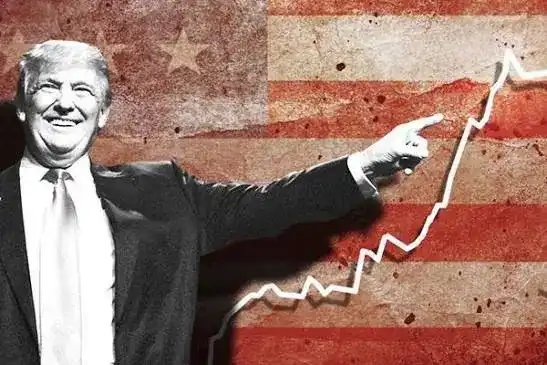
Trump, the President Who Knows Best How to 'Trade Stocks'

Former US President Donald Trump reported a record-breaking $2.2 billion in personal income for 2025, the highest annual income ever disclosed by a sitting president. This figure, from a 927-page government ethics filing, represented a 3.5-fold increase from his $600 million income in 2024 and boosted his net worth to $6.5 billion. The primary drivers were cryptocurrency (64% of income, approximately $1.4 billion) and real estate (26%, approximately $575 million). His crypto earnings stemmed largely from the launch of his personal meme coin, $TRUMP, generating over $600 million in licensing fees, and substantial profits from the WLFI token and its parent company. Despite a sluggish property market, his Mar-a-Lago resort and associated golf clubs saw revenue surges of 50% and 27%, respectively, attributed to their use as venues for presidential events. Trump's financial disclosure also revealed an unprecedented level of stock market activity, with over 22,000 trades executed in 2025, averaging 87 trades per market day. Media analyses noted several instances where significant trading coincided with major policy announcements, such as proposed tariffs, raising questions about potential conflicts of interest. While the White House stated these trades were handled by a family-managed trust fund and not Trump directly, critics highlighted this as a departure from the blind trusts traditionally used by presidents post-Watergate. The report has intensified debate over the commercialization of the presidency. Supporters view it as a success story of a businessman-president, while critics argue it demonstrates an unprecedented conversion of public influence into private wealth, with policy decisions potentially linked to personal financial gains. The controversy centers on whether Trump's earnings represent innovative entrepreneurship or a fundamental conflict of interest, sparking renewed calls for stricter ethics reforms in US governance.

marsbit07/06 15:02

Trump, the President Who Knows Best How to 'Trade Stocks'

marsbit07/06 15:02

Who is the Most Profitable Man in the Crypto World? Trump Rakes in Over $1.427 Billion in 2025

Who is the most profitable man in crypto? President Trump's 2025 financial disclosure, filed with the Office of Government Ethics, reveals crypto-related earnings exceeding $1.427 billion, starkly contrasting the broader market downturn. The bulk of this wealth stems not from passive investment but from his entities' roles as issuers and licensors. CIC Digital LLC, his memecoin operation, generated approximately $636 million in 2025, primarily from "Celebration Coins" royalty fees. DT Marks Defi LLC, a stakeholder in World Liberty Financial, earned about $594 million from asset sales and token distribution proceeds. Other entities held significant Bitcoin, Ethereum, and various altcoin wallets, along with substantial income from stablecoin ventures and his wife's NFT sales. This "issuer model" shields him from market downturns. While his namesake memecoin plummeted from ~$74 to ~$1.68, leaving many retail investors at a loss, his royalty income remained unaffected. The disclosure emerges as the U.S. Senate debates the CLARITY Act, which includes contentious ethics provisions aimed at preventing officials from profiting from the crypto sector they regulate. Critics argue Trump's earnings exemplify a critical conflict of interest, fueling demands for stricter rules to separate regulatory power from personal financial gain in the industry.

Foresight News07/01 02:41

Who is the Most Profitable Man in the Crypto World? Trump Rakes in Over $1.427 Billion in 2025

Foresight News07/01 02:41

Trump's 25-Year Financial Report: Family Earns Over $1 Billion Annually from Crypto, While Retail Investors Lose Money on $TRUMP

Former President Donald Trump's family earned approximately $1.2 billion from cryptocurrency ventures in 2025, according to a financial disclosure report. This revenue stream, outlined in a 927-page filing, now surpasses income from most of his long-established real estate holdings. The crypto earnings originated from two main sources: over $500 million from the sale of products like "governance tokens" by World Liberty Financial, a DeFi project co-owned by the Trump family, and roughly $635 million in royalties from the Trump-themed meme coin $TRUMP, issued by CIC Digital LLC. While Trump's entities profited, retail investors faced significant losses. The $TRUMP token, which peaked above $74 shortly after its January 2025 launch, has plummeted to around $1.68. World Liberty Financial's token has also fallen roughly 80% since its debut. Reports indicate that the majority of meme coin buyers have lost money, with Trump-linked entities still holding about 80% of $TRUMP's supply under vesting plans. The disclosure highlights a stark contrast: Trump's crypto and real estate businesses flourished—with new international property deals bringing in tens of millions—even as his administration shifted to crypto-friendly policies, relaxing the stringent regulatory stance of the previous Biden administration. The White House maintains that Trump acts only in the public interest, with his businesses placed in a trust managed by his sons, denying any conflict of interest. However, the report notes the difficulty of assessing such conflicts, particularly regarding foreign business dealings with countries that later received favorable U.S. policy decisions.

marsbit07/01 02:39

Trump's 25-Year Financial Report: Family Earns Over $1 Billion Annually from Crypto, While Retail Investors Lose Money on $TRUMP

marsbit07/01 02:39

Sam Altman's Personal Alchemy of Wealth: Investing in 400 Companies, Over 10 Deeply Tied to OpenAI

The article investigates Sam Altman's personal wealth strategy, centered around his investments in approximately 400 companies while serving as OpenAI's CEO. Despite not holding direct equity in OpenAI, Altman has built a vast portfolio, with at least 10 of his investments having commercial ties or ongoing negotiations with OpenAI. This creates a complex network of potential conflicts of interest, drawing scrutiny from U.S. congressional committees and state attorneys general. Key investments highlighted include the anti-aging startup Retro Biosciences (valued at $258 million for his stake as of late last year) and the chipmaker Cerebras, whose value soared following an OpenAI procurement deal. His most significant financial gain is linked to the nuclear fusion company Helion, where a recent funding round reportedly increased his stake's value to at least $4.1 billion. The article details a decade-long relationship between Altman, Helion, and OpenAI, including a controversial non-binding power purchase agreement and Altman's efforts to secure investments from OpenAI and its backer SoftBank for Helion. Other points include internal investigations at Tools for Humanity (developer of Worldcoin) and OpenAI's massive contracts with tech giants like Nvidia. According to Forbes, Altman's net worth is around $3.4 billion, ranking him 1251st globally—a rise of over 1400 places since 2024. OpenAI's board states that Altman's external dealings are transparent and potential conflicts are carefully managed.

Odaily星球日报06/25 09:41

Sam Altman's Personal Alchemy of Wealth: Investing in 400 Companies, Over 10 Deeply Tied to OpenAI

Odaily星球日报06/25 09:41

"Crypto Retirement Plan" Heavily Criticized by Democrats: Trump Is "Harvesting" American Workers' Pensions

Democratic senators Bernie Sanders (I-VT) and Elizabeth Warren (D-MA), along with Representative Bobby Scott (D-VA), are urging the Labor Department to repeal a proposed rule that would open U.S. retirement savings accounts, such as 401(k)s, to investments in cryptocurrencies like Bitcoin and other alternative assets. The rule, stemming from an August executive order by President Trump, would provide a legal safe harbor for plan fiduciaries offering these volatile assets if they follow a prescribed process. The lawmakers argue in a 14-page letter that the rule dangerously weakens long-standing "prudent man" standards under the Employee Retirement Income Security Act (ERISA), potentially exposing the $14.2 trillion in 401(k) savings to high-risk, minimally regulated investments. They cite warnings from FINRA about crypto's high volatility and from the FBI about massive cryptocurrency scam losses. The letter also alleges a conflict of interest, noting that President Trump's adult children manage the family's crypto business, which has reportedly raised billions from digital token sales. They contend the rule change could enrich the Trump family at the expense of workers' retirement security. In defense, the Trump administration frames the rule as expanding worker choice. Acting Labor Secretary Keith Sonderling stated it ends the department "picking winners and losers," requiring fiduciaries to follow a prudent process. Treasury Secretary Scott Bessent supported it as a step toward the president's "Golden Age."

marsbit06/03 08:47

"Crypto Retirement Plan" Heavily Criticized by Democrats: Trump Is "Harvesting" American Workers' Pensions

marsbit06/03 08:47

活动图片