‘Tools for scammers’- Tennessee’s crypto ATM ban hits record 10K uninstallations

ambcryptoPublished on 2026-07-09Last updated on 2026-07-09

Abstract

Tennessee's ban on cryptocurrency ATMs has taken effect after a federal court sided with the state, denying an attempt by operator CoinFlip to block it. State Attorney General Jonathan Skrmetti labeled the machines "tools for scammers," citing losses of $4 million, primarily targeting the elderly. The law classifies operating a crypto ATM as a Class A misdemeanor. Following this and similar actions in states like Indiana and Minnesota, a record 10,230 crypto ATMs were uninstalled globally in June 2026, with over 9,700 of those in the U.S. However, the crackdown may not hinder broader crypto adoption, as the use of crypto-linked debit cards from Visa and Mastercard surged 106% last year, offering a safer alternative for spending digital assets through traditional payment networks.

Crypto ATM operator CoinFlip has suffered another blow in Tennessee. In a recent statement, Tennessee Attorney General Jonathan Skrmetti confirmed that the ban on crypto ATMs will go into effect.

This move followed a failed attempt by CoinFlip and the broader crypto ATM sector to block the ban after a federal court sided with Tennessee. For AG Skrmetti, cryptocurrency ATMs are “tools for scammers” and “benefit fraudsters” more than citizens.

The General Assembly recognized that these machines benefit fraudsters at the expense of everyday citizens, and the Court recognized the strong public interest in allowing this law to take effect while the case proceeds.

AD

Under Tennessee law, Public Chapter 766 classifies the operation of crypto kiosks or crypto ATMs knowingly as a Class A misdemeanor.

Will the crypto ATM crackdown affect adoption?

The state moved to ban crypto ATMs in April after $4 million in scam losses, mostly targeting elderly people. However, CoinFlip, one of the largest operators, moved to block the ban. However, the injunction motion was denied by the federal court, allowing the ban to go into effect.

Besides Tennessee, crypto ATMs have been banned in Indiana and Minnesota. Although Missouri has not formalized a state-wide ban, operators like CoinFlip have been accused of being ‘gateways for fraud.’

Other states, such as Delaware, New Jersey, and Michigan, are also exploring formal bans against crypto ATMs.

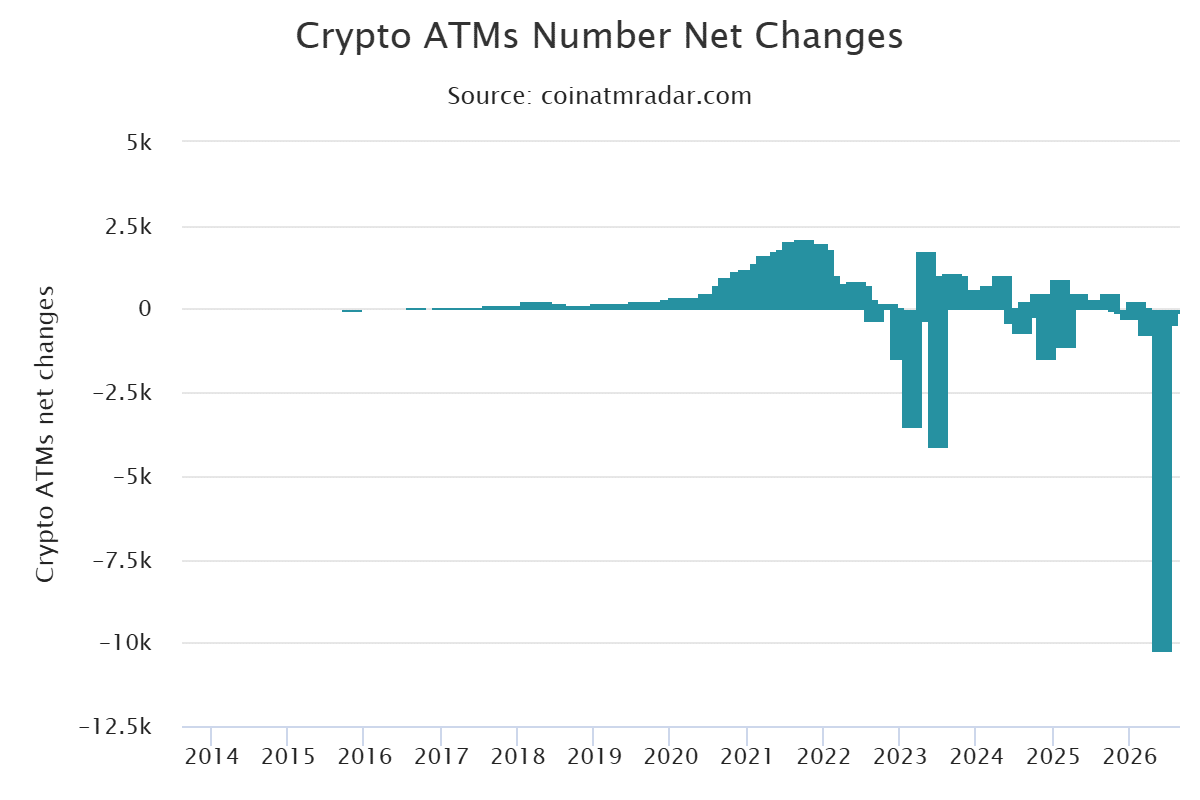
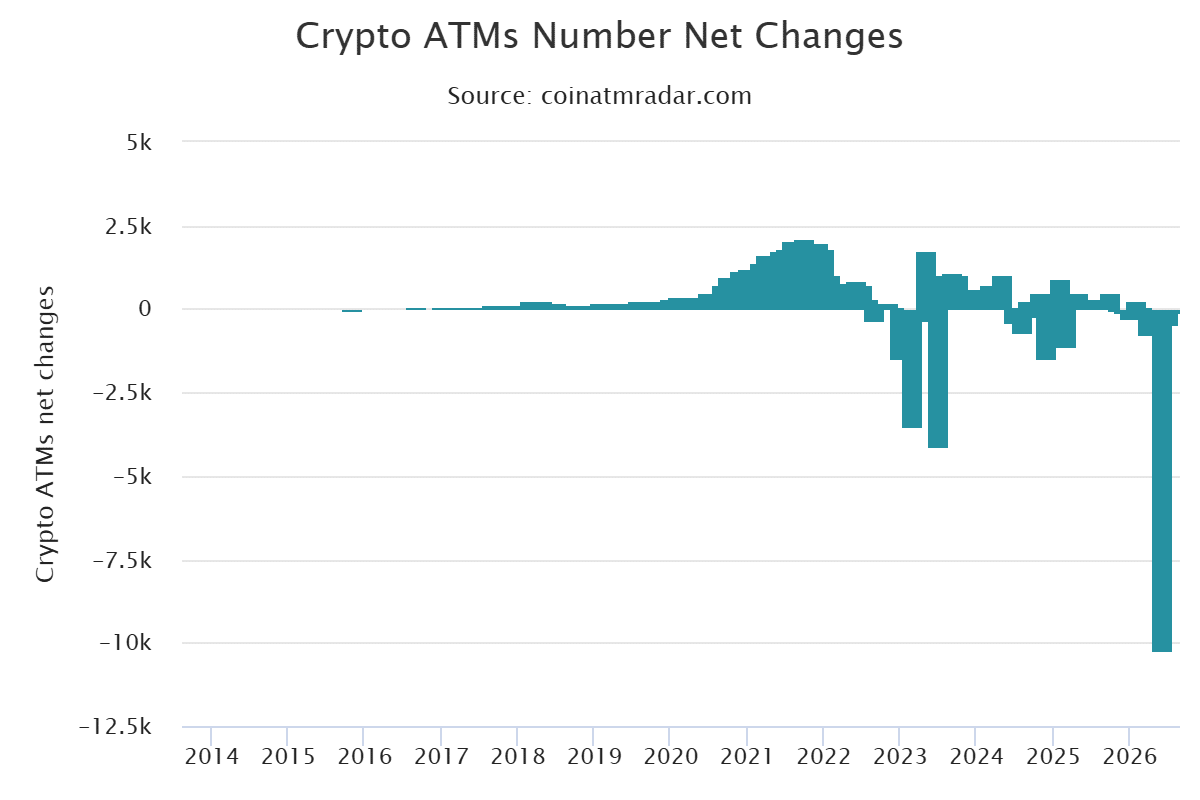
In fact, amid this crackdown, the number of uninstalled crypto ATMs has hit a record level in June 2026. Over 10K specialized crypto kiosks were uninstalled according to data aggregated by CoinATM Radar.
Source: CoinATM Radar

The U.S accounted for 9,798 out of the 10,230 uninstalled crypto ATMs globally, underscoring a close correlation with the ongoing state crackdown.

Will crypto cards replace crypto ATMs?

But this might not negatively affect broader adoption across the U.S as crypto cards are emerging as a safer alternative for crypto spending. For clarification, crypto kiosks or ATMs are purpose-built for crypto or BTC.

On the contrary, crypto cards issued by Mastercard, Visa, and other crypto-focused payment platforms allow users to spend their digital assets via the traditional ATM network.

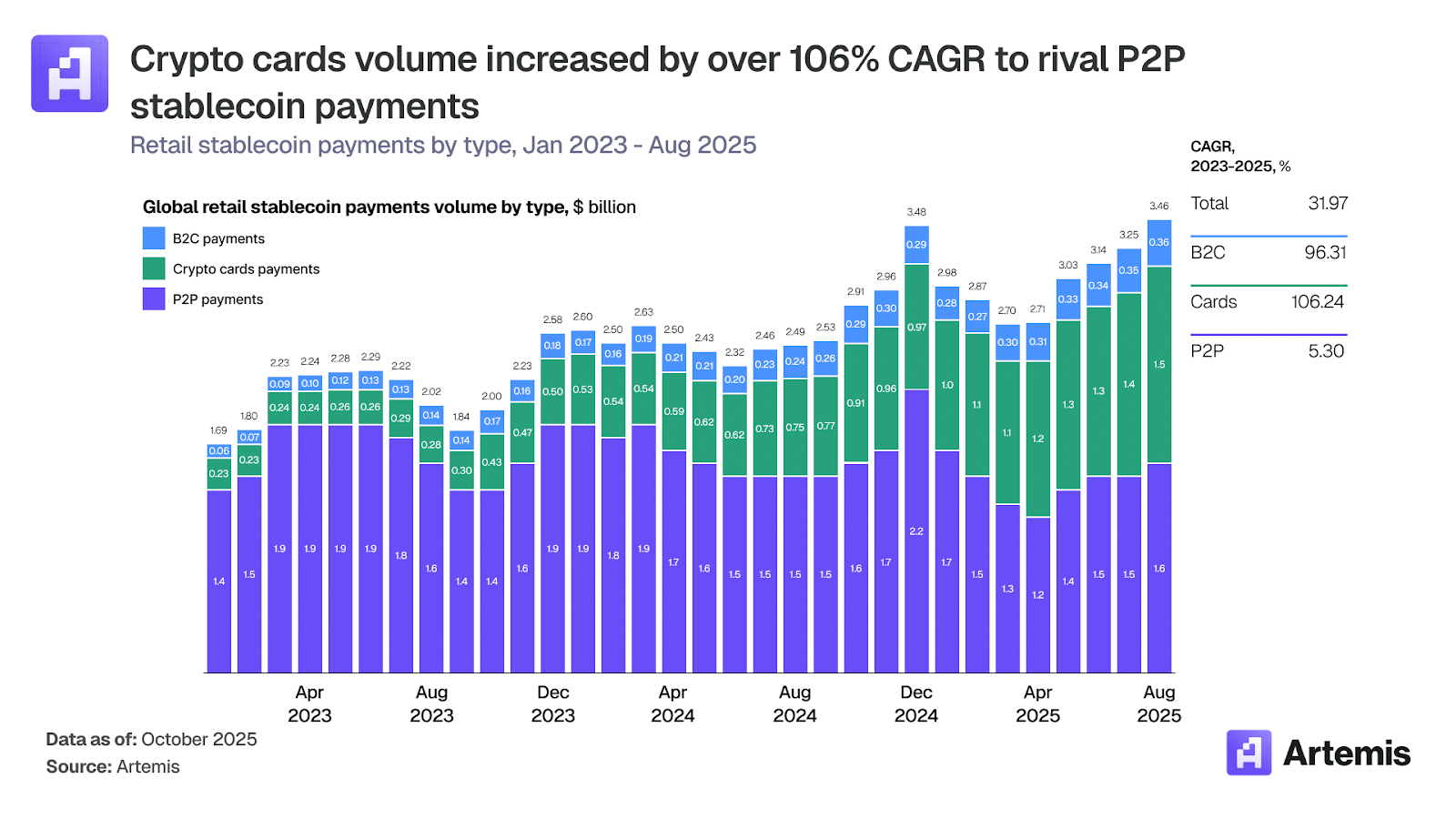
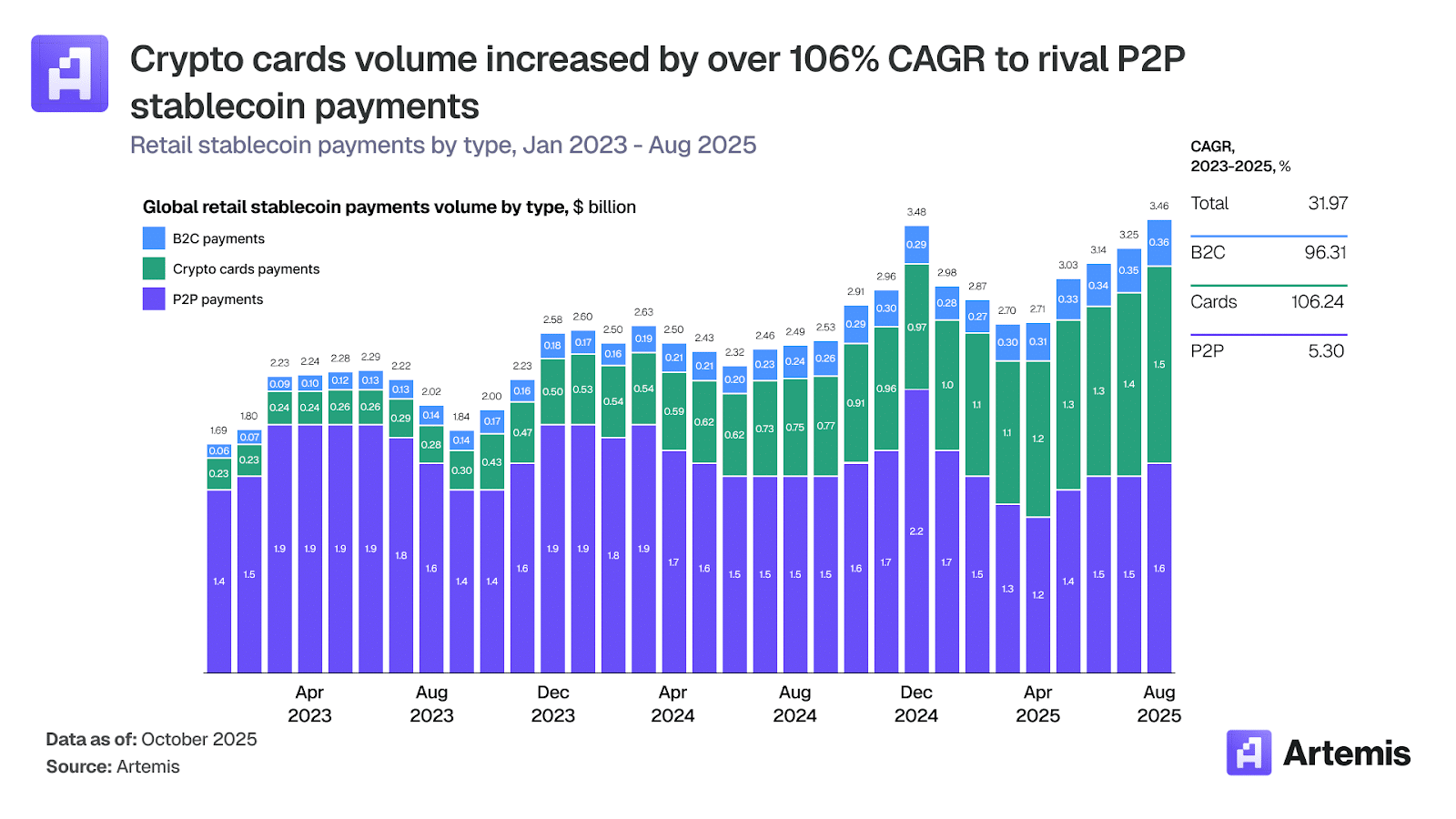
In fact, crypto card volume increased 106% last year, rivaling P2P stablecoin payments, further underscoring their demand.
Source: Artemis

Overall, the ongoing crypto ATM crackdown amid growing scams may not affect crypto adoption. Instead, it could help users adopt relatively safer alternatives like crypto cards.


Final Summary

  • Tennessee got the green light from the federal court to go ahead with the crypto ATM ban
  • Crypto card usage has exploded as the crypto ATM crackdown drives record uninstallations across the U.S.


Trending Cryptos

Related Questions

QWhat is the main reason given by Tennessee Attorney General Jonathan Skrmetti for banning crypto ATMs?

AHe states that cryptocurrency ATMs are 'tools for scammers' and 'benefit fraudsters' more than everyday citizens.

QWhich crypto ATM operator attempted to block the ban in Tennessee, and what was the outcome?

ACoinFlip attempted to block the ban. However, a federal court sided with Tennessee, denying CoinFlip's injunction motion and allowing the ban to go into effect.

QHow many crypto ATMs were uninstalled globally in June 2026 according to the article, and how many of those were in the U.S.?

AGlobally, 10,230 crypto ATMs were uninstalled in June 2026, with 9,798 of those uninstallations occurring in the U.S.

QAccording to the article, what alternative to crypto ATMs is seeing increased adoption for crypto spending?

ACrypto cards issued by platforms like Mastercard and Visa are emerging as a safer alternative, with their usage volume increasing significantly.

QBesides Tennessee, which other U.S. states are mentioned as having banned or exploring bans on crypto ATMs?

AIndiana and Minnesota have banned crypto ATMs. Delaware, New Jersey, and Michigan are also exploring formal bans. Missouri has not formalized a ban but has accused operators of being 'gateways for fraud'.

Related Reads

The Verdict in Choi Tae-won's Divorce Case: Revealing the Inheritance Undercurrent Behind SK Hynix's Trillion-Won Empire

SK Group Chairman Chey Tae-won's high-profile divorce case, involving a record 1.38 trillion won settlement, has drawn attention to the succession plans for Korea's second-largest conglomerate, especially its crown jewel, SK hynix. Unlike traditional chaebol scripts centered on the eldest son, Chey's three children from his marriage to former President Roh Tae-woo's daughter, Roh Soh-yeong, are carving distinct, non-traditional paths. Eldest daughter Chey Yun-jung (b. 1989) is seen as the most evident successor. With a scientific and consulting background, she holds executive roles at SK bioscience and SK Inc.'s growth support department, focusing on future strategy and biopharma. Her marriage is to an AI infrastructure entrepreneur, not a traditional business alliance. Second daughter Chey Min-jung (b. 1991) took a unique route, voluntarily serving as a South Korean naval officer, including an anti-piracy deployment. She later worked on policy and strategy for SK hynix in Washington D.C. before co-founding an AI-driven healthcare startup. She married a former U.S. Marine Corps officer, connecting her to U.S. defense and policy circles—networks crucial for a global semiconductor giant. The only son, Chey In-geun (b. 1995), who studied physics like his father, worked briefly at SK E&S before joining McKinsey. Despite fitting the traditional "heir" profile as the eldest son, he remains silent and holds no public position or shares in SK, suggesting the old succession playbook is obsolete. As SK hynix's valuation soars, becoming a geopolitical asset in the AI era, the heirs' legitimacy is no longer automatic. They must prove themselves in fields like AI biotech, global policy, and strategic consulting. Their marriages also reflect new elite networks in tech and defense, not old political alliances. Their inheritance is the complex challenge of navigating a globalized, tech-driven world, not just a corporate throne.

marsbit2 days ago 09:06

The Verdict in Choi Tae-won's Divorce Case: Revealing the Inheritance Undercurrent Behind SK Hynix's Trillion-Won Empire

marsbit2 days ago 09:06

From OpenSea to OpenRouter: Is Alex Atallah Repeating His 'Exit at the Peak' Playbook?

From OpenSea to OpenRouter: Is Alex Atallah Repeating His "Exit at the Peak" Playbook? According to the Wall Street Journal, payments giant Stripe is in talks to acquire the AI model aggregation platform OpenRouter in a potential deal valuing the company near $100 billion. This would mark founder Alex Atallah's second creation of a company reaching a $100 billion valuation, following his co-founding of NFT marketplace OpenSea. OpenRouter, founded just over three years ago, has grown rapidly by acting as a unified gateway for developers to access over 400 AI models. It currently has about 10 million users and processes over 200 trillion tokens monthly. While the platform's annualized revenue is around $50 million, its valuation has skyrocketed from $1.3 billion in March 2026. The potential acquisition by Stripe, a company OpenRouter's founder once likened it to, represents a major expansion into AI infrastructure for the payments leader. This move echoes Atallah's previous timing with OpenSea, where he departed before the NFT market's significant downturn. For OpenRouter, selling now may be strategic. Despite its scale, its business model—charging a 5-5.5% fee on AI inference calls—faces pressure from competition, open-source models, and potential price wars among model providers, limiting its profitability narrative for an IPO. A key asset for potential acquirers like Stripe is OpenRouter's vast repository of real-world AI usage data, which offers unique insights into model performance and developer preferences that are difficult to replicate. Whether this potential deal signifies a new valuation benchmark for AI infrastructure or another market peak signal remains to be seen.

链捕手2 days ago 08:42

From OpenSea to OpenRouter: Is Alex Atallah Repeating His 'Exit at the Peak' Playbook?

链捕手2 days ago 08:42

Trading

Spot

Hot Articles

Discussions

Welcome to the HTX Community. Here, you can stay informed about the latest platform developments and gain access to professional market insights. Users' opinions on the price of S (S) are presented below.

活动图片