After 50x Storage Surge, Justin Sun Always Looks to the Next Decade

marsbitPublicado a 2026-05-11Actualizado a 2026-05-11

Resumen

Sun Yuchen, known for his controversial stunts like a $30 million lunch with Warren Buffett (canceled due to a kidney stone) and eating a $6.2 million duct-taped banana, is often overshadowed by a significant fact: his decade-long track record of spotting major investment trends. In 2016, he famously advised young people to invest in Bitcoin, Nvidia, Tesla, and Tencent instead of buying property. A hypothetical $20,000 investment in Nvidia and Tesla from that list would now be worth over 50 million RMB. His latest major call was on November 6, 2025, predicting a "50x storage opportunity" tied to the AI boom, which materialized with Sandisk's stock surging nearly 50-fold by 2026. Looking ahead, Sun now focuses on the next frontier: Physical AI. He identifies four key areas: 1. **Embodied AI/Robotics**: He sees this reaching its "iPhone moment," with companies like UBTech and Galaxy General leading in commercialization. 2. **Drones**: Viewed as the first commercially viable form of Physical AI, revolutionizing sectors from warfare (e.g., AeroVironment's Switchblade) to logistics. 3. **Spatial Computing**: Beyond VR, it's about AI understanding physical space, a foundational technology for robotics and autonomous systems, exemplified by Apple's Vision Pro. 4. **Space Exploration**: After a 2025 suborbital flight with Blue Origin, Sun advocates for space as the ultimate frontier, discussing blockchain's potential role in space asset management and data transactions. His in...

Most people in China know Justin Sun from his bizarre stories.

Spending 30 million to have dinner with Warren Buffett, only to cancel at the last minute due to a kidney stone; buying a duct-taped banana for 6.2 million dollars at an auction and eating it in front of everyone at a press conference; investing 75 million dollars to become the largest backer of the Trump family's crypto project, securing a seat at a White House dinner; and at the age of 35, flying past the Kármán line, declaring himself the youngest Chinese commercial astronaut.

There are also many negatives. In 2023, he was sued by the SEC for market manipulation, with accusations including over 600,000 wash trades to inflate the price of TRX and hiring celebrities for promotion without disclosing payments. Currently, he is in a lawsuit with the Trump family-related project WLFI.

These stories spread so widely that they almost overshadowed a serious matter. This man, over the past decade in the secondary capital markets, has almost never missed betting on any trend.

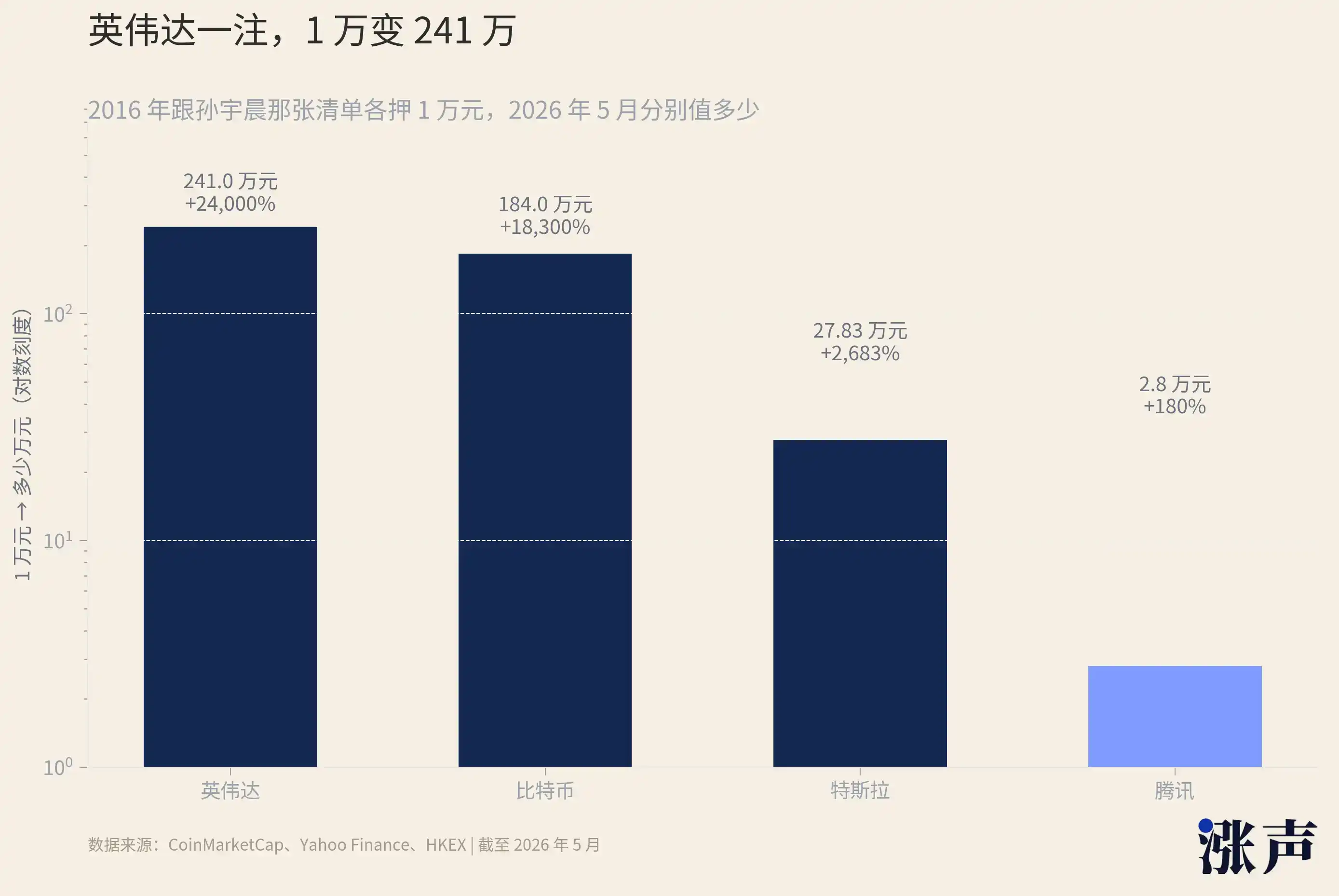
From buying BTC starting in late 2013, to 2016, advising post-90s generations not to buy houses, but to buy:

Bitcoin, NVIDIA, Tesla, Tencent.

Ten years have passed. As of May 2026, Tesla's total return is approximately 2683%, and NVIDIA's total return is nearly 24000%.

If you had listened to Brother Sun back then and invested 10,000 yuan in NVIDIA, it would be 2.4 million today; 10,000 yuan in Tesla would be 278,000 today. A listener who bet 200,000 yuan on each item on that list in 2016 would have seen just the NVIDIA bet turn into approximately 48 million, and the Tesla bet into approximately 5.4 million, totaling over 53 million.
And this man continues to take shots today. On November 6, 2025, Justin Sun dropped a statement:

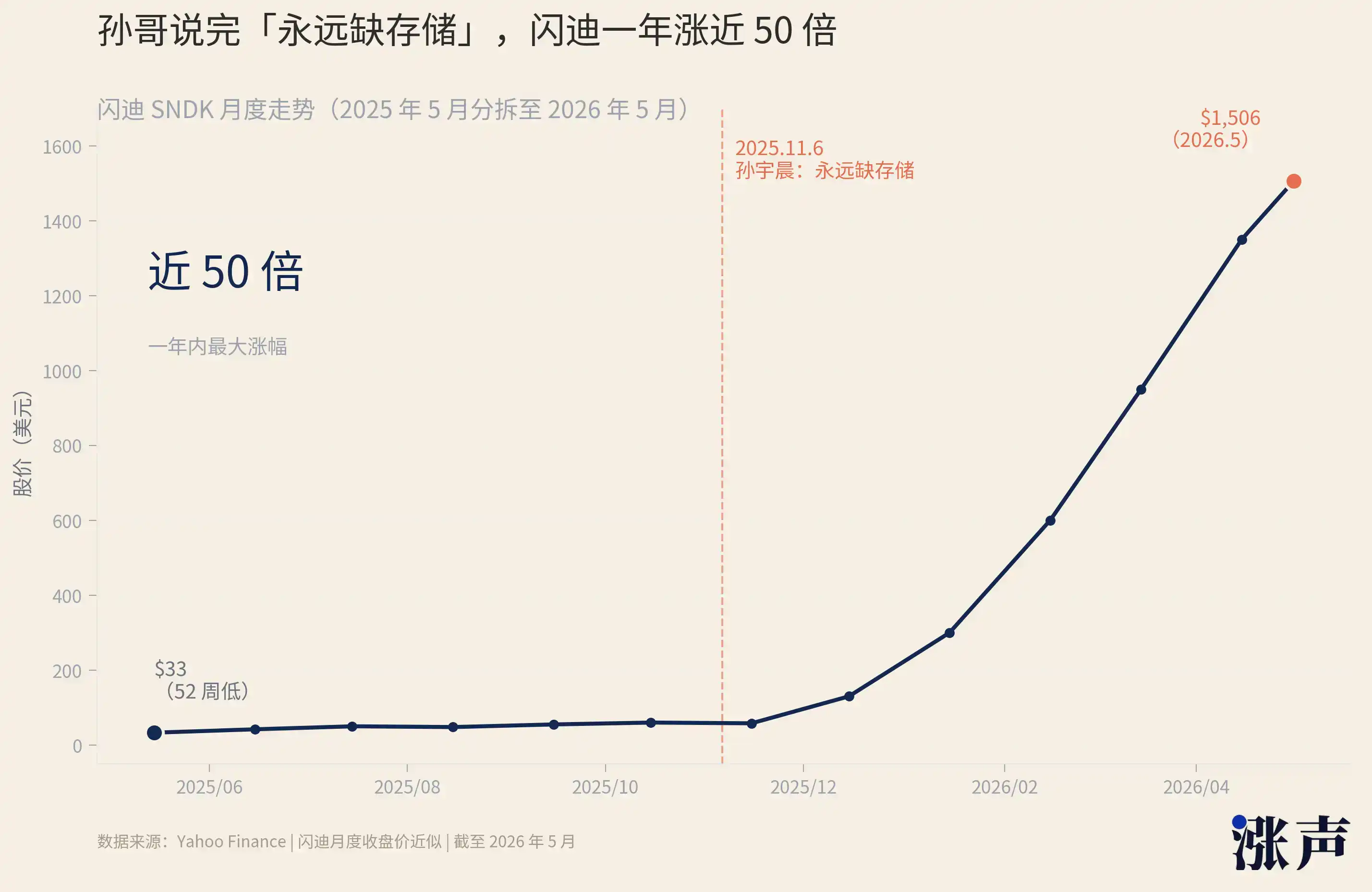
The capital market's reaction to this statement didn't reach fever pitch until 2026. SanDisk (SNDK), spun off from Western Digital, rose from a low of around $35 to $1,439 in a year, a maximum increase of nearly 50 times.
HBM memory capacity from Samsung, SK Hynix, and Micron was fully booked for 2026, already sold out, with orders scheduled through 2027-2028.

While everyone is still chasing the memory concept frenzy, in early 2026, Justin Sun changed his tune again in a video.

That video was originally about the outlook for 2026. Besides topics leaning towards wellness like putting health on the new year's list, he dedicated a segment to advise young people: embodied AI, drones, spatial computing, space exploration.

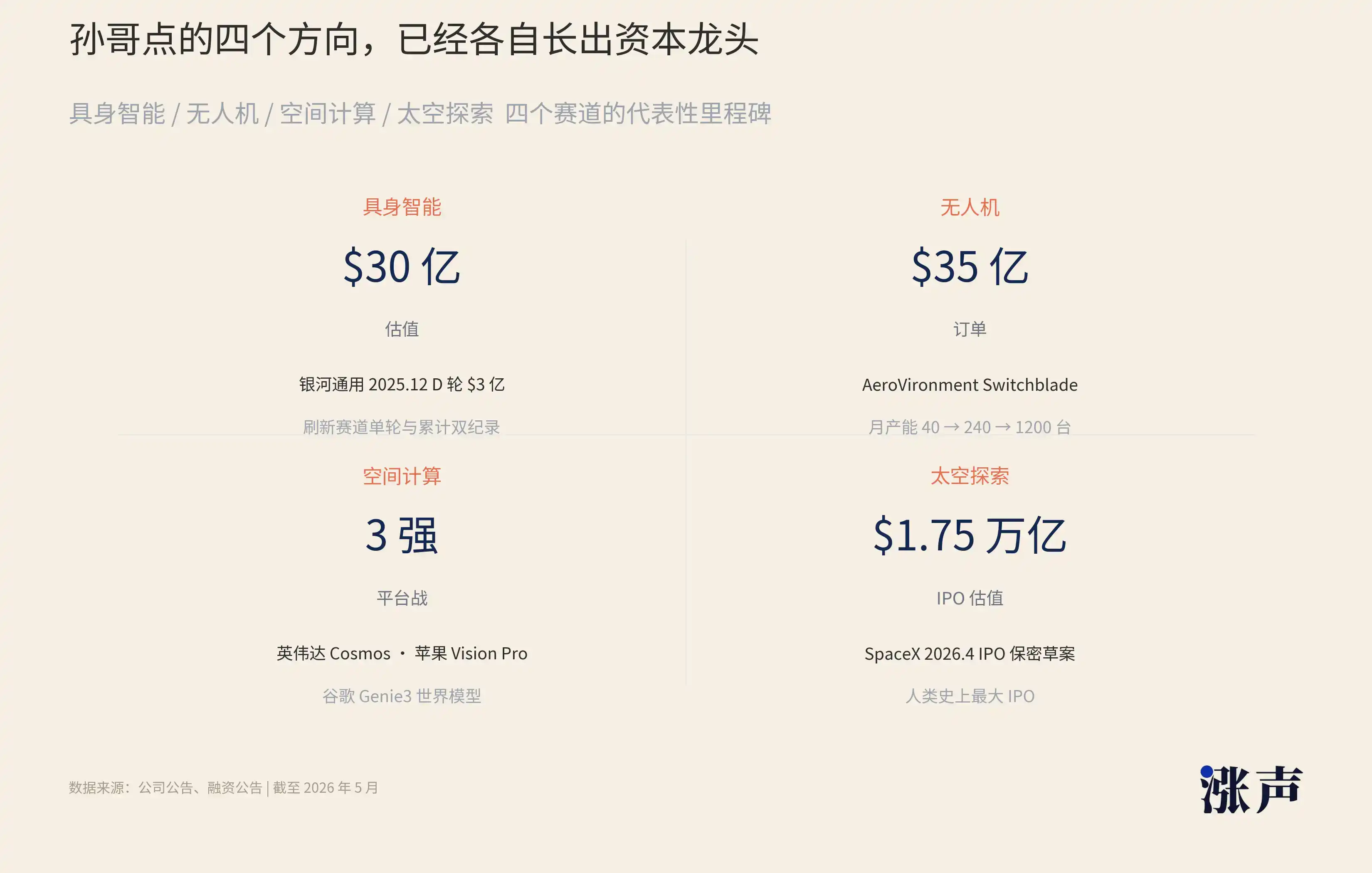
The author collected Justin Sun's public statements over the past two years regarding these four directions. Stringing them together, preliminary capital leaders have also emerged on each path.

Who Is the Next Storage Stock?

The first area Justin Sun pointed to was embodied AI.

The concept of robots has been discussed by humans for at least a hundred years. The Czech playwright Čapek coined the word "Robot" in 1920; industrial robotic arms have been used since the 1980s; Honda's ASIMO could climb stairs over twenty years ago. But the real bottleneck has always been the brain.

In the last two years, the entire industry has shifted towards VLA models—Vision-Language-Action. In plain terms, robots used to act based on code; now robots are starting to act based on seeing the world.

Unitree shipped over 5,500 humanoid robots in 2025, ranking first globally, and applied for a Science and Technology Innovation Board IPO in March 2026. Galaxy General raised a new round of $300 million (approx. 2.1 billion RMB) in December 2025, with cumulative funding of about $800 million and a valuation of $3 billion (approx. 21.1 billion RMB), setting new records for both single-round and total funding in the embodied AI sector.

Justin Sun said he likely won't personally venture into building robots, but he has a nose for narratives and the direction of capital flow. He said in a Bloomberg interview, "In a market where 99% of people don't know what a wallet is, the cost of education must be factored into the business model."

This statement, used to explain stablecoins in 2018, applies equally well in 2026. 99% of Chinese haven't used an embodied AI robot yet, but as long as that robot can cook, move boxes, or care for the elderly, the remaining 1% is the next opportunity.

The second sector he pointed to is drones.

While humanoid robots are still ramping up production, drones have already taken a step ahead into commercial deployment. They are naturally suited for what AI does best, from autonomous navigation to swarm coordination to data collection. They don't need to walk; flying is simpler than bipedal locomotion.

On the Russia-Ukraine battlefield, AI drone swarms have already taken over a large part of the role of tank units; Ukraine's annual drone production target has climbed to several million units. Over rice fields in rural China, DJI's agricultural drones fly, one replacing ten farm workers. In Shenzhen, Meituan has operationalized drone delivery, with order-to-delivery times not exceeding 15 minutes.

Drones are ahead of humanoid robots. They are the first form where AI has achieved a commercial closed-loop in the physical world.

The third area Justin Sun mentioned is spatial computing. This is the least mainstream among the directions he pointed out.

When Apple released the Vision Pro in 2024, most people saw it as a VR headset that cost several times more. This might be a misreading.

The Vision Pro's ambition has little to do with VR. It's Apple's first attempt to make AI understand space—how big your living room is, how far the table is from you, whether the coffee cup is to the left or right of the sofa, if you can reach it when you stretch your hand. This sounds simple but is ten times harder than training ChatGPT. Large language models only need to understand language; spatial computing needs to understand physics.

This is precisely the common prerequisite for robots, drones, and autonomous driving—they all require a form of spatial intelligence. NVIDIA's Cosmos platform, Google's Genie 3 world model, Tesla's FSD, are all doing the same thing: transitioning AI from understanding text to understanding the world.

ChatGPT only needs to understand language, but the next generation of AI needs to understand the world itself.

For the first three sectors, Justin Sun only verbally pointed them out. When it comes to space, he actually went there in person.

On August 3, 2025, he boarded Blue Origin's "New Shepard" NS-34 capsule and flew past the Kármán line.

After returning to Earth, he expressed an ambition: to make his company not just a "cryptocurrency exchange" but a "service provider for space economy infrastructure," using blockchain to solve space asset ownership, satellite data trading, and interplanetary payments. It sounds like science fiction. But look back at how he evangelized USDT ten years ago—people thought that was science fiction too back then.
Back on Earth, his message to young people was more direct: "Space exploration is a common mission for all humanity. I hope this flight inspires more young people to devote themselves to technology and innovation, collectively shaping humanity's interstellar future."

Brother Sun's Investment Logic

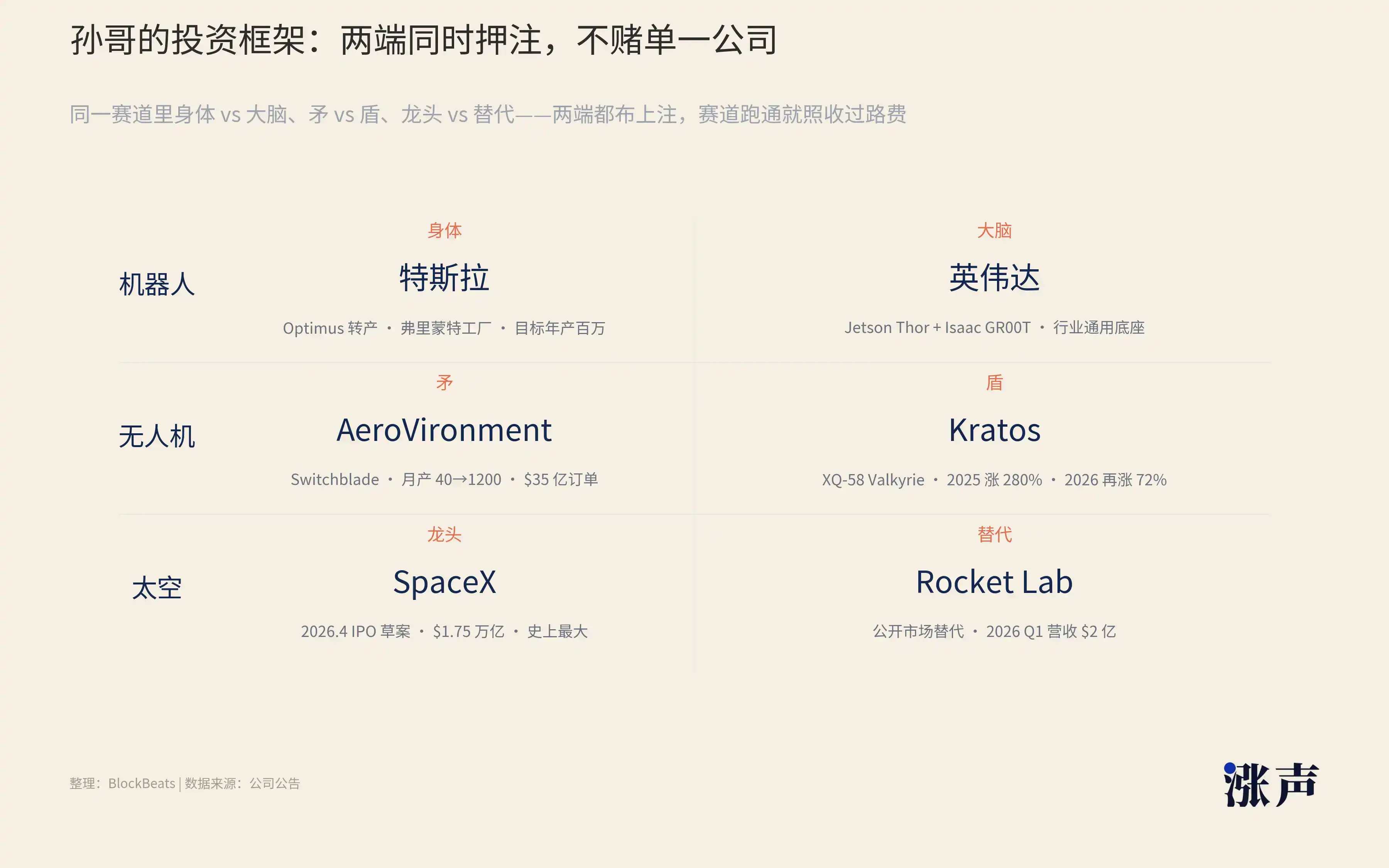
Justin Sun's publicly expressed investment logic is: find sectors with a clear direction, place bets on both ends, and do not gamble on the execution of a single company.

On the robotics line, his framework is to bet separately on the body and the brain.

Bet on Tesla for the body. In early 2026, Tesla announced discontinuing Model S and Model X, converting the Fremont factory into an Optimus production line, targeting an annual output of one million units with a mass-production unit price of about $20,000 to $25,000; current version Optimus robots are already handling parts transport and sorting at Austin and Fremont factories; the Gen 3 production line is scheduled to start in summer 2026.

Bet on NVIDIA for the brain. Jetson Thor puts server-grade AI inference into the robot body, Isaac GR00T has almost become the industry's common base, and Jensen Huang declared at GTC that there will be 1 billion humanoid robots globally by 2035.

Whether Optimus delivers on schedule is Elon Musk's problem, not NVIDIA's. As long as the sector takes off, the toll will be collected.

On the drone line, the core judgment is the irreversibility of Physical AI in military scenarios.

AeroVironment's Switchblade loitering munition became an iconic weapon in Ukraine, with monthly production capacity increased from 40 to 500 units, targeting 1,200 units; a $3.9 billion order locks in revenue for the next three years in advance. Kratos' XQ-58 Valkyrie is the "loyal wingman" to the F-35—manned aircraft on missions, drones on the flanks—with a unit price less than a fraction of a fifth-generation fighter jet, rising 280% in 2025 and another 72% in 2026.

One makes tanks uneconomical, the other makes manned fighter jets redundant—the logic on both ends is complementary.
On the space line, Justin Sun bid $28 million for a Blue Origin flight seat in 2021. This money was donated to the Blue Origin STEM charity fund, distributed among 19 non-profit organizations. On August 3, 2025, he boarded the New Shepard NS-34 mission, completing a suborbital flight.

In public markets, SpaceX filed a confidential IPO draft with the SEC in April 2026, targeting a valuation of $1.75 trillion, poised to become the largest IPO in human history; Rocket Lab's Q1 2026 revenue exceeded $200 million, making it the most direct alternative investment when SpaceX isn't available.

Once SpaceX goes public, the entire space sector's valuation framework will be rewritten.

Listen to Brother Sun

Stringing together Justin Sun's statements over the past two years, "AI, robotics, and blockchain have reached their iPhone moment" is his judgment on embodied AI. "Robot armies, robot police" is his prophecy for autonomous weaponized AI. "The integration of AI, robotics, and spatial computing" is his bet on the next generation of human-machine interfaces. "Earth is too small; it's our home" is his perspective shift after flying past the Kármán line.

These four things pieced together form the complete picture of Physical AI.

Over the past two decades, the internet changed the way information flows. WeChat replaced letters, Taobao replaced markets, Douyin replaced TV.

But the underlying rules of the physical world didn't change. Workers are still workers, factories are still factories.

In the next two decades, AI might change the very way the real world operates. Factories will have tireless humanoid robots, roads will have autonomous vehicle traffic, battlefields will roar with drone swarms, and the first "residents" on the Moon and Mars are likely to be pioneering AI robots.

That young man who in 2016 told everyone not to buy houses has now flown past the Kármán line.

And most of us are probably still waiting for the next Yanjiao.

Criptos en tendencia

Preguntas relacionadas

QWhat is the core of Sun Yuchen's investment philosophy as presented in the article?

ASun Yuchen's core investment philosophy, as presented, is to identify long-term, trend-based themes with high potential for change, and then invest in multiple key players across that entire value chain rather than betting on a single company. His approach focuses on the structural change of an industry.

QWhich sectors or technologies does Sun Yuchen point to as the next big opportunities after the success in the storage sector?

ASun Yuchen points to four key areas as the next big opportunities: Embodied AI/Robotics, AI Drones, Spatial Computing (the AI-powered understanding of physical space), and Space Exploration. He sees these as the frontiers where AI will begin to materially alter the physical world.

QHow does Sun Yuchen's investment strategy in the robotics sector exemplify his broader logic?

AIn the robotics sector, his strategy is to invest in both the 'body' and the 'brain' separately. He cites Tesla (Optimus) as a bet on the physical robot platform (the body) and Nvidia (Jetson Thor, Isaac platform) as a bet on the AI intelligence and operating system (the brain). This way, he benefits from the growth of the overall sector regardless of which specific company executes best.

QAccording to the article, what is the author's perspective on the historical impact of AI and its future potential?

AThe author argues that the internet and AI have so far primarily changed information flow and digital services. The future potential lies in AI fundamentally altering the operation of the physical world itself—through robots in factories, autonomous vehicles, drone swarms, and even AI/robotics pioneers in space—representing a much deeper transformation of reality.

QWhat is the significance of Sun Yuchen's space flight in the context of his overall vision?

AHis space flight on Blue Origin's New Shepard is symbolic of his shift towards a long-term, frontier-oriented vision. It represents his ambition to move beyond cryptocurrency into 'space economy infrastructure' and serves as a personal statement to inspire younger generations to engage with transformative, long-horizon technologies like space exploration.

Lecturas Relacionadas

¿La competencia de chips entre China y EE.UU. se reduce solo al dinero tras igualarse la inversión en I+D?

Según un informe de la Asociación de la Industria de Semiconductores de EE. UU. (SIA), utilizando el criterio de Paridad de Poder Adquisitivo (PPA), la inversión total de China en I+D para 2024 ha alcanzado y posiblemente superado ligeramente a la de Estados Unidos. Sin embargo, medido por el tipo de cambio de mercado, la inversión estadounidense sigue siendo significativamente mayor. Este dato refleja la capacidad de China para movilizar recursos a gran escala, pero no implica una igualdad tecnológica total. En el sector de los semiconductores, las empresas con sede en EE. UU. mantienen una clara ventaja, con unos gastos de I+D de 76.800 millones de dólares en 2025, lo que representa alrededor del 15% de sus ventas. La estructura de la inversión china está muy orientada al desarrollo experimental (81,2% en 2024), centrada en ingeniería, aplicación industrial y mejora de productos. En cambio, Estados Unidos asigna aproximadamente el doble de su I+D a la investigación básica (15% frente al 7% de China). Esta diferencia refleja la división del trabajo dentro de sus respectivos ecosistemas de innovación. La competencia en semiconductores ya no se trata solo de la cantidad de dinero invertido, sino de la eficiencia con la que se gasta. Los desafíos clave para China incluyen: transformar la inversión en capacidades industriales reales y validadas por el cliente; fortalecer la investigación básica de largo plazo sin descuidar la solución de problemas de ingeniería urgentes; y evitar la dispersión de recursos en proyectos duplicados. El éxito futuro dependerá de la capacidad de crear ciclos virtuosos donde la I+D se convierta en productos competitivos, generando ingresos que financien la próxima generación de innovación.

marsbitHace 6 min(s)

¿La competencia de chips entre China y EE.UU. se reduce solo al dinero tras igualarse la inversión en I+D?

marsbitHace 6 min(s)

El 10% de los hogares en Estados Unidos acapara el 88% de la riqueza, ¿cómo se repartirá el pastel en la era de la IA?

El rápido desarrollo de la inteligencia artificial (IA) ha impulsado un aumento significativo de la riqueza, pero también ha agravado las desigualdades en la distribución del ingreso. Según un informe del Foro Chino de las Cuarenta Finanzas (CF40), entre 2019 y el primer trimestre de 2026, la riqueza en acciones que poseen directamente las familias estadounidenses casi se duplicó, pasando de 29 a 55 billones de dólares. Este crecimiento se aceleró especialmente después de 2023, coincidiendo con el auge bursátil impulsado por la IA. La distribución de esta nueva riqueza ha sido profundamente desigual. De 2022 a 2026, el 10% de las familias más ricas se apropió del 88% del incremento de la riqueza en acciones (18,5 billones de dólares), mientras que el 50% de las familias con menos ingresos solo recibió alrededor del 1% (0,2 billones de dólares). En paralelo, sectores con alta adopción de IA han mostrado un crecimiento del empleo inferior al promedio histórico. Huang Yiping, de la Universidad de Pekín, señala que la IA, como tecnología de propósito general, podría generar un período de "estancamiento salarial" similar al "Intervalo de Engels" de la primera revolución industrial. Identifica cuatro mecanismos a través de los cuales la IA afecta a la distribución del ingreso: 1) sesgo hacia el capital (reduciendo la participación del trabajo), 2) polarización de tareas (hueco en empleos de media cualificación), 3) brecha digital (ampliando desigualdades de habilidades) y 4) mecanismos de amplificación de la riqueza (desvinculando ganancias de capital y trabajo). Esta concentración del ingreso amenaza la demanda agregada, ya que los trabajadores tienen una mayor propensión marginal al consumo que los dueños del capital. Para China, que ya enfrenta un desequilibrio entre una oferta fuerte y una demanda débil, este efecto podría intensificarse. El informe propone una estrategia triple para lograr una distribución más equitativa de los beneficios de la IA: 1. **Defensa:** Fortalecer las redes de seguridad social, hacer cumplir las leyes antimonopolio y regular las aplicaciones de IA que simplemente reemplazan puestos de trabajo. 2. **Empoderamiento:** Reformar el sistema educativo para incluir competencias en IA, fomentar el aprendizaje permanente y promover habilidades para trabajar junto con la IA. 3. **Reequilibrio:** Explorar instrumentos políticos como impuestos sobre los beneficios excesivos de la IA, aclarar los derechos de propiedad de los datos y considerar fondos para distribuir los beneficios de la IA entre toda la sociedad. El objetivo es gestionar la transición, invertir en capital humano y diseñar instituciones que permitan compartir los frutos del progreso tecnológico, garantizando tanto la estabilidad social a corto plazo como la eficiencia económica a largo plazo.

marsbitHace 13 min(s)

El 10% de los hogares en Estados Unidos acapara el 88% de la riqueza, ¿cómo se repartirá el pastel en la era de la IA?

marsbitHace 13 min(s)

El gigante del arbitraje de EE.UU. lanza un panel especializado para disputas de criptomonedas

La Asociación Estadounidense de Arbitraje (AAA), uno de los mayores proveedores de servicios privados de resolución de disputas, ha lanzado un panel especializado para casos de blockchain y activos digitales. La iniciativa ofrece a las empresas acceso a árbitros con experiencia en las complejidades técnicas y legales de los conflictos relacionados con criptomonedas. El panel, denominado Web3 Panel, reúne a profesionales de diversos campos, como derecho, tecnología, académico y litigios en empresas de activos digitales. Está diseñado para abordar disputas derivadas de sistemas comerciales cada vez más automatizados y descentralizados, incluidas controversias sobre interpretación de contratos, gobernanza, control de activos, ciberseguridad, registros de transacciones y aplicación transfronteriza. Este movimiento refleja el esfuerzo de las instituciones legales convencionales por construir infraestructura especializada para manejar los conflictos cada vez más complejos que surgen con la adopción comercial de la tecnología blockchain y las transacciones automatizadas. Inicialmente, el panel incluye a abogados especializados, al profesor de la Universidad de Pensilvania David Hoffman y a Rich Widmann de Google Cloud. La AAA aclara que el panel no le otorga autoridad regulatoria sobre la industria de las criptomonedas, ya que el arbitraje generalmente requiere el acuerdo previo de las partes involucradas para someter su disputa a un árbitro privado.

cointelegraphHace 31 min(s)

El gigante del arbitraje de EE.UU. lanza un panel especializado para disputas de criptomonedas

cointelegraphHace 31 min(s)

Finlandia 'cortará' los cables: los operadores rusos tendrán que buscar nuevas rutas para Internet

La compañía energética finlandesa Fingrid ha notificado a los operadores rusos de telecomunicaciones que dejará de dar servicio, a partir de 2027, a los postes que soportan las líneas de fibra óptica entre Rusia y Finlandia, planificando su corte y desmantelamiento. El motivo formal es la interrupción en 2022 de los pagos y suministros de electricidad desde Rusia, lo que hizo económicamente inviable mantener la infraestructura únicamente para telecomunicaciones. Según expertos, tras 2022, alrededor del 60-70% del tráfico internacional de internet de Rusia transita por Finlandia, y hasta un 30% de ese flujo utiliza estas líneas en postes de tendido eléctrico. Los operadores rusos ya negocian rutas alternativas a través de Bielorrusia, los países bálticos y sistemas de cables submarinos en el mar Báltico. No se espera un gran impacto para los usuarios finales, pero podrían producirse reconfiguraciones de rutas, menor redundancia y posible aumento de la latencia, especialmente en el noroeste de Rusia. El análisis señala que el cambio a rutas de reserva, particularmente los cables submarinos, conlleva sus propios riesgos técnicos por su vulnerabilidad a daños. La situación se enmarca en un contexto más amplio de autonomía digital y posible reducción progresiva de la dependencia de canales de conexión internacionales. La clave para los usuarios dependerá de la fluidez y fiabilidad de la transición a los canales alternativos.

cryptonews.ruHace 3 hora(s)

Finlandia 'cortará' los cables: los operadores rusos tendrán que buscar nuevas rutas para Internet

cryptonews.ruHace 3 hora(s)

¡Tras la decisión de tasas de interés de la Fed y las declaraciones de Kevin Warsh, los expertos se reunieron y compartieron sus últimos comentarios!

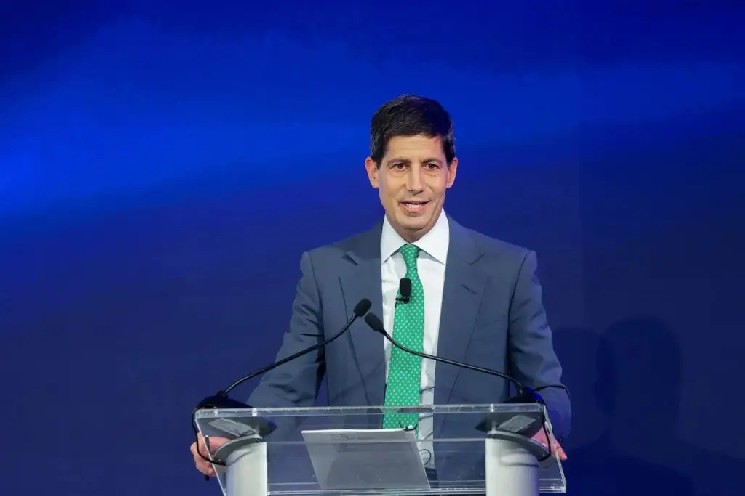
El hecho de que tres miembros del Comité se opusieran a la decisión de mantener las tasas de interés inalteradas refuerza las expectativas de un período más independiente y divergente en la política de la Fed. Los expertos señalaron que, a pesar de una leve caída en los rendimientos de los bonos y un dólar más débil tras la decisión, no se descarta una posible subida de tasas en septiembre. Mark Hackett de Nationwide señaló que los tres votos en contra podrían indicar una nueva tendencia hacia una mayor independencia de los miembros del FOMC. Destacó que el repunte del mercado tras la decisión podría ser un "rebote de alivio", pero es pronto para sacar conclusiones definitivas antes de la conferencia de prensa del presidente Kevin Warsh. Audrey Child-Freeman, estratega de divisas, afirmó que los tres votos disidentes muestran que la Fed mantiene su postura firme. Señaló que el escenario alcista, con altos rendimientos de bonos apoyando al dólar, sigue vigente para los meses de verano, pero la Fed seguirá monitoreando datos económicos y una subida en septiembre sigue siendo posible. El analista Chris Anstey destacó que los mercados estarán atentos a los rendimientos de los bonos del Tesoro a 10 años durante la conferencia de Warsh. Un aumento continuo podría reflejar preocupaciones de que la Fed no está haciendo lo suficiente contra la inflación, lo que sería negativo para Warsh. También mencionó la importancia de estas tasas para préstamos como las hipotecas. Diane Swonk, economista jefe de KPMG, opinó que la Fed subirá las tasas en septiembre. Argumentó que una subida ahora habría sido más apropiada, dada la inflación persistentemente alta de los últimos casi cinco años, y advirtió que los altos precios podrían volverse permanentes en el sistema económico.

cryptonews.ruHace 4 hora(s)

¡Tras la decisión de tasas de interés de la Fed y las declaraciones de Kevin Warsh, los expertos se reunieron y compartieron sus últimos comentarios!

cryptonews.ruHace 4 hora(s)

Trading

Spot

Artículos destacados

Cómo comprar SUN

¡Bienvenido a HTX.com! Hemos hecho que comprar SUN (SUN) sea simple y conveniente. Sigue nuestra guía paso a paso para iniciar tu viaje de criptos.Paso 1: crea tu cuenta HTXUtiliza tu correo electrónico o número de teléfono para registrarte y obtener una cuenta gratuita en HTX. Experimenta un proceso de registro sin complicaciones y desbloquea todas las funciones.Obtener mi cuentaPaso 2: ve a Comprar cripto y elige tu método de pagoTarjeta de crédito/débito: usa tu Visa o Mastercard para comprar SUN (SUN) al instante.Saldo: utiliza fondos del saldo de tu cuenta HTX para tradear sin problemas.Terceros: hemos agregado métodos de pago populares como Google Pay y Apple Pay para mejorar la comodidad.P2P: tradear directamente con otros usuarios en HTX.Over-the-Counter (OTC): ofrecemos servicios personalizados y tipos de cambio competitivos para los traders.Paso 3: guarda tu SUN (SUN)Después de comprar tu SUN (SUN), guárdalo en tu cuenta HTX. Alternativamente, puedes enviarlo a otro lugar mediante transferencia blockchain o utilizarlo para tradear otras criptomonedas.Paso 4: tradear SUN (SUN)Tradear fácilmente con SUN (SUN) en HTX's mercado spot. Simplemente accede a tu cuenta, selecciona tu par de trading, ejecuta tus trades y monitorea en tiempo real. Ofrecemos una experiencia fácil de usar tanto para principiantes como para traders experimentados.

900 Vistas totalesPublicado en 2024.12.12Actualizado en 2025.03.21

Cómo comprar SUN

Discusiones

Bienvenido a la comunidad de HTX. Aquí puedes mantenerte informado sobre los últimos desarrollos de la plataforma y acceder a análisis profesionales del mercado. A continuación se presentan las opiniones de los usuarios sobre el precio de SUN (SUN).

活动图片