Why Avalanche’s Broadridge integration fails to stop AVAX’s 10% slide

ambcryptoОпубликовано 2026-04-07Обновлено 2026-04-07

Введение

Despite the integration of Avalanche with Broadridge's on-chain proxy voting platform, which began its rollout on Avalanche and was adopted by Galaxy Digital, AVAX's price fell nearly 10%. This decline was driven by weak on-chain fundamentals, including a significant drop in Total Value Locked (TVL) to $720 million—its lowest since July 2024—indicating capital outflow and reduced activity. Derivatives market data showed increased bearish sentiment, with a Long/Short Ratio of 0.89 and negative Funding Rates, reflecting dominant short positions. Additionally, exchange netflows revealed distribution, as more AVAX was moved to exchanges and sold, suggesting investors used the news as an exit opportunity rather than a bullish catalyst.

On the 6th of April, Broadridge Financial Solutions (NYSE: BR) expanded its governance platform to support on-chain proxy voting. The rollout began on Avalanche.

The firm processed nearly $8 trillion in transactions monthly, showcasing its scale in global markets.

The system allowed firms to manage voting, corporate actions, and disclosures across traditional and tokenized securities. Galaxy Digital (NASDAQ: GLXY) became the first adopter, planning usage for its May shareholder meeting.

However, Avalanche [AVAX] fell nearly 10% over the past day despite this integration.

Weak on-chain fundamentals undermine sentiment

That divergence traced back to weakening on-chain activity as capital exited the ecosystem.

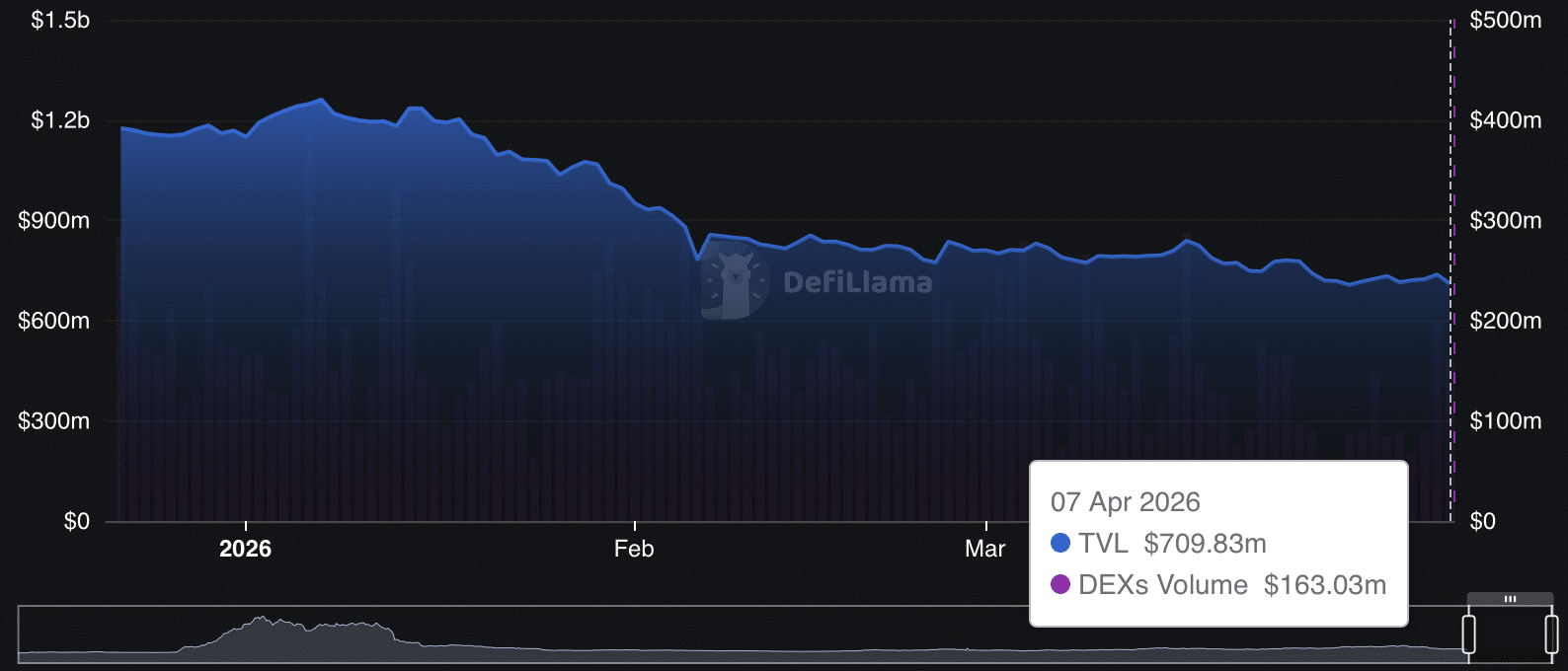
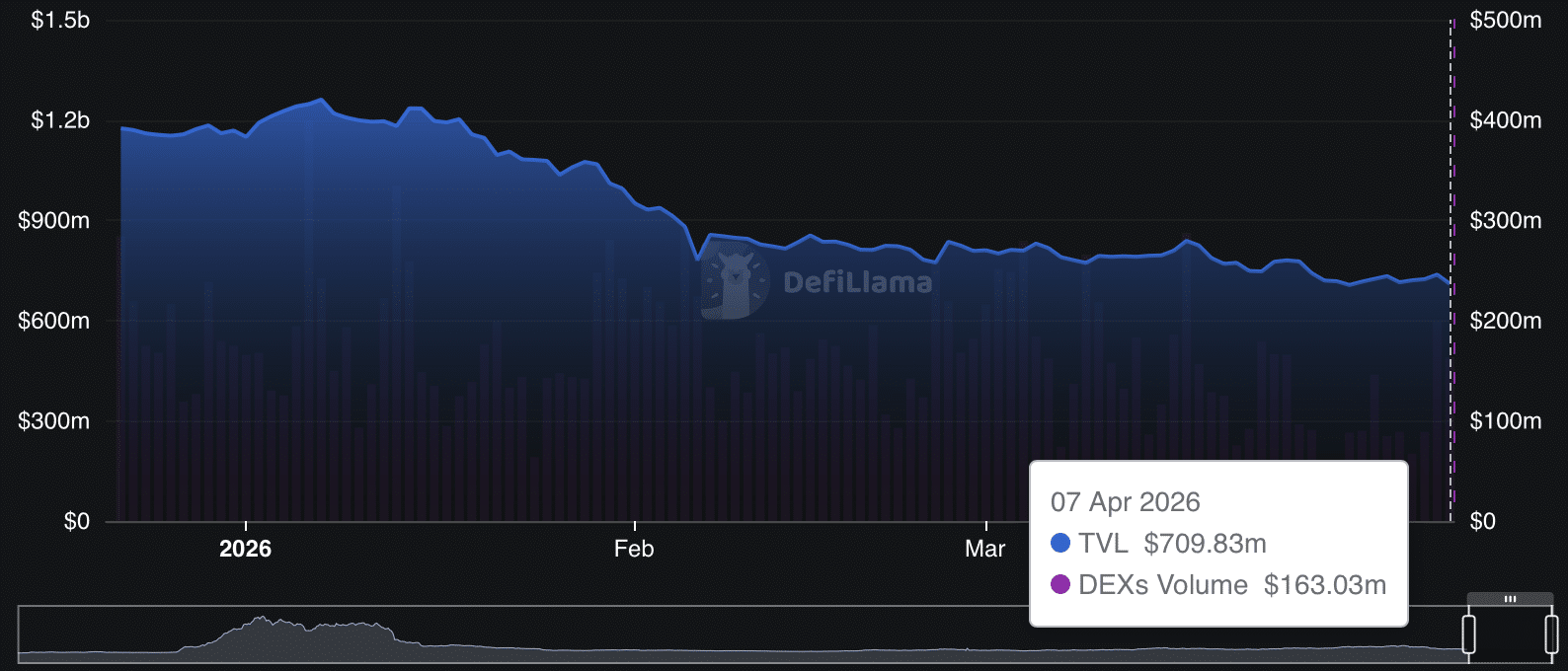
Total Value Locked [TVL] dropped to $720 million, its lowest level since the 9th of July 2024. That period also reflected weak sentiment and reduced activity.

Source: DeFiLlama

Sustained outflows suggested investors remained cautious, limiting conviction in any short-term recovery.

On top of that, Decentralized Exchange Volumes rose steadily since the 4th of April. This increase reflected distribution rather than accumulation.

Derivatives market accelerates downside

In the Derivatives market, traders have amplified the bearish move.

Data from CoinGlass showed a clear uptick in sell-side activity across AVAX perpetual contracts. The Long/Short Ratio fell to 0.89, confirming short dominance.

A ratio below 1 typically signals that bearish bets outweigh bullish ones, and the current reading points to sustained downside positioning.

At the same time, Open Interest [OI] declined by nearly $37 million. This suggested that traders closed positions instead of adding risk.

Source: CoinGlass

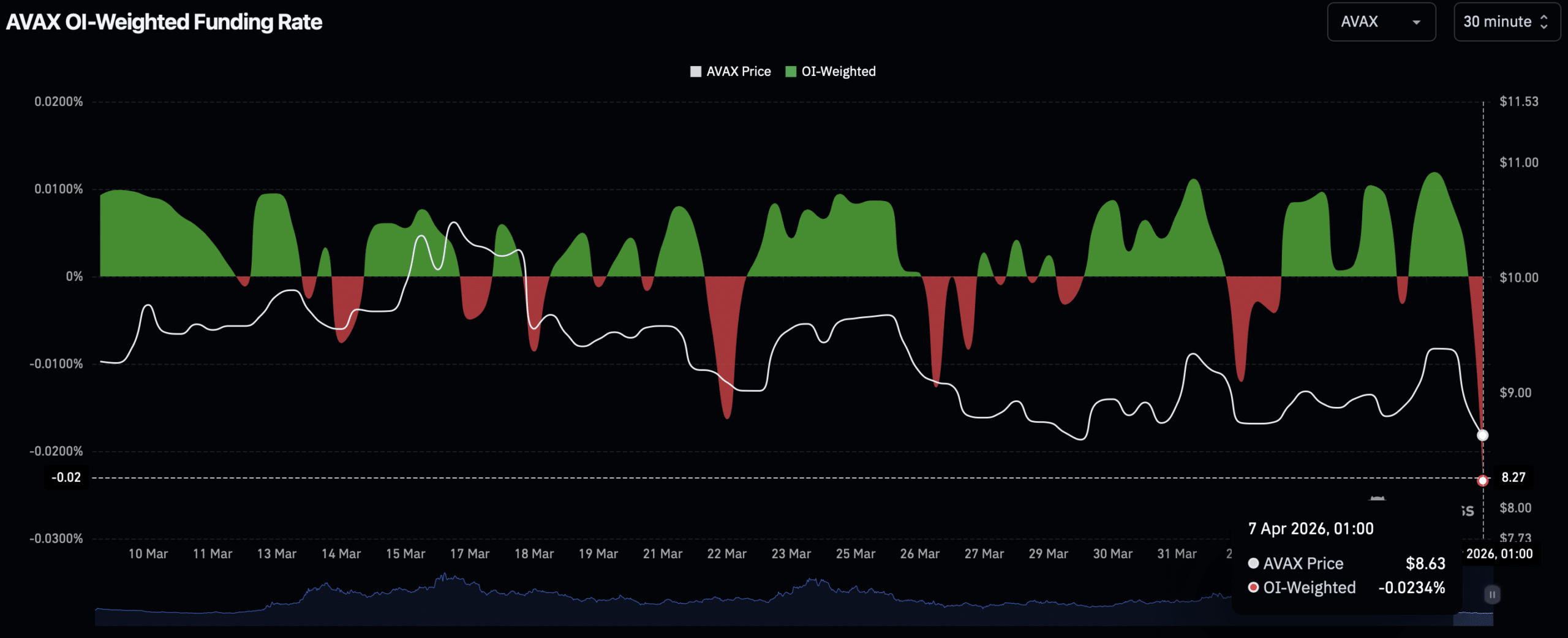
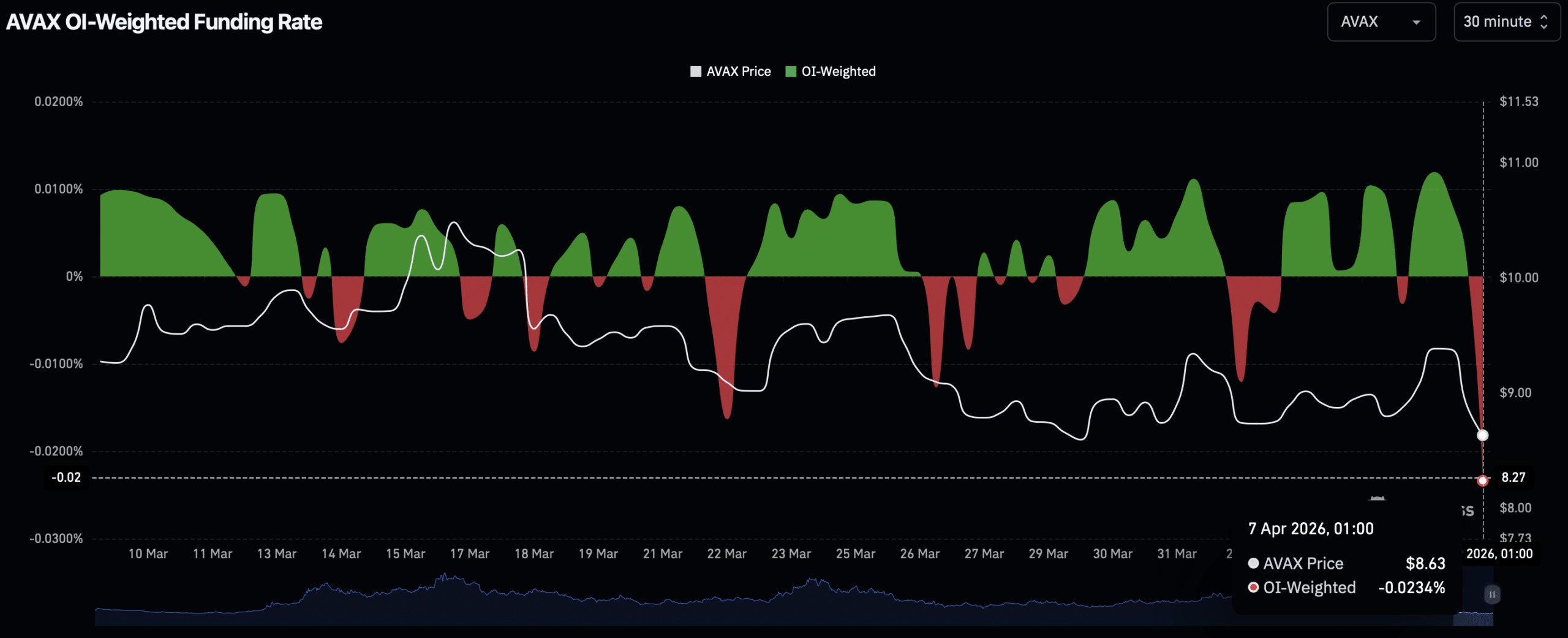
Funding Rates also turned negative, reinforcing downside pressure. This structure meant short traders paid longs, reflecting a persistent bearish bias.

Spot market reveals distribution

By contrast, Spot data showed mixed signals before aligning with the broader trend.

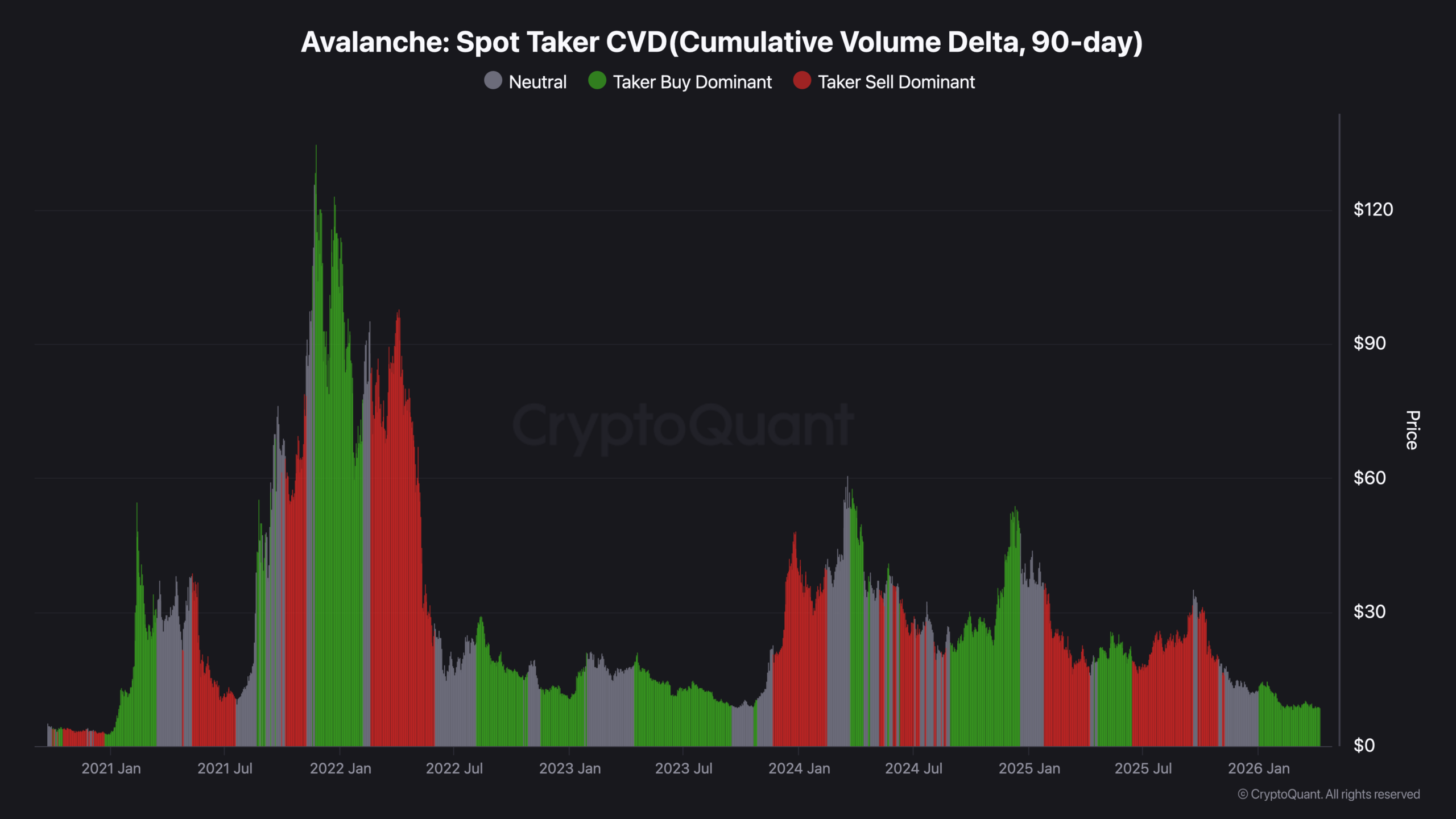
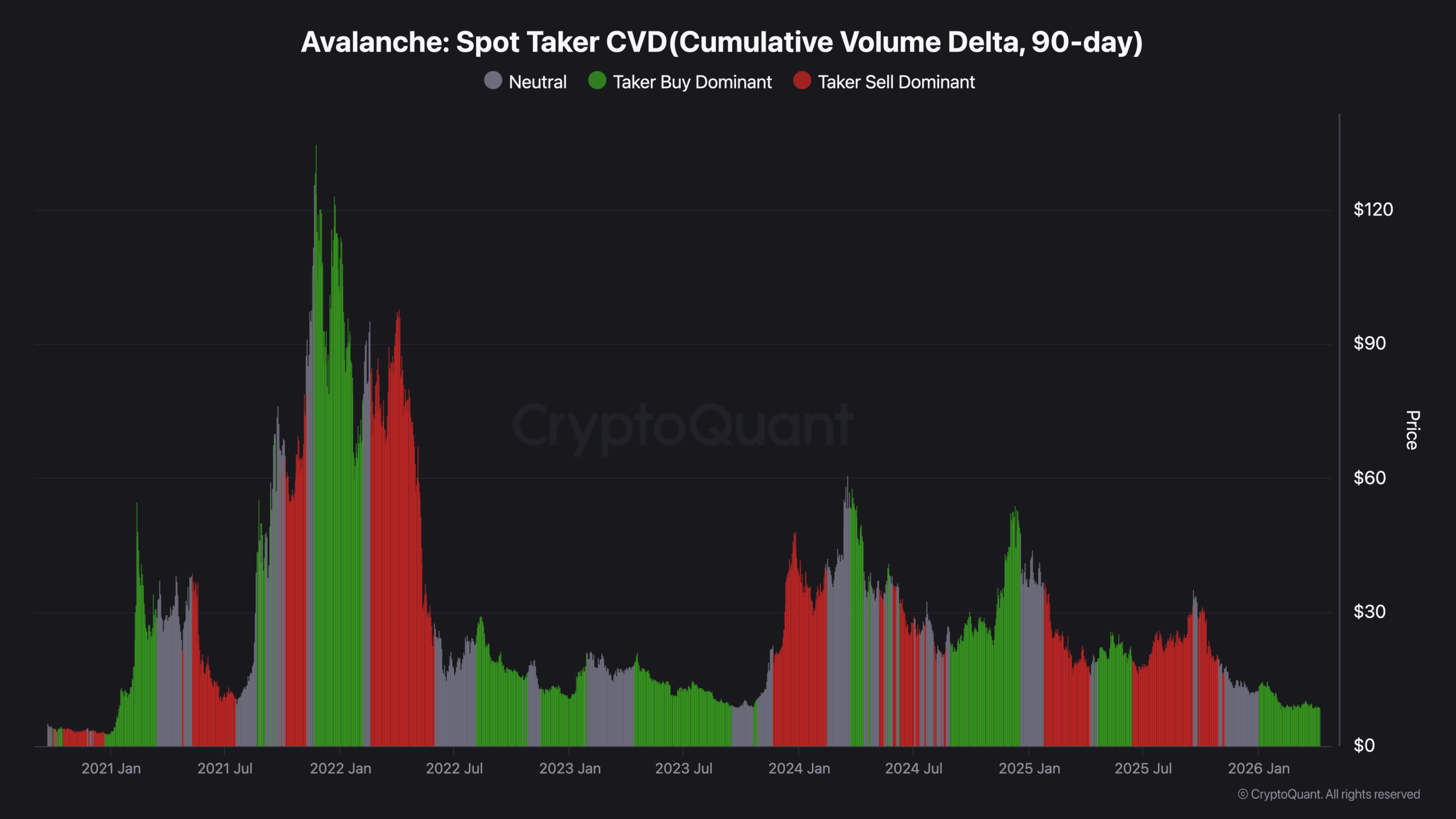
Taker Buy Volume increased, indicating pockets of demand. However, Exchange Netflows pointed to rising sell pressure.

More AVAX moved onto exchanges than was withdrawn, signaling potential distribution.

Source: CryptoQuant

Net inflows reached $2.26 million, while $20.46 million worth of AVAX was sold after the announcement.

That sequence suggested investors positioned ahead of the news and exited once it materialized.

For now, AVAX remained under pressure as weak fundamentals and bearish derivatives positioning outweighed institutional developments.


Final Summary

  • AVAX dropped because investors sold into the news, using the announcement as an exit point rather than a trigger for upside.
  • The fall in TVL to yearly lows showed capital leaving the ecosystem and weakening network activity.

Связанные с этим вопросы

QWhat was the key announcement from Broadridge Financial Solutions on April 6th and which blockchain did it begin with?

ABroadridge Financial Solutions expanded its governance platform to support on-chain proxy voting, and the rollout began on Avalanche.

QDespite the positive integration news, by how much did AVAX's price fall and what was the primary on-chain metric that weakened?

AAVAX fell nearly 10% over the past day, and the primary on-chain metric that weakened was the Total Value Locked (TVL), which dropped to $720 million, its lowest level since July 9th, 2024.

QWhat did the Long/Short Ratio of 0.89 and the negative Funding Rates in the derivatives market indicate about trader sentiment?

AA Long/Short Ratio below 1 (0.89) indicated that bearish bets outweighed bullish ones, and negative Funding Rates meant short traders were paying longs, both reflecting a persistent bearish bias and downside pressure.

QWhat did the spot market data, specifically Exchange Netflows, reveal about investor behavior following the announcement?

AExchange Netflows showed that more AVAX was moved onto exchanges than was withdrawn, with net inflows reaching $2.26 million, signaling potential distribution as investors sold into the news, using the announcement as an exit point.

QWhich company was named as the first adopter of Broadridge's new on-chain proxy voting system and for what purpose?

AGalaxy Digital (NASDAQ: GLXY) became the first adopter, planning to use the system for its May shareholder meeting.

Похожее

How Risky is the "Death Spiral" of MSTR and STRC?

Summary: This article explores the perceived "death spiral" risk between MicroStrategy (MSTR), its Bitcoin holdings, and its perpetual preferred stock (STRC), drawing comparisons to the LUNA-UST collapse. While both systems feature price anchors, high yields for holders, and potential feedback loops, their core mechanisms differ fundamentally. The MSTR-STRC structure relies on continuous financing to sustain its high dividend payouts, primarily through stock ATM offerings. A negative feedback cycle could occur: falling MSTR stock price makes raising equity capital harder, increasing pressure to sell Bitcoin, which undermines STRC confidence and further depresses MSTR. However, unlike LUNA-UST's automated, direct linkage, the MSTR-STRC loop is weaker and has brakes: STRC dividends can be deferred or rates lowered, and STRC holders have a $100/share liquidation preference in bankruptcy, providing a price floor. The company's sustainability hinges on its ability to continue financing. Its current ~$900 million USD reserves cover only about 6.3 months of its ~$1.71 billion annual interest/dividend burden. The next six months are critical, aligning with both the potential bottom in Bitcoin's four-year cycle and the depletion timeline of its reserves. While a LUNA-style catastrophic collapse is deemed highly unlikely due to structural differences, the key question is whether MicroStrategy can navigate this period through healthy deleveraging to restart its capital engine.

Foresight News6 мин. назад

How Risky is the "Death Spiral" of MSTR and STRC?

Foresight News6 мин. назад

How Much Debt Does Strategy Really Have? Is There a Risk of Implosion?

MicroStrategy's Debt Risk: A Turning Point in the "Never Sell" Strategy As of June 3, 2026, MicroStrategy holds 843,706 bitcoins (valued at ~$53.1B) but faces significant financial obligations. Its capital structure includes $6.75B in convertible notes and $15.48B in perpetual preferred stock (led by the $8.5B STRC series), creating an annual payout burden of ~$1.71B. With software revenue at only ~$500M, interest and dividend obligations far exceed operating income. A critical shift occurred in late May 2026 when the company sold 32 bitcoins for ~$2.5M to cover dividends, breaking CEO Michael Saylor's long-standing "never sell" pledge. This symbolic move triggered a sharp decline in both Bitcoin's price and MSTR stock, reflecting market fears about cash flow sustainability. The core of the strain is the STRC perpetual preferred stock, designed as a "permanent loan" with no maturity date but requiring high monthly dividends (currently 11.5%). Its business model relies on a three-part cycle: issuing new STRC shares, using proceeds to buy more Bitcoin and fund a USD reserve, and using that reserve to pay dividends. This cycle depends on continuous investor demand for STRC and Bitcoin's price appreciation. Analysis shows Bitcoin needs to appreciate at least 2.3% annually to cover the $1.71B in yearly obligations at current holdings. With Bitcoin price down ~22% from March 2026 highs, this pressure has intensified. The company's $900M USD reserve can only cover about 7 months of payments if STRC issuance stalls. Key risks are not immediate bankruptcy or forced Bitcoin liquidation (as BTC is not collateral), but rather: 1) The erosion of MSTR's premium to its Bitcoin holdings (mNAV), which would cripple its ability to raise cheap capital; 2) A vicious cycle where stagnant Bitcoin prices reduce STRC demand, draining the USD reserve and forcing BTC sales, further depressing prices. The period from February 2027 to September 2028 is a crucial test, with over $5.9B in convertible notes facing put options or maturity. In essence, MicroStrategy has evolved from a simple Bitcoin holder into a complex financial entity acting like a "private Bitcoin bank," leveraging its BTC holdings to create layered financial products. Its survival depends on maintaining Bitcoin's price trend, its stock premium, and market appetite for its preferred shares. The recent token sale marks not a betrayal of its Bitcoin thesis, but an admission that the leveraged strategy must eventually be paid for.

marsbit16 мин. назад

How Much Debt Does Strategy Really Have? Is There a Risk of Implosion?

marsbit16 мин. назад

Anthropic Cries Wolf: Is the AGI Threat Real, or Just an IPO Story?

Anthropic has published an article titled "When AI builds itself," discussing the emerging concept of "recursive self-improvement," where AI begins to actively participate in designing, training, testing, and optimizing its own subsequent versions. The company presents internal data showing that by May 2026, over 80% of code merged into its codebase was written by Claude, its AI model. Claude's capabilities have expanded to handling complex, open-ended engineering tasks, achieving a 76% success rate in such areas, and even contributing to research processes, such as optimizing code performance and conducting AI safety experiments. Anthropic outlines an evolution from human-driven development to AI-assisted workflows, culminating in the current stage where AI agents can autonomously write, run, and delegate code. The company cautions that the path toward a "closed loop," where AI continuously improves itself, is becoming visible. It calls for coordinated global mechanisms to potentially slow or pause frontier AI development to allow safety research and societal structures to catch up. However, the timing of this warning coincides with Anthropic's preparations for an IPO, framing the narrative not just as a safety concern but also as a demonstration of Claude's advanced capabilities and its integral role in accelerating Anthropic's own R&D—creating a potential "flywheel" effect for competitive advantage. This contrasts with OpenAI's recent, more policy-oriented discussion of the same risks, highlighting the competitive dynamics in the AI industry as companies position themselves in both the technological and regulatory landscape.

marsbit1 ч. назад

Anthropic Cries Wolf: Is the AGI Threat Real, or Just an IPO Story?

marsbit1 ч. назад

Торговля

Спот
Фьючерсы

Популярные статьи

Как купить S

Добро пожаловать на HTX.com! Мы сделали приобретение Sonic (S) простым и удобным. Следуйте нашему пошаговому руководству и отправляйтесь в свое крипто-путешествие.Шаг 1: Создайте аккаунт на HTXИспользуйте свой адрес электронной почты или номер телефона, чтобы зарегистрироваться и бесплатно создать аккаунт на HTX. Пройдите удобную регистрацию и откройте для себя весь функционал.Создать аккаунтШаг 2: Перейдите в Купить криптовалюту и выберите свой способ оплатыКредитная/Дебетовая Карта: Используйте свою карту Visa или Mastercard для мгновенной покупки Sonic (S).Баланс: Используйте средства с баланса вашего аккаунта HTX для простой торговли.Третьи Лица: Мы добавили популярные способы оплаты, такие как Google Pay и Apple Pay, для повышения удобства.P2P: Торгуйте напрямую с другими пользователями на HTX.Внебиржевая Торговля (OTC): Мы предлагаем индивидуальные услуги и конкурентоспособные обменные курсы для трейдеров.Шаг 3: Хранение Sonic (S)После приобретения вами Sonic (S) храните их в своем аккаунте на HTX. В качестве альтернативы вы можете отправить их куда-либо с помощью перевода в блокчейне или использовать для торговли с другими криптовалютами.Шаг 4: Торговля Sonic (S)С легкостью торгуйте Sonic (S) на спотовом рынке HTX. Просто зайдите в свой аккаунт, выберите торговую пару, совершайте сделки и следите за ними в режиме реального времени. Мы предлагаем удобный интерфейс как для начинающих, так и для опытных трейдеров.

1.4k просмотров всегоОпубликовано 2025.01.15Обновлено 2026.06.02

Как купить S

Sonic: Обновления под руководством Андре Кронье – новая звезда Layer-1 на фоне спада рынка

Он решает проблемы масштабируемости, совместимости между блокчейнами и стимулов для разработчиков с помощью технологических инноваций.

2.3k просмотров всегоОпубликовано 2025.04.09Обновлено 2025.04.09

Sonic: Обновления под руководством Андре Кронье – новая звезда Layer-1 на фоне спада рынка

HTX Learn: Пройдите обучение по "Sonic" и разделите 1000 USDT

HTX Learn — ваш проводник в мир перспективных проектов, и мы запускаем специальное мероприятие "Учитесь и Зарабатывайте", посвящённое этим проектам. Наше новое направление .

1.8k просмотров всегоОпубликовано 2025.04.10Обновлено 2025.04.10

HTX Learn: Пройдите обучение по "Sonic" и разделите 1000 USDT

Обсуждения

Добро пожаловать в Сообщество HTX. Здесь вы сможете быть в курсе последних новостей о развитии платформы и получить доступ к профессиональной аналитической информации о рынке. Мнения пользователей о цене на S (S) представлены ниже.

活动图片