Автор:imToken
12 марта 2026 года стал историческим моментом для стейкинга Ethereum.
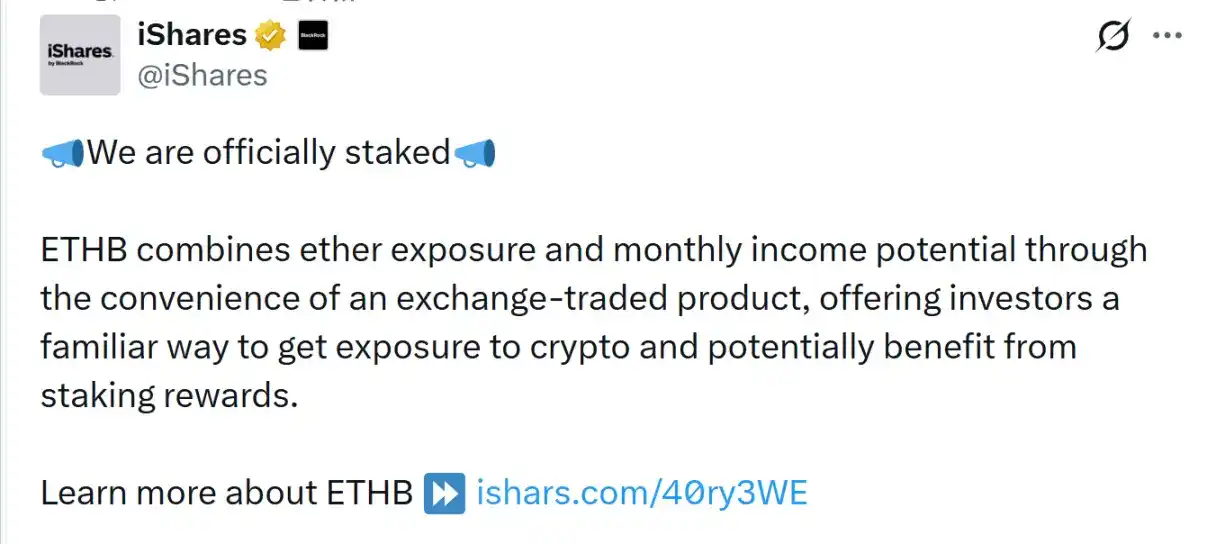
Крупнейшая в мире управляющая активами компания BlackRock официально запустила на NASDAQ ETF на Ethereum с доходом от стейкинга «iShares Staked Ethereum Trust» (тикер: ETHB) — который не только держит спотовый Ethereum, но и будет использовать большую часть этих активов для стейкинга в блокчейне, а также периодически распределять доход среди инвесторов.
Можно сказать, что после более чем года рыночных обсуждений запуск ETHB по сути решает ключевую проблему, которая оставалась нерешённой с момента запуска спотового ETF на Ethereum: будет ли ETH официально принят основной финансовой системой в качестве «доходного актива»?
Это также знаменует собой то, что «стейкинг» — поведение, которое когда-то было свойственно нативным пользователям блокчейна, —正式进入ходит в рамки распределения активов Уолл-стрит.
一、Что такое ETHB и как он работает?
С точки зрения времени и рыночной среды запуск ETHB от BlackRock можно назвать своевременным и удачным.
С одной стороны, фонд BlackRock iShares Bitcoin Trust (IBIT) в настоящее время управляет активами на сумму более 55 миллиардов долларов США, а фонд iShares Ethereum Trust (ETHA) управляет активами на сумму 6,5 миллиардов долларов США, что подтверждает принятие институтами ETF на криптоактивы; с другой стороны, от США до района Гонконг, Китай, дискуссии и подготовка политики вокруг того, разрешать ли ETF участвовать в стейкинге, продолжаются более года.
А главное отличие ETHB от предыдущих спотовых ETF на Ethereum, таких как ETHA, заключается в том, что он не позволяет ETH простаивать.
Ведь традиционная модель работы крипто-ETF очень проста: обычно покупают ETH, хранят, отслеживают изменения цены, а затем ничего не делают, тогда как ETHB вводит ключевое изменение, позволяя持有的 активам ETH участвовать в сетевом консенсусе и приносить доход:
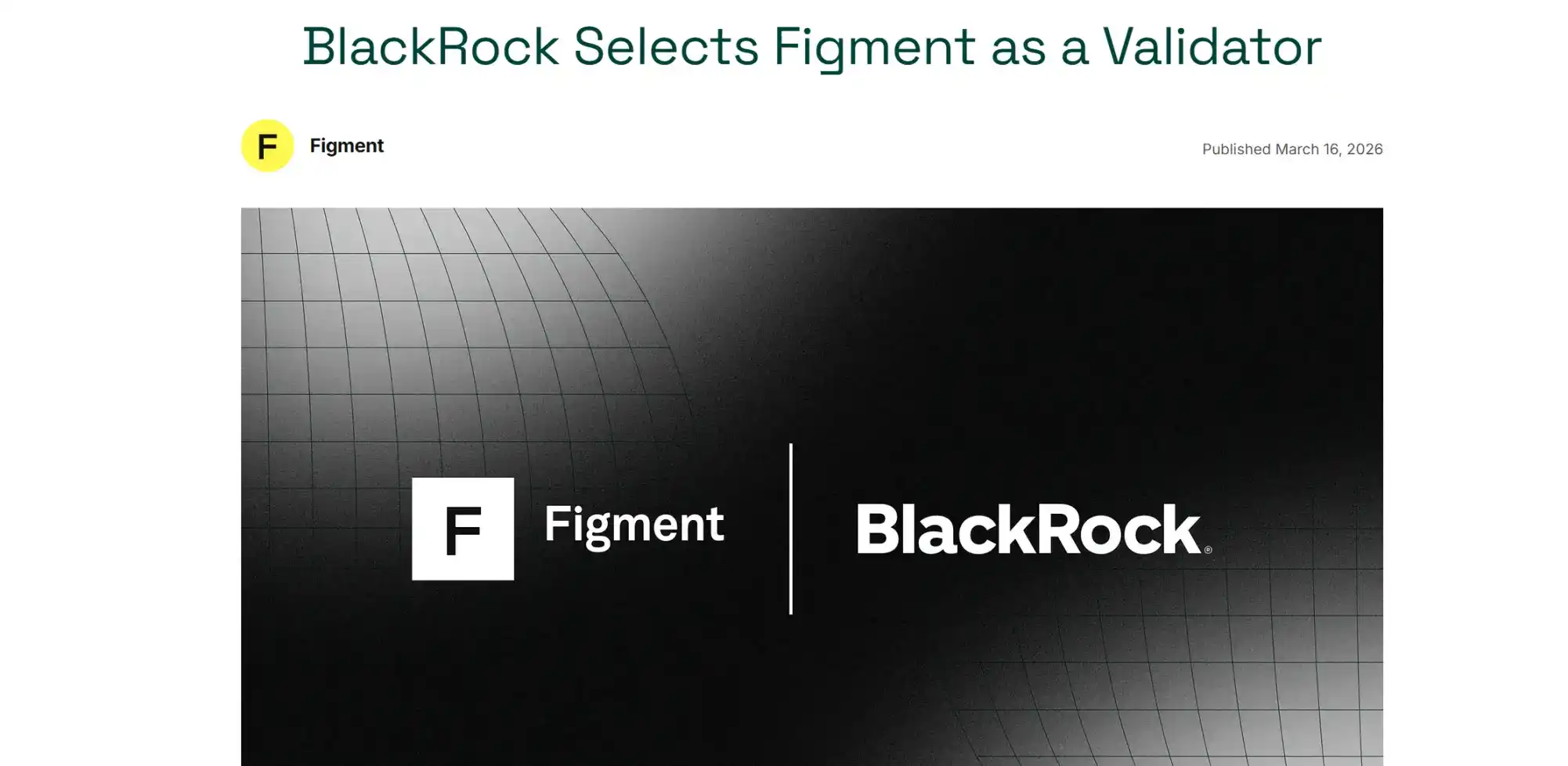
Он передает 70%至95% ETH из своих активов через Coinbase Prime таким профессиональным нодам валидации, как Figment, для стейкинга, позволяя активам активно участвовать в поддержании консенсуса сети Ethereum и зарабатывать вознаграждения за стейкинг.
Если конкретно разобрать этот механизм:
- Инвесторы покупают доли фонда ETHB;
- Фонд на привлеченные средства покупает спотовый ETH;
- Большая часть ETH стейкуется;
- Вознаграждения, полученные от стейкинга, примерно 82% ежемесячно распределяются среди держателей фонда, оставшиеся 18% сохраняются BlackRock и другими в качестве платы за услуги;
- Фонд также взимает годовую комиссию за управление в размере 0,25% (льготная ставка 0,12% в течение первого года для активов до 2,5 миллиардов долларов США);
Это также демонстрирует核心价值复利质押. На примере stETH: после стейкинга ETH пользователем получаемый баланс токенов stETH будет автоматически увеличиваться с вознаграждениями за стейкинг, без каких-либо ручных操作, каждое вознаграждение становится частью основной суммы и продолжает генерировать новый доход.
А для ETHB мы также можем посчитать аналогичный счёт — текущая годовая доходность стейкинга в сети Ethereum составляет от 2,8% до 3,1%, и поскольку часть, распределяемая ETHB среди инвесторов, составляет примерно 3,1% × 82%, то фактический доход после вычета комиссии за управление составляет около 2,3%~2,5%.
Хотя цифры выглядят не очень высокими, ключевым моментом является то, что это постоянный, автоматический, предсказуемый денежный поток, это означает, что обычные инвесторы, покупающие ETHB, отныне также смогут享受复利.
Конечно, хотя ETHB распределяет вознаграждения ежемесячно, если инвесторы не будут主动 реинвестировать распределённый доход в покупку долей ETF, они не смогут享受 эффекта сложения复利, что в некоторой степени может дать нативному стейкингу в блокчейне небольшое преимущество в долгосрочной доходности.
二、Почему появление ETHB так важно?
Значение ETHB выходит далеко за рамки рождения нового фонда.
Как известно, в течение срока полномочий бывшего председателя Комиссии по ценным бумагам и биржам США (SEC) Гэри Генслера все заявки на ETF Ethereum требовали удаления функции стейкинга на том основании, что стейкинг может представлять собой незарегистрированную ценную бумагу. После ухода Генслера и назначения нового председателя Пола Аткинса регуляторная позиция明显转向, что в конечном итоге расчистило путь для рождения ETHB.
А BlackRock в настоящее время управляет активами, связанными с криптовалютой, на сумму более 1300 миллиардов долларов США через ETP, и его продукты серии iShares в 2025 году привлекли около 95% чистого притока глобальных цифровых активов в ETP,когда учреждение такого масштаба включает «Staking» в свою продуктовую архитектуру, оно посылает сигнал всему рынку о том, что доход от стейкинга уже является законным, устойчивым источником инвестиционного дохода.
Поэтому вполне вероятно, что, как и в былые времена, после одобрения биткоин-ETF, Ethereum, Solana и другие相继排队跟进, на этот раз после выпуска ETHB, заявки на ETF для стейкинга таких сетей PoS, как Solana, Cardano, Polkadot, также陆续进入 очередь на рассмотрение, и все эмитенты ETF на криптоактивы быстро последуют их примеру.
Мы甚至可以预见, что в ближайшие полгода большая часть средств спотовых ETF вернется в доходные ETF.
На самом деле, еще в январе этого года некоторые ETF на Ethereum начали тестировать эту область, позволяя держателям получать проценты定期, как при владении ценными бумагами — Grayscale Ethereum Staking ETF (ETHE) от Grayscale уже распределил среди существующих держателей долей доход, полученный от стейкинга, что также стало первым случаем, когда американский спотовый продукт для торговли криптоактивами распределил среди держателей доход от стейкинга.
Хотя в глазах нативных игроков Web3 это не более чем обычная практика в блокчейне,但放眼加密金融史,却标志着以太坊原生收益首次被包装进传统金融的标准外壳中,无疑具有里程碑意义.
Важно подчеркнуть, что это не означает, что стейкинг Ethereum уже полностью соответствует требованиям, и не означает, что регуляторы дали единую трактовку услуг стейкинга для ETF, но в экономическом плане ключевое изменение уже произошло, а именнонекриптонативные пользователи впервые, без необходимости понимания нод, приватных ключей и операций в блокчейне, косвенно получили原生 доход, генерируемый консенсусом сети Ethereum.
С этой точки зрения, стейкинг Ethereum сделал关键一步 к выходу на более широкое поле зрения капитала.
三、Что дальше?
Конечно, не все будут получать доход от стейкинга, покупая ETHB. Для большинства криптопользователей более прямой способ — участвовать в блокчейне.
Нам все еще нужно回顾一下目前主要的以太坊质押方式,主要有三种路径.
Первый, конечно, нативный стейкинг, однако он требует от пользователей застейкать как минимум 32 ETH и запустить独立 ноду валидации, поэтому, хотя он предлагает самую высокую доходность и является наиболее децентрализованным, он имеет较高门槛 и больше подходит для опытных пользователей с сильными техническими навыками.
Во-вторых, это目前市场主流的流动性质押 (Liquid Staking), общий объем которого в настоящее время составляет近 1500万枚 ETH, общая стоимость超 350 миллиардов долларов США, пользователи через протоколы Lido (stETH), Rocket Pool (rETH) и другие могут участвовать без необходимости иметь 32 ETH.
И после стейкинга они получают流动性代币, привязанные к исходному активу в пропорции 1:1, которые можно继续 использовать в деятельности DeFi, что обеспечивает наиболее显著 эффект复利.
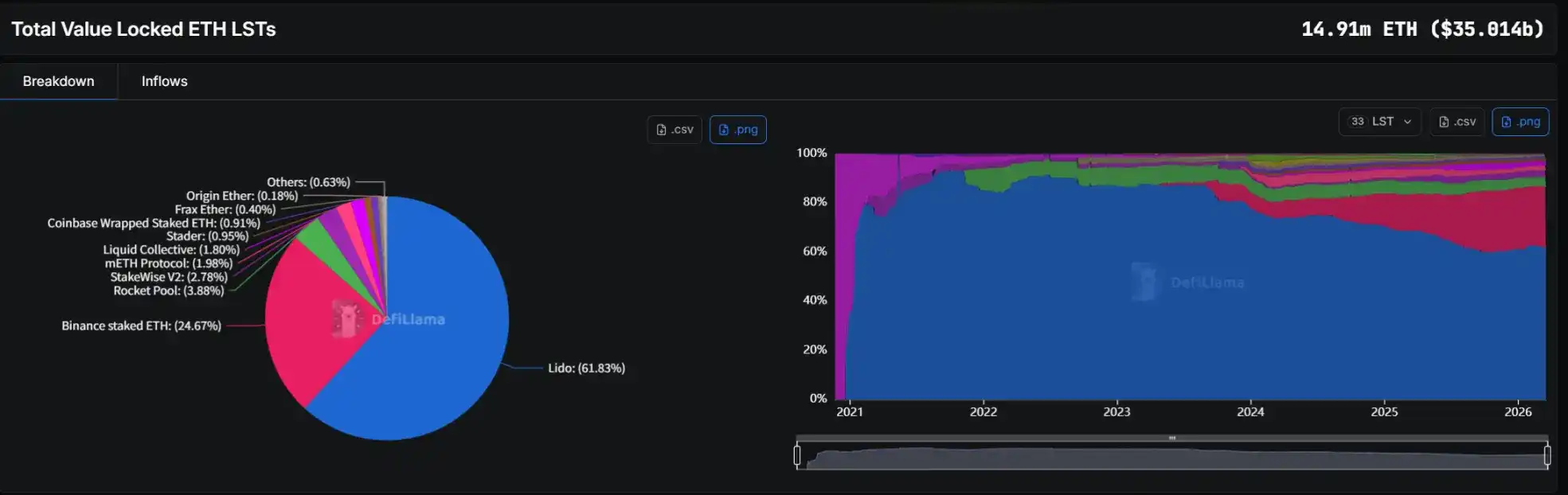
Источник: DeFiLlama
Конечно,还有节点质押, в основном через кошельки с поддержкой функции стейкинга для прямого участия,操作简单, подходит для нетехнических пользователей, что также предъявляет более высокие требования к配套基础设施, таким как кошельки.
В целом, запуск ETHB от BlackRock является важной вехой на пути стейкинга Ethereum от «нативного поведения в блокчейне» к « mainstream финансовому продукту», он подтверждает законность дохода от стейкинга, а также ускоряет процесс притока институционального капитала в экосистему ETH.
Но для обычных держателей монет более важный сигнал заключается в том, что:стейкинг как способ заставить активы постоянно работать был признан крупнейшим в мире управляющим активами учреждением.
Когда ETH начинает自动 приносить проценты, логика ценообразования активов также меняется. Он больше не просто спекулятивный актив, ожидающий повышения стоимости, а «машина для получения дохода», которая может持续 генерировать денежный поток. Будь то через ETF или через стейкинг в блокчейне, эта тенденция уже необратима.
А вы готовы заставить ваш ETH работать?