What Were Crypto KOLs Talking About in the Last 24 Hours!

比推Опубликовано 2026-02-14Обновлено 2026-02-14

Введение

Summary of "What Were Crypto KOLs Talking About in the Last 24 Hours!" The article compiles trending discussions among crypto influencers, primarily from X (formerly Twitter), covering several key topics: 1. **False Rumor About Eileen Gu**: A claim that the athlete Eileen Gu joined Benchmark was debunked. Comments highlighted her controversial public perception, dual identity, and the fact that, as a U.S. citizen, she is subject to U.S. global taxation on her earnings. 2. **KOLs' Bitcoin Buying Range**: Many Key Opinion Leaders (KOLs) identified $40,000-$50,000 as an ideal range to buy Bitcoin. Replies expressed that a drop to this level would be reasonable based on historical patterns, but a further decline could shatter market confidence. Some were skeptical, predicting targets would shift lower if prices fell. 3. **Ethereum's Stagnant Price**: The phrase "Eight years later, still $1900" was used to describe Ethereum's perceived lack of progress, causing frustration among its supporters ("Ethereum soldiers"). 4. **Hong Kong Conference Insights**: The article included multiple images from a Hong Kong crypto conference, though the specific content of the discussions was not detailed in the text. 5. **Prevailing Market Sentiment**: A mood of pessimism was noted in the industry, with some participants choosing to leave the market while others advocated for patience and waiting for a market reversal ("mean reversion"). A comment pointed out the increasing "siphoning effect...

Editor's Note: The following discussions are personal opinions and do not constitute investment advice. Information compiled from X.

Eileen Gu Joining Benchmark? Fake!

Popular Replies:

Next step: HTX Co-CEO, TRON Global Ambassador lol

She's been getting roasted these past few days—criticized in Chinese circles, called out in English circles, one moment representing Americans, the next representing Chinese!

Fun fact: Eileen Gu is a U.S. citizen, and the U.S. government taxes globally. So, 40% of every dollar she earns in China goes to the U.S. government!

90% of KOLs' Bottom-Buying Range is $40K-$50K?

Popular Replies:

You're right on point. Actually, if it really drops to $40K-$50K, it would be reasonable. History is there, everyone gets it. The fear is if it drops to $20K-$30K or even lower—that would shatter all faith.

Hahaha, a couple of months ago they were shouting $60K. If it really drops to $40K-$50K, they'll start yelling $30K-$40K.

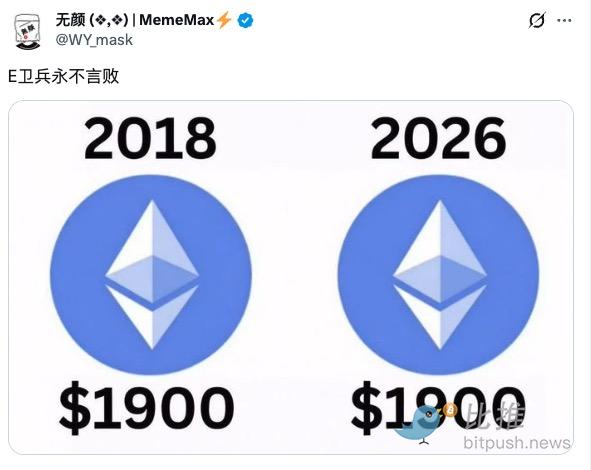
"Eight Years, Still $1900"—ETH Maximalists Collective Meltdown

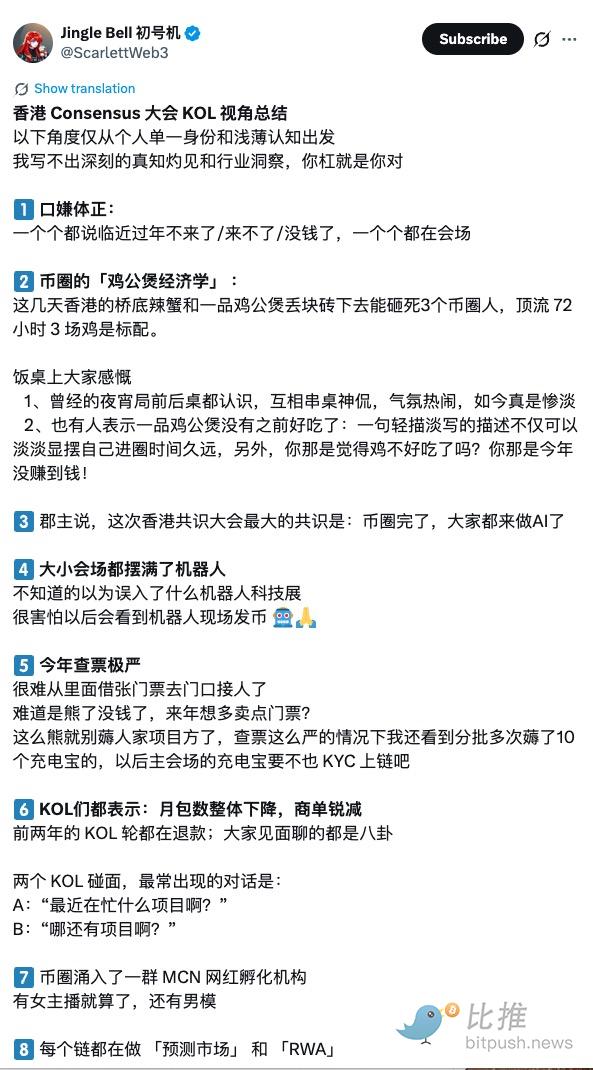
Hong Kong Conference Essay Extravaganza

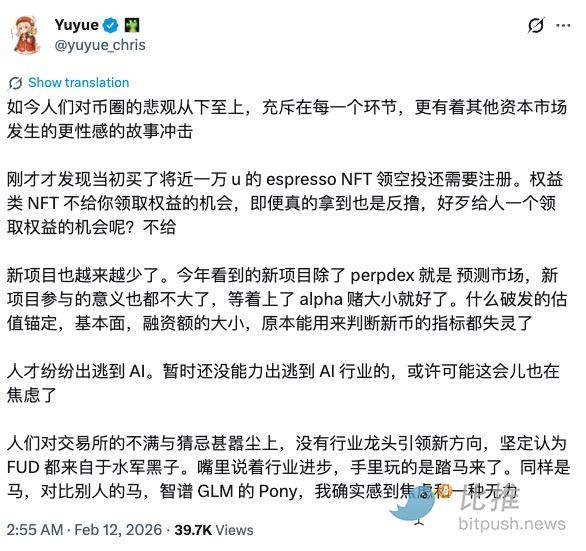
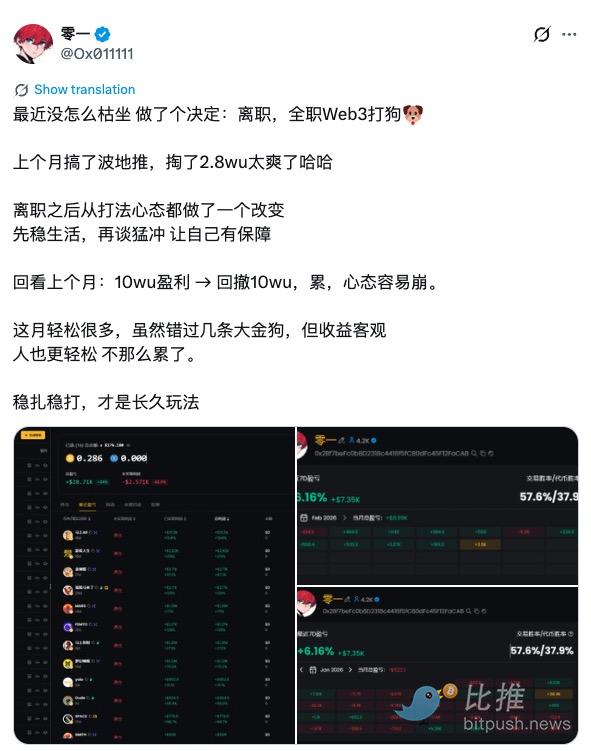
Pessimism Pervades the Industry—Some Flee, Others Hold Firm

Popular Replies:

Extremes reverse—wait for the mean reversion. Right now, it's about resting. The sooner you rest up, the more advantage you'll have;

Just wait it out;

The AI circle's siphon effect should become particularly strong this year.


Twitter:https://twitter.com/BitpushNewsCN

Bitpush TG Discussion Group:https://t.me/BitPushCommunity

Bitpush TG Subscription: https://t.me/bitpush

Original link:https://www.bitpush.news/articles/7612025

Похожее

Uncovering the Truth About Agent Commerce, Payments, and Infrastructure

Decoding Agent Commerce, Payments, and Infrastructure: The Reality Over the past year, I've been building infrastructure for the Agent economy, engaging with major players like Stripe, Visa, Coinbase, Google, and dozens of startups. A clear conclusion emerges: true, large-scale demand does not yet exist. Startups face structural challenges. Data points illustrate this gap. Stripe's Agent commerce platform has over 1,000 merchants but only single-digit transacting agents. Visa's Agent payment token requires 9-month KYC and a $250M revenue threshold, accessible only to giants like Amazon. On-chain analysis reveals actual daily Agent transaction volume is around $17k, half of which are test transactions. The article analyzes four potential markets: **1. Agent-to-Merchant (A2M):** Current AI shopping UX is often inferior to traditional e-commerce for visual, comparison-heavy purchases (clothing, electronics). Chat interfaces are a step back. Real merchant interest is defensive "Agent Engine Optimization," fearing future obsolescence, not current demand. Potential exists in high-frequency, low-decision purchases (e.g., food delivery) or simplifying terrible UX (complex checkouts, non-native shoppers), but these require massive consumer distribution channels dominated by giants like DoorDash and Amazon. **2. Agent-to-API (A2A):** Developers already have subscriptions and billing for core APIs (compute, data). The argument for micro-payments via crypto for sub-dollar API calls is addressed by pre-paid balances today. The deeper issue is supplier resistance; major SaaS firms rely on enterprise contracts, not fractional cent pricing. Opportunity lies in the long tail of niche services, but this is a smaller market catering to developers, a historically low-paying group. **3. Agent-to-Agent (A2A):** This remains a theoretical long-term vision with near-zero current transaction volume. It involves unique challenges: discovery, trust, negotiation, dispute resolution. When it materializes, it will require a fundamentally new settlement infrastructure for high-speed, variable-value, multi-party transactions. It's a real long-term bet, but not the current market. **4. Agent-to-Finance (A2F):** This is the only category with existing, paying demand. Integrating AI into financial workflows (trading, portfolio management) is a natural evolution and enables new capabilities like autonomous rebalancing. However, competition favors incumbents with regulatory licenses, compliance infrastructure, and existing client relationships. **The Real Issue:** Why is infrastructure still being built? Incumbents can afford long-term bets, and payment companies see every problem as a nail for their payment hammer. However, payment is just one piece. The core challenge is *coordination*—orchestrating work between Agents and humans, verifying outcomes, and settling results. Payment is part of settlement, which is part of coordination. Companies that solve the coordination problem will subsume payments, not the other way around. Startups lack the infinite runway of giants and must find today's real market, which, after a year of exploration, lies outside these four categories—in an area with real, growing, and underserved activity.

marsbit57 мин. назад

Uncovering the Truth About Agent Commerce, Payments, and Infrastructure

marsbit57 мин. назад

Kalshi, MTS, and a16z's Ambition

The article "Kalshi, MTS, and a16z's Ambition" explores prediction markets as a focal point of excitement in 2025 for investors, crypto enthusiasts, and media. It traces their intellectual lineage from Friedrich Hayek's ideas on dispersed knowledge and market coordination to Robin Hanson's Logarithmic Market Scoring Rule (LMSR), which incentivizes truthful information sharing. The piece argues that a16z's significant investment in prediction market platform Kalshi (valued at $220B) transcends mere financial speculation. a16z frames prediction markets as a new form of "media" that provides "presence"—a way for individuals to actively engage with and influence world events through financial stakes, countering postmodern detachment. By wagering on outcomes, users become "super observers," and the market's aggregated probabilities gain authoritative power to define event truth and importance. The article uses media company MTS ("Monitoring The Situation") as a case study of a16z's "new media" strategy: rapidly producing high-intensity, multi-format content to "take over the timeline." However, prediction markets like Kalshi are presented as the ultimate piece in this media empire. Their real-money, crowd-sourced probabilities possess a unique "reality distortion field" and perceived objectivity, potentially swaying public opinion and granting a private company unprecedented interpretive power over reality. Ultimately, Kalshi's immense valuation is attributed not just to its exchange model, but to its role as a foundational component in a16z's envisioned new media landscape, where prediction markets define narrative and truth.

链捕手57 мин. назад

Kalshi, MTS, and a16z's Ambition

链捕手57 мин. назад

Торговля

Спот
Фьючерсы
活动图片