Vitalik's Layer2 Reset: Can It Save Ethereum?

marsbitОпубликовано 2026-02-05Обновлено 2026-02-05

Введение

Vitalik Buterin's recent post recalibrates Ethereum's Layer2 (L2) strategy, acknowledging that the original 2020 "rollup-centric" roadmap—based on L2s acting as "branded shards" of Ethereum—no longer aligns with reality. Two key issues are identified: L2 decentralization has progressed slower than expected, with only a few major L2s reaching Stage 1 decentralization, and Ethereum L1 has scaled beyond initial projections, reducing L2s' necessity for scalability. The core conceptual shift introduces a "trust spectrum" framework, recognizing that L2s serve diverse purposes and may legitimately operate at varying decentralization levels (e.g., Stage 0 or 1) without being deemed failures. This allows L2s to pursue different economic and regulatory goals, such as compliant chains with asset-freezing capabilities. Technically, Vitalik proposes a "native rollup precompile" to simplify L2 infrastructure by embedding EVM execution verification directly into Ethereum, reducing audit burdens and improving security. Additionally, a mechanism for "synchronous composability" is outlined, enabling atomic cross-layer transactions between L1 and L2. Responses from L2 teams like Arbitrum, Base, Linea, and Optimism reflect strategic diversity, validating the trust spectrum approach. The post implicitly acknowledges L2s' economic realities, such as sequencer revenue and regulatory constraints, and suggests differentiation strategies for L2s in a cheaper L1 environment. This update demonstrate...

Author: YQ

Compiled by: Saoirse, Foresight News

Since 2015, I have been deeply involved in scaling technology research, studying all iterative solutions from sharding, Plasma, App Chains to Rollup. I have in-depth collaborations with every mainstream Rollup tech stack and team in the ecosystem. Therefore, I always pay close attention when Vitalik publishes content that can fundamentally reshape our understanding of Layer2 (L2). The post he published on February 3rd is such a key piece of content.

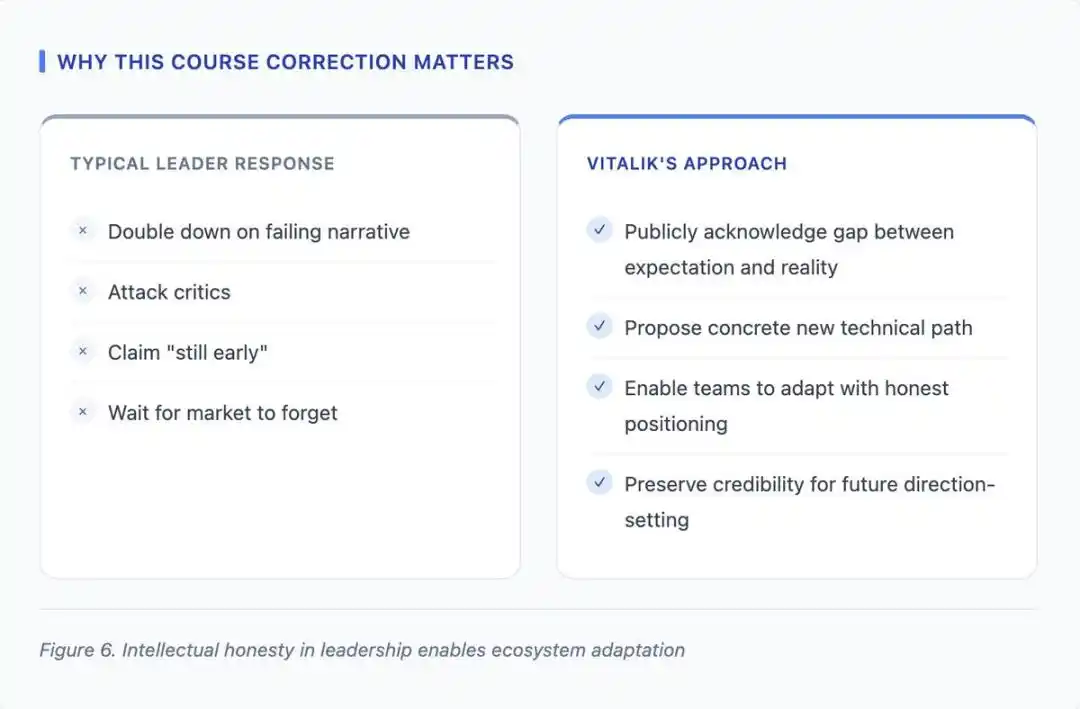
What Vitalik did is not easy — admitting that the core assumptions from 2020 did not materialize as expected. This kind of candor is something most leaders avoid. The "Rollup-centric" roadmap back then was built on the premise that "L2s would act as Ethereum's 'branded shards'." But four years of market data paint a different picture: L2s have evolved into platforms with independent economic incentives, and Ethereum Layer1's scaling speed has far exceeded expectations. The original vision has long been disconnected from reality.

In fact, it would have been easier to continue defending the old narrative — for example, by强行 pushing teams towards a vision the market had already否决. But this is not the mark of good leadership. The truly wise approach is to acknowledge the gap between expectations and reality, propose a new direction, and move towards a brighter future. And this post does exactly that.

The Problems Vitalik Actually Diagnosed

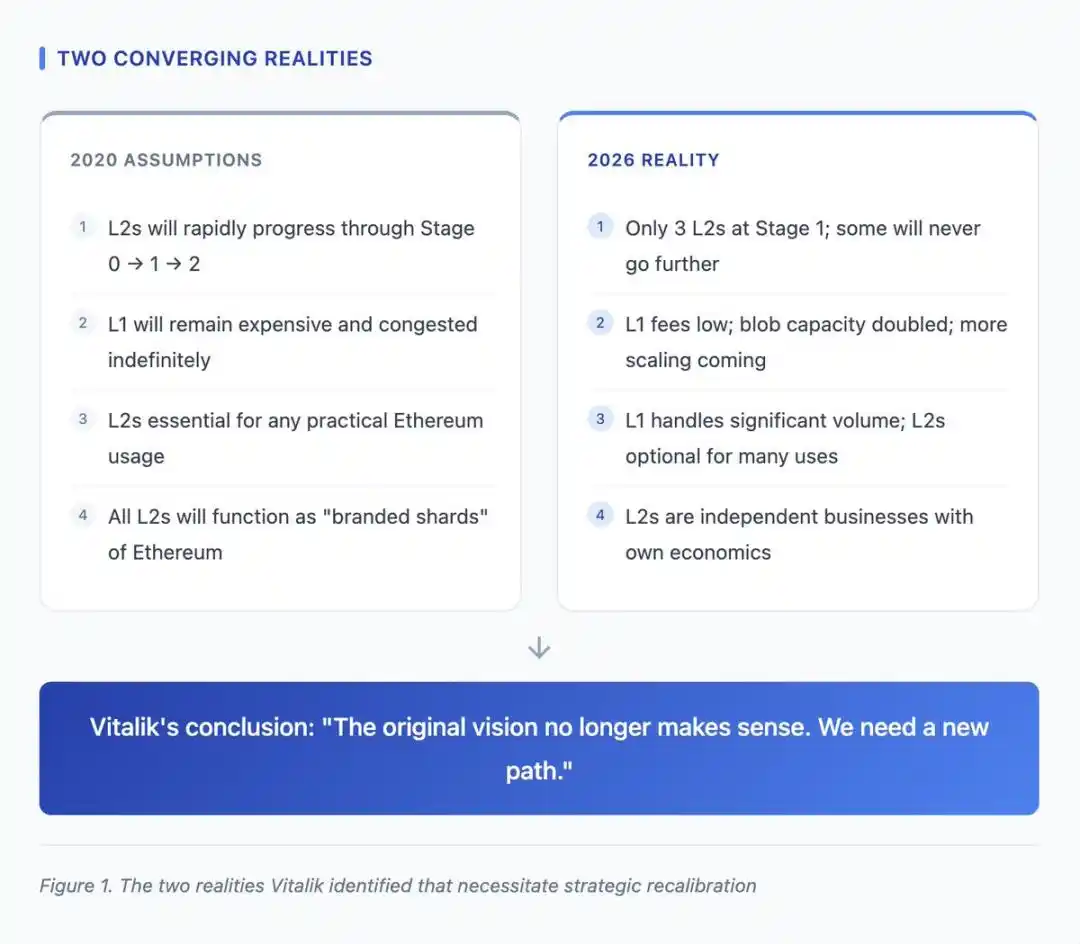
The post points out two core realities requiring strategic adjustment:

First, the decentralization of L2s is much slower than expected. Currently, only 3 mainstream L2s (Arbitrum, OP Mainnet, Base) have reached the first stage of decentralization; some L2 teams have explicitly stated that, due to regulatory requirements or business model limitations, they may never pursue full decentralization. This is not a moral "failure," but a reflection of economic reality — for L2 operators, sequencer revenue is the core business model.

Second, Ethereum L1 has achieved significant scaling. Current L1 fees are low, the Pectra upgrade doubled data blob capacity, and there are plans to continuously increase the Gas limit through 2026. When the Rollup roadmap was designed, "high L1 costs and network congestion" were the basic premises; this premise no longer holds. L1 can now handle a large number of transactions at reasonable costs, which also transforms the value proposition of L2s from "a necessity for ensuring availability" to "an optional solution for specific use cases."

The two realities requiring strategic adjustment as pointed out by Vitalik

Restructuring the Trust Spectrum

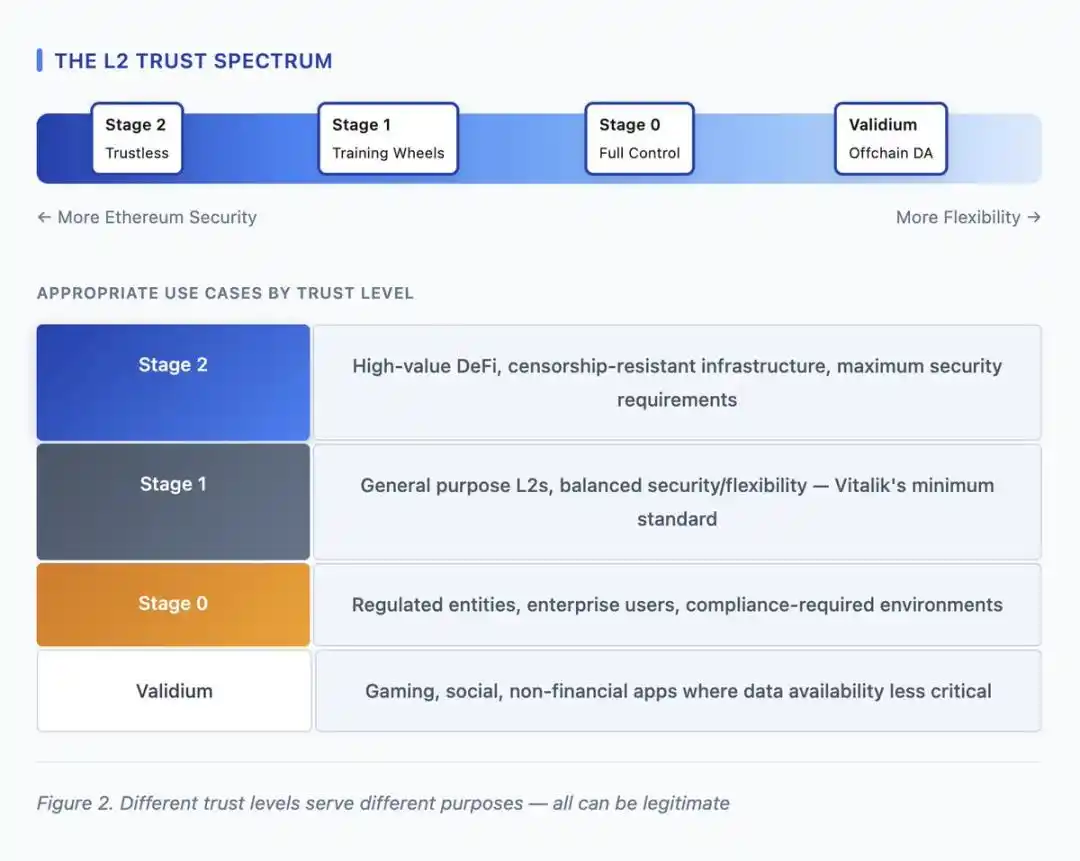
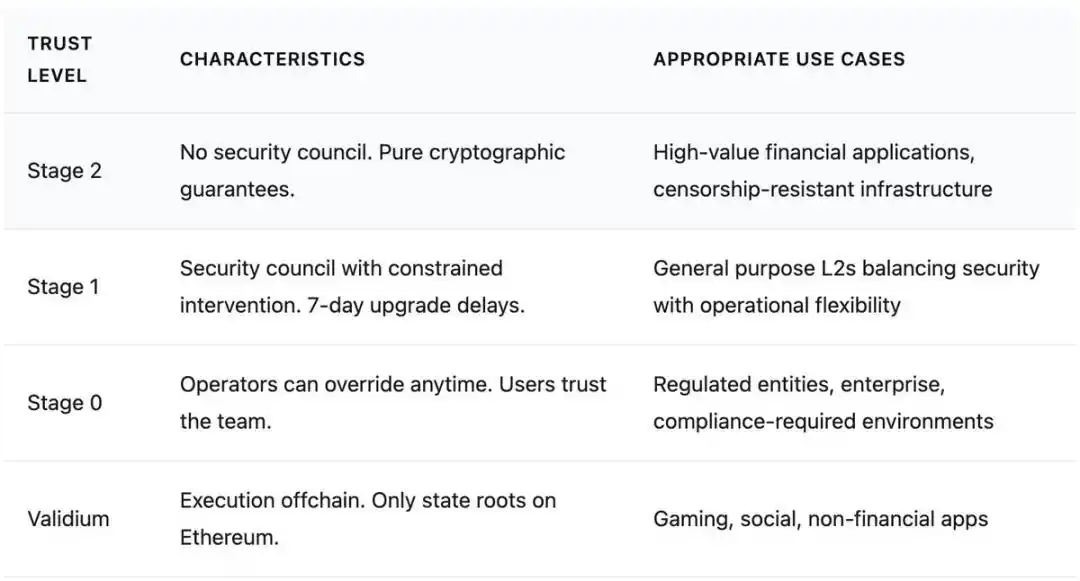
Vitalik's most core conceptual contribution is liberating L2s from the framework of a "single category, uniform obligations" and redefining them as "diverse entities existing on a trust spectrum." The previous metaphor of "branded shards"默认 all L2s needed to pursue Stage 2 decentralization and, as extensions of Ethereum, bear the same value and security commitments as L1. The new framework acknowledges: different L2s have different purposes, and for projects with specific needs, Stage 0 or Stage 1 decentralization can be a perfectly reasonable end goal.

The strategic significance of this reframing is that it breaks the implicit judgment that "an L2 not pursuing full decentralization is a failure." For example, a regulated L2 serving institutional clients that requires asset freezing functionality is not a "flawed Arbitrum," but a "differentiated product for a different market." By endorsing this "trust spectrum," Vitalik allows L2s to be upfront about their positioning, without having to make promises of "decentralization" lacking economic incentive support.

Different trust levels correspond to different uses — all levels can reasonably exist

Classification table of trust levels for Ethereum L2s

Native Rollup Precompile Proposal

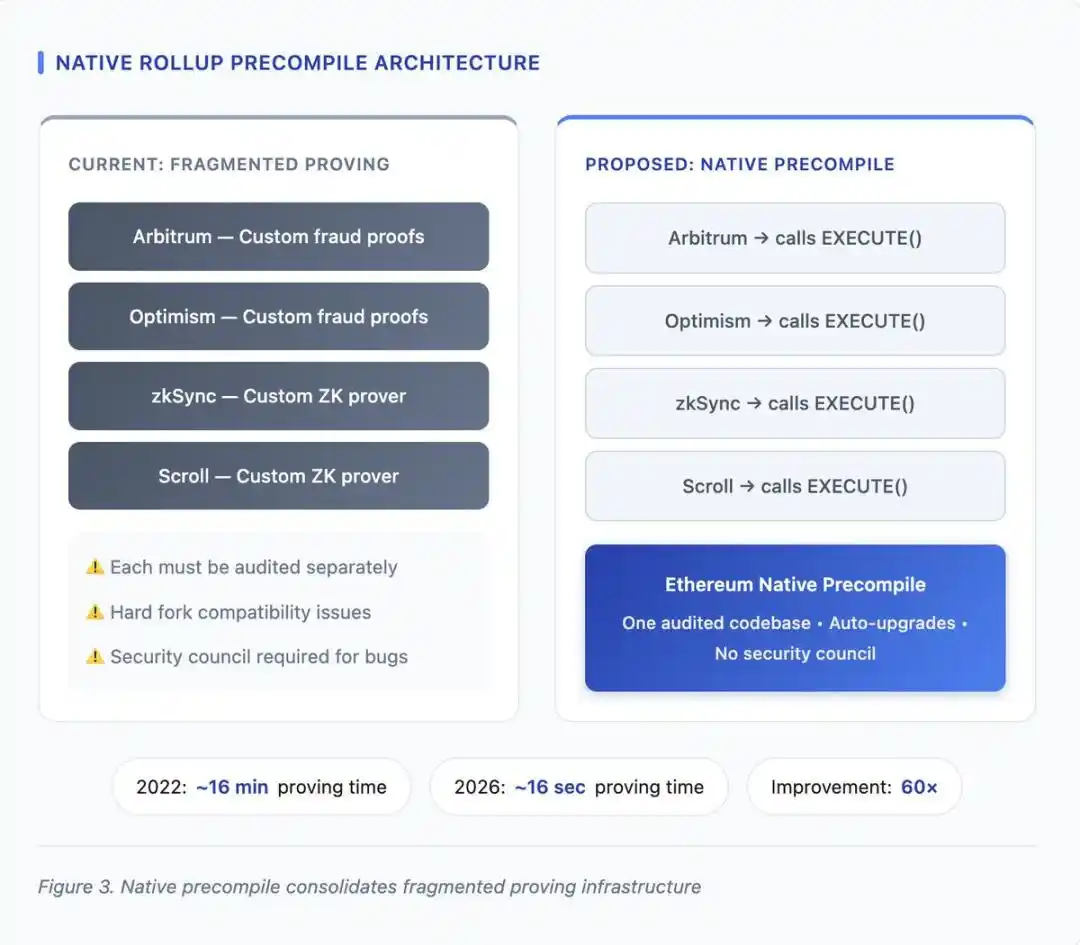
The technical core of Vitalik's post is the "Native Rollup Precompile" proposal. Currently, each L2 needs to independently build a system for "proving state transitions to Ethereum": Optimistic Rollups use fraud proofs with a 7-day challenge period, while ZK Rollups use validity proofs based on custom circuits. These implementations not only require independent audits but may also contain vulnerabilities, and need to be updated synchronously when Ethereum hard forks cause changes in EVM (Ethereum Virtual Machine) behavior. This "fragmented" status quo brings security risks and maintenance burdens to the entire ecosystem.

The "Native Rollup Precompile" involves building a function for "verifying EVM execution" directly into Ethereum. Then, each L2 would no longer need to maintain custom provers, but only need to call this shared infrastructure. The advantages are significant: only 1 codebase needs auditing (instead of dozens), automatic compatibility with Ethereum upgrades, and once the precompile functionality is battle-tested, it might even allow for the removal of security councils.

Before and after comparison of Ethereum Native Rollup Precompile architecture

Synchronous Composability Vision

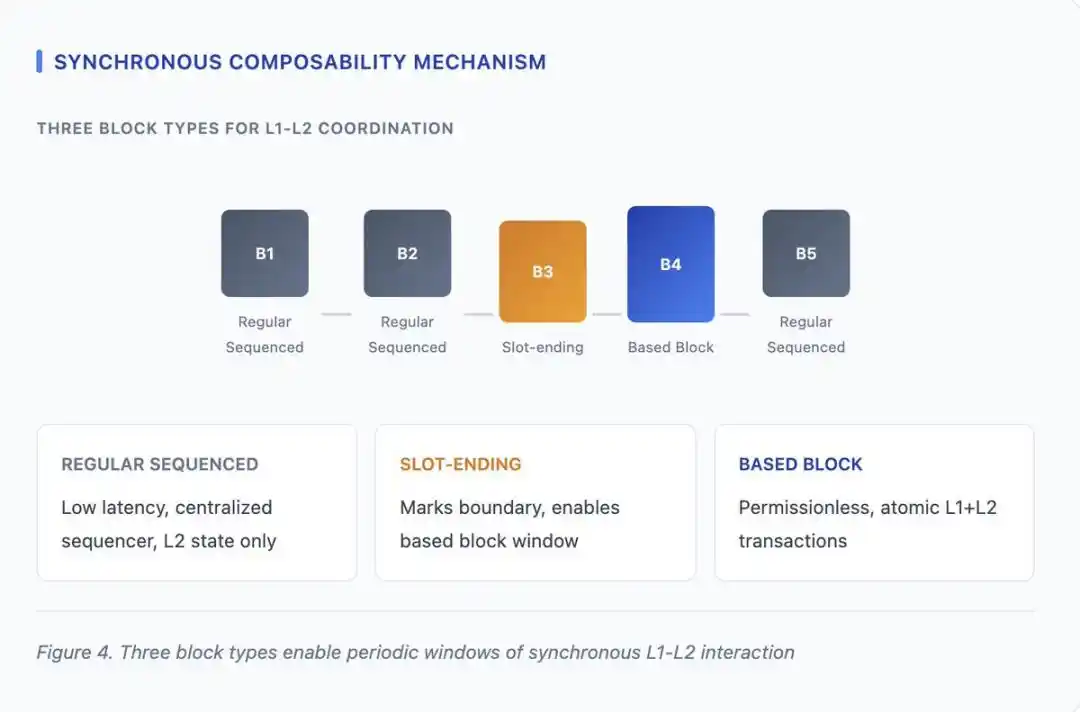
In his post on ethresear.ch, Vitalik detailed a mechanism to achieve "synchronous composability" between L1 and L2. Currently, transferring assets or executing logic across L1 and L2 either requires waiting for final confirmation (7 days for Optimistic Rollups, hours for ZK Rollups) or relies on fast bridges with counterparty risk. "Synchronous composability" would allow transactions to "atomically use L1 and L2 state" — reading and writing data across layers within the same transaction, either completely succeeding or completely rolling back.

The mechanism designs three types of blocks:

  • Regular Sequencing Blocks: For processing low-latency L2 transactions;
  • Slot End Blocks: Mark the boundary of a time window;
  • Base Blocks: Blocks that can be built permissionlessly after the Slot End Block is generated.

During the window for Base Blocks, any block builder can create blocks that interact with both L1 and L2 states simultaneously.

Three types of blocks support periodic synchronous interaction between L1 and L2

Responses from L2 Teams

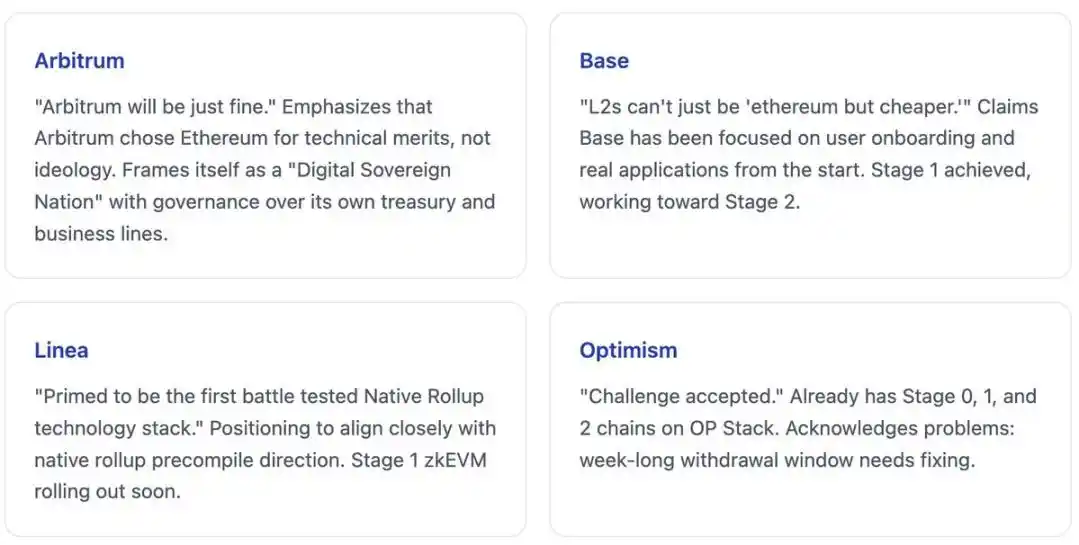
Mainstream L2 teams responded within hours, showing a healthy strategic diversity —这正是 Vitalik's "trust spectrum" framework intended to achieve: different teams can choose different positioning without pretending to march towards the same finish line.

Differentiated responses from four mainstream Ethereum L2 projects to Vitalik's "L2 Reset" proposal

This diversity in response is healthy:

  • Arbitrum: Emphasizes independence and self-sufficiency;
  • Base: Focuses on applications and users;
  • Linea: Closely aligns with the Native Rollup direction proposed by Vitalik;
  • Optimism: Acknowledges current challenges while宣称持续推进改进 (claiming continued progress on improvements).

These positions are not right or wrong, just strategic choices for different market segments —这正是 the "trust spectrum" framework recognizes as reasonable.

The L2 Economic Reality Acknowledged by Vitalik

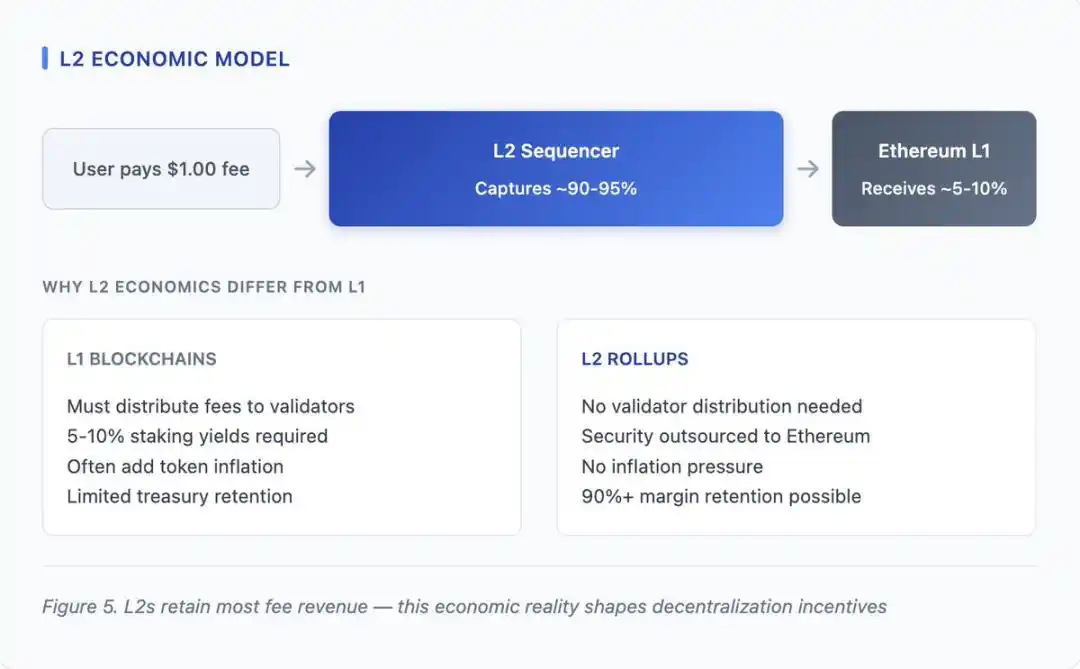
One significant meaning of Vitalik's post is the implicit acknowledgment of L2s' economic attributes. When he mentions that "some L2s may 'never progress beyond Stage 1 decentralization' due to 'regulatory requirements' (need to retain ultimate control),". he is essentially admitting: L2s are not idealized "branded shards," but commercial entities with legitimate economic interests. Sequencer revenue is real, regulatory compliance requirements are real — expecting L2s to abandon these interests to cater to ideology was unrealistic from the start.

<极客时间 style="max-width:100%;overflow:hidden;" src="https://d1x7dwosqaosdj.cloudfront.net/images/2026-02/8d0d6a2a248c43bdaeff8d8398087009.jpg" alt="">

L2s retain most fee revenue — this economic reality determines the incentive direction for decentralization

The Future Path Outlined by Vitalik

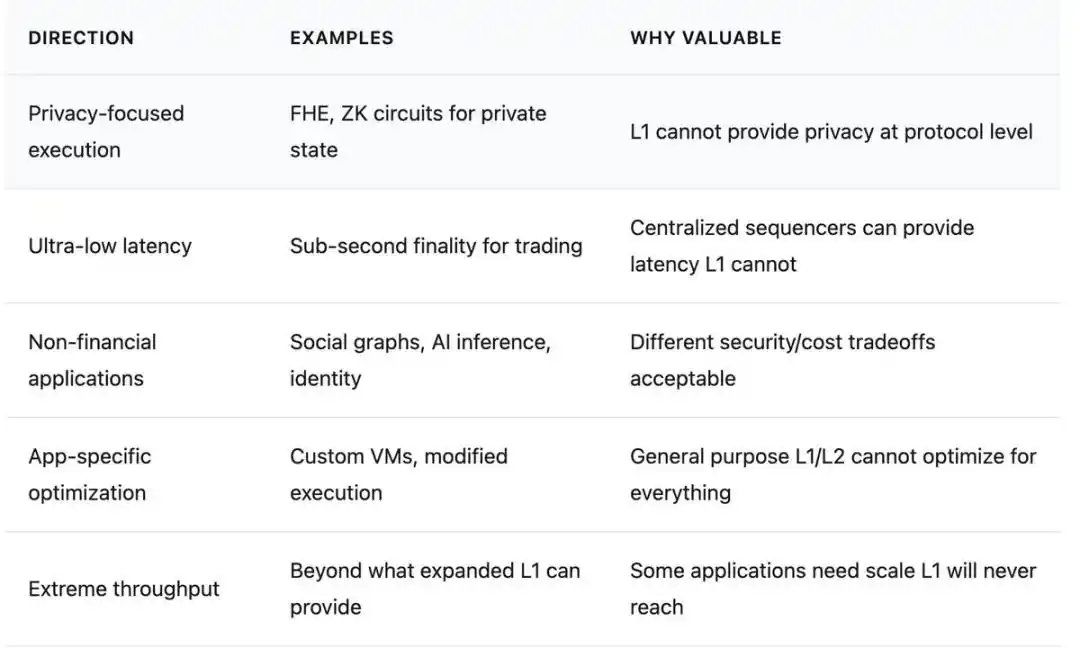
Vitalik's post is not just about "diagnosing problems" but also focuses on "solving problems." He outlines several concrete directions for those L2s that want to maintain value in the context of continued L1 scaling. These are not mandatory requirements, but suggested paths for L2s to differentiate themselves when "cheaper Ethereum" is no longer the core competitive advantage.

Table of differentiated value directions for Ethereum L2s

Rational candor in leadership enables adaptive development for the ecosystem

Summary

In February 2026, the post published by Vitalik Buterin marked a key calibration of Ethereum's strategy towards L2s. Its core insight is: L2s have evolved into independent platforms with legitimate economic interests, rather than "branded shards" with obligations to Ethereum. Vitalik did not fight this reality but proposed embracing it by: endorsing differentiated paths through the "trust spectrum," strengthening collaboration efficiency for those willing to participate in L1-L2 integration through "native Rollup infrastructure," and enabling cross-layer interaction through "synchronous composability mechanisms."

The response from the L2 ecosystem shows healthy diversity: Arbitrum emphasizes independence, Base focuses on applications, Linea aligns with the Native Rollup direction, Optimism acknowledges challenges and pushes for improvements. This diversity is precisely the expected result of the "trust spectrum" framework: different teams can pursue different strategies without pretending to be on the same path.

For Ethereum, this course correction maintains its credibility by "acknowledging reality" rather than "defending outdated assumptions." Considering the maturity of ZK-EVM technology, the related technical proposals are feasible; and the strategic proposals create space for the ecosystem to evolve efficiently. This is the embodiment of "adaptive leadership" in the technology field: realizing the environment has changed, then proposing a new path, rather than stubbornly sticking to a strategy the market has already否决.

Having been deeply involved in scaling research for a decade and operating a Rollup infrastructure company for four years, I have seen too many leaders refuse to adjust when facts change — often with poor results. Vitalik's choice this time was not easy: publicly admitting that the 2020 vision needed updating. But it was the right choice. Clinging to a narrative the market has abandoned benefits no one. The way forward is now clearer than it was a week ago — that in itself is tremendously valuable.

Связанные с этим вопросы

QWhat are the two core realities that Vitalik's post identifies as requiring strategic adjustment for Ethereum's Layer2?

AThe two core realities are: 1) The decentralization of L2s is progressing much slower than expected, with only a few major L2s reaching the first stage of decentralization. 2) Ethereum L1 has achieved significant scaling, with lower fees and increased data capacity, which changes the value proposition of L2s from a necessity for availability to an optional solution for specific use cases.

QWhat is the key conceptual contribution of Vitalik's new framework regarding L2s?

AThe key conceptual contribution is reframing L2s from a 'single category with uniform obligations' to a 'diverse existence on a spectrum of trust.' This acknowledges that different L2s have different purposes and that achieving stage 0 or stage 1 decentralization can be a reasonable endpoint for projects with specific needs, rather than a failure.

QWhat is the technical core proposal in Vitalik's post to address the current fragmentation in L2 implementations?

AThe technical core proposal is the 'Native Rollup Precompile.' This involves building a function for 'verifying EVM execution' directly into Ethereum. This shared infrastructure would allow L2s to call this function instead of maintaining their own custom provers, reducing security risks and maintenance burdens.

QHow does the proposed 'synchronous composability' mechanism aim to improve interaction between L1 and L2?

AThe 'synchronous composability' mechanism aims to allow transactions to atomically use both L1 and L2 states within a single transaction, ensuring it either fully succeeds or fully rolls back. It proposes three types of blocks (regular sequencing blocks, slot-end blocks, and base blocks) to enable this cross-layer interaction without the delays or risks associated with current methods like waiting for finality or using fast bridges.

QHow did major L2 teams like Arbitrum, Base, Linea, and Optimism respond to Vitalik's proposal, and what does this indicate?

AThe responses showed healthy strategic diversity: Arbitrum emphasized independence and self-sufficiency, Base focused on applications and users, Linea closely aligned with the native Rollup direction, and Optimism acknowledged current challenges while committing to ongoing improvements. This diversity indicates the success of the 'trust spectrum' framework, allowing different teams to pursue different strategic positions for their respective markets without pretending to move toward the same endpoint.

Похожее

Different Choices After the Plunge: Institutions Buy the Dip, Traders Shift to US Stocks

Title: Diverging Strategies After the Crash: Institutions Buying the Dip, Traders Shifting to US Stocks Following a sharp decline where Bitcoin briefly fell below $60,000 on June 6th, market sentiment remains "extreme fear" despite a partial recovery. This has led to varied responses from major market participants. Several institutional figures and analysts present a cautiously optimistic long-term view for Bitcoin. Glassnode's co-founder identifies $46k-$54k as a probable key bottom range based on historical on-chain models, while a Standard Chartered executive suggests the bottom is nearly formed. Strive's CEO points to Bitcoin touching its 200-week moving average as a historically reliable buy signal. Analysts highlight metrics like MVRV ratio and the "Power Law" model indicating Bitcoin is in an extremely undervalued zone. Conversely, some traders are exiting the crypto space. One trader cited a more attractive risk/reward profile and deeper research opportunities in US stocks, particularly with AI-related equities outperforming and capital rotating away from crypto. This shift is partly attributed to perceived ongoing risks, including those related to Strategy's Bitcoin sales. Market prediction data suggests a high probability (72%) of Bitcoin falling below $55,000, but lower odds for a deeper crash below $35k-$40k. The overall picture is one of division: institutions and long-term analysts see a accumulating opportunity, while some active traders are seeking alpha elsewhere amidst the volatility and shifting capital flows.

marsbit41 мин. назад

Different Choices After the Plunge: Institutions Buy the Dip, Traders Shift to US Stocks

marsbit41 мин. назад

Tech Stocks in the Midst of Deleveraging: Rather Than Rushing to Buy the Dip, Wait for the Macro Environment to Stabilize First

"Technology Stocks in Deleveraging Phase: Wait for Macro Stability Before Buying the Dip" The current sell-off in tech/AI stocks is primarily driven by macro headwinds, not a breakdown in AI fundamentals. After a parabolic rise, the market faced a perfect storm: an overcrowded trade, a massive SpaceX IPO draining liquidity, pre-CPI/PPI/FOMC hedging, and strong jobs data renewing "higher-for-longer" rate fears. This triggered a concentrated deleveraging in hot tech names. Key historical context: Unlike the December 2023 sell-off focused on AI capex returns, the current correction centers on the "denominator" – rising concerns over rates, inflation, the Fed, geopolitics, and liquidity. Leading memory stocks like Micron have seen ~20% pullbacks, significant but not yet at panic levels seen in March. The intense selling wave may be largely over, but a quick V-shaped recovery is unlikely. The market will likely churn in high volatility, awaiting clarity. The immediate catalyst needed for a sustainable reversal is a "stop-bleeding" signal from macro conditions. This doesn't require a major positive shock (like the April Iran ceasefire), but simply a halt to further deterioration: CPI not surprising hotter, Treasury yields stabilizing, the Fed not turning more hawkish, and post-SpaceX IPO liquidity easing. Once macro pressure plateaus, the intact AI investment thesis – centered on persistent compute/memory shortages and accelerating commercialization – can quickly regain market focus. The strategy is clear: prioritize monitoring macro stabilization over rushing to bottom-fish individual AI stories. Patience is key.

marsbit48 мин. назад

Tech Stocks in the Midst of Deleveraging: Rather Than Rushing to Buy the Dip, Wait for the Macro Environment to Stabilize First

marsbit48 мин. назад

South Korean Stocks Plunge, Global Funds Liquidate: Has the Semiconductor Fundamentals Really Changed?

South Korean stocks experienced their sharpest decline of the year, with the KOSPI index plunging nearly 9% on Monday, triggering a market circuit breaker. Leading semiconductor firms Samsung Electronics and SK Hynix were heavily sold off, raising questions about whether the AI-driven bull market has reached an inflection point. This sell-off was largely triggered by a significant drop in the U.S. semiconductor sector late last week. Concurrently, NVIDIA CEO Jensen Huang visited Seoul over the weekend, meeting with top executives from SK Group, Samsung, LG, and NAVER. He announced a new multi-year partnership with SK Hynix to co-develop next-generation memory products for AI data centers. Huang emphasized that AI infrastructure build-out remains in its early stages, creating a stark contrast between market panic and ongoing, strengthened industry collaboration. The article argues that South Korea has become one of the most sensitive markets for global AI-related capital flows, functioning like a large AI memory ETF due to the heavy weighting of its chipmakers. The current market turmoil reflects a shift in investor focus: from simply betting on overall AI growth to scrutinizing which companies will actually capture the profits from that growth. This "profit pool reassessment" phase is causing high volatility based on supply chain news and earnings guidance. Ultimately, the direction of the Korean market will be determined by external factors—NVIDIA's orders, HBM supply-demand dynamics, and capital expenditures from cloud service providers—rather than domestic conditions. The disconnect between sharp price corrections and continued strong signals from the industry core leaves the market at a crossroads, awaiting clearer data on the durability of AI infrastructure demand.

marsbit1 ч. назад

South Korean Stocks Plunge, Global Funds Liquidate: Has the Semiconductor Fundamentals Really Changed?

marsbit1 ч. назад

Trump in Talks with AI Companies Over Profit Sharing, A Narrative Pressure of Industrial Revolution Scale Begins

In recent AI market discussions, a new dimension beyond growth and profits has emerged: the question of how the immense wealth potentially generated by AI should be shared with the wider public. Triggered by reports of White House officials discussing "voluntary equity transfers" with top AI firms, similar to models like Alaska's Permanent Fund, the conversation focuses on public wealth funds. OpenAI's own whitepaper proposes such funds, allowing households without direct tech stock ownership to benefit from AI gains. More radical proposals, like Bernie Sanders' call for high public equity stakes and board seats, represent an extreme end of the spectrum. Currently, these are early-stage policy probes, not enacted laws. OpenAI's initiative is seen as an attempt to secure "social license" for its future expansion, mitigating risks of public backlash, stricter regulation, or anti-trust actions as AI's economic impact grows. The core market implication is the introduction of a "policy discount" to AI valuations, particularly for private model companies like OpenAI, Anthropic, and xAI. Investors must now consider not just future earnings but also what portion might be allocated to public mechanisms. The impact varies greatly based on the mechanism. A small, voluntary transfer of non-voting economic rights (e.g., 5%) acts as a quantifiable long-term cost. Government acquisition of economic rights via warrants tied to support differs from direct equity with governance power. The most disruptive scenario would be forced high-percentage public ownership affecting control and innovation incentives. Key signals to watch include whether other AI companies follow suit, if the White House formalizes proposals, related disclosures in future IPO documents, and any market price reactions. For now, this represents a shift from pricing pure AI growth to pricing its potential distribution. A manageable, voluntary economic share is akin to an insurance cost for societal acceptance, while a forced shift toward control and governance would fundamentally alter valuation logic.

marsbit1 ч. назад

Trump in Talks with AI Companies Over Profit Sharing, A Narrative Pressure of Industrial Revolution Scale Begins

marsbit1 ч. назад

From Record Highs to a Two-Week Low: Why Did AI Concept Stocks Suddenly Pull Back?

From Record Highs to Two-Week Lows: Why Did AI Stocks Suddenly Pull Back? U.S. stock indices, led by the tech-heavy Nasdaq 100, fell sharply to two-week lows. This marked a reversal from earlier in the week when AI infrastructure and semiconductor stocks had propelled major indices to record highs. Investors are rotating out of these previously high-flying tech sectors into other areas. The sell-off was driven by profit-taking and concerns that the AI rally had become overextended, exacerbated by chipmaker Broadcom's sales outlook falling short of lofty market expectations. The decline accelerated following a stronger-than-expected U.S. May nonfarm payrolls report, which showed 172,000 jobs added versus an estimated 88,000. This data sparked a jump in bond yields, with the 10-year Treasury yield rising to 4.553%, as it reinforced market speculation that the Federal Reserve's next move could be a rate hike rather than a cut. Globally, equities also declined, with European and Asian markets falling. Within the U.S. market, chip and AI-related stocks like Super Micro Computer and Arm Holdings led the losses, dropping over 7%. Cryptocurrency-linked stocks and mining shares also fell sharply amid drops in Bitcoin and commodity prices. While the overall Q1 earnings season remained solid, with 83% of S&P 500 companies beating estimates, the weakness was concentrated in tech. Excluding the tech sector, Q1 earnings growth was around 3%, the weakest in two years.

marsbit1 ч. назад

From Record Highs to a Two-Week Low: Why Did AI Concept Stocks Suddenly Pull Back?

marsbit1 ч. назад

Торговля

Спот
Фьючерсы

Популярные статьи

Как купить S

Добро пожаловать на HTX.com! Мы сделали приобретение Sonic (S) простым и удобным. Следуйте нашему пошаговому руководству и отправляйтесь в свое крипто-путешествие.Шаг 1: Создайте аккаунт на HTXИспользуйте свой адрес электронной почты или номер телефона, чтобы зарегистрироваться и бесплатно создать аккаунт на HTX. Пройдите удобную регистрацию и откройте для себя весь функционал.Создать аккаунтШаг 2: Перейдите в Купить криптовалюту и выберите свой способ оплатыКредитная/Дебетовая Карта: Используйте свою карту Visa или Mastercard для мгновенной покупки Sonic (S).Баланс: Используйте средства с баланса вашего аккаунта HTX для простой торговли.Третьи Лица: Мы добавили популярные способы оплаты, такие как Google Pay и Apple Pay, для повышения удобства.P2P: Торгуйте напрямую с другими пользователями на HTX.Внебиржевая Торговля (OTC): Мы предлагаем индивидуальные услуги и конкурентоспособные обменные курсы для трейдеров.Шаг 3: Хранение Sonic (S)После приобретения вами Sonic (S) храните их в своем аккаунте на HTX. В качестве альтернативы вы можете отправить их куда-либо с помощью перевода в блокчейне или использовать для торговли с другими криптовалютами.Шаг 4: Торговля Sonic (S)С легкостью торгуйте Sonic (S) на спотовом рынке HTX. Просто зайдите в свой аккаунт, выберите торговую пару, совершайте сделки и следите за ними в режиме реального времени. Мы предлагаем удобный интерфейс как для начинающих, так и для опытных трейдеров.

1.4k просмотров всегоОпубликовано 2025.01.15Обновлено 2026.06.02

Как купить S

Sonic: Обновления под руководством Андре Кронье – новая звезда Layer-1 на фоне спада рынка

Он решает проблемы масштабируемости, совместимости между блокчейнами и стимулов для разработчиков с помощью технологических инноваций.

2.3k просмотров всегоОпубликовано 2025.04.09Обновлено 2025.04.09

Sonic: Обновления под руководством Андре Кронье – новая звезда Layer-1 на фоне спада рынка

HTX Learn: Пройдите обучение по "Sonic" и разделите 1000 USDT

HTX Learn — ваш проводник в мир перспективных проектов, и мы запускаем специальное мероприятие "Учитесь и Зарабатывайте", посвящённое этим проектам. Наше новое направление .

1.8k просмотров всегоОпубликовано 2025.04.10Обновлено 2025.04.10

HTX Learn: Пройдите обучение по "Sonic" и разделите 1000 USDT

Обсуждения

Добро пожаловать в Сообщество HTX. Здесь вы сможете быть в курсе последних новостей о развитии платформы и получить доступ к профессиональной аналитической информации о рынке. Мнения пользователей о цене на S (S) представлены ниже.

活动图片