Виталик Бутерин заявляет, что новое «правило быстрого подтверждения» для Ethereum может дать пользователям твердую гарантию того, что блок не будет отменен после одного слота, или примерно 12 секунд, что резко сократит одно из самых больших практических неудобств сети для бирж, мостов и систем второго уровня.
Предложение, публично описанное исследователем Фонда Ethereum Джулианом Ма и поддержанное Бутерином в X, предназначено для сокращения разрыва между сильной моделью безопасности Ethereum и более медленным временем подтверждения, которое до сих пор влияет на пользовательский опыт во всей экосистеме. По словам Бутерина, механизм «позволяет получить твердую гарантию того, что Ethereum не откатится после одного слота (12 секунд). Предположения безопасности: (i) сверхбольшинство честных, (ii) задержка сети менее ~3 с. Так что на один шаг ниже экономической финальности, но очень сильный для многих случаев использования».
Новое правило Ethereum для более быстрых подтверждений
Это различие важно. Финальность Ethereum остается самым сильным гарантом урегулирования в цепи, но она требует гораздо большего времени ожидания. Ма заявил, что правило быстрого подтверждения (FCR) сокращает время депозитов с основного блокчейна Ethereum на L2 и централизованные биржи примерно до 13 секунд, что он описал как «сокращение на 80-98% для большинства L2 и бирж».
Для пользователей непосредственным следствием является скорость. Для поставщиков инфраструктуры более важная история — это эффективность. Ма утверждал, что медленное подтверждение в основной сети вынуждает биржи, мосты и роллапы работать с задержками и неопределенностью, особенно при обработке депозитов или синхронизации рыночной активности между цепями. «Перевод средств из Ethereum на L2 и централизованные биржи медленный. Пользователи ждут минуты при использовании канонических мостов», — написал он. «Новое Правило Быстрого Подтверждения (FCR) решает это. Оно сокращает время депозита с Ethereum L1 на L2 или биржи примерно до 13 секунд».
Он добавил, что ожидается, что правило станет «новым отраслевым стандартом для L2 и бирж», и сказал, что его можно начать внедрять в ближайшие месяцы без хардфорка. Это важный дизайнерский выбор. Вместо введения изменения консенсуса, требующего координации по всей сети, FCR может быть активировано по мере реализации клиентами, причем узлы смогут автоматически применять правило, как только поддержка будет запущена.
Объяснение Ма представляет FCR как золотую середину между сегодняшними эвристиками и формальной финальностью Ethereum. Большинство бирж, L2 и солверов сейчас не ждут финальности. Вместо этого они полагаются на правило глубины блока, или «k-deep», по сути ожидая, пока транзакция будет погребена под достаточным количеством последующих блоков. FCR выбирает другой путь: оно считает аттестации, а не блоки. По словам Ма, это делает его структурно быстрее, а также дает ему доказуемую модель безопасности, которой lacks k-deep.
Компромисс явный. Быстро подтвержденный блок не является финализированным, и гарантия зависит от более строгих предположений, чем финальность. FCR предполагает синхронную сеть, что на практике означает, что аттестации прибывают в течение примерно восьми секунд, и предполагается, что противник не контролирует более 25% поставленного ETH. Финальность, напротив, предназначена для работы в условиях асинхронности и при пороге враждебности до 33%.
Тем не менее, Ма утверждал, что система плавно ухудшается при ухудшении условий. «Если сеть медленная, у FCR есть встроенный резервный режим. Вместо быстрого подтверждения блока в течение 13 секунд это может занять немного больше времени», — написал он. «Как только доставляется достаточное количество аттестаций, блок быстро подтверждается. В худшем случае FCR откатывается к финальности».
Этот резервный вариант является центральным в предложении. Механизм не претендует на то, что риск реорга исчезает; он утверждает, что dramatically сокращает время ожидания, сохраняя детерминированные гарантии, когда его предположения выполняются. Ма также подчеркнул, что если эти предположения выполняются, быстро подтвержденный блок «будет финализирован с certainty».
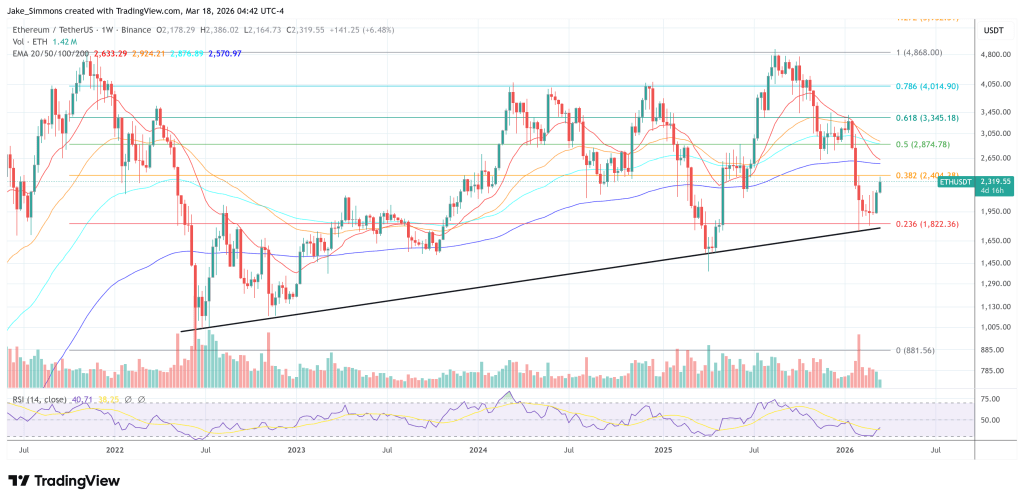
На момент публикации ETH торговался по цене $2319.