Visa Revelation: The 50-Year Cycle of Stablecoin 'Fragmentation Dilemma'

marsbitОпубликовано 2026-01-15Обновлено 2026-01-15

Введение

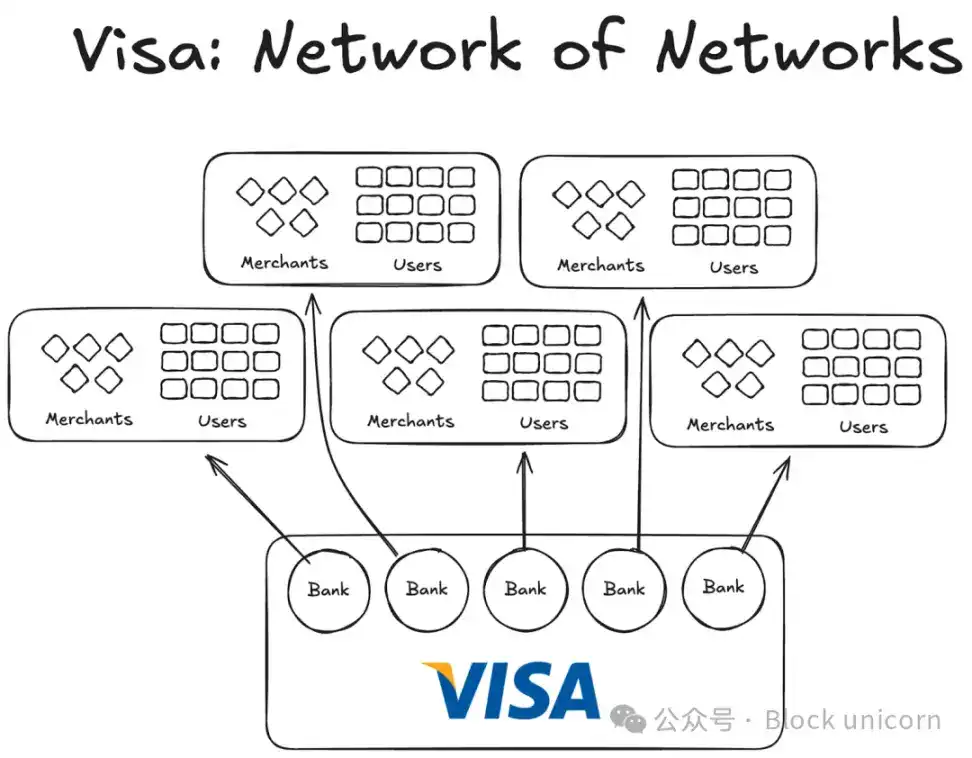
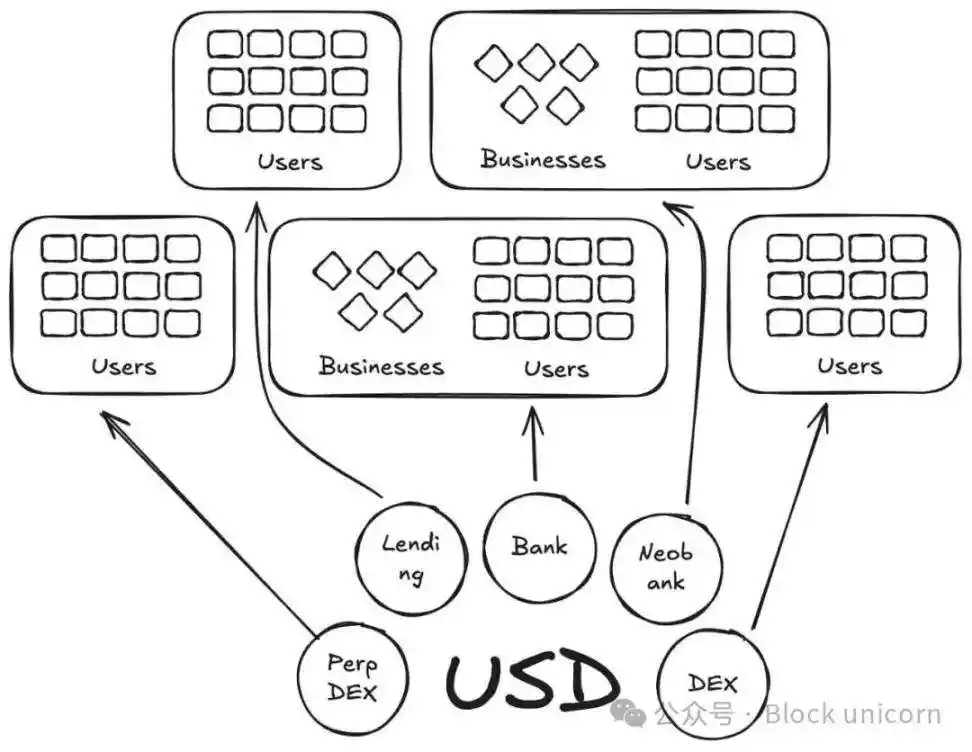
In the 1960s, the credit card industry was fragmented networks with limited interoperability. Visa succeeded not just through technology, but by creating a cooperative structure that unified banks under a shared network, aligning incentives, distributing ownership, and enabling compound network effects. It operated as a neutral third party, granted members profit shares and governance rights, and enforced exclusivity to consolidate growth. Today, stablecoins face a similar fragmentation issue, with over 300 stablecoins listed on Defillama, each confined to its own ecosystem, limiting network effects and liquidity. Services like Anchorage Digital and Ethena enable new issuers to create stablecoins, but this exacerbates fragmentation rather than solving it. The solution lies in adopting a Visa-like model: a neutral, cooperative structure where issuers and protocols unite under a single stablecoin standard. Members would share reserve yields and participate in governance, fostering widespread adoption and retaining value within the network instead of fragmenting liquidity. This approach could drive the mainstream integration stablecoins need.

Original Author: Nishil Jain

Original Compilation: Block unicorn

Preface

In the 1960s, the credit card industry was in chaos. Banks across the United States were trying to establish their own payment networks, but each network operated independently. If you held a Bank of America credit card, you could only use it at merchants that had a cooperation agreement with Bank of America. And when banks tried to expand their business to other banks, all credit card payments encountered the problem of inter-bank settlement.

If a merchant accepted a card issued by another bank, the transaction had to be settled through its original check settlement system. The more banks that joined, the more settlement problems arose.

Then Visa emerged. Although the technology it introduced undoubtedly played a huge role in the bank card payment revolution, the more important key to its success was its global universality and its success in getting global banks to join its network. Today, almost every bank in the world has become a member of the Visa network.

While this seems very normal today, imagine trying to convince the first thousand banks, both inside and outside the United States, that joining a cooperation agreement instead of building their own network was a wise move, and you begin to realize the scale of this endeavor.

By 1980, Visa had become the dominant payment network, processing about 60% of credit card transactions in the United States. Currently, Visa operates in more than 200 countries.

The key was not more advanced technology or more capital, but structure: a model that could coordinate incentives, decentralize ownership, and create compound network effects.

Today, stablecoins face the same fragmentation problem. And the solution may be exactly the same as what Visa did fifty years ago.

Pre-Visa Experiments

Other companies that appeared before Visa failed to develop.

American Express (AMEX) tried to expand its credit card business as an independent bank, but its scale expansion was limited to continuously adding new merchants to its bank network. On the other hand, BankAmericard was different; Bank of America owned its credit card network, and other banks only leveraged its network effects and brand value.

American Express had to approach each merchant and user individually to open their bank accounts; whereas Visa achieved scale by accepting banks itself. Every bank that joined the Visa cooperative network automatically gained thousands of new customers and hundreds of new merchants.

On the other hand, BankAmericard had infrastructure problems. They didn't know how to efficiently settle credit card transactions from one consumer bank account to another merchant bank account. There was no efficient settlement system between them.

The more banks that joined, the worse this problem became. Thus, Visa was born.

The Four Pillars of Visa's Network Effects

From the story of Visa, we learn about 2-3 important factors that led to the accumulation of its network effects:

Visa benefited from its status as an independent third party. To ensure that no bank felt threatened by competition, Visa was designed as a cooperative independent organization. Visa does not participate in competing for the distribution pie; the banks are the ones competing for the pie.

This incentivized the participating banks to strive for a larger share of the profits. Each bank is entitled to a portion of the total profits, proportional to the total transaction volume it processes.

Banks have a say in network functions. Visa's rules and changes must be voted on by all relevant banks and require 80% approval to pass.

Visa had exclusivity clauses with each bank (at least initially); anyone joining the cooperative could only use Visa cards and the network, and could not join other networks—therefore, to interact with a Visa bank, you also needed to be part of its network.

When Visa's founder, Dee Hock, lobbied banks across the United States to join the Visa network, he had to explain to each bank that joining the Visa network was more beneficial than building their own credit card network.

He had to explain that joining Visa meant more users and more merchants would be connected to the same network, which would facilitate more digital transactions globally and bring more benefits to all participants. He also had to explain that if they built their own credit card network, their user base would be very limited.

Implications for Stablecoins

In a sense, Anchorage Digital and other companies now offering stablecoin-as-a-service are replaying the BankAmericard story in the stablecoin space. They provide the underlying infrastructure for new issuers to build stablecoins, while liquidity continues to fragment into new tokens.

Currently, there are over 300 stablecoins listed on Defillama. Moreover, each newly created stablecoin is limited to its own ecosystem. Therefore, no single stablecoin can generate the network effects needed to go mainstream.

Since the same underlying assets back these new coins, why do we need more coins with new code?

In our Visa story, these are like BankAmericards. Ethena, Anchorage Digital, M0, or Bridge—each allows a protocol to issue its own stablecoin, but this only exacerbates industry fragmentation.

Ethena is another similar protocol that allows yield pass-through and white-label customization of its stablecoin. Just like MegaETH issuing USDm—they issued USDm through tools that support USDtb.

However, this model failed. It only fragments the ecosystem.

In the credit card case, the brand differences between banks were not important because it did not create any friction in user-to-merchant payments. The underlying issuance and payment layer was always Visa.

However, for stablecoins, this is not the case. Different token codes mean an infinite number of liquidity pools.

Merchants (or in this case, applications or protocols) will not add all stablecoins issued by M0 or Bridge to their list of accepted stablecoins. They will decide whether to accept them based on the liquidity of these stablecoins in the open market; the coins with the most holders and the strongest liquidity should be accepted, the others will not.

The Way Forward: The Visa Model for Stablecoins

We need independent third-party institutions to manage stablecoins for different asset classes. Issuers and applications supporting these assets should be able to join the cooperative and access reserve earnings. At the same time, they should also have governance rights and be able to vote on the direction of their chosen stablecoin.

From a network effects perspective, this would be a superior model. As more and more issuers and protocols join the same token, it will facilitate the widespread adoption of a token that can retain earnings internally rather than flowing into others' pockets.

Связанные с этим вопросы

QWhat was the main problem with the credit card industry in the 1960s that Visa solved?

AThe main problem was fragmentation, where each bank had its own payment network, leading to interoperability issues and inefficient interbank settlements. Visa created a universal network that allowed banks to cooperate, solving the settlement problems and enabling global scalability.

QHow did Visa's cooperative structure differ from competitors like American Express and BankAmericard?

AVisa acted as an independent third-party cooperative, allowing banks to join without competition fears, share profits proportionally, and have voting rights. In contrast, American Express operated as a standalone bank, and BankAmericard was owned by a single bank with infrastructure limitations.

QWhat is the 'fragmentation problem' facing stablecoins today, as described in the article?

AStablecoins face fragmentation due to the proliferation of numerous stablecoins issued by different protocols (e.g., via services like Ethena or Anchorage Digital), each with its own token code and liquidity pool, preventing network effects and universal adoption.

QHow does the article suggest applying Visa's model to solve stablecoin fragmentation?

AIt proposes an independent third-party cooperative model for stablecoins, where issuers and protocols join a shared network, earn reserve yields, and participate in governance, thereby consolidating liquidity and creating compound network effects for a universally accepted stablecoin.

QWhy did the 'stablecoin as a service' model (e.g., by Anchorage Digital) fail to achieve scalability, according to the article?

AIt failed because it perpetuated fragmentation by creating multiple stablecoins with separate liquidity pools, limiting adoption to their own networks rather than enabling universal acceptance, similar to the pre-Visa BankAmericard issue.

Похожее

Has Hook Summer Really Arrived? sato, Lo0p, FLOOD Ignite the New Narrative of Uniswap v4

"Hook Summer" Arrives? Sato, Lo0p, FLOOD Ignite Uniswap v4 Narrative Amidst a slight market recovery, attention within the Ethereum ecosystem has shifted to Meme coins built on Uniswap v4's Hook protocol. Following ASTEROID, tokens like sato, sat1, Lo0p, and FLOOD have become market focal points, with market caps ranging from millions to tens of millions, bringing concentrated liquidity to a narrative-dry market. Uniswap v4 Hooks are "plugin smart contracts" that allow developers to inject custom logic at key points in a liquidity pool's lifecycle (initialization, adding/removing liquidity, swaps, etc.), making the AMM programmable. Recent representative projects include: * **sato**: Market cap peaked over $38M; uses a v4 curve mechanism for minting/burning, locking ETH as reserve. * **sat1**: Market cap briefly exceeded $10M, positioning as an "optimized sato," but later declined significantly. * **Lo0p**: Market cap neared $6.6M; a "lending AMM protocol" allowing users to borrow ETH against deposited LO0P tokens without immediate selling pressure. * **FLOOD**: Market cap approached $6M; channels trading reserves into Aave v3 to generate yield, which is retained in the pool. The emergence of these Hook-based tokens could drive long-term growth for the Uniswap ecosystem by attracting users and liquidity to v4 pools. Combined with Uniswap's activated fee switch (partially used to burn UNI), the long-term outlook for UNI appears positive. However, short-term UNI price appreciation is not directly guaranteed. Factors include the sustainability and lifecycle of these new tokens, their price volatility, overall market conditions, and regulatory pressures. Currently, Uniswap v4's TVL ($595M) lags behind v3 and v2, indicating Hook adoption still requires time to mature. In summary, the Hook ecosystem serves as "long-term nourishment" for UNI, but acts more as a "catalyst" than a direct "booster" in the short term. Note: These are early-stage experimental tokens and may carry unknown risks.

marsbit3 мин. назад

Has Hook Summer Really Arrived? sato, Lo0p, FLOOD Ignite the New Narrative of Uniswap v4

marsbit3 мин. назад

Has Hook Summer Truly Arrived? sato, Lo0p, FLOOD Ignite the New Uniswap v4 Narrative

With the broader market showing signs of recovery, a new wave of interest has emerged around Ethereum-based meme coins. Following ASTEROID, tokens like sato, sat1, Lo0p, and FLOOD, built upon the Uniswap v4 Hook protocol, are capturing market attention. Their market capitalizations range from millions to tens of millions of dollars, injecting much-needed focused liquidity into a market lacking narratives. This article explores whether this trend signifies an incoming "Hook Summer" and its potential impact on UNI's price. Hooks are essentially plug-in smart contracts for Uniswap v4 liquidity pools, allowing developers to inject custom logic at key points in a pool's lifecycle (like initialization, adding/removing liquidity, swaps). This transforms the AMM into programmable building blocks. Key highlighted projects include: * **sato**: Peaked over $38M market cap. It utilizes a v4 curve for minting/burning; buying locks ETH as reserve to mint new tokens, while selling redeems ETH from the reserve and burns tokens. * **sat1**: Market cap briefly exceeded $10M, promoted as an "optimized sato," but later declined significantly. * **Lo0p**: Reached nearly $6.6M. It's a lending AMM protocol where buying LO0P tokens locks them as collateral, allowing users to borrow ETH from the pool reserve at 40% LTV, aiming to improve capital efficiency for idle ETH in LPs. * **FLOOD**: Peaked near $6M. Its mechanism directs asset reserves from buys into Aave v3 to generate yield, with fees and interest retained in the pool to potentially influence the token's price long-term. In the long term, the development of the Hook ecosystem can attract users and liquidity to Uniswap v4, benefiting UNI's fundamentals—especially combined with the recent activation of the protocol fee switch, where a portion of fees is used to burn UNI. However, in the short term, these Hook-based tokens are unlikely to directly drive significant UNI price appreciation. Their impact is moderated by factors like token sustainability, price volatility, and broader market and regulatory conditions. Currently, Uniswap v4's TVL ($595M) still trails behind v2 and v3, indicating adoption and growth will take time. The article concludes that while the Hook ecosystem provides long-term "nourishment" for UNI, its short-term role is more of a "catalyst" than a "booster." Readers are cautioned that these are early-stage experimental tokens and may carry unknown risks.

Odaily星球日报16 мин. назад

Has Hook Summer Truly Arrived? sato, Lo0p, FLOOD Ignite the New Uniswap v4 Narrative

Odaily星球日报16 мин. назад

Interview with Michael Saylor: I Did Say I Would Sell Bitcoin, But Never a Net Sale

Interview with Michael Saylor: I Said We'd Sell Bitcoin, But Never Be a Net Seller In a recent podcast, MicroStrategy Executive Chairman Michael Saylor clarified the company's stance on potentially selling Bitcoin. Following MicroStrategy's earnings call statement about being prepared to sell BTC to fund dividends for its STRC (Strategic) credit product, Saylor emphasized the distinction between selling and being a "net seller." Saylor explained the core business model: MicroStrategy sells credit instruments like STRC and uses the proceeds to buy Bitcoin, which is viewed as "digital capital" expected to appreciate around 30-40% annually. A portion of these capital gains can then be used to pay the dividends on the credit products. He stressed that even if the company sells some Bitcoin for dividends, it simultaneously buys much more with new credit issuance. For example, after raising $3.2 billion from STRC sales in April, the dividend obligation was only $80-90 million, making the company a net buyer. The clarification aims to counter market narratives questioning the value of Bitcoin on MicroStrategy's balance sheet if it were never sold, and to dismiss claims of a "Ponzi scheme." Saylor reiterated his personal philosophy for investors: "Don't be a net seller of bitcoin" and ensure your Bitcoin holdings increase each year. Saylor also discussed Bitcoin's role as the foundation for "digital credit," noting that STRC has become the largest and most liquid preferred stock issue in the U.S., offering high risk-adjusted returns (Sharpe ratio). He highlighted Bitcoin's deep liquidity, stating that even large purchases by MicroStrategy do not move the market significantly, which is driven by macro factors, geopolitical tensions, and capital flows from ETFs and credit products. Finally, Saylor reflected on his early inspiration from sci-fi books, which motivated his path to MIT, and maintained his fundamental thesis on Bitcoin remains unchanged: it is superior digital capital enabling superior digital credit.

链捕手20 мин. назад

Interview with Michael Saylor: I Did Say I Would Sell Bitcoin, But Never a Net Sale

链捕手20 мин. назад

Beaten SK Hynix Employees in China: Year-end Bonus Less Than 5% of Korean Staff's

"SK Hynix Chinese Staff Hit Hard: Bonuses Less Than 5% of Korean Counterparts" Driven by the AI boom, South Korea's SK Hynix is experiencing record performance, with media reports predicting massive year-end bonuses for its employees, making them highly desirable in the matchmaking market. However, this prosperity starkly contrasts with the situation for the company's Chinese employees. According to reports, SK Hynix operates under a rule allocating 10% of operating profit for employee bonuses. While projections suggest Korean employees could receive bonuses reaching millions of RMB, a Chinese employee with over a decade of technical experience revealed the disparity: "If they get 3 million, Chinese staff get less than 5% of that." After adjustments based on KPI ratings, this employee's highest bonus was slightly over 100,000 RMB. Bonuses are paid annually in Korea but semi-annually in China. During the industry downturn in 2023-2024, Chinese employees received no bonus at all. The gap extends beyond bonuses. Recruitment posts for SK Hynix's Chinese factories (in Wuxi, Dalian, Chongqing) show engineer monthly salaries ranging from 10,000 to 35,000 RMB, with a 13th-month salary promised. Chinese employees also receive standard benefits like annual leave but lack stock incentives, which are reportedly unavailable to them. Furthermore, management positions in China are predominantly held by Korean personnel, though industry observers note a gradual increase in local middle managers over time. SK Hynix has confirmed the 10% bonus rule but cautioned that specific future bonus amounts remain unpredictable. The company forecasts strong demand for HBM and other high-value enterprise products for the next 2-3 years, driven by AI infrastructure investment. This focus on business-to-business markets may continue to constrain supply for consumer products, potentially prolonging price increases for components like memory.

链捕手33 мин. назад

Beaten SK Hynix Employees in China: Year-end Bonus Less Than 5% of Korean Staff's

链捕手33 мин. назад

Торговля

Спот
Фьючерсы
活动图片