Author: darkzodchi, Crypto KOL
Compiled by: Felix, PANews
There are many highly educated and intelligent people in the financial markets, but only a minority make money, and a significant portion of them are not highly educated. They have learned a lot of theory but cannot make money. What causes this "anomaly"? Based on personal experience and research, crypto KOL darkzodchi analyzed this phenomenon and proposed five common cognitive mistakes made by smart people. Details below.
I know someone who can mentally solve differential equations. He graduated with top honors and works at a top tech company you've definitely heard of, earning $180,000 a year. But his net worth is essentially zero. If you factor in his car loan, it might even be negative.
In stark contrast, most of my friends dropped out of school before they were 20, fully devoting themselves to entrepreneurship or trading, and now earn more than those with finance degrees. Half of them don't even understand basic economic terms; they just know when to act.
What's going on here?
I've seen this countless times: strategists almost never act. Have you ever wondered why university professors don't drive Ferraris? Because they know *how* to act in theory, but don't know *what* to do in practice.
Let's talk about 5 math mistakes that specifically plague smart people, and a "foolproof" solution for each.
Mistake 1: Pursuing Precision While Ignoring the Importance of Action
Smart people love pursuing absolutely correct answers. This pursuit is rewarded in school: on a math test, 97% accuracy is far worse than 100%.
But in the world of money? 97% accuracy achieved next month is far less valuable than 70% accuracy right now.
I watched a friend spend two years building a "perfect" liquidity provision project; he even raised funds for it. He used custom metrics and ran backtests spanning 15 years, covering three different volatility environments. Honestly, it was a remarkable piece of work.
But by the time he launched, the market environment had changed. His model was tailored for a market that no longer existed. Meanwhile, some unknown person on CT forums made $80,000 with three simple lines of heuristic code—"buy when funding rate is negative, sell when positive"—while my friend was still struggling.
There's actually a formula for this called the Value of Information (VoI), which tells you when more research is worth it:
VoI = EV(Decision with more info) - EV(Decision now) - Cost of Delay
If VoI < 0, stop researching and act immediately.
The cost of delay is something smart people consistently underestimate. They think it's zero because doing research "feels productive." It's not. Markets move, opportunities vanish, capital sits idle.
I've personally fallen for this. In August 2025, I spent a month thinking about how to structure a Polymarket project, trying to devise an extremely complex scheme, until I completely forgot about it.
By October, I switched my mindset and started coding daily. By November, the project was live.
I wasted more time "thinking about the idea" than actually creating it. Classic self-sabotage.
The Fix: Set a deadline *before* you start researching. "No matter how much information I have, I will decide by Friday." This single habit is more valuable than any formula.
Mistake 2: Finding Patterns in Noise (And Betting on Them)
This is a big one, and it's unique to smart people.
If you're smart, your brain is like a pattern recognition machine. This ability got you great grades and a dream job. You see structure where others see chaos.
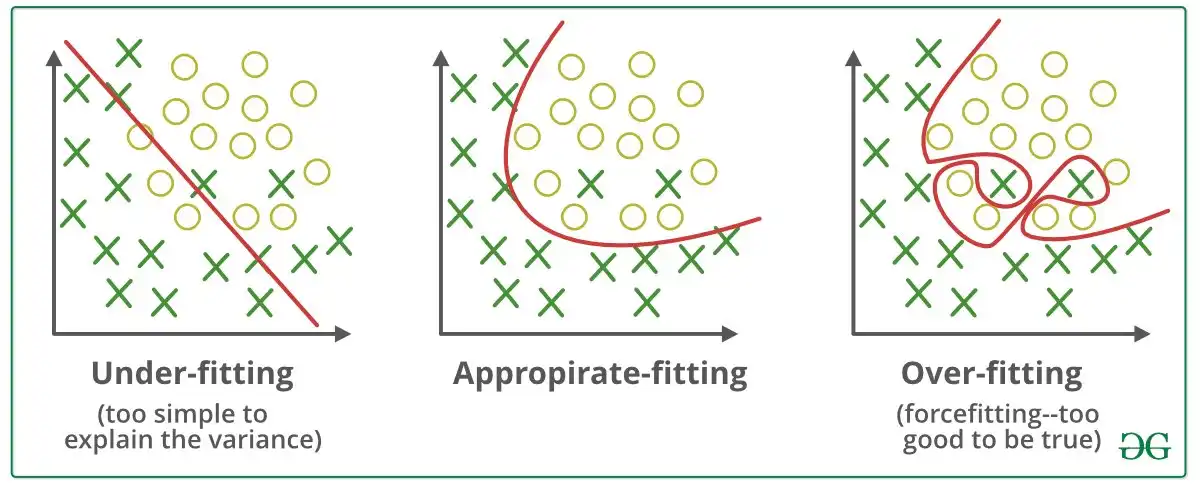
The problem: Financial markets are mostly chaos. Your amazing pattern-matching brain will find patterns that aren't there. Then it will convince you they are real, you'll bet, and you'll lose.
This is called "overfitting." Here's an example of how it works.
Take any random dataset: stock prices, temperature readings, anything. Run enough combinations of indicators, and you *will* find a formula that "predicts" the past with 95% accuracy. It looks amazing in backtests. But it's garbage; it found a pattern in the noise.
Overfitting Test:
- If your model has N parameters and you tested K combinations:
- Expected number of false discoveries = K × Significance level
- Testing 100 indicators at p < 0.05 yields 5 "significant" results that are pure noise.
I fell for this hard. In 2022, I found a "pattern" in ETH that held for 3 months of data. Something about the Binance/Coinbase volume ratio. The backtest looked bulletproof, I got excited, and immediately put $2,000 into it.
Lost $400 the first week. The pattern was noise. I wasn't smart enough to realize that *being able to find it* was the problem.
The data from Polymarket confirms this powerfully. When I analyzed 112,000 wallets, those running the most complex strategies (10+ signals, fancy ML models) actually performed *worse* than those using just 2-3 simple rules. More complexity = more overfitting = more losses.
The Fix: Before believing any pattern, ask: "If I tested 100 random strategies, how many would look this good by pure luck?" If the answer is more than 1 or 2, your "discovery" is likely noise. The Bonferroni correction helps: divide your significance threshold by the number of strategies you tested.
Mistake 3: Diversifying When You Should Concentrate (And Vice Versa)
This one hits close to home, as I was running five different projects simultaneously a few years ago, and they all failed.
Every smart person knows "don't put all your eggs in one basket." It's like the first rule of finance: diversify. Modern Portfolio Theory, Markowitz, Nobel Prize.
Yet... the actual math reveals something more nuanced that most people miss.
Diversification protects you *when you have no edge*. If you're picking stocks randomly, sure, diversify. You don't actually know what will happen.
But when you actually have an edge (a genuinely mispriced opportunity), diversification *harms* your returns. You dilute your best idea with mediocre ones.
- Kelly Criterion for Concentration: f* = Edge / Odds
- If your edge is 15%, odds are 1:1: f* = 0.15 / 1.0 = 15% of bankroll
- If your edge is 3%: f* = 0.03 / 1.0 = 3% of bankroll
This formula literally says: bigger edge, bigger bet; smaller edge, smaller bet. It does NOT say "spread your capital equally across 47 positions."
Warren Buffett (who is quite good at this) has said repeatedly that diversification is protection against ignorance. If you know what you're doing, it makes no sense.
I used to hold 5-10 different tokens during the SOL and BSC booms. The best performer went up 120%, but it was only 4% of my portfolio, netting me about $80 total. Meanwhile, my largest holding dropped 40%.
And the top Polymarket wallets I studied? They only have 3-5 positions open at any time, max, but each position is sized according to its edge.
The Fix: Ask yourself honestly: Do I have an edge in this trade? If yes, size up (within Kelly limits). If no, either skip it entirely or index. The "a little bit of everything" compromise is the graveyard of returns.

Mistake 4: Anchoring to Irrelevant Numbers
Smart people are especially susceptible to anchoring because they remember numbers, and remembered numbers become subconscious reference points for all future decisions.
"I bought ETH at $4800."
So what? The market doesn't care. That number is completely, utterly, 100% irrelevant to whether ETH is a good buy today. But your brain has welded $4800 to your self-esteem. Now, every price below feels like a "loss," every price above feels like "breaking even."
This isn't just a feeling. It measurably changes your behavior:
- You hold losing positions too long (waiting to "break even")
- You sell winning positions too early (fear of giving back profits).
- You evaluate new opportunities based on past prices, not future value.
There's a very simple test for this. Daniel Kahneman calls it "Would I buy it today?"
- You hold an asset, current price P.
- You bought it at price P_0.
- Ignore P_0 completely; it's a sunk cost.
Question: If you had cash right now, would you buy this asset at price P?
- If yes → Hold
- If no → Sell
- If unsure → Your position is too large
I had to write this on a sticky note on my monitor: "Would I buy it today?" Because even knowing the bias, I'd still think, "But I'm only down 20%, let's wait for a bounce." Anchoring is that powerful.
This applies beyond trading. Salary negotiation? If you make $90k now, you anchor on that and ask for $100k. But the market rate for your role might be $130k. You're literally negotiating against yourself using an irrelevant anchor. Changing jobs? "I've been here 4 years." So what? The question is whether the next four years are better spent here or elsewhere. The past four are sunk regardless.
The Fix: Before any financial decision, write down the numbers influencing you. Then ask: "Is this number actually relevant to future outcomes, or am I just anchored to the past?" If it's the past, cross it out (literally, with a pen).
Mistake 5: Mistaking Understanding for Action
This is the cruelest one. Honestly, it's my biggest weakness too.
Smart people read about compound interest and nod along. They understand the Kelly Criterion, they can explain loss aversion at dinner parties, they've read *Thinking, Fast and Slow* (or at least the summary).
Then they think understanding equals action. It doesn't. Not even close.
Understanding compounding doesn't mean you're investing. Understanding Kelly doesn't mean you're sizing correctly. Understanding loss aversion doesn't mean you're immune to it.
There's research on this. It's called the "knowledge-action gap," and it's huge. One study found almost no correlation between financial literacy scores and actual financial outcomes. People scoring 95 on a financial literacy test were just as likely to carry credit card debt as those scoring 50.
Financial Outcome = Knowledge × Action × Consistency
No matter how vast the knowledge, if action is zero, the result is zero.
The formula is obvious, but smart people get stuck on the first term. They keep accumulating knowledge: one more book, one more course, one more podcast. Because learning feels safe and secure. Action feels risky and uncomfortable.
I know because I lived it. I read three books on investing before making my first trade. I could explain the Efficient Market Hypothesis, factor investing, options pricing—all of it. My first live trade? I panicked and lost 12% in three days. All that knowledge, and emotion still ruled everything.
You know what finally helped me? I was literally on the basketball court, pulled out my phone, and put $50 on a Polymarket bet, purely to try it. Not $5000, just $50. The stakes were low, real money was on the line, almost no chance to win—but I just wanted to feel what it was like to have skin in the game.
Suddenly, those probability formulas weren't abstract. They were tied to my money. That $50 bet taught me more about my biases than 11 books combined.

The Fix: After reading this, do *one* thing. Not five things. One thing. Place a small bet, calculate an expected value, test a hypothesis. The gap between knowing and doing is bridged by tiny acts of doing.
Why This Matters More Than You Think
What bothers me most about all this: These 5 mistakes aren't from being "stupid," but from being "smart in the wrong way." School trains us to be meticulous, precise, knowledgeable. The market rewards being fast, roughly right, and taking action.
The rules of the game changed, and nobody told us.
The good news is, once you see these traps, you can't unsee them. Every time you find yourself spending 3 hours researching a $200 decision—that's Mistake #1. Every time you find an exciting "pattern" in a crypto chart—that's Mistake #2. Every time you spread your capital across 20 positions because "diversification"—that's Mistake #3.
The smartest thing a smart person can do is get a little "dumber." Simpler strategies, fewer positions, faster decisions. Less research, more action.
The math supports it, the 112,000 wallets I studied prove it, the books prove it, my own expensive mistakes prove it.
Now stop reading and go do something.
Related reading: Must-Read for Beginners: Senior Trader Shares Five Trading "Secrets"