Author: Aleiah
Compiled by: Asher
Original title: How to Systematically Track High-Win-Rate Addresses on Polymarket?
An address on Polymarket rolled $35,000 into $442,000, achieving a 12.6x return. Notably, the position was established hours before a major market movement, with the trade largely completed and cashed out before the news spread to mainstream channels. This is not an isolated incident; before the news of the "Venezuela Raid" political event became public, three addresses made early moves and collectively profited $630,000 from the same event.
If such trading occurred in traditional financial markets, one might easily think of information asymmetry. But in prediction markets, all fund flows and position changes are recorded on the public blockchain—there are no hidden accounts or private transactions.
Public does not mean without gaps. The key is not whether the trades can be seen, but whether one can discern the truly informative signals from the vast amount of data.
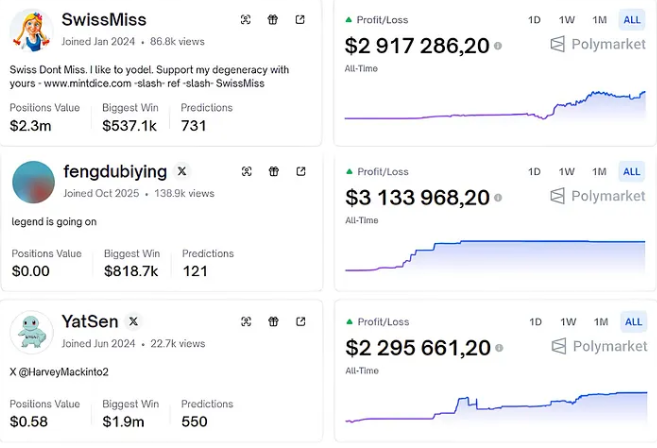
Every Trade on Polymarket is Public Data
Many prediction market participants still view Polymarket as a traditional betting platform: watch the odds, choose a direction, and bet on the outcome. But Polymarket's underlying structure is completely different from DraftKings or ordinary sports betting. All transactions occur on-chain; fund flows, position sizes, and entry/exit times are all publicly viewable. The operational paths of the most accurate and timely addresses are not post-hoc speculation but real-time on-chain records.
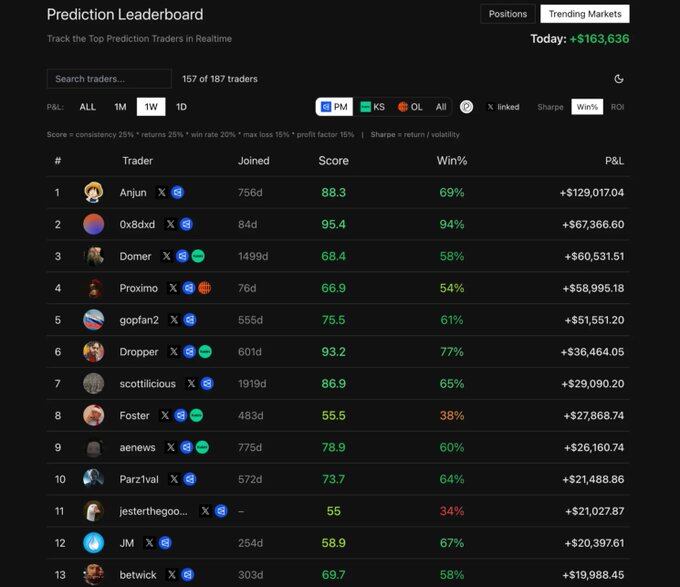
Polymarket's API is also open. Transaction records, market data, historical trades—anyone can directly call it; there is no permission barrier.
Therefore, the gap is not about who can see the data, but about who can extract meaning from it. On-chain information is public, but what is truly valuable are the wallets worth tracking continuously and the ability to recognize behavioral changes before prices fully reflect them.
What Characteristics Do True "Insider Addresses" Typically Have?
It is important to emphasize that not all profitable wallets imply insider information. Some traders have solid research capabilities, while others rely on quantitative models and algorithmic advantages. But when profitability is repeatedly combined with specific behavioral patterns, one can observe structural features that distinguish them from "luck."
First Type: New Addresses Combined with Unusually Large Bets
A wallet created just days ago, with very few transactions, suddenly invests a large amount of capital in a low-liquidity niche market—this behavior is not common. Especially in the absence of public catalysts, large, concentrated positions often carry stronger informational significance.
Second Type: Highly Vertical Trading Focus
Some addresses do not operate across markets but focus long-term on a specific niche, maintaining a stable and significant win rate in that area. They do not diversify across crypto prices, elections, sports, and other sectors but concentrate their firepower on a single theme, with more decisive position decisions.
Third Type: Abnormal Changes in Position Size
When an address that has been betting medium-sized amounts for a long time suddenly significantly increases its position in a certain market, this behavior often indicates a change in the strength of conviction. Position size itself is an attitude; a sudden change in scale usually reflects an upgrade in information or belief.
Fourth Type: Excessively Precise Timing
Occasional early moves can be attributed to coincidence, but if an address repeatedly completes position building hours before major news announcements, with highly consistent direction, such timing lead is difficult to simply explain as luck. Once is random; repeated occurrences are more likely to reflect an information advantage.
How to Systematically Screen for Potential "Information-Advantaged Addresses"
Step 1: Analyze Polymarket Leaderboard Performance
Start with the Polymarket Analytics leaderboard (link: https://polymarketanalytics.com/traders), sorted by 30-day P&L, using recent stable profitability as the first filter. Focus on wallet addresses with overall positive returns for 30 consecutive days, a win rate above 55%, and total profits significantly higher than total losses. Also, confirm that their trading is concentrated in markets with real liquidity, not low-volume prediction events with little participation.
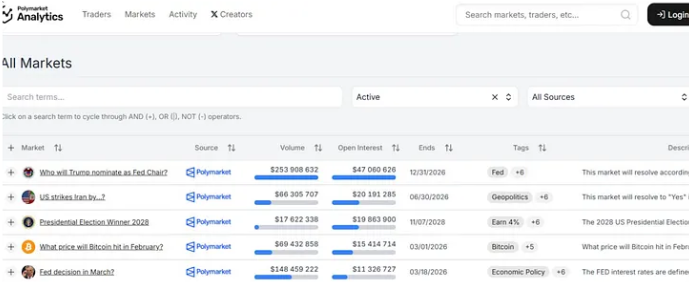
The goal at this stage is not to directly judge whether they have an information advantage, but to establish a watchlist of addresses with sustained profitability. A stable profit record is the foundation for subsequent behavioral analysis.
Step 2: Analyze Position Structure in Specific Events
After the initial screening, drill down into specific trading events. Enter active prediction markets and check the Top Holders list for that event. Polymarket publicly displays the addresses with the largest current positions; these large positions often represent stronger conviction.
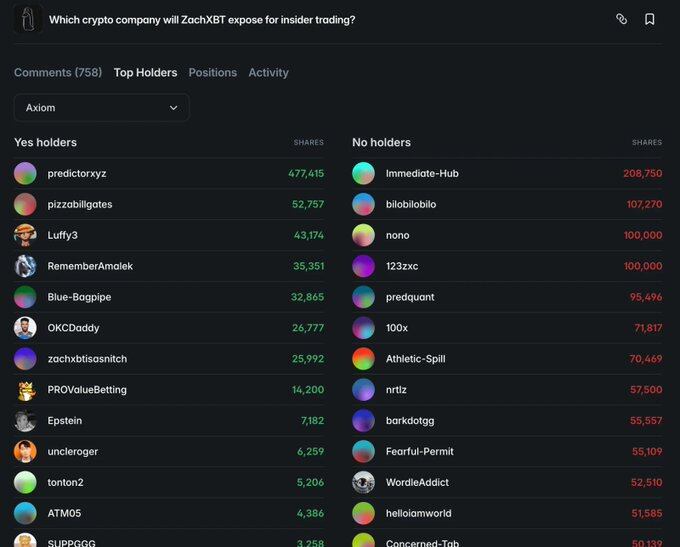
The key is not whether an address hits a single large bet, but whether its behavior is sustained. If a wallet repeatedly appears in the top holder lists of multiple important events, and these positions are built before the market has fully priced them in, then this repetition itself constitutes a signal.
A single successful bet might be偶然, but repeatedly making large, early-stage positions with consistent direction and validated outcomes often indicates a stable advantage in their judgment system.
Step 3: Analyze Trading Behavior and Position Timing
After identifying candidate addresses, further回溯 their on-chain transaction history, focusing on entry timing, position structure, and holding rhythm.
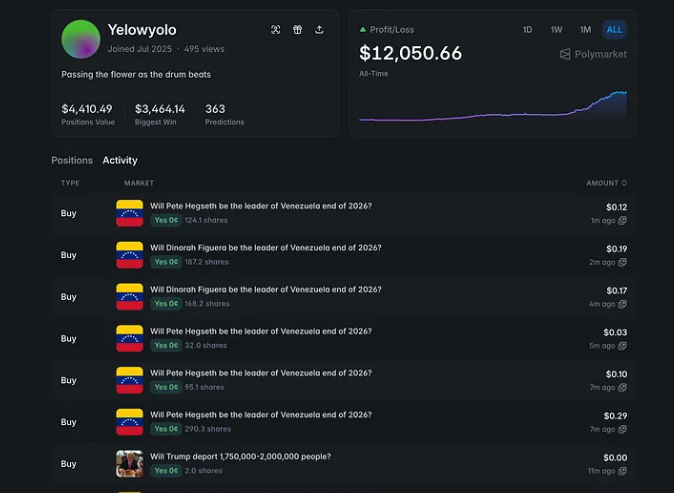
First, observe the entry time. If the purchase occurs hours before the official news release and repeats multiple times, the timing advantage itself becomes an important variable; entering after media reports is more likely to be just information following.
Second, analyze the position building method. Mature traders typically build positions in batches and add gradually, while wallets with strong information judgment often complete concentrated布局 quickly in a short time because their window is limited.
Third, pay attention to the holding period. Some high-quality addresses choose to exit during the mid-stage of行情发酵, rather than waiting for the tail end of extreme volatility, indicating their goal is to lock in the main trend rather than gamble on marginal profits.
Finally, observe their trading scope. Addresses that are highly vertical and long-term focused on a single niche are more likely to form stable information advantages; addresses that frequently operate across sectors are more likely to rely on market sentiment rather than specific domain judgment.
Advanced Address Tracking Strategies
After mastering the basic screening methods, what truly makes the difference is the further decomposition of details in fund behavior.
First, focus on exit behavior, not just entry timing. Addresses with information advantages often not only enter early but also actively reduce positions before potential negative news emerges. When a large address with long-term stable holdings suddenly significantly reduces its position without obvious catalysts, the information content is often higher than the initial buying behavior. Especially when the reduction reaches a significant proportion, this change itself is a signal.
Second, perform wallet clustering analysis using on-chain data. The relationships between addresses are not completely untraceable. Identical funding sources, similar Gas usage patterns, and transactions occurring consecutively within a very short time may reveal relationships between addresses. Many seemingly "brand new" accounts can often be traced back to a long-active old address through 2-3 fund transfers. Tracking along the fund flow path helps identify new potential high-quality accounts before the market notices.
Additionally, pay attention to abnormal volume changes in冷门 markets. If a market with usually small daily trading volume suddenly experiences significant fund inflows without public news, this structural volume increase often means some participants have already acted early. Analyzing the specific addresses driving the volume change can help build a new watchlist.
Finally, cross-verify on-chain behavior with external public information. The so-called "Pizza Index" once used abnormal order volume changes at pizza shops near the Pentagon to speculate on potential military actions. Similarly, flight tracking data, social media activity of key figures, public schedule adjustments, and other information can provide corroboration or反向验证 for on-chain position behavior. The联动 between on-chain fund flows and real-world signals can often strengthen the reliability of judgment.
Twitter:https://twitter.com/BitpushNewsCN
Bitpush TG Discussion Group:https://t.me/BitPushCommunity
Bitpush TG Subscription: https://t.me/bitpush