Автор: Ryan Yoon
Компиляция: Deep Tide TechFlow
Введение Deep Tide: Рынок вступает в нисходящий цикл, и сомнения в отношении крипторынка растут. Tiger Research считает, что на этот раз все иначе: прошлые зимы были вызваны внутренними проблемами (взлом Mt. Gox, мошенничество с ICO, крах FTX), тогда как нынешний рост и падение движутся внешними факторами (бычий рынок из-за одобрения ETF, падение из-за тарифной политики и процентных ставок).
После регулирования рынок разделился на три уровня: регулируемый, нерегулируемый и общая инфраструктура; капитал больше не течет, как раньше, по принципу «эффекта просачивания». Деньги ETF остаются в биткоине и не перетекают в альткоины.
Для следующего бычьего рынка необходимо два условия: появление убийственного приложения в нерегулируемом сегменте + благоприятная макросреда.
Полный текст ниже:
По мере того как рынок вступает в нисходящий цикл, сомнения в отношении крипторынка растут. Сейчас вопрос в том, не вошли ли мы уже в криптозиму.
Ключевые моменты
- Криптозима следует последовательности: значительное событие → крах доверия → утечка талантов
- Прошлые зимы были вызваны внутренними проблемами; текущие взлеты и падения вызваны внешними факторами; ни зима, ни весна
- После регулирования рынок разделился на три уровня: регулируемый, нерегулируемый, общая инфраструктура; эффект просачивания исчез
- Деньги ETF остаются в биткоине; не выходят за пределы регулируемой зоны
- Следующему бычьему рынку нужно убийственное применение + поддерживающая макросреда
1. Как развивались предыдущие криптозимы?
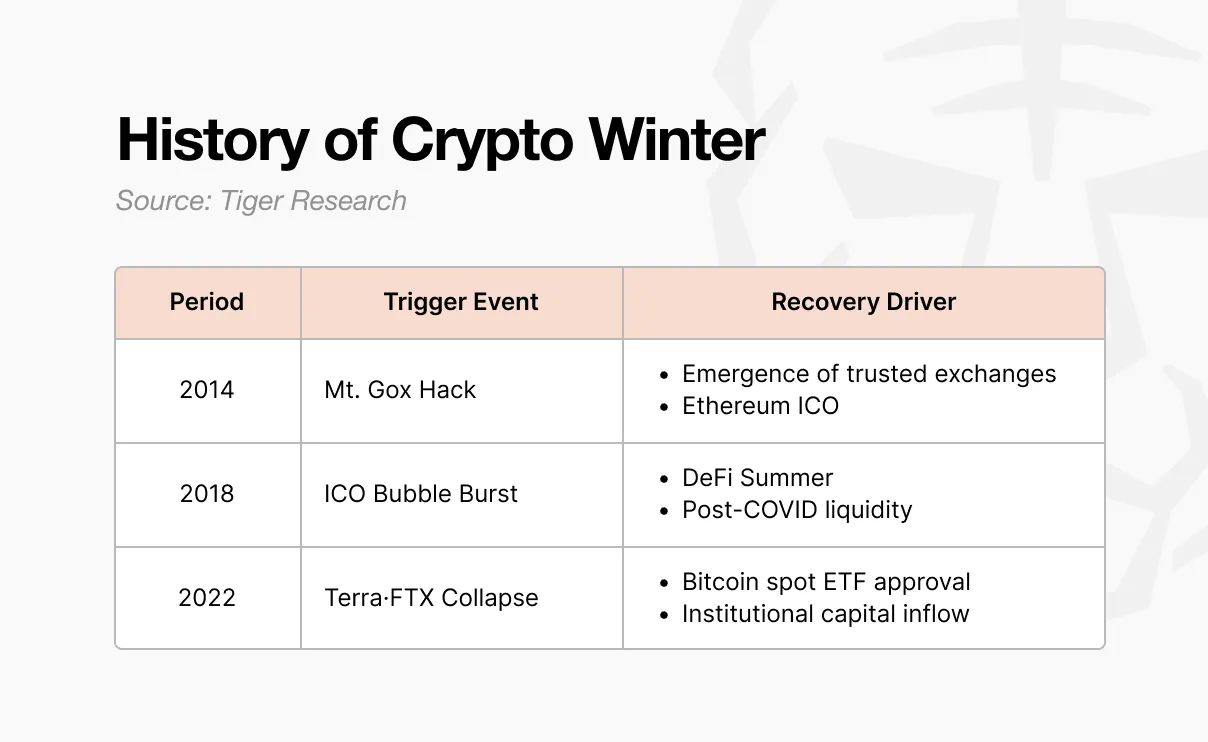
Первая зима случилась в 2014 году. Mt. Gox была биржей, на которую приходилось 70% мирового объема биткоин-трейдинга. Около 850 000 BTC исчезли в результате хакерской атаки, доверие рынка рухнуло. Появились новые биржи с функциями внутреннего контроля и аудита, доверие начало восстанавливаться. Ethereum также вышел на сцену через ICO, открыв новые возможности для видения и способов финансирования.
Эти ICO стали спусковым крючком для следующего бычьего рынка. Когда любой мог выпустить токен и привлечь средства, начался бум 2017 года. Хлынули проекты, привлекали сотни миллионов лишь с белой бумагой, но большинство из них не имели substance.
В 2018 году Южная Корея, Китай и США обрушили регулирующие меры, пузырь лопнул, наступила вторая зима. Эта зима длилась до 2020 года. После COVID пришла ликвидность, внимание привлекли DeFi-протоколы, такие как Uniswap, Compound и Aave, капитал вернулся.
Третья зима была самой суровой. Когда в 2022 году рухнула Terra-Luna, последовательно обанкротились Celsius, Three Arrows Capital и FTX. Это было не просто падение цен; пошатнулась сама структура индустрии. В январе 2024 года американская SEC одобрила спотовый биткоин-ETF, затем последовали халвинг биткоина и прокриптовая политика Трампа, деньги снова потекли.
2. Модель криптозимы: Значительное событие → Крах доверия → Утечка талантов
Все три зимы следовали одной и той же последовательности. Происходит значительное событие, доверие рушится, таланты уходят.
Всегда начинается со значительного события. Взлом Mt. Gox, регулирование ICO, банкротство FTX после краха Terra-Luna. Масштаб и форма каждого события разные, но результат одинаков. Весь рынок в шоке.
Шок быстро перерастает в крах доверия. Те, кто обсуждал, что строить дальше, начинают сомневаться, является ли криптовалюта действительно значимой технологией. Атмосфера сотрудничества среди строителей исчезает, они начинают обвинять друг друга, кто виноват.
Сомнения ведут к утечке талантов. Строители, создававшие новую динамику в блокчейне, погружаются в сомнения. В 2014 году они ушли в финтех и крупные tech-компании. В 2018 году — в институциональный сектор и AI. Они уходили туда, где казалось более определенно.
3. Сейчас криптозима?
Модель прошлых криптозим видна и сегодня.
- Значительное событие:
- Тарифная политика Трампа вызвала волатильность рынка
- Изменение политики ФРС по процентным ставкам
- Общее падение крипторынка
- Крах доверия: В индустрии распространяются сомнения. Фокус сместился с того, что строить дальше, к взаимным обвинениям.
- Давление утечки талантов: AI-индустрия быстро растет. Сулит более быстрые выходы и большее богатство, чем крипто.
Однако, трудно назвать это криптозимой. Прошлые зимы взрывались изнутри индустрии. Mt. Gox взломали, большинство ICO-проектов оказались мошенническими, FTX рухнул. Индустрия сама потеряла доверие.
Сейчас все иначе.
Одобрение ETF запустило бычий рынок, тарифная политика и ставки подтолкнули падение. Внешние факторы подняли рынок, внешние факторы же и опустили его.
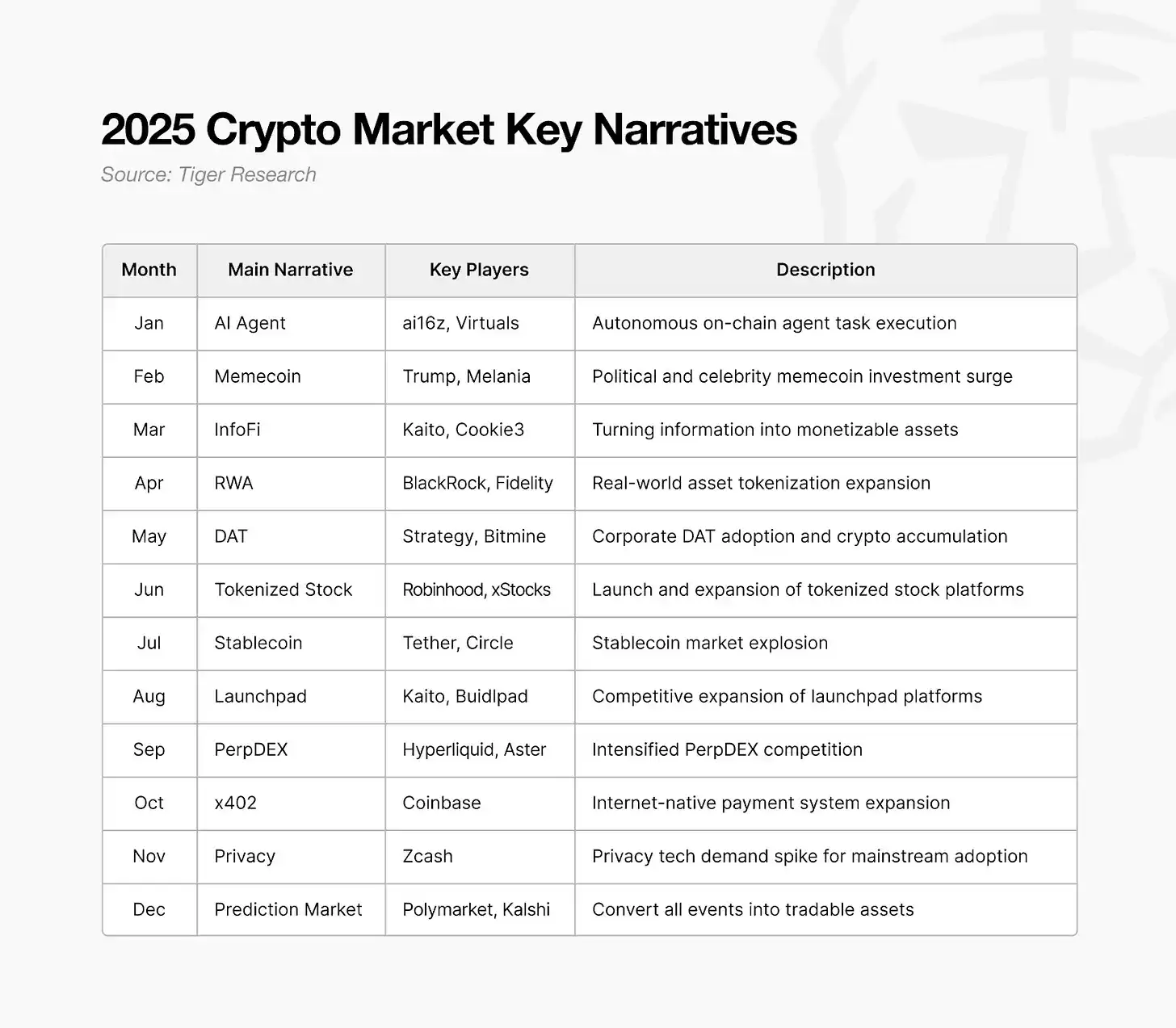
Строители также не уходят.
RWA, perpDEX (децентрализованные биржи перпетуальных контрактов), прогнозные рынки, InfoFi, приватность. Появляются новые нарративы, их все еще создают. Они еще не тянут весь рынок, как DeFi, но и не исчезают. Индустрия не рухнула; изменилась внешняя среда.
Мы не создали весну, поэтому и зимы нет.
4. Изменения структуры рынка после регулирования
За этим стоит серьезное изменение структуры рынка после регулирования. Рынок разделился на три уровня: 1) Регулируемая зона, 2) Нерегулируемая зона и 3) Общая инфраструктура.
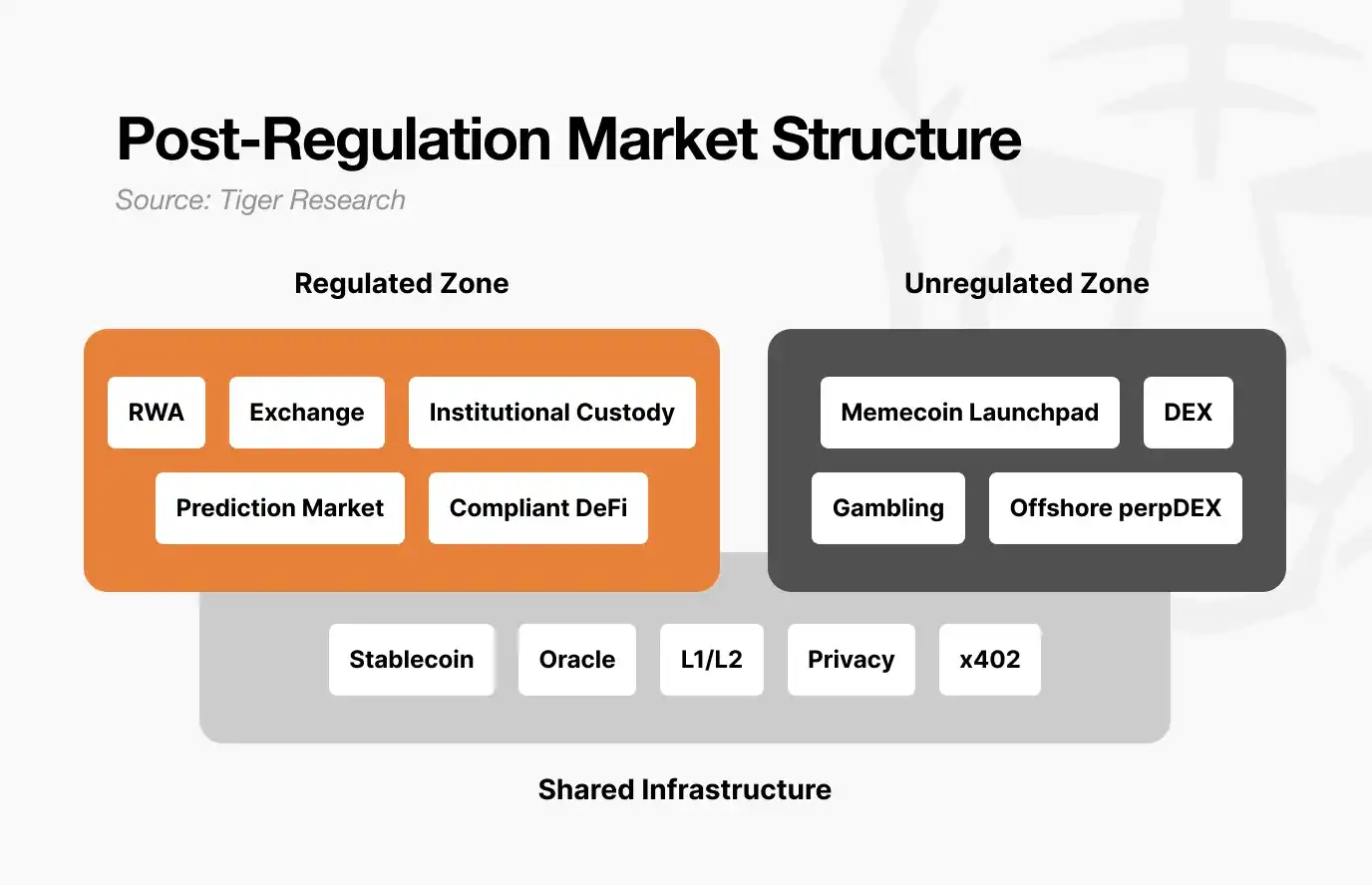
Регулируемая зона включает токенизацию RWA, биржи, институциональный кастоди, прогнозные рынки и основанный на compliance DeFi. Они проходят аудит, раскрывают информацию и имеют юридическую защиту. Рост медленный, но масштаб капитала большой и стабильный.
Однако, попав в регулируемую зону, трудно ожидать взрывной доходности, как раньше. Волатильность снижена, потенциал роста ограничен. Но и downside risk также ограничен.
С другой стороны, нерегулируемая зона в будущем станет еще более спекулятивной. Низкий порог входа, высокая скорость. x100 за день, -90% на следующий день будут происходить чаще.
Однако, это пространство не бессмысленно. Рождающиеся в нерегулируемой зоне индустрии креативны, и一旦 проверены, они переходят в регулируемую зону. DeFi сделал это, прогнозные рынки делают это сейчас. Она служит полигоном для экспериментов. Но сама нерегулируемая зона будет все больше отделяться от бизнеса регулируемой зоны.
Общая инфраструктура включает стейблкоины и оракулы (oracles). Они используются и в регулируемой, и в нерегулируемой зонах. Тот же USDC используется для институциональных RWA-платежей и для торговли на Pump.fun. Оракулы предоставляют данные для верификации токенизированных казначейских обязательств и для ликвидаций на анонимных DEX.
Другими словами, с разделением рынка изменились и потоки капитала.
Раньше, когда рос биткоин, альткоины росли через эффект просачивания. Теперь все иначе. Институциональный капитал, приходящий через ETF, остается в биткоине, и на этом все. Капитал регулируемой зоны не течет в нерегулируемую. Ликвидность остается только там, где ценность уже доказана. И даже биткоин, относительно рисковых активов, еще не доказал свою ценность как актив-убежище.
5. Условия следующего бычьего рынка
Регулирование уже устаканивается. Строители все еще строят. Тогда остаются две вещи.
Во-первых, из нерегулируемой зоны должно появиться новое убийственное применение. Что-то, что создает ранее не существовавшую ценность, как DeFi Summer 2020 года. AI-агенты, InfoFi и ончейн-социалка — кандидаты, но они еще не достигли масштаба, способного двигать весь рынок. Должен быть снова создан процесс, когда эксперименты нерегулируемой зоны проверяются и переходят в регулируемую. DeFi сделал это, прогнозные рынки делают это сейчас.
Во-вторых, макроэкономическая среда. Даже если регулирование улажено, строители строят, инфраструктура копится, если макросреда не поддерживает, потенциал роста ограничен. DeFi Summer 2020 года взорвался на фоне выброса ликвидности после COVID. Рост после одобрения ETF в 2024 году также совпал с ожиданиями снижения ставок. Как бы ни выступала криптоиндустрия, она не контролирует ставки и ликвидность. Чтобы то, что строит индустрия, получило убедительность, макроэкономическая среда должна развернуться.
Вероятно, больше не повторится «криптосезон», когда все растет вместе, как раньше. Потому что рынок разделился. Регулируемая зона стабильно растет, нерегулируемая — сильно растет и сильно падает.
Следующий бычий рынок наступит. Но он наступит не для всех.