The Truth About Global Payments, Exposed by Airwallex

marsbitОпубликовано 2026-05-28Обновлено 2026-05-28

Введение

Airwallex's founder, Jack Zhang, outlines the three primary paths in the global payments industry and explains why the company chooses the most demanding one: building its own global financial infrastructure. The article begins by highlighting a common industry problem: payment platforms appear homogenized on the surface, offering similar features like global acquiring and multi-currency accounts. However, their underlying capabilities differ vastly. Customers truly care about payment stability, compliance robustness, and reliable market entry support. Zhang identifies three strategic paths: 1. **Bypassing Traditional Systems (Web3/Crypto):** This path promises efficiency via stablecoins and blockchain settlement but struggles with mainstream adoption, significant regulatory friction, and a lack of competitive edge against established players, often leaving it with niche or non-compliant markets. 2. **Packaging Existing Infrastructure:** The most common route, where companies layer a modern interface over legacy banking and partner networks. While enabling fast expansion, it fails to solve core issues like dependency on correspondent banks and intermediary risk, merely postponing the need for solid foundations. 3. **Building Own Global Infrastructure:** The path chosen by Airwallex, Ant International, and others. It involves obtaining local licenses, establishing direct regulatory relationships, building local teams, and controlling the full technology stack. This "heavy...

Author: Gang Ge

After the last article was published, many people sent me private messages, with questions mainly falling into the following categories:

"A certain platform seems similar, is it reliable?"

"Isn't digital currency payment much less troublesome?"

"Is it really necessary for Airwallex to build such a heavy payment infrastructure?"

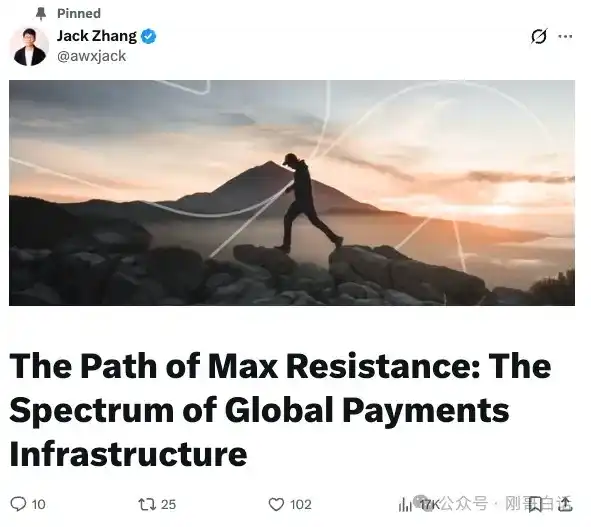
To answer these questions, we can look at the popular article posted by Airwallex founder Jack Zhang on the official WeChat account and X.com (formerly Twitter): " The Path of Maximum Resistance Is the Way Out: A Panorama of Global Payments Infrastructure ".

Figure 1: Jack Zhang's original tweet

This article not only explains why Airwallex chose the "heavy asset" path but also reveals a problem long kept secret in the global payments industry.

So what exactly did he talk about? Let me break it down for you below.
【Full text 2966 characters, estimated reading time 10 minutes】

01 Surface Homogeneity, Core Differentiation

When choosing a payment platform, corporate clients are often confused by a problem: several payment companies seem to offer similar capabilities.

For example, almost all of the hundreds of global payment companies use a similar script to introduce their products: instant settlement, global coverage, serving modern enterprises. Even the features and interfaces are becoming more alike.

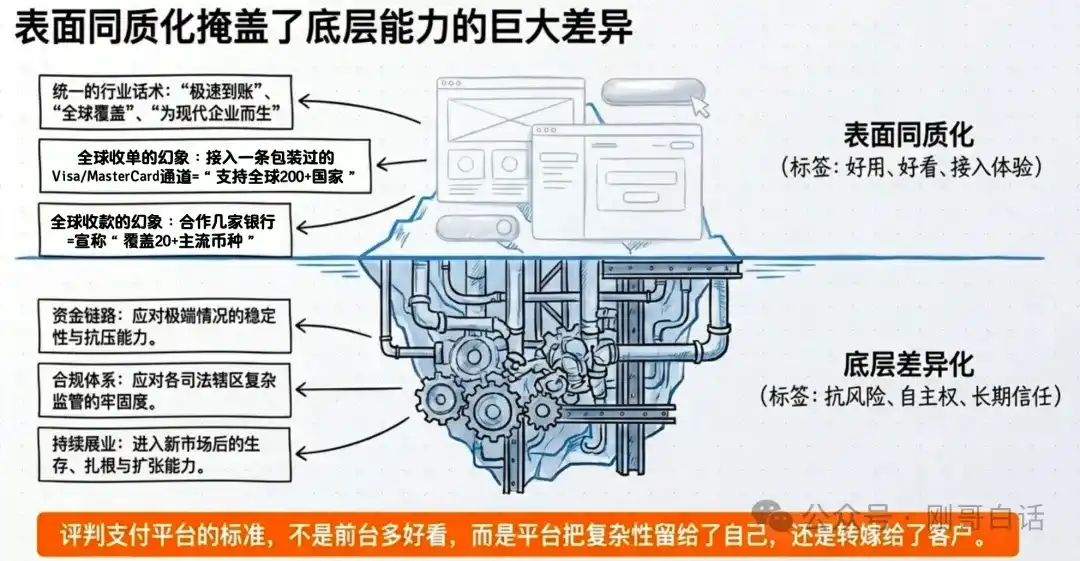
  • Everyone has global acquiring: by connecting to a wrapped Visa/MasterCard channel, they can claim "support for 200+ countries and regions";

  • Everyone has global accounts: by partnering with a few banks, they can claim "one account for global collection, covering 20+ major currencies".

The problem is that while surface functions look more similar, the underlying capabilities are worlds apart.

Figure 2: Superficial homogeneity masks vast underlying differences

Users also cannot see the real differences between platforms from product descriptions, which is why they repeatedly scrutinize payment institutions on cost, background, licenses, and risks.

Ultimately, what corporate clients truly care about is not just the integration experience, but the stability of the fund flow, the robustness of the compliance system, and the ability to smoothly operate after entering new markets.
Therefore, to judge whether a payment platform is reliable, you must not only look at what the front end looks like but also see whether the platform keeps the complexity for itself or passes it on to the client.

02 Three Paths in Global Payments

Since core capabilities are not apparent from the front end, we must return to the underlying layer and deconstruct the common paths in this industry.

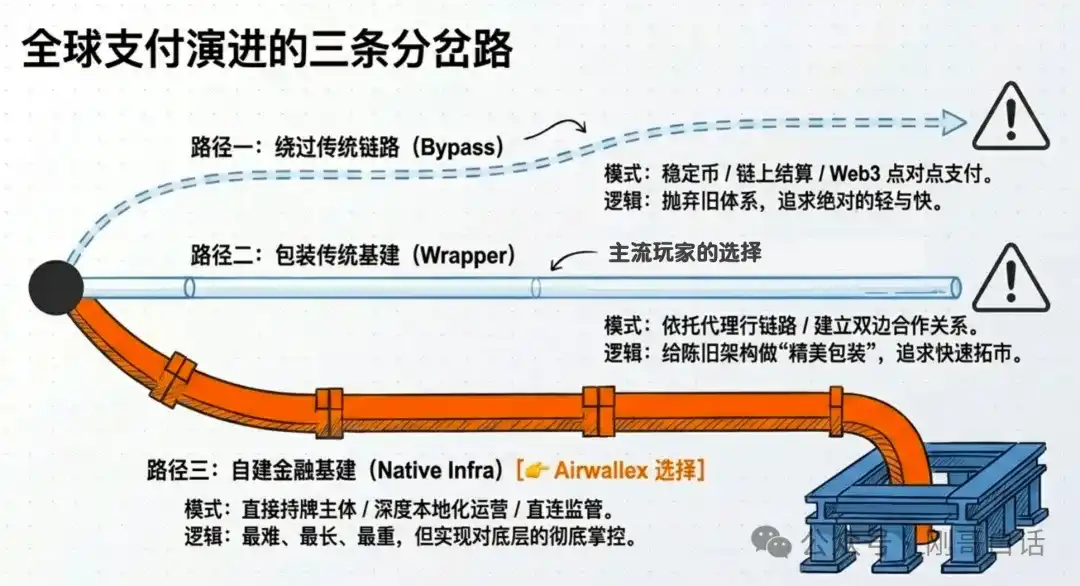
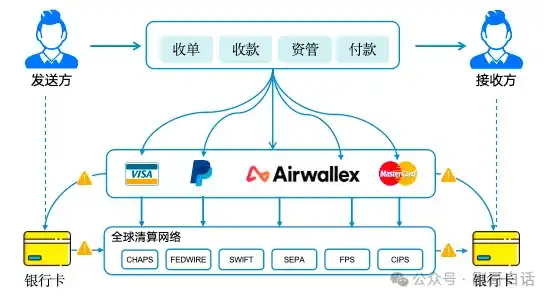
If we break down the mainstream players in the industry, there are roughly three paths.

Figure 3: Three divergent paths in the evolution of global payments

2.1 The First Path: Bypassing Traditional Chains

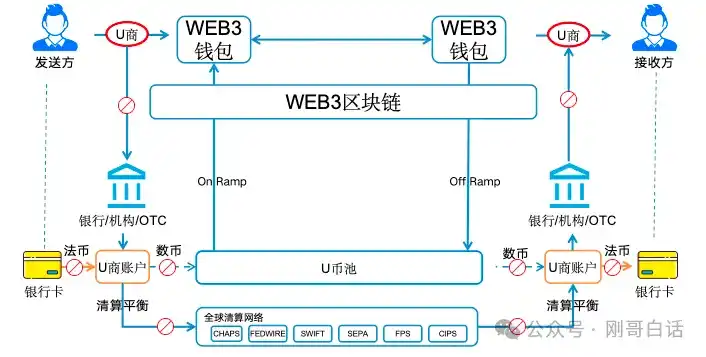
The first path: Web3 digital currency payments.

This path typically tells the same story: stablecoins, on-chain settlement, programmable payments, peer-to-peer payments. Compared to traditional payments, it promises shorter paths, faster speeds, and lower costs; and it hopes to penetrate the consumer retail scene with a story of small, frequent transactions.

However, you'll find that very few digital currency payment players have survived on this path.

The core reason is not that this path lacks efficiency, but that in the face of mainstream payment platforms, new players have no substitution advantage, and too much regulatory friction makes short-term solutions difficult .

Figure 4: The first path: bypassing traditional chains with on-chain settlement

Now, mainstream global payment platforms not only possess global payment networks but also deeply integrate into local ecosystems worldwide, building operational teams, forming comprehensive advantages over digital currency payments in technology, service, compliance, and product.
  • Technical level: global payments settled instantly; merchant settlement to card with D1/D0 options;

  • Service level: payment costs are not high under high competition, with mature local operational teams serving clients to the last mile;

  • Compliance level: regulators in various jurisdictions have persistent doubts about its compliance, resulting in significant friction;

  • Product level: mainstream payment platforms also focus on stablecoin payments; as soon as compliance policies are established, products can be integrated and replaced at any time.

Therefore, new players on this path often find that the only options left are fragmented markets that mainstream payment institutions are unwilling to serve, and gray/black market clients they dare not serve .

This is also why many who started with dreams of Web3 payment entrepreneurship ultimately had to withdraw quietly.

2.2 The Second Path: Wrapping Traditional Infrastructure

This is the most traveled path in the industry: relying on partners and intermediaries to wrap a layer around the complex, outdated underlying architecture, then using better product experiences and faster marketing to drive market expansion.

The advantages of this path are also obvious: quick results, fast business expansion, rapid coverage growth, making it the natural choice for most players.

But the problem is that it primarily optimizes the front end, not rewrites the underlying layer.

Jack Zhang's judgment on this point is direct: The core issues remain unchanged; correspondent banking chains, bilateral partnerships, compliance dependency risks—they all still exist.
He also believes: "A nice interface has long been standard, but it cannot shake the underlying logic of global payments."

Figure 5: The second path: aggregator gateways wrapping infrastructure

In fact, Stripe, the company with the fastest-growing global market value, had its acquisition of Airwallex rejected in 2019 and was rumored to acquire PayPal in 2026 (which was also reportedly rejected).

This at least illustrates one point: even an international payment giant that grew rapidly through "technology + light-asset connectivity" ultimately has to go back and learn the lesson of building infrastructure.

Often, the path that seems lighter doesn't avoid infrastructure; it merely delays it.

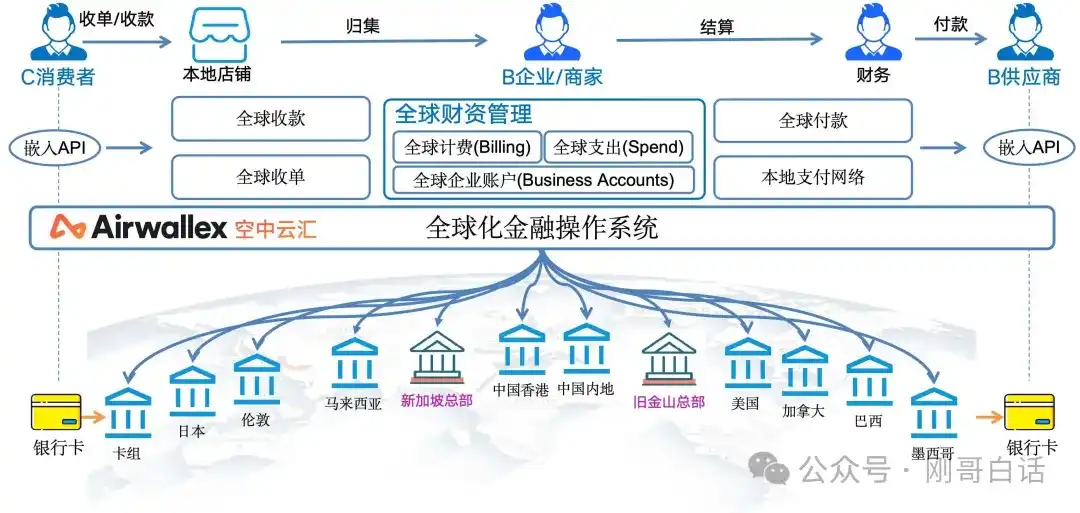
2.3 The Third Path: Building a Global Financial Infrastructure from Scratch

This is also the path chosen by companies like Airwallex, Ant International, Pingpong, and LianLian Global : obtaining licenses in jurisdictions where business is conducted, operating locally, maintaining regular communication with regulators, and keeping compliance, technology, and underlying networks as much as possible in their own hands.

This path is the most difficult because there is almost no shortcut. It requires sustained high investment, longer cycles, and also implies heavier responsibility.

But Airwallex has been more resolute in this regard , self-developing the full-stack infrastructure and absolutely refusing to connect via agents or middlemen.
This means they must invest heavily worldwide to obtain licenses, maintain deep communication with local regulators as a licensed entity, continuously integrate with local compliance institutions, establish local teams, and serve clients to the last mile.

Figure 6: The third path: building global infrastructure from scratch

This kind of heavy-asset investment obviously makes many people think it's "not smart enough." Actually, who wouldn't want to take a shortcut? It just depends on what kind of value you want to offer clients. If the underlying capabilities are still held by others, the ones ultimately bearing the uncertainty will inevitably be the clients.

03 Platform's "Heaviness" for Client's "Lightness"

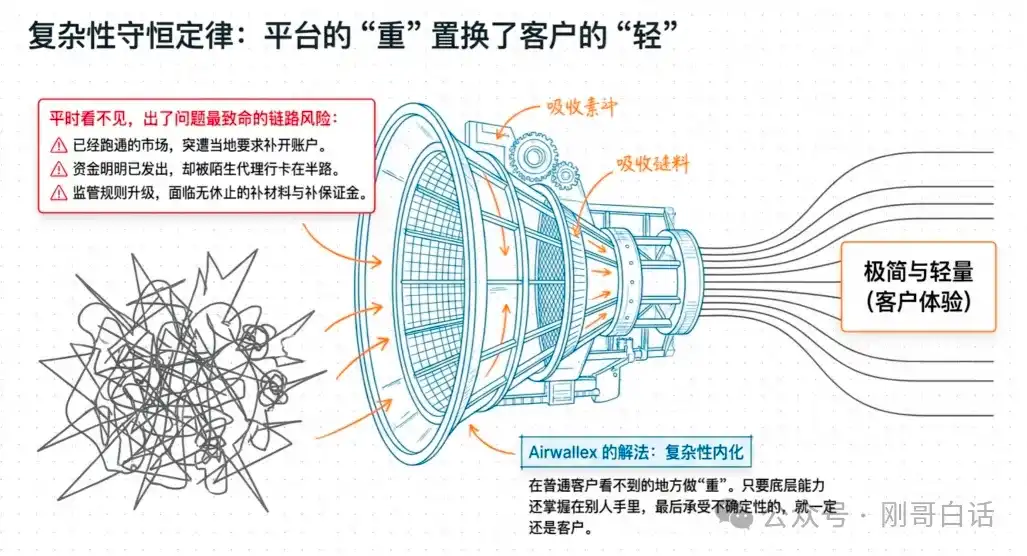
For enterprise clients going global, the most expensive thing is never a single payment fee, but the invisible risks in the fund flow chain that become fatal when problems arise.

For example, a market that was already running smoothly might suddenly have its bank account frozen; customers who have already paid for goods may have their funds stuck halfway by a correspondent bank, unable to settle; when regulatory rules upgrade, they must submit additional materials, deposits, or processes.

These problems may not occur daily, but one occurrence is enough to disrupt a company's rhythm.

Figure 7: Platform's "heaviness" exchanged for client's "lightness"

Therefore, building solid infrastructure is essentially about keeping the complexity that would otherwise fall on the client within one's own system to digest, trading one's own "heaviness" for the client's "lightness."

04 What Do Clients Actually Get?

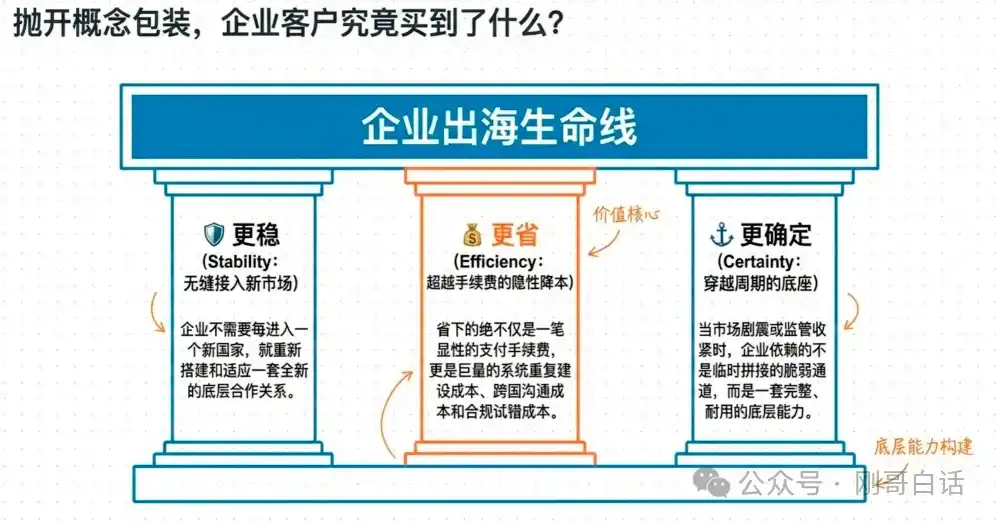
Enterprise clients are very pragmatic; they never buy concepts but the value they can obtain. In the cross-border payment field, the so-called value boils down to three things: more stable, more cost-effective, and more certain.

Figure 8: The real value enterprise clients need

  • More stable, because businesses don't need to adapt to a new set of partnerships every time they enter a market.

  • More cost-effective, not just saving on fees, but reducing a lot of duplicated system costs, communication costs, and compliance costs.

  • More certain, because when market conditions change or regulatory rules tighten, clients rely not on a temporarily patched channel, but on a more complete, durable, and cycle-proof underlying capability.

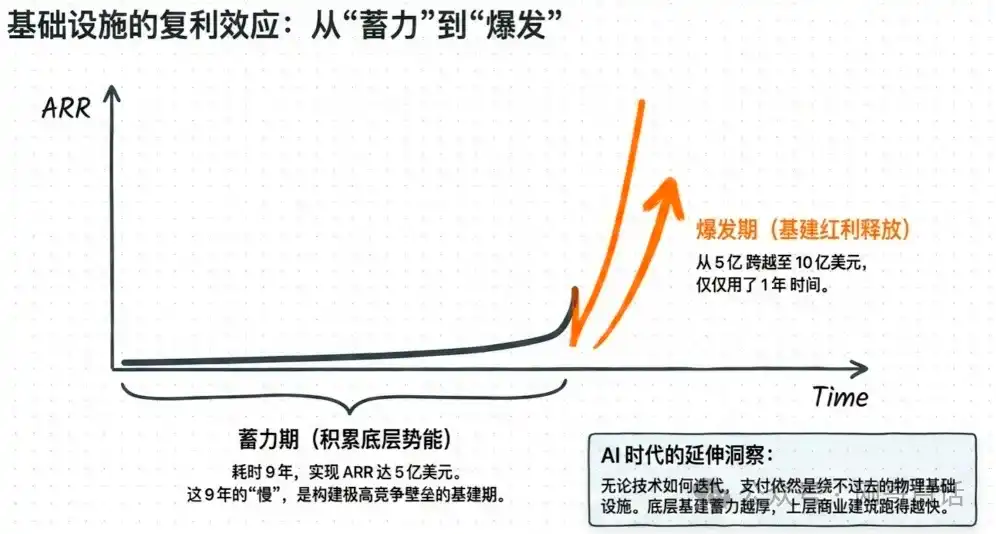
This is also why Airwallex's growth logic resembles compound interest rather than explosive growth.

Figure 9: Compound interest growth brought by infrastructure investment

According to public information, Airwallex took 9 years to achieve $500 million in Annualized Recurring Revenue (ARR), but only one year to go from $500 million to $1 billion. The initial "slowness" was not inefficiency but rather accumulating underlying potential for future acceleration.

05 Final Words

Returning to the initial question, why does Airwallex build its own global financial infrastructure?

Because, the most difficult part is precisely the part that cannot be outsourced, is most worthy of long-term investment, and can create the most value for clients .

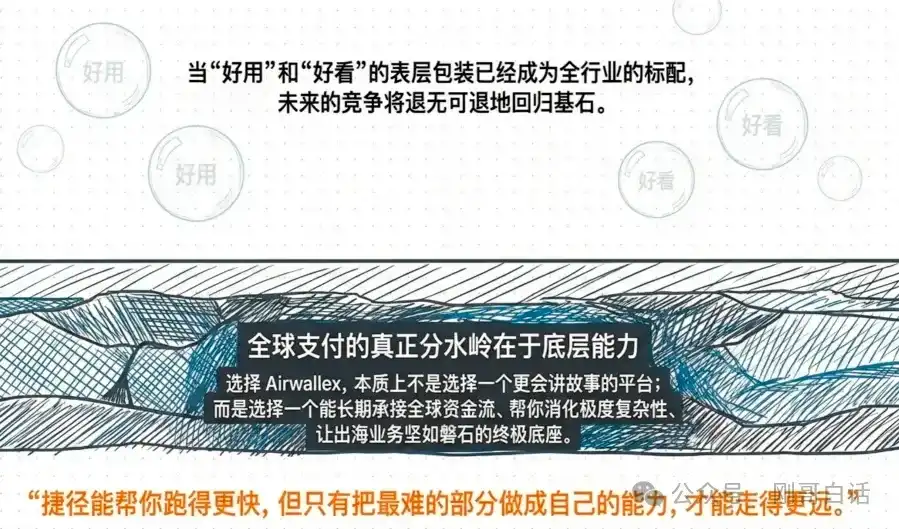
Figure 10: Underlying capability is the real watershed

For enterprise clients, choosing a global payment platform is essentially about choosing a long-term partner, a foundation that can digest complexity for you and help you operate your business more stably.

For the global payments industry, shortcuts can help you run faster, but only by turning the hardest part into your own capability can you go further.

【References】

【1】Original article on Airwallex official WeChat: The Path of Maximum Resistance Is the Way Out

https://www.airwallex.com/cn/blog/the-path-of-max-resistance-the-spectrum-of-global-payments-infrastructure

【2】Original article on Airwallex official WeChat: The Last Mile of Global Payments

https://www.airwallex.com/cn/blog/the-last-mile-of-global-payments

【3】Sina Finance: Reshaping the Future of Finance

https://finance.sina.com.cn/cj/2025-10-11/doc-inftnpwr8889861.shtml

Связанные с этим вопросы

QAccording to the article, what are the three main paths for global payment companies, and which one does Airwallex represent?

AThe three main paths are: 1) Web3/Cryptocurrency payment bypassing traditional systems, 2) Packaging existing traditional infrastructure with a better interface (the most common path), and 3) Building independent global financial infrastructure. Airwallex, along with companies like Ant International, Pingpong, and Lianlian Global, represents the third path of self-building global infrastructure.

QWhat is the key reason mentioned for the limited success of Web3/digital currency payment platforms in replacing mainstream payment systems?

AThe key reason is that while potentially efficient, new Web3 players lack any substitution advantage over mainstream platforms. Mainstream platforms already possess global networks, deep local ecosystem integration, and have overwhelming advantages in technology, service, compliance, and product. Furthermore, Web3 platforms face significant unresolved compliance friction.

QWhat does the article suggest is the fundamental trade-off made by payment platforms like Airwallex that choose the 'heavy infrastructure' path?

APlatforms like Airwallex make a trade-off of using their own operational 'heaviness' (high investment, local licensing, compliance, self-built networks) to achieve the client's operational 'lightness'. They absorb complexity and risk within their own system to provide clients with greater stability, cost savings (beyond just fees), and certainty.

QWhat are the three core values that enterprise clients are truly seeking from a global payment platform, as outlined in the article?

AEnterprise clients seek three core values: 1) Greater Stability (not needing to rebuild relationships in each new market), 2) Greater Cost Efficiency (saving on system, communication, and compliance costs, not just transaction fees), and 3) Greater Certainty (relying on a durable, cycle-resistant underlying capability rather than temporary拼接/patched-together channels).

QHow does the article characterize the growth logic of Airwallex, and what evidence does it provide?

AThe article characterizes Airwallex's growth logic as being more akin to compound interest rather than explosive growth. It states that building foundational infrastructure creates underlying momentum. As evidence, it cites that Airwallex took 9 years to reach $500 million in Annual Recurring Revenue (ARR), but only one year to grow from $500 million to $1 billion, suggesting the earlier 'slowness' was accumulating potential for later acceleration.

Похожее

SpaceX, OpenAI, Anthropic: The Three AI Giants Racing for IPO, Which One Is Worth Betting On?

SpaceX, OpenAI, and Anthropic are poised for historic IPOs within weeks, potentially raising a combined $180 billion—a sum exceeding the entire internet bubble's fundraising. The hosts of the Limitless Podcast argue this isn't just individual company financing but an unprecedented capital concentration for AI infrastructure, driven by an insatiable need for compute, data centers, power, and chips. SpaceX's IPO is notable for reportedly changing market index rules to allow faster inclusion, potentially funneling trillions in passive retirement funds into its stock, despite its unproven space-based data center business model. In contrast, Anthropic demonstrates explosive growth, with ARR reportedly hitting $45 billion and approaching profitability, fueled by strong enterprise adoption of products like Claude Code. Google's separate $80 billion raise highlights the immense capital pressure, even for giants. The discussion acknowledges bubble risks but leans optimistic. The hosts contend the massive spending is building essential physical infrastructure for the next technological era. A key bottleneck isn't capital but the real-world limits of chip manufacturing and construction speed. As long as demand for AI compute outstrips supply, this investment cycle represents a foundational build-out rather than a purely financial bubble. All three companies are seen as foundational bets on the future, with Anthropic often cited as the most immediately compelling due to its proven revenue trajectory.

marsbit34 мин. назад

SpaceX, OpenAI, Anthropic: The Three AI Giants Racing for IPO, Which One Is Worth Betting On?

marsbit34 мин. назад

From 'Old Guys' to 'New Favorites': How AI Is Revaluing Old Infrastructure from Dell to Nokia?

From "Vintage Tech" to "New AI Darlings": How AI Revalues Old Infrastructure One year ago, tech giants like Dell, Nokia, Cisco, and Western Data were seen as slow-growth, low-valuation stories, far from the AI spotlight dominated by players like Nvidia. Now, these legacy tech stocks are gaining market attention, sparking debate on whether this is genuine industry revaluation or a temporary narrative. As AI moves from model parameters to real-world data centers, the market is recognizing companies with proven delivery and infrastructure capabilities. This shift marks a change in the AI investment thesis: from pure model and GPU focus to the complex systems engineering required for deployment. Companies like Dell, HPE, and Corning are being revalued not for being "sexy" AI innovators, but for their decades of accumulated expertise in supply chains, enterprise delivery, and infrastructure—assets that have become critical in the AI buildout phase. The revaluation is unfolding across three key infrastructure lines: 1. **Servers & System Integration:** Dell and HPE are emerging as crucial system integrators or "general contractors" for AI data centers, translating GPU orders into complete, deployable server racks integrated with power, cooling, and networking. 2. **Networking & Connectivity:** AI's scale demands robust high-speed connections. Corning (fiber optics), Nokia (AI-RAN, 6G), and Cisco (data center switches) are gaining importance for enabling efficient data transfer within and between AI clusters. 3. **Storage:** Beyond high-speed memory (HBM/DRAM), the AI data explosion is driving demand for high-capacity hard drives (HDDs) from companies like Western Digital and Seagate to handle training data, logs, and cold storage cost-effectively. For this revaluation to be substantive and not just a narrative, three criteria are key: 1) Concrete AI-related order and revenue growth (e.g., Dell's AI server sales), 2) Upward revisions to company financial guidance, and 3) Sustainable improvements in profit quality, not just top-line revenue spikes. In essence, AI's transition to a real construction phase is re-pricing "old assets" against "new demand." The opportunity, however, is selective. Only those legacy firms that are demonstrably integrated into the capital expenditure chains of data center and enterprise AI deployment are likely to experience a true "logic re-rating" rather than just a temporary valuation bounce.

marsbit40 мин. назад

From 'Old Guys' to 'New Favorites': How AI Is Revaluing Old Infrastructure from Dell to Nokia?

marsbit40 мин. назад

The Merger of Codex and ChatGPT Marks the Beginning of a Major Reshuffle in Programming Tools

OpenAI is shifting its strategic focus from ChatGPT to Codex, merging them along with the browser tool Atlas into a unified desktop super-app. This move signals an internal belief that Codex, originally a programming tool, represents the next evolution of AI more than conversational models like ChatGPT. Over the past year, Codex's weekly active users have surged past 5 million. The key distinction is that while ChatGPT answers questions, Codex executes tasks. Enterprises increasingly value this ability to get work done over simply receiving advice. Consequently, Codex is attracting professionals beyond developers, including analysts, bankers, marketers, and product managers. OpenAI's reorganization and increased investment in Codex stem from recognizing that the future of AI competition lies in execution capabilities, not just conversation. The company is launching role-specific plugins (e.g., for data analysis, sales, design) to transform Codex into a broad knowledge work platform that automates and redefines white-collar workflows. Beyond being a tool, Codex reflects OpenAI's ambition to redefine software. New features like "Sites"—which generates interactive websites from documents—and collaborative "Annotations" aim to create a paradigm where the AI understands the goal and handles the tools and steps, functioning more like a digital colleague than traditional software. The ultimate goal is a unified experience where the user cares only about the completed task.

marsbit49 мин. назад

The Merger of Codex and ChatGPT Marks the Beginning of a Major Reshuffle in Programming Tools

marsbit49 мин. назад

Interpreting Investment Opportunities in the Age of Great Navigation, Invesco Great Wall Fund Releases '2026 Report on Chinese Enterprises Going Global'

Invesco Great Wall Fund has released its "2026 China Corporate Globalization Report," titled "The 'Great Navigation Era' of Chinese Enterprises." The report analyzes the new trends and investment opportunities as Chinese companies expand globally, moving from simple product exports to comprehensive overseas operations involving services, branding, and local production. Driven by factors like trade friction, the pursuit of higher profit margins abroad, and policy support, globalization is becoming essential for Chinese companies. The report outlines an evolution: from early product export ("Globalization 1.0") to the current "Globalization 2.0," characterized by overseas capacity, capital goods investment, consumer brand expansion, and service exports. Chinese firms' competitive advantages are highlighted, including a vast engineer talent pool, low-cost and robust infrastructure, and complete industrial clusters. Specific sectors with significant出海 potential are identified: * **Capital Goods** (e.g., engineering machinery, power equipment): Benefiting from global demand, especially in Belt & Road markets and the AI-driven power grid upgrade cycle. * **Consumer Brands**: Transitioning from cost to brand advantage, leveraging供应链 efficiency. * **Technology & Innovation**: Including AI applications, optical modules within global tech supply chains, and new energy vehicles focusing on local production. * **Pharmaceuticals**: Chinese biotech firms are becoming preferred partners for global pharma, with potential for breakthrough drugs in areas like oncology and weight loss. The report concludes that corporate globalization represents a sustained, core theme for China's capital markets, though companies must navigate challenges like geopolitics and localization.

marsbit1 ч. назад

Interpreting Investment Opportunities in the Age of Great Navigation, Invesco Great Wall Fund Releases '2026 Report on Chinese Enterprises Going Global'

marsbit1 ч. назад

Торговля

Спот
Фьючерсы

Популярные статьи

Как купить PEOPLE

Добро пожаловать на HTX.com! Мы сделали приобретение ConstitutionDAO (PEOPLE) простым и удобным. Следуйте нашему пошаговому руководству и отправляйтесь в свое крипто-путешествие.Шаг 1: Создайте аккаунт на HTXИспользуйте свой адрес электронной почты или номер телефона, чтобы зарегистрироваться и бесплатно создать аккаунт на HTX. Пройдите удобную регистрацию и откройте для себя весь функционал.Создать аккаунтШаг 2: Перейдите в Купить криптовалюту и выберите свой способ оплатыКредитная/Дебетовая Карта: Используйте свою карту Visa или Mastercard для мгновенной покупки ConstitutionDAO (PEOPLE).Баланс: Используйте средства с баланса вашего аккаунта HTX для простой торговли.Третьи Лица: Мы добавили популярные способы оплаты, такие как Google Pay и Apple Pay, для повышения удобства.P2P: Торгуйте напрямую с другими пользователями на HTX.Внебиржевая Торговля (OTC): Мы предлагаем индивидуальные услуги и конкурентоспособные обменные курсы для трейдеров.Шаг 3: Хранение ConstitutionDAO (PEOPLE)После приобретения вами ConstitutionDAO (PEOPLE) храните их в своем аккаунте на HTX. В качестве альтернативы вы можете отправить их куда-либо с помощью перевода в блокчейне или использовать для торговли с другими криптовалютами.Шаг 4: Торговля ConstitutionDAO (PEOPLE)С легкостью торгуйте ConstitutionDAO (PEOPLE) на спотовом рынке HTX. Просто зайдите в свой аккаунт, выберите торговую пару, совершайте сделки и следите за ними в режиме реального времени. Мы предлагаем удобный интерфейс как для начинающих, так и для опытных трейдеров.

758 просмотров всегоОпубликовано 2024.04.12Обновлено 2026.06.02

Как купить PEOPLE

Обсуждения

Добро пожаловать в Сообщество HTX. Здесь вы сможете быть в курсе последних новостей о развитии платформы и получить доступ к профессиональной аналитической информации о рынке. Мнения пользователей о цене на PEOPLE (PEOPLE) представлены ниже.

活动图片