
Автор: CJ_Blockchain
BTC сохранил абсолютную силу на фоне макроэкономических колебаний, и одной из причин может быть активная торговля STRC.
На прошлой неделе средний дневной объем торгов привилегированными акциями MSTR, STRC, превысил 300 миллионов долларов, а максимальный дневной объем достиг 750 миллионов долларов. Фактически это сделало их одними из самых ликвидных привилегированных акций на американском фондовом рынке.
Согласно механизму STRC, объем торгов на прошлой неделе мог потенциально обеспечить чистые покупки BTC на сумму около 700 миллионов долларов.
Данная статья aims to познакомить с основами STRC, механизмом его работы, объяснить, почему это приводит к покупкам BTC, и указать на потенциальные риски.
1. Что такое привилегированные акции STRC?
С финансовой точки зрения, STRC — это инструмент долевого участия, похожий на долговой, выпускаемый для внешних инвесторов. Через структурирование он разделяет высокую волатильность биткойна на кредитный продукт с фиксированными денежными потоками.
Четыре ключевые характеристики STRC:
-
Краткосрочный высокодоходный кредит: Позиционируется как краткосрочный высокодоходный инструмент, предлагающий конкурентоспособные ежемесячные дивиденды (текущая годовая ставка составляет 11,5%).
-
Бессрочная структура: Не имеет фиксированной даты погашения, компания не несет давления по «возврату основного долга», как по традиционным облигациям, это перманентный капитал.
-
Приоритет в структуре капитала: Имеет преимущество перед обыкновенными акциями ($MSTR) при ликвидации, обеспечивая защиту для инвесторов, ориентированных на долговые инструменты.
-
Отсутствие риска дефолта: Юридически относится к собственному капиталу (Equity), выплата дивидендов не является обязательной, что позволяет избежать банкротства из-за временного недостатка денежных средств.
Сравнение MSTR и STRC
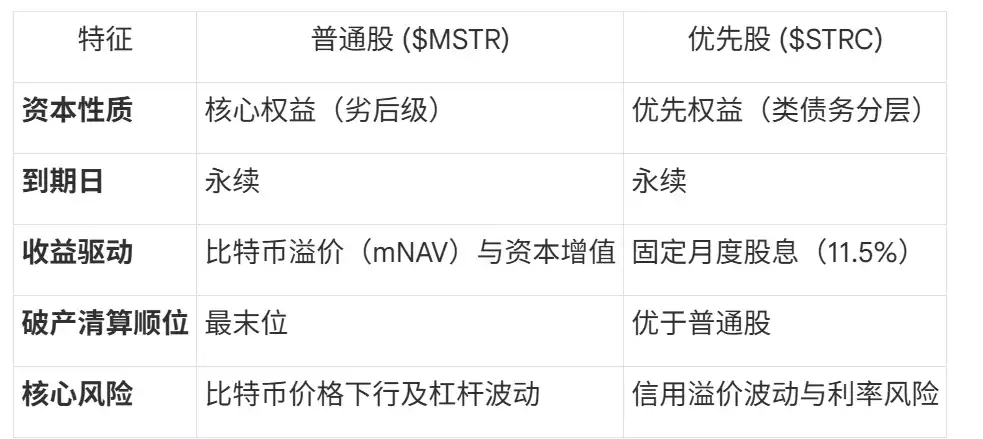
2. Механизм привязки цены: Анкерование STRC и поглощение ликвидности
Компания Strategy использует ряд финансовых рычагов, чтобы зафиксировать рыночную цену STRC вокруг отметки в 100 долларов, создавая таким образом стабильное окно для финансирования.
Ключевые инструменты контроля цены:
-
Динамическая регулировка дивидендов: Strategy использует рефлексивную корректировку ставки. Если цена STRC падает ниже $99, компания повышает дивиденды (на 25-50 б.п.), чтобы стимулировать покупки; в противном случае она снижает ставку, чтобы сдержать избыточный спрос и вернуть доходность к рыночному равновесию.
-
ATM (Программа на рынке): Когда цена STRC > $100, Strategy выпускает дополнительные акции STRC по цене $100 и продает их на рынке, поглощая избыточный спрос и одновременно преобразуя超额ные средства в покупательную способность для BTC.
-
Условия выкупа: Компания оставляет за собой право выкупить STRC по цене $101. Этот пункт психологически и финансово ограничивает мотивацию инвесторов покупать с премией, обеспечивая, чтобы цена не отклонялась от номинала.
-
Оптимизация налоговой эффективности: Дивиденды по STRC имеют характер «возврата капитала», что позволяет держателям享受 льготы по налоговому отсрочению. Такая структура снижает частоту продаж со стороны инвесторов и усиливает стабильность ценового якоря в $100.
Strategy стремится закрепить цену STRC в узком диапазоне 99-100 долларов, используя это как краеугольный камень для масштабного преобразования в покупательную способность биткойна.
3. Структурированный маховик добавленной стоимости BTC: Преобразование объема торгов в покупательную способность
Когда цена STRC колеблется в диапазоне 99-101, объем торгов преобразуется в покупательную способность BTC следующим образом:
-
Выпуск STRC для удовлетворения избыточного спроса: Когда цена STRC достигает 100 долларов (паритет), компания выпускает и продает новые акции через программу ATM для STRC, чтобы удовлетворить «избыточный спрос», превышающий текущую рыночную капитализацию. Например, если в какой-то день объем торгов STRC при цене 100 долларов составил 100 миллионов долларов, и предположим, что 30% этого объема соответствует новым выпускам акций, компания продаст STRC на 30 миллионов долларов и немедленно купит BTC на 30 миллионов долларов.
-
Балансировка левериджа: Дополнительный выпуск STRC фактически увеличивает долг компании. В настоящее время целевой показатель левериджа MSTR сохраняется на уровне около 33%, что означает, что на каждый дополнительный доллар долга в казне должно приходиться 3 доллара BTC. Таким образом, при увеличении долга на 30 миллионов долларов, Strategy необходимо дополнительно приобрести BTC на 60 миллионов долларов.
-
Выпуск обыкновенных акций MSTR для填补缺口: Чтобы получить эти дополнительные 60 миллионов долларов BTC и сохранить стабильный леверидж, компания использует ATM для обыкновенных акций MSTR, выпуская и продавая новые акции MSTR на 60 миллионов долларов, а затем использует вырученные средства для покупки BTC на 60 миллионов долларов.
Вывод: Согласно этому механизму, каждый доллар, привлеченный от выпуска STRC, в大致转化为 увеличение запасов BTC на 3 доллара. Таким образом, дневной объем торгов STRC в 100 миллионов долларов при паритете не только приведет к выпуску новых STRC на 30 миллионов долларов, но и в конечном итоге заставит компанию купить до 0,9 миллиарда долларов BTC.
Конечно, ключевыми факторами здесь являются время и объем торгов STRC выше 100 долларов в течение недели. Здесь для простоты понимания принято предположение о 30%. На самом деле все зависит от объявлений, которые MSTR опубликует на следующей неделе.
Этот маховик не может вращаться вечно, и в настоящее время есть три основных сдерживающих фактора:
-
Цена STRC должна достичь 100 долларов: MSTR является продавцом STRC только при цене в 100 долларов. Если цена STRC строго ниже 100 долларов, выпуск новых акций не triggered, и преобразование в новую покупательную способность BTC не произойдет.
-
mNAV обыкновенных акций должен быть больше 1x: Ключевая долгосрочная цель Strategy — увеличить соотношение биткойнов на акцию. Продажа обыкновенных акций для покупки BTC увеличивает bps только тогда, когда mNAV MSTR выше 1x; если mNAV упадет ниже 1, продажа MSTR для получения BTC приведет к разводнению, и компания будет избегать использования ATM для MSTR. Если возникнет ситуация с огромным спросом на STRC, но mNAV ниже 1x, компания сможет только抑制 избыточный спрос путем снижения дивидендной ставки по STRC.
-
Долгосрочные показатели цены BTC (самый фундаментальный риск): Вся стратегия основана на ожидании долгосрочного роста BTC (например, годовая доходность выше 20%). Если BTC вступит в длительный медвежий рынок, STRC может упасть ниже паритета и持续 торговаться со скидкой, а mNAV MSTR也可能 упасть ниже 1, перекрыв путь к выплате дивидендов через выпуск обыкновенных акций. В таком экстремальном сценарии Strategy сможет полагаться только на свои现有的 долларовые резервы (в настоящее время их хватит примерно на 28 месяцев) для выплаты дивидендов; если долларовые резервы будут исчерпаны, компания будет вынуждена постепенно продавать свои резервы BTC.
4. Заключение
Сэйлор еще в прошлом году подчеркивал, что Strategy — это не просто компания «DAT», а структурированная финансовая компания, поддерживающая биткойн. Он не просто верующий в BTC, а финансовый гений.
Каждый раз, когда BTC падает, Strategy и сам Сэйлор подвергаются наибольшей критике. Некоторые беспокоятся о взрыве Strategy, другие — о том, что Strategy покупает слишком много, влияя на децентрализацию BTC.
Но Сэйлор никогда не обращает на это внимания, он просто делает все возможное, чтобы купить BTC.





















