The Founder of Coinbase Is Going to Research Immortality

marsbitОпубликовано 2026-06-03Обновлено 2026-06-03

Введение

Coinbase founder Brian Armstrong has co-founded NewLimit, a longevity biotech startup, which just raised $435 million in a Series C funding round led by Peter Thiel’s Founders Fund. The round values the company at $3.1 billion, more than triple its valuation from a year ago. NewLimit is developing drugs aimed at reversing cellular aging to extend human healthspan. Its approach builds on Nobel Prize-winning research on cellular reprogramming (Yamanaka factors), with a focus on identifying specific gene combinations that can restore younger cell function. The company plans to begin human clinical trials next year, initially targeting alcohol-related liver disease as a form of accelerated aging. Founded in 2021 by Armstrong alongside biotech investor Blake Byers and scientist Jacob Kimmel, NewLimit has now raised over $700 million across multiple rounds. It joins a growing field of well-funded longevity ventures backed by tech billionaires, including Sam Altman’s Retro Biosciences and Jeff Bezos-backed Altos Labs, reflecting a surge of interest in using science to combat aging and extend healthy lifespan.

Author | Azuma(@azuma_eth)

At 3:00 AM Beijing time on June 3, longevity technology startup NewLimit announced the completion of a $435 million Series C funding round. This round was led by Peter Thiel's fund Founders Fund, with continued participation from Abstract Ventures, Kleiner Perkins, NFDG, Eli Lilly Ventures, Valor Equity Partners, among others, while also introducing new investors such as Thrive Capital, Greenoaks, and Quiet Capital.

A WSJ report indicated that NewLimit's valuation in this round reached $3.1 billion, more than triple its valuation from a year ago.

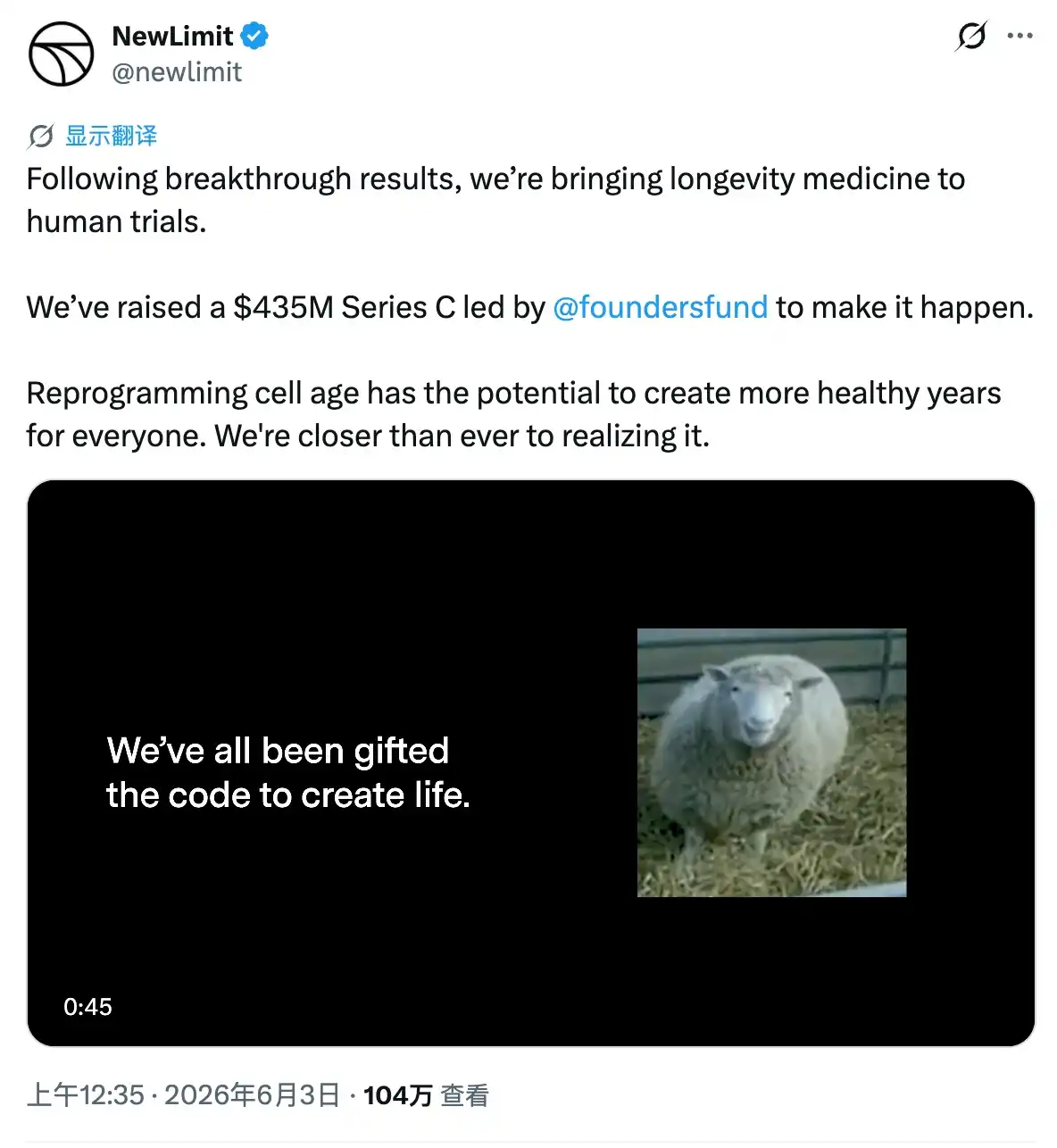
In its funding announcement, NewLimit revealed that following breakthrough research achievements, the company is advancing longevity medicine into the human clinical trial stage. Its first drug targeting alcohol-related liver disease is expected to commence clinical trials next year.

NewLimit also emphasized: "By reprogramming cell age, humans may achieve longer health spans, and now, we are closer than ever to the goal of delaying or even reversing aging."

The Founder Turns Out to Be an Old Acquaintance

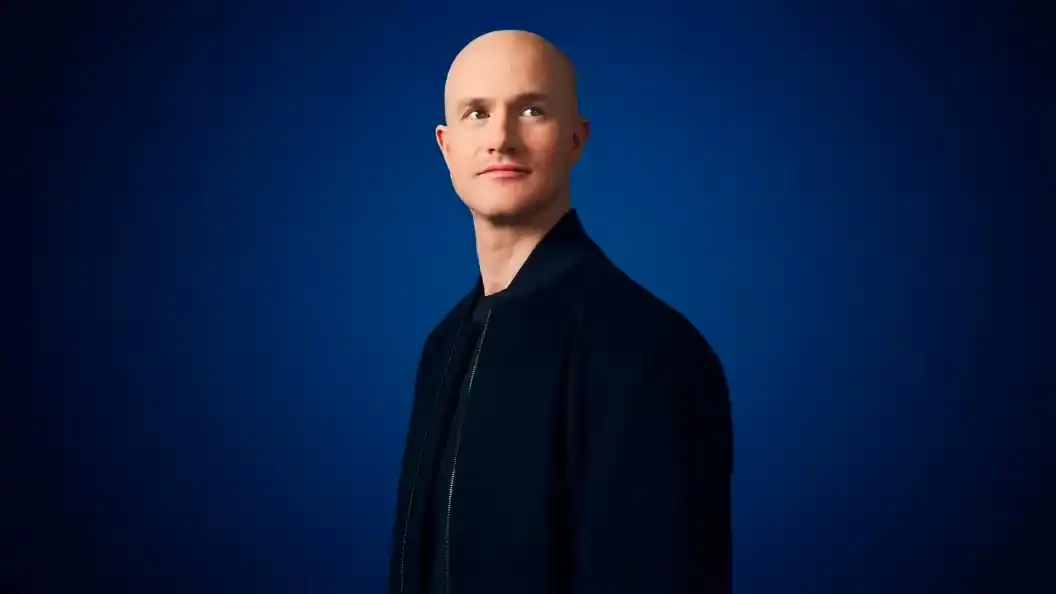
It is worth mentioning that one of NewLimit's co-founders is none other than our old acquaintance — Coinbase founder and CEO Brian Armstrong.

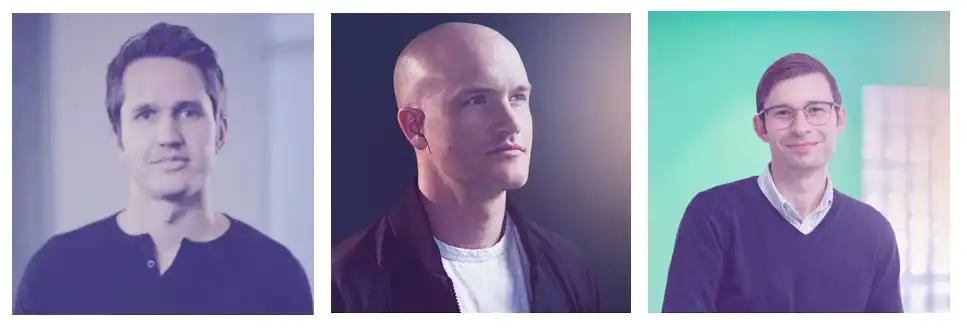
In 2021, Brian Armstrong, together with former GV partner and bioengineer Blake Byers and stem cell biologist Jacob Kimmel, invested $110 million to establish NewLimit in South San Francisco.

Picture: The NewLimit founding team

Prior to this funding round, NewLimit had already completed three rounds of financing, as detailed below.

  • May 2023: Completed a $40 million Series A round, with investors including Dimension, Founders Fund, and Kleiner Perkins;
  • May 2025: Completed a $130 million Series B round, reaching a valuation of $810 million, led by Kleiner Perkins, with participation from Founders Fund, Khosla Ventures, and Human Capital, among others;
  • October 2025: Received an additional $45 million investment, bringing the post-money valuation to $1.62 billion, with investors including Lilly Ventures, Duke University, Section 32, etc.;

According to NewLimit's official introduction, the company is dedicated to developing drugs that can extend human health span — "As humans age, cellular function gradually declines, making people more susceptible to diseases. It was once believed that aging was inevitable, but emerging science shows that the aging process can be reversed at the cellular level. We are developing the first drugs based on these discoveries to restore the youthful function of aging cells."

In simpler terms, NewLimit is using scientific methods to research immortality!

Reversing Aging is Not a Fantasy

Over the past few decades, while the scientific community has long recognized the link between aging and cellular functional decline, it could not precisely find a way to make cells "rejuvenate." The turning point came in 2006 when Japanese scientist Shinya Yamanaka discovered that activating just a few specific transcription factors could reprogram adult cells into a youthful state resembling embryonic stem cells. This discovery was later named "Yamanaka Factors" and helped him win the 2012 Nobel Prize in Physiology or Medicine.

Odaily Note: Picture shows Shinya Yamanaka speaking in Tokyo

Yamanaka's research first proved something previously considered impossible — that cellular age is not irreversible. And the story told by NewLimit is built precisely upon this discovery.

NewLimit writes on its website: "Our drugs can reprogram a cell's epigenome to a younger state by activating specific transcription factor genes. We already know this reversal is possible. However, for different cell types, exactly which combinations of transcription factors are needed to restore their youthful function remains unknown. Finding and discovering these effective payloads is the core challenge of our work."

NewLimit's strategy is to first target a specific disease to obtain drug approval, and then explore broader applications. As mentioned earlier, NewLimit is advancing a drug for alcohol-related liver disease into clinical trials.

NewLimit Co-founder and CEO Jacob Kimmel further explained, "Liver disease can actually be viewed as an 'accelerated version of aging,' it just presents the aging process that everyone experiences in a faster and more intense manner."

The Biggest Investors in This Sector Are All Billionaires

NewLimit is not the only tech company currently targeting "immortality."

In 2022, Sam Altman invested $180 million in Retro Biosciences, which is developing drugs to rejuvenate aging cells. Last month, Retro Biosciences disclosed its valuation had reached $1.8 billion.

Furthermore, Altos Labs, reportedly backed by Jeff Bezos's funding, also launched in 2022 with $3 billion and has since raised nearly twice that amount in total funding.

It's easy to see that from Peter Thiel to Sam Altman to Jeff Bezos, the biggest investors in this sector are without exception super-rich individuals at the pinnacle of technology and wealth. Peter Thiel has publicly expressed extreme aversion to death, advocating similar views on multiple occasions: "Death is humanity's greatest enemy, yet we treat it as a natural law..."

The logic behind these tech titans' willingness to invest hundreds of millions is not hard to understand — when wealth and power reach their peak, time becomes the only enemy, the only luxury that cannot be bought directly with money.

Having earned enough money, "how to live longer" becomes the greatest challenge.

Связанные с этим вопросы

QWhat is NewLimit, and what is its primary goal?

ANewLimit is a longevity biotechnology startup. Its primary goal is to develop drugs to extend human healthspan by reversing the aging process at the cellular level.

QWho is the notable co-founder of NewLimit mentioned in the article?

AThe notable co-founder is Brian Armstrong, who is also the founder and CEO of the cryptocurrency exchange Coinbase.

QWhat scientific breakthrough is NewLimit's research based on?

ANewLimit's research is based on the discovery of the 'Yamanaka Factors' by Japanese scientist Shinya Yamanaka in 2006, which showed that adult cells can be reprogrammed into a younger, pluripotent state.

QHow much funding did NewLimit recently raise and at what valuation?

ANewLimit recently raised $435 million in a Series C funding round, which valued the company at $3.1 billion.

QWhy are super-wealthy tech figures like Peter Thiel and Sam Altman investing in longevity companies?

AFor super-wealthy individuals, time is seen as the ultimate luxury that money cannot directly buy. After achieving immense wealth and power, extending their healthspan and potentially reversing aging becomes a primary focus.

Похожее

A Nation Blocks Chips, a Giant Buys a Nuclear Power Plant: Why It's Time to Seriously Consider DeAI

**Title: Great Powers Blockade Chips, Giants Buy Nuclear Plants: Why It's Time to Seriously Consider DeAI** In May 2026, the US closed loopholes for Chinese firms to acquire advanced NVIDIA chips via overseas subsidiaries. That same month, Kenya halted a $1B geothermal data center project involving Microsoft, fearing its immense energy consumption. Meanwhile, Huawei announced mass production of its Ascend AI chip. These disparate events underscore a new reality: the competition for computing power ("compute") has escalated beyond the tech industry, becoming a geopolitical and infrastructural battleground. A new era of oligopoly is forming, with control over the AI stack—from GPU chips (NVIDIA) and cloud platforms (AWS, Azure, Google Cloud) to foundational models (OpenAI, Anthropic)—concentrating in a few Western "AI Octopus" corporations. This centralization creates systemic risks: pricing power and platform lock-in for users, infrastructure fragility, and a widening "compute divide" that threatens to marginalize nations without independent AI capacity. An "AI Iron Curtain" is deepening through export controls. In response, some nations like Saudi Arabia and the UAE are investing heavily to buy compute power, aiming to transition from oil to AI economies. The EU seeks to triple its compute capacity by 2030 to reduce dependency. However, the spending gap is vast, with four US tech giants alone planning ~$750B in AI capex for 2026. The race is increasingly constrained by energy, with AI tasks consuming up to 1000x more power than web searches, pushing firms to even acquire nuclear plants. This landscape is fueling interest in Decentralized AI (DeAI). It proposes a third way: using open protocols to coordinate a global network of idle GPUs, independent developers, and data centers, creating an AI infrastructure without a single controlling entity. Leveraging blockchain and cryptographic verification, DeAI aims to break market concentration, disperse energy demands, reduce geopolitical dependencies, and enhance transparency. While still nascent in performance and stability, DeAI's core promise is not immediate superiority but providing a crucial alternative architecture to resist monopoly, censorship, and centralized power. As specialized AI hardware costs fall and open-source models flourish, the window to build this foundation is open. The very existence of such competition serves as a vital check against the inevitable abuse of concentrated power.

marsbit49 мин. назад

A Nation Blocks Chips, a Giant Buys a Nuclear Power Plant: Why It's Time to Seriously Consider DeAI

marsbit49 мин. назад

Outpoll Review: A Prediction Market Platform Built for Active Traders

Outpoll Review: A Prediction Market Platform Built for Active Traders In recent years, prediction markets have grown from a niche sector to a mainstream arena, attracting billions in trading volume and institutional capital. However, the user experience and tools for traders have not kept pace. Outpoll, a new global prediction market platform, aims to fill this gap by providing enhanced trading infrastructure for active and professional traders. Built on standard prediction market principles, Outpoll allows users to trade on the outcome of specific events. It uses fully collateralized contracts with USDC settlement, charges a competitive 0.1% fee per trade, and provides clear settlement rules upfront to minimize disputes. A key focus for Outpoll is its professional-grade trading tools. The platform supports limit and market orders, as well as take-profit and stop-loss orders for open positions—features uncommon in prediction markets. For automated trading, Outpoll offers comprehensive REST and WebSocket APIs, enabling portfolio management, price arbitrage, and integration with existing tools. The platform also features a creator-led market model, where approved experts and community leaders can create and manage markets for niche topics under platform supervision. Its integrated interface combines news feeds directly with trading functions, allowing users to monitor events and manage positions seamlessly. Outpoll launched with a native Android app (available on Google Play) and plans an iOS version later this year. In summary, Outpoll distinguishes itself with trader-focused tools, practical APIs, transparent and collateralized markets, integrated news, and an expanding creator program. For active traders, its advanced order types and API access alone make it a platform worth watching. Outpoll is now globally accessible via outpoll.com and Google Play.

marsbit57 мин. назад

Outpoll Review: A Prediction Market Platform Built for Active Traders

marsbit57 мин. назад

Bitwise: Crypto Becomes a Contrarian Investment, Three Logics to Understand the Current Market

**Summary** Matt Hougan, Bitwise's CIO, analyzes the current crypto market through three key lenses, arguing it has shifted from a momentum-driven to a contrarian investment. **1) Crypto Becomes a Contrarian Play:** The market is weak, with major assets like Bitcoin and Ethereum down significantly. Capital has moved to hot sectors like AI, leaving crypto as an "unloved" asset class. This transforms crypto investing from trend-following to a test of patience and fundamental analysis. Investors now favor projects with solid fundamentals (e.g., Hyperliquid) over speculative ones. **2) Regulatory Overhang:** The uncertain fate of the U.S. CLARITY Act, a major crypto regulatory framework, is a key headwind. With its passage in 2024 seen as far from guaranteed (estimates range from 30-55%), institutional capital remains on the sidelines, choosing less risky alternatives like AI stocks. The market needs clarity—whether the bill passes or fails—more than any specific outcome to move decisively. **3) Capital Rotates to New Fundamentals:** This cycle differs from past bear markets where money fled to Bitcoin. Now, capital seeks smaller assets with strong use cases. While major cryptos fell in May 2024, tokens like Hyperliquid (+72%), Zcash (+50%), and XLM (+44%) rallied on their specific fundamentals. This rotation confirms the new contrarian, fundamentals-driven logic and signals the bear market may be in its later stages. **Conclusion:** Short-term pressure persists due to regulatory uncertainty and competition from AI narratives. Investing in crypto now requires a contrarian mindset—acting against the crowd and focusing on fundamental value. Patience and targeting high-quality projects based on their merits are essential for capturing long-term gains.

marsbit1 ч. назад

Bitwise: Crypto Becomes a Contrarian Investment, Three Logics to Understand the Current Market

marsbit1 ч. назад

Торговля

Спот
Фьючерсы
活动图片